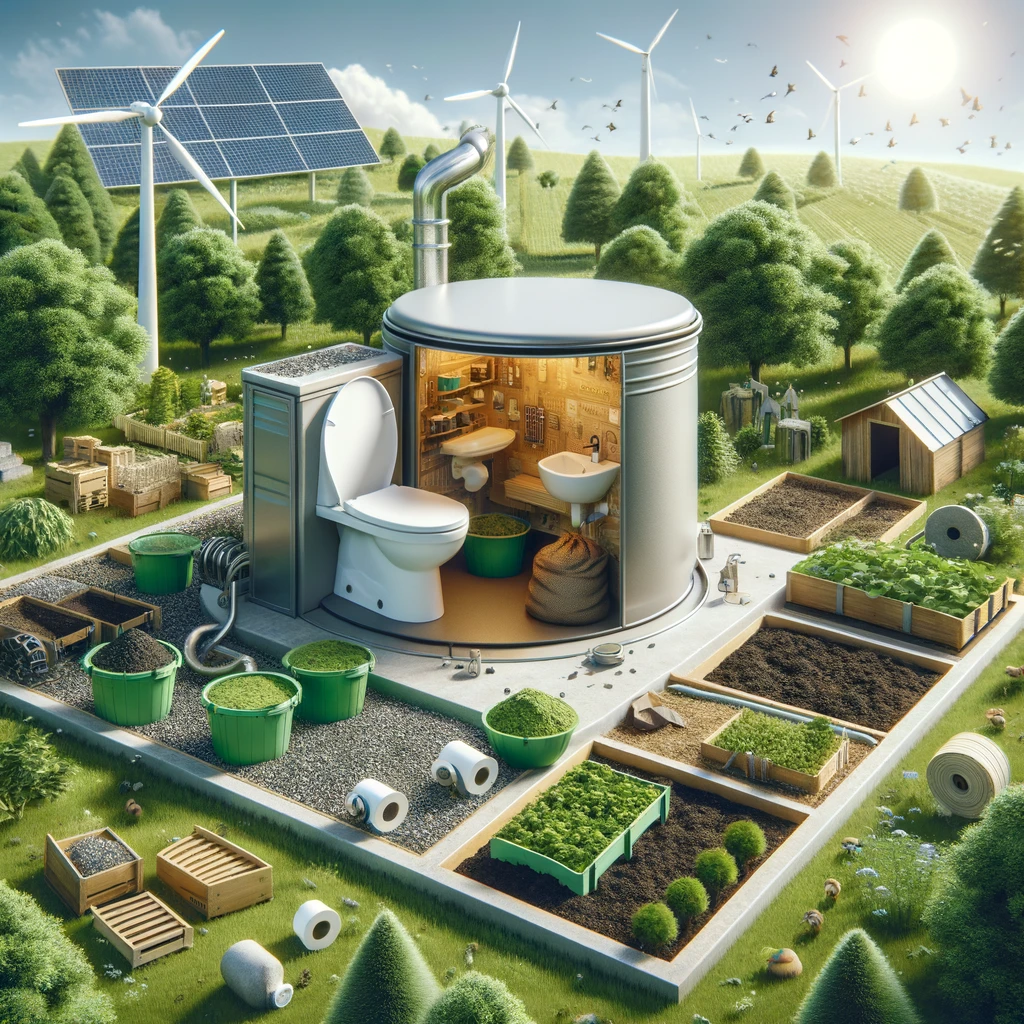
Ecological sanitation, commonly known as EcoSan, is a sustainable approach to managing human waste that focuses on recycling and safe reuse rather than mere disposal. This concept is grounded in preventing pollution and conserving nutrients to enhance soil fertility and protect water resources. EcoSan systems are designed to recover and utilize the nutrients found in human excreta, such as nitrogen, phosphorus, and potassium, which are valuable components for agricultural activities.
Delving into Vermicomposting: Nature’s Recycling Experts
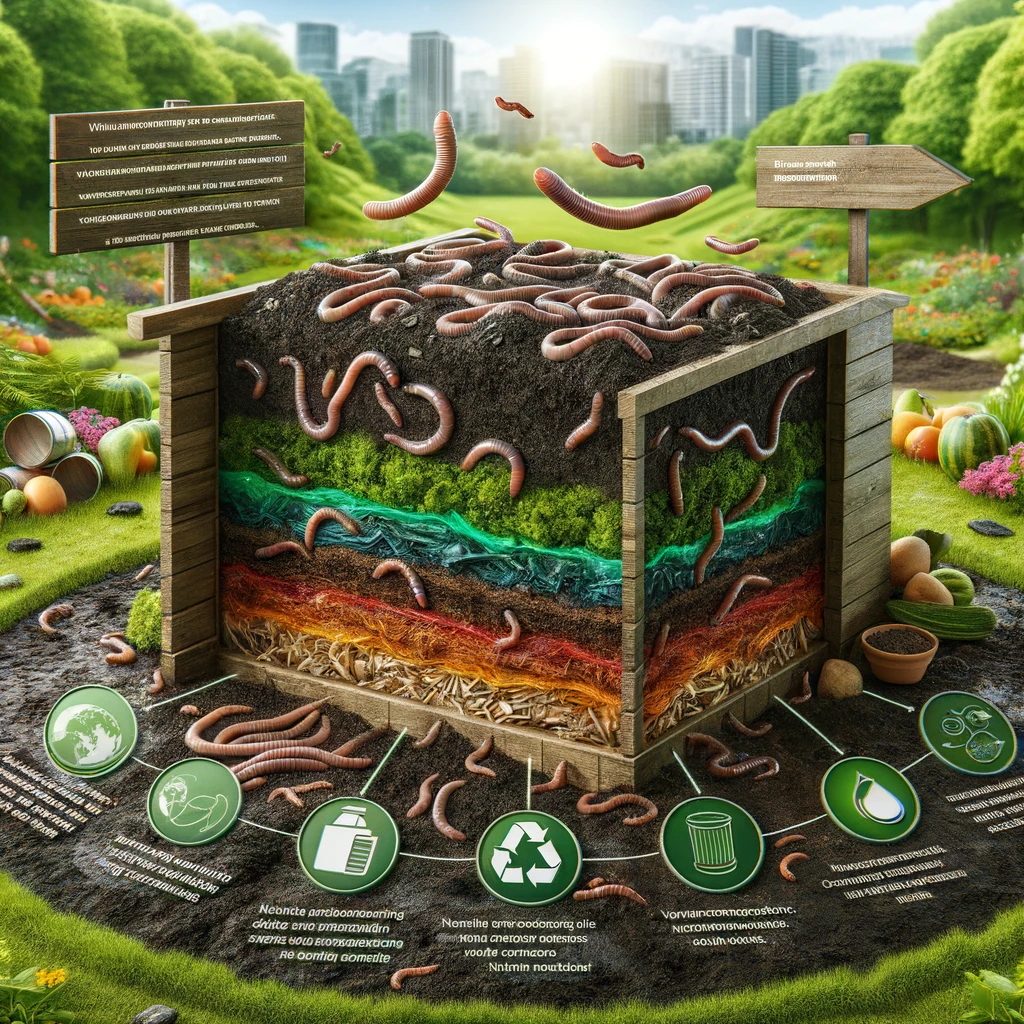
One of the pivotal methods in EcoSan is vermicomposting, which effectively harnesses the natural digestive power of earthworms to break down organic waste, transforming it into nutrient-rich compost. This method stands out as not only an efficient recycling strategy but also a significant contributor to sustainable waste management and soil health enhancement.
How Vermicomposting Fits into EcoSan Practices
Vermicomposting is a key player in the EcoSan approach due to its dual capability of waste reduction and nutrient recovery. It involves the breakdown of organic waste — including human excreta — through the action of earthworms, primarily species such as Eisenia fetida or the red wiggler. These earthworms are particularly adept at converting organic materials into worm castings, a type of compost that is highly valued for its nutrient content and soil conditioning properties. The integration of vermicomposting into EcoSan allows for the safe and effective transformation of waste into a resource that promotes soil fertility and crop growth, without the use of chemical fertilizers.
In EcoSan systems, specially designed toilet facilities are used where human waste is collected and subsequently subjected to vermicomposting treatment. This method significantly reduces pathogens while decomposing the waste into usable compost, making it a healthier and more environmentally friendly option compared to traditional sanitation methods.
Technological Enhancements in Vermicomposting
Advancements in technology have played a crucial role in optimizing vermicomposting processes within EcoSan frameworks. Innovations such as compartmentalized vermicomposting toilets and enhanced aeration systems improve the efficiency and hygiene of the process. These technologies are designed to facilitate better oxygen flow and maintain ideal conditions for the worms, which helps accelerate the composting process and reduces the risk of odor and disease. Moreover, research continues into developing more robust strains of earthworms and improving composting bin designs to enhance the digestion efficiency and throughput. The ultimate goal is not just to manage waste but to convert it into a high-quality product that can support sustainable agriculture and contribute to a circular economy.
The Environmental and Social Implications
Adopting vermicomposting within EcoSan not only addresses waste management issues but also plays a pivotal role in promoting environmental sustainability. By converting waste into compost, it reduces landfill use, lowers greenhouse gas emissions, and minimizes leaching of pollutants into water bodies. Socially, it can provide significant health benefits by reducing the incidence of sanitation-related diseases and improving overall community well-being. Furthermore, the end-product, vermicompost, can be used to boost agricultural productivity, which can be particularly transformative in developing regions where chemical fertilizers may be cost-prohibitive.
In summary, vermicomposting is not just a waste treatment method but a holistic part of modern EcoSan systems that highlights the potential of organic waste as a resource. Through the conversion of waste into valuable compost, it supports not only sanitation and health but also environmental sustainability and agricultural productivity. As we continue to explore and refine these interactions, the role of vermicomposting in improving our approach to human waste management and soil health appears not only promising but essential.
Scaling Up: Challenges and Opportunities in Vermicomposting for EcoSan
The integration of vermicomposting into ecological sanitation presents unique challenges that require innovative solutions to ensure scalability and effectiveness. One primary challenge is the adaptation of vermicomposting systems to varied climatic and cultural settings. Different regions have different temperature ranges, moisture levels, and social acceptance which can affect the viability and operation of vermicomposting processes.
Adapting to Local Climates and Cultures
Vermicomposting relies significantly on the health and activity of earthworms, which are sensitive to extreme temperatures and moisture levels. In colder regions, maintaining an active worm population during winter months requires additional insulation or heat sources, which can complicate system design and increase costs. Conversely, in very hot climates, protecting worms from overheating is equally challenging. Each of these scenarios needs tailored approaches to insulation, aeration, and moisture control to maintain an efficient composting process.
Cultural acceptance is another crucial factor. In some communities, the use of human excreta in agriculture, even in the form of compost, may be met with skepticism or resistance. Educational campaigns and community engagement are essential to changing perceptions and demonstrating the safety and benefits of using compost derived from human waste.
Scaling for Urban and Rural Settings
The scalability of vermicomposting in EcoSan also varies between urban and rural environments. In urban areas, space limitations are a common hurdle. Designing compact, odorless, and efficient vermicomposting systems that can be integrated into building infrastructure is vital. These systems need to be user-friendly to encourage adoption by households or community facilities. In rural areas, while space may not be as much of an issue, accessibility to necessary resources to construct and maintain vermicomposting setups can be a challenge.
Additionally, the integration of vermicomposting with other rural activities, such as agriculture and animal husbandry, offers opportunities for symbiotic systems that enhance overall productivity and sustainability.
Future Directions in Research and Development
To overcome these challenges and maximize the potential of vermicomposting within EcoSan, ongoing research and development are crucial. Areas of focus include the development of low-cost, high-efficiency composting systems that are easy to build and maintain with locally available materials. Moreover, investigating and promoting the use of indigenous earthworm species that are better adapted to local environmental conditions can enhance the robustness and efficiency of vermicomposting processes. Technological innovations, such as IoT-based monitoring systems, can play a role in optimizing the composting process.
Sensors and smart technology can help monitor moisture levels, temperature, and compost readiness, providing real-time data that can be used to manage the vermicomposting process more effectively and ensure consistent quality of the compost produced. As we advance these technologies and tailor vermicomposting systems to meet diverse needs, the scalability and adoption of EcoSan practices look promising. With continued refinement and adaptation, vermicomposting has the potential to transform sanitation, waste management, and agriculture, making substantial contributions to a more sustainable future.
Enhancing Community Participation and Education
Central to the success of scaling vermicomposting within EcoSan frameworks is strengthening community involvement and education. This aspect of strategy not only aids in overcoming cultural hurdles but also in ensuring the longevity and effectiveness of the initiative. Community workshops and interactive sessions that focus on the importance of sustainable waste management can play a transformative role in shifting perceptions and promoting more widespread acceptance and participation in vermicomposting projects. Educational programs need to be tailored to address the specific concerns and interests of different demographics. For example, engaging school children with hands-on vermicomposting projects can instill a sense of responsibility towards the environment at an early age. For adults, sessions might focus more on the practical benefits, such as soil improvement for farming and reduced waste disposal costs.
Besides direct education, social media campaigns and local influencers can be employed to spread awareness and maintain public engagement. Sharing successful local and global case studies can provide a relatable and convincing argument for the benefits and feasibility of integrating vermicomposting into daily life. By focusing on community education and participation, vermicomposting initiatives can become more than just waste management solutions—they can evolve into community-driven movements towards sustainability and ecological awareness, thereby ensuring better acceptance and success in a variety of cultural landscapes.
Conclusion: Empowering Communities Through Vermicomposting
The journey towards sustainable waste management through vermicomposting is not just about adapting new ecological strategies but also about fundamentally enhancing the way communities engage with their environment. The success of these initiatives hinges significantly on active participation and thorough education at all community levels.
By fostering an inclusive approach – educating, engaging, and empowering individuals from young school children to adults – vermicomposting can transcend being merely a method of waste reduction to becoming a cornerstone of community development. Local workshops, hands-on projects at schools, and consistent outreach via social media are crucial tools in building a robust framework for community engagement. These efforts demystify the process of vermicomposting, showcase its tangible benefits, and importantly, cultivate a culture of environmental stewardship.
As communities begin to see the positive impacts – richer soil, reduced waste, and enhanced biodiversity – support and enthusiasm will naturally grow. Moreover, the role of local influencers and success stories cannot be overstated. They not only serve as testimony to the effectiveness of vermicomposting but also help in knitting a narrative that resonates with local ethos and values, thereby ensuring a deeper and more widespread impact.
In conclusion, integrating vermicomposting within EcoSan frameworks is not merely about changing how communities manage waste but about reshaping community identities towards more sustainable and ecologically cognizant futures. Through continuous education and engagement, vermicomposting can evolve into a widely accepted, sustainable practice that aligns with the environmental aspirations of communities worldwide. Thus, our collective commitment to these practices doesn’t just aid in waste management but actively contributes to nurturing more resilient and environmentally aware societies.
References
- Atiyeh, R. M., Arancon, N., Edwards, C. A., & Metzger, J. D. (2001). The influence of humic acids derived from earthworm-processed organic wastes on plant growth. Bioresource Technology, 84(1), 7-14.
- Blouin, M., Hodson, M. E., Delgado, E. A., Baker, G., Brussaard, L., Butt, K. R., Dai, J., Dendooven, L., Peres, G., Tondoh, J. E., Cluzeau, D., & Brun, J. J. (2013). A review of earthworm impact on soil function and ecosystem services. European Journal of Soil Science, 64(2), 161-182.
- Crini, G., & Lichtfouse, E. (2019). Advantages and disadvantages of techniques used for wastewater treatment. Environmental Chemistry Letters, 17(1), 145-155.
- Eastman, B. R., Kane, P. N., Edwards, C. A., Trytek, L., Gunadi, B., Stermer, A. L., & Mobley, J. R. (2001). The effectiveness of vermiculture in human pathogen reduction for USEPA biosolids stabilization. Compost Science & Utilization, 9(1), 38-49.
- Garg, P., Gupta, A., & Satya, S. (2006). Vermicomposting of different types of waste using Eisenia foetida: A comparative study. Bioresource Technology, 97(3), 391-395.
- Jenkins, M. B., Endale, D. M., & Fisher, D. S. (2009). Bioavailability and earthworm uptake of residual biosolids-borne pharmaceuticals and personal care products. Environmental Science & Technology, 43(19), 7745-7751.
- Sinha, R. K., Herat, S., Agarwal, S., Asadi, R., & Carretero, E. (2010). Vermiculture technology: Reviving the dreams of Sir Charles Darwin for scientific use of earthworms in sustainable development programs. Technology and Investment, 1(3), 155-172.
- Tilley, E., Ulrich, L., Lüthi, C., Reymond, P., & Zurbrügg, C. (2014). Compendium of sanitation systems and technologies (2nd Ed.). Swiss Federal Institute of Aquatic Science and Technology (Eawag), Dübendorf, Switzerland.
- Tomati, U., Grappelli, A., & Galli, E. (1988). The hormone-like effect of earthworm casts on plant growth. Biology and Fertility of Soils, 5(4), 288-294.