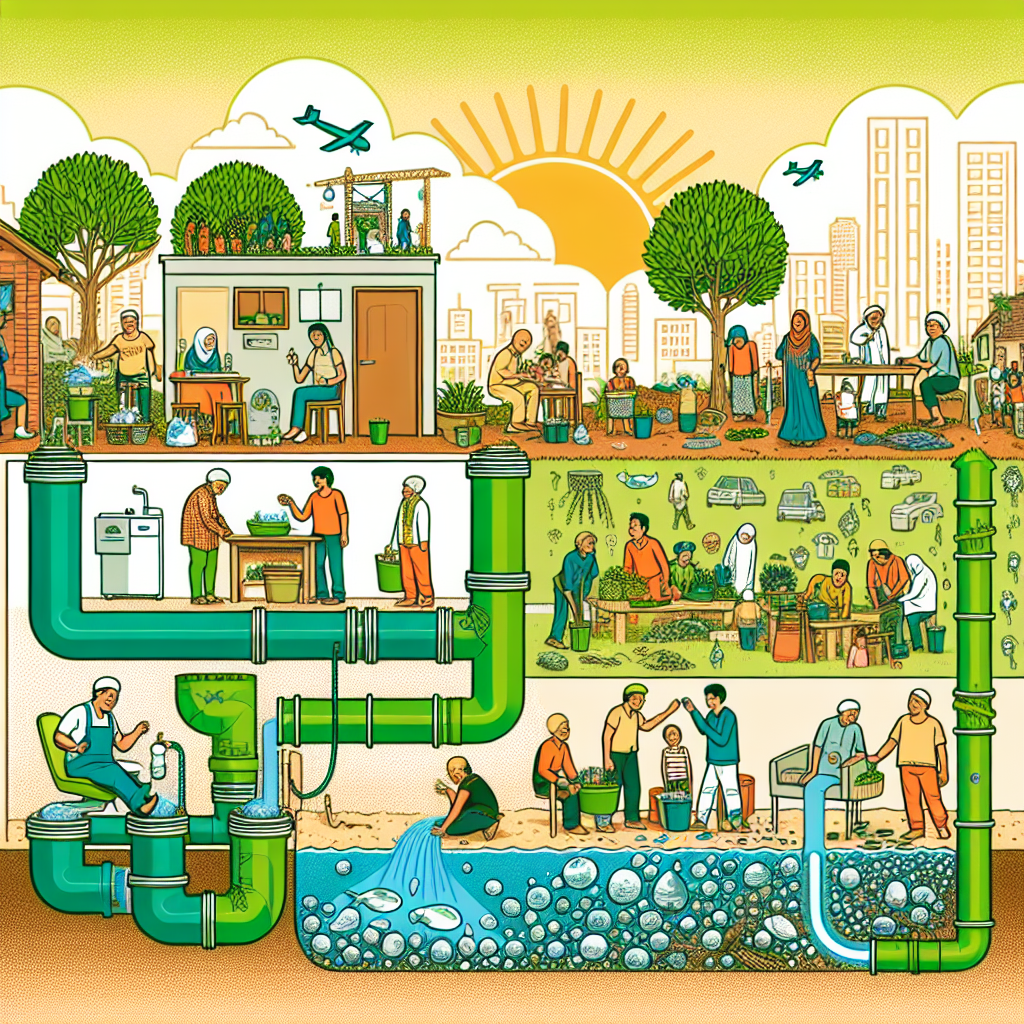
When you hear the term “Ecological Sanitation” (EcoSan), it might conjure images of green technologies seamlessly integrating with natural cycles. But what does this really mean, especially when we talk about nutrient-flow? In simple terms, EcoSan is a sustainable system for handling human waste by considering it as a resource rather than waste. It’s about closing the loop between sanitation and agriculture, emphasizing recovery and safe reuse.
The Basics of Nutrient Flow
At the core of EcoSan is the concept of nutrient-flow. Nutrients, primarily nitrogen, phosphorus, and potassium, are present in human excreta. Normally, these are treated as waste products in conventional sanitation systems and often end up contributing to pollution. EcoSan shifts this paradigm by treating these nutrients as valuable inputs for agricultural production.
Nitrogen – The Growth Booster
Nitrogen is a critical nutrient for plant growth, integral to proteins and chlorophyll. In EcoSan systems, urine, which is rich in nitrogen, is collected separately and can be applied directly to crops or stored and treated to produce a concentrated fertilizer. This direct loop from human waste to food production not only reduces the need for synthetic fertilizers but also cuts down the environmental footprint associated with their production and use.
Phosphorus – The Energy Storage Expert
Phosphorus plays a vital role in plant energy storage and transfer. It’s a key component of ATP, the energy unit of cells. Traditional sanitation systems often lead to phosphorus ending up in waterways, causing eutrophication and algal blooms. EcoSan, by segregating and treating human feces, preserves phosphorus in a form that can be safely returned to the soil, supporting crop yields and maintaining ecological balance.
Potassium – The Disease Resistant Promoter
Potassium is essential for plant health, helping in osmoregulation and disease resistance. In EcoSan systems, potassium, along with other nutrients, is recycled from human excreta. This recycling not only sustains soil fertility but also reduces the dependency on mined potassium, which is a non-renewable resource and is becoming increasingly scarce.
The Practical Implementation
Implementing EcoSan involves separating human urine and feces at the source. This is often achieved through specially designed toilets that segregate these wastes. The separated waste streams are then treated through processes that ensure that pathogens are destroyed and the nutrients are preserved in a form beneficial for plants. These can include composting the feces and storing urine to allow ammonification to kill off harmful organisms.
Environmental and Social Impacts
The direct environmental benefit of recycling nutrients in EcoSan is clear. It reduces the load on sewage treatment plants and minimizes water pollution. Socially, it promotes a mindset of reusing and recycling, fostering a closer connection with our environment. Communities that adopt EcoSan not only contribute to a greener planet but often witness improved agricultural productivity, which can support local economies.Understanding and implementing EcoSan can seem daunting at first glance. However, when broken down, the concept of nutrient-flow is straightforward: it’s about seeing value where we are used to seeing waste. By rethinking our sanitation systems, we can turn everyday human activities into opportunities for nurturing our environment.
Challenges and Solutions in EcoSan Implementation
Despite its numerous benefits, the path to fully integrating EcoSan practices within communities involves certain challenges that must be acknowledged and addressed. Understanding these barriers can help stakeholders in finding practical solutions that pave the way for broader adoption.
Overcoming Cultural Hesitations
One of the main hurdles in the implementation of EcoSan systems is the cultural resistance towards the use of human excreta in agriculture. For many, the idea of using treated human waste as fertilizer conflicts with social taboos or personal discomfort. Addressing these concerns involves education and awareness campaigns that emphasize the safety and environmental benefits of EcoSan. Engaging community leaders and demonstrating successful models can also help build trust and acceptance.

Technological and Logistical Barriers
While EcoSan technologies are designed to be simple and low-cost, challenges can arise in areas lacking the basic infrastructure to support such systems. Moreover, the separation of urine and feces at the source requires a behavior change and buy-in from users, which can be a significant barrier in some communities. To overcome this, governments and NGOs can provide subsidies for the installation of EcoSan toilets and conduct community training sessions to ensure proper use and maintenance.
Legal and Regulatory Frameworks
Another challenge is the absence of supportive legal and regulatory frameworks that recognize and encourage the use of recycled nutrients in agriculture. Without clear guidelines and standards, it can be difficult for EcoSan to gain the legitimacy needed to become a widely accepted practice. Advocacy and lobbying efforts can be directed towards the creation of policies that support and regulate EcoSan systems effectively, ensuring they meet health and safety standards while promoting sustainability.
Integrating EcoSan into Existing Systems
For EcoSan to become more than just a niche solution, it needs to be integrated into existing waste management and agricultural systems. This includes developing partnerships between urban planners, waste management professionals, and the agricultural sector. Such integrations can help streamline processes and ensure that the recycling of nutrients is done in a manner that benefits all parties involved.
Continuous Research and Innovation
Continued research and technological innovations are crucial to addressing operational challenges and enhancing the efficiency of EcoSan systems. Investment in research can lead to better methods for nutrient recovery, more effective pathogen elimination, and innovations that lower the costs and labor involved in maintaining EcoSan systems. These advancements could make the technologies more appealing and accessible to a wider range of users.Understanding the multifaceted challenges of EcoSan implementation is fundamental in optimizing its benefits and paving the way for its acceptance on a wider scale. By focusing on comprehensive solutions that address cultural, technological, regulatory, and integrative barriers, stakeholders can enhance the sustainability and impact of EcoSan systems worldwide.
Financial Constraints and Funding Opportunities
Accessing sustainable funding to set up and maintain EcoSan systems poses a significant challenge, especially in economically disadvantaged regions. The initial cost for infrastructure can be high, deterring local governments and communities from investing in these systems. To address this financial barrier, it’s crucial to explore various funding avenues, including grants, low-interest loans, and potentially, public-private partnerships. These mechanisms can reduce the burden on individual communities and incentivize the adoption of EcoSan solutions. Additionally, highlighting the long-term cost savings and environmental benefits of EcoSan can aid in garnering more support from international donors and local stakeholders willing to invest in sustainable development technologies.
Conclusion
Securing the necessary funds to implement and sustain EcoSan systems is undoubtedly a major hurdle, particularly in less economically developed areas. However, overcoming this challenge is not only possible but essential for fostering sustainable waste management practices globally. Exploring diverse financing options such as grants, low-interest loans, and public-private partnerships presents a viable path forward. Moreover, by effectively communicating the long-term economic and environmental gains of EcoSan systems to potential investors and stakeholders, it becomes easier to attract the much-needed support for these initiatives.Empowering communities by making these solutions accessible will catalyze the broader adoption of sustainable technologies necessary for ecological and human health. Let’s harness these opportunities to ensure that financial constraints do not hold back essential progress in our quest for a cleaner, more sustainable planet.