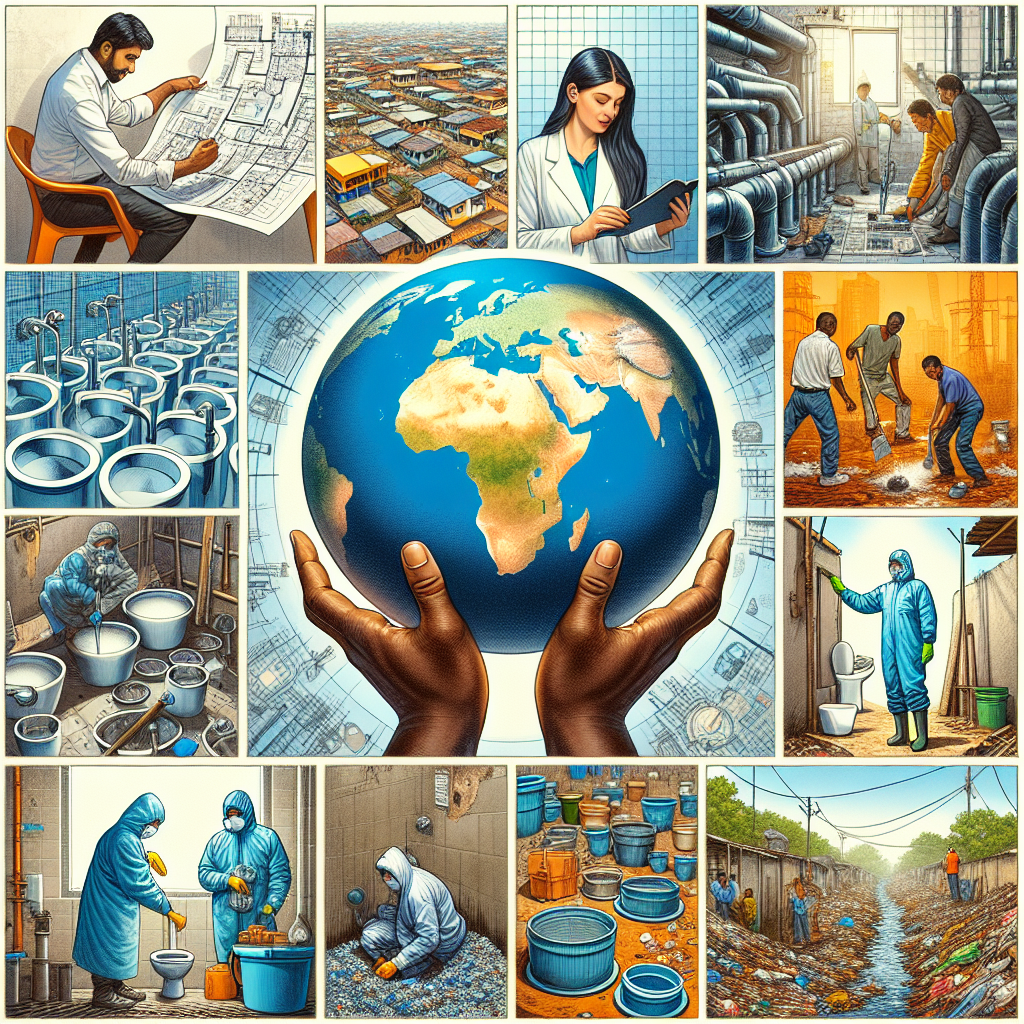
Sanitation is a fundamental human right, crucial for health, dignity, and economic progress. However, in rapidly growing urban areas, especially in slums, achieving proper sanitation remains a significant challenge. Traditional sanitation systems, like sewer networks and wastewater treatment plants, are often impractical for these densely populated areas due to high costs, complex infrastructures, and water scarcity. This is where Ecological Sanitation (EcoSan) shines as a beacon of innovation and sustainability.
EcoSan technologies focus on closing the loop of sanitation by treating human excreta as a resource rather than waste. This approach not only addresses the immediate need for better sanitation but also promotes environmental sustainability, resource recovery, and job creation. In this article, we will delve into advanced insights into EcoSan technologies and explore novel sanitation approaches specifically tailored for slum upgrading projects.
We will cover various facets of EcoSan, including urine-diverting dry toilets, composting toilets, biogas digesters, and decentralized wastewater treatment solutions. By understanding these technologies and their implementations, urban planners, NGOs, and local governments can make informed decisions to improve the quality of life in slums while promoting ecological health.
Urine-Diverting Dry Toilets
Urine-diverting dry toilets (UDDTs) are a cornerstone of EcoSan technologies. These innovative toilets separate urine and feces at the source, which significantly simplifies subsequent treatment processes. The separation of waste not only prevents contamination but also allows for the recovery of valuable nutrients.
Urine, rich in nitrogen, phosphorus, and potassium, can be treated and used as a fertilizer in agriculture. Feces, on the other hand, can be composted to produce high-quality soil conditioner. This dual treatment approach not only mitigates health risks associated with improper sanitation but also creates opportunities for resource recovery and agricultural enhancement.
In slum settings where space and resources are limited, UDDTs offer a practical and cost-effective solution. These toilets do not require water for flushing, making them ideal for areas with water scarcity. Additionally, they are low-maintenance and can be constructed using locally available materials, promoting community involvement and sustainability.
Composting Toilets
Composting toilets are another viable EcoSan solution, particularly well-suited for slum environments. These toilets facilitate the decomposition of human excreta into compost, a valuable organic fertilizer. The design of composting toilets can vary, ranging from simple pit designs to more sophisticated above-ground systems.
Composting toilets function by creating an aerobic environment that promotes the breakdown of organic matter. The end product is a nutrient-rich compost that can be safely used in agriculture and gardening. This process not only addresses the issue of waste management but also contributes to soil fertility and food security.
For slum upgrading projects, composting toilets offer several advantages. They can be installed quickly, are relatively inexpensive, and do not require extensive infrastructure. Moreover, composting toilets reduce the risk of groundwater contamination, as they prevent the leaching of pollutants often associated with traditional pit latrines.

Biogas Digesters
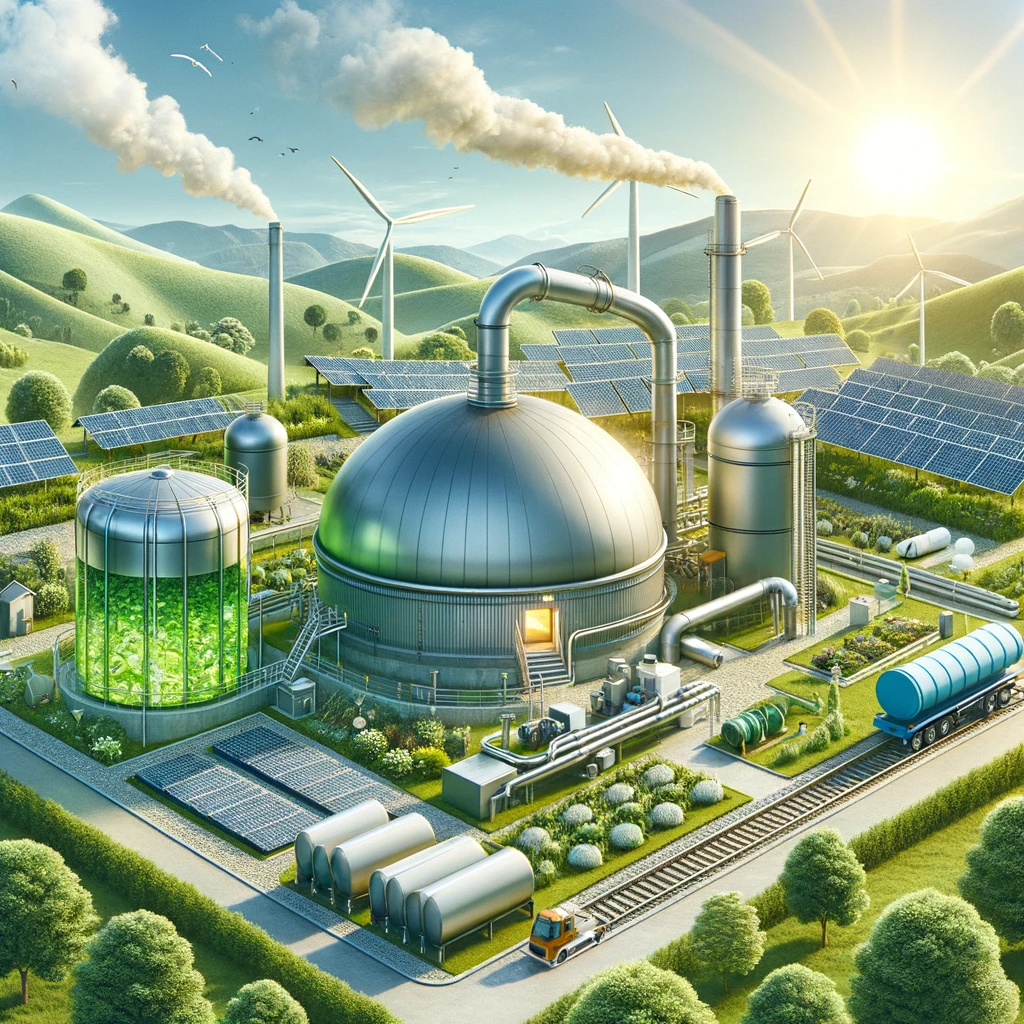
Biogas digesters represent an innovative approach that goes beyond sanitation to address energy needs in slums. These systems treat organic waste, including human excreta, to produce biogas and digestate. Biogas, a mixture of methane and carbon dioxide, can be used as a renewable energy source for cooking, heating, and electricity generation.
Biogas digesters operate through anaerobic digestion, a process in which microorganisms break down organic matter in the absence of oxygen. The digestate, a nutrient-rich byproduct, can be used as fertilizer. This technology not only improves sanitation but also enhances energy security and agricultural productivity.
In slum areas, biogas digesters can be integrated with community-based sanitation facilities, providing a holistic solution that addresses multiple needs. The biogas produced can reduce reliance on traditional fuels, such as wood and charcoal, mitigating deforestation and indoor air pollution. Furthermore, the fertilizer output supports urban agriculture initiatives, promoting food resilience and economic opportunities in slum communities.
Decentralized Wastewater Treatment
Decentralized wastewater treatment systems (DEWATS) offer a scalable and flexible approach to managing wastewater in slums. Unlike centralized systems that require extensive infrastructure, DEWATS can be implemented at the community or neighborhood level, making them ideal for densely populated urban areas.
DEWATS employ a combination of treatment methods, such as sedimentation, filtration, biological treatment, and constructed wetlands, to effectively manage wastewater. These systems are designed to treat both blackwater (wastewater from toilets) and greywater (wastewater from sinks, showers, and laundry), ensuring comprehensive sanitation solutions.
By treating wastewater on-site, DEWATS reduce the need for long sewage pipelines and large treatment plants, lowering costs and environmental impacts. The treated water can be safely reused for non-potable purposes, such as irrigation and toilet flushing, promoting water conservation. Furthermore, DEWATS can generate valuable byproducts, such as biogas and treated sludge, which can be utilized for energy and agriculture, respectively.
Community Engagement and Education
The success of EcoSan projects in slums heavily depends on community engagement and education. It is crucial to involve residents in the planning, implementation, and maintenance of sanitation systems to ensure their sustainability and acceptance. Community participation fosters a sense of ownership and responsibility, which is vital for the long-term success of these projects.
Educational initiatives should focus on the benefits of EcoSan technologies, proper usage, and maintenance of sanitation facilities, and the importance of hygiene practices. Workshops, training sessions, and awareness campaigns can be effective in building the community’s capacity to manage EcoSan systems. Additionally, involving local leaders and influencers can help gain community trust and support, facilitating smoother project implementation.
Education should also extend to school programs, teaching young people about the importance of sanitation and environmental stewardship. By inculcating these values early, we can nurture a generation that prioritizes sustainable practices and champions sanitation improvements in their communities.
Policy Support and Funding Mechanisms
For EcoSan initiatives to flourish in slum upgrading projects, strong policy support and innovative funding mechanisms are essential. Governments, international organizations, and private sector stakeholders must collaborate to create an enabling environment for the adoption and scaling-up of EcoSan technologies.
Policy support can come in the form of regulatory frameworks, subsidies, and incentives that promote the use of sustainable sanitation solutions. Governments should integrate EcoSan into their urban planning strategies and provide technical assistance to communities and implementing agencies. Furthermore, research and development in sanitation technologies should be encouraged to drive continuous innovation and improvement.
Funding mechanisms should be diverse and inclusive, leveraging resources from public, private, and philanthropic sectors. Microfinance, community savings groups, and public-private partnerships can provide the necessary financial support for EcoSan projects. Additionally, performance-based financing and impact investing can attract funds by demonstrating the social, environmental, and economic benefits of EcoSan initiatives.
Conclusion
EcoSan technologies offer a transformative approach to sanitation that is particularly suited for slum upgrading projects. By treating human waste as a resource, these systems address sanitation challenges while promoting environmental sustainability and resource recovery. Urine-diverting dry toilets, composting toilets, biogas digesters, and decentralized wastewater treatment solutions are just some of the innovative tools available to improve sanitation in slums.
For sustainable success, it is crucial to engage communities, educate residents, and garner policy support and funding. By adopting EcoSan technologies and fostering collaboration among various stakeholders, we can create healthier, more resilient urban environments and uplift the living conditions of millions of slum dwellers worldwide.
The journey towards improved sanitation in slums is a multifaceted challenge requiring innovative solutions and committed partnerships. EcoSan technologies provide a pathway to not only meet the immediate sanitation needs but also to build a foundation for sustainable urban development. Let us embrace these novel approaches and work together to ensure that everyone, regardless of their living conditions, has access to safe and dignified sanitation.