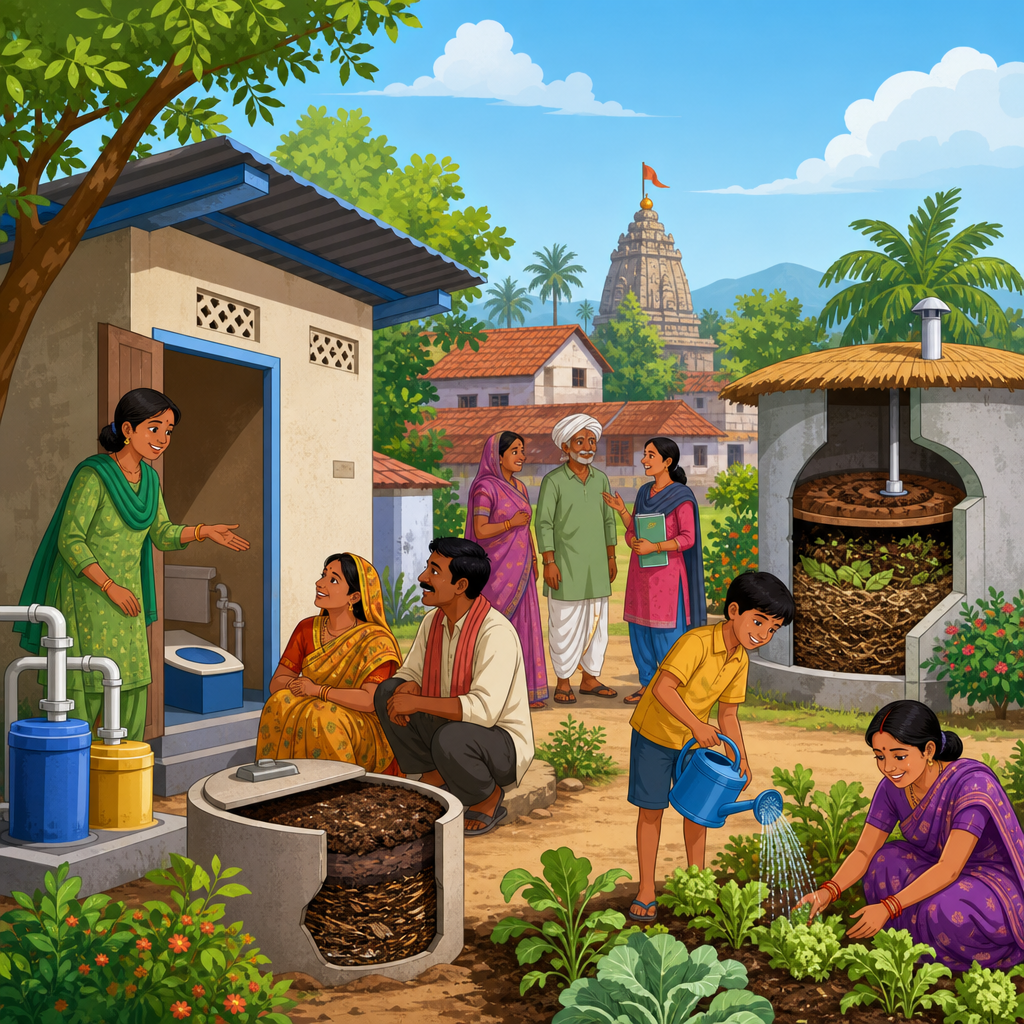
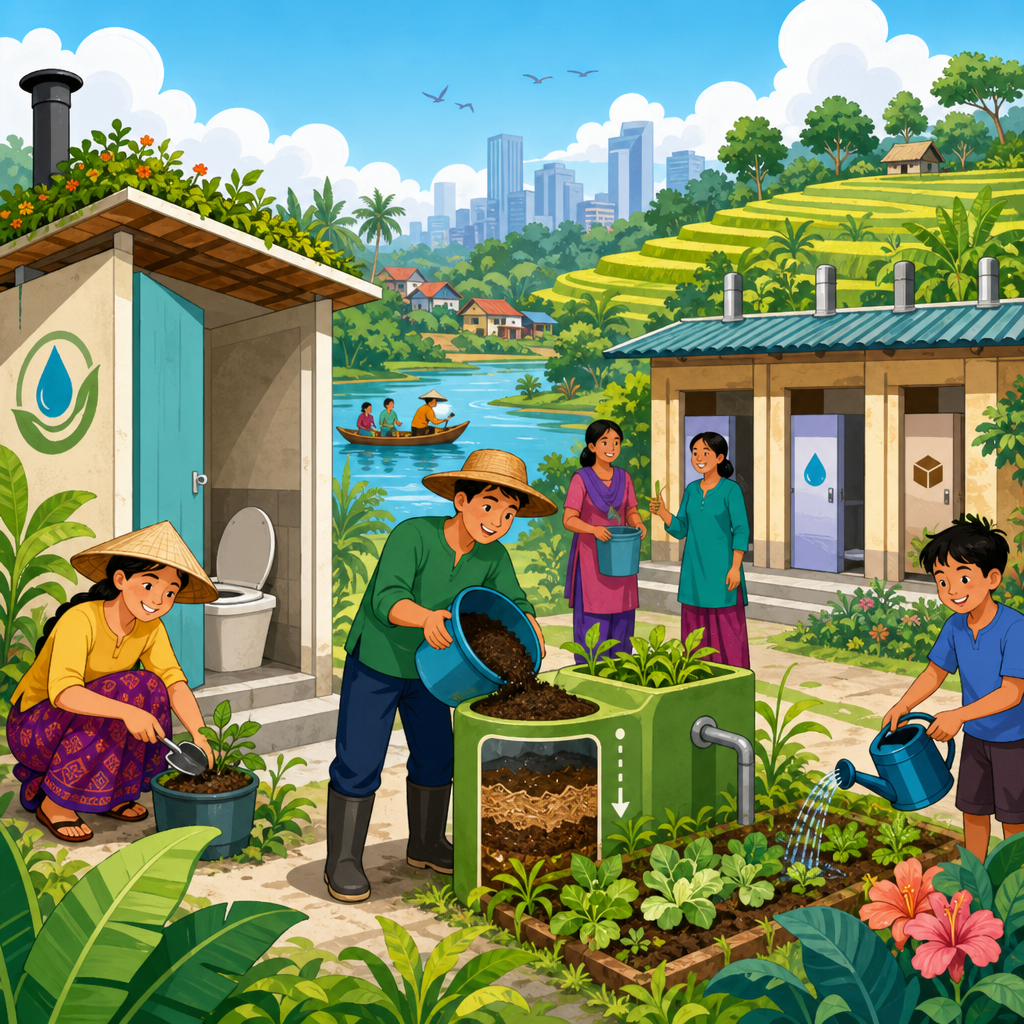
Sanitation Synergies: Rural India’s Path to Eco-Friendly Practices shows how villages can turn a basic public health service into a system that protects water, improves soil, and strengthens local livelihoods. In rural India, sanitation is not only about building toilets; it is about what happens to urine, feces, wash water, and household behavior after construction crews leave. EcoSan, short for ecological sanitation, treats human waste as a resource that can be safely recovered through separation, composting, dehydration, or controlled reuse. When implemented well, EcoSan reduces groundwater contamination, lowers dependence on chemical fertilizers, and cuts the strain on water-scarce communities.
I have worked on sanitation content and implementation reviews where the same pattern appeared repeatedly: a village would celebrate toilet coverage, yet pits filled too quickly, groundwater near hand pumps tested poorly, and households quietly returned to open defecation when systems became inconvenient. EcoSan emerged as a practical response in places where conventional sewerage was unrealistic and single-pit approaches created recurring maintenance problems. The concept matters especially in rural India because settlement patterns are dispersed, water supply is often intermittent, and local governments must stretch limited budgets across roads, housing, drinking water, and solid waste management.
The strongest EcoSan case studies from India show that success depends less on hardware alone than on the interaction between design, training, local governance, agriculture, and social acceptance. Dry or low-water toilets can work in flood-prone districts, rocky terrain, and water-stressed blocks, but only when users understand safe handling timelines, masons follow correct dimensions, and panchayats establish maintenance accountability. This hub article examines lessons from EcoSan implementations across rural India, including what has worked, where projects stalled, and how future programs can integrate sanitation with environmental management. For practitioners, policymakers, NGOs, and researchers, these lessons offer a realistic path toward eco-friendly sanitation that lasts.
What EcoSan Means in Rural India
EcoSan is an umbrella term covering sanitation systems designed to safely contain, treat, and recover nutrients from human excreta with minimal water use. In the Indian rural context, the most relevant forms include urine-diverting dry toilets, double-vault composting toilets, dehydration chambers, and linked systems that convert fecal matter into soil conditioner after pathogen reduction. The key principle is source separation and controlled treatment. Urine, which contains most of the nitrogen and potassium, can be stored and diluted for agricultural use in some systems. Feces are kept dry or composted so pathogens decline over time before handling.
This differs from standard pit latrines and septic tanks in a critical way. Conventional systems focus on disposal, usually below ground. EcoSan focuses on containment, treatment, and reuse above or partly above ground, reducing leaching into soil and aquifers. That distinction matters in rural India, where many households rely on shallow groundwater and where high water tables, hard rock, or flood conditions can make pits unsafe or short lived. States with water stress have found EcoSan appealing because it avoids or sharply reduces flushing. In drought-prone districts, every liter saved at household level contributes to broader resilience.
EcoSan also aligns with agricultural realities. Smallholders face rising fertilizer costs, degraded soils, and variable monsoon conditions. While nutrient recovery from sanitation is not a complete fertilizer strategy, it can complement composting, farmyard manure, and integrated nutrient management. The lesson from successful projects is that communities adopt EcoSan more readily when it is framed not as an unusual toilet, but as a village resource system tied to health, water security, and farming economics.
Lessons from Early Implementations and Pilot Projects
Early EcoSan pilots in India were often led by NGOs, research institutions, or donor-supported rural development programs. Many targeted regions where conventional sanitation repeatedly failed, such as coastal belts with saline groundwater, rocky areas where pit excavation was costly, and flood-prone zones where pits overflowed. One recurring lesson was that technical suitability alone did not guarantee continued use. Villages accepted new toilet models during construction, but long-term success depended on whether families understood ash addition, urine diversion, vault switching, and safe emptying intervals.
Projects in states such as Kerala, Tamil Nadu, Odisha, and parts of Maharashtra demonstrated that demonstration households were more persuasive than posters or one-time meetings. When a respected local family used an EcoSan toilet for a full cycle, showed the dry composted output, and connected that result to kitchen gardens or coconut plots, skepticism dropped sharply. I have seen this firsthand in implementation summaries: usage stabilized when communities could observe odor control, manageable maintenance, and visible agronomic benefit. By contrast, pilots that remained confined to institutional compounds often failed to normalize household adoption.
Another lesson involved mason training. Small construction errors created large operational failures. Incorrect slope in urine channels caused blockages. Oversized squat holes allowed moisture into dry chambers. Poorly fitted doors increased flies and odor. In multiple case studies, systems were blamed for design flaws that were actually workmanship problems. The most durable programs invested in standard drawings, on-site supervision, and post-construction inspections. They treated local masons as frontline sanitation professionals rather than casual labor. That approach reduced rework, increased user confidence, and protected the reputation of the technology.
Design Choices That Determine Performance
EcoSan is not a single fixed model, and design must respond to climate, culture, household size, and operation capacity. In water-scarce areas, urine-diverting dry toilets often perform well because they minimize moisture and accelerate dehydration. In places where households are comfortable with compost handling and have space for twin chambers, double-vault systems provide a practical rotation: one chamber fills while the other rests and sanitizes. In flood-prone regions, raised structures are essential. Elevation protects chambers from inundation and keeps treatment conditions stable during monsoon months.
Ventilation, access hatches, roof overhang, and user interface details matter more than many planners assume. If chambers stay damp, decomposition becomes incomplete and odors increase. If cleaning is awkward, women and elderly users may reject the toilet. If child-friendly features are absent, families may revert to unsafe alternatives for younger members. Good designs account for menstrual hygiene management, anal cleansing practices, and the local preference for sitting or squatting. The systems that endure are not the most novel; they are the ones adapted to daily life.
| Implementation factor | What successful villages did | What happened when ignored |
|---|---|---|
| Site assessment | Matched design to water table, soil, flood risk, and space | Chambers flooded, pits failed, or systems were abandoned |
| Mason training | Used standard dimensions and supervised construction | Leakage, blockages, odor, and user complaints increased |
| User orientation | Explained ash use, vault switching, and safe emptying | Moist chambers, flies, and confusion reduced adoption |
| Reuse planning | Linked outputs to gardens or farms with safety guidance | Recovered material was discarded instead of productively used |
| Local governance | Assigned follow-up through panchayats or village committees | Minor maintenance issues became long-term failure points |
Material choice also influences lifecycle cost. Low-quality pans, pipes, and chamber doors often fail within a few seasons, especially under heat and monsoon stress. Better projects specified durable components available in local markets so repairs could be made without donor support. The practical lesson is straightforward: a rural toilet should be designed as a service system, not merely as a structure completed at handover.
Behavior Change, Dignity, and Community Ownership
Behavior change is the decisive variable in EcoSan. Users must understand why urine and feces are separated, why water should not be poured into dry chambers, and why resting time before handling is non-negotiable. Programs that relied on a single awareness session generally struggled. The better approach combined pre-construction consultations, household demonstrations, follow-up visits, and visual instructions placed inside or near the toilet. Repetition mattered because sanitation behavior is habitual and often gendered. Women, older adults, and caregivers of children typically carried the operational burden, so they needed direct training rather than secondhand explanations.
Dignity is equally important. Some communities initially associated handling treated excreta with stigma, especially where caste-based sanitation labor histories remain strong. Successful implementations addressed this openly instead of pretending resistance did not exist. They emphasized household control, safety intervals, tool-based handling, and the agricultural value of the end product. In villages where self-help groups, school teachers, or frontline health workers participated, EcoSan was more likely to be discussed as a modern resource-conscious practice rather than a backward compromise.
Community ownership grows when the village sees sanitation as shared infrastructure even when toilets are household units. Panchayats that tracked functionality, arranged repair support, and included sanitation in Gram Sabha discussions maintained better outcomes. Some villages linked sanitation monitoring with water and health committees, creating a practical governance loop: if contamination risk dropped and toilet use remained high, the whole village benefited. That institutional memory is essential because households change, new marriages alter user numbers, and systems need periodic guidance long after inauguration ceremonies end.
Environmental and Agricultural Gains, with Limits
The environmental case for EcoSan in rural India is strong. Properly managed systems reduce the seepage of untreated waste into groundwater, a major concern where hand pumps and shallow wells supply drinking water. They also cut water demand compared with flush-based systems. In regions facing declining groundwater tables, this is not a minor advantage. Sanitation design that uses little or no water supports broader watershed resilience. EcoSan can also reduce the burden on fecal sludge transport where road access is weak and desludging services are irregular or unaffordable.
Agricultural gains are real but should be described carefully. Recovered nutrients can supplement soil fertility, particularly in kitchen gardens, orchards, non-leafy crops, and tree-based systems. Urine contains readily available nitrogen; sanitized fecal compost contributes organic matter and some nutrients. However, nutrient value depends on storage, contamination control, and application practice. EcoSan output is not identical to commercial fertilizer, and misuse can create health risks. The most credible case studies paired reuse with clear protocols, crop restrictions where needed, and agricultural extension support.
There are also limits. EcoSan may be unsuitable where households strongly prefer pour-flush systems and are unwilling to adapt. It can underperform if ash or dry cover material is scarce, if treatment chambers are too small for family size, or if local governance cannot support troubleshooting. These limitations do not weaken the model; they clarify where it fits best. The central lesson is to deploy EcoSan selectively, based on hydrogeology, water availability, settlement pattern, and community readiness, rather than as a universal template.
Scaling Lessons for Governments, NGOs, and Rural Programs
For scaling, the biggest lesson from Indian EcoSan implementations is that sanitation programs must move beyond construction targets. Counting toilets built is easy; measuring sustained use, safe treatment, and environmental benefit is harder, but far more important. Government schemes and NGO programs should define functionality indicators that include chamber condition, user understanding, and safe reuse or disposal pathways. District officials need simple monitoring tools, not only completion reports. Even a short checklist used during follow-up visits can reveal whether a system is operating as intended.
Financing models also matter. Subsidies can support adoption, but underfunded designs usually cost more later in repairs, retrofits, or abandonment. Programs that bundled hardware support with training, mason certification, and post-installation visits achieved better value. Convergence with rural livelihoods, watershed development, and agriculture departments can further strengthen results. When farmers see sanitation linked to composting, soil health, and water conservation, the intervention shifts from welfare to productive infrastructure.
As a hub for case studies and success stories, this topic points to a consistent conclusion: EcoSan works in rural India when programs treat it as a managed ecological system rooted in local behavior, skilled construction, and long-term support. The most useful lesson is not that one toilet design solved every problem. It is that villages achieved durable sanitation gains when they matched technology to landscape, trained users and masons carefully, and connected sanitation to farming and water security. If you are planning rural sanitation content, policy, or field implementation, use these lessons as the starting framework and build your next decision on evidence, not assumption.
Frequently Asked Questions
1. What does ecological sanitation mean in the context of rural India?
Ecological sanitation, often called EcoSan, is an approach that looks beyond toilet construction and focuses on the full sanitation cycle: containment, safe handling, treatment, reuse, and long-term behavior change. In rural India, this matters because sanitation systems must work with local water availability, soil conditions, farming practices, and village-level infrastructure. Instead of treating human waste only as something to dispose of, EcoSan treats urine, feces, and even household wash water as materials that can be managed safely and, in some cases, reused productively.
This approach is especially relevant in areas where water is scarce, groundwater is vulnerable to contamination, or pit emptying and sewage networks are limited. EcoSan systems may include urine-diverting toilets, composting methods, and decentralized treatment options that reduce pressure on water resources while helping prevent open contamination of land and water bodies. The larger goal is not just sanitation access, but sanitation that protects health, conserves resources, supports agriculture, and remains practical for communities to maintain over time.
2. How can sanitation practices help protect water sources and improve soil health in villages?
Well-designed sanitation systems can make a major difference to both water safety and soil quality. In many rural settings, poorly managed pits, open defecation, or untreated wastewater can allow pathogens and nutrients to seep into groundwater, ponds, streams, and irrigation channels. This creates public health risks and weakens the environmental base that villages depend on. Eco-friendly sanitation reduces these risks by improving containment, separating waste streams where appropriate, and promoting treatment before any reuse or release.
Soil health can also improve when treated organic matter is returned to the land safely. After proper storage, composting, or dehydration, certain sanitation by-products may be used as soil conditioners in accordance with health and agricultural guidelines. This can add organic matter to depleted soils and support more circular village economies. At the same time, greywater from bathing or washing can be filtered or diverted to kitchen gardens or tree plantations when managed correctly. The key principle is safety first: any reuse must be based on proper treatment, local acceptance, and clear protocols that reduce pathogen exposure and protect both farmers and families.
3. Why is building toilets alone not enough for sustainable sanitation in rural communities?
Toilet construction is important, but it is only the visible first step. A toilet that is not used consistently, cannot be maintained affordably, fills too quickly, contaminates nearby water, or has no safe plan for waste handling will not deliver lasting health or environmental benefits. Sustainable sanitation depends on what happens after the toilet is built: whether users understand hygiene practices, whether water is available when needed, whether pits or chambers can be emptied safely, and whether treated outputs are managed responsibly.
Behavior, maintenance, and local systems are therefore just as important as infrastructure. Households need practical guidance on toilet use, handwashing, menstrual hygiene, child feces disposal, and routine cleaning. Villages also need arrangements for operation and maintenance, supply chains for repairs, and trained workers for safe emptying and transport where applicable. When sanitation planning includes community participation, local governance, and environmental safeguards, the result is much stronger than construction targets alone. In short, real sanitation success comes from combining hardware, habits, and long-term management.
4. What kinds of livelihood opportunities can grow from eco-friendly sanitation systems?
Eco-friendly sanitation can create local economic value when villages move from a disposal mindset to a resource management mindset. This may include jobs and enterprises linked to toilet maintenance, safe pit or chamber emptying, compost processing, urine management, decentralized wastewater treatment, and greywater reuse systems. Local masons, fabricators, self-help groups, and sanitation workers can all play a role in building and servicing systems that fit village conditions.
There can also be agricultural benefits. When treated sanitation outputs are safely processed and accepted by the community, they may reduce dependence on some external inputs by contributing nutrients or organic matter to the soil. In parallel, water-saving designs can lower stress on local water supplies, which supports farming resilience. The most effective models are those that combine technical safety, community trust, and clear market or household value. Livelihood gains do not happen automatically, but with training, regulation, and local ownership, sanitation can become part of a broader rural development strategy rather than a stand-alone public works project.
5. What are the biggest challenges to adopting EcoSan in rural India, and how can communities overcome them?
The biggest challenges usually include social acceptance, limited awareness, maintenance gaps, financing constraints, and concerns about safely handling human waste. In some communities, the idea of reusing treated sanitation by-products may face cultural resistance. In others, households may prefer familiar systems even if those systems are less sustainable. Technical problems can also arise when toilets are poorly designed for local conditions, when users are not trained properly, or when no institution is responsible for follow-up support after installation.
Overcoming these barriers requires a combination of community engagement, practical training, and strong local governance. Demonstration sites can help people see that eco-friendly sanitation is safe, useful, and manageable in real village conditions. Panchayats, health workers, schools, farmer groups, and women’s collectives can all help build understanding and accountability. It is also important to choose technologies that match local realities, including water access, climate, soil type, affordability, and user preference. When communities are involved in design and decision-making from the beginning, adoption is stronger, maintenance improves, and sanitation systems are more likely to protect health, conserve resources, and deliver lasting environmental benefits.