

Ecological sanitation, or EcoSan, represents a forward-thinking approach to modern sanitation challenges. As we grapple with increasing global populations and the dire need for sustainable living practices, innovative EcoSan technologies stand out as a beacon of hope. Central to these innovations are smart toilets, designed to not only meet our sanitation needs but also to contribute to a more sustainable ecosystem.
Smart toilets are more than just high-tech gadgets; they embody the promise of a future where waste management is efficient, hygienic, and environmentally friendly. By incorporating advanced features such as water conservation, nutrient recycling, and real-time monitoring, these intelligent sanitation systems offer practical solutions to some of the world’s most pressing environmental issues.
The potential of EcoSan technologies is immense. By transforming waste into valuable resources, these solutions can significantly reduce environmental pollution, enhance public health, and even contribute to agricultural productivity. This article delves into the innovative world of smart toilets within the EcoSan framework, exploring their features, benefits, and the promising future they hold.
Smart Toilets: The Tech Behind EcoSan
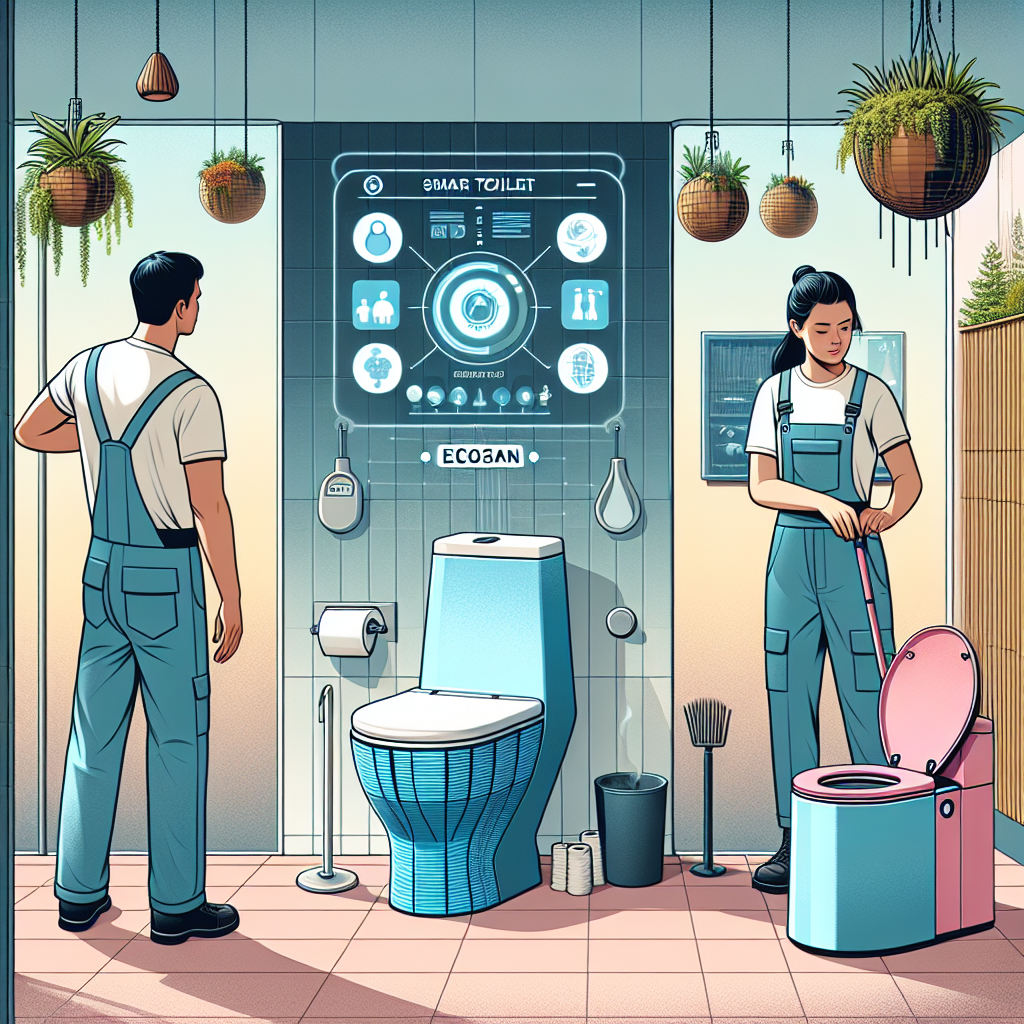
At the core of the EcoSan revolution is the integration of smart technology into traditional sanitation systems. Smart toilets are equipped with sensors, processors, and connectivity solutions that allow them to monitor and manage waste more efficiently than ever before. These advanced systems use minimal water, reduce the need for sewage infrastructure, and can even process waste into usable byproducts.
One of the key components of smart toilets is their ability to segregate waste at the source. This separation allows for efficient treatment and recycling of different types of waste. For example, urine can be diverted and processed into fertilizers, while solid waste can be composted or transformed into biogas. This not only minimizes the environmental footprint but also provides valuable resources that can be reused, promoting a circular economy.
Moreover, smart toilets are designed with user convenience and hygiene in mind. Features such as automatic flushing, self-cleaning mechanisms, and touch-free operations greatly enhance the user experience while ensuring high standards of cleanliness. These advancements make smart toilets an attractive option for both residential and public sanitation systems.
Water Conservation and Management
Water scarcity is a growing concern across the globe, making the water-saving capabilities of smart toilets particularly significant. Many advanced smart toilet systems utilize vacuum technology and other innovative methods to drastically reduce water usage per flush. Some models even operate without any water, using instead composting or incineration methods to handle waste.
In regions where water is especially scarce, these systems can make a substantial difference. For instance, vacuum flush toilets use air suction to remove waste, requiring only a fraction of the water that conventional toilets use. By significantly reducing water consumption, these technologies help alleviate the stress on local water supplies and contribute to broader water conservation efforts.
Beyond water savings, smart toilets also enable better management of wastewater. Real-time monitoring systems can detect leaks, track usage patterns, and provide valuable data that can be used to optimize water management practices. This ensures that every drop of water is used efficiently, further supporting sustainable sanitation solutions.
Nutrient Recycling: Turning Waste into Resources
One of the standout features of smart toilets within the EcoSan framework is their ability to recycle nutrients from human waste. This process not only addresses sanitation issues but also creates valuable byproducts that can enhance agricultural productivity. Key nutrients found in human waste, such as nitrogen, phosphorus, and potassium, are essential for plant growth and can be reclaimed and reused as fertilizers.
Urine-diverting toilets are a prime example of this technology. These systems separate urine from solid waste, allowing it to be processed and treated for use as a nutrient-rich fertilizer. This approach not only reduces the environmental impact of traditional waste disposal methods but also closes the nutrient loop, contributing to more sustainable agricultural practices.
In addition to urine diversion, composting toilets offer another effective means of recycling nutrients. These toilets decompose solid waste into compost, which can be used to enrich soil and support plant growth. This method not only reduces the volume of waste but also transforms it into a valuable resource, aligning perfectly with the principles of ecological sanitation.
Public Health Implications
Improving sanitation is critical for public health, and smart toilets offer significant advancements in this area. Traditional sanitation systems can be breeding grounds for disease, particularly in areas with inadequate infrastructure. Smart toilets, with their advanced cleaning and waste processing capabilities, help mitigate these health risks.
By ensuring proper waste management and reducing human exposure to harmful pathogens, smart toilets can significantly lower the incidence of waterborne diseases. Moreover, the hygienic features of these toilets, such as touch-free operation and automatic cleaning, further enhance their public health benefits. These innovations make smart toilets an invaluable tool in the fight against sanitation-related health issues.
Furthermore, the data collected by smart toilets can provide critical insights into public health trends. For instance, monitoring of waste and usage patterns can help detect outbreaks of diseases early, allowing for prompt intervention. This proactive approach can lead to more effective public health strategies and better overall outcomes.
Cost-Benefit Analysis
While the initial investment in smart toilet systems can be higher compared to conventional toilets, the long-term benefits often outweigh the costs. The savings in water usage, reduced need for sewage infrastructure, and the production of valuable byproducts such as fertilizers can provide significant economic benefits over time.
Several studies have highlighted the potential for cost savings with the adoption of EcoSan technologies. For example, communities that implement urine-diverting toilets can reduce the expense of synthetic fertilizers by using processed urine. Similarly, composting toilets can lower the cost of waste disposal and provide compost that enhances soil productivity.
Moreover, the reduced environmental impact and improved public health outcomes associated with smart toilets can lead to broader societal benefits. These include decreased healthcare costs, enhanced food security through improved agricultural practices, and more sustainable water management. When viewed through this holistic lens, the investment in smart toilet technologies appears not only justified but also essential for achieving long-term sustainability goals.
The Road Ahead: Innovations and Challenges
As with any emerging technology, the future of smart toilets in the EcoSan framework is both promising and challenging. Continued innovation is necessary to address existing limitations and expand the reach of these technologies. Research and development efforts are focused on enhancing the efficiency, affordability, and accessibility of smart toilet systems.
One of the key challenges is scaling these technologies for widespread adoption, particularly in low-income and remote areas. This requires not only technological advancements but also supportive policies, funding mechanisms, and community engagement. Overcoming these hurdles is essential for realizing the full potential of EcoSan technologies and achieving global sanitation and sustainability goals.
The integration of smart technologies into sanitation systems also opens up new possibilities for innovation. For example, advancements in IoT (Internet of Things) can enable smarter, more connected waste management systems. These systems can provide real-time data and analytics, optimizing waste processing and resource recovery.
Looking ahead, the continued evolution of smart toilets promises to bring even more efficient, sustainable, and user-friendly solutions. By leveraging the power of technology, EcoSan initiatives can play a pivotal role in creating a healthier, more sustainable future for all.
Conclusion: Embracing the Future of EcoSan
The future of smart toilets within the EcoSan framework is undoubtedly bright, holding the potential to revolutionize sanitation while fostering sustainability. Smart toilets embody the intersection of technology and environmental stewardship, offering practical solutions to some of our most pressing challenges. From water conservation and nutrient recycling to improved public health and economic benefits, the advantages of these advanced systems are manifold.
As we strive towards a more sustainable future, the adoption of EcoSan technologies and smart toilets will be crucial. Governments, communities, and individuals all have a role to play in supporting these initiatives, whether through policy support, investment, or simply making informed choices about sanitation systems.
By embracing the innovations in EcoSan, we can move towards a future where waste is not a burden but a resource, where sanitation systems contribute positively to the environment, and where public health is significantly enhanced. The journey towards that future begins with understanding, supporting, and adopting the smart solutions that EcoSan technologies offer.


