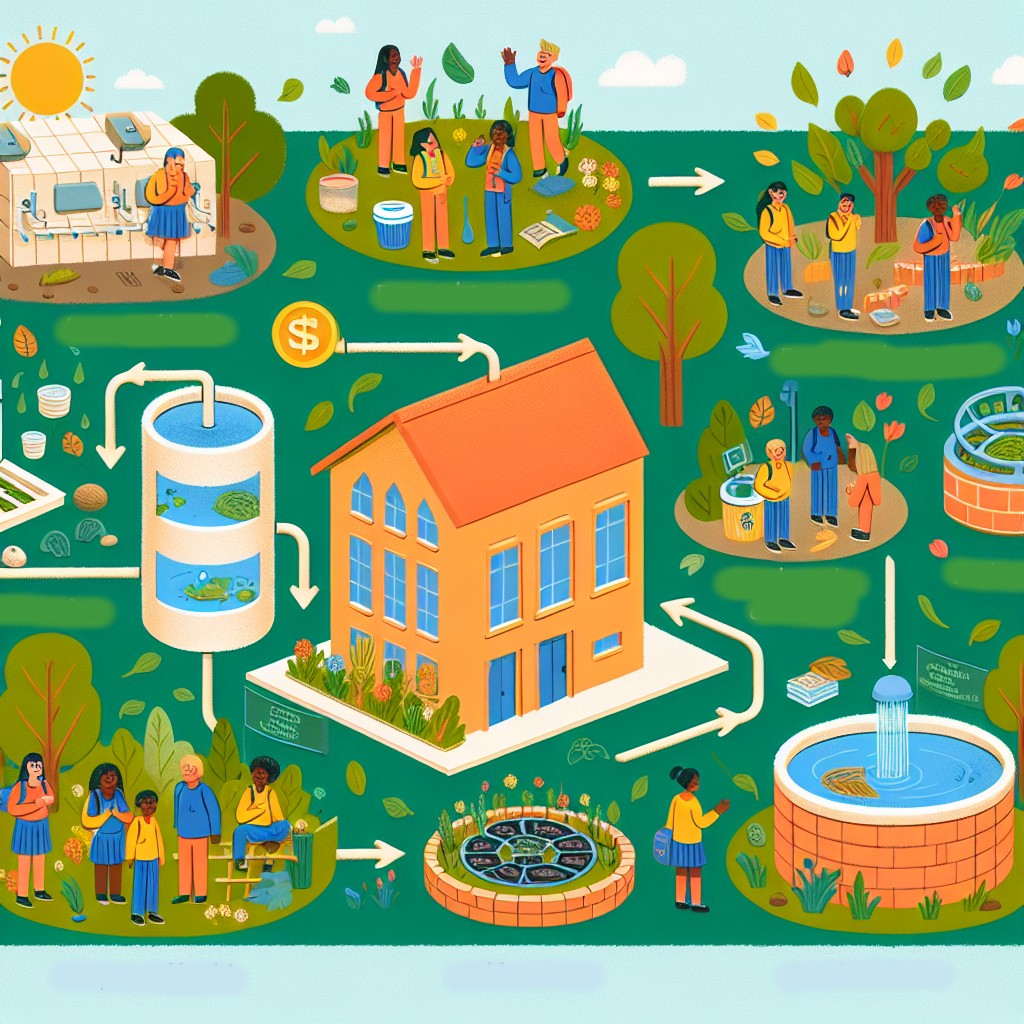
Ecological sanitation, commonly known as EcoSan, is increasingly becoming a buzzword in both environmental and public health sectors. The concept refers to a sustainable approach to sanitation which advocates for the safe recycling of human waste into resources that can be used in agriculture. This not only addresses the critical need for enhancing sanitation but also plays a role in combating soil degradation and promoting organic farming. While the idea of EcoSan sounds revolutionary and beneficial, effective implementation needs careful strategic planning and capacity building for the practitioners involved. This article delves into the significance of training and capacity building activities, ensuring that EcoSan initiatives are implemented successfully and sustainably.
EcoSan initiatives are designed to break down the traditional barriers between humans and ecosystems, promoting a cyclical use of resources. By converting waste into compost and other valuable materials, EcoSan addresses multiple issues such as reducing pollution, minimizing water usage, and enhancing agricultural productivity. However, no matter how sound a concept may be, its success heavily hinges on the people involved in its execution. Adequate training and capacity building thus form the backbone of any successful EcoSan project. Practitioners need the requisite knowledge, skills, and attitudes to implement EcoSan systems effectively, considering both technical and cultural aspects.
This article is structured to provide comprehensive insights into crucial elements of EcoSan training and capacity building. Key sections will discuss stakeholder engagement, educational modules, practical training, monitoring and evaluation, and the sustainability of capacity-building efforts. Engaging these elements thoroughly ensures a coherent, holistic approach to implementing EcoSan initiatives.
Engaging Stakeholders
The first step towards fostering effective EcoSan practitioners is engaging relevant stakeholders. Stakeholders can range from local communities, governmental agencies, non-governmental organizations (NGOs), to international agencies and private sector participants. For a training program to be successful, it is imperative to identify who these stakeholders are and understand their roles.
Community members often bear the brunt of poor sanitation practices, hence they stand to benefit the most from EcoSan initiatives. Conducting initial sessions with community representatives can help identify their specific needs, concerns, and the cultural dynamics that influence sanitation practices. Equally important are the policymakers and regulators whose endorsement can make or break the initiative. Gaining their support through workshops and advocacy is vital.
NGOs, often being the implementers of EcoSan projects, require tailored training that aligns with their operational capabilities. International organizations bring the added advantage of global expertise and can offer advanced training modules that build upon local practices. Private sector involvement can be sought for funding and technological innovation. A well-rounded training initiative should therefore address the diverse needs and capabilities of all these stakeholders.
Educational Modules
Developing a robust educational module forms the foundation of an effective training program. These modules should be comprehensive yet adaptable, considering the varied learning capacities among different groups. The educational material should start with the basics of sanitation and gradually introduce the principles of ecological sanitation.
One of the first things practitioners need to understand is the science behind human waste as a resource. This encompasses understanding nutrient cycles, composting processes, and the biological breakdown of organic matter. It is essential to employ simple language and clear visuals to elucidate these concepts for non-technical audiences.
Moreover, modules must also address the socio-cultural implications of EcoSan. Not all communities might be immediately receptive to the idea of recycling human waste, so it’s crucial to include sessions on changing perceptions and dispelling myths. Modules that highlight case studies of successful EcoSan implementations can serve as powerful motivational tools. Incorporating local success stories makes the content relatable and fosters a sense of possibility among trainees.
Practical Training
While theoretical knowledge is necessary, practical training is where the rubber meets the road. Hands-on sessions allow trainees to apply what they’ve learned in real-world scenarios. Practical training usually involves field trips to existing EcoSan sites, live demonstrations of composting toilets, and interactive workshops on waste management.
Field visits are particularly useful as they provide a tangible context to the theoretical knowledge. Seeing an operational EcoSan system in action helps demystify the concept and provides a model that trainees can aim to replicate. During these visits, trainees should be encouraged to interact with the people managing and using the system, facilitating a two-way learning process.
Workshops that employ role-playing exercises can be particularly beneficial. Trainees could, for example, simulate community meetings to practice how they would introduce the concept of EcoSan to skeptical community members. These exercises build confidence and hone communication skills, preparing trainees for the real interactions they will subsequently face.
Monitoring and Evaluation
A training program is incomplete without a robust monitoring and evaluation (M&E) framework. M&E serves multiple purposes: it determines the effectiveness of the training modules, identifies gaps, and provides insights for future improvements. A comprehensive M&E strategy involves both formative and summative evaluations.
Formative evaluations are conducted during the training program to gather immediate feedback from participants. This could be through quick surveys, focus group discussions, or individual interviews. Such evaluations help trainers make real-time adjustments to meet the needs of the trainees better.
Summative evaluations are conducted at the end of the training program to assess the overall effectiveness. Tools for summative assessments can include post-training tests, observation of practical tasks, and feedback from stakeholders. Additionally, long-term follow-ups with practitioners can offer insights into how well they are implementing what they’ve learned. This ongoing interaction helps ensure that the training effects are not transient but result in lasting competence.
Sustainability of Training Efforts
The long-term success of EcoSan initiatives heavily depends on the sustainability of training efforts. This calls for a continuous cycle of learning and adaptation. One effective approach is creating a “train the trainer” model. In this model, a core group of practitioners undergoes advanced training and then takes on the role of trainers for the broader community. This cascade effect not only multiplies the reach of training efforts but also fosters a local sense of ownership and sustainability.
Another key factor is the creation of peer networks. Facilitating a platform where EcoSan practitioners can share their experiences, challenges, and solutions can be invaluable. Such networks can be supported through regular online meetups, forums, and newsletters. Ongoing support from local and international agencies can also significantly bolster these networks.
Furthermore, incorporating EcoSan training into formal educational curricula can provide a steady stream of well-informed practitioners. Collaborations with educational institutions to offer diploma or certificate courses in ecological sanitation ensure a consistent quality of training and keep the workforce updated with the latest advancements in the field.
Conclusion
Training and capacity building for EcoSan practitioners is a multifaceted endeavor requiring careful planning and execution. From engaging stakeholders to developing effective educational modules, and from hands-on practical training to rigorous monitoring and evaluation, each element plays a crucial role in ensuring the successful implementation of EcoSan initiatives.
One of the key takeaways is the importance of a holistic approach that considers both the technical and socio-cultural aspects of ecological sanitation. Practitioners need to be equipped not just with technical know-how but also with the skills to engage communities and stakeholders effectively. This ensures that EcoSan systems are not just implemented but are also embraced and sustained by the communities that use them.
The journey of implementing EcoSan systems is ongoing. As challenges and opportunities evolve, so must the training and capacity-building strategies. By fostering a culture of continuous learning and adaptability, EcoSan initiatives can achieve their ultimate goal of creating sustainable, resilient communities that live in harmony with their natural environment.
Through dedicated training and capacity building, we can create a cadre of skilled EcoSan practitioners who are not just implementers but champions of a sustainable future. Their expertise and commitment can pave the way for widespread acceptance and success of ecological sanitation, bringing us closer to a world where human waste is no longer a problem but a valuable resource.