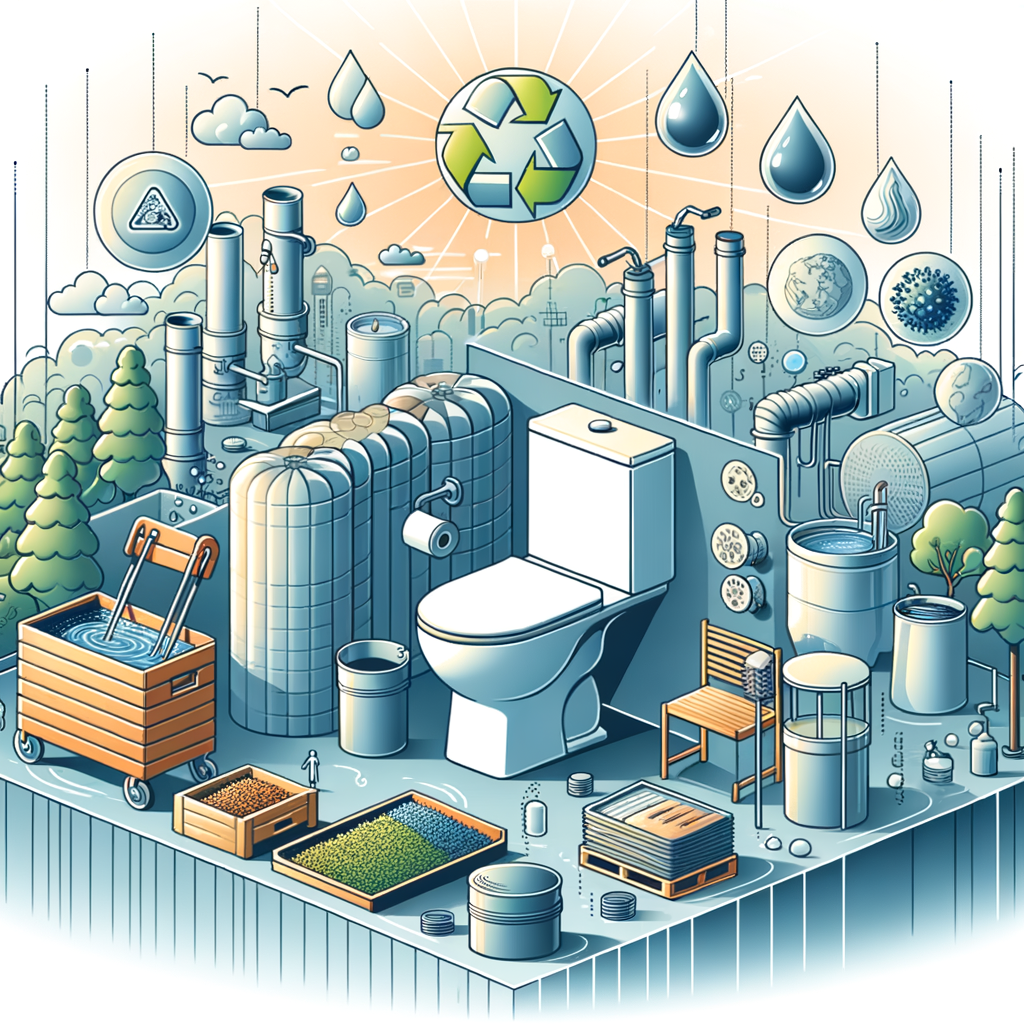
In an age where environmental sustainability and public health are pivotal to the wellbeing of communities worldwide, EcoSan, or ecological sanitation, emerges as a transformative approach. EcoSan is a modern sanitation technique designed not only to treat human waste but also to recycle it into valuable resources like nutrient-rich compost. This system particularly garners attention due to its innovative integration of ecological processes in addressing critical issues of waste management. These issues include minimizing water usage, preventing contamination, and recycling nutrients back into the environment—thereby creating a closed-loop system. By decentralizing waste treatment, it addresses several shortcomings of traditional sanitation methods, notably in areas grappling with water scarcity and inadequate sanitation infrastructures. This approach is a beacon of hope in tackling the sanitation crisis, especially in developing countries. As we delve into the impact of EcoSan on public health and hygiene, we’ll explore the profound implications of its adoption on global sanitation strategies, human health, and the environment. With a growing world population exerting pressure on natural resources, EcoSan positions itself as an indispensable tool. Its perspective aligns with the sustainable development goals outlined by international organizations. However, understanding its potential and actual impact requires a detailed examination of its practical applications and outcomes. These insights will underscore EcoSan’s pivotal role in enhancing hygiene and public health, setting the stage for a healthier, more sustainable future. Developing a comprehensive awareness of its components, mechanisms, and benefits is the first step towards embracing this pioneering approach. Through this article, we aim to share not only the functionality but also the widespread benefits of EcoSan systems, advocating for its broader implementation.
Overview of EcoSan Systems
EcoSan systems embody a fundamental shift in how humanity perceives and handles sanitation. Unlike conventional systems that often focus on waste elimination, EcoSan prioritizes nutrient recovery and water conservation. At the heart of these systems are ecological processes designed to treat human waste through natural cycles of decomposition and nutrient recycling. They function effectively by segregating urine and feces at the source, addressing pollution and contamination from the get-go. Urine, which is rich in nitrogen and phosphorus, can be collected and processed separately as a powerful fertilizer. Feces, meanwhile, undergo composting to become pathogen-free organic material suitable for agricultural use. By utilizing dry sanitation methods and local treatment facilities, EcoSan circumvents the need for massive water and infrastructural investments typical of sewer systems. Most importantly, these systems can be tailored to fit the geographical and socio-economic contours of their locale, making them versatile and adaptable solutions. The materials and technology involved are often affordable, ensuring easy implementation in different regions, be they urban or rural.
Impact on Public Health
The correlation between sanitation and public health is well-documented. The majority of diseases in poorer regions bloom from inadequate sanitation facilities which lead to water contamination and direct pathogen transmission. In fact, lack of sanitation touches all areas of life by impacting nutrition, mental health, and community wellbeing. EcoSan offers a preventive solution to these prevalent public health challenges. By processing waste through methods that focus on pathogen containment and nutrient recovery, EcoSan ensures that human waste is transformed into a non-threatening resource rather than a public hazard. This effectively reduces incidence rates of waterborne diseases and gastrointestinal infections, prominent culprits of health crises in poverty-stricken areas. Beyond direct health benefits, EcoSan systems facilitate greater public awareness concerning hygiene practices, encouraging communities to develop healthier habits. The knowledge and behavior changes cultivated through EcoSan adoption ripple out to improve other hygiene aspects. As communities experience better health outcomes, the indirect benefits include reduced medical costs and improved quality of life.
Reduction in Water Usage
Global freshwater resources are under ever-increasing pressure. As populations grow, water becomes a scarcer commodity, necessitating strategies that maximize efficiency and conservation. EcoSan stands out by dramatically reducing the amount of water needed for sanitation. Traditional sanitation systems depend heavily on large volumes of water to transport waste, a luxury not available to many communities. EcoSan’s dry and semi-dry technologies operate independently of water-intensive practices, leveraging biological and chemical processes to safely treat waste. This reduction in water usage translates to more available water for drinking, agriculture, and other crucial activities. The implications are enormous, especially in arid regions where every drop is a battle against scarcity. By realigning sanitation priorities with environmental realities, ecological sanitation not only aids communities in crisis but also sets a precedent for sustainable water management globally.
Environmental Benefits
Environmental conservation is integrally linked to the success of any sustainable sanitation initiative. EcoSan is exceptional in that it delivers measurable environmental benefits alongside improved health outcomes. By recycling nutrients, it plays a vital role in soil rejuvenation and agricultural productivity, offering a powerful counterpoint to chemical fertilizers. The reintegration of nutrients bolsters crop yields and enhances food security. Furthermore, EcoSan systems mitigate pollution risks by minimizing backflows into natural water bodies, which are common in inadequately maintained sewerage systems. This benefit extends to flourishing biodiverse ecosystems, emphasizing healthy water cycles and sustaining aquatic life. By diverting waste from traditional disposal pathways, EcoSan also reduces greenhouse gas emissions associated with wastewater treatment plants. More broadly, the embrace of EcoSan can have profound ecological impacts by promoting a circular economy lens in community planning efforts.
Case Studies: Successes and Challenges
Looking at successful EcoSan implementations provides valuable insights and reinforces its potential against various cultural and ecological backdrops. In Sweden, for instance, robust public support for ecological sanitation has led to innovations in dry toilet technology and nutrient recovery, setting standards adopted worldwide. Likewise, in parts of Sub-Saharan Africa and India, EcoSan has delivered significant improvements in health outcomes and agricultural efficiency. However, the path to successful implementation is not without challenges. Societal acceptance often poses a hurdle, driven by cultural stigmas or lack of awareness. Infrastructure and policy support can also fluctuate, affecting long-term system sustainability. Nonetheless, growing global commitment and clear policy directives can diffuse challenges by building community trust and integrating education initiatives to change perceptions. Wider dissemination of information detailing successful stories and benefits can universally encourage accepting and adapting EcoSan.
Practical Applications and Innovations
Innovations in EcoSan technology continue to evolve, integrating digital tools and renewable energy sources to enhance efficiency and user friendliness. Smart EcoSan toilets equipped with sensor technologies ensure optimal operation, overcoming fears of malfunction—a common deterrent to adoption. Small, solar-powered treatment plants represent another advancement, capable of processing waste onsite and benefiting energy-scarce communities. These developments amplify EcoSan’s appeal, offering not only increased feasibility but also enhanced adaptability to various climates and regions. From grassroots level implementations to national policies, EcoSan models are increasingly finding favor as standard bearers for modern sanitation needs. Collectively, these innovations light the path towards a healthier and more sustainable world.
Future Outlook and Global Adoption
EcoSan sits at the forefront of a needed transformation in global sanitation policies. The international spotlight recognizing the United Nations’ Sustainable Development Goals has propelled EcoSan as a viable solution for closing sanitation gaps. Further embracing and integrating EcoSan approaches can redefine urban planning, encourage rural revitalization, and foster global health beyond superficial improvements. Regional developments, in high-demand there now owing to success stories, drive optimism towards larger-scale adoption of EcoSan systems. The pace of change can accelerate through collaborative efforts involving public education, robust policy frameworks, and reliable funding mechanisms supported by international aid and private sector investment. As societal behaviors adjust, EcoSan’s pervasive potential to reach all corners of the globe represents not only a sanitation evolution but a profound cultural shift towards environmental stewardship and holistic public health management.
Conclusion
In conclusion, EcoSan shines as an essential player in redefining sanitation infrastructure—a nexus linking public health, environmental quality, and resource conservation. Its contribution mirrors an ecosystem approach to handling waste, championing a sustainable trajectory amid growing global challenges. By addressing immediate health risks and reinforcing ecological and economic stability, EcoSan simultaneously attacks root problems and provides sustainable solutions. As communities witness improved health markers and environmental restoration, the case for wider implementation becomes compellingly clear. Despite challenges, involving education, social trust fortification, and technological support lays the groundwork for EcoSan’s widespread embrace. Crucially, EcoSan embodies a paradigmatic shift that encourages reevaluation of conventional sanitation—one that aligns with global environmental and sustainable development goals, spurs economic productivity through resource recovery, and improves public hygienic practices on a grand scale. Adoption signals a promising departure from outdated practices to resilient, regenerative communities. As authorities and stakeholders rally to the cry of innovative solutions, EcoSan’s transformative impact could signal a promising sanitation renaissance that ensures healthier, thriving human societies while nurturing the planet’s natural systems. The holistic fusion of sanitation, resource management, and environmental stewardship places EcoSan as a pivotal strategy in fortifying the future of humanity and the planet.
Frequently Asked Questions
1. What exactly is EcoSan, and how does it function?
EcoSan, short for ecological sanitation, is an innovative and sustainable approach to waste management that focuses on treating human waste and converting it into valuable resources. Unlike traditional sanitation systems that often simply dispose of waste, EcoSan systems focus on recycling and reuse. At its core, EcoSan involves the collection of human waste in a way that allows for its safe decomposition and transformation into nutrient-rich compost. This process creates a closed-loop system where waste is not merely seen as a byproduct but as a potential resource.
The functioning of an EcoSan system starts with dry or low-water toilets that separate urine and feces. The separated waste is then processed through composting or other biological treatments to eliminate pathogens. This produces safe, nutrient-rich end-products like compost and biogas, which can be used for agriculture or as a renewable energy source. By relying on natural biological processes, EcoSan systems contribute to sustainability by reducing the environmental impact of waste disposal and promoting the recycling of nutrients back into the ecosystem.
2. How does EcoSan impact public health?
EcoSan systems can significantly improve public health through various mechanisms. Traditional waste disposal systems often lead to the contamination of water sources, especially in areas with inadequate infrastructure. This contamination can cause numerous waterborne diseases, which pose a major public health risk. EcoSan addresses this issue by offering a more controlled containment and treatment of waste, reducing the risk of contamination of drinking water and the spread of infectious diseases.
Moreover, the nutrient-rich compost produced by EcoSan can facilitate agricultural productivity and food security. By improving soil quality, this compost helps enhance the nutritional value of crops, contributing indirectly to better community health. Furthermore, EcoSan systems empower communities through education and participation in sustainable practices, fostering a healthier environment and enhancing the overall quality of life.
3. How does EcoSan contribute to environmental sustainability?
EcoSan systems are pivotal in promoting environmental sustainability due to their resource efficiency and waste reduction capabilities. One of the key components of EcoSan is its commitment to turning human waste into a resource rather than a problem. This transformation supports a circular economy where waste is recycled and reused rather than simply discarded.
The process of composting and biological treatment in EcoSan not only recycles nutrients into agriculture but also reduces the need for chemical fertilizers, lowering the environmental impact of farming practices. By minimizing water usage through dry sanitation solutions, EcoSan lessens the strain on natural water resources and decreases the energy required for water processing and sewage treatment.
Additionally, EcoSan systems can mitigate greenhouse gas emissions by capturing methane from waste to produce biogas, a renewable energy source. Overall, these systems help decrease the negative environmental impacts of traditional waste disposal methods, supporting broader sustainability goals.
4. What are the challenges associated with implementing EcoSan systems?
While EcoSan offers numerous benefits, its implementation is not without challenges. Cultural acceptance and behavioral change are significant hurdles. Many communities have ingrained sanitation practices, and introducing new systems requires careful planning and community involvement to ensure acceptance and proper utilization. Education and awareness-raising are crucial to overcoming these obstacles and demonstrating the health and ecological benefits of EcoSan.
Another challenge is the initial cost of installing EcoSan infrastructure. Even though these systems can lead to long-term savings and benefits, the upfront investment can be prohibitive for some communities, particularly those in developing regions. Securing funding and implementing cost-effective solutions are vital for widespread adoption.
Lastly, there are technical challenges in designing EcoSan systems that are suitable for diverse climatic conditions, population densities, and available resources. Customization and adaptability are important factors in ensuring that these systems meet the specific needs of each community while maintaining efficiency and effectiveness.
5. Can EcoSan be integrated with other public health initiatives?
Yes, EcoSan systems can be effectively integrated with a variety of public health initiatives to create a holistic approach to community well-being. For example, EcoSan can complement water, sanitation, and hygiene (WASH) programs by improving sanitary conditions and reducing pollution in water sources. By safely managing and recycling waste, EcoSan supports better hygiene practices, reducing the incidence of diseases linked to poor sanitation.
Additionally, EcoSan can align with agricultural programs focused on sustainable farming and food security. By providing nutrient-rich compost, EcoSan aids in improving soil fertility and crop yields, directly impacting nutrition and food availability. This integration can boost local economies and support health improvements by increasing access to healthy food options.
Furthermore, EcoSan can play a role in climate change adaptation and mitigation strategies by promoting the use of renewable resources and reducing dependency on fossil fuels. As communities adopt EcoSan systems, they can contribute to broader environmental protection efforts, aligning with global initiatives aimed at sustainability and resilience in the face of climate challenges.