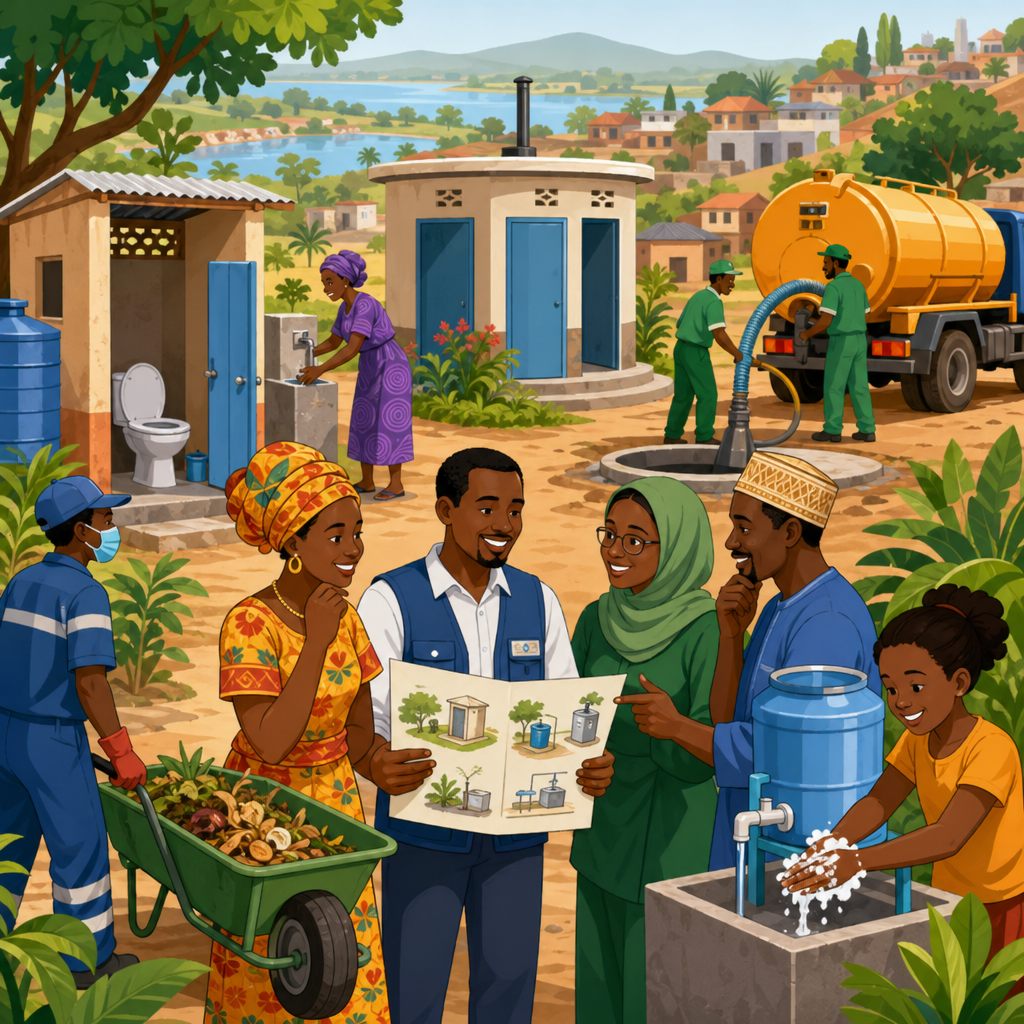
The global need for sustainable sanitation solutions has never been more pressing. With increasing populations and limited resources, especially in remote areas, the demand for efficient and eco-friendly sanitation systems is on the rise. Ecological Sanitation (EcoSan) is one answer, representing a paradigm shift from traditional waste management systems. This innovative approach not only addresses the sanitation needs but also aims to recycle nutrients and improve environmental outcomes. The challenge, however, is implementing EcoSan in remote and challenging environments where resources are scarce, infrastructure is lacking, and cultural practices vary widely. In this exploration, we examine case studies from such regions to illustrate the practicalities and challenges of adopting EcoSan solutions. By examining these real-world applications, we gain insight into how EcoSan can be effectively utilized to promote health and sustainability in communities that need it the most.
EcoSan seeks to go beyond the simple disposal of human waste, transforming waste into resources that benefit people and the environment. This is crucial in areas where access to water and sanitation is severely limited. Many remote areas face challenges like harsh climates, isolation, and limited resources. Here, EcoSan serves as a beacon of hope. It employs methods that use minimal water, often reusing and recycling resources. As we delve into multiple case studies, the adaptability of EcoSan is put to the test in diverse geographical and cultural contexts. By understanding the intricacies of implementing EcoSan in these locales, stakeholders can better tailor solutions to fit specific needs, ultimately improving community health and sustainability outcomes.
The following sections highlight case studies from various remote areas worldwide. Each example provides insight into the unique challenges faced in implementing EcoSan solutions, innovative strategies employed to overcome these challenges, and the successes and lessons learned from these implementations. These narratives not only showcase the potential for EcoSan but also offer a template for replication in similar contexts worldwide. Understanding these dynamics is crucial for scaling and adapting EcoSan solutions globally, ensuring that even the most remote communities have access to safe and sustainable sanitation.
Case Studies: EcoSan Implementation in Remote Areas
Case Study 1: The Himalayan Highlands
In the sparsely populated regions of the Himalayan highlands, communities face extreme climatic conditions with snow and freezing temperatures for a better part of the year. Traditional latrines often become ineffective amidst such weather constraints. Here, an innovative EcoSan approach using urine-diverting dry toilets (UDDTs) has taken root. The UDDTs operate effectively by separating urine and feces. In this cold climate, the absence of water in EcoSan toilets prevents freezing, a common issue with typical water-based sanitation methods.
The implementation process involved intensive community engagement and educational workshops to demonstrate the benefits and functionality of UDDTs. Locals were trained in the construction and maintenance of these systems, empowering them with skills and ownership of the solutions. Additionally, the resultant sanitized human waste contributes to local agriculture. Compost from these toilets, high in nutrients, is applied to soil, boosting agricultural productivity in otherwise barren terrains. Despite challenges such as initial skepticism and the remoteness limiting material transportation, this case underscores the efficacy of EcoSan in harsh environments.
Case Study 2: Amazon Rainforest Settlements
Deep within the Amazon Rainforest, settlements often lack basic infrastructure, with impassable terrains and dense forests posing significant logistical challenges. Here, a collaborative initiative introduced EcoSan systems with a focus on resource recovery and minimal environmental impact. Instead of conventional septic systems that are unsuited for the rainforest’s saturated soil, composting toilets designed for these settings provided an alternative.
Given the ecological importance of the Amazon, this EcoSan model emphasized harmonizing with the surrounding environment. The ecological footprint of sanitation programs was minimized by using locally sourced materials for toilet construction and incorporating traditional knowledge into the implementation strategy. The toilets produce compost that is integrated back into the ecosystem, enhancing soil quality and vegetation. By engaging with indigenous communities, implementers gained crucial insights into sustainable practices, ensuring that the solutions were culturally sensitive and embraced by locals. This initiative faced challenges like navigating delicate ecological balances and transporting materials, yet succeeded in demonstrating the adaptability of EcoSan in lush, remote ecosystems.
Case Study 3: Arid African Villages
In drought-stricken areas of sub-Saharan Africa, where water scarcity defines daily life, EcoSan represents a pivotal development. The introduction of solar-powered dehydration toilets was a game-changing adaptation of EcoSan principles. These toilets use solar energy to dry fecal matter, preventing the spread of pathogens and producing a safe, manageable fertilizer. This represents a critical advantage in regions where water is more valuable than gold.
The adoption of these systems was facilitated by partnerships with local leaders and capacity-building programs aimed at educating communities about the health benefits and agricultural possibilities of processed waste. The dried output, rich in nutrients, is subsequently used to rejuvenate soils battered by drought and cultivation, enhancing food security in these villages. However, the project was not without hurdles, with the high costs and technical maintenance of solar equipment being significant concerns. Solutions included leveraging local craftsmanship and using affordable, sustainable materials to maintain the toilets, making EcoSan an economically viable venture in these communities.
Case Study 4: Polynesian Islands
The dispersed islands in Polynesia face unique challenges, with isolation and space constraints limiting traditional sanitation infrastructure. EcoSan systems implemented here are adapted to operate independently without reliance on centralized water or sewage systems. Dry toilets and biodigesters were introduced to convert human waste into biogas, which is then used for cooking and lighting.
This integration of EcoSan has reduced the islands’ dependence on imported fossil fuels, thus decreasing living costs and environmental impact. The closed-loop system finds favor with communities who value sustainability and independence. Workshops and community discussions facilitated an understanding of these systems, addressing initial resistance due to unfamiliarity with the technology. The project highlighted the importance of continuous education and community involvement for EcoSan success. Logistics posed significant challenges, from transporting materials between islands to sourcing technicians for maintenance, yet the adaptability of EcoSan proved resilient in overcoming these barriers.
Conclusion
The application of EcoSan in challenging and remote environments, as seen in these diverse case studies, demonstrates the potential and versatility of ecological sanitation solutions. Each case presents a unique environment requiring tailored sanitation systems, stressing the importance of understanding local context — socially, culturally, and environmentally. These examples illustrate the transformative potential of EcoSan, not merely as sanitation infrastructure but as an integral component of community health, economic stability, and environmental sustainability.
The Himalayan highlands leveraged urine-diverting dry toilets to combat freezing climate conditions. In contrast, the Amazon settlements adapted composting toilets respectful of ecological integrity. The arid African villages utilized solar-powered dehydration toilets that address extreme water shortages. Polynesian Islands ingeniously utilized biodigesters to create a self-sufficient energy source. These implementations underscore the necessity for collaboration with local communities, empowering them to sustain these practices independently. This empowerment is essential for the longevity and success of EcoSan systems, ensuring communities not only benefit immediately but also continue to thrive sustainably over time.
These case studies provide invaluable lessons for future EcoSan initiatives. Consistent themes emerge: the crucial role of cultural sensitivity, community education, and local resource utilization. However, the success of these endeavors also hinges on flexibility and innovation, adapting EcoSan technologies to meet diverse regional challenges. As global interest in sustainable sanitation grows, these case studies are guiding templates for the successful adaptation and implementation of EcoSan in similar remote environments worldwide. Investing in and scaling EcoSan technologies promises enhanced global health, environmental protection, and dignity through access to safe sanitation for all, delivering profoundly positive impacts on human development and ecological conservation.
Frequently Asked Questions
1. What is Ecological Sanitation (EcoSan) and why is it considered a sustainable solution for remote areas?
Ecological Sanitation, commonly referred to as EcoSan, is an innovative approach to sanitation that emphasizes the sustainable management of human waste. Unlike conventional systems, EcoSan focuses on recycling nutrients back into the environment. This approach is crucial for remote areas where resources are limited and conventional waste management infrastructures may not be feasible.
The primary objective of EcoSan is to treat human excreta as a valuable resource rather than waste. This system capitalizes on the nutrient content of human waste, converting it into safe fertilizers and soil conditioners which can be used to enhance agricultural productivity. By doing so, it supports local food production, reduces reliance on chemical fertilizers, and contributes to a closed-loop system that minimizes environmental impact.
EcoSan systems are particularly beneficial in remote areas due to their adaptability and efficiency. They do not require complex infrastructure, making them cost-effective and suitable for regions with challenging terrains and limited access to resources. By addressing sanitation needs while fostering environmental sustainability, EcoSan offers a viable and responsible solution for developing communities worldwide.
2. How does EcoSan differ from traditional sanitation methods?
EcoSan stands out from traditional sanitation systems primarily due to its unique approach to the treatment and disposal of human waste. Traditional sanitation methods, such as flush toilets and septic tanks, usually involve the use of water to transport waste, which can lead to numerous environmental issues, including water pollution and the depletion of valuable water resources.
In contrast, EcoSan takes a dry or minimal-water approach, focusing on the ecological treatment and reuse of excreta. Instead of flushing waste away, EcoSan systems typically avoid water altogether or use it sparingly. Processes such as dehydration, composting, or anaerobic digestion are employed to sanitize and convert excreta into nutrient-rich products that can be safely returned to the soil.
EcoSan systems are also designed to close the nutrient loop, conserving and recycling essential nutrients like nitrogen, phosphorus, and potassium found in human waste. By doing so, they reduce dependency on synthetic fertilizers and alleviate pressure on natural water bodies typically impacted by wastewater discharge from traditional systems.
3. What are some of the challenges faced in implementing EcoSan systems in remote areas?
Implementing EcoSan systems in remote areas comes with its unique set of challenges. Geographic isolation, limited access to resources, and inadequate infrastructure are common barriers that need to be addressed for successful deployment.
Additionally, cultural perceptions and resistance to change can significantly influence the acceptance of these systems. Communities accustomed to traditional sanitation methods may initially be hesitant to adopt EcoSan due to lack of awareness or perceived inconveniences associated with non-water-based systems.
Another challenge is the technical expertise required to design and maintain EcoSan systems. Training local communities and ensuring proper installation and upkeep is critical for the longevity and effectiveness of these systems. The integration of EcoSan into existing community practices and its alignment with local agricultural activities is necessary to ensure sustainability and maximize benefits.
Despite these challenges, with proper education, community involvement, and support from local governments or NGOs, EcoSan can be effectively implemented even in the most challenging environments, transforming potential hurdles into opportunities for environmental improvement and public health advancement.
4. Can you provide some successful case studies of EcoSan in remote environments?
There are numerous successful case studies of EcoSan implementation in remote environments, showcasing the adaptability and impact of this sanitation approach. One notable example is found in the dry regions of Ethiopia, where EcoSan has transformed the lives of local communities by providing sustainable sanitation solutions along with agricultural benefits.
These communities adopted urine-diverting dry toilets, which effectively separate liquid and solid waste. The collected urine, rich in nitrogen and phosphorus, is used to fertilize crops, while the composted solids enhance soil quality. This has not only improved sanitation conditions but also boosted food security and agricultural productivity.
Another inspiring case can be seen in rural areas of Bolivia, where EcoSan systems have been integrated into local agricultural practices. By collaborating with local farmers, the initiative has helped reduce waste, improve soil fertility, and provide a cost-effective fertilizer alternative. This synergy between sanitation and agriculture has led to improved livelihoods and environmental conservation.
Additionally, in the Pacific Island nations, EcoSan has played a significant role in protecting water resources and enhancing resilience to the impacts of climate change. The implementation of composting toilets has reduced dependency on limited freshwater supplies, protecting fragile ecosystems and supporting sustainable development.
5. What is the role of community involvement in the success of EcoSan programs?
Community involvement is a cornerstone of successful EcoSan programs, as local engagement and acceptance are crucial for sustainability and effectiveness. It begins with raising awareness about the environmental and health benefits of EcoSan systems and addressing any misconceptions about these alternative sanitation solutions.
Community participation is essential in the design and implementation phases, ensuring that the systems are culturally acceptable, user-friendly, and well-integrated into local customs and practices. Involvement also fosters a sense of ownership and responsibility, encouraging long-term maintenance and management of the systems.
Training and capacity-building activities are vital in empowering community members to operate and maintain EcoSan solutions efficiently. Local champions and leaders play a pivotal role in advocating for EcoSan and spreading knowledge about its benefits, helping to overcome resistance and secure widespread adoption.
Moreover, community-driven EcoSan projects have the potential to create economic opportunities, as the products generated from these systems, like compost and fertilizers, can be commercialized or utilized to improve local agriculture. By placing communities at the helm of EcoSan programs, the likelihood of achieving sustainable and lasting change increases, resulting in improved sanitation, better public health outcomes, and enhanced environmental sustainability.