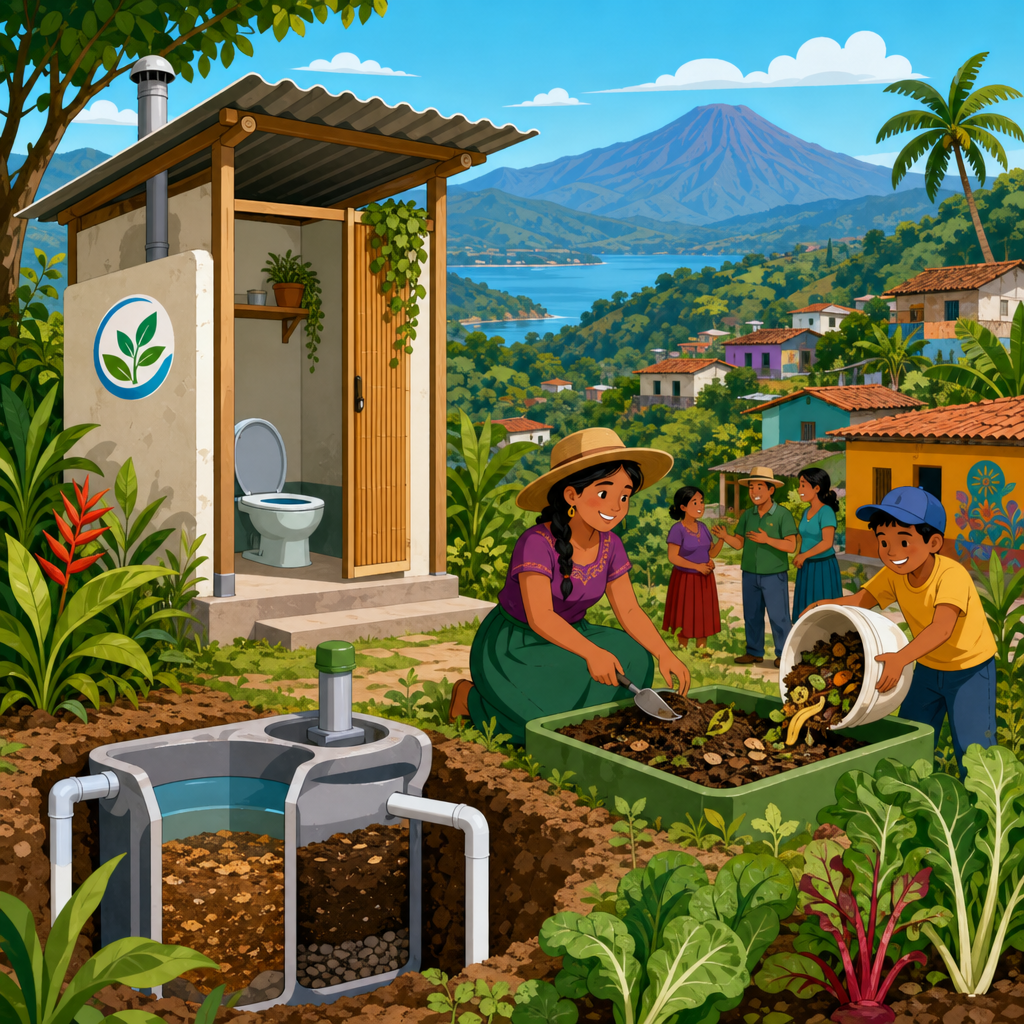
Customizing EcoSan solutions to local needs and conditions is the difference between a sanitation project that is briefly installed and one that becomes a durable public health asset. EcoSan, short for ecological sanitation, treats human waste as a resource stream that can be safely managed, transformed, and reused rather than simply discarded. In practice, that can mean urine-diverting dry toilets, composting toilets, container-based collection, decentralized treatment, or systems that recover nutrients, water, and energy. I have seen projects with identical hardware produce opposite outcomes because the local context was handled differently: one community accepted the service because the design matched farming practices, water scarcity, and cultural norms, while another abandoned it because the toilet interface, maintenance burden, and reuse model did not fit daily life. That is why this hub on diverse EcoSan success stories matters. It connects case-based lessons across climates, income levels, settlement types, and governance models so planners, NGOs, utilities, architects, and local leaders can adapt proven approaches rather than copy them blindly.
Customization starts with clear definitions. Local needs include household preferences, land tenure, agricultural demand, affordability, disability access, gender safety, service expectations, and institutional capacity. Local conditions include soil type, groundwater depth, rainfall, flood risk, temperature, housing density, road access, electricity reliability, and the legal status of resource recovery products. Success in ecological sanitation is not only toilet adoption. It also means pathogen reduction, safe emptying, reliable collection or treatment, financially viable operations, user satisfaction, and measurable environmental benefit such as reduced water use or nutrient recycling. The most credible EcoSan success stories show performance across the full sanitation chain, from containment to reuse or final disposal. They also reveal tradeoffs. Dry systems can save water but demand disciplined operation. Reuse can improve soil fertility but requires regulatory clarity and behavior change. Understanding those realities helps readers navigate the related case studies linked from this hub and identify which model is most transferable to their own setting.
Why local context determines whether EcoSan works
Every sanitation technology embeds assumptions about user behavior, climate, logistics, and economics. When those assumptions match reality, the system feels intuitive. When they do not, breakdown appears quickly. In peri-urban settlements with high water tables, for example, conventional pits can contaminate groundwater or fill rapidly. A urine-diverting dry toilet or sealed container-based system may perform better because it separates liquids, reduces infiltration risk, and allows above-ground or shallow installation. In contrast, in a cool, humid mountain region, dehydration and composting can be slower, so storage time, ventilation, and secondary treatment must be adjusted. I have repeatedly found that project teams overfocus on the superstructure and underinvest in understanding operations: who empties, who transports, who buys the reuse product, and what happens in the rainy season. The case studies under this subtopic consistently show that sanitation is a service system, not a single product.
Local context also shapes acceptance. In farming communities, nutrient recovery can be a practical selling point if agronomic guidance is credible and the fertilizer value is visible in crop performance. In dense informal settlements, households may care less about reuse and more about odor control, privacy, safety at night, and monthly service reliability. Gender and age matter too. Women often judge a toilet by menstrual hygiene management, lighting, cleanliness, and whether children can use it safely. Older adults may prioritize seat height, balance support, and short walking distance. The strongest EcoSan success stories begin with this granular understanding, then adapt the interface, service model, and messaging accordingly.
Lessons from diverse EcoSan success stories across settings
Looking across established examples reveals patterns that are more valuable than any single technology brand. In rural East Africa, urine-diverting dry toilets have succeeded where extension workers linked sanitation to soil fertility and trained households on ash use, vault rotation, and crop application timing. The benefit was concrete: lower spending on mineral fertilizer and improved yields for vegetables, bananas, or maize in nutrient-poor soils. In South Africa, urine diversion programs demonstrated both promise and limits. Municipal rollout achieved broad installation, yet long-term use varied because maintenance support, user training, and product design quality were inconsistent. The lesson is not that urine diversion fails; it is that scaling hardware without ongoing service and community engagement weakens results.
In peri-urban Haiti and parts of Kenya, container-based sanitation has shown that EcoSan can work in dense neighborhoods where pits are impractical and sewers are unaffordable. Sealed containers, frequent collection, and off-site thermophilic composting reduce exposure during emptying and make service quality easier to standardize. The success factor was operational discipline: route planning, subscription management, quality control at treatment sites, and customer support. In Sweden and Germany, source-separating systems have been used in eco-villages and decentralized developments where planners could integrate urine storage tanks, greywater treatment, and agricultural partnerships from the start. These cases show how policy support, technical supervision, and clear reuse pathways strengthen long-term performance. Across all regions, success came from matching the sanitation chain to local geography, market demand, and institutional capability, not from insisting on a universal blueprint.
| Setting | Typical constraint | EcoSan adaptation | Main success factor |
|---|---|---|---|
| Rural farming villages | Low cash income, fertilizer costs | Urine-diverting dry toilets with agronomy training | Visible crop benefits and household ownership |
| Dense informal settlements | Limited space, unsafe pit emptying | Container-based sanitation with off-site treatment | Reliable collection service and clean user interface |
| Flood-prone coastal areas | High groundwater, pit failure | Raised or above-ground dry systems | Containment that prevents infiltration during storms |
| Planned eco-developments | Need for integrated infrastructure | Source separation plus decentralized treatment | Upfront planning and regulatory approval |
Technical design choices that must be customized
The first design decision is whether the system should be urine-diverting, composting, dehydrating, container-based, or hybrid. Each option has implications for moisture control, pathogen reduction, odor, and service logistics. Urine-diverting dry toilets work best when the pedestal or squat plate reliably separates flows and users are trained to keep cleansing water out of the feces vault unless the design specifically accommodates it. Composting toilets need an appropriate carbon source, aeration, and temperature profile; in many household settings, what people call composting is actually dehydration plus storage, followed by secondary treatment elsewhere. Container-based systems reduce on-site treatment demands but require a professional operator, transfer infrastructure, and treatment capacity sized to collection volumes.
Climate and site conditions are decisive. In arid zones, dehydration is easier, and water-saving benefits are obvious. In monsoon climates, roof design, stormwater exclusion, and secure vault sealing are essential because excess moisture drives odor, fly breeding, and incomplete treatment. On rocky sites or areas with shallow bedrock, above-ground structures may be cheaper and safer than excavation. In places with frequent flooding, all containment should be elevated above expected flood levels, anchored against flotation where needed, and protected from inflow. Accessibility must be designed in from the start: wider doors, handrails, ramps with manageable slope, and child-friendly interfaces improve adoption far more than retrofit measures. The most effective teams prototype user interfaces locally, then modify dimensions, materials, and maintenance procedures before scaling.
Operations, finance, and governance are as important as the toilet
Sanitation systems fail operationally long before they fail structurally. A technically sound EcoSan installation can become unusable if no one budgets for consumables, empties vaults safely, repairs doors, or responds to user complaints. Successful programs define responsibilities with precision. Households may manage routine cleaning and bulking material addition, while a service provider handles collection, transport, and treatment. Municipalities may regulate quality and subsidize access for low-income users. Cooperatives or small enterprises may market compost, dried biosolids, black soldier fly larvae feed, or struvite where regulations permit. Without this governance map, contamination risks and customer dissatisfaction rise quickly.
Finance models must reflect local cash flow. In communities with seasonal income, annual upfront payments can suppress adoption even when lifetime cost is favorable. Monthly subscriptions, output-based aid, revolving funds, or cross-subsidies often work better. I have seen programs improve repayment simply by aligning payment dates with harvest cycles or payroll timing. Capital expenditure and operating expenditure should be separated in planning because dry sanitation often looks affordable at installation but becomes fragile if no revenue supports service and treatment. Benchmarking against sewer expansion, pit emptying, and septic management usually shows that decentralized EcoSan can be cost-competitive in difficult terrain or low-density areas, but only when asset management, training, and monitoring are funded from the beginning.
Reuse pathways, safety standards, and community trust
Resource recovery is one of the strongest reasons to invest in ecological sanitation, but reuse succeeds only when safety is managed rigorously. The World Health Organization’s sanitation safety planning approach is useful because it maps hazards along the chain and sets control measures for storage, treatment, transport, and end use. Urine may need storage periods that reflect crop type and household health conditions. Compost or dried fecal material requires validated treatment steps and restricted application if full sanitization is uncertain. In many countries, regulation for recovered sanitation products is incomplete, so project teams must work with agriculture agencies, public health authorities, and local universities to establish practical specifications and monitoring protocols.
Community trust depends on transparency. Farmers are more willing to trial recovered products when nutrient content, application rates, and contamination testing are explained in plain language. Demonstration plots are especially effective because they turn an abstract circular economy claim into visible results. For urban customers, trust often centers on cleanliness and professionalism rather than reuse itself. Uniformed staff, sealed containers, scheduled pickups, complaint hotlines, and documented treatment performance all signal reliability. Several of the strongest success stories in this hub show that communication should never oversell. If the recovered product is best suited to trees, fiber crops, or soil conditioning rather than leafy vegetables, say so clearly. Honest framing protects both public health and program credibility.
How to use this hub to evaluate and adapt EcoSan case studies
This hub is designed to help readers compare diverse EcoSan success stories without losing sight of context. Start by identifying your setting: rural, peri-urban, dense urban, institutional campus, emergency transition, or planned development. Then compare physical constraints such as water availability, flood risk, plot size, and road access. Next, assess service capacity: who can collect, transport, treat, inspect, and enforce standards? Finally, examine demand for outputs such as compost, urine-based fertilizer, reclaimed water, or insect protein. The linked articles in this subtopic should be read through that lens, because transferability depends on system fit, not popularity.
A practical screening method is to ask five questions of every case study. What user problem did the system solve better than alternatives? What behavior changes were required, and how were they supported? What treatment barrier delivered pathogen reduction? Who paid for operations after donor funding ended? What evidence showed sustained use after the first year? When I review sanitation projects, those questions quickly separate strong models from attractive pilots. Use them as a checklist while exploring the success stories gathered here, and treat each article as a pattern library entry rather than a template. The reward is better decisions: selecting EcoSan solutions that reflect local realities, protect health, conserve resources, and remain functional long after ribbon-cutting ceremonies end.
Customizing EcoSan solutions to local needs and conditions is not an optional design refinement; it is the foundation of lasting sanitation success. The case studies gathered in this hub make that point repeatedly. Effective programs align toilet interface, containment, collection, treatment, financing, and reuse with the way people actually live and the environments they inhabit. They account for water scarcity, flood exposure, housing density, farming demand, maintenance capacity, and social expectations. They also treat sanitation as a managed service chain with measurable health safeguards rather than a one-time construction project. That is why diverse EcoSan success stories are so valuable: they reveal how the same principles can lead to different, locally appropriate solutions.
The main benefit of this hub is practical clarity. Instead of asking which EcoSan technology is best in the abstract, readers can ask which configuration has worked under conditions closest to their own. That shift leads to better planning, more realistic budgets, stronger user acceptance, and safer resource recovery. As you move through the related articles in this subtopic, compare examples by context, service model, and long-term performance, not by novelty alone. Use the lessons here to shortlist adaptable approaches, refine your assumptions, and build a sanitation strategy grounded in local evidence. Explore the linked success stories next and identify the model that best fits your community, project site, or institutional program.
Frequently Asked Questions
Why is it important to customize EcoSan solutions to local needs and conditions?
Customization is what makes ecological sanitation practical, accepted, and sustainable over time. EcoSan systems are not one-size-fits-all because sanitation performance depends on a wide range of local factors, including climate, soil type, groundwater levels, settlement density, water availability, cultural norms, household preferences, maintenance capacity, and budget. A toilet or waste recovery system that works well in a dry rural area may fail in a flood-prone settlement or in a dense urban neighborhood where space is limited and waste collection logistics are more complex.
When EcoSan solutions are tailored to local realities, they are more likely to be used correctly, maintained consistently, and valued by the community. For example, in water-scarce regions, dry or urine-diverting systems can reduce pressure on limited water supplies. In places with high groundwater, sealed container-based or above-ground systems may better protect drinking water sources. In agricultural communities, nutrient recovery can create a clear local benefit if farmers are willing and able to use treated outputs safely. In other settings, the priority may be odor control, privacy, ease of cleaning, affordability, or compatibility with municipal waste services.
Customization also improves long-term resilience. It helps planners match technology to local supply chains, spare parts availability, operator skills, and institutional support. Rather than installing infrastructure that quickly falls into disrepair, a customized EcoSan approach creates a system that communities can manage, local governments can support, and service providers can sustain. That is why adapting EcoSan to local conditions is not just a design preference; it is a core requirement for protecting public health and delivering lasting sanitation outcomes.
What local factors should be assessed before choosing an EcoSan system?
Before selecting an EcoSan solution, it is essential to carry out a thorough local assessment that looks beyond the toilet itself and examines the entire sanitation chain: user interface, collection, storage, transport, treatment, reuse, and final disposal if reuse is not feasible. Physical and environmental conditions are the first priority. These include rainfall patterns, temperature, flood risk, drought risk, soil permeability, slope, groundwater depth, and available land. These factors influence whether a system should be dry or water-based, above-ground or below-ground, decentralized or collection-based, and how safely waste can be stored and treated.
Social and cultural conditions are just as important. Communities may have specific preferences related to sitting versus squatting, anal cleansing practices, gender privacy, child accessibility, and perceptions of handling human-derived materials. If these factors are ignored, even technically sound systems may be rejected or misused. It is also necessary to understand who will empty containers, manage compost, transport materials, or monitor treatment, because these tasks must align with local labor patterns, social acceptance, and health protections.
Economic and institutional factors also shape success. Project teams should evaluate household ability to pay, expected operation and maintenance costs, financing options, local business participation, and the presence of government regulations for reuse and treatment. Supply chain capacity matters too. If specialized parts, treatment additives, or trained technicians are not reliably available, the system may not remain functional. Finally, the assessment should consider whether there is a realistic end use for recovered products such as compost, treated solids, urine-derived fertilizer, biogas, or reclaimed water. A strong EcoSan design is based on what can actually be operated, serviced, regulated, and used in that specific location, not simply on what appears ideal on paper.
How do climate and environmental conditions influence the design of EcoSan solutions?
Climate and environmental conditions directly affect the safety, durability, and performance of EcoSan systems. In dry climates, low-water or no-water technologies such as urine-diverting dry toilets and composting systems are often a strong fit because they conserve water and can function effectively with proper moisture management. However, in humid regions, drying and composting may take longer, requiring better ventilation, larger storage capacity, more careful cover material use, or additional treatment steps to ensure pathogen reduction. Temperature also matters because biological treatment processes often work differently in hot and cold conditions.
Flooding and groundwater risk are especially important in sanitation planning. In flood-prone areas, below-ground pits or systems with poor containment can overflow and contaminate homes, streets, and water sources. In those contexts, raised toilets, sealed vaults, container-based sanitation, or regularly serviced off-site treatment systems may be safer choices. In areas with high groundwater, the design must minimize infiltration and leakage to protect wells and aquifers. Similarly, rocky soils, unstable slopes, or dense urban layouts can limit excavation and make compact or modular systems more practical.
Environmental conditions also influence material choices and maintenance requirements. Areas exposed to salt air, heavy rainfall, intense sun, or seasonal storms need structures and components that can withstand corrosion, UV degradation, and physical stress. Even access roads and transport routes matter, because a collection-based system is only reliable if service teams can reach households year-round. By accounting for these environmental realities early in the design process, planners can choose EcoSan solutions that remain safe and functional under real operating conditions rather than only in ideal circumstances.
How can communities safely reuse resources recovered through EcoSan systems?
Resource recovery is one of the defining features of ecological sanitation, but safe reuse depends on proper treatment, clear protocols, and local demand. EcoSan systems may recover urine, composted fecal matter, treated sludge, biogas, black soldier fly biomass, or reclaimed water, depending on the technology used. Each output has different risks, treatment needs, and use cases. The central principle is that waste should only be reused after it has been processed to meet appropriate health and environmental safety standards for the intended application.
For agricultural reuse, planners need to evaluate crop type, application method, treatment time, storage conditions, pathogen reduction, and user training. Urine, for example, may be valued as a nutrient source, but safe handling requires proper collection, storage, dilution or application guidance where relevant, and controls to reduce human exposure. Compost or treated solids should be produced through validated treatment methods and applied in ways that align with national or local regulations. In many cases, non-food crops, tree planting, landscaping, or soil restoration may be the most suitable starting points before expanding to broader agricultural use.
Safe reuse also depends on market and behavior considerations. Communities are more likely to participate when the recovered product has visible benefits, consistent quality, and clear instructions for use. This means EcoSan projects should include training, monitoring, protective equipment where needed, and communication that addresses stigma and misinformation. In some settings, resource recovery may be technically possible but socially or economically weak, so it may be wiser to focus first on safe treatment and containment. The most effective EcoSan programs treat reuse as a managed value chain, not as an automatic outcome. They build demand, verify safety, and create systems that protect both users and the wider environment.
What makes an EcoSan project successful in the long term?
Long-term success comes from treating EcoSan as a service system rather than a single construction project. Installing toilets is only the beginning. A successful program must ensure that users understand the system, maintenance tasks are realistic, collection or emptying services are dependable, treatment works consistently, and local institutions can oversee quality and safety. Many sanitation projects struggle not because the technology is fundamentally flawed, but because they underestimate the importance of follow-up support, financing, training, and governance.
Community engagement is one of the strongest predictors of success. Households, landlords, local leaders, farmers, sanitation workers, and public agencies should all be involved early enough to shape the design. This improves user acceptance and helps identify practical concerns before construction begins. Affordability is equally important. If operation and maintenance costs are too high, or if spare parts and consumables are difficult to obtain, systems often fall into disuse. Strong projects plan for life-cycle costs, not just initial capital costs.
Monitoring and adaptation are also essential. EcoSan systems should be reviewed after installation to see whether they are being used as intended, whether pathogen control targets are being met, whether odors or pests are occurring, and whether reuse pathways are functioning. If local conditions change due to urban growth, climate pressures, or policy changes, the system may need adjustment. The most durable EcoSan initiatives are flexible, evidence-based, and supported by clear roles for households, service providers, and regulators. In short, long-term success comes from combining appropriate technology with good management, local ownership, and a realistic plan for continuous operation.