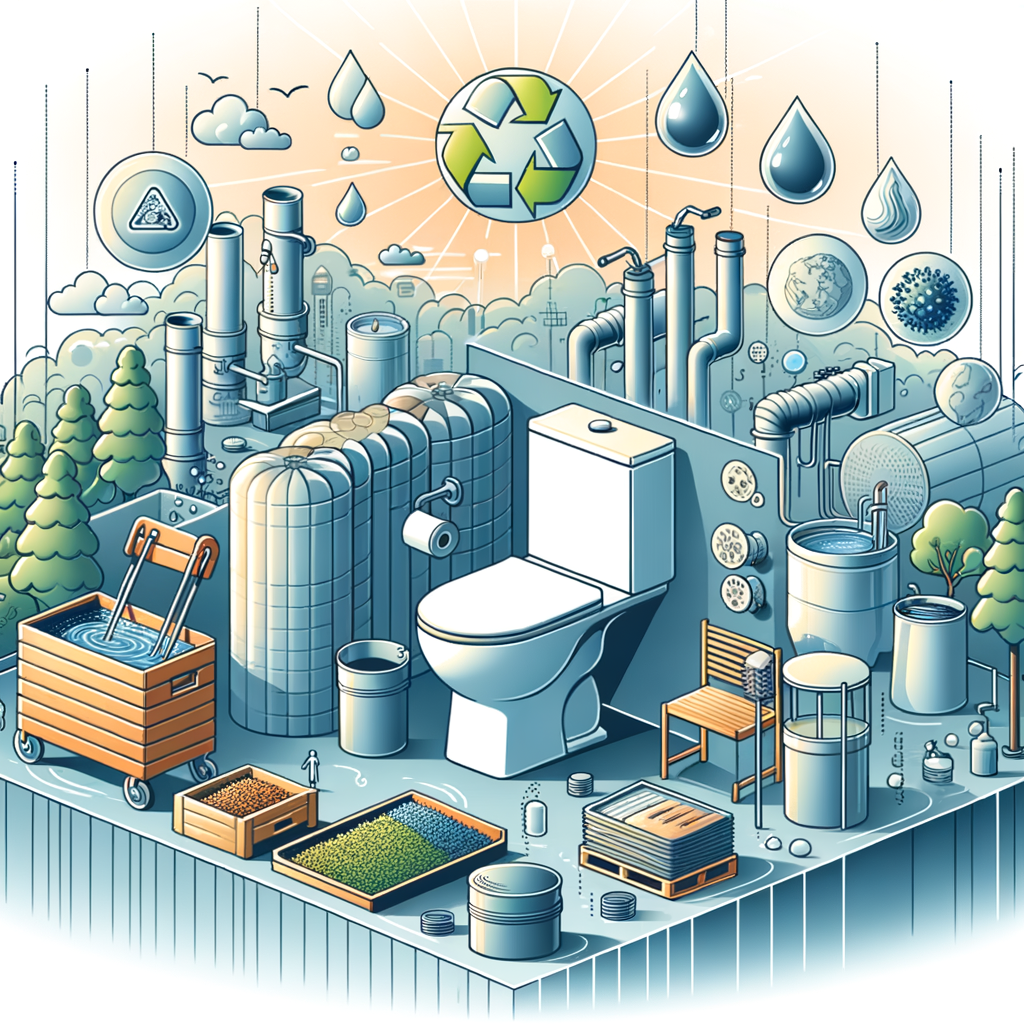
Non-governmental organizations have been central to scaling up ecological sanitation, or EcoSan, by turning small pilot projects into durable public health and resource recovery systems. EcoSan refers to sanitation approaches that safely separate, treat, and reuse human excreta and wastewater as resources, usually through urine diversion, composting, dehydration, or decentralized treatment. In practice, EcoSan is not a single technology but a design philosophy: prevent contamination, conserve water, recover nutrients, and close local material loops. I have seen projects succeed or fail based less on hardware than on whether the implementing organization could build trust, train users, and align sanitation with agriculture, education, and municipal planning.
This matters because conventional sewer expansion remains slow and expensive across many low-income and water-stressed settings. The World Health Organization and UNICEF continue to report major sanitation gaps, especially in peri-urban settlements, remote rural areas, and informal communities where centralized infrastructure is financially or physically impractical. At the same time, degraded soils, rising fertilizer costs, and water scarcity make resource-oriented sanitation more relevant than ever. NGOs often occupy the space between households, local government, engineers, schools, and donors. They translate technical options into usable services, test behavior change methods, and generate the evidence that helps a local success become a regional model. As a hub for diverse EcoSan success stories, this article explains exactly how NGOs make scale possible, what models have worked in the field, where limitations appear, and which lessons consistently transfer across countries.
Why NGOs Are Often the Catalyst for EcoSan Scale
NGOs scale EcoSan by doing work that no single actor reliably performs alone. Governments may set policy but lack field staff; private suppliers may sell units but not long-term education; communities may understand local realities but need technical and financial support. Effective NGOs bridge those gaps. In my experience reviewing sanitation programs, the best organizations begin with context analysis: groundwater conditions, flood risk, cultural norms around reuse, land tenure, household income, and local farming practices. That early diagnosis prevents the common mistake of importing a toilet design that looks sustainable on paper but does not fit how people live.
They also reduce implementation risk. Before a district invests public money, an NGO can pilot urine-diverting dry toilets, arborloo systems, container-based services, or fecal sludge composting under real conditions. It can measure fill rates, maintenance burden, pathogen reduction, user acceptance, and agricultural uptake. Those data points matter. Officials are far more likely to support scale when a local pilot shows lower water demand, manageable operating procedures, and visible crop benefits. NGOs also help package results into manuals, training curricula, and procurement specifications so the next hundred installations do not depend on the original project team.
Another catalytic role is coalition building. EcoSan sits at the intersection of sanitation, agriculture, environment, climate resilience, and livelihoods. NGOs routinely bring together health ministries, farmer cooperatives, women’s groups, school administrators, masons, sludge operators, and microfinance institutions. That cross-sector coordination is usually what turns an isolated sanitation intervention into a broader circular economy program. When nutrient recovery creates value for farmers, when schools teach safe use, and when local masons can earn income building approved designs, adoption stops being donor dependent and starts becoming locally reinforced.
Diverse EcoSan Success Stories and What They Show
Diverse EcoSan success stories show that scale does not follow one universal path. In Uganda, organizations such as Uganda EcoSan Promotion have supported school and household urine-diversion projects that combined sanitation improvements with agricultural reuse, demonstrating how institutions can normalize unfamiliar technologies. In Ethiopia, Sustainable Sanitation and Hygiene for All and related initiatives have shown the value of linking sanitation marketing with local entrepreneurship and government extension systems. In Malawi and Zimbabwe, arborloo and ecological latrine programs popularized simple, low-cost designs that households could build incrementally, then connect to household food production through tree planting and compost use.
South Africa provides a different lesson. Large numbers of urine-diverting dry toilets were rolled out in eThekwini Municipality, with support from technical partners and civil society organizations. The scale proved decentralized sanitation could be integrated into formal municipal service delivery. At the same time, the experience highlighted that installation volume alone is not success. Ongoing maintenance support, pit emptying arrangements, user education, and design adaptation are essential. That balance is a recurring theme across EcoSan case studies: the strongest projects pair infrastructure deployment with service systems, monitoring, and feedback loops.
India offers another instructive pattern. NGOs working in water-scarce regions and schools have used composting and urine-diverting toilets where sewerage was unrealistic, often coupling construction with menstrual hygiene education, teacher training, and farmer demonstrations. In peri-urban contexts in Kenya and Haiti, container-based sanitation models supported by social enterprises and nonprofit partners have shown that safe collection and off-site treatment can function as an EcoSan pathway when on-site conditions are poor. These examples widen the definition of success. EcoSan is not only a toilet type; it is any sanitation chain designed for safe containment and beneficial reuse.
How NGOs Move from Pilot to Program
Scaling EcoSan requires repeatable systems, not just compelling demonstrations. NGOs that succeed typically move through four phases: proof of concept, service design, institutional embedding, and expansion. In the proof phase, they validate technology under local conditions. In service design, they establish training, supply chains, maintenance routines, tariffs or financing, and safe reuse protocols. In institutional embedding, they align with municipal by-laws, school standards, agricultural extension services, and public health rules. Only then does expansion become reliable.
A practical comparison helps explain why some NGO-led EcoSan initiatives spread while others stall.
| Scaling factor | Weak approach | Strong NGO-led approach |
|---|---|---|
| Technology choice | One design for all sites | Match design to soil, water table, density, and user capacity |
| User training | Single handover session | Repeated coaching, signage, school sessions, and refresher visits |
| Supply chain | Imported components | Local masons, spare parts, standard drawings, approved vendors |
| Reuse pathway | Assumed farmer interest | Field trials, pathogen guidance, crop-specific recommendations |
| Finance | Full subsidy only | Blended finance, household contribution, microloans, public support |
| Monitoring | Count toilets built | Track usage, fill rates, treatment quality, and satisfaction |
I have found that the monitoring row is especially decisive. A project that reports only the number of toilets built may hide abandonment, misuse, or unsafe emptying. Strong NGOs track outcomes that matter: whether urine diversion remains functional, whether anal cleansing practices are compatible with the design, whether compost reaches target temperatures or storage times, and whether farmers apply outputs safely. Many now use mobile survey tools such as KoboToolbox, mWater, or Akvo for follow-up, allowing managers to spot failure patterns early and redesign before scale magnifies defects.
The Functions NGOs Perform on the Ground
Community engagement is the most visible function, but it is only one part of the NGO role. Training local artisans is equally important. EcoSan systems fail when construction tolerances are ignored: urine diversion pedestals are set at the wrong angle, vaults are undersized, ventilation is poor, or access doors are not sealed. NGOs often create mason certification schemes, illustrated build guides, and supervision checklists. That technical discipline turns informal construction into consistent sanitation infrastructure.
Behavior change support is another core function. EcoSan depends on correct use more than flush toilets do. Users must know what goes into each chamber, when to add cover material, how to switch vaults, and when treated products can be handled. NGOs typically develop practical communication materials for schools, households, and caretakers. The best messages are concrete rather than abstract: keep urine separate to reduce smell, add ash or dry soil after defecation to support drying, and wash hands after handling collection containers. Clear guidance lowers disgust, confusion, and misuse.
NGOs also formalize the reuse side. Safe reuse is where EcoSan creates much of its economic and environmental value, but it must be managed carefully. Organizations often rely on World Health Organization guidance on sanitation safety planning and risk reduction, plus local agricultural research on nutrient content and crop response. In several field programs, small demonstration plots comparing compost from treated excreta with conventional fertilizer have been more persuasive than any workshop. Farmers respond to visible yield, plant vigor, and input savings. Once results are credible, reuse shifts from taboo topic to practical agronomy discussion.
Finally, NGOs play an accountability role. They document complaints, mediate between users and authorities, and publish lessons that others can scrutinize. That transparency matters because not every EcoSan project works well. Designs can be too complex, collection logistics can be underfunded, and acceptance can remain low in some settings. Credible NGOs improve the sector by reporting those limits honestly and adjusting course.
Common Barriers to Scaling EcoSan and How NGOs Address Them
The first barrier is social acceptance. Many households initially reject the idea of handling or reusing treated excreta. NGOs address this through phased exposure: separate discussions with community leaders, visits to functioning sites, school-based education, and agricultural demonstrations that focus on safety protocols rather than ideology. The second barrier is operational complexity. Double-vault systems, urine storage, and compost management require routines that some households do not want. In dense settlements, NGOs often pivot toward serviced models, including container collection, cooperative maintenance, or simplified decentralized treatment rather than insisting on household-managed systems.
Financing is another persistent obstacle. EcoSan may reduce life-cycle costs, but upfront costs can still exceed those of basic pit latrines. Organizations have responded with targeted subsidies for the poorest households, revolving funds, sanitation loans, and results-based grants tied to verified use. Importantly, strong programs avoid distorting the market by subsidizing everything equally. They reserve grants for public goods, such as school sanitation, demonstration units, technical assistance, and treatment infrastructure, while encouraging household investment where feasible.
Regulation can also slow progress. Building codes, waste rules, and fertilizer standards often do not clearly cover recovered products from sanitation systems. NGOs help by generating evidence for regulators, convening technical working groups, and aligning pilot operations with recognized risk management frameworks. When there is no legal pathway for reuse, scale remains fragile. The most durable success stories are those in which NGOs helped convert project practice into accepted local standards, operating procedures, and budget lines.
What the Best EcoSan Case Studies Teach the Sector
The strongest lesson from diverse EcoSan success stories is that scale comes from system design, not toilet promotion. A successful EcoSan initiative includes technology selection, user training, maintenance, safe emptying, treatment verification, reuse or disposal pathways, financing, and institutional ownership. Remove any one of those elements and performance usually declines. Another lesson is that schools, health centers, and public institutions are often the best early adopters. They create demonstration value, concentrate training, and make monitoring easier than dispersed household programs.
A third lesson is that local adaptation beats rigid replication. In one district, urine-diverting dry toilets may work because water is scarce and households have space for vault management. In another, flood risk or high density may make container-based collection and centralized composting the better EcoSan option. NGOs that scale well treat technologies as components in a sanitation portfolio. They do not confuse commitment to ecological principles with commitment to one hardware template.
For practitioners building the next generation of EcoSan programs, the priority is clear: document what works, quantify service performance, and design for institutions that will remain after project funding ends. NGOs are most valuable when they turn field learning into durable local capability. If you are exploring EcoSan case studies and success stories, use this hub as your starting point, then map each example against context, service model, and reuse pathway before borrowing its design.
Frequently Asked Questions
1. What role do NGOs play in scaling up EcoSan initiatives?
NGOs often serve as the bridge between small-scale ecological sanitation pilots and broader, long-term sanitation systems that communities and institutions can sustain. Their role usually begins with identifying local sanitation gaps, water stress, agricultural needs, and public health risks, then helping communities choose EcoSan approaches that fit local realities rather than imposing a one-size-fits-all model. Because EcoSan is a design philosophy centered on safe separation, treatment, and reuse of human waste and wastewater, NGOs help translate that philosophy into practical solutions such as urine-diverting toilets, composting systems, dehydration vaults, and decentralized treatment units.
Beyond technology selection, NGOs contribute in areas that are essential for scale. They often lead community engagement, behavior change communication, and user training so that households understand how to operate and maintain systems correctly. They also support local masons, entrepreneurs, sanitation workers, and farmers through technical training and business development, which helps build a service ecosystem around EcoSan rather than leaving communities dependent on external aid. In many successful cases, NGOs also collect evidence on health outcomes, fertilizer value, user acceptance, and cost-effectiveness, which is critical for convincing local governments, donors, and regulators to support wider adoption.
Perhaps most importantly, NGOs help coordinate the many actors needed for scale: communities, municipal authorities, public health agencies, agriculture departments, schools, utilities, and private sector service providers. They can pilot innovative models, refine them through field learning, and then package those lessons into policies, financing strategies, and implementation frameworks. In that sense, NGOs are not just service providers; they are facilitators, advocates, capacity builders, and knowledge brokers who help EcoSan move from isolated demonstration sites to durable public health and resource recovery systems.
2. Why are NGOs especially important for turning EcoSan pilot projects into sustainable, large-scale programs?
Many sanitation pilots fail to scale because they prove a technology but do not build the institutional, financial, and social conditions needed for long-term success. NGOs are especially important here because they tend to work across these different dimensions at the same time. A pilot EcoSan toilet may function well in a demonstration village, but scaling requires supply chains for construction materials, trained operators, safe reuse protocols, financing for low-income households, local government buy-in, and monitoring systems that protect public health. NGOs are often the organizations willing and able to stitch those pieces together.
They also bring a level of flexibility that is valuable in complex sanitation environments. Unlike rigid infrastructure programs that focus primarily on construction targets, NGOs can adapt designs based on soil type, density, water availability, cultural norms, farming practices, and user feedback. This adaptive approach matters because EcoSan depends heavily on correct use, maintenance, and social acceptance. If households do not understand source separation, if collection systems are weak, or if reuse pathways are poorly managed, the entire system can break down. NGOs help reduce these risks through continuous engagement, training, troubleshooting, and iterative improvement.
Another reason NGOs matter is credibility and trust. In many communities, sanitation involves privacy, dignity, religion, caste, gender, and long-standing taboos around human waste. NGOs frequently have established relationships with local leaders and residents, which allows them to facilitate conversations that governments or contractors may struggle to lead. At the same time, they can communicate the evidence-based benefits of EcoSan in plain language: improved sanitation safety, reduced water use, lower nutrient loss, better soil fertility, and new livelihood opportunities in collection, treatment, and reuse. By combining technical competence with social trust and institution-building, NGOs create the conditions that allow pilots to become sustainable programs instead of short-lived experiments.
3. How do NGOs help communities accept and properly use EcoSan systems?
Community acceptance is one of the most decisive factors in EcoSan success, and NGOs typically play a central role in building it. Ecological sanitation asks users to engage with sanitation differently than conventional flush-and-forget systems. Households may need to separate urine and feces, add drying material, manage composting cycles, or participate in collection and reuse arrangements. These practices can feel unfamiliar at first, so NGOs invest heavily in education, dialogue, and hands-on demonstrations. They explain not just how the system works, but why it matters for health, water conservation, environmental protection, and agricultural productivity.
Effective NGOs usually begin with participatory planning rather than technical promotion alone. They involve women, farmers, tenants, landlords, school staff, sanitation workers, and marginalized groups in discussing sanitation challenges and possible solutions. This helps identify practical concerns early, such as odor, convenience, privacy, menstrual hygiene management, child use, accessibility for older adults, and the labor required for upkeep. When these issues are addressed in design and training, acceptance improves significantly. NGOs also use local champions, peer educators, community meetings, and demonstration sites to make EcoSan visible and trustworthy in everyday life.
Proper use depends on sustained support, not just one-time instruction. Strong NGO-led programs often include follow-up visits, refresher training, pictorial user guides, maintenance checklists, and feedback channels so problems can be corrected quickly. In schools and public facilities, they may train caretakers and establish clear responsibilities for cleaning and waste handling. For reuse components, they often work with farmers to demonstrate safe application methods and show the agronomic value of treated outputs. This combination of participation, communication, practical support, and visible benefits is what turns EcoSan from a novel concept into a system people are willing and able to use correctly over the long term.
4. What challenges do NGOs face when scaling up EcoSan, and how do they address them?
Scaling EcoSan is rarely straightforward, and NGOs face challenges at technical, financial, institutional, and cultural levels. One major challenge is that EcoSan systems require more than installation; they need ongoing management, quality control, and user compliance. If treatment is incomplete or reuse is poorly regulated, public health risks can emerge. NGOs address this by developing standardized operating procedures, training local service providers, establishing monitoring systems, and promoting safe handling and reuse protocols grounded in public health guidance. They also work to ensure that treatment and end-use practices match local climate, land availability, and agricultural demand.
Financing is another persistent barrier. Households may struggle with upfront construction costs, and municipalities may hesitate to invest in decentralized systems they view as unconventional. NGOs often respond by testing blended financing models, such as subsidies for vulnerable households, microfinance, revolving funds, output-based support, and partnerships with development agencies or social enterprises. Some also help create value chains around resource recovery, showing how treated compost, dried fecal matter, or nutrient-rich urine can support agriculture and offset some operating costs when managed safely and responsibly.
Institutional fragmentation is also common. Sanitation, water, health, agriculture, and environmental regulation are often managed by different agencies with limited coordination. NGOs help by convening stakeholders, aligning roles, and advocating for policies that recognize EcoSan as a legitimate component of sanitation planning. In parallel, they confront social barriers such as stigma around handling human waste, skepticism about reuse, and resistance to behavior change. They address these through evidence, demonstration, local leadership, and culturally sensitive messaging. The most effective NGOs understand that scale is not achieved by distributing more toilets alone; it is achieved by building a functioning system of governance, service delivery, user confidence, and safe resource recovery.
5. How do NGOs work with governments, farmers, and the private sector to make EcoSan initiatives last?
Lasting EcoSan initiatives depend on partnerships, and NGOs are often the organizations that make those partnerships practical. With governments, NGOs frequently support planning, policy development, standards, training, and monitoring. They may help municipal authorities integrate EcoSan into sanitation master plans, identify suitable settlement types for decentralized solutions, and establish oversight mechanisms for treatment and reuse. By documenting lessons from field implementation, NGOs can provide policymakers with real-world evidence on costs, user behavior, environmental performance, and health safeguards, making it easier for governments to move from caution to institutional support.
Farmers are another critical partner because EcoSan is designed around resource recovery, not just waste disposal. NGOs work with agricultural stakeholders to validate the usefulness of treated sanitation by-products as soil amendments or nutrient sources, while emphasizing safe treatment and application practices. Demonstration plots, agronomic trials, and farmer training can show how nutrient recovery supports soil health, reduces dependence on chemical fertilizers, and fits into local cropping systems. This is essential because reuse markets create an economic rationale for maintaining the sanitation chain, but only if products are safe, acceptable, and genuinely useful.
With the private sector, NGOs help build the service backbone that allows EcoSan to function at scale. This may include training masons to construct urine-diverting toilets correctly, supporting small businesses that collect and transport treated material, helping local manufacturers improve product quality, or partnering with social enterprises that process reusable outputs. NGOs can also help define business models, quality standards, and customer education strategies so services remain reliable after donor-funded projects end. When governments provide enabling policies, farmers create demand for safe recovered resources, and private actors deliver construction, maintenance, and reuse services, EcoSan becomes much more resilient. In this ecosystem, NGOs play the catalytic role of aligning incentives, building capacity, and ensuring that public health, environmental protection, and community needs remain at the center of scale-up efforts.