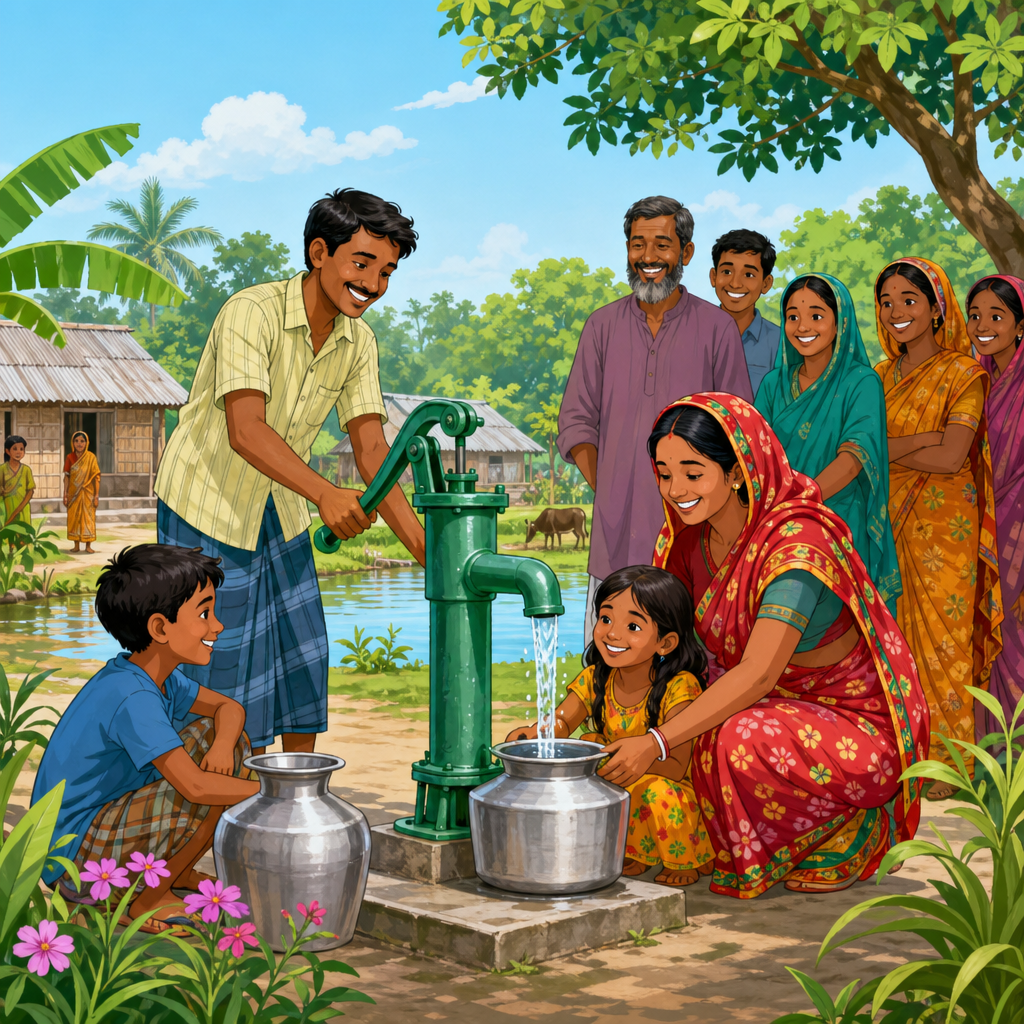
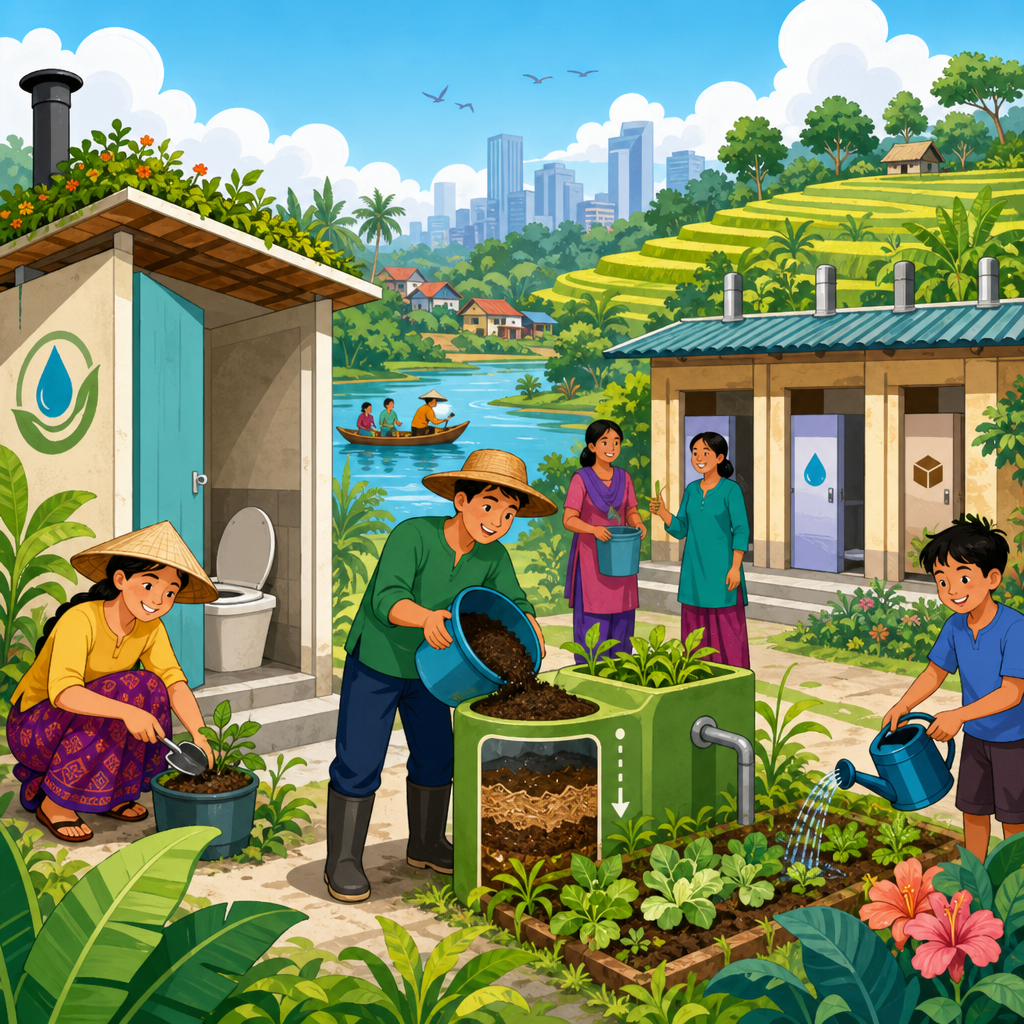
Sustainable WASH in schools creates safer, healthier learning environments by ensuring that water, sanitation, and hygiene services are reliable, affordable, inclusive, and manageable for years rather than months. In practice, WASH in schools means much more than building toilets. It includes water supply, handwashing stations, menstrual hygiene support, waste management, operations and maintenance, behavior change, and governance. When these systems fail, attendance drops, disease spreads, and school facilities quickly deteriorate. When they work well, schools become anchors of public health and dignity. Across case studies involving ecological sanitation, or EcoSan, I have seen the same lesson repeatedly: infrastructure alone is never the whole story. The strongest results come from designs matched to local water scarcity, soils, culture, budgets, and school management capacity. That is why a hub page on diverse EcoSan success stories matters. It helps school leaders, NGOs, engineers, and local governments compare models, understand tradeoffs, and choose approaches that remain functional long after donor funding ends.
EcoSan refers to sanitation systems that safely recover nutrients, organic matter, or water from human waste instead of treating excreta only as a disposal problem. In schools, this can include urine-diverting dry toilets, composting toilets, container-based systems, and decentralized treatment linked to reuse in school gardens. These approaches are especially relevant where sewer networks are absent, groundwater is vulnerable, or water for flushing is unreliable. They can reduce water consumption dramatically, lower contamination risks, and support climate resilience. Yet EcoSan in schools is not automatically sustainable. Success depends on child-friendly design, routine cleaning, teacher oversight, supply chains for spare parts, safe handling protocols, and clear responsibility for emptying and reuse. The most useful case studies do not hide these operational details. They explain why one school maintained high handwashing compliance while another struggled, or how menstrual hygiene improvements affected girls’ retention. Those practical lessons are what make this topic valuable for readers looking for proven WASH in schools strategies.
What sustainable WASH in schools looks like in practice
A sustainable school WASH system consistently provides safe water, usable toilets, handwashing with soap, and hygiene education for all students, including younger children and learners with disabilities. UNICEF and WHO Joint Monitoring Programme service ladders are useful here because they move the discussion beyond whether a facility exists to whether it is functional, accessible, and available when needed. In the schools I have assessed, the difference between nominal coverage and actual service is often stark. A toilet block may count on an inventory sheet, yet be locked, broken, lacking privacy, or impossible to clean. Sustainable systems therefore combine hardware with management routines: cleaning schedules, budget lines for consumables, student hygiene clubs, caretaker training, and monitoring indicators such as pupil-to-toilet ratio, downtime, soap availability, and fecal sludge handling practices.
EcoSan adds another layer of sustainability by designing sanitation around resource recovery and low-water operation. In drought-prone areas, urine-diverting dry toilets can keep sanitation services running when flush toilets fail due to empty tanks. In flood-prone areas, raised or sealed decentralized systems can reduce contamination of shallow groundwater. In schools with gardens or agriculture programs, treated outputs may support tree planting or non-food landscaping, provided national regulations and safety protocols are followed. The strongest school programs also integrate hygiene behavior. Handwashing infrastructure placed near toilets and meal areas increases use. Menstrual hygiene rooms with water, disposal, privacy, and emergency supplies reduce absenteeism. WASH committees that include girls often identify problems adults miss, such as broken inside locks, poor lighting, or fear of using remote toilet blocks.
Diverse EcoSan success stories and the patterns behind them
Diverse EcoSan success stories show that there is no single best model; there are context-specific solutions that perform well under clear conditions. In East Africa, urine-diverting dry toilet projects have succeeded in schools facing chronic water scarcity because they eliminated dependency on unreliable piped supply. Several programs paired sanitation blocks with handwashing stations using tippy taps or low-flow tanks, plus school gardens that demonstrated nutrient cycles in science classes. The educational value mattered. Students understood why ash or dry cover material was needed, which reduced misuse. In Southern Africa, ventilated improved pit designs and alternating pit systems have worked where schools had enough land, good supervision, and scheduled pit management. In South Asia, school sanitation projects linked to menstrual hygiene management have delivered measurable attendance gains for adolescent girls when privacy, water, washing space, and disposal were designed together rather than separately.
Latin American case studies add another important dimension: community ownership. Rural schools using composting toilets or small decentralized treatment units often performed best where parent committees, municipalities, and teachers shared roles instead of assuming the school alone could maintain the system. I have seen projects improve simply by posting maintenance tasks publicly and assigning backup responsibility during holidays. Another recurring pattern is phased implementation. Pilot one block, train users, fix design flaws, then scale. Schools that rushed directly to large installations often repeated avoidable errors, such as steep steps that younger children could not use safely or urine diversion pans that were difficult to clean. The best success stories are honest about iteration. They reveal that sustainable WASH in schools depends less on novelty than on fit-for-purpose design, clear operations, and continuous user feedback.
Comparing common school sanitation models
Choosing the right sanitation model for a school requires matching technology to water availability, soil conditions, user age, maintenance capacity, and long-term funding. Flush toilets connected to sewerage can provide high user acceptance where networks and treatment work, but they are often unrealistic for rural schools. Septic tanks may be appropriate, yet they demand desludging access and good construction standards. EcoSan options become attractive when water is scarce, treatment infrastructure is absent, or reuse has educational and environmental value. The key is to evaluate the full service chain, not only the toilet cubicle. That includes cleaning, storage, emptying, transport, treatment, final use or disposal, and supervision.
| Model | Best fit | Main strengths | Main risks |
|---|---|---|---|
| Urine-diverting dry toilets | Water-scarce schools with trained caretakers | Very low water use, nutrient recovery, resilient during outages | User error, odor or blockage if cleaning and cover material lapse |
| Composting toilets | Schools with space, oversight, and strong education programs | Reduced waste volume, potential reuse, strong learning value | Slow processing, inconsistent compost quality, management intensive |
| Twin-pit or alternating pit systems | Rural sites with adequate land and safe separation from groundwater | Simple, lower operating cost, easier resting and emptying cycle | Groundwater risk in poor soils, stigma around pit emptying |
| Septic tank with pour-flush | Schools with moderate water and desludging access | Familiar interface, easier acceptance, decent performance when maintained | High water demand, frequent failure from poor desludging |
This comparison matters because school sanitation decisions are often made under procurement pressure instead of operational reality. The most durable programs start with a site assessment, estimate annual operations costs, and ask who will manage the system during teacher turnover or holiday closures. That is where many diverse EcoSan success stories stand out: they documented management arrangements as carefully as engineering choices.
Health, attendance, and learning outcomes
The central reason to invest in sustainable WASH in schools is not the facility itself but the health and education gains it enables. Poor school sanitation contributes to diarrheal disease, helminth transmission, dehydration from toilet avoidance, urinary tract problems, and reduced concentration. Handwashing with soap is one of the most cost-effective public health interventions available; its impact on gastrointestinal and respiratory infections is well established. In schools, the benefits multiply because habits formed there travel home. I have watched handwashing compliance improve sharply when schools moved soap from a locked store to fixed dispensers attached to stations directly outside toilets. Convenience changes behavior.
Attendance effects are especially visible for girls when menstrual hygiene needs are addressed properly. A private stall without water or disposal is not a complete solution. Successful schools provide a package: lockable doors, washing space, disposal bins or incineration managed safely, spare materials, and at least one adult trained to respond discreetly. This is where EcoSan projects can either excel or fail. If they deliver privacy, cleanliness, and reliable access, they support retention. If urine diversion pedestals are confusing, floors are hard to wash, or bins are missing, students avoid them. Learning outcomes also improve when facilities reduce stress and classroom interruptions. Teachers report fewer requests to leave school early and fewer disruptions caused by queues, odor, or broken taps. Good WASH is educational infrastructure, not a side service.
Design principles that make EcoSan work for students
School sanitation must be designed for children’s bodies and routines, not adapted from adult public toilet templates. That means lower pedestal heights where needed, easy-to-understand signage, non-slip floors, inside locks that function, lighting, and pathways usable during rain. For EcoSan systems, interface design is critical. Urine-diverting pans must be intuitive and easy to clean. If a toilet requires users to balance awkwardly or place cover material in a confusing way, misuse rises immediately. I have seen schools solve this through color coding, footprint decals, and supervised orientation for new students at the start of each term. Small design choices deliver large operational gains.
Accessibility and inclusion are equally important. At least one toilet and handwashing point should be accessible to users with mobility limitations, and privacy features should consider all learners. Water points should support anal cleansing preferences where culturally relevant. Ventilation matters for comfort and dignity, while doors and roofs matter for security. Handwashing stations work best when they are visible, durable, and stocked. Menstrual hygiene spaces should not be isolated so far from classrooms that students feel exposed while reaching them. Finally, plan for maintenance from day one. Storage for cleaning tools, drainage for wash water, spare taps, and clear access for emptying are not extras. They determine whether a school facility remains usable after the inauguration photos are gone.
Governance, financing, and long-term maintenance
Most school WASH failures are governance failures before they are technical failures. A toilet does not stay clean because the design was innovative; it stays clean because someone has authority, time, budget, tools, and accountability. Sustainable programs define these roles early. Head teachers oversee budgets and standards. Caretakers or cleaners manage daily tasks. Student clubs support reporting and peer education, not replacement labor. Parent committees or school management boards help finance repairs. Local government provides technical backstopping and links to sanitation service providers. Without that chain, even well-built EcoSan facilities decline quickly.
Financing must also be realistic. Capital grants are common; recurrent budgets are the weak point. Schools need funds for soap, cleaning supplies, menstrual hygiene materials, spare parts, and periodic emptying or treatment support. Lifecycle costing is the right approach because a cheaper installation may be more expensive over five years if it fails often or requires specialized parts. Digital monitoring can help. Simple mobile checklists that track functionality, cleanliness, water availability, and consumables give district officials evidence to target support. Success stories from diverse EcoSan programs repeatedly show that maintenance improves when indicators are reviewed monthly and when schools receive small, predictable operational grants rather than waiting for emergency repairs. Sustainability is management discipline made visible.
How this hub helps readers navigate case studies and choose the right model
As a hub for case studies and success stories, this page should guide readers toward the examples most relevant to their context. Decision-makers usually start with practical questions: Is EcoSan suitable for a water-scarce primary school? How do schools manage odor and cleaning? What sanitation options support menstrual hygiene management? Which models protect groundwater best? What did successful schools do differently from failed pilots? Organizing related articles around these questions makes the entire cluster more useful than a generic collection of project summaries. Readers need pathways by geography, climate, school size, technology type, and management model.
The main takeaway from diverse EcoSan success stories is straightforward. Sustainable WASH in schools is achieved when technology, behavior, financing, and governance are designed as one system. The best-performing schools treat sanitation as part of education and public health, not as a one-time construction project. They choose context-appropriate toilets, place handwashing where students will actually use it, plan for menstrual hygiene and accessibility, fund routine maintenance, and monitor service quality continuously. If you are building or upgrading a school WASH program, use this hub to compare proven models, study what made them work, and identify the operational details that determine long-term success. Then move from inspiration to implementation with a design and management plan grounded in real evidence.
Frequently Asked Questions
What does sustainable WASH in schools actually mean?
Sustainable WASH in schools refers to water, sanitation, and hygiene services that continue to function safely, reliably, and inclusively over the long term. It is not limited to installing a few toilets or a hand pump. A sustainable approach makes sure students and staff have consistent access to safe drinking water, usable and clean toilets, handwashing facilities with soap, menstrual hygiene support, waste management systems, and clear routines for cleaning, maintenance, and repairs. Just as important, it includes school leadership, budgets, supply chains, staff responsibilities, student engagement, and health-promoting habits that keep the system working year after year.
In practical terms, sustainability means a school can manage everyday use, seasonal changes, equipment breakdowns, and changing student needs without the system collapsing after a few months. Facilities must be affordable to operate, easy to maintain, accessible for girls and boys, inclusive of children with disabilities, and supported by local governance. When these pieces work together, WASH becomes part of a healthy learning environment rather than a short-term infrastructure project.
Why is sustainable WASH so important for student health, attendance, and learning outcomes?
Sustainable WASH has a direct effect on whether children can learn in a safe and healthy environment. When schools lack reliable water, clean toilets, and places to wash hands with soap, the risk of diarrheal disease, respiratory illness, skin infections, and parasite transmission increases. These health burdens contribute to absenteeism, lower concentration, fatigue, and missed instructional time. In contrast, functioning WASH services help reduce preventable illness and create conditions where students can attend regularly and focus on learning instead of discomfort or sickness.
The impact also extends beyond physical health. Clean, private, and safe sanitation facilities support dignity, confidence, and school participation, especially for girls and older students. If toilets are dirty, unsafe, or nonfunctional, many children avoid using them, drink less water, or stay home altogether. This is particularly significant during menstruation, when the absence of private facilities, water, soap, and disposal options can disrupt attendance. Sustainable WASH supports equitable participation by making school environments more respectful, predictable, and usable for everyone. Over time, healthier attendance patterns and improved well-being contribute to better educational outcomes and a stronger school community.
What are the core components of an effective and sustainable WASH in schools program?
An effective WASH in schools program is built on multiple interconnected components. Safe and reliable water supply is foundational, whether through piped systems, boreholes, rainwater harvesting, storage tanks, or treated delivery systems. Sanitation facilities must be sufficient in number, clean, gender-sensitive, safe, well-ventilated, and designed for privacy. Handwashing stations should be conveniently located near toilets and eating areas, with regular access to soap and water. Menstrual hygiene management is another essential element, including private spaces, water for washing, disposal systems, and school policies that reduce stigma and support girls’ participation.
Equally important are the less visible systems that determine whether services last. These include daily cleaning routines, operations and maintenance plans, spare parts access, budgets for soap and repairs, trained caretakers or facility managers, and clear accountability among school staff and local authorities. Waste management must also be considered, including drainage, solid waste handling, and safe management of fecal sludge where relevant. Finally, behavior change and governance are critical. Students, teachers, and administrators need practical hygiene education, supportive norms, and mechanisms to monitor conditions and respond quickly when problems arise. Without these management and governance elements, even well-built infrastructure can fail quickly.
How can schools make WASH services more inclusive and accessible for all students?
Inclusive WASH design starts with recognizing that students do not all use facilities in the same way. Younger children, girls, children with disabilities, and students managing menstruation may face barriers that standard designs overlook. To address this, schools should provide toilets and handwashing facilities that are physically accessible, with ramps, handrails, adequate door widths, reachable taps, and enough internal space for mobility support where needed. Privacy and safety are also essential, including lockable doors, appropriate lighting, and separate facilities where culturally and operationally appropriate.
Inclusion also means designing for dignity and daily usability. Menstrual hygiene support should include access to water, soap, disposal bins, and private changing areas, along with accurate education that reduces shame and misinformation. Schools should consider schedules, cleaning frequency, and supervision so facilities remain usable throughout the day, not just after installation or inspection. Student feedback is especially valuable here. When schools ask learners what makes a toilet difficult to use, unsafe, or embarrassing, they often uncover practical improvements that make a major difference. An inclusive WASH program is one that works not only in principle, but in everyday reality for every student.
What makes school WASH systems fail, and how can schools keep them working over time?
School WASH systems often fail not because the original idea was wrong, but because long-term management was underestimated. Common reasons include poor construction quality, no budget for soap or repairs, weak maintenance routines, lack of spare parts, unclear staff responsibilities, damaged infrastructure, and limited oversight from school leadership or local government. Sometimes facilities are built without considering the school’s actual water source, user numbers, or ability to maintain the technology. In other cases, behavior change is ignored, so students and staff are not supported in using and protecting the facilities properly. When any of these gaps persist, toilets become unusable, handwashing stations run dry, and the system slowly stops serving its purpose.
Keeping WASH services working requires planning for the full life cycle of the system. Schools need realistic operation and maintenance plans, assigned responsibilities, routine inspections, and dedicated funding for consumables and repairs. Technologies should match local conditions and maintenance capacity, not just initial budgets. Partnerships with local government, communities, health authorities, and service providers can strengthen technical support and accountability. Monitoring is equally important: schools should track functionality, cleanliness, water availability, soap supplies, and student satisfaction, not simply count the number of facilities installed. Sustainable WASH is achieved when infrastructure, financing, behavior, and governance are all managed together so the system continues to deliver health benefits year after year.