Ecological Sanitation (EcoSan) represents a paradigm shift in waste management by viewing human waste as a resource rather than a problem. The traditional approach to sanitation focuses on merely disposing of waste, often resulting in environmental contamination and the unnecessary consumption of precious water resources. EcoSan, on the other hand, aims to safely recycle human waste for agricultural use, which makes it particularly relevant to arid and semi-arid regions where water conservation is paramount and soil fertility is often poor.
Arid and semi-arid regions are characterized by limited water resources and harsh climatic conditions that exacerbate the challenges associated with conventional sanitation systems. These regions often struggle with water scarcity, which makes water-intensive sanitation systems, like flush toilets, impractical. Furthermore, the harsh climate can inhibit the decomposition processes upon which many traditional waste management systems rely.
Adapting EcoSan technologies to the specific needs of arid and semi-arid regions can provide multiple benefits. Beyond the conservation of water, EcoSan can improve soil fertility through the safe reuse of nutrients found in human waste, enhancing agricultural productivity. Additionally, implementing EcoSan systems can mitigate the health risks associated with poor sanitation, such as waterborne diseases, which can be particularly prevalent in water-scarce areas.
In this article, we will explore various EcoSan technologies and present tailored solutions designed to address the unique challenges faced by arid and semi-arid regions. We will examine the principles behind these technologies, their practical applications, and the socio-economic benefits that they offer. By highlighting successful case studies, we aim to demonstrate how EcoSan can be a sustainable and transformative approach to sanitation in water-scarce environments.
Understanding the Basics of EcoSan Technologies
The foundation of EcoSan lies in its fundamental principles: reducing the waste at its source, sanitizing the by-products to make them safe for reuse, and recycling nutrients back into the environment. To achieve these goals, EcoSan employs a range of technologies that include urine-diversion dry toilets (UDDTs), composting toilets, and constructed wetlands, among others.
Urine-Diverting Dry Toilets (UDDTs) are among the most effective EcoSan solutions in arid and semi-arid regions. These toilets separate urine and feces at the source, which not only simplifies the sanitation process but also allows for the separate treatment and reuse of these waste streams. Urine, which is nutrient-rich, can be safely used as a fertilizer after minimal treatment. Feces, on the other hand, are collected and composted to kill pathogens, resulting in a safe soil conditioner.
Composting Toilets utilize aerobic processes to decompose human feces into humus-like material. These toilets are designed to facilitate the decomposition process while minimizing odors and pathogens. In the hot and dry conditions of arid regions, composting toilets can be highly effective if they are properly managed to maintain adequate moisture and aeration levels.
Constructed Wetlands are engineered systems that mimic the natural purification processes of wetlands to treat wastewater. By channeling waste through a series of planted beds, constructed wetlands can effectively remove contaminants and produce water that is safe for irrigation. These systems can be particularly useful in semi-arid regions where wastewater can be reused for agricultural purposes.
Tailoring UDDTs for Arid Regions
Urine-Diverting Dry Toilets (UDDTs) offer one of the most applicable EcoSan solutions for arid regions. By separating urine and feces at the source, UDDTs minimize the risk of contamination and allow for the efficient reuse of nutrients. To further enhance the suitability of UDDTs in arid regions, several adaptations can be considered.
One crucial adaptation is enhancing the dehydration process to reduce pathogenic risks. In arid climates where water is scarce, ensuring the rapid dehydration of feces can prevent pathogen survival. This can be achieved through the use of solar dehydration chambers, which utilize the intense sunlight typical of arid regions to quickly dry out feces. Advanced designs can incorporate solar-powered fans to increase airflow and accelerate the drying process.
Moreover, UDDTs in arid regions can be augmented with locally available materials to improve their functionality and acceptance among users. For example, the addition of ash, sawdust, or even dry soil after each use can enhance the drying process and control odors. These materials are often readily available and can be easily integrated into the daily use of UDDTs.
Furthermore, the regular maintenance and monitoring of UDDTs are essential to ensure their long-term effectiveness. Training local communities in the proper use and maintenance of these toilets can foster ownership and enhance compliance. Community-led initiatives that promote awareness of the health and agricultural benefits of UDDTs can also play a pivotal role in their successful implementation.
Case studies from regions such as the Sahel and parts of South Asia have demonstrated the success of UDDTs in improving sanitation and enhancing agricultural productivity. These examples provide valuable lessons and best practices that can be applied to other arid regions seeking sustainable sanitation solutions.
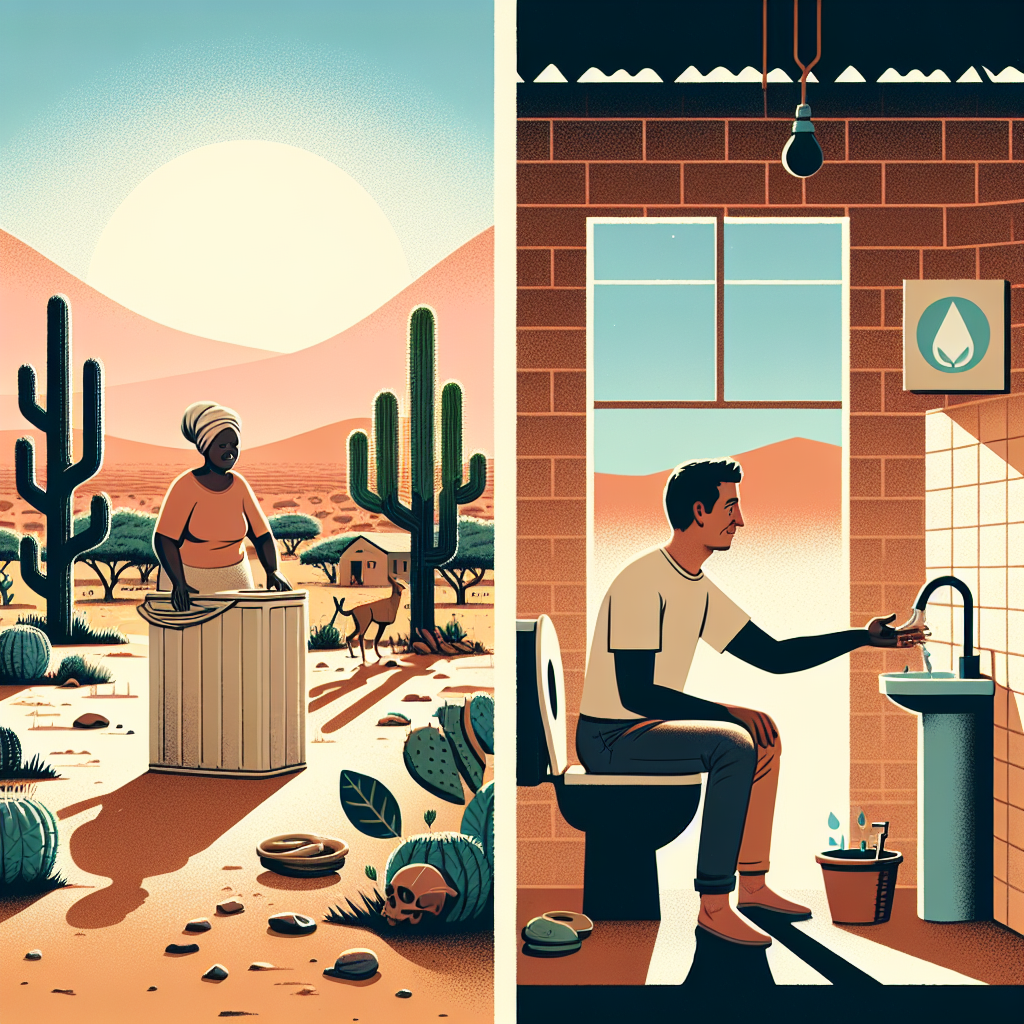
Implementing Composting Toilets in Semi-Arid Regions
Composting Toilets are another EcoSan technology that can be highly effective in semi-arid regions. These toilets leverage natural decomposition processes to transform human waste into beneficial compost. However, the implementation of composting toilets in semi-arid regions requires careful consideration of several factors.
One primary concern is ensuring adequate moisture levels to facilitate effective composting. In semi-arid regions where rainfall is limited, maintaining the right balance of moisture can be challenging. To address this, users can incorporate greywater from household activities, such as dishwashing or laundry, to keep the composting material moist. In addition, maintaining proper ventilation is crucial to support aerobic decomposition and control odors.
Another important consideration is the design and construction of composting toilets. Insulating the composting chambers can help maintain consistent temperatures, which is vital for the microbial activity essential to the composting process. Employing thermal mass materials, such as stone or brick, can stabilize temperatures and enhance the efficiency of composting in semi-arid climates.
Regular turning and mixing of the composting material promote aeration and uniform decomposition. Users should be educated on the importance of regularly turning the compost and monitoring its progress to ensure the production of safe and high-quality compost. Additionally, integrating composting toilets with agricultural practices can provide a direct link between sanitation and improved soil fertility.
Case studies from regions like Central America and East Africa illustrate the successful implementation of composting toilets in semi-arid areas. These examples showcase how adapting composting techniques to local conditions and engaging communities can lead to sustainable and productive EcoSan solutions.
The Role of Constructed Wetlands
Constructed Wetlands are engineered ecosystems designed to treat wastewater through natural processes involving vegetation, soil, and microbial interactions. They offer an effective EcoSan solution for semi-arid regions where water conservation and reuse are critical objectives. These systems can be tailored to address the specific challenges posed by semi-arid conditions.
One of the key challenges in semi-arid regions is ensuring the efficient use and reuse of water. Constructed wetlands can be designed to maximize water retention and minimize evaporation. Utilizing plant species that are well adapted to semi-arid climates, such as cattails or bulrushes, can enhance the resilience and effectiveness of these systems.
Furthermore, the design of constructed wetlands should account for the potential variability in water flow and quality. By incorporating multiple treatment stages, including primary sedimentation, secondary treatment through wetland cells, and tertiary filtration, constructed wetlands can adapt to fluctuations in wastewater characteristics and volume. This multi-stage approach ensures that the treated water meets the necessary quality standards for safe reuse, particularly in agricultural applications.
Maintaining the functionality of constructed wetlands in semi-arid regions requires regular monitoring and maintenance. Periodic removal of accumulated sediments, trimming of vegetation, and monitoring for potential clogging are essential practices to sustain the efficiency of the wetland system. Engaging local communities in these maintenance activities can promote a sense of ownership and responsibility, ensuring the long-term sustainability of the constructed wetlands.
Successful implementations of constructed wetlands in regions like the Middle East and North Africa serve as valuable models for other semi-arid areas. These case studies highlight the potential of constructed wetlands to provide reliable and sustainable wastewater treatment while contributing to water conservation and agricultural productivity.
The Socio-Economic Impact of EcoSan
Beyond the technical aspects of EcoSan technologies, their implementation in arid and semi-arid regions can yield significant socio-economic benefits. By addressing the fundamental needs of sanitation and water management, EcoSan solutions can contribute to improved public health, enhanced agricultural productivity, and socio-economic development.
Improved public health is one of the primary outcomes of effective EcoSan implementation. Traditional sanitation systems often lead to environmental contamination and the spread of waterborne diseases. EcoSan technologies, by providing safe and hygienic waste management, reduce the incidence of diseases such as diarrhea, cholera, and other infections. This improvement in public health translates into reduced healthcare costs and increased productivity among community members.
The reuse of nutrients from human waste in agriculture enhances soil fertility and crop yields. Arid and semi-arid regions often face challenges related to poor soil conditions and limited access to chemical fertilizers. EcoSan technologies provide a sustainable and cost-effective alternative by recycling nutrients back into the soil. This not only boosts agricultural productivity but also promotes food security and income generation for local communities.
Furthermore, the implementation of EcoSan systems can create employment and entrepreneurial opportunities. The establishment and maintenance of EcoSan facilities require skilled labor, creating jobs within the community. Additionally, the production and sale of sanitized compost and urine-based fertilizers can generate income for individuals and cooperatives. Encouraging local entrepreneurship in the production and distribution of these resources fosters economic growth and self-sufficiency.
Empirical evidence from various regions underscores the positive socio-economic impact of EcoSan technologies. For instance, in regions of South Asia and Sub-Saharan Africa, communities have experienced notable improvements in health, agricultural productivity, and economic stability through the adoption of EcoSan solutions. By leveraging these success stories, other arid and semi-arid regions can replicate and adapt these practices to achieve similar benefits.
Conclusion
EcoSan technologies offer a transformative approach to sanitation by viewing human waste as a valuable resource. For arid and semi-arid regions facing challenges related to water scarcity, poor soil fertility, and public health concerns, EcoSan provides sustainable solutions that address these issues holistically. From urine-diverting dry toilets and composting toilets to constructed wetlands, these technologies can be tailored to meet the specific needs and conditions of water-scarce environments.
By understanding the fundamentals of EcoSan, adapting technologies to local conditions, and engaging communities in the implementation process, arid and semi-arid regions can achieve significant benefits. Improved sanitation, enhanced agricultural productivity, and positive socio-economic impacts are among the key outcomes of successful EcoSan initiatives.
Ultimately, the adoption of EcoSan technologies represents a shift toward more sustainable and resilient water and waste management practices. By recognizing the potential of human waste as a resource and implementing EcoSan solutions, arid and semi-arid regions can build healthier, more productive, and more sustainable communities.