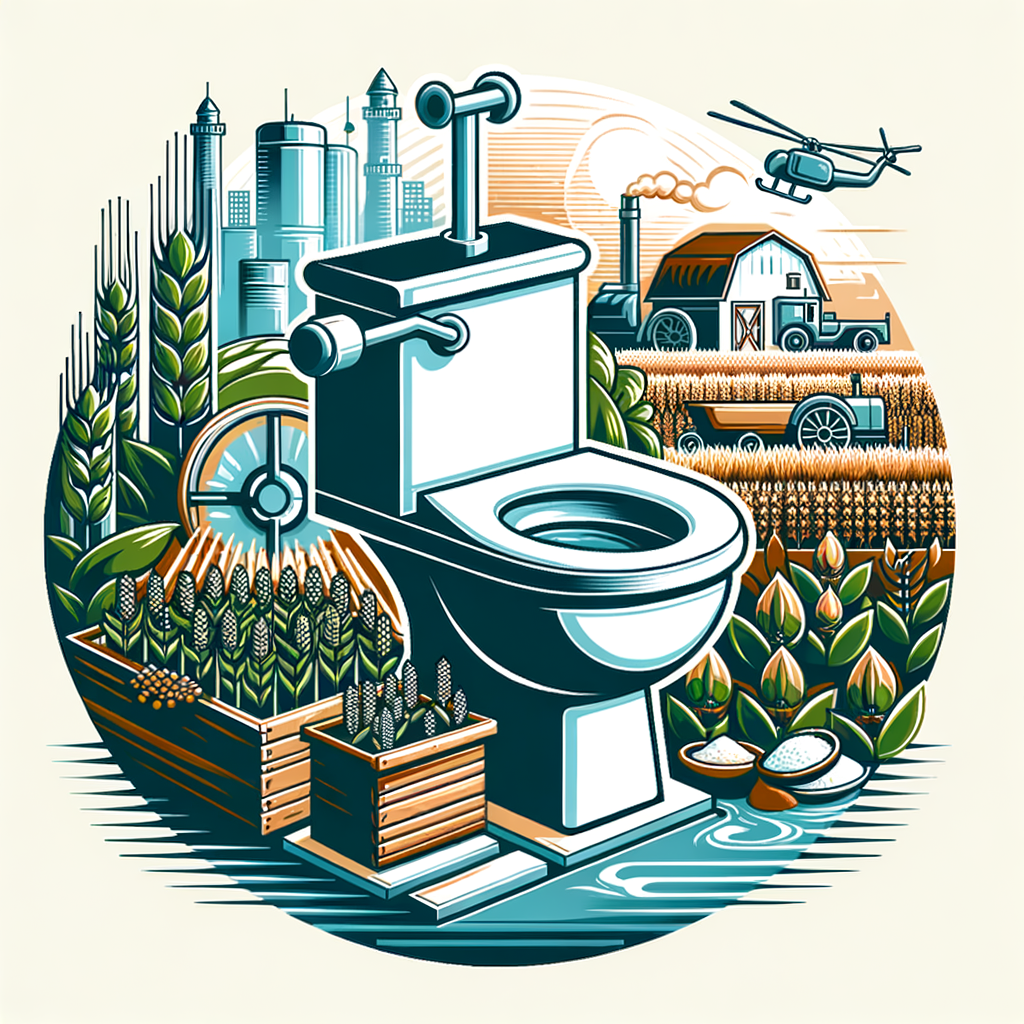
Asian success stories in ecological sanitation show that safe sanitation is not only a public health service but also a resource management system that can recover nutrients, conserve water, and strengthen local resilience. Ecological sanitation, often shortened to EcoSan, refers to sanitation approaches that treat human excreta as a resource rather than only as waste. In practice, that includes urine-diverting dry toilets, composting toilets, dehydration vaults, container-based collection systems, and fecal sludge reuse models that turn nutrients and organic matter into fertilizer or soil conditioner. I have worked on sanitation content and implementation reviews across South and Southeast Asia, and the pattern is clear: EcoSan succeeds when technology, behavior change, maintenance, and markets for reuse are designed together from the start.
This matters across Asia because the region contains both dense cities with failing sewer expansion plans and rural areas where water scarcity, flooding, rocky terrain, and weak sludge management make conventional systems unreliable or unaffordable. According to the WHO and UNICEF Joint Monitoring Programme, safely managed sanitation still lags in many countries, especially where on-site systems dominate and treatment chains break down after the toilet. EcoSan addresses that gap by focusing on the full sanitation value chain: capture, storage, treatment, transport, and reuse or safe disposal. The strongest Asian examples did not copy a single toilet design everywhere. They adapted to climate, culture, agriculture, and local government capacity. That practical lesson is why these ecological sanitation case studies matter for planners, NGOs, utilities, and communities now.
What ecological sanitation implementations in Asia teach first
The first lesson from EcoSan implementations is that the toilet unit is only one component of the system. Programmes fail when agencies install urine-diverting pans or dehydration chambers without planning collection, user training, spare parts, pit emptying, and reuse pathways. In contrast, successful projects start by mapping user needs and end uses. In parts of rural China, for example, household biogas digesters linked to toilets worked best where families already kept pigs or cattle and could feed digesters consistently. The sanitation intervention aligned with daily fuel demand and farm practice, so users had a direct economic reason to maintain the system.
A second lesson is that terminology influences acceptance. Communities often reject unfamiliar language such as excreta reuse, but they respond better to discussions about clean fertilizer, water savings, odour control, and reduced spending on chemical inputs. In several South Asian projects, uptake improved when field teams demonstrated how treated urine diluted correctly could support fruit trees or fodder crops rather than discussing nutrient recovery in abstract terms. Plain communication matters because EcoSan asks households to participate actively in operation and maintenance. If people do not understand why ash, sawdust, or separate collection is required, performance declines quickly.
The third lesson is governance. Municipal endorsement, local masons, health workers, farmers, and school administrators all shape outcomes. Where one actor is missing, systems stall. I have repeatedly seen pilot toilets praised during launch events and neglected six months later because no one budgeted for follow-up visits or replacement seals. Asian success stories stand out because they institutionalized aftercare, not because they discovered a perfect toilet model.
Bangladesh and India: flood-prone and water-stressed settings
Bangladesh offers some of the clearest ecological sanitation lessons for difficult terrain. In flood-prone and high-water-table areas, conventional pits contaminate groundwater and often collapse. Several NGOs, including Practical Action and local partners, tested raised latrines and urine-diverting models that kept waste out of floodwater and allowed safer handling after storage. The key insight was not simply elevation. It was redesigning the entire superstructure, vault access, and user instructions so systems remained functional during monsoon conditions. Where projects also trained households on cover material use and post-storage handling, odour and fly problems dropped significantly.
India presents a more varied picture because climates and institutions differ widely across states. In peri-urban and water-scarce areas, urine-diverting dry toilets and composting systems have been used where sewerage is unrealistic or where water use must be minimized. The most effective Indian initiatives linked sanitation to agriculture, especially in communities already interested in organic cultivation. Farmers are more willing to accept sanitized compost when nutrient value is demonstrated with crops they know. Programmes that compared yields, input costs, and soil texture had better credibility than generic awareness sessions. This is a recurring EcoSan lesson from India: evidence shown in the field beats messaging delivered in meetings.
Another Indian lesson involves schools and public institutions. Toilet blocks in schools can introduce ecological sanitation concepts, but only if cleaning routines are simple and assigned. Too many school projects assumed teachers or children would manage ash dosing and vault switching without supervision. The better models appointed caretakers, posted visual instructions, and scheduled inspections. EcoSan in institutions requires managerial discipline, not just hardware grants.
Nepal and Bhutan: mountain solutions and decentralized design
Mountain regions expose the limits of conventional sanitation faster than flat urban areas do. In Nepal, rocky ground, scattered settlements, and limited water supply make sewer networks expensive and septic systems unreliable. EcoSan projects in hill districts gained traction because they reduced water demand and fit locations where digging deep pits was impractical. Organizations working after the sanitation campaigns of the 2000s found that dehydration toilets could be acceptable if households received hands-on training and if the structures matched local building styles. A concrete box dropped beside a traditional house often signaled an externally imposed idea. Masonry adapted to local architecture increased acceptance.
Bhutan’s smaller scale and strong community structures also offer lessons. Decentralized sanitation works better when maintenance responsibility is obvious and socially reinforced. In villages where local leaders openly used and discussed improved toilets, adoption barriers fell. The social proof effect matters in ecological sanitation because some practices, such as handling stored material after a waiting period, challenge long-held taboos. Successful programmes normalized these steps by using demonstrations, peer exchanges, and extension officers rather than relying on one-time subsidies.
For both Nepal and Bhutan, cold climates introduced operational issues. Decomposition slows in low temperatures, so storage periods may need adjustment. That is a technical point often overlooked in donor-driven pilots. Asian EcoSan success stories are persuasive because they acknowledge these constraints and modify treatment time, insulation, and chamber design accordingly.
China and Vietnam: linking sanitation to resource recovery
China has one of the longest histories of agricultural reuse linked to sanitation, although not all traditional practices were safe. Modern ecological sanitation programmes succeeded where they improved safety and convenience without ignoring farmers’ economic logic. In western and central provinces, integrated household systems combining toilets, biogas digesters, and animal manure management created value through cooking gas and slurry fertilizer. The lesson is straightforward: reuse becomes credible when households can see the savings. If a family replaces part of its fuel bill and improves crop production, maintenance is no longer viewed as a burden alone.
Vietnam contributed important lessons through urine diversion and reuse pilots in both rural and peri-urban settings. Research and field programmes showed that separated urine, when stored and diluted appropriately, can provide plant-available nitrogen that farmers understand immediately because crop response is visible. Yet Vietnam also demonstrated a limit: demand for reuse products depends on trust, timing, and transport. Nutrient recovery is not enough by itself. The product has to be hygienically handled, easy to move, and competitive with existing fertilizers. This is why many successful ecological sanitation implementations include local entrepreneurs, cooperatives, or municipal logistics support rather than expecting households to solve marketing on their own.
| Country | Main EcoSan approach | Core challenge addressed | Key lesson |
|---|---|---|---|
| Bangladesh | Raised urine-diverting toilets | Flooding and high water tables | Design for monsoon conditions, not average days |
| India | Dry and composting toilets | Water scarcity and weak sewers | Field proof with farmers builds trust |
| Nepal | Dehydration toilets | Rocky terrain and limited water | Local architecture and training increase acceptance |
| China | Toilet-biogas-farm systems | Fuel costs and nutrient recovery | Households maintain systems that save money |
| Vietnam | Urine diversion and reuse | Fertilizer costs and sanitation gaps | Reuse needs logistics and market confidence |
Institutional, financial, and social lessons across Asian case studies
The biggest cross-cutting lesson from ecological sanitation implementations is that user behavior is infrastructure. Cover material use, urine separation, chamber switching, handwashing, and safe emptying are not optional add-ons. They determine whether the system protects health. Programmes that budgeted for repeated household visits, refresher training, and troubleshooting performed better than those focused on construction targets. Community-led engagement methods helped, but they worked best when paired with practical follow-up by trained local workers.
Financing models also shaped results. Fully subsidized pilots often produced low ownership unless maintenance costs and replacement parts were planned. On the other hand, expecting very poor households to fund unfamiliar systems without credit or incentives also failed. The stronger models blended public support for initial construction with user contribution, microfinance, or livelihood gains from reuse. In dense settlements, service-based approaches can outperform household-managed systems because collection and treatment require professionalization. This is especially relevant for urban Asia, where container-based sanitation and fecal sludge treatment with resource recovery may be more realistic than household composting.
Regulation remains a major gap. Many countries have building codes for septic tanks but weak standards for source separation, compost quality, or urine-derived fertilizers. Without clear rules, promising pilots remain isolated. Recognized frameworks from the World Health Organization on safe reuse and from sanitation planning tools such as Sanitation Safety Planning provide a path forward. They help municipalities identify hazards, define barriers, and assign responsibility. Asian success stories became scalable when local governments moved from tolerance of pilots to formal operating procedures, inspection, and budgeting.
Social acceptance deserves equal weight. Taboos around excreta are real and rational in contexts where treatment is poorly understood. Trust rises when programmes are transparent about storage time, pathogen reduction, crop restrictions, and safe handling. It also rises when early adopters are respected farmers, teachers, or health staff rather than only project beneficiaries selected by outsiders. In my experience, nothing changes attitudes faster than a well-run demonstration site that is clean, odour-free, and visibly useful.
How to apply these EcoSan lessons in future projects
If this hub article has one message, it is that ecological sanitation succeeds in Asia when designers think in systems, not products. Start with local constraints: water availability, flood risk, soil conditions, settlement density, labor capacity, and farming demand. Then choose the sanitation model that fits those realities. Test the user journey from the first day of use to the moment treated material is reused or removed. Train local masons and operators before construction begins. Put maintenance manuals in plain language with pictures. Monitor not just toilet completion but separation quality, storage time, emptying safety, and user satisfaction. Those indicators reveal whether the system is actually working.
Future EcoSan projects should also build stronger links between sanitation, agriculture, climate adaptation, and municipal service delivery. Water-saving toilets matter more in drought-prone districts. Raised and sealed systems matter more in floodplains. Nutrient recovery matters more where fertilizer prices are volatile. These are not side benefits; they are adoption drivers. For readers exploring deeper case studies under this subtopic, use the Asian examples as a decision framework: identify the context, understand the service chain, confirm the reuse pathway, and plan governance early. That is how ecological sanitation moves from pilot success to durable public value. Review the case studies, compare the models, and use the lessons to shape your next sanitation programme with confidence and realism.
Frequently Asked Questions
What is ecological sanitation, and why has it gained attention in Asian success stories?
Ecological sanitation, or EcoSan, is an approach to sanitation that treats human waste as a recoverable resource rather than something to be discarded and forgotten. Instead of relying only on conventional sewer systems and water-intensive flushing, EcoSan systems are designed to safely separate, treat, and reuse nutrients, organic matter, and in some cases even water. Common examples include urine-diverting dry toilets, composting toilets, dehydration vaults, and container-based sanitation systems. These technologies are especially relevant in places where water is scarce, sewer infrastructure is limited, or communities want more resilient and affordable sanitation options.
Asian success stories have drawn attention because they show that EcoSan can solve multiple problems at once. In many regions, local governments, social enterprises, and community organizations have used ecological sanitation to improve public health, reduce contamination of groundwater and surface water, lower dependence on expensive centralized infrastructure, and create useful by-products such as compost or nutrient-rich fertilizer. These projects stand out because they are not just technical pilots; they often connect sanitation to agriculture, climate adaptation, urban service delivery, and local livelihoods. That broader value proposition helps explain why EcoSan has become such an important topic in discussions about sustainable sanitation across Asia.
What kinds of ecological sanitation systems have been used successfully in Asia?
Successful EcoSan initiatives in Asia have used a range of technologies, depending on climate, settlement density, cultural preferences, and local capacity for operation and maintenance. Urine-diverting dry toilets are among the best-known systems. These toilets keep urine and feces separate, which makes treatment easier and allows nutrients to be recovered more efficiently. In some communities, dehydrating or composting chambers are used to sanitize fecal matter over time, producing material that can be safely handled and, where regulations and social acceptance permit, reused in agriculture or landscaping.
Other successful approaches include composting toilets in rural and peri-urban settings, where households or institutions can manage treatment on-site, and container-based sanitation in dense urban settlements where space constraints make pit latrines or septic systems impractical. In flood-prone areas, raised or sealed systems have also proved valuable because they reduce the risk of overflow and contamination during extreme weather. The most successful examples tend to be those that match the technology to local conditions rather than assuming one design fits everywhere. Strong user training, regular maintenance, safe treatment protocols, and clear reuse pathways are usually what turn a promising system into a lasting success story.
How do Asian EcoSan projects support public health, water conservation, and resource recovery at the same time?
This is one of the main reasons ecological sanitation has become so compelling. From a public health perspective, properly designed EcoSan systems reduce human exposure to pathogens by ensuring excreta is contained, treated, and managed safely. That matters enormously in places where open defecation, failing septic tanks, or poorly managed pit latrines can contaminate water sources and spread diarrheal disease, intestinal infections, and other health risks. By improving containment and treatment, EcoSan strengthens the sanitation barrier that protects households and communities.
At the same time, many EcoSan systems use little or no water compared with conventional flush toilets. That makes them especially valuable in water-stressed regions, informal settlements without reliable piped water, and rural areas where every liter matters. Water conservation is not just an environmental benefit; it can also reduce household costs and make sanitation more accessible where infrastructure is weak.
Resource recovery is the third major advantage. Human urine contains valuable nutrients such as nitrogen, phosphorus, and potassium, while treated fecal matter can contribute organic material that improves soil structure. When these resources are safely recovered and reused under appropriate standards, EcoSan can help close nutrient loops that are otherwise broken in conventional sanitation systems. In several Asian cases, this has supported home gardening, small-scale farming, or local soil improvement. The most effective projects make safety the first priority, but they also show that sanitation can contribute to circular economy goals rather than simply generating waste.
What factors have made ecological sanitation projects succeed in different parts of Asia?
The strongest EcoSan success stories in Asia usually share a combination of technical quality, community buy-in, institutional support, and practical follow-through. Technology matters, but it is rarely the only reason a project succeeds. Systems perform best when communities understand how they work, why separation or treatment is necessary, and what daily use and maintenance involve. User education is especially important with ecological sanitation because many systems depend on correct behavior, such as keeping streams separated, adding cover material, or following collection schedules.
Government support and policy alignment are also critical. Projects are more likely to scale when local authorities recognize ecological sanitation as a legitimate service option rather than a temporary experiment. That includes approval standards, treatment guidelines, public health oversight, financing mechanisms, and integration into broader sanitation planning. In some Asian success stories, partnerships between municipalities, NGOs, researchers, and local entrepreneurs helped bridge gaps in funding, technical design, and long-term service delivery.
Another key factor is adapting to social and cultural realities. Sanitation is deeply tied to privacy, dignity, gender needs, and cultural attitudes about waste and reuse. The most durable programs have taken time to involve communities in design decisions, respond to user concerns, and build trust around safety. Finally, successful projects plan for the entire service chain: user interface, collection or containment, treatment, transport where needed, and safe end use or disposal. When every link in that chain is addressed, EcoSan becomes much more reliable and much more likely to deliver lasting results.
What challenges do ecological sanitation programs in Asia still face, and what do the best examples teach us about the future?
Even the most impressive EcoSan initiatives face real challenges. Social acceptance remains one of the biggest. In some settings, people are uncomfortable with dry toilets, unfamiliar maintenance routines, or the idea of reusing treated excreta in agriculture. These concerns are understandable and cannot be solved by technology alone. They require clear communication, visible safety standards, and often demonstration projects that show the system working well over time. Without trust, even technically sound systems may struggle to gain adoption.
Operational and institutional challenges are equally important. Ecological sanitation needs dependable maintenance, monitoring, and treatment management. If collection services fail, composting or dehydration is poorly managed, or end-use standards are unclear, the system can lose credibility quickly. Financing is another issue. Some EcoSan systems are affordable over the long term, but upfront costs, training needs, and service logistics can still be barriers, especially for low-income households or under-resourced municipalities. Regulatory frameworks may also lag behind innovation, making it harder to scale reuse-based sanitation models.
The best Asian examples point toward a promising future because they show how these barriers can be addressed. They demonstrate that sanitation planning works better when it is flexible, decentralized where appropriate, and linked to local environmental and economic realities. They also show that success depends on treating sanitation as a service system, not just a toilet installation. Looking ahead, ecological sanitation is likely to play an increasingly important role in climate resilience, water security, nutrient recovery, and inclusive urban and rural development. The lesson from Asia is clear: when safety, user needs, and resource recovery are integrated thoughtfully, sanitation can become a powerful tool for both human well-being and environmental sustainability.