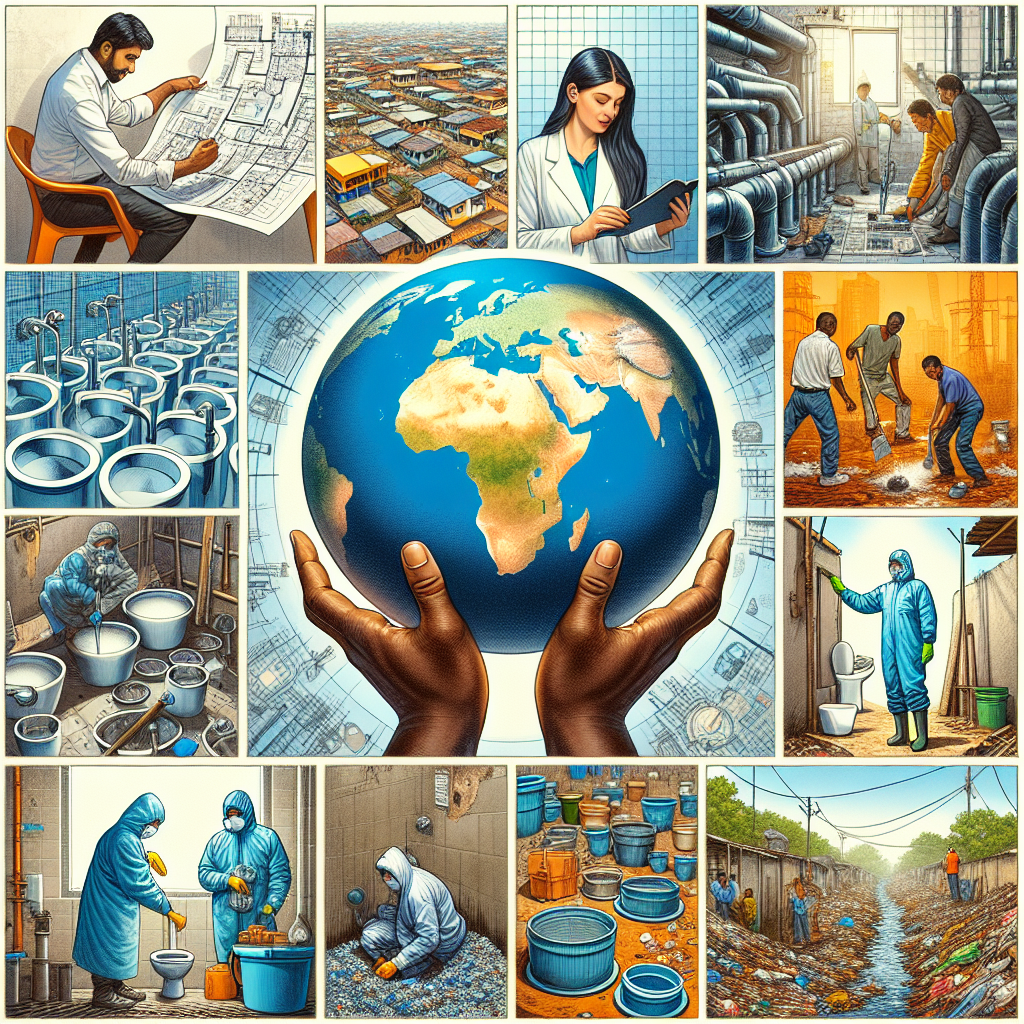
Ecological Sanitation (EcoSan) is a sustainable approach to sanitation that emphasizes the use of biological processes to treat and recycle human excreta. Its primary goals are to protect human health, preserve water resources, and recycle nutrients back into the environment. However, implementing EcoSan in coastal areas presents unique challenges, particularly due to high salinity levels in soil and water. These saline conditions can hinder the effectiveness of conventional EcoSan technologies, necessitating the development and application of specialized approaches.
In coastal regions, salinity can substantially affect the microbial processes that are essential for breaking down waste. Traditional methods, such as composting toilets and constructed wetlands, may not be as effective where high salt concentrations are present. As a result, engineers and environmental scientists have been innovating new techniques and adapting existing systems to function efficiently under those challenging conditions. This article explores the specific obstacles posed by salinity in coastal areas and the innovative EcoSan technologies designed to address these issues.
Over time, coastal populations continue to grow, exacerbating the need for effective sanitation solutions that can cope with their unique environmental constraints. Salinity, in particular, hinders the decomposition of waste and the safe reuse of treated by-products, which is a cornerstone of EcoSan. This comprehensive guide sheds light on the advancements made in the field and offers practical insights into deploying effective EcoSan systems in saline environments.
Understanding Salinity Challenges in Coastal Areas
Salinity refers to the presence of salt in soil and water, often measured in parts per thousand (ppt). In coastal areas, naturally high salinity levels are further intensified by human activities, such as irrigation with saline water and seawater intrusion. These conditions pose significant hurdles for EcoSan systems since many microbial processes necessary for waste decomposition are inhibited by high salt concentrations.
One of the primary challenges posed by salinity is its impact on soil structure. Salty soils tend to have poor aeration and drainage, affecting the efficiency of composting and other biological treatment processes. Furthermore, high salinity levels can lead to an increased risk of corrosion in sanitation infrastructure, resulting in higher maintenance costs and shorter lifespans of EcoSan systems.
Salinity also impacts plant growth, an essential component of constructed wetlands often employed in EcoSan systems. Plants like reed beds and other wetland flora are less likely to thrive in saline environments, reducing the efficiency of phytoremediation, a process where plants remove contaminants from the environment. Therefore, understanding these salinity challenges is crucial for developing robust and effective EcoSan solutions tailored for coastal regions.
Adaptation of Composting Toilets for Saline Conditions
Composting toilets are a cornerstone of EcoSan technology, offering an effective way to manage human waste without the need for water-based sewage systems. However, in coastal regions, high salinity levels present unique challenges. Traditional composting relies heavily on microbial activity, which is significantly hampered by saline conditions.
To counter these challenges, engineers have been developing saline-resistant microbial strains specifically tailored for high-salt environments. These microbial strains can better withstand the osmotic pressure exerted by salt, ensuring the composting process continues efficiently. Additionally, the incorporation of specialized additives that bind with salt ions can help mitigate the adverse effects of salinity on composting processes.
Optimizing the physical design of composting toilets also plays a critical role. Systems that promote better aeration and moisture control can compensate for the negative effects of saline soils. For example, porous materials in composting bins can facilitate improved air circulation, which is crucial for the aerobic decomposition of organic matter. By addressing these specific salinity challenges, composting toilets can remain an effective EcoSan solution in coastal areas.
Constructed Wetlands and Saline-resistant Plant Species
Constructed wetlands are another popular EcoSan technology, utilizing natural processes involving wetland vegetation, soils, and associated microbial assemblages to treat wastewater. However, the high salinity levels commonly found in coastal areas can impede the growth and functionality of typical wetland plants used in these systems.
To overcome this, researchers have been identifying and cultivating saline-resistant plant species capable of thriving in high-salt environments. Halophytes, which are plants that naturally grow in salty conditions, have shown considerable promise. Species such as Salicornia, Spartina, and certain types of sedges can adapt well to saline soils and water, thus maintaining the efficiency of constructed wetlands.
Moreover, incorporating design modifications, such as raised beds and improved filtration layers, can help mitigate the effects of salinity on constructed wetlands. Proper plant selection, combined with engineering tweaks, ensures that these EcoSan systems can effectively purify wastewater in coastal regions while remaining cost-effective and low-maintenance.
Innovative Biofiltration Techniques
Biofiltration is an advanced EcoSan technique that uses biological processes to filter and purify wastewater. However, saline environments present unique challenges for maintaining the microbial communities essential to biofiltration. High salinity can disrupt microbial cell function and lead to reduced system efficiency.
One innovative solution involves the use of biofilms comprised of saline-tolerant bacteria. These biofilms can form protective layers that shield microbial communities from the adverse effects of salt. The incorporation of modern materials, such as biochar, can provide a conducive environment for these resilient microbial colonies to thrive.
Additionally, integrating anaerobic digestion processes, which are less affected by salinity compared to aerobic processes, can improve the overall efficiency of biofiltration systems in coastal areas. By leveraging these advanced techniques, EcoSan projects can achieve efficient waste treatment while coping with the salinity challenges present in coastal environments.
Membrane Filtration Technologies
Membrane filtration technologies, like reverse osmosis (RO) and nanofiltration (NF), have been widely used for desalinating water and can be adapted for EcoSan purposes in saline environments. These technologies work by forcing wastewater through membranes that selectively block contaminants, including salt.
Membrane filtration offers several advantages, such as a high level of contaminant removal and the ability to operate under various environmental conditions. However, they also come with high energy demands and the potential for membrane fouling, which can be exacerbated by high salt concentrations.
New advancements in membrane materials and designs are helping to address these challenges. For instance, the development of saline-resistant and anti-fouling membranes can enhance longevity and performance. Additionally, hybrid systems that combine membrane filtration with biofiltration or composting processes can create more robust and versatile EcoSan solutions for coastal regions.
Conclusion
EcoSan technologies hold significant promise for improving sanitation in coastal areas, provided that they are adapted to manage the unique challenges posed by high salinity levels. From saline-resistant microbes and plant species to innovative biofiltration and membrane technologies, a variety of approaches can be employed to enhance the effectiveness of EcoSan systems.
Incorporating these advancements into existing frameworks not only ensures successful waste treatment but also promotes the sustainable reuse of resources, aligning with the core principles of EcoSan. Ultimately, the continual development and adaptation of these technologies are essential for meeting the growing sanitation needs in coastal regions worldwide.
Investing in research and collaboration between engineers, environmental scientists, and local communities will drive further innovation, leading to more resilient and efficient EcoSan systems. By addressing the salinity challenges head-on, we can create sustainable and effective sanitation solutions that protect both human health and the environment in our coastal areas.