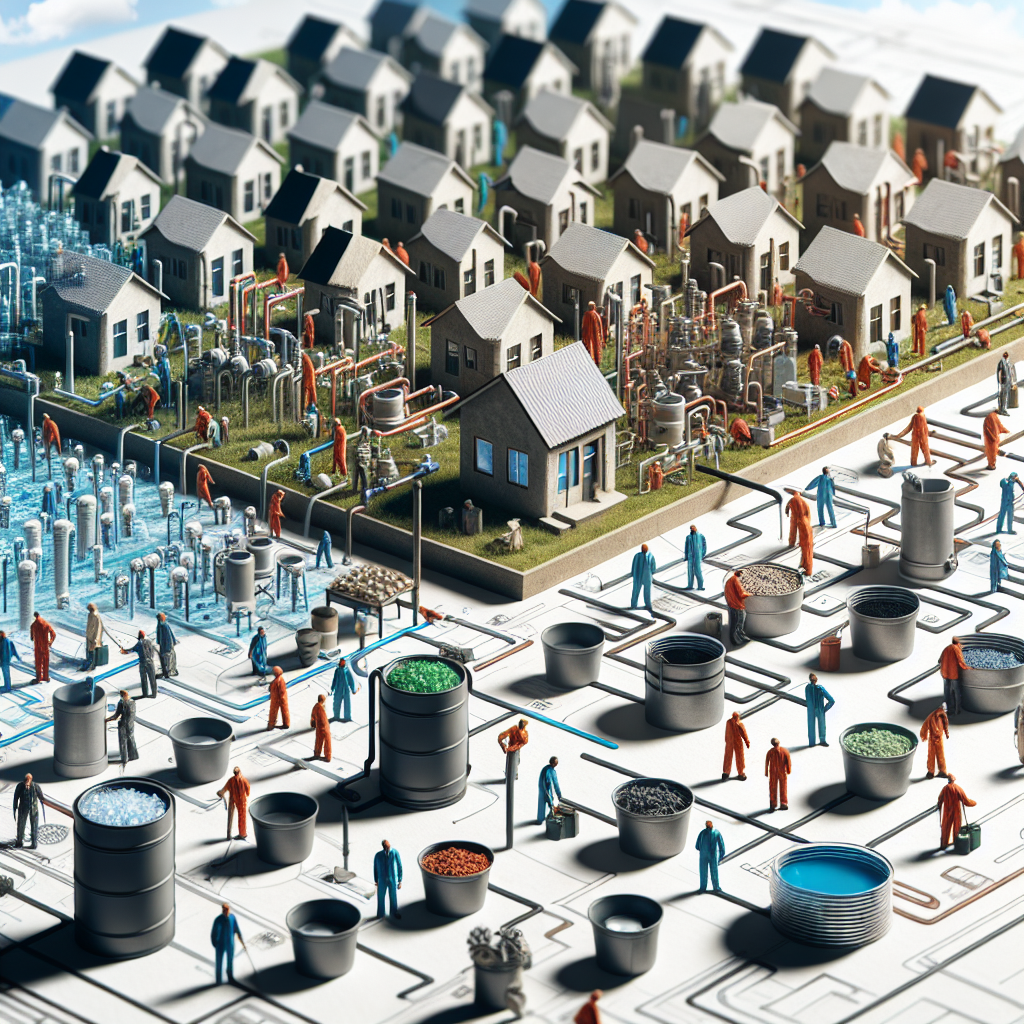
Ecological sanitation, often abbreviated as EcoSan, represents a paradigm shift in our approach to waste management, particularly in rural areas where conventional sewage systems are either impractical or too costly to install. The core ethos of EcoSan is to turn waste into a resource, thereby promoting environmental sustainability and public health. In this article, we explore cutting-edge EcoSan technologies and how they are poised to revolutionize septic system management in rural landscapes.
Introduction: The Necessity of EcoSan in Rural Areas
Sanitation is a fundamental human need, closely linked with health, dignity, and environmental sustainability. While urban regions generally possess well-established sewage systems, rural areas frequently encounter challenges such as inadequate infrastructure, dispersed populations, and financial constraints. Traditional septic systems, though commonly employed, are not without flaws. They often lead to ground and surface water pollution and require regular maintenance, posing significant challenges for rural households and communities.
This is where ecological sanitation, or EcoSan, comes into play. Instead of viewing human excreta as waste, EcoSan turns it into a resource that can be safely recycled and reused. This approach not only mitigates environmental pollution but also promotes the sustainable use of resources. With EcoSan, we can achieve a more holistic sanitation model that integrates water conservation, resource recovery, and sustainable agriculture.
In recent years, various novel technologies under the EcoSan framework have emerged, offering innovative solutions to septic system management in rural areas. These technologies range from urine-diverting dry toilets (UDDTs) to constructed wetlands and biogas digesters, each serving a specific purpose within the broader EcoSan spectrum.
This article delves into some of these advanced EcoSan technologies, highlighting their principles, applications, and benefits. By understanding and implementing these novel approaches, rural communities can achieve improved sanitation outcomes, contributing to public health, environmental conservation, and sustainable development.
Urine-Diverting Dry Toilets (UDDTs): A Resourceful Solution
One of the most noteworthy EcoSan technologies is the urine-diverting dry toilet (UDDT). Unlike conventional flush toilets that mix urine and feces, UDDTs separate these waste streams at the source. This separation is beneficial for several reasons. Firstly, urine, which is rich in nitrogen, phosphorus, and potassium, can be directly used as a fertilizer in agriculture, significantly reducing the need for synthetic fertilizers. Secondly, by keeping feces dry, the UDDT efficiently reduces odors and facilitates safer and easier handling of waste.
UDDTs operate on the principle of dehydration and storage. The dry fecal matter can be safely composted or used as a soil conditioner after a period of storage to ensure pathogen die-off. This process not only enhances soil fertility but also contributes to carbon sequestration, playing a part in mitigating climate change.
The implementation of UDDTs in rural areas has been transformative. Communities adopting this technology have reported improved hygiene conditions, reduced environmental pollution, and enhanced agricultural productivity. Moreover, UDDTs require minimal water, making them ideal for arid and drought-prone regions.
Despite their numerous advantages, challenges like cultural acceptance and initial costs remain. However, with proper education and community involvement, these hurdles can be overcome, leading to successful long-term adoption.
Constructed Wetlands: Harnessing Nature for Waste Treatment
Constructed wetlands are engineered systems that mimic the processes of natural wetlands to treat wastewater. These systems utilize aquatic plants, microorganisms, and natural filtration processes to remove contaminants from wastewater. Constructed wetlands can be considered low-cost, low-energy alternatives to traditional wastewater treatment plants, making them particularly suited to rural settings.
There are two main types of constructed wetlands: surface flow wetlands and subsurface flow wetlands. Surface flow wetlands have water flowing above the ground surface, whereas subsurface flow wetlands have water moving through a gravel or sand substrate planted with wetland vegetation. Both types effectively treat wastewater, removing pollutants such as organic matter, nutrients, pathogens, and heavy metals.
Constructed wetlands offer multiple benefits beyond water treatment. They provide habitat for wildlife, enhance local biodiversity, and offer aesthetic and recreational value to communities. Additionally, these systems can be integrated with agricultural landscapes, using treated water for irrigation purposes and thus promoting water conservation.
The implementation of constructed wetlands in rural areas has demonstrated promising results. Communities benefit from improved water quality, reduced health risks, and the creation of multifunctional landscapes. However, proper design, operation, and maintenance are crucial for the success of these systems. Local capacity building and knowledge transfer are essential to ensure sustainable management and long-term benefits.
Biogas Digesters: Turning Waste into Energy
Biogas digesters represent another groundbreaking EcoSan technology with potential for rural areas. These anaerobic digestion systems convert organic waste, including human excreta, into biogas and nutrient-rich slurry. The biogas, primarily composed of methane, can be used as a clean energy source for cooking, heating, and electricity generation, thus reducing reliance on traditional biomass fuels and fossil fuels.
The process of anaerobic digestion takes place in a sealed tank, where microorganisms break down organic matter in the absence of oxygen. This microbial activity produces biogas and digestate, the latter of which can be used as a high-quality organic fertilizer.
Biogas digesters offer several advantages. They mitigate greenhouse gas emissions by capturing methane, which would otherwise be released into the atmosphere. They provide a renewable energy source, reducing household energy costs and improving indoor air quality by replacing smoky biomass stoves. Additionally, the digestate enhances soil fertility, promoting sustainable agricultural practices.
In rural areas, biogas digesters can be integrated with other EcoSan technologies, creating a closed-loop system where waste is efficiently managed and resources are maximized. Successful implementation of biogas digesters requires community engagement, technical training, and appropriate financing mechanisms. By addressing these factors, rural communities can unlock the full potential of biogas technology for sustainable development.
Composting Toilets: Closing the Nutrient Loop
Composting toilets are another pivotal EcoSan technology that offers an effective solution for rural sanitation. These toilets compost human excreta on-site, converting it into humus-like material that can be safely used as a soil amendment. Composting toilets do not require water for flushing, making them highly suitable for water-scarce regions.
Composting toilets operate through aerobic decomposition, where microorganisms break down organic matter in the presence of oxygen. The process generates heat, which helps in pathogen reduction and the stabilization of waste. The resulting compost is rich in organic matter and nutrients, enhancing soil structure and fertility.
Various designs of composting toilets exist, ranging from simple pit composting systems to more advanced continuous composting units. Some models incorporate urine diversion to enhance compost quality and facilitate nutrient recycling. Regular maintenance, including turning the compost and managing moisture levels, is essential for optimal performance.
Composting toilets contribute to environmental sustainability by reducing water consumption, minimizing pollution, and closing the nutrient loop. By processing human waste on-site, they eliminate the need for costly and resource-intensive sewage infrastructure. Moreover, the use of compost as a soil amendment supports sustainable agriculture and improves food security in rural areas.
The adoption of composting toilets in rural areas requires community education and capacity building. Proper training on toilet use, maintenance, and compost utilization ensures the successful implementation and long-term benefits of this technology. By empowering communities with the knowledge and skills needed for composting toilets, rural sanitation can be transformed into a sustainable and resilient system.
Waterless Urinals: Efficient and Eco-Friendly
Waterless urinals are an innovative EcoSan technology that offers significant water savings and environmental benefits. These urinals operate without the need for flushing water, relying on gravity and chemical barriers to prevent odors and ensure proper waste disposal.
The design of waterless urinals typically includes a trap or sealant, such as a biodegradable liquid or replaceable cartridge, that blocks urine odors from escaping. This sealant allows urine to pass through while preventing odors from rising back into the restroom.
Waterless urinals offer several advantages. They drastically reduce water consumption, saving thousands of gallons of water per urinal annually. They also reduce maintenance and operational costs associated with plumbing and flushing mechanisms. Additionally, by eliminating the need for water, waterless urinals contribute to the conservation of freshwater resources.
In rural settings, waterless urinals can be integrated with other EcoSan technologies, such as UDDTs or composting toilets, to create comprehensive and sustainable sanitation systems. The urine collected from these urinals can be diverted for agricultural use, providing a valuable source of nutrients for crop production.
Successful implementation of waterless urinals requires proper installation, maintenance, and periodic replacement of the sealing mechanisms. Community education and awareness campaigns are crucial to ensure the acceptance and proper use of waterless urinals. By adopting this technology, rural communities can achieve significant water savings and environmental benefits, while promoting sustainable sanitation practices.
Conclusion: Embracing EcoSan for a Sustainable Future
The adoption of advanced EcoSan technologies in rural areas offers a transformative opportunity to address sanitation challenges while promoting environmental sustainability. Urine-diverting dry toilets, constructed wetlands, biogas digesters, composting toilets, and waterless urinals represent innovative solutions that turn waste into valuable resources.
These technologies offer numerous benefits, including improved hygiene and public health, reduced water consumption, enhanced agricultural productivity, and the mitigation of environmental pollution. By leveraging the principles of ecological sanitation, rural communities can achieve sustainable and resilient sanitation systems that contribute to overall well-being and development.
However, successful implementation of EcoSan technologies requires a holistic approach. Community engagement, education, and capacity building are essential to ensure acceptance and proper utilization of these systems. Technical training, financial support, and policy frameworks are also critical to facilitate the adoption and scaling of EcoSan technologies in rural areas.
In conclusion, embracing EcoSan technologies offers a pathway towards sustainable sanitation in rural areas. By shifting our perspective from waste to resource, we can achieve holistic and integrated solutions that benefit both people and the environment. Through collaboration, innovation, and community-driven approaches, we can create a future where rural sanitation is not only effective but also environmentally sustainable and socially inclusive.