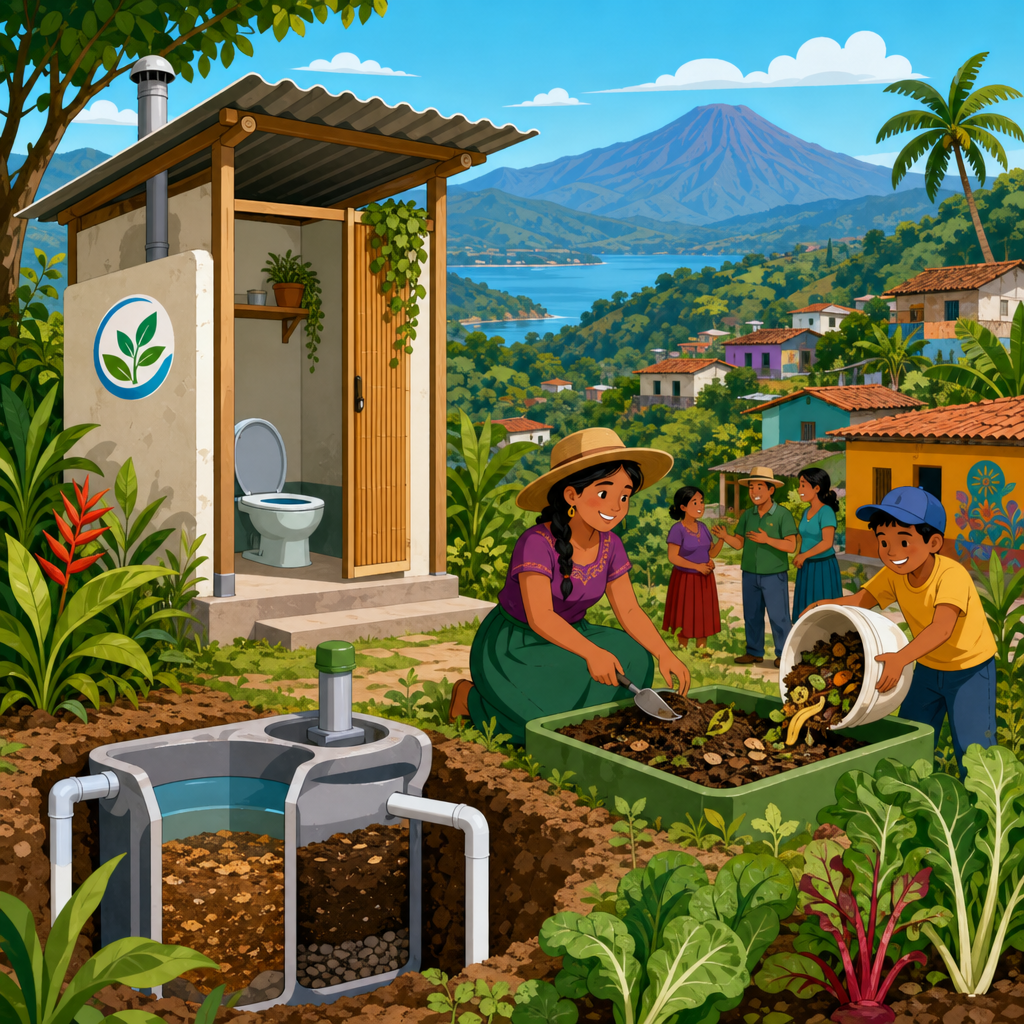
Ecological sanitation, commonly shortened to EcoSan, plays a practical and increasingly important role in disaster risk reduction because it treats human waste as a resource, protects water sources, and keeps sanitation services functioning when floods, storms, droughts, conflict, or infrastructure failure overwhelm conventional sewer systems. In field programs I have supported and reviewed, the strongest EcoSan results appear where planners stop treating toilets as isolated hardware and instead design a full risk-reduction system: safe containment, urine and feces separation where appropriate, pathogen reduction through storage or composting, nutrient reuse, and local operation that does not depend on uninterrupted piped water or centralized treatment plants.
EcoSan refers to sanitation approaches that prevent pollution and recover value from excreta, usually nutrients, organic matter, and sometimes water. Common models include urine-diverting dry toilets, composting toilets, container-based systems, and dehydrating vault toilets. Disaster risk reduction means reducing exposure, vulnerability, and potential losses before hazards turn into crises. Put together, EcoSan in disaster risk reduction means building sanitation systems that continue working during shocks, reduce disease transmission afterward, and help communities recover faster with lower environmental damage. This matters because sanitation failures after disasters are not secondary problems. They are often catalysts for diarrhea outbreaks, cholera transmission, groundwater contamination, school closures, loss of dignity, and expensive emergency responses that linger long after headlines fade.
The case for EcoSan is strongest in places where standard flush systems are fragile, unaffordable, or physically impossible. Flood-prone settlements with shallow water tables, cyclone-exposed coastal villages, informal urban neighborhoods without sewers, and drought-affected rural districts all face the same core problem: conventional sanitation needs stable water supply, intact pipelines, accessible desludging, and centralized treatment. Disasters interrupt each link. EcoSan can reduce those dependencies. It is not a universal replacement for every sanitation technology, and poor design can fail badly, but across diverse EcoSan success stories the pattern is clear. When systems are adapted to local climate, culture, maintenance capacity, and agricultural demand, they do more than manage waste. They strengthen community resilience before, during, and after emergencies.
Why EcoSan Fits Disaster Risk Reduction Better Than Conventional Sanitation
EcoSan supports disaster risk reduction because it addresses the three sanitation weaknesses that repeatedly appear in emergency assessments: dependence on water, dependence on vulnerable infrastructure, and unsafe waste accumulation near people and drinking water. A urine-diverting dry toilet can keep operating when pumps fail or electricity is cut. A raised dehydration vault can perform in flood zones where pit latrines collapse or overflow. Container-based sanitation can be deployed in dense settlements where digging is impossible after earthquakes or in camps where groundwater contamination must be avoided. These are not theoretical advantages. They are design features that directly reduce the probability of secondary public health emergencies.
In practical terms, EcoSan reduces hazard amplification. After major floods, I have seen lined pits and septic tanks inundated, sending fecal sludge into surface water and household compounds. By contrast, elevated or sealed EcoSan units can reduce infiltration and overtopping if they are sited correctly and built with resilient superstructures, tie-downs, ventilation protection, and accessible emptying plans. In drought settings, dry or low-water systems preserve scarce drinking water. In places with disrupted roads, decentralized treatment lowers dependence on long-distance sludge transport. And where fertilizer prices spike after a disaster, sanitized urine or composted material can support household agriculture, helping recovery while reducing waste disposal burdens.
None of this means EcoSan is automatically safer. Risk reduction depends on disciplined management. Urine diversion requires users to understand correct use. Pathogen reduction requires adequate storage time, dehydration, composting temperatures, or secondary treatment. Reuse requires barriers such as crop restrictions, application timing, personal protective equipment, and hygiene training. The systems that succeed are the ones built as services, not just structures.
Diverse EcoSan Success Stories Across Contexts
The most useful way to understand EcoSan is through varied success stories, because performance depends heavily on context. In flood-prone Bangladesh and parts of coastal South Asia, raised latrines and urine-diverting systems have been promoted to reduce contamination during monsoon flooding and cyclones. The lesson from these programs is that elevation alone is not enough; stairs, child-friendly access, anchored slabs, and clear feces removal protocols determine whether facilities are used during storms rather than abandoned. Where these details were addressed, communities reported cleaner compounds and fewer periods of open defecation during flood events.
In Haiti after the 2010 earthquake, container-based and urine-diverting dry toilet models gained attention because damaged infrastructure and dense temporary settlements made pits and flush systems difficult or dangerous. Organizations working there demonstrated that excreta collection, off-site treatment, and compost production could provide a safer interim pathway than unmanaged waste accumulation. The key success factor was service reliability. Users accepted non-sewered systems when collection was predictable, toilets were clean, and treatment sites were professionally managed.
In arid parts of East Africa, including Ethiopia and Kenya, EcoSan projects have shown value where water scarcity and poor soils intersect. Farmers using sanitized urine and composted fecal matter on trees, maize, or household gardens often report visible yield improvements, particularly when conventional fertilizer is expensive or unavailable. The sanitation benefit is immediate, but the recovery dividend comes from food production and income. In southern Africa, several Zimbabwe EcoSan initiatives highlighted both promise and caution: communities appreciated fertilizer value, yet some sites struggled where user training was weak or where households lacked labor to manage vault emptying. These mixed outcomes are valuable because they show that successful EcoSan is as much social organization as engineering.
| Context | EcoSan approach | Risk reduced | Main success factor |
|---|---|---|---|
| Flood-prone coastal villages | Raised urine-diverting toilets | Overflow and water contamination | Elevation plus durable access and anchoring |
| Post-earthquake dense settlements | Container-based sanitation | Unsafe pit digging and waste exposure | Reliable collection and treatment service |
| Drought-affected rural areas | Dry or composting toilets | Excess water use and failing pits | Simple operation and agricultural reuse demand |
| High water table communities | Sealed above-ground vault systems | Groundwater pollution | Correct siting and pathogen reduction protocol |
Elsewhere, Sweden, Germany, and parts of rural Mexico have long provided evidence that source-separating sanitation can work at household and institutional scale when supported by standards, maintenance routines, and agricultural partnerships. Those settings differ from disaster-prone low-income contexts, but they prove a crucial point: resource-oriented sanitation is technically credible when managed seriously. The hub lesson across diverse EcoSan success stories is that no single design wins everywhere. The winning pattern is fit-for-purpose design tied to operations, user acceptance, and a safe end-use or treatment pathway.
How EcoSan Reduces Health, Environmental, and Recovery Risks
EcoSan reduces health risk first by interrupting the fecal-oral transmission routes that accelerate after disasters. When toilets fail, pathogens move into hands, water, soil, food, and flies. A properly managed EcoSan system contains excreta, limits direct contact, and allows treatment before reuse or disposal. The World Health Organization sanitation safety planning framework is useful here because it forces teams to identify hazards along the entire chain, from user interface to storage, transport, treatment, and end use. The best EcoSan programs apply this logic even when they do not formally label it.
Environmental protection is the second major benefit. After storms and floods, nitrogen and phosphorus from waste can reach rivers, ponds, and shallow wells. In fragile watersheds and coastal areas, nutrient pollution compounds existing disaster stress. Source-separating systems keep nutrient flows manageable and can redirect them to controlled agricultural use. That turns a pollutant into an input. In practice, urine contains most of the nitrogen and potassium excreted by humans, while feces contain much of the phosphorus and organic matter. Capturing these streams separately makes treatment and reuse easier.
Recovery risk is reduced because EcoSan can lower operating costs and create local value. A household with a functioning toilet is less likely to spend scarce cash on emergency medical care linked to sanitation-related disease. A farmer using sanitized nutrients may restore a damaged garden faster. A municipality using decentralized treatment avoids waiting for expensive sewer reconstruction before basic sanitation can resume. These benefits are strongest where the supply chain for spare parts, containers, cover material, and treatment oversight is local. Imported components often undermine resilience because replacements disappear precisely when they are needed most.
What Makes EcoSan Projects Succeed in Disaster-Prone Areas
From reviewing successful and failed initiatives, I would isolate six factors that consistently determine outcomes. First is hazard-specific design. Flood areas need raised platforms, sealed or lined containment, anti-float measures, and drainage control. Cyclone zones need stronger superstructures and roof fastening. Drought zones need low-water or dry systems and handwashing options that conserve water. Earthquake areas need lightweight, repairable components and flexible service logistics.
Second is user-centered design. Toilets fail when they are too dark, too hot, hard to clean, unsafe for women at night, or confusing for children and older adults. Urine diversion especially depends on correct pan geometry, splash control, and instructions people can understand quickly. Third is service planning. Every successful EcoSan project answers the same question in advance: who empties, who transports, who treats, who monitors, and who pays? If those responsibilities are vague, the technology usually degrades into unsafe storage.
Fourth is treatment discipline. Composting is not simply piling waste and hoping for the best. It requires moisture balance, carbon addition, aeration, time, and verification. Dehydration vaults require ash, lime, or dry cover material and protected storage periods. Container-based systems need secure transfer and treatment hubs. Fifth is community engagement. The strongest programs recruit local masons, women’s groups, farmers, teachers, and health workers early, then use demonstration plots or model toilets to build trust. Sixth is institutional backing. Local government approval, land for treatment, extension support for reuse, and integration with disaster preparedness plans all improve durability.
One practical insight from field implementation is that demonstration value matters enormously. Households may not care about nutrient recovery as an abstract environmental principle, but they care when they see greener banana plants or lower toilet maintenance costs. Successful EcoSan projects turn invisible public health benefits into visible household benefits.
Limits, Tradeoffs, and How to Link This Hub to Deeper Case Studies
EcoSan has limits, and acknowledging them makes implementation stronger. User acceptance can be fragile where handling transformed excreta is taboo. Dry systems may perform poorly if urine diversion is inconsistent or if heavy rain enters the vault. Compost quality can be unreliable without supervision. Reuse is not always appropriate near certain crops, in cold climates with slow pathogen die-off, or where there is no safe market or agricultural demand. In dense urban areas, household-managed systems may need to shift toward professionally serviced container models rather than expecting each family to manage treatment.
Cost comparisons also require honesty. A simple pit latrine can be cheaper upfront than an EcoSan unit, but lower upfront cost is not the same as lower risk or lower lifecycle cost. In flood zones, repeatedly rebuilding damaged pits can cost more over time than installing a resilient elevated system. At the same time, a poorly supported EcoSan rollout can waste money if households stop using it. The correct comparison is always hazard-adjusted lifecycle performance, not just initial construction price.
As a sub-pillar hub under case studies and success stories, this page should connect readers to deeper articles on flood-resilient EcoSan in coastal communities, post-earthquake container sanitation, school EcoSan systems in water-scarce regions, farmer adoption of urine reuse, municipal treatment models for container-based services, and lessons from projects that underperformed. That internal structure helps readers move from broad understanding to decision-ready detail. The central message remains consistent across all those stories: EcoSan contributes to disaster risk reduction when it is planned as a resilient sanitation service with safe reuse or treatment, not when it is installed as a stand-alone toilet and left unsupported.
EcoSan is not a niche idea for environmental enthusiasts. It is a serious sanitation strategy for places where disasters repeatedly expose the weakness of water-intensive, centralized, or poorly contained systems. The strongest evidence from diverse EcoSan success stories shows that these approaches can protect water sources, maintain sanitation through shocks, reduce disease pathways, and support recovery through nutrient reuse and local service models. They work best where design matches the hazard, operations are defined, treatment is verified, and communities see clear practical benefits. They work poorly when projects assume toilets alone will change behavior or when reuse is promoted without safeguards.
For practitioners, the key takeaway is straightforward. Start with the hazard profile and sanitation chain, not the product catalog. Choose the EcoSan model that fits flood risk, water scarcity, density, cultural norms, and maintenance capacity. Build in training, monitoring, and an end-use or disposal plan from day one. For policymakers, include EcoSan in disaster preparedness, climate adaptation, and rural and peri-urban sanitation strategies rather than treating it as an experimental add-on. For readers exploring this hub, the next step is to review the linked case studies by context and compare what made each model succeed. That is where EcoSan moves from concept to replicable disaster risk reduction practice.
Frequently Asked Questions
What is EcoSan, and why is it important in disaster risk reduction?
Ecological sanitation, or EcoSan, is a sanitation approach that safely manages human waste while recognizing that nutrients, organic matter, and even water can be recovered and reused when handled correctly. In disaster risk reduction, that matters because conventional sanitation systems often fail under stress. Floods can overwhelm sewers and septic systems, storms can damage treatment plants, droughts can make flush toilets impractical, and conflict or infrastructure breakdown can interrupt water supply, waste collection, and maintenance services. EcoSan systems are designed to reduce those vulnerabilities by separating, containing, treating, and reusing waste in ways that do not depend as heavily on centralized pipes, large volumes of water, or uninterrupted utility networks.
Its value in disaster risk reduction is especially clear when sanitation is viewed as part of a broader resilience strategy rather than as a stand-alone toilet project. A well-planned EcoSan program can help prevent fecal contamination of drinking water, reduce disease outbreaks after emergencies, and maintain basic sanitation services when standard systems are damaged or inaccessible. Because many EcoSan models are decentralized, they can continue functioning even when roads are blocked, electricity is unreliable, or treatment infrastructure is offline. Just as importantly, they can be adapted to local environmental risks such as high water tables, flood-prone areas, water scarcity, dense settlements, or remote rural settings.
EcoSan also supports recovery and long-term resilience. Instead of treating human waste only as a disposal problem, it can create safe pathways for nutrient recovery and soil improvement, which is especially useful where disasters disrupt food systems and livelihoods. When combined with community training, operation and maintenance planning, safe reuse protocols, and public health oversight, EcoSan becomes more than a sanitation technology. It becomes a practical risk reduction tool that protects health, conserves water, and strengthens a community’s ability to cope with shocks and recover more quickly.
How does EcoSan help protect water sources during floods, storms, and other emergencies?
One of the biggest sanitation dangers during disasters is the contamination of surface water and groundwater with untreated human waste. When pit latrines flood, septic tanks overflow, or sewer lines break, pathogens can spread rapidly into wells, rivers, drainage channels, and household water storage. EcoSan helps reduce that risk by using sanitation designs that limit direct contact between excreta and the surrounding environment. Many EcoSan systems rely on urine diversion, dry containment, raised structures, sealed vaults, or controlled composting chambers, all of which can reduce leakage and make waste easier to manage safely under unstable conditions.
In flood-prone areas, elevated or above-ground EcoSan designs are particularly valuable because they avoid placing untreated waste in direct contact with saturated soils or rising groundwater. That can make a significant difference in emergency settings where contamination pathways multiply quickly. Instead of relying on pits that may inundate or collapse, properly designed EcoSan systems can maintain separation between human waste and water sources, helping to reduce the spread of diarrheal disease, cholera, dysentery, hepatitis, and other waterborne illnesses that often surge after disasters. This protective function is not automatic, however; it depends on correct siting, sound construction, and local risk assessment.
EcoSan also strengthens water protection by reducing the need for flush water. In droughts or disrupted supply conditions, conventional toilets may stop functioning because there simply is not enough water to move waste through the system safely. Dry or low-water EcoSan options avoid that dependency, which means communities are less likely to resort to unsafe open defecation or improvised disposal methods that contaminate water points. When planners integrate EcoSan with drainage management, hygiene education, fecal sludge handling, and groundwater protection measures, it becomes a powerful part of emergency preparedness and a much more reliable barrier between sanitation failure and public health crisis.
Can EcoSan systems continue working when conventional sanitation infrastructure fails?
Yes, and that is one of the most important reasons EcoSan is increasingly discussed in resilience and disaster planning. Conventional sanitation systems often depend on multiple interconnected services: piped water, functioning sewers, pumping stations, treatment plants, electricity, fuel, spare parts, and access for repair crews. In emergencies, any one of those links can break. EcoSan systems are often more resilient because they are decentralized and can be designed to operate with minimal external inputs. They do not necessarily require continuous water supply, grid power, or long-distance transport of waste, which makes them especially useful when infrastructure is damaged or public services are interrupted.
That said, continuity does not happen simply because a toilet is labeled EcoSan. Performance depends on whether the system has been designed around realistic use patterns, local hazards, maintenance capacity, and safe emptying arrangements. For example, a urine-diverting dry toilet may remain functional during a drought or sewer outage, but only if users understand how to use it, drying materials are available, vaults can be alternated properly, and treated outputs are handled safely. In a displacement camp or post-disaster settlement, a robust EcoSan solution may need to include user orientation, cleaning routines, container management, gender-sensitive design, child-friendly access, lighting, and security, all of which affect whether the facility remains usable over time.
The strongest EcoSan results usually appear where planners stop treating toilets as isolated hardware and instead build complete sanitation service systems around them. That means considering supply chains for construction materials, local operators, behavior change support, monitoring, and contingency plans for extreme weather or access disruptions. When those elements are in place, EcoSan can provide a level of continuity that centralized sanitation often cannot match during crises. It offers communities a practical way to preserve sanitation services, reduce exposure to disease, and maintain dignity even when larger infrastructure networks are under severe stress.
What types of disasters or high-risk settings are best suited to EcoSan solutions?
EcoSan is not a one-size-fits-all answer, but it is especially useful in settings where conventional sanitation is structurally vulnerable. Flood-prone communities are an obvious example because pit latrines and septic systems can overflow or leach into water sources during heavy rains. Areas with high water tables also benefit from EcoSan approaches that keep waste above ground or in sealed containment structures. In drought-affected regions, EcoSan becomes attractive because it reduces or eliminates the need for flushing water, preserving scarce supplies while keeping sanitation available. These features make it relevant in both sudden-onset disasters and slow-onset crises linked to climate stress.
It is also well suited to remote communities, informal settlements, fragile states, and conflict-affected areas where centralized sewer expansion may be unrealistic, too costly, or too easily disrupted. In these environments, decentralized sanitation offers flexibility and can often be deployed in stages. EcoSan can support schools, health posts, temporary settlements, peri-urban neighborhoods, and rural households when local authorities and aid actors need practical sanitation options that do not depend on fully functioning municipal systems. In recovery phases, it can also help communities rebuild in safer ways instead of restoring the same vulnerable sanitation patterns that failed before.
However, suitability depends on more than hazard type. Social acceptance, land availability, reuse practices, maintenance systems, regulation, and institutional support all matter. Some locations may require highly engineered EcoSan models, while others can succeed with simpler, community-managed systems. The best fit comes from matching the sanitation design to the actual risk environment and service capacity. A flood-resilient toilet that no one can maintain is not resilient in practice. A dry sanitation system with strong local management, safe reuse protocols, and clear public health safeguards often delivers far better disaster risk reduction outcomes than a technically impressive but operationally fragile alternative.
What does it take to implement EcoSan successfully as part of a disaster risk reduction strategy?
Successful EcoSan implementation starts with planning, not products. The first step is understanding the specific risks the sanitation system must withstand: flooding depth and duration, erosion, groundwater conditions, drought frequency, population density, access constraints, and potential service interruptions. From there, planners need to choose a sanitation model that aligns with those realities and with how people actually live. Household systems, shared facilities, institutional toilets, and emergency or transitional solutions all require different management arrangements. Good disaster risk reduction practice means thinking through the full sanitation chain, from user access and waste containment to treatment, storage, transport if needed, and safe end use or disposal.
Community engagement is equally important. EcoSan performs best when users understand why the system is different, how to use it correctly, and what health protections must be maintained. This includes practical training on urine diversion where relevant, adding cover material, keeping chambers dry, alternating vaults, handwashing, cleaning routines, and safe handling of treated outputs. Acceptance improves when systems are convenient, private, culturally appropriate, and designed for women, children, older adults, and people with disabilities. In emergency and high-stress settings, these details are not optional; they are central to whether sanitation remains functional and safe.
Long-term success also depends on governance and service support. Authorities, NGOs, and local service providers need clear roles for monitoring, maintenance, quality control, and public health oversight. There should be guidance on what constitutes safe treatment, how reuse is regulated, what happens when a unit is full, and how systems will be supported if disaster conditions intensify. Financing matters as well, because resilient sanitation often costs less over the full disaster cycle than repeated repair and emergency response, but only if