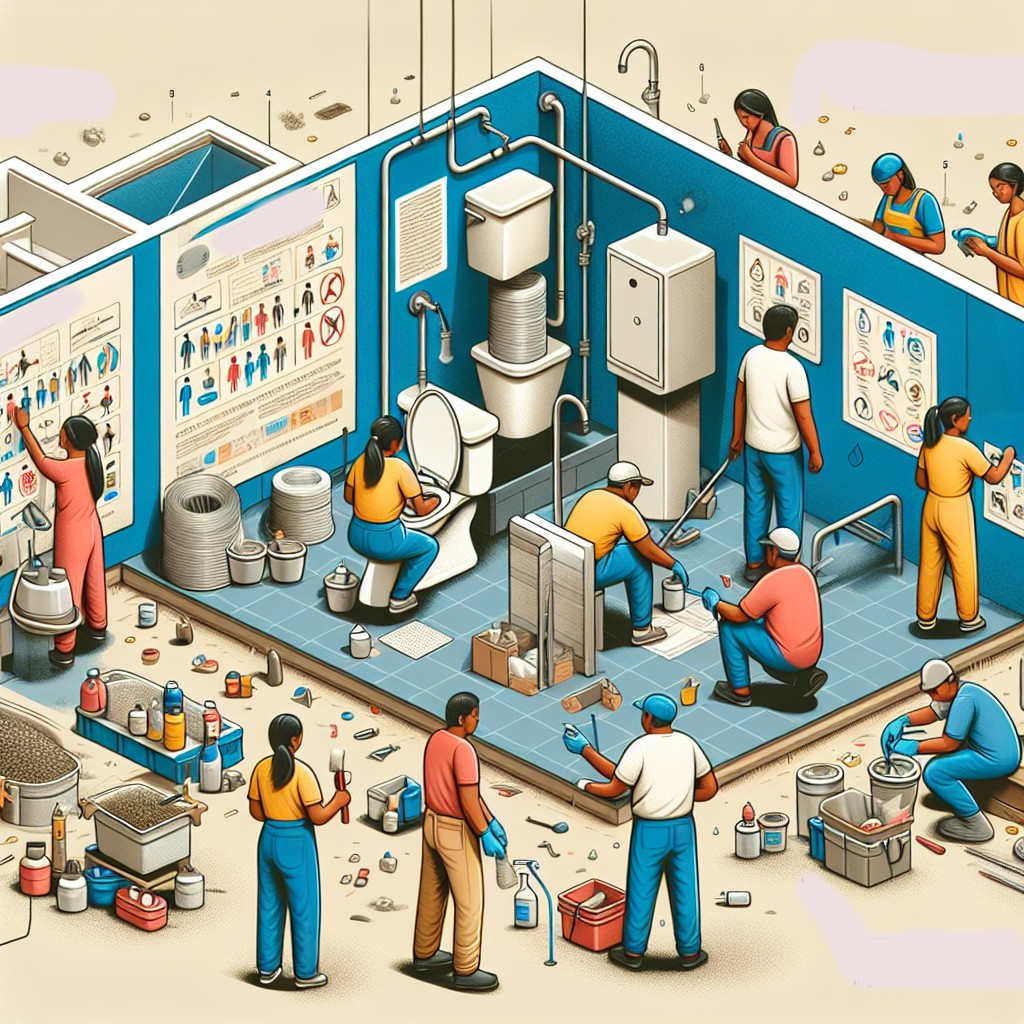
Innovations in ecological sanitation (EcoSan) foster solutions that respect both human health and the environment, aiming to close the loop in nutrient cycles while reducing pollution and conserving water. One of the intriguing aspects of EcoSan is how it interlaces traditional practices with contemporary technologies to create sustainable, culturally sensitive sanitation solutions. Among these solutions, bamboo toilets stand out as a prime example of this synergy.
Why Bamboo?
Bamboo is more than just a symbol of traditional wisdom; it’s a versatile, fast-growing plant that has been integral to building, handicrafts, and even medicine across various cultures, notably in Asia. It’s known for its strength, flexibility, and sustainability, making it an excellent material for construction, including sanitation infrastructure. Bamboo grows incredibly quickly, making it a renewable resource that is both durable and lightweight. Its rapid growth cycle and ability to thrive in diverse climates make it an environmentally friendly alternative to traditional hardwoods. Additionally, processing bamboo has a lower ecological footprint, requiring less energy compared to other building materials like plastics and metals.
The Design and Implementation of Bamboo Toilets
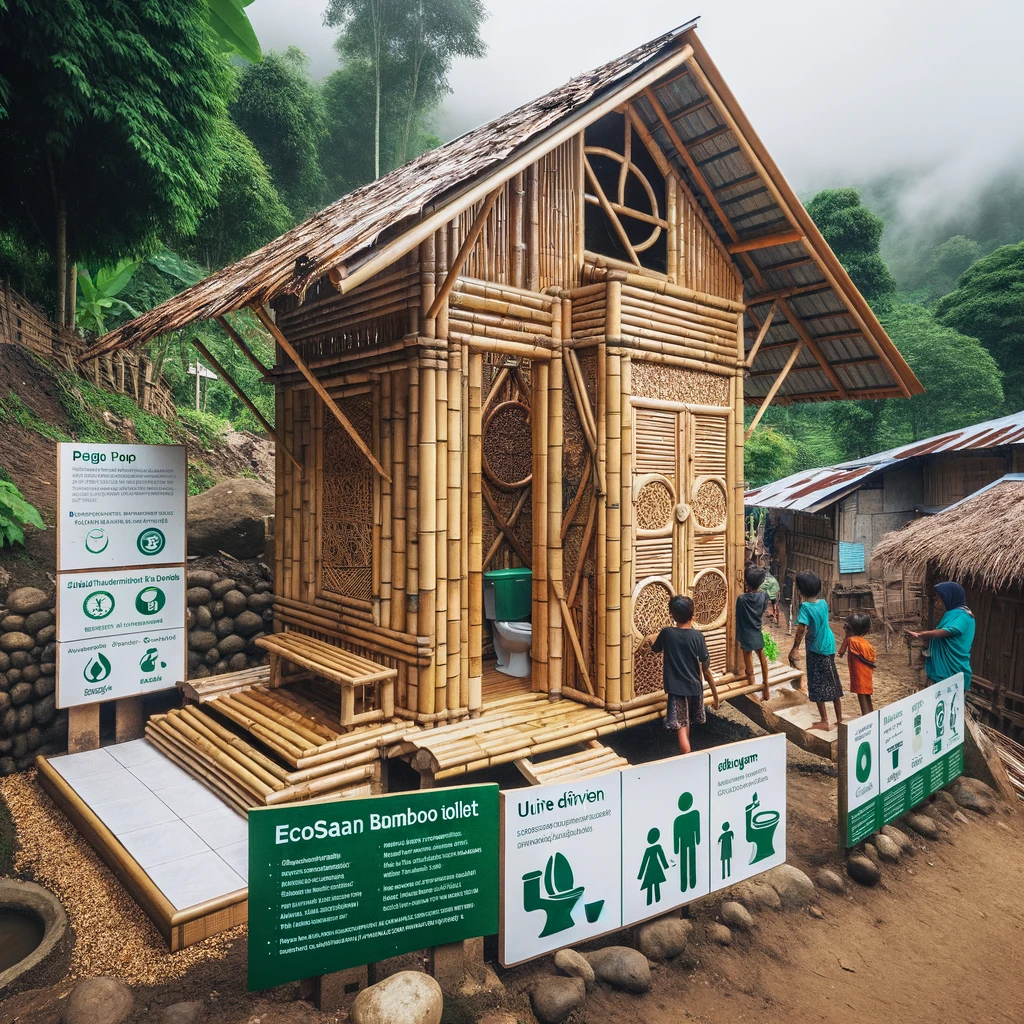
At the heart of combining traditional bamboo applications with modern ecological sanitation principles is the design of bamboo toilets. These structures utilize bamboo in various forms – from the framing and paneling to the plumbing and support structures.
Structural Benefits
Bamboo’s tensile strength is comparable to steel, which is crucial for the structural integrity required in toilet construction. Its flexibility also allows for innovative design architectures that can be both functional and aesthetic, accommodating varying terrains and climate conditions.
Ecological Advantages
Using bamboo in toilet construction significantly reduces the ecological impact typically associated with building materials. Bamboo sequesters carbon at a high rate, which can help offset the carbon footprint of the sanitation infrastructure. Moreover, when treated properly, bamboo has a long lifespan, which ensures that the ecological benefits continue over years.
Integrating Modern EcoSan Technologies
The use of bamboo in EcoSan technologies is not just about traditional building methods. It integrates seamlessly with modern ecological sanitation techniques, enhancing them with environmentally sustainable practices. One key technology used in bamboo toilets is the dry or composting toilet system, which does not rely on water for flushing.
Dry Composting Systems
These systems utilize natural processes to decompose waste, turning it into compost that can be used as fertilizer. This method is highly water-efficient and reduces the need for chemical treatments. Integrating bamboo here offers both material benefits and fits well with the ecological cycle that composting supports.
Nutrient Recovery and Reuse
In line with EcoSan principles, bamboo toilets can facilitate nutrient recovery by treating human waste as a resource rather than a waste product. The resulting compost can nourish bamboo groves or other crops, thus supporting local agriculture and maintaining soil health in the community.
Cultural Relevance and Community Acceptance
It’s important to consider that the success of any sanitary solution depends significantly on its acceptance and usability within the community it serves. Bamboo, being a culturally significant material in many regions around the world, naturally enhances community engagement and acceptance. Educational programs and community-driven designs can further enhance this, turning a simple toilet into a point of community pride and a symbol of environmental stewardship.
These restrooms do more than just serve a basic human need; they represent a full-circle ecological solution, integrating traditional knowledge with modern technology to solve contemporary issues. Tailoring these bamboo-based EcoSan solutions for different contexts can significantly aid in global efforts towards sustainability and improved sanitation. Discussion continues as the integration of bamboo within EcoSan technologies evolves, constantly redefining what it means to build sustainably.
Community Engagement and Design Participation
When introducing bamboo toilets within various communities, the engagement process plays a critical role in ensuring the successful adaptation and sustained use of these eco-friendly sanitation systems. Encouraging community participation in the design and construction of bamboo toilets not only fosters a sense of ownership among the users but also allows for customization according to local needs and preferences.
Participatory Design Workshops
One effective approach is to conduct participatory design workshops where community members can voice their opinions, suggest modifications, and contribute to the final design. These workshops can serve as a platform for educating the community about the benefits of bamboo as a sustainable resource and the importance of ecological sanitation practices. By involving local artisans and builders, communities can also preserve traditional craftsmanship and promote local employment.
Educational Outreach
Educational programs that focus on sanitation, sustainability, and the environmental benefits of using bamboo can further increase community acceptance. Schools, local organizations, and leaders can play pivotal roles in these educational efforts, spreading awareness about how such systems contribute to health improvements and environmental preservation.
Adapting Technology to Local Conditions
Adapting bamboo toilet designs to account for local environmental conditions, cultural practices, and available resources is crucial for their wide acceptance and effectiveness. For instance, in areas with high moisture levels, enhancing the natural resistance of bamboo through various treatment methods can prevent decay and extend the lifespan of the structures.
Climate-Responsive Design
Implementing climate-responsive design principles ensures that bamboo toilets remain durable and functional under different environmental conditions. This includes considerations such as positioning for natural ventilation, protection from excessive moisture, and the use of locally adapted species of bamboo.
Water and Waste Management Innovations
Although bamboo toilets often use dry composting systems, integrating other water and waste management technologies such as small-scale biogas plants or greywater recycling systems can further improve their efficiency and appeal. These technologies not only manage waste but also provide additional resources, such as biogas for cooking or treated greywater for irrigation.
Ongoing Support and Maintenance
For the long-term success and sustainability of bamboo toilets, establishing a framework for ongoing support and maintenance is essential. This involves training local technicians to handle regular maintenance tasks, as well as providing communities with the knowledge to troubleshoot and repair minor issues.
Community-Led Maintenance Programs
Developing community-led maintenance programs can empower residents and ensure the operational efficiency of the toilet systems. Regular check-ups, cleaning, and replenishment of materials necessary for the composting process are all parts of effective maintenance that can be managed locally. The integration of bamboo in modern EcoSan systems represents not only a technical alignment of natural materials and ecological principles but also a cultural bridge that can enhance community cohesion and resilience. As this sustainable practice continues to evolve, it holds the promise of redefining rural and urban sanitation infrastructures around the world, laying the groundwork for a cleaner, more sustainable future in the communities that embrace it.
Local Partnership and Skill Development
Working alongside local organizations and experts can significantly enhance the adoption and customization of bamboo toilet systems. Collaborations with local universities, technical institutes, and environmental NGOs can provide technical support and innovative ideas adapted to local context and conditions. These partnerships typically involve joint efforts in research on sustainable materials, the development of resilient designs, and the creation of educational programming tailored to community needs. Engaging local talent not only cultivates relevant skills but also creates job opportunities within the community. Programs focused on training local builders and artisans in the construction and maintenance of bamboo toilets help maintain the infrastructure and stimulate the local economy.
Additionally, empowering local experts to lead workshops and training sessions builds a sustainable community-centric model, where knowledge and skills are continuously developed and retained within the community. Together, these efforts support a sustainable, community-led approach to sanitation that respects local traditions and leverages contemporary ecological technologies. This synergy of old and new enriches community engagement, underpinning the success of the initiative with broad-based support and practical benefits.
Conclusion
In sum, forging partnerships with local entities and focusing on skill development are more than just strategic moves; they represent a commitment to sustainable development that is both inclusive and effective. By tapping into local knowledge and expertise, bamboo toilet projects can be more than just sanitation solutions—they become a catalyst for community development and environmental stewardship. The collaborative approach ensures that the solutions devised are not only environmentally suitable but also culturally resonant and economically viable. This fosters a sense of ownership and pride among community members, which is crucial for the long-term success and sustainability of sanitation programs. Moreover, by investing in local skills and creating job opportunities, these initiatives help build a resilient community ready to tackle future challenges.
The continual knowledge transfer and skill enhancement that occur through these partnerships solidify the foundation of community-led innovation and self-sufficiency. In this way, the integration of traditional practices with new sustainable technologies via local partnerships and skill development embodies a powerful model for change—one that holds promise not only for improving sanitation but also for sparking widescale environmental and social improvements. The journey towards sustainable change is a collaborative effort, and by employing this integrated approach, communities are poised to realize a healthier, more sustainable future.
References
- Aigbavboa, C. O., & Thwala, W. D. (2017). An exploration of the potential benefits of bamboo in sustainable construction. Journal of Sustainable Construction Materials and Technologies, 1(2), 8596.
- Escobar, M. C., & Sperling, M. V. (2019). EcoSan: A Review on the Ecological Sanitation Approach. Environmental Engineering & Management Journal, 18(11), 24532464.
- Liu, H., & Ramakrishna, S. (2016). Bamboo Fiber and its Reinforced Composites: Structure and Properties. Cellulose, 23(5), 28812898.
- Mshandete, A., & Parawira, W. (2008). Biogas technology research in selected subSaharan African countries A review. African Journal of Biotechnology, 7(2), 116125.
- Ramage, M. H., Burridge, H., BusseWicher, M., et al. (2017). The wood from the trees: The use of timber in construction. Renewable and Sustainable Energy Reviews, 68(Part 1), 333359.
- Singh, B., Strøm, J., & Ottosen, L. M. (2018). Environmental performance of biobased building materials: Perceptions and realities. Environmental Reviews, 26(3), 288299.
- Tilley, E., Ulrich, L., Lüthi, C., Reymond, Ph., & Zurbrügg, C. (2014). Compendium of Sanitation Systems and Technologies. Dübendorf, Switzerland: Swiss Federal Institute of Aquatic Science and Technology (Eawag).