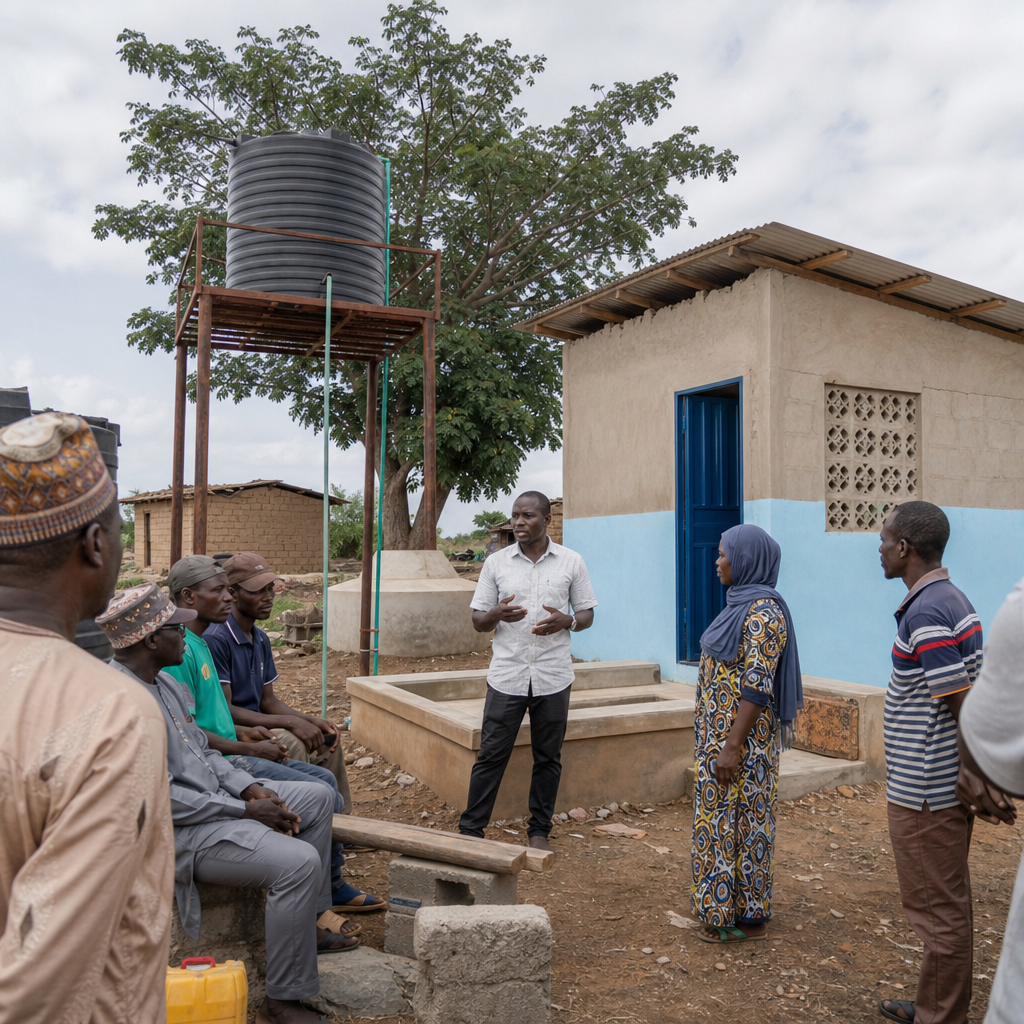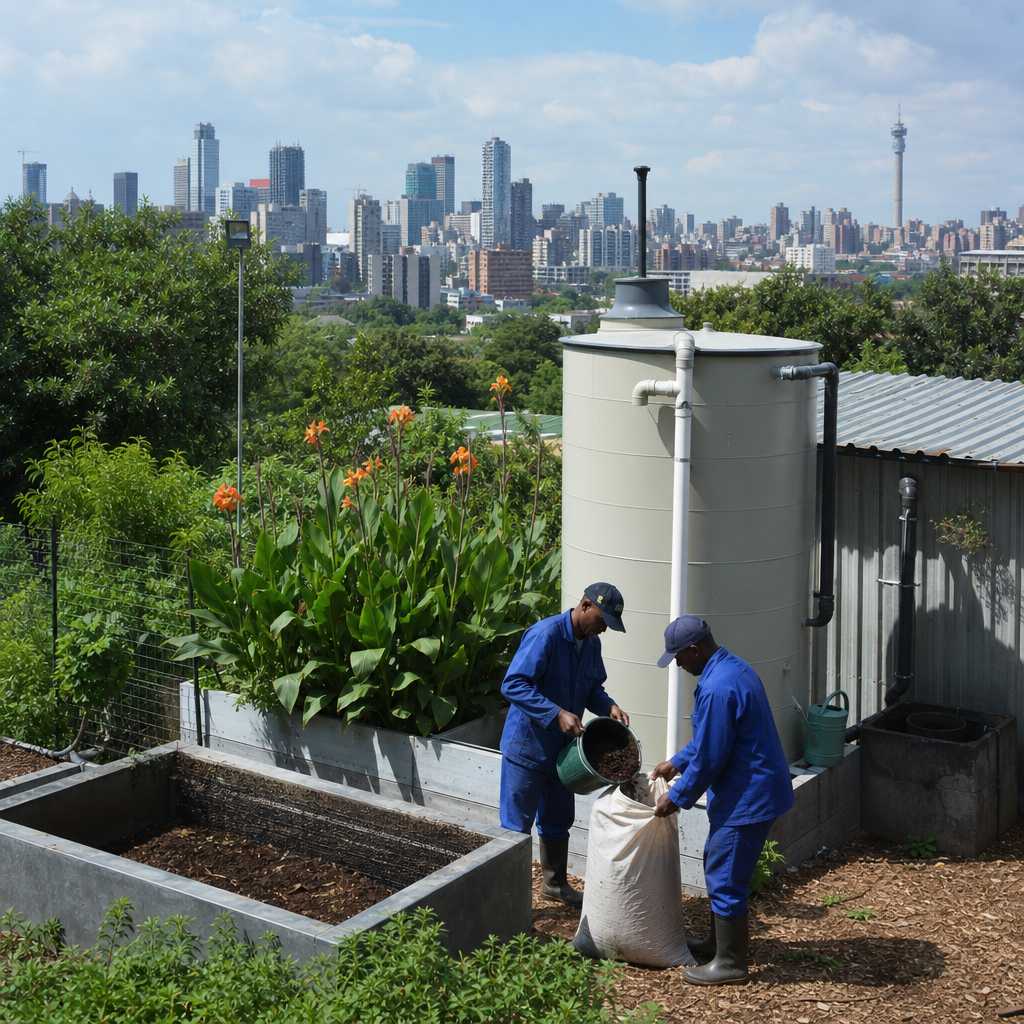
EcoSan, short for ecological sanitation, is more than a sanitation technology; it is an economic system that converts waste management costs into local value for sustainable cities. In practical terms, EcoSan includes approaches such as urine diversion, composting toilets, dehydrating toilets, blackwater separation, and nutrient recovery systems designed to treat human excreta as a resource rather than a disposal problem. When cities adopt EcoSan at household, neighborhood, and institutional levels, they can reduce infrastructure pressure, create jobs, recover nutrients for agriculture, lower water demand, and improve public health outcomes that directly affect productivity. That combination makes EcoSan a serious economic development tool, not a niche environmental idea.
I have worked on sanitation business cases where the debate was initially framed around toilets alone, but the numbers changed once decision-makers looked at fertilizer replacement, sludge transport savings, avoided sewer expansion, and the value of healthier communities. That is where EcoSan becomes compelling. Conventional sanitation often relies on expensive linear systems: potable water is used to transport waste, energy is consumed to move and treat it, and valuable nutrients are discharged or lost. EcoSan uses circular design principles. Nutrients such as nitrogen, phosphorus, and potassium can be recovered. Organic matter can be stabilized and reused. In some systems, biogas or soil amendments can also be produced. The economic question is not simply what a toilet costs. The better question is what urban sanitation can return over time.
This hub article covers economic sustainability in EcoSan comprehensively because cities need a full view of costs, benefits, incentives, markets, and risks. Economic sustainability means a sanitation system can be financed, operated, maintained, and renewed without collapsing under subsidy dependence or hidden environmental costs. For EcoSan, that includes capital expenditure, operating costs, user affordability, revenue from recovered products, service business models, public health gains, land use efficiency, and resilience against water scarcity or fertilizer price shocks. It also includes the institutions required to make reuse safe and bankable. Understanding those elements matters for planners, utilities, developers, public health teams, and investors who want sanitation systems that support urban growth rather than constrain it.
How EcoSan creates urban economic value
EcoSan creates economic value by changing sanitation from a cost center into a productive urban service. The first source of value is avoided infrastructure expenditure. Waterborne sewerage requires extensive pipe networks, pumping stations, and centralized treatment plants. In dense or informal urban areas, those systems are slow and costly to expand. Decentralized EcoSan systems can defer or reduce capital spending, especially in peri-urban settlements, schools, markets, transport hubs, and new housing developments. A urine-diverting dry toilet, for example, can function without continuous water supply or sewer connection, which reduces both construction complexity and utility dependence.
The second source of value is resource recovery. Human urine contains most of the nitrogen and a significant share of the phosphorus and potassium excreted by households. When safely collected and processed, these nutrients can substitute part of the demand for synthetic fertilizers. That matters economically because phosphorus is a finite mined resource and nitrogen fertilizer prices are strongly linked to energy markets. Cities that recover nutrients are not just solving sanitation; they are improving regional material security. In practice, I have seen the strongest cases emerge where municipalities connect sanitation planning with peri-urban agriculture, landscaping departments, or compost markets instead of treating reuse as an afterthought.
The third source of value is labor and enterprise development. EcoSan systems need manufacturing, installation, collection logistics, processing, quality control, monitoring, extension services, and product distribution. Those functions support small and medium enterprises in ways that centralized sewer systems often do not. The economic effect is especially important in cities with high youth unemployment because sanitation services can create local jobs across skill levels. The fourth source is avoided disease burden. Diarrheal disease, helminth infections, and environmental contamination reduce attendance, labor productivity, and household income. Better containment and treatment create measurable economic returns even before reuse revenues are counted.
Cost structures and financial performance
The financial performance of EcoSan depends on whether cities evaluate full life-cycle costs or only upfront hardware. Life-cycle costing includes planning, construction, user training, routine operation, collection, treatment, product processing, monitoring, replacement, and end-of-life rehabilitation. On that basis, EcoSan often compares favorably with conventional sanitation in water-scarce districts and low-density expansion zones. The most common mistake I see is assuming that a lower-cost toilet automatically produces a lower-cost sanitation service. In reality, the service chain determines economics. If collection routes are inefficient or treatment quality is inconsistent, a theoretically sound system will underperform.
Affordability also has to be separated from viability. A system can be viable in total cost terms and still require smart financing to be affordable for low-income households. Common financing approaches include output-based aid, municipal co-financing, targeted capital subsidies, revolving funds, and pay-for-service models that spread costs over time. For landlords and housing developers, EcoSan can reduce water bills and eliminate connection fees, which changes project economics immediately. For schools and public facilities, maintenance design is critical; toilets that save water but fail under poor cleaning routines generate false economies. Financial performance improves when systems are standardized, spare parts are locally available, and operators have predictable service contracts.
| Economic factor | Conventional sewered sanitation | EcoSan approach | Why it matters |
|---|---|---|---|
| Capital investment | High network and treatment plant costs | Lower or modular decentralized investment | Enables phased expansion in growing cities |
| Water use | Continuous potable water demand | Minimal or no flush water in many systems | Reduces utility costs and drought exposure |
| Nutrient management | Nutrients diluted and often lost | Nutrients separated and recoverable | Creates fertilizer or soil amendment value |
| Operations | Utility-centered, energy intensive | Service-chain dependent, often localized | Can support local businesses and jobs |
| Expansion into informal areas | Difficult and expensive | More adaptable to constrained sites | Improves inclusion without waiting for sewers |
A rigorous business case should compare net present cost, internal rate of return where revenue exists, and sensitivity to water tariffs, fuel prices, fertilizer prices, and collection frequency. Cities should also consider shadow pricing for groundwater depletion and environmental discharge because these are real economic costs even when they do not appear in utility accounts. The best-performing models rarely depend on one revenue stream. They combine user fees, municipal service payments, institutional procurement, and product sales. That diversified revenue base makes EcoSan more resilient.
Resource recovery markets and circular economy potential
Economic sustainability in EcoSan depends heavily on whether recovered outputs can enter real markets. The most established outputs are sanitized urine, composted fecal matter, co-compost blends, and in some cases struvite, a crystalline phosphate fertilizer produced under controlled conditions. Market acceptance depends on treatment quality, pathogen control, nutrient consistency, odor management, packaging, and regulation. The World Health Organization has published guidance on safe use of wastewater, excreta, and greywater, and those principles are essential for turning recovered materials into trusted products. Without consistent standards, reuse markets remain fragile and discount prices stay low.
From experience, the strongest markets are usually not generic retail fertilizer markets at the start. They are targeted institutional channels. Municipal parks departments can use compost in landscaping. Tree nurseries can use stabilized organic amendments. Peri-urban farmers growing non-leafy crops may accept nutrient products if extension support is provided. Commercial agriculture buyers will demand nutrient analysis, moisture control, and supply consistency. This is why EcoSan economics improve when treatment and product development are managed professionally rather than left to ad hoc informal exchange. Certification, labeling, and clear storage protocols increase buyer confidence and reduce reputational risk.
Circular economy potential goes beyond selling products. Cities can reduce waste haulage, preserve landfill space, and improve soil carbon in surrounding agricultural zones. In regions dependent on imported fertilizer, nutrient recovery also improves local economic resilience. During fertilizer price spikes in recent years, sanitation-derived nutrient products became more attractive because their relative value increased. That does not mean they replace all synthetic fertilizer. The realistic model is partial substitution combined with better soil structure and moisture retention. When city governments recognize this, EcoSan moves from pilot logic to economic planning logic.
Job creation, enterprise models, and local industry development
EcoSan supports a wider range of enterprises than many policymakers expect. Upstream, there are manufacturers of toilet pans, urine-diversion fixtures, storage containers, dehydration vault components, vent pipes, and prefabricated superstructures. Midstream, there are service providers handling collection, transport, toilet maintenance, digital route management, and treatment operations. Downstream, there are processors, labs, distributors, agronomic advisors, and retailers of recovered products. Each link can be formalized into local businesses, particularly where municipalities issue performance-based service contracts. This is why EcoSan should be analyzed as an urban value chain, not a single product category.
Different business models fit different city contexts. In dense low-income settlements, container-based sanitation paired with regular collection can outperform static systems because service quality is easier to control. In peri-urban homes with space constraints but agricultural links, urine-diverting dry toilets may deliver stronger reuse value. For apartment projects, source separation integrated into building design can reduce long-term utility dependency, but only if building managers are trained and service contracts are secured. Social enterprises often enter the market first, yet long-term scale usually requires mainstream private operators, municipal franchises, or utility partnerships. Enterprise growth depends on predictable demand, enforceable standards, and finance for equipment.
Workforce development is a major economic lever. Skilled masons, operators, and sanitation entrepreneurs need training in containment integrity, pathogen reduction, moisture management, occupational safety, and customer service. Programs aligned with standards such as ISO 30500 for non-sewered sanitation systems can help cities build confidence in product quality. Formalization matters because sanitation workers are too often undervalued despite providing essential public services. When cities professionalize EcoSan work, they improve service quality, create dignified employment, and attract more investment into the sector.
Public finance, policy incentives, and investment readiness
Public finance remains essential because sanitation generates strong public benefits that private markets alone do not capture. Cleaner neighborhoods, lower disease transmission, reduced water abstraction, and less pollution all justify municipal and national support. Effective incentives include capital grants for first adoption, tax relief on approved sanitation equipment, results-based payments for verified service delivery, and public procurement of recovered products for landscaping or restoration projects. Land use policy also matters. If building codes and urban plans assume only sewered models, EcoSan projects face unnecessary delays even when they are technically appropriate.
Investment readiness depends on data quality and governance. Lenders and development finance institutions want evidence on collection volumes, treatment performance, customer retention, tariff payment rates, unit economics, and legal responsibility across the service chain. Bankable projects have clear offtake arrangements for outputs, transparent operator contracts, and risk allocation that does not leave every failure point with one party. Blended finance often works best: concessional capital can support early infrastructure, while commercial finance can fund fleet expansion, equipment upgrades, or standardized facility rollouts once cash flow is proven. Strong monitoring systems, including digital service records and periodic lab testing, reduce uncertainty and make scaling easier.
Policy consistency is just as important as money. A city cannot promote resource recovery publicly while maintaining waste rules that classify all excreta-derived products as unusable. Regulatory pathways must distinguish untreated waste from sanitized products that meet safety standards. That clarity unlocks enterprise formation, insurance, procurement, and long-term contracting. In cities where I have seen progress, the breakthrough was not a new toilet design. It was alignment between health authorities, environmental regulators, utilities, and agricultural agencies around a shared service model.
Risks, limitations, and what cities must get right
EcoSan is economically promising, but it is not automatically low cost or universally suitable. Poor user acceptance can reduce performance if systems are inconvenient or unfamiliar. Inadequate collection schedules can cause overflow or odor complaints. Weak treatment control can destroy trust in reuse products. Market demand may be seasonal, and transport can erode margins if processing sites are too far from users. Dense high-rise districts may still require sewered solutions or hybrid systems because space and logistics constrain decentralized approaches. The right lesson is not that EcoSan fails in these contexts, but that design must fit urban form, culture, and operational capacity.
Cities must also avoid overestimating direct product revenue. In most cases, resource recovery improves the business case but does not fully finance the sanitation system by itself. The strongest economic argument combines avoided costs, public health benefits, resilience, and moderate product income. Measurement matters. Track containment performance, service reliability, occupational safety incidents, customer satisfaction, and end-use compliance, not just toilet installation counts. If a city wants EcoSan to become an economic driver, it needs disciplined service delivery, honest pricing, and long-term institutional support rather than pilot enthusiasm alone.
EcoSan can drive economic sustainability in cities because it reduces costly linear waste systems, recovers nutrients and materials, supports local enterprises, and strengthens resilience where water, land, and public budgets are under pressure. Its value is highest when cities evaluate the whole sanitation service chain, not only the toilet; when they build reliable markets for recovered products; and when they align health, agriculture, housing, and utility policy around safe reuse. The central benefit is practical: EcoSan helps cities spend less on wasteful infrastructure while generating more local value from sanitation.
As the hub for economic sustainability in EcoSan, this topic should guide deeper work on financing models, life-cycle costing, nutrient markets, public-private partnerships, job creation, policy reform, and urban agriculture linkages. City leaders, planners, utilities, and investors should treat EcoSan as core economic infrastructure for sustainable cities, then test it with robust data and well-designed pilots that are built to scale.
Frequently Asked Questions
1. What is EcoSan, and why is it considered an economic driver in sustainable cities?
EcoSan, or ecological sanitation, is a resource-based approach to sanitation that treats human waste as a recoverable asset rather than a costly disposal problem. Instead of relying only on centralized sewer networks and energy-intensive wastewater treatment, EcoSan systems can include urine-diverting toilets, composting toilets, dehydrating toilets, blackwater separation, and nutrient recovery technologies that capture usable materials from excreta. The economic importance of EcoSan comes from its ability to reduce infrastructure strain, lower long-term sanitation costs, and create new value chains around compost, fertilizer inputs, water conservation, and decentralized service delivery.
In sustainable cities, this matters because sanitation is not just a public health issue; it is also a budget issue, a land-use issue, and a local development issue. Traditional urban sanitation systems often require expensive pipe networks, pumping stations, treatment plants, and ongoing maintenance. EcoSan can reduce some of these costs by decentralizing treatment and enabling reuse closer to the point of generation. That means cities may spend less on transporting and treating waste while households, cooperatives, and local enterprises gain opportunities to participate in collection, processing, maintenance, manufacturing, and agricultural reuse markets.
EcoSan also supports circular urban economies. Nutrients such as nitrogen, phosphorus, and potassium can be recovered and returned to agriculture or landscaping rather than being lost as waste. In water-stressed cities, technologies that reduce flushing demand can lower water consumption and associated utility costs. Over time, those efficiencies can improve municipal resilience, especially in rapidly growing cities where conventional systems are too expensive or too slow to expand. In that sense, EcoSan becomes an economic driver because it turns sanitation from a purely public expense into a platform for local jobs, resource recovery, cost savings, and more durable urban development.
2. How does EcoSan help cities save money and create local economic value?
EcoSan creates economic value in two connected ways: it cuts avoidable costs and generates useful outputs. On the cost side, cities can reduce spending on sewer expansion, wastewater transport, freshwater consumption, and centralized treatment capacity. This is especially important in dense urban areas, informal settlements, peri-urban neighborhoods, and public institutions where extending conventional infrastructure may be financially unrealistic. EcoSan systems can often be implemented in phases and adapted to local conditions, which helps cities avoid major capital expenditures while still improving sanitation access.
On the value-generation side, EcoSan supports local enterprise development. Toilets and treatment systems must be designed, installed, maintained, emptied, monitored, and serviced. Recovered products may be processed into soil amendments, compost, or nutrient inputs for farming, landscaping, forestry, and green infrastructure projects. This opens the door for small businesses, sanitation entrepreneurs, cooperatives, equipment suppliers, masons, mechanics, transport providers, and agribusiness actors to participate in a growing urban sanitation economy. Rather than sending public funds only into utility operations and large-scale treatment plants, EcoSan can distribute economic activity across neighborhoods and local service networks.
There are also indirect economic gains that are often overlooked but extremely important. Better sanitation reduces disease burden, which can lower healthcare costs, decrease missed workdays, and improve school attendance. Cleaner neighborhoods can increase property values, support tourism, and make commercial districts more attractive. When sanitation systems are designed to recover nutrients and conserve water, cities may also strengthen food systems and reduce dependence on imported fertilizers or scarce freshwater resources. Taken together, these savings and revenue opportunities explain why EcoSan is increasingly viewed not only as an environmental solution, but also as a practical urban economic strategy.
3. What types of jobs and business opportunities can EcoSan create in urban areas?
EcoSan can create a surprisingly wide range of jobs because it is not a single product; it is an ecosystem of services, technologies, and material flows. At the front end, there are opportunities in toilet manufacturing, construction, retrofitting, plumbing adaptation, urine-diversion design, and installation. Households, schools, apartment complexes, markets, and community facilities all need systems that fit local space constraints, user preferences, climate conditions, and maintenance capacity. That demand supports skilled labor and specialized local businesses.
Once systems are operating, EcoSan generates recurring service needs. These include inspection, user training, maintenance, safe collection, dehydration management, compost processing, container exchange services, blackwater segregation logistics, odor control, and quality monitoring. In many cities, these service chains can be organized through private operators, municipal contracts, social enterprises, neighborhood cooperatives, or public-private partnerships. That means EcoSan can create both formal and informal employment pathways, provided that regulation, training, and worker protections are in place.
Further down the value chain, nutrient recovery and reuse create additional business opportunities. Processed outputs can be used in urban farming, peri-urban agriculture, tree nurseries, landscaping, land restoration, and green belt development. Entrepreneurs may specialize in fertilizer blending, compost packaging, soil rehabilitation products, or integrated resource recovery services. There is also a growing need for technical consulting, system monitoring, public health compliance, data management, and behavior-change communication. In other words, EcoSan does not just create “toilet jobs.” It can stimulate a localized circular economy that links sanitation, agriculture, water conservation, environmental services, and small-scale manufacturing into a broader urban development model.
4. Is EcoSan practical and safe for large-scale use in cities?
Yes, EcoSan can be practical and safe at scale, but success depends on good design, strong management, and clear public health safeguards. One of the most common misconceptions is that ecological sanitation is only suitable for rural areas or small pilot projects. In reality, many EcoSan principles are highly relevant to cities, especially where water scarcity, infrastructure deficits, high utility costs, flooding risks, and rapid population growth make conventional sewer expansion difficult. The key is to match the technology and service model to the urban context. What works for a single household may differ from what works in a school, apartment block, transport hub, or neighborhood-scale treatment system.
Safety comes from controlled treatment, proper separation, user education, and regulation. Urine diversion, composting, dehydration, and blackwater management systems must be designed to minimize human exposure, prevent contamination, and ensure that recovered materials meet health and environmental standards before reuse. Cities that implement EcoSan effectively typically combine technical standards with operator training, inspection systems, monitoring protocols, and public awareness campaigns. In other words, EcoSan is safe when it is treated as infrastructure and public service delivery, not as an improvised workaround.
Large-scale practicality also depends on governance. Municipal authorities need policies that recognize decentralized sanitation, define reuse standards, support licensing and service delivery, and coordinate sanitation with agriculture, water, housing, and climate planning. Financing models matter as well. Some systems are best supported by household investment, while others require municipal incentives, subsidies, institutional procurement, or blended finance. When these elements are in place, EcoSan can scale in ways that are modular, resilient, and cost-effective. For many cities, especially those seeking circular economy strategies, EcoSan is not a fringe option; it is an increasingly relevant part of modern urban sanitation planning.
5. What should city leaders, planners, and communities consider before investing in EcoSan?
Before investing in EcoSan, city leaders should start by viewing sanitation as a resource management system, not just a waste removal service. That mindset changes the planning process. Instead of asking only how waste will be disposed of, decision-makers should ask what resources can be recovered, what costs can be avoided, and which local actors can participate in the value chain. A strong EcoSan strategy begins with local assessment: water availability, housing density, soil conditions, user behavior, cultural preferences, existing sanitation gaps, institutional capacity, and potential end markets for recovered products. No EcoSan model is universally correct, so context-specific planning is essential.
Planners should also pay close attention to operations and maintenance, because the long-term performance of EcoSan depends more on service systems than on hardware alone. It is not enough to install toilets or separation systems and assume the benefits will follow automatically. Cities need maintenance plans, collection logistics, operator training, treatment oversight, reuse protocols, and financing mechanisms that keep the system functioning over time. Public institutions such as schools, clinics, transport facilities, and housing projects can be strong early adopters because they provide visible use cases and can anchor demand for local service providers.
Community engagement is equally important. People are far more likely to use and maintain EcoSan systems correctly when they understand the health, environmental, and economic benefits. Communication should be practical and respectful, addressing concerns about hygiene, convenience, odor, safety, and social acceptance. At the policy level, cities should align EcoSan with broader goals such as climate resilience, water security, green jobs, food system strengthening, and inclusive urban development. When leaders combine sound regulation, community participation, technical rigor, and market development, EcoSan can move from pilot status to a credible citywide strategy that improves sanitation while also driving economic opportunity.