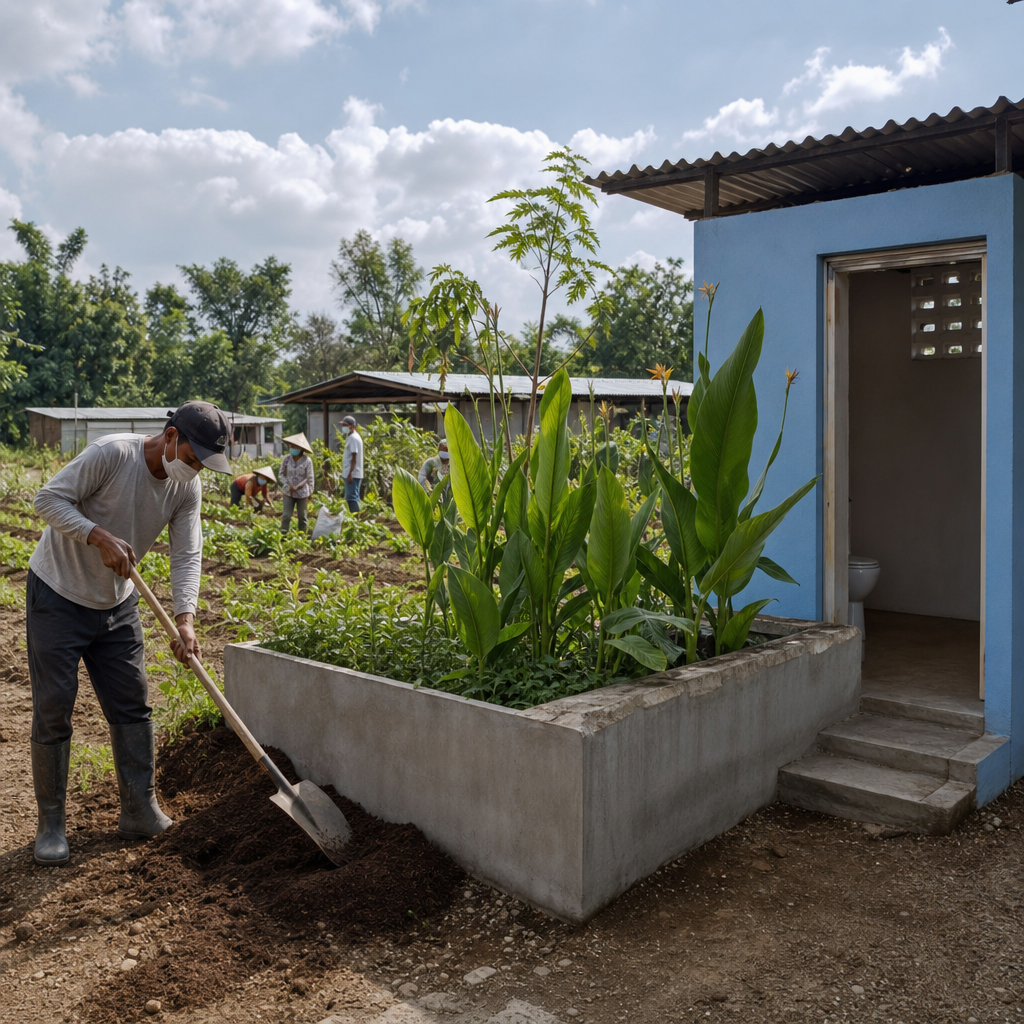
The role of EcoSan in economic recovery post-pandemic is larger than many policymakers first assumed, because sanitation is not only a public health service but also a productive economic system. EcoSan, short for ecological sanitation, refers to approaches that safely separate, treat, and reuse human waste and wastewater as resources, especially nutrients, water, and energy. In practice, that can include urine-diverting dry toilets, decentralized treatment units, composting systems, fecal sludge processing, and circular business models that turn sanitation by-products into fertilizer, soil conditioners, irrigation water, or fuel. When I have worked on sanitation economics with municipalities and social enterprises, the most important shift has always been moving the conversation from waste disposal costs to asset recovery value.
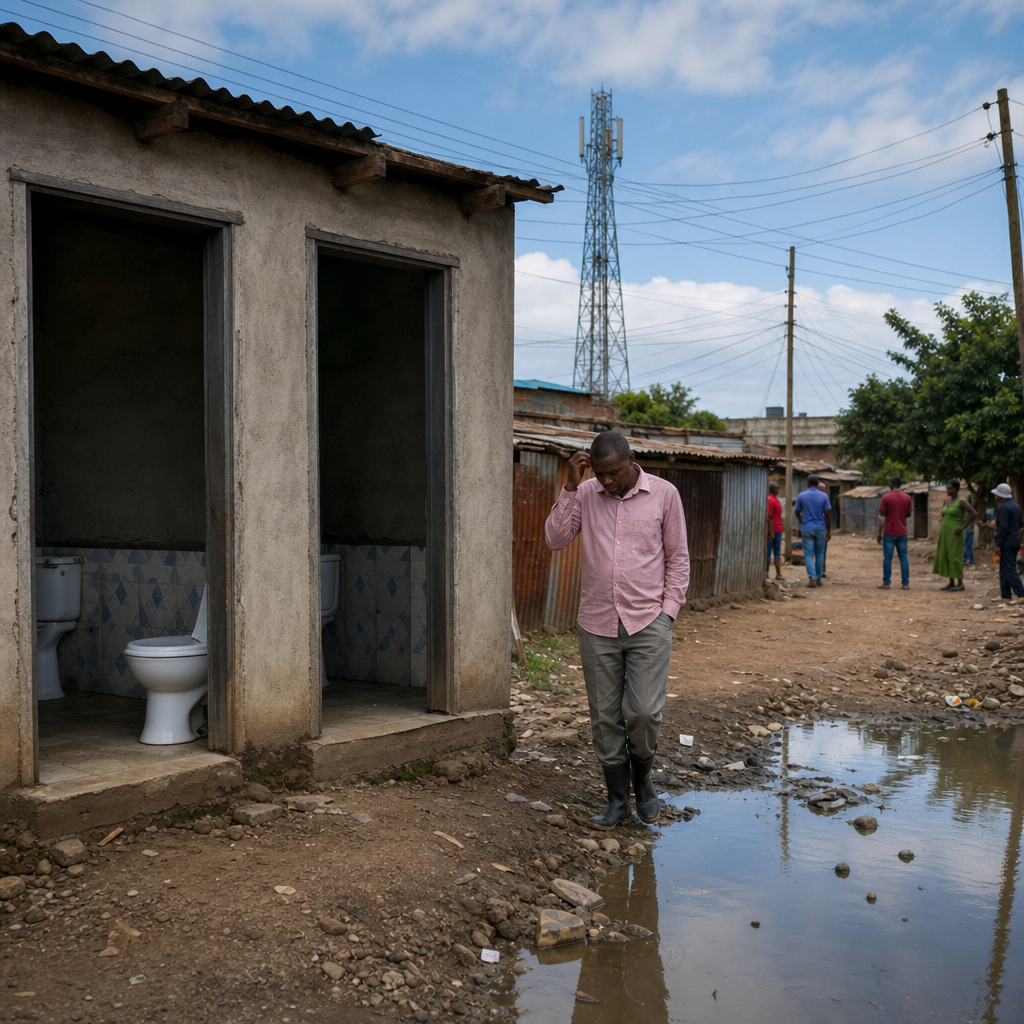
That shift matters even more after the pandemic. COVID-19 exposed how weak sanitation systems amplify economic shocks. Communities with inadequate toilets, poor drainage, and unreliable wastewater treatment faced higher health risks, lost workdays, school disruption, and heavier pressure on public budgets. Informal workers, small farmers, women-led enterprises, and dense urban settlements were hit hardest. At the same time, governments needed investments that could create jobs quickly, reduce import dependence, strengthen local food systems, and improve resilience without locking cities into expensive centralized infrastructure they could not maintain. EcoSan fits that need because it can be deployed incrementally, create local value chains, and lower lifecycle costs when designed correctly.
Economic sustainability in EcoSan means more than earning revenue from compost or biogas. It means the sanitation system can cover operation and maintenance, protect public health, withstand shocks, support livelihoods, and deliver measurable value over time. A financially sustainable toilet project that fails hygienically is not sustainable. Likewise, a technically sound system that depends forever on unstable grants is economically fragile. The strongest EcoSan models balance capital expenditure, operating costs, user affordability, resource recovery income, public subsidies for social benefits, and long-term maintenance capacity. This hub article explains how that balance works and why it should sit near the center of post-pandemic economic recovery planning.
The case for EcoSan rests on a simple economic principle: sanitation has multiplier effects. Better sanitation reduces disease burden, which raises labor productivity and lowers health spending. Reliable waste collection and treatment create service jobs. Resource recovery supports agriculture, landscaping, energy production, and manufacturing. Cleaner neighborhoods improve land values and business confidence. Schools and workplaces function better when sanitation is dignified and dependable. The World Bank has long documented that poor sanitation imposes large national economic losses through health costs, time losses, premature deaths, and environmental damage. EcoSan addresses those losses while creating recoverable value from materials that conventional systems often discard.
Why EcoSan Became an Economic Recovery Tool
Post-pandemic recovery required projects that were labor-intensive, fast to roll out, and locally anchored. EcoSan meets those conditions. A decentralized sanitation upgrade can employ masons, plumbers, pit emptiers, treatment operators, transport workers, agronomists, and small manufacturers. Unlike imported megaproject components, many EcoSan systems rely on local construction materials and routine service contracts. I have seen municipalities revive local contractor networks through sanitation tenders that bundled toilet retrofits, fecal sludge logistics, and compost site operations. That kind of spending circulates inside the local economy instead of leaking outward through high foreign procurement costs.
EcoSan also reduces exposure to supply-chain disruption. During the pandemic, many cities struggled to maintain centralized systems because chemicals, spare parts, and fuel became more expensive or harder to source. Decentralized treatment and reuse systems can be simpler, modular, and less dependent on uninterrupted long-distance inputs. Urine diversion, sludge composting, and small-scale biodigesters are not maintenance free, but they often offer more flexibility than extending sewer networks into low-income or peri-urban areas where revenues are weak and service reliability is low. That flexibility is economically valuable because resilience itself has a price.
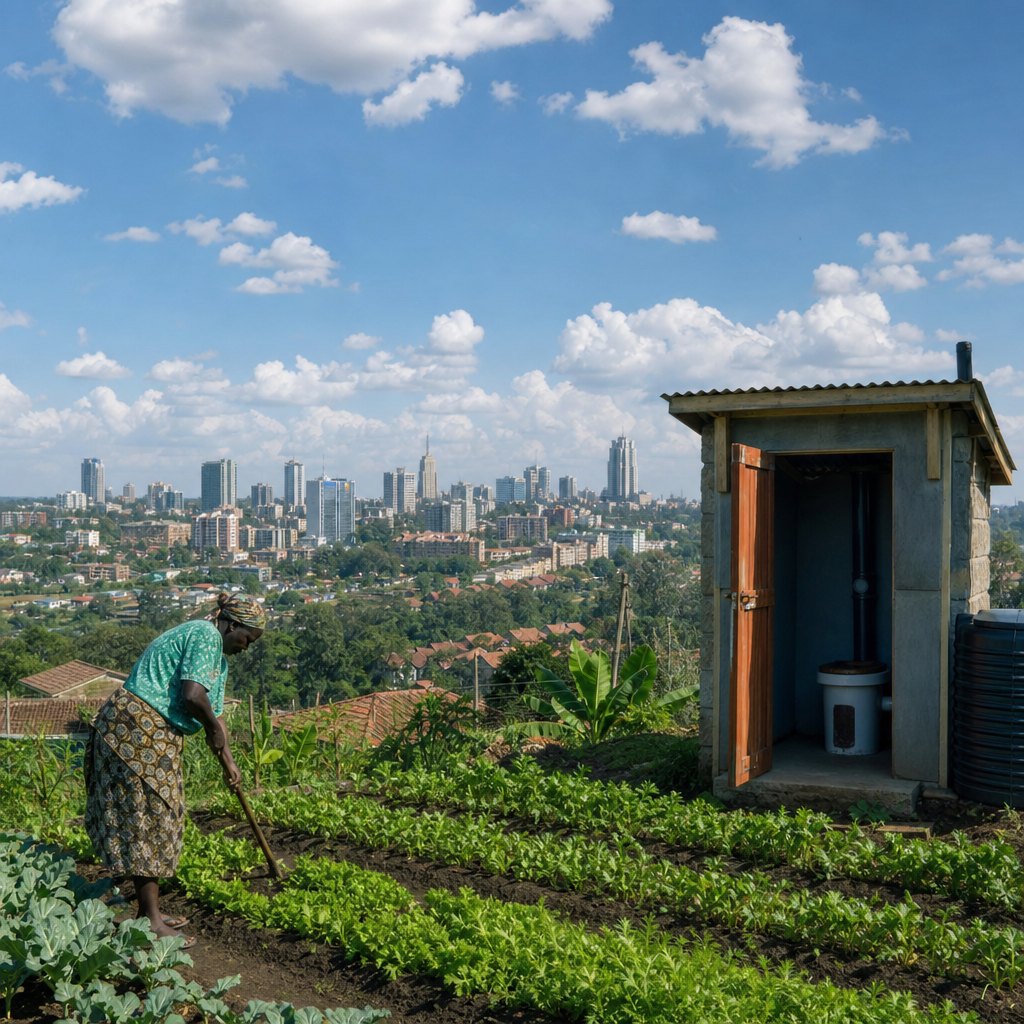
A further advantage is alignment with food security goals. Farmers worldwide faced rising fertilizer prices after the pandemic, and some regions experienced severe import dependence for nitrogen, phosphorus, and potassium inputs. EcoSan can partially offset that pressure by recovering nutrients locally. Human urine contains significant nitrogen and potassium, while treated fecal matter can contribute phosphorus and organic carbon. When treatment meets health standards and agronomic guidance is followed, these outputs can supplement commercial fertilizer, improve soil structure, and lower input costs for smallholders. That is not theoretical; practical reuse programs in parts of East Africa, South Asia, and Latin America have shown demand when quality control and extension support are strong.
How Economic Sustainability Works in EcoSan Systems
Economic sustainability in EcoSan depends on the full service chain, not the toilet alone. The chain includes user interface, containment, collection, transport, treatment, product processing, marketing, and safe end use. If one link is underfunded, the business case collapses. For example, a city may subsidize urine-diverting toilets but ignore scheduled collection, leading to overflow, odor, and customer rejection. Another project may build a compost plant without securing feedstock quality or agricultural buyers. Sustainable systems therefore start with unit economics: cost per household served, emptying frequency, transport distance, treatment yield, product price, and required subsidy per ton or per user. These figures should be tracked before expansion.
In my experience, the most successful EcoSan enterprises separate revenue streams into three buckets. First is the sanitation service fee paid by households, institutions, landlords, or municipalities. Second is resource recovery income from compost, dried sludge fuel, black soldier fly larvae feed, reclaimed water, or biogas. Third is public or blended finance that recognizes the health and environmental externalities the market does not fully pay for. Expecting product sales alone to cover the entire system is usually unrealistic, especially in early years. The stronger model treats reuse revenue as a stabilizer that lowers net public cost, not as a magic replacement for service finance.
| EcoSan component | Main economic value | Typical risk | Practical mitigation |
|---|---|---|---|
| Urine-diverting toilets | Lower water use and nutrient capture | User misuse reduces performance | Training, clear design, routine inspection |
| Fecal sludge collection | Creates local service jobs and fee revenue | Irregular demand and unsafe handling | Scheduled desludging and protective equipment |
| Composting or co-composting | Sale of soil amendment for farms and landscaping | Weak product trust | Testing, certification, demonstration plots |
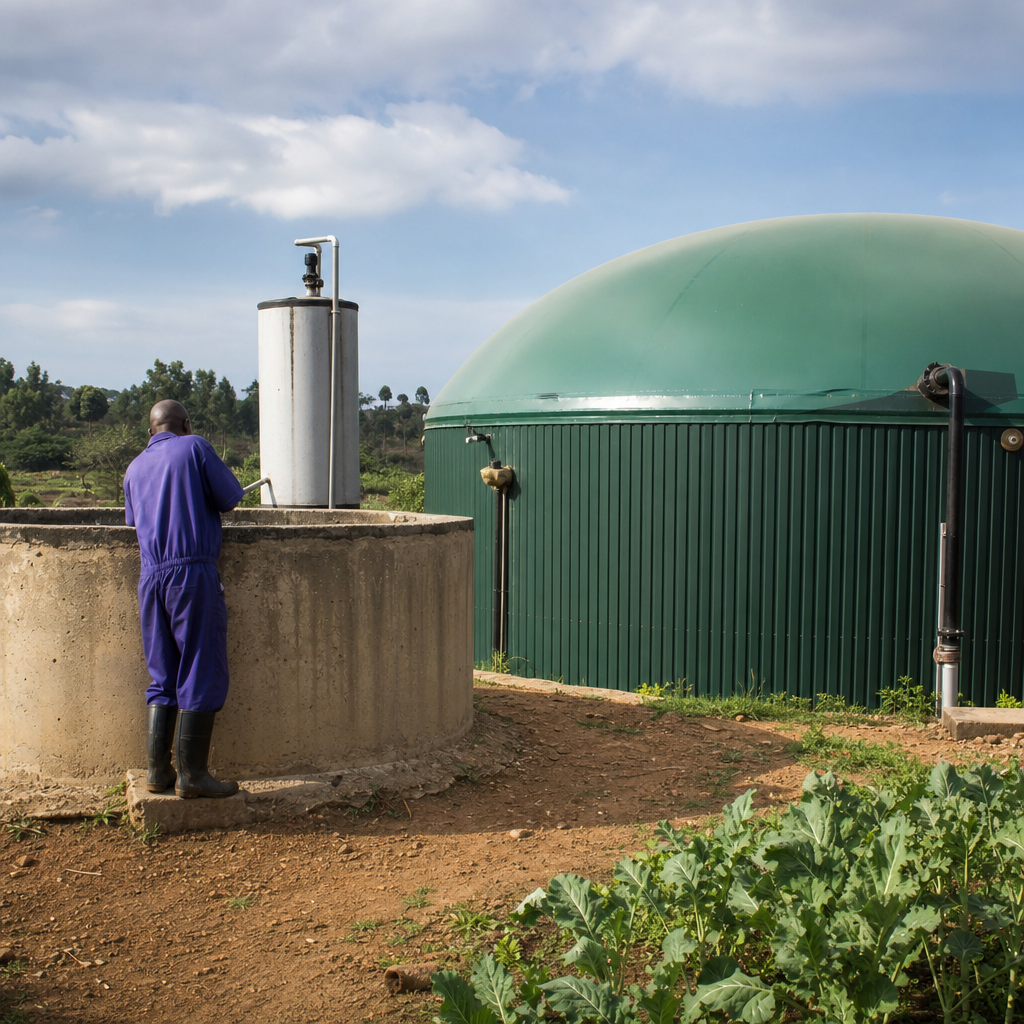
| Biodigestion | Biogas for heat or electricity, digestate reuse | Feedstock inconsistency | Blending protocols and operator training |
| Reclaimed water reuse | Reduced freshwater demand for irrigation | Public acceptance and quality failures | Monitoring, restricted-use standards, contracts |
Cost recovery should be judged over the lifecycle. Capital costs are visible and politically attractive, but operation and maintenance determine real affordability. A decentralized system with slightly higher upfront design effort may outperform a cheaper installation that fails in two years. Standard financial tools such as net present value, internal rate of return, and payback period are useful, but sanitation planners also need cost-benefit analysis that includes avoided disease, reduced groundwater contamination, fewer flood-related losses, and lower fertilizer imports. The economic sustainability question is not only “What does this system cost?” but “Compared with what alternatives, over what time horizon, and with what avoided losses?”
Jobs, Small Enterprise Growth, and Local Multiplier Effects
EcoSan contributes to recovery because it creates employment across skill levels. Construction workers build toilets and treatment units. Mechanics maintain pumps and carts. Operators manage composting pads, biodigesters, and drying beds. Community health workers and sales agents support adoption. Laboratories test product quality. Retailers distribute recovered inputs to farms and nurseries. This matters in post-pandemic economies where many households need income opportunities close to home. Sanitation work is often dismissed as low status, yet formalization and training can turn fragmented informal labor into safer, more productive microenterprises.
Small businesses are especially important in this sector. A municipality may never manage every toilet directly, but it can license and regulate private emptiers, franchise container-based sanitation routes, or contract social enterprises to process waste into marketable outputs. I have seen peri-urban operators bundle toilet servicing with compost delivery to nearby vegetable growers, creating a closed-loop local market. Another practical model is school or market sanitation managed by women’s cooperatives that collect user fees, maintain facilities, and sell compost to landscaping companies. These examples show that EcoSan is not one technology; it is an ecosystem of services and transactions.
The multiplier effect comes from repeated local spending. When households pay a sanitation fee to a neighborhood operator, that operator hires staff, buys tools, rents storage, and pays transport providers. If treated outputs are sold locally, farmers reduce fertilizer purchases from distant suppliers and spend savings on seeds, labor, or irrigation. Municipal health departments also benefit indirectly because cleaner environments reduce the burden of enteric disease, parasitic infections, and outbreak response. Not every benefit is immediately visible in a balance sheet, but together they improve local economic circulation and resilience.
Financing Models, Public Policy, and Investment Priorities
No serious EcoSan strategy works without structured finance. The most durable model is blended: households contribute what they can afford, enterprises earn service and product revenue, and governments subsidize the public-good portion. That subsidy is justified because sanitation generates benefits beyond the paying user, including disease prevention, cleaner water bodies, and reduced environmental remediation costs. Results-based financing can help, especially when payments are tied to verified service delivery rather than construction counts. Development finance institutions, municipal green bonds, climate adaptation funds, and impact investors can also support EcoSan when projects present credible demand, operating plans, and safeguards.
Policy design determines whether investment succeeds. Regulations should define treatment standards, allowable reuse pathways, worker safety requirements, and monitoring responsibilities. Land-use planning must reserve space for transfer stations, treatment sites, and product storage. Tariff policy should avoid forcing utilities to underprice services so severely that maintenance collapses. Public procurement can stimulate the market by purchasing certified compost for parks, roadside planting, and land restoration. Agricultural extension services should train farmers in application rates and safe handling. Without these enabling conditions, even technically sound projects struggle to attract capital.
Investors should prioritize data discipline. Before scale-up, decision makers need baseline information on sanitation coverage, sludge volumes, transport routes, soil demand, fertilizer substitution potential, and willingness to pay. Tools such as citywide inclusive sanitation planning, material flow analysis, and fecal waste flow diagrams help identify leak points and market opportunities. Digital payment systems can improve fee collection. GIS mapping can reduce collection costs. Simple dashboards tracking uptime, customer retention, pathogen reduction, and product sales are often more valuable than glossy pilot reports. Recovery funding should reward systems that prove service continuity and measurable reuse, not just installation numbers.
Limits, Risks, and What Good Implementation Requires
EcoSan is not a universal substitute for sewers, and presenting it that way undermines credibility. Dense high-rise districts, industrial wastewater loads, flood-prone areas, and locations with weak maintenance institutions may need different solutions or hybrid systems. Reuse products can fail if contamination control is poor. Users may reject unfamiliar toilets if design ignores comfort, privacy, or cleaning needs. Nutrient recovery markets may be seasonal or oversupplied. These are real constraints, not minor details. Good implementation begins with context assessment, user-centered design, training, and independent quality assurance.
Health protection is nonnegotiable. Treatment must meet recognized pathogen reduction targets, and workers need gloves, masks, vaccination access, and safe operating procedures. Product standards, batch testing, and traceability build buyer confidence. Communication should be direct and practical: what the product is, how it was treated, where it can be used, and what restrictions apply. From an economic standpoint, trust is infrastructure. One contamination incident can destroy a young market and impose costs far beyond the immediate cleanup. That is why strong governance and transparent monitoring are not administrative extras; they are core economic safeguards.
For economic recovery, the lesson is clear: EcoSan works best when treated as essential infrastructure linked to agriculture, employment, and public health, rather than as a niche environmental experiment. Its main advantage is not merely cheaper toilets. It is the ability to convert a chronic service gap into a circular local economy that creates jobs, protects health, conserves water, and recovers nutrients. Communities rebuilding after the pandemic need investments that keep value moving locally while reducing future risk. EcoSan can do that when the full service chain is financed, regulated, and managed with discipline. Use this hub as the starting point for deeper planning on business models, financing structures, treatment choices, and market development, then turn strategy into measurable sanitation services.
Frequently Asked Questions
1. What is EcoSan, and why does it matter for post-pandemic economic recovery?
EcoSan, or ecological sanitation, is an approach to sanitation that treats human waste and wastewater not as material to be discarded, but as resources that can be safely recovered and reused. Depending on the system, those resources can include nutrients for agriculture, reclaimed water for productive use, compost-like soil conditioners, biogas, and even energy. Common EcoSan models include urine-diverting dry toilets, composting toilets, decentralized wastewater treatment units, and fecal sludge treatment systems designed for nutrient and energy recovery.
Its importance in post-pandemic economic recovery comes from the fact that sanitation affects far more than hygiene alone. The pandemic made clear that weak sanitation systems increase public health vulnerability, disrupt labor productivity, and place extra burdens on already stretched public budgets. EcoSan helps address those pressures by improving sanitation access while also creating value from waste streams that are typically ignored or costly to manage. When communities can reduce disease exposure, lower treatment and disposal costs, support local agriculture with recovered nutrients, and create jobs in collection, processing, maintenance, and reuse markets, sanitation becomes part of economic rebuilding rather than just a public expense.
In other words, EcoSan contributes to recovery on multiple levels at once: it supports healthier households, strengthens local service economies, reduces environmental contamination, and helps cities and rural areas become more resilient to future shocks. That combination is exactly why policymakers, development agencies, and local governments are increasingly viewing ecological sanitation as an economic infrastructure strategy, not merely a sanitation intervention.
2. How can EcoSan create jobs and stimulate local economies?
EcoSan can generate employment across an entire service and resource recovery chain. At the front end, jobs are created in system design, manufacturing, construction, installation, and maintenance of toilets and decentralized treatment units. Beyond that, there are opportunities in waste collection, transport, treatment operations, quality control, equipment servicing, monitoring, and user training. On the back end, recovered products such as compost, treated biosolids, liquid fertilizers, irrigation water, and biogas can support enterprises in farming, landscaping, energy generation, and input distribution.
This matters especially in a post-pandemic context, when many communities are trying to rebuild livelihoods with limited capital and a strong need for local, labor-intensive industries. EcoSan systems are often well suited to small and medium enterprises because they can be implemented incrementally and adapted to local demand. A decentralized treatment model, for example, may support local operators rather than depending entirely on large centralized sewer infrastructure. That creates space for entrepreneurs, cooperatives, utilities, and social enterprises to participate in service delivery and reuse markets.
There is also an important multiplier effect. When farmers gain access to lower-cost nutrient sources from safely processed sanitation by-products, their input costs may fall, yields may improve, and local food systems can become more stable. When communities reduce disease-related work absences and healthcare spending, more household income stays available for other economic activity. When municipalities avoid some of the costs associated with unmanaged waste, pollution, and emergency health responses, they can reallocate funds to other public priorities. Taken together, these effects show how EcoSan can stimulate local economies directly through jobs and indirectly through stronger productivity and resource efficiency.
3. In what ways does EcoSan improve public health while supporting economic resilience?
EcoSan improves public health by reducing exposure to pathogens that spread through unsafe sanitation, contaminated water, and poorly managed fecal sludge. Systems that safely separate, contain, treat, and reuse waste can help interrupt disease transmission pathways that contribute to diarrheal illness, parasitic infections, and broader environmental health risks. That is especially important in dense urban settlements, informal communities, schools, healthcare settings, and water-stressed regions where conventional sanitation infrastructure may be incomplete, overloaded, or unaffordable to expand quickly.
From an economic standpoint, healthier populations are more productive populations. Households facing fewer sanitation-related illnesses typically spend less on treatment, lose fewer workdays, and experience fewer disruptions to education and caregiving. Employers benefit from improved workforce reliability, and public health systems face less pressure from preventable disease burdens. During the pandemic and its aftermath, governments were reminded that health security and economic stability are deeply linked. Investments that reduce environmental exposure and improve sanitation reliability help lower the risk of future outbreaks and build resilience against shocks that can stall recovery.
EcoSan also supports resilience because many systems are decentralized and adaptable. They can continue functioning where centralized sewer networks are absent, underfunded, or vulnerable to disruption. In areas prone to climate stress, water scarcity, or infrastructure damage, ecological sanitation can offer more flexible service models that protect health without relying entirely on large-scale, water-intensive systems. That resilience has economic value because it helps communities maintain essential sanitation services even during crises, reducing the chance of cascading failures in health, labor, education, and local markets.
4. Can EcoSan really turn waste into useful resources, and is that economically significant?
Yes, when properly designed and managed, EcoSan can recover several economically valuable resources from human waste and wastewater. Urine contains nutrients such as nitrogen, phosphorus, and potassium that are important for plant growth. Fecal matter, once safely treated, can be processed into compost-like soil amendments or other agricultural inputs. Wastewater can sometimes be reclaimed for non-potable applications, and organic waste streams can be used in biodigesters to produce biogas for cooking, heating, or electricity generation. The exact outputs depend on the technology used, the treatment quality achieved, local regulations, and the intended end use.
The economic significance of this resource recovery has grown in recent years for several reasons. First, many countries face rising fertilizer prices, water stress, and energy insecurity. Recovering nutrients, water, and energy locally can reduce dependence on imported or expensive inputs. Second, municipalities and service providers often spend substantial amounts on waste handling and disposal with little return. EcoSan changes that equation by creating the possibility of cost recovery or revenue generation through saleable by-products and reduced disposal burdens. Third, circular economy models are gaining traction because they make communities more efficient and less vulnerable to supply chain disruptions, which became a major concern during and after the pandemic.
That said, economic significance depends on implementation quality. Resource recovery is only beneficial if treatment is safe, products meet standards, users trust the system, and markets exist for the outputs. Successful EcoSan programs typically pair technology with regulation, training, public education, and business development. When those elements are in place, turning waste into resources is not just technically possible; it can be a practical way to support agriculture, reduce environmental costs, and strengthen local economic recovery.
5. What are the biggest challenges to scaling EcoSan, and how can policymakers address them?
Scaling EcoSan is promising, but it is not automatic. One major challenge is public perception. In many places, people are understandably cautious about any system associated with human waste reuse, particularly if they are unfamiliar with treatment processes or do not trust product safety. Another challenge is regulation. In some regions, legal frameworks for recovered nutrients, treated sludge, reused water, and decentralized sanitation services are incomplete or inconsistent, making it difficult for providers to invest confidently. Financing is also a barrier, since sanitation projects often struggle to attract funding even when their long-term economic benefits are strong.
Operational capacity is another issue. EcoSan systems require proper design, routine maintenance, safe collection and transport where needed, and consistent treatment performance. Without trained operators, monitoring systems, and clear accountability, even good technologies can underperform. Market development matters too. If there is no reliable demand for recovered fertilizers, soil amendments, reclaimed water, or biogas, the economic model becomes weaker. In addition, policymakers must recognize that one size does not fit all. Urban informal settlements, peri-urban areas, rural communities, schools, and commercial zones may each require different service models and incentives.
Policymakers can address these challenges by treating EcoSan as part of economic planning, public health strategy, and climate resilience policy all at once. That means setting clear safety and quality standards, supporting pilot projects that can be evaluated and replicated, investing in workforce training, and creating financing mechanisms for decentralized sanitation enterprises and local governments. Public procurement can help build markets for recovered products, while agricultural extension services can support safe adoption by farmers. Equally important, authorities should communicate clearly with communities about health safeguards, performance expectations, and the economic value of circular sanitation systems. With the right governance and investment approach, EcoSan can move from niche innovation to a scalable contributor to post-pandemic recovery.