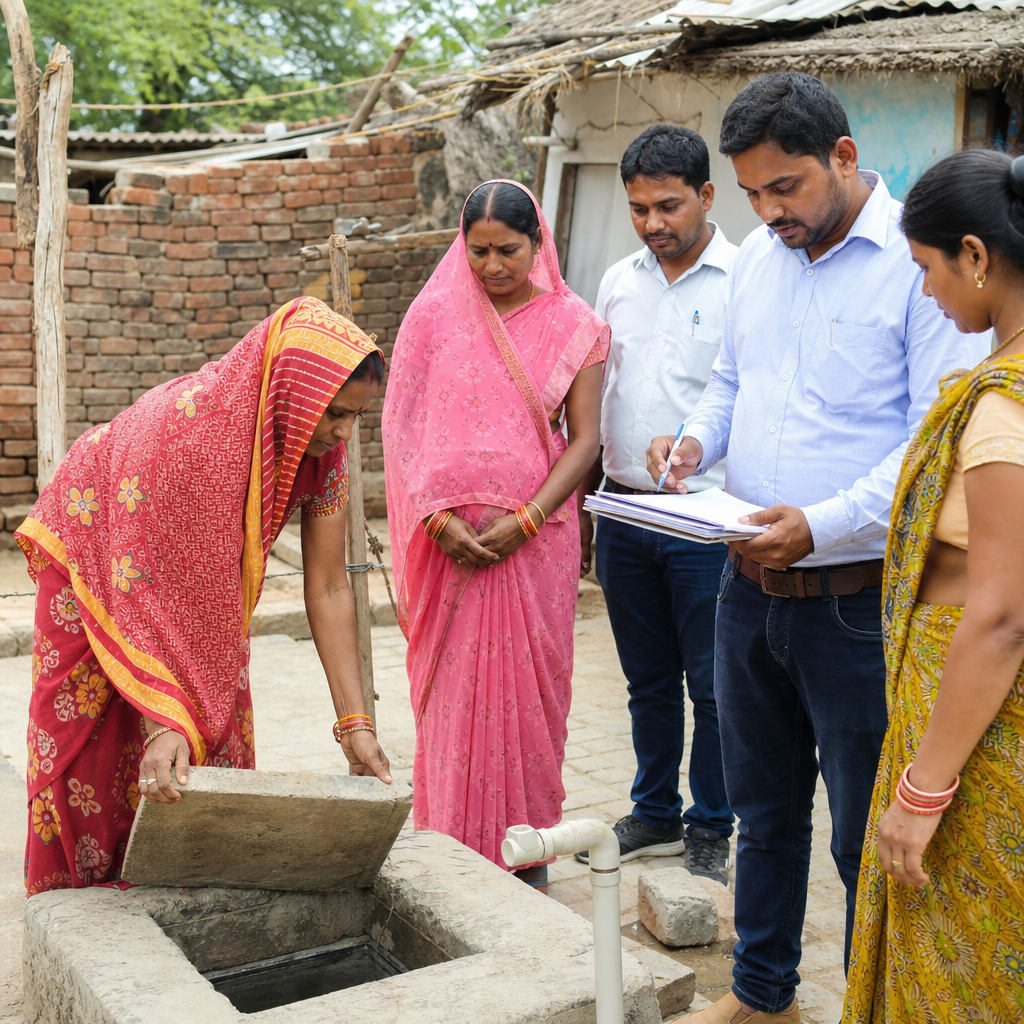
Financially sustainable sanitation programs depend on one core principle: services must keep working long after the first grant, pilot, or construction contract ends. In the context of eco-sanitation, often shortened to EcoSan, that means funding not only toilets or treatment units, but also collection, transport, reuse, maintenance, behavior change, monitoring, and local business capacity. I have worked with sanitation budgets where the visible hardware consumed nearly all available funds, while the unglamorous operating costs were treated as optional. Those programs rarely held up. The strongest programs treat sanitation as a service chain and finance every link deliberately.
EcoSan refers to sanitation systems designed to protect health while recovering resources such as nutrients, organic matter, water, or energy. Examples include urine-diverting dry toilets, composting toilets, container-based sanitation, co-composting of fecal sludge with organic waste, and fecal sludge treatment plants that produce briquettes or soil conditioners. Financial sustainability means revenues, transfers, and household contributions are sufficient and predictable enough to cover routine operating expenditure, planned maintenance, capital replacement, and oversight over time. It does not always mean full cost recovery from users alone. In low-income and climate-vulnerable settings, public finance remains essential because sanitation creates major public benefits that individual households cannot capture on their own.
This matters because unsafe sanitation carries economic costs across health, education, productivity, water quality, and land values. The World Bank has repeatedly shown that poor sanitation can cost countries several percentage points of GDP through illness, premature death, time loss, and environmental damage. At the same time, well-designed EcoSan can reduce fertilizer demand, lower treatment costs, create local enterprises, and improve resilience where sewer expansion is unrealistic. As a hub for financing and investing in EcoSan, this article explains how to build durable sanitation business models, structure blended finance, price services intelligently, attract investors appropriately, and measure whether a program is truly bankable, affordable, and equitable.
Map the full sanitation value chain before choosing a financing model
The first strategy is to finance the complete sanitation value chain rather than a single asset. Every program should identify who pays for containment, emptying, transport, treatment, reuse, regulation, customer support, and eventual replacement. If one link lacks money, the whole system fails. I have seen donor-funded toilet construction programs report high coverage while pits filled, sludge was dumped informally, and farmers rejected end products because no one financed quality assurance. A financially sustainable program starts with service mapping, unit cost analysis, and demand forecasting.
In practical terms, planners should separate capital expenditure, operational expenditure, minor maintenance, major maintenance, and capital maintenance expenditure. This life-cycle costing approach is standard good practice because it prevents underbudgeting. For example, a urine-diverting dry toilet may be relatively affordable to build, but households still need containers, ash or cover material, periodic repairs to slabs and superstructures, user training, and a safe market outlet for recovered products. Container-based sanitation systems often show this clearly: customer acquisition, route logistics, transfer stations, labor, and treatment can outweigh the cost of the toilet interface itself. A robust financial plan also includes depreciation assumptions, working capital needs, and contingency for shocks such as fuel price spikes or flooding.
Demand matters just as much as engineering. A treatment plant sized for optimistic projections can become a stranded asset. Conversely, underestimating growth creates immediate service bottlenecks. The right approach is to model realistic utilization scenarios and test sensitivity. Ask direct questions: How many households will pay monthly? What share will need subsidies? What is the cost per ton of sludge transported at different route densities? How much product can local agriculture absorb? These answers shape whether the system should rely mainly on tariffs, municipal transfers, producer payments, carbon-related revenue, or a combination.
Blend public finance, household payments, and commercial capital
No single funding source is enough for most EcoSan programs. The durable model is blended finance: public money for public benefits, household payments for service use, and commercial capital where cash flows are strong enough to repay it. Public finance usually supports upstream planning, pro-poor subsidies, treatment infrastructure, regulation, and behavior change. Household payments support recurring service delivery. Commercial finance may fit vehicle fleets, treatment upgrades, manufacturing lines, or digital billing systems once operational performance is proven.
The reason is simple. Sanitation produces positive externalities, so governments should fund part of the system just as they do drainage, roads, and disease control. Expecting poor households to finance all capital costs often suppresses uptake and pushes people toward unsafe alternatives. However, fully free services can weaken accountability and undermine maintenance if no recurring revenue exists. The balanced answer is targeted subsidy design. For instance, municipalities can subsidize toilet construction for low-income households while requiring affordable monthly fees for collection and treatment. Cross-subsidies also work: commercial users, apartment blocks, institutions, or wealthier neighborhoods pay more to support lower-income customers.
Commercial lenders and impact investors will only engage if risks are allocated realistically. They want predictable demand, enforceable contracts, experienced operators, and transparent cash management. Development finance institutions and local banks are more open when projects have viability gap funding, partial guarantees, first-loss facilities, or output-based aid. In one city-scale model, the municipality financed land and core treatment assets, a private operator financed trucks and containers, and donor funds covered customer onboarding in informal settlements. That structure worked because each party funded the part best matched to its risk tolerance and return expectations.
Set tariffs using affordability, cost recovery, and service quality data
Tariff design is where many sanitation programs become either unsustainable or socially unacceptable. Pricing should start with actual service costs, then be adjusted using affordability analysis and policy objectives. A monthly EcoSan tariff can be fixed, variable, or hybrid. Fixed charges provide revenue stability, while variable charges can reflect collection frequency, container volume, or waste quantities. For fecal sludge emptying, scheduled desludging paid in installments is often more sustainable than large emergency payments every few years because households can budget for it and operators can plan routes efficiently.
Affordability should be tested against income data, not guessed. Many utilities use thresholds tied to a share of household expenditure, though local context matters. Programs should identify who cannot pay, who can pay part, and who can pay full cost. Social registries, geographic targeting, or community validation can improve subsidy accuracy. The critical point is to subsidize people or outcomes, not inefficiency. If an operator has poor route density, high leakage, or weak billing discipline, raising tariffs alone will not fix the model.
| Financing tool | Best use in EcoSan | Main advantage | Main limitation |
|---|---|---|---|
| Capital subsidy | Toilet installation, treatment plants, transfer stations | Expands access quickly where public benefits are high | Can create dependence if operations are not funded |
| User tariff | Routine collection, treatment, customer service | Builds recurring revenue and operator discipline | Limited by affordability and willingness to pay |
| Concessional loan | Vehicles, equipment, expansion of proven services | Lowers financing cost for growth investments | Still requires reliable repayment cash flow |
| Results-based finance | Verified toilets, safe disposal, reuse outcomes | Rewards performance instead of inputs | Needs strong monitoring and verification systems |
| Carbon or environmental revenue | Projects reducing methane, fuelwood use, or nutrient loss | Can improve project viability and attract investors | Usually supplementary, not a standalone revenue source |
Good tariff policy also links price to service quality. Customers will pay more reliably when pickup is punctual, complaints are resolved, and facilities are clean and safe. Digital payments, prepaid plans, and mobile money can reduce collection costs and improve transparency. Named tools such as customer relationship management platforms, GIS route planning, and management dashboards make this practical. In my experience, the simplest win is often moving from cash collection to mobile payments with automatic reminders. Revenue leakage drops, and operators finally get usable payment data.
Build revenue beyond the toilet: resource recovery, service contracts, and climate finance
EcoSan becomes more financially resilient when revenues come from several streams rather than one. Resource recovery is the most discussed option, but it must be approached with discipline. Recovered compost, dried fecal sludge fuel, black soldier fly larvae feed inputs, urine-based fertilizer products, and biogas all have potential, yet few programs should assume that by-product sales alone will fund sanitation. Product quality, pathogen reduction, logistics, branding, and regulatory approval determine whether reuse revenue is meaningful. Standards matter. Programs should align with World Health Organization guidance on safe use and national fertilizer or waste regulations before forecasting sales.
The strongest recovery businesses begin with a clear buyer and a tested product specification. For example, co-compost sold to peri-urban horticulture may work when nutrient content is consistent and transport distances are short. Briquettes from treated sludge may compete where charcoal prices are high and industrial buyers value steady calorific value. Urine-derived fertilizers can succeed in high-value crops if storage, sanitization, and application protocols are credible. In each case, off-take agreements and pilot sales data are more valuable than optimistic feasibility studies.
Service contracts are often a steadier source of income than product sales. Municipalities, schools, markets, health centers, construction sites, and humanitarian settings may contract EcoSan operators for regular collection, cleaning, or treatment. These contracts create predictable cash flow and can underpin lending. Another underused source is climate and environmental finance. Sanitation projects that reduce methane emissions, avoid open dumping, displace fossil-intensive fertilizers, or protect watersheds may qualify for carbon methodologies or resilience-oriented funding. The paperwork is demanding, and revenue is uncertain, but for larger portfolios it can materially improve project economics.
Make investment readiness a management discipline, not a pitch deck exercise
Many sanitation enterprises think they are fundraising problems when they are actually data problems. Investors ask straightforward questions: customer acquisition cost, churn, gross margin by service line, route density, treatment throughput, collection efficiency, average revenue per user, and default rate. If a provider cannot answer those questions monthly, it is not investment ready. I have helped operators prepare for diligence, and the biggest gap is usually management information, not mission. A lender or investor needs evidence that the service works repeatedly, not just in one well-supported pilot zone.
Investment readiness starts with auditable accounts and clear unit economics. Separate grant revenue from earned revenue. Track subsidy flows explicitly. Measure direct operating costs by neighborhood or route. Document asset condition and replacement cycles. Use cohort analysis to see whether customers remain active after six or twelve months. If a program sells recovered products, monitor gross margin after packaging, storage, and transport, not just farm-gate price. These basics make valuations more realistic and reduce the risk of financing growth that amplifies losses.
Governance also matters. Special purpose vehicles, concession agreements, performance-based contracts, and ring-fenced revenue accounts can all improve investor confidence. Public-private partnership structures can work well for citywide sanitation if responsibilities are specific and enforceable. The public authority should define service standards, reporting rules, tariff policy, and subsidy commitments. The operator should commit to coverage, safe handling, and response times. Independent verification, whether through regulators, third-party auditors, or digital tracking, reduces disputes and makes future refinancing easier.
Use policy, procurement, and local market development to lower long-term costs
Financial sustainability is not only about finding money; it is also about reducing avoidable cost. Policy reform can make EcoSan cheaper and more investable by clarifying permits, land access, product standards, and institutional roles. When treatment sites face years of approval delays or recovered products sit in regulatory limbo, costs rise and investors leave. Clear national sanitation policies, city sanitation plans, and fecal sludge management regulations create a framework within which private firms can invest.
Procurement design is another major lever. Lowest-price procurement often produces weak construction quality and no incentive for long-term performance. Better models tie payments to verified outcomes such as functional toilets after one year, safely treated sludge volumes, or continuity of collection services. Framework contracts for emptying, spare parts, and laboratory testing can lower transaction costs. Local manufacturing support also matters. If urine-diverting pans, containers, dehydration vault components, or transfer equipment are imported in small batches, costs remain high. Developing local supply chains improves maintenance speed and creates jobs, which in turn strengthens political support for sanitation budgets.
Finally, programs should institutionalize monitoring against a few decisive indicators: cost per household served, operating ratio, collection efficiency, safe treatment rate, customer retention, and subsidy per low-income user reached. These metrics reveal whether the model is maturing. Financially sustainable sanitation programs are built, not discovered. They combine realistic tariffs, targeted subsidies, disciplined operations, diversified revenue, and supportive policy. For any organization investing in EcoSan, the next step is simple: map your full service chain, quantify real costs, and design finance around long-term service delivery rather than short-term construction.
Frequently Asked Questions
What makes a sanitation program financially sustainable over the long term?
A financially sustainable sanitation program is one that continues delivering safe, reliable service after startup grants, donor projects, or construction budgets end. In practice, that means planning for the full service chain rather than only the visible infrastructure. Toilets, urine-diverting systems, composting units, treatment sites, and other EcoSan assets are important, but they are only one part of the cost structure. Programs also need dependable funding for operations, preventive maintenance, repairs, emptying or collection, transport, treatment, reuse, customer support, monitoring, behavior change, and management oversight.
Long-term sustainability usually depends on aligning three elements: realistic costs, predictable revenue, and strong local capacity. Realistic costs include both capital expenditure and lifecycle costs, especially the ongoing expenses that are often underestimated. Predictable revenue can come from user fees, municipal budgets, public subsidies, cross-subsidies, sanitation tariffs, service contracts, carbon or environmental finance in some cases, and revenue from recovered products where markets are real and stable. Strong local capacity means trained operators, accountable institutions, clear roles, supply chains for spare parts, and local enterprises that can deliver services consistently.
The most resilient programs are designed around affordability and service quality at the same time. If fees are set too low, systems fail from lack of maintenance. If fees are set too high, households may stop using the service or revert to unsafe practices. A financially sustainable model therefore balances willingness to pay, public health priorities, and targeted support for low-income users. The key insight is simple: sanitation is not a one-time construction project; it is an ongoing public service that requires continuous financing and management.
Why do sanitation projects often struggle financially after the initial funding ends?
Many sanitation projects run into financial trouble because early budgets focus heavily on construction while underfunding everything needed to keep services functioning. Hardware is visible, politically attractive, and easy to count, so it often absorbs most of the available money. Meanwhile, less visible but essential activities such as pit emptying, fecal sludge transport, reuse management, operator salaries, routine maintenance, hygiene promotion, and performance monitoring receive little attention. Once the initial grant ends, the system has assets on the ground but no durable mechanism to operate them well.
Another common issue is unrealistic financial assumptions. Some projects assume that households will fully cover costs through user fees even where incomes are low or service quality is inconsistent. Others overestimate the market value of compost, urine, biogas, or other recovered resources from EcoSan systems. Resource recovery can be part of the business case, but it rarely solves the entire financing challenge on its own, especially in the early years. Markets may be seasonal, transport costs may be high, product standards may be unclear, and customer demand may take time to build.
Institutional gaps also play a major role. If no one is clearly responsible for collection, treatment, regulation, tariff setting, and service monitoring, financial performance deteriorates quickly. Delayed payments, weak procurement, poor contract management, and lack of maintenance planning can all undermine sustainability. In many cases, the technical system is not the main reason for failure; the financial and institutional model is. Programs perform better when they treat sanitation as a managed service with defined responsibilities, ring-fenced budgets, measurable service levels, and regular review of both costs and revenues.
How should EcoSan programs budget beyond toilets and treatment units?
EcoSan budgeting should be built around the entire sanitation service chain and the full lifecycle of the system. That starts with capital costs for facilities and treatment infrastructure, but it must go much further. A complete budget should include community engagement, user training, behavior change communication, operator training, routine inspection, cleaning, replacement of consumables, scheduled maintenance, repairs, emptying or collection logistics, transport, treatment processes, quality control for reuse products, environmental and health safeguards, customer complaint handling, and administrative management. Monitoring and data collection should also be funded from the start so decision-makers can track whether systems are actually functioning as intended.
It is especially important to distinguish between one-time costs and recurring costs. One-time costs might include construction, equipment purchase, site preparation, and initial training. Recurring costs include labor, fuel, transport, protective equipment, spare parts, supervision, laboratory testing where needed, outreach, insurance, and regulatory compliance. Programs often underestimate recurring costs because they seem small compared with capital investment, but over several years they frequently exceed the original construction cost. Budgeting should therefore be multi-year and based on realistic operating scenarios, not best-case assumptions.
For EcoSan systems with reuse components, budgeting should also include the steps required to make reuse safe and marketable. That may involve storage time, testing, packaging, transport to farms, market development, product promotion, and compliance with local standards. If these costs are omitted, the reuse side of the model can stall, causing materials to accumulate or disposal practices to become unsafe. A strong budget is one that reflects what it truly takes to deliver a reliable service, protect public health, and support local enterprises over time rather than simply install infrastructure at the lowest initial cost.
What financing models can support financially sustainable sanitation programs?
There is no single financing model that works everywhere, but the most sustainable sanitation programs usually combine several sources of finance rather than relying on one. Household payments can contribute to routine service costs where affordability allows, especially when service is reliable and clearly valued. Municipal or utility funding is often needed because sanitation generates broad public health and environmental benefits that extend beyond individual households. Targeted subsidies can help low-income communities access services without undermining the financial viability of operators. In many settings, public finance is essential for capital investment, while user charges support some portion of operations and maintenance.
Blended models are often the most practical. For example, a local government might finance treatment infrastructure, private operators might handle collection and transport under performance-based contracts, and households might pay affordable fees for regular service. Cross-subsidies can also be effective, where higher-income users, commercial customers, or related utility revenues help support service in lower-income areas. Output-based aid, service delivery contracts, revolving funds, microfinance for household-level improvements, and results-based financing can all play useful roles when designed carefully.
In EcoSan, resource recovery may add revenue, but it should usually be treated as a supplementary stream rather than the sole foundation of the business model. Compost, urine-derived products, biogas, or other recovered outputs can improve financial performance, especially where there is strong agricultural demand and efficient logistics. However, these revenue streams tend to be sensitive to market conditions, regulation, seasonal demand, and product quality. The strongest financing models are those that build a stable base of public and user finance first, then use resource recovery and enterprise development to strengthen resilience, improve cost recovery, and create local economic value.
How can program leaders improve cost recovery without making sanitation unaffordable?
Improving cost recovery starts with understanding what users are paying for and what level of service they actually receive. People are more willing to pay when services are dependable, convenient, safe, and visibly managed well. That means cost recovery is not only about raising fees; it is about improving service design, reliability, and trust. Programs should begin with transparent costing so leaders know the real expense of delivering service. From there, they can set tariffs or fees that are realistic, understandable, and linked to clear service commitments.
Affordability can be protected through smart subsidy design rather than across-the-board underpricing. Uniformly low fees often leave providers unable to maintain systems, which harms everyone. A better approach is targeted support for households that genuinely cannot pay, while allowing moderate cost recovery from users who can. Lifeline tariffs, geographic targeting, installment payment options, seasonal payment schedules, vouchers, or municipal support for vulnerable groups can all help. Efficiency improvements matter as well. Better route planning for collection, preventive maintenance, bulk procurement of spare parts, digital payment systems, and stronger contract management can reduce operating costs without reducing service quality.
Program leaders should also look beyond direct user fees. Cost recovery can be strengthened through institutional budget allocations, sanitation surcharges, commercial partnerships, and modest revenue from safe reuse where feasible. Just as important, they should monitor financial performance continuously. If collection rates are low, equipment is breaking down often, or customer complaints are rising, those are financial warning signs as much as operational ones. Sustainable sanitation depends on keeping the system trusted, affordable, and functional. The goal is not to force full cost recovery at any price; it is to build a durable financing mix that keeps services running, protects public health, and remains equitable for the communities served.