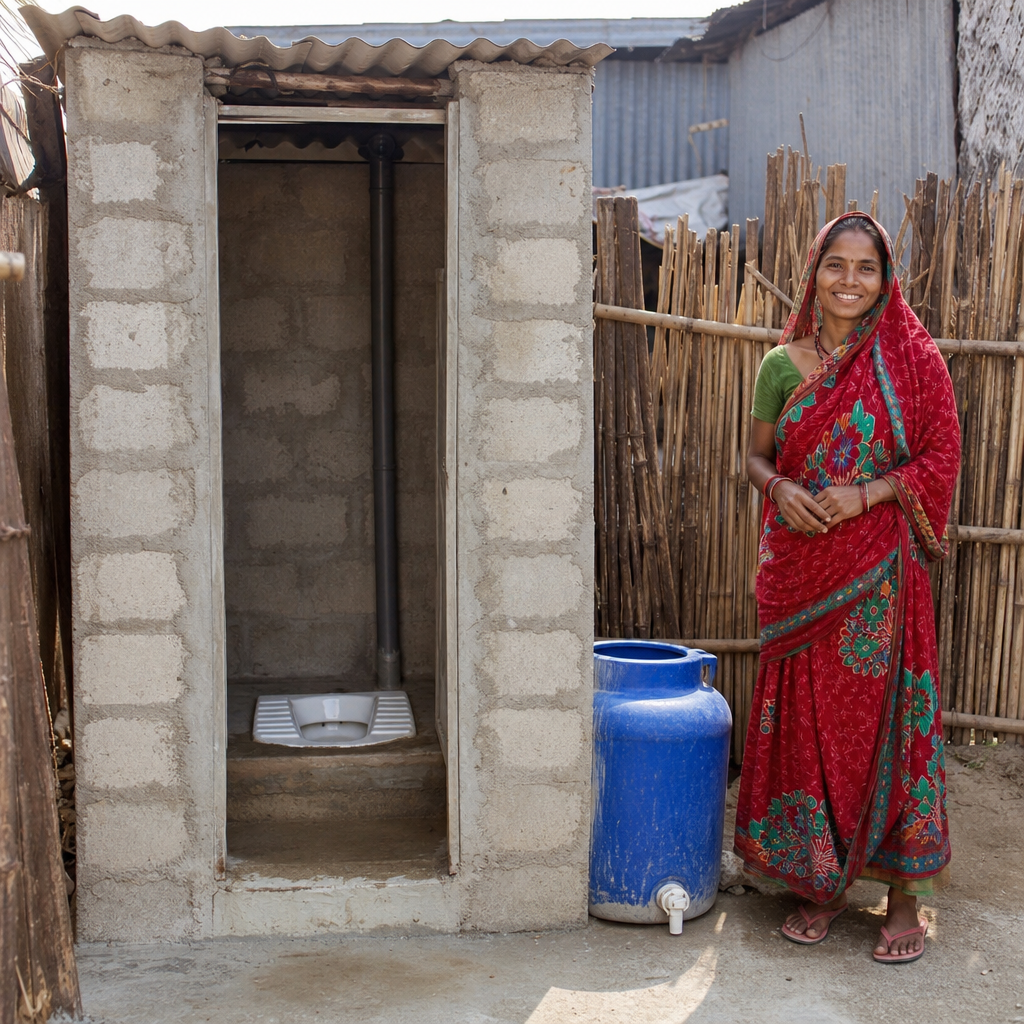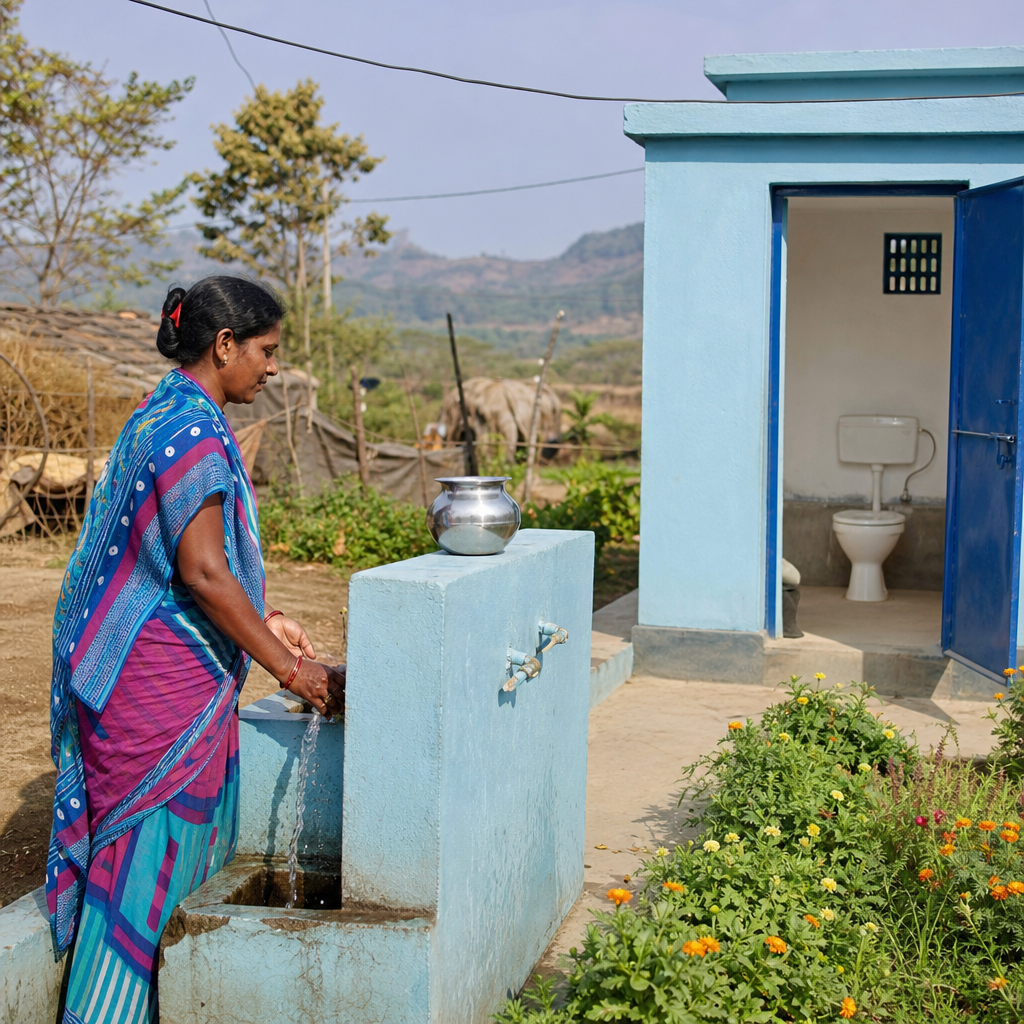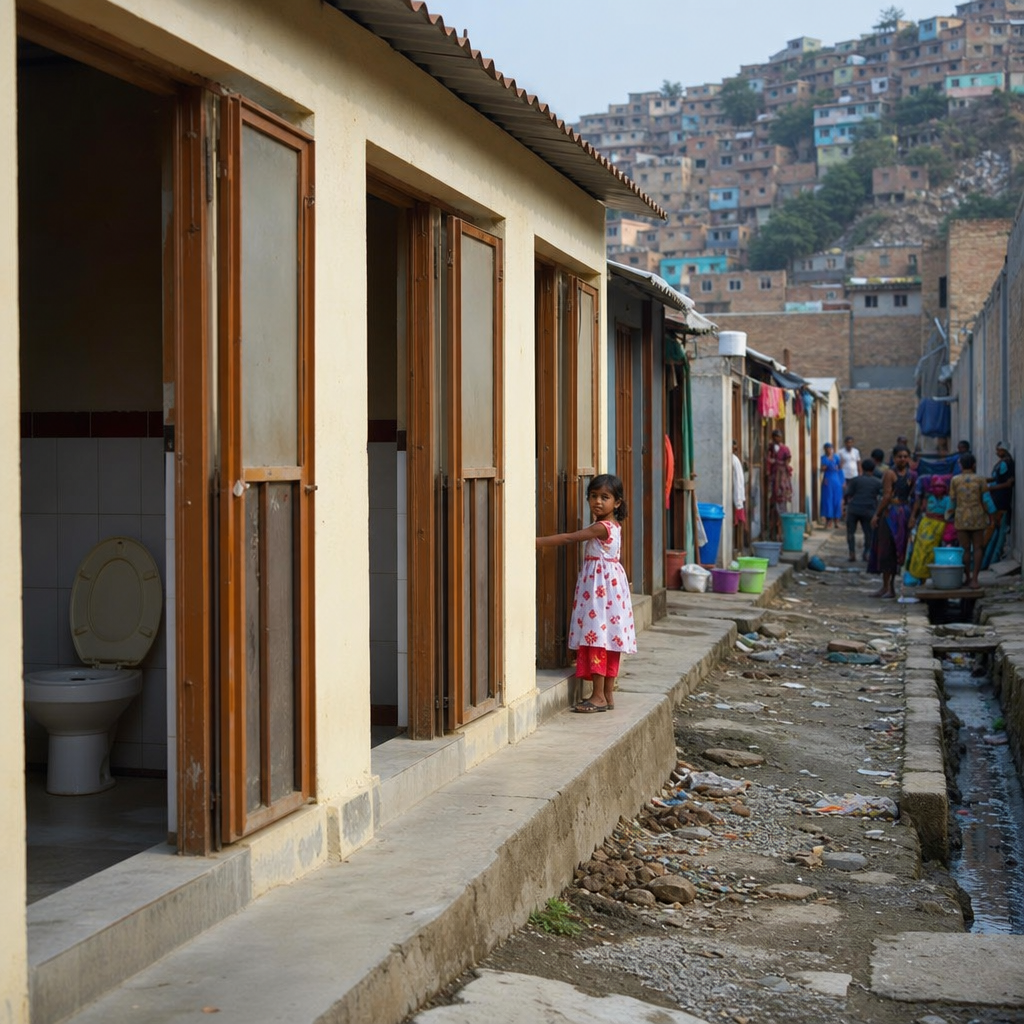
Sanitation is often framed as a public health service, yet in slum upgrading it is equally an economic asset that shapes household budgets, land values, labor productivity, municipal finance, and investor confidence. The economic value of sanitation in slum upgrading becomes clearest when informal settlements move from unsafe, fragmented waste management toward reliable systems that protect health and recover resources. In practice, this article focuses on financing and investing in EcoSan, the family of ecological sanitation approaches that safely contain, treat, and reuse nutrients, water, energy, or organic matter from human waste. In dense low-income settlements, EcoSan can include urine-diverting dry toilets, container-based sanitation, decentralized wastewater treatment, fecal sludge treatment with composting, and biogas-linked toilet systems.
I have worked with sanitation business cases where the first conversation was about toilets, but the decision was really about cash flow, risk, and who captures value. That is why sanitation planning in slum upgrading cannot stop at engineering drawings. It must ask who pays capital expenditure, who covers operations and maintenance, who owns land or service rights, what revenue streams are realistic, and how affordability constraints affect demand. The economics matter because poorly financed systems fail quickly, while well-structured systems reduce disease costs, save time, improve school and work attendance, support local enterprises, and make neighborhoods more bankable for future infrastructure. For governments, NGOs, utilities, social enterprises, and community organizations, EcoSan investment works best when it is treated as a long-term urban service with measurable returns rather than as a one-off construction project.
Why sanitation investment pays in informal settlements
The economic case starts with avoided losses. Unsafe sanitation increases diarrheal disease, helminth infection, environmental contamination, flooding from blocked drains, and healthcare spending. Households in informal settlements often pay more per unit for poor services than formal residents pay for networked services, including fees for shared toilets, informal emptying, medical treatment, and lost wages from illness. When sanitation is upgraded, those hidden costs fall. Children miss fewer school days, adults lose fewer work hours, and women and girls gain safety and time. These are not abstract benefits. In dense settlements, a thirty-minute daily reduction in toilet access time can translate into hundreds of productive hours per household each year.
There are also direct asset effects. Settlements with reliable sanitation become easier to service with water, drainage, roads, and electricity because environmental risk declines and tenure regularization becomes more feasible. In projects I have reviewed, landlords were willing to contribute to toilet blocks or septic improvements once they saw lower tenant turnover and less conflict over shared facilities. Small businesses benefit too. Food vendors, workshops, and schools need sanitation to operate legally and safely. When a settlement gains functioning sanitation, it strengthens the local economic base and supports higher occupancy, better rent collection, and greater willingness among lenders or donors to fund adjacent improvements.
EcoSan business models and where value is created
Financing and investing in EcoSan requires matching the technology to a business model. Not every system should be expected to pay for itself through user fees alone. In slum contexts, the strongest models usually blend public funding, household contributions, and enterprise revenue. Urine-diverting dry toilets reduce water demand and can work where sewers are unrealistic, but they require disciplined user behavior, supply chains for spare parts, and reliable collection or on-site treatment plans. Container-based sanitation offers high service quality in dense, flood-prone areas with insecure tenure because units can be installed quickly and waste can be transported to treatment sites. Decentralized wastewater treatment systems may suit larger upgrading programs where there is enough land for treatment modules and a stable institution to run them.
Value is created at several points: toilet access, collection, transport, treatment, and resource recovery. Compost, dried biosolids, black soldier fly larvae feed, biogas, and reclaimed water can generate income, but these revenues are usually secondary, not primary. The primary economic value remains service reliability and avoided health costs. Overestimating reuse revenue is one of the most common investment mistakes. For example, compost from fecal sludge may face strict quality requirements, seasonal demand, transport costs, and farmer acceptance barriers. Biogas can offset fuel use in institutions or treatment plants, but small systems often underperform if feedstock quality is inconsistent. Sound financial planning treats resource recovery as a bonus that improves margins, not as the sole basis for repayment.
Who pays: households, landlords, cities, utilities, and investors
A workable sanitation finance structure begins with stakeholder roles. Households can usually contribute to connection fees, monthly service payments, or labor, but expecting very low-income residents to fund full capital costs is unrealistic. Landlords should contribute when they receive rental income and property improvements, especially for shared compounds. Municipal governments have a clear role because sanitation produces public goods: cleaner drains, lower disease burden, reduced contamination, and safer public space. Utilities may manage parts of the chain if mandates include fecal sludge management or decentralized services. Development finance institutions, climate funds, impact investors, and philanthropic capital can fill gaps, but each requires a different risk-return profile.
In practical terms, sanitation investment stacks funding sources. Grants can pay for early-stage planning, community engagement, and subsidies for the poorest. Public capital budgets can support trunk infrastructure, transfer stations, treatment plants, or performance-based contracts. Commercial debt may fit mature service providers with predictable collection revenue. Results-based financing can reward verified toilet access, safe emptying, or treatment outputs. Carbon finance is emerging where methane avoidance or biogas capture can be measured, though transaction costs remain significant. Blended finance works when concessional funding takes first-loss risk and private capital funds scalable operating assets. The key is to align each funding source with the part of the value chain it is best suited to support.
How to evaluate an EcoSan investment
Investors and city planners should test five questions before funding any EcoSan project: demand, affordability, service design, unit economics, and institutional durability. Demand means more than saying residents want toilets. It requires evidence that users will adopt the specific service model and continue paying for it. Affordability analysis should examine not only monthly fees but also the irregular cash flow patterns common in informal work. Weekly or mobile-money payments often outperform monthly billing. Service design must account for plot density, flood risk, groundwater depth, road access for collection, and the full sanitation chain from containment to final treatment.
Unit economics should be calculated per household and per ton of waste managed, including depreciation, cleaning, collection labor, transport, treatment, customer support, and replacement parts. I have seen promising pilots collapse because the toilet hardware was subsidized while collection routes remained uneconomic at low customer density. Institutional durability asks whether permits, land access, treatment rights, and tariff approvals will still hold after political turnover. A project with modest margins but clear authority and stable contracts is usually stronger than a flashy reuse concept with unresolved governance. Financial models should include sensitivity analysis on uptake rates, fuel prices, labor costs, and delinquency, because sanitation margins in low-income settings are often thin.
| Finance option | Best use in EcoSan | Main advantage | Main limitation |
|---|---|---|---|
| Household fees | Routine operations, minor repairs, collection services | Creates accountability and recurring revenue | Affordability limits cost recovery |
| Public subsidy | Capital costs, pro-poor access, treatment infrastructure | Matches public health benefits | Can be politically unstable |
| Concessional debt | Scaling proven service providers | Lowers financing cost for expansion | Requires predictable cash flow |
| Results-based finance | Verified outputs such as toilets served or sludge treated | Rewards performance, not promises | Verification systems add complexity |
| Impact investment | Growth-stage sanitation enterprises | Can support innovation and management capacity | Return expectations may exceed sector realities |
Revenue streams, tariffs, and affordability design
Most successful sanitation enterprises in informal settlements build revenue from service fees first and from reuse products second. Tariffs should reflect willingness to pay, but willingness is shaped by service quality, convenience, and trust. Residents are far more likely to pay if collection is punctual, toilets are clean, and customer complaints are handled quickly. This is why operators that behave like disciplined service companies often outperform technically superior but poorly managed projects. Pricing can be flat per household, per container exchange, per use in public facilities, or bundled with rent or water bills. Bundling often improves collections because sanitation stops being a discretionary transaction.
Affordability design is central to equitable upgrading. Cross-subsidies between higher- and lower-income users, targeted vouchers, output-based aid, and landlord obligations can all protect access for the poorest. Public toilet blocks may still be necessary in transient or highly congested areas, but they need strong management and transparent cleaning budgets to avoid rapid decline. A common rule in sanitation economics is that the poor can pay something, but not everything, and they should not be priced into unsafe alternatives. That is why tariff policy should be linked to poverty data, not guesswork. In citywide planning, the least-cost mix often combines household systems, shared systems, and off-site treatment rather than forcing one model everywhere.
Risk, governance, and what makes projects bankable
Bankable EcoSan projects reduce uncertainty across technical, social, and regulatory dimensions. Technical risk includes system failure, odor, vector control, flood damage, and treatment underperformance. Social risk includes low adoption, misuse, vandalism, and conflict over shared responsibilities. Regulatory risk includes unclear standards for reused products, missing licenses for transport or treatment, and the absence of legally recognized non-sewered sanitation service models. The ISO 30500 standard for non-sewered sanitation systems and the broader Sanitation Safety Planning approach provide useful discipline, but local enforcement and practical fit matter more than citations on paper.
Governance quality is often the decisive factor. Cities that clearly assign responsibility for containment, emptying, transport, treatment, and monitoring attract more serious operators and funders. Long-term service contracts, transparent tariff rules, and access to land for transfer or treatment sites matter as much as technology choice. Community organizations also play a crucial role. In settlements where savings groups or resident committees manage payments, monitor cleaning, and mediate disputes, repayment and upkeep are usually better. The strongest hub strategies link local stewardship with professional service delivery, so community ownership does not become a substitute for technical competence.
Lessons from implementation and how to build an investment pipeline
Across slum upgrading programs, the most durable sanitation investments share four traits. First, they start with settlement diagnostics rather than technology preferences. Mapping density, topography, drainage, tenure, and access routes prevents expensive misfits. Second, they phase finance. Grants support design and behavior change, public funds anchor infrastructure, and private capital is introduced only when revenue is proven. Third, they build data systems early. Operators need metrics on fill rates, missed collections, customer churn, treatment volumes, and cost per household. Fourth, they plan for scale from the beginning, including procurement, spare parts, training, and transfer logistics.
To build a strong financing and investing in EcoSan pipeline, cities should package projects at the service-area level, not as isolated toilet installations. Investors fund repeatable systems better than scattered pilots. A credible pipeline includes demand data, land agreements, environmental permits, pro-poor subsidy rules, operator contracts, and a pathway to cost recovery. It also links this hub topic to related areas such as fecal sludge management, public-private partnerships, community savings, climate resilience, and municipal budgeting. The economic value of sanitation in slum upgrading is ultimately straightforward: when sanitation is financed as essential urban infrastructure, neighborhoods become healthier, more productive, and more investable. Cities, funders, and service providers should use that logic now to design bankable EcoSan programs that serve low-income communities at scale.
Frequently Asked Questions
Why is sanitation considered an economic asset in slum upgrading, not just a public health service?
Sanitation creates economic value because it directly affects how households spend money, how often people can work, how neighborhoods are perceived, and how cities manage long-term infrastructure costs. In informal settlements, poor sanitation does more than increase disease risk. It also raises out-of-pocket spending on treatment, increases time lost to illness or care work, reduces productivity, and lowers the attractiveness of an area for formal investment. When sanitation improves, those losses can be reduced in measurable ways.
For households, reliable sanitation often means fewer medical expenses, less income disruption, and less time spent dealing with unsafe or inconvenient waste disposal. For workers and small business owners, this can translate into more consistent earnings and better working conditions. For landlords and structure owners, improved sanitation can support higher occupancy, better asset maintenance, and stronger rental value. At the settlement level, sanitation can improve drainage conditions, reduce environmental contamination, and make broader upgrading investments such as roads, lighting, and housing improvements more durable and effective.
From a municipal perspective, sanitation is also tied to fiscal efficiency. Cities that invest in safer, more reliable systems may reduce downstream costs linked to emergency health responses, environmental cleanup, flooding, and repeated infrastructure failure. This is why sanitation in slum upgrading should be viewed as productive infrastructure. It protects health, but it also improves the economic functioning of households, neighborhoods, and local governments. In that sense, sanitation is not simply a social service. It is a foundational asset that supports inclusive urban growth.
How does improved sanitation affect household finances in informal settlements?
Improved sanitation can reshape household finances in both immediate and long-term ways. In many informal settlements, families pay hidden but significant costs for inadequate sanitation. These may include medical bills for sanitation-related illness, transport to clinics, purchases of water or cleaning supplies to cope with unsafe conditions, and fees for unreliable shared toilets or informal emptying services. Families may also lose income when adults miss work, when children miss school and require supervision, or when caregivers spend time managing illness rather than earning money.
When safer sanitation systems are introduced, many of these costs can decline. Reliable access to toilets and waste management reduces exposure to contamination, which can help lower the frequency of diarrheal disease, parasitic infections, and other sanitation-linked health problems. Even modest reductions in illness can make a meaningful difference for low-income households living with narrow financial margins. A smaller health burden often means fewer emergency expenses, more stable attendance at work, and less disruption to daily routines.
There are also indirect financial gains. Households with access to dignified sanitation may spend less time queuing, traveling to distant facilities, or managing unsafe disposal practices. Time savings matter economically, especially where income depends on daily labor, petty trade, home-based production, or care responsibilities. In some cases, sanitation improvements can also enhance the value of a dwelling, support rental income, or make it easier for a family to invest in home improvements because the basic service environment has become more secure. While financing mechanisms must be carefully designed so that user costs remain affordable, the overall financial case is strong: improved sanitation can reduce recurring losses and create more stable economic conditions for poor households.
What makes EcoSan financially attractive in slum upgrading projects?
EcoSan, or ecological sanitation, can be financially attractive because it does not treat sanitation only as a disposal problem. It also creates opportunities for resource recovery, cost efficiency, and service models that fit dense, infrastructure-poor settlements. In places where sewer expansion is technically difficult or prohibitively expensive, EcoSan systems may offer a more practical investment pathway. They can reduce dependence on large network infrastructure, lower water demand in some designs, and create decentralized service options that are easier to phase into informal neighborhoods.
The economic logic becomes stronger when recovered outputs such as composted nutrients, treated organic matter, or other reusable products can be safely processed and linked to local markets. Although resource recovery revenues alone do not always cover total system costs, they can improve financial performance and diversify income streams for operators. This is especially relevant in upgrading programs that aim to combine sanitation access with circular economy principles, local job creation, and environmental resilience.
EcoSan can also be appealing to investors and public agencies because it supports modular scaling. Instead of waiting for a full conventional network rollout, upgrading initiatives can begin with targeted sanitation investments that deliver visible benefits more quickly. This can improve community confidence, demonstrate repayment or service-fee viability, and attract blended finance from public, private, and philanthropic sources. However, the financial attractiveness of EcoSan depends on good design, safe operation, user acceptance, maintenance planning, and clear institutional responsibility. The strongest projects are those that assess the full value chain, from household use and collection to treatment, reuse, and revenue management, rather than focusing only on toilet installation.
How does sanitation investment influence land values, local business activity, and investor confidence?
Sanitation investment can significantly change how a settlement is valued by residents, landlords, lenders, businesses, and public authorities. Areas with unsafe sanitation are often seen as high-risk environments because contamination, flooding, odor, and visible service failure weaken the case for broader economic activity. Businesses may hesitate to locate there, landlords may struggle to maintain property quality, and outside investors may view the area as unstable or too costly to upgrade. This risk perception matters even when demand for housing and commerce is strong.
When sanitation systems become more reliable, the local investment climate can improve. Better environmental conditions make structures more usable, streets more accessible, and commercial spaces more attractive to customers and suppliers. Small enterprises such as food vendors, workshops, rental units, and service shops often benefit from cleaner surroundings and more dependable basic services. Over time, that can increase cash flow within the neighborhood and support a more active local economy.
Improved sanitation can also contribute to rising land and rental values, especially when combined with drainage, roads, water, and tenure-related improvements. While value appreciation can signal successful upgrading, it also requires safeguards to prevent displacement of low-income residents. For municipalities and development partners, the key point is that sanitation helps convert perceived risk into investable potential. It signals that a settlement is becoming more governable, healthier, and more compatible with formal infrastructure and finance. That improved confidence can unlock additional investment, but equitable planning is essential so that existing communities share in the gains rather than being priced out of them.
What should policymakers and investors consider when financing sanitation in slum upgrading?
Policymakers and investors should begin by recognizing that sanitation finance in informal settlements rarely works through a single funding source or a simple payback model. Because the benefits of sanitation are spread across households, public health systems, local economies, and urban environments, financing usually needs to blend public subsidy, user contributions, development finance, and in some cases private capital. The right structure depends on affordability, land conditions, population density, technical feasibility, and the expected balance between public benefit and recoverable revenue.
For EcoSan and other decentralized approaches, decision-makers should assess the entire service chain. That means looking beyond the capital cost of toilets to include collection, treatment, maintenance, user education, regulation, monitoring, and the commercial viability of any recovered resources. Many sanitation projects underperform financially because the initial installation is funded but the long-term service model is weak. Strong investment planning includes realistic demand analysis, tariff design that protects poor households, operational accountability, and performance indicators tied to health, service reliability, environmental outcomes, and cost recovery where appropriate.
Investors should also pay attention to governance and risk allocation. Questions such as who owns the assets, who operates the system, who bears maintenance risk, and how revenue is collected are central to project viability. In slum upgrading, community engagement is especially important because usage patterns, trust, and social acceptance can determine whether a technically sound project succeeds. Policymakers can improve bankability by clarifying regulatory frameworks, supporting land-use coordination, de-risking early-stage pilots, and linking sanitation investment to broader upgrading strategies. The most effective financing approaches do not treat sanitation as an isolated intervention. They position it as core urban infrastructure that delivers health protection, economic returns, environmental benefits, and stronger foundations for inclusive development.