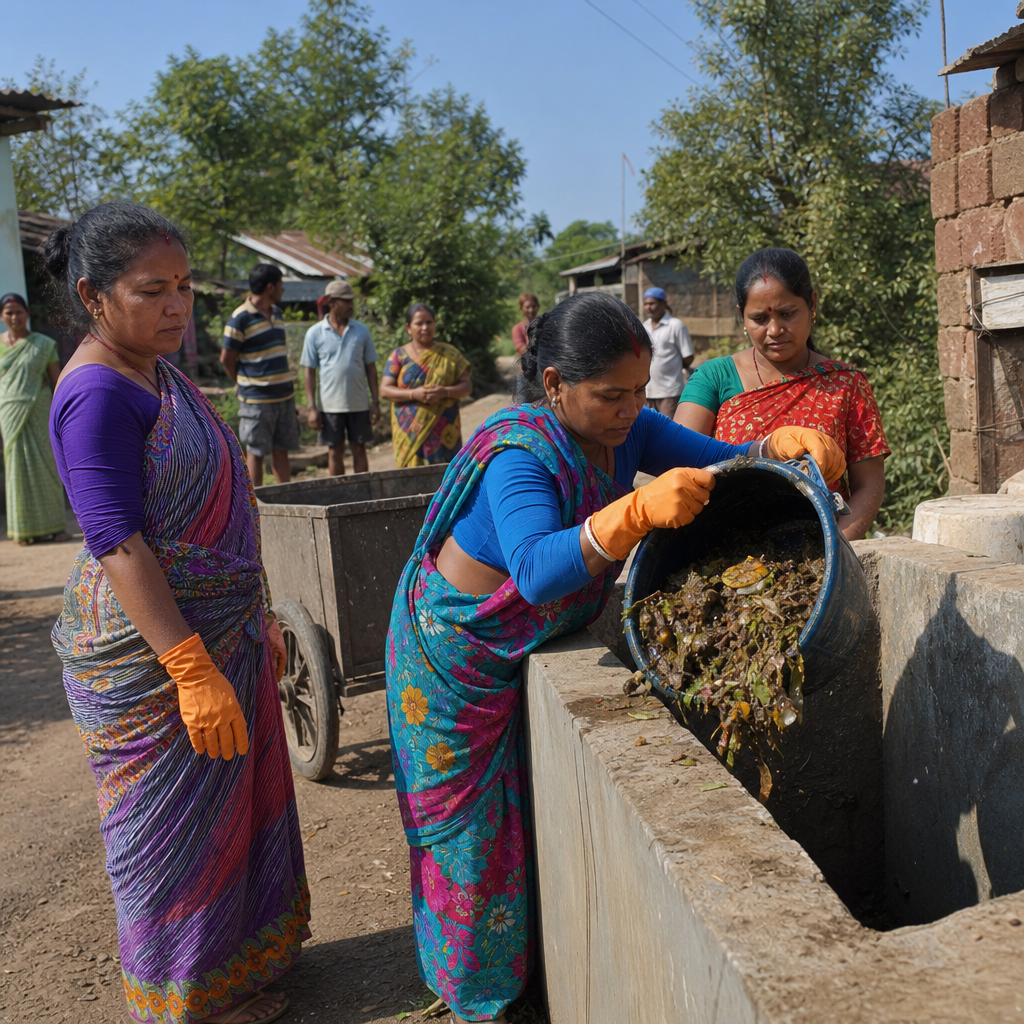
Sanitation is often discussed as a public health service, yet its economic role is just as decisive. When communities cannot safely manage human waste, they lose labor hours, spend more on treatment, miss school and work, and see land and water resources degraded. In my work reviewing sanitation programs and resource recovery models, I have seen the same pattern repeatedly: better sanitation reduces avoidable costs, protects productive assets, and creates conditions for investment. That is why the role of sanitation in achieving economic stability deserves to be examined through the lens of economic sustainability in EcoSan.
EcoSan, or ecological sanitation, is an approach that treats human waste as a resource stream rather than a disposal problem. Instead of relying only on water-intensive conveyance and centralized treatment, EcoSan systems aim to safely recover nutrients, organic matter, water, and in some cases energy. Common examples include urine-diverting dry toilets, composting toilets, decentralized treatment units, and co-composting systems that transform fecal sludge into soil conditioners. The economic question is not simply whether these systems work technically. It is whether they can deliver durable value at household, municipal, and market levels over many years.
This matters because sanitation decisions lock in spending patterns for decades. A city that builds infrastructure with high operating costs but weak cost recovery can strain public budgets. A rural district that ignores safe containment and reuse may keep paying hidden costs through disease burden, groundwater contamination, and lower farm productivity. By contrast, a well-designed EcoSan model can reduce lifecycle costs, diversify revenue, strengthen local enterprises, and improve resilience where water, fertilizer, and energy prices are volatile. Economic stability in sanitation means dependable service, manageable financing, productive reuse, and institutions that can keep systems running without chronic crisis.
For readers exploring the Economic Aspects topic, this hub article lays out the core logic behind economic sustainability in EcoSan. It explains where value is created, what cost drivers determine viability, how reuse markets influence adoption, and why governance matters as much as technology. It also answers a practical question decision-makers ask early: can sanitation systems move from being a pure expense to becoming part of a local circular economy? In many settings, the answer is yes, but only when health safeguards, user behavior, and realistic business models are built into the design from the beginning.
Why sanitation is an economic foundation, not a side issue
Sanitation underpins economic stability because it shapes labor productivity, healthcare spending, education outcomes, tourism confidence, agricultural efficiency, and environmental risk. The World Health Organization has long documented that poor sanitation contributes to diarrheal disease, parasitic infections, and undernutrition, all of which reduce workforce performance and household earning capacity. Lost productivity is not abstract. When adults miss days of work to care for sick children or when illness lowers physical output in farming and informal labor, income drops immediately. At the national level, these household losses aggregate into lower economic performance and higher public health costs.
There are also infrastructure and resource implications. Conventional sewer expansion can be appropriate in dense urban settings, but it is capital intensive and often difficult to maintain where utility revenues are low and power supply is unreliable. I have seen municipalities install ambitious systems only to struggle with pumping costs, nonrevenue connections, and underperforming treatment plants. Economic stability requires service models that align with local ability to pay, institutional capacity, and water availability. EcoSan becomes relevant here because it broadens the menu of options. It allows planners to compare centralized and decentralized systems based on total cost, not just initial construction.
Another reason sanitation is foundational is that its failures spill into other sectors. Unsafe waste disposal contaminates irrigation sources, fisheries, and urban drainage channels. That contamination can raise treatment costs for drinking water utilities, lower crop quality, and worsen flood impacts when drains clog. In economic terms, sanitation failures create negative externalities that are paid by households, farmers, businesses, and local governments. A stable economy limits those spillovers. Safe sanitation does exactly that by containing waste, treating it appropriately, and, in the case of EcoSan, converting part of the waste stream into usable products.
How EcoSan creates economic value across the sanitation chain
Economic sustainability in EcoSan depends on understanding the full sanitation chain: user interface, containment, emptying, transport, treatment, reuse, and final disposal when reuse is not possible. Value can be created or destroyed at each stage. A urine-diverting toilet may reduce water use and preserve nutrients, but if users are not trained or collection logistics fail, the expected economic benefits vanish. Likewise, a fecal sludge treatment facility can produce compost or fuel, but only if feedstock quality, processing time, pathogen reduction, and market demand are managed carefully.
The strongest EcoSan business cases usually come from combining cost avoidance with resource recovery. Cost avoidance includes lower water consumption, reduced need for sewer extension, fewer disease-related losses, and less expenditure on emergency pit emptying or environmental remediation. Resource recovery includes sales of compost, dried biosolids, struvite, treated water, and biogas. None of these streams should be romanticized. In many projects, recovered products do not fully pay for the system. But they can materially improve the economics, especially where chemical fertilizers are expensive or imported and where soils need organic matter.
Urine reuse is a clear example. Human urine contains most of the nitrogen and a large share of the phosphorus and potassium excreted by households. When source separated and stored safely, it can substitute for part of commercial fertilizer demand in agriculture. Field programs in countries such as Sweden, Nepal, and parts of East Africa have demonstrated agronomic value when application rates are matched to crop needs. Fecal composting offers a different value proposition. Its nutrient content is lower and more variable, but it can improve soil structure, moisture retention, and organic carbon. For smallholders facing degraded soils, that benefit has direct economic significance because better soil function supports more stable yields.
| EcoSan element | Main economic benefit | Typical constraint | Practical example |
|---|---|---|---|
| Urine diversion | Reduces fertilizer purchases through nutrient recovery | User compliance and separate storage requirements | Vegetable farmers applying diluted urine to nitrogen-demanding crops |
| Composting toilets | Lowers water demand and produces soil amendment | Needs correct moisture, carbon balance, and maintenance | Dry sanitation in water-scarce peri-urban settlements |
| Fecal sludge co-composting | Creates marketable compost and reduces disposal costs | Contamination control and market development | Municipal sludge mixed with organic market waste |
| Anaerobic digestion | Generates biogas for heat or electricity | Feedstock consistency and capital cost | Institutional sanitation linked to kitchens or farms |
What this shows is that EcoSan economics are rarely based on one revenue stream. They are based on a portfolio effect. Savings on water and infrastructure, better health outcomes, reduced environmental damage, and moderate income from recovered products together make the model stronger. That is why serious financial assessment should use lifecycle costing and include externalities wherever possible. Looking only at upfront capital cost almost always leads to the wrong conclusion.
Costs, financing, and the business models that make EcoSan durable
For EcoSan to support economic stability, the financing structure must match the service model. Households often focus on upfront toilet cost, while municipalities worry about operation and maintenance, compliance, and long-term asset replacement. A durable model addresses both. In practice, that means separating capital financing from service financing. Grants, public investment, climate-resilience funds, or concessional loans may support initial infrastructure, but recurring services such as collection, treatment, product quality control, and customer support need predictable revenue.
There are several workable business models. One is the service-fee model, in which households pay a scheduled fee for collection and maintenance. This has worked best where operators use route density and standardized containers to lower logistics costs. Another is a cross-subsidy model, where commercial customers or institutions pay more and support lower-income households. A third is a hybrid resource-recovery model, where service fees cover core operations and sale of compost, briquettes, or liquid fertilizer offsets part of treatment cost. From experience, the hybrid model is usually the most realistic because recovered products add value without forcing operators to depend entirely on uncertain commodity markets.
Unit economics matter. Collection frequency, transport distance, labor productivity, contamination rates, and product drying time can determine profitability more than the toilet technology itself. For example, decentralized treatment may outperform a centralized facility if road access is poor and haulage distances are long. Conversely, a centralized composting site may be cheaper where waste volumes are high and land is available. Tools such as lifecycle cost analysis, sensitivity analysis, and willingness-to-pay studies help clarify these tradeoffs. International practice increasingly favors citywide inclusive sanitation planning because it compares multiple service pathways rather than assuming sewering is the default answer everywhere.
Financing also depends on risk allocation. Private operators can bring efficiency, but they should not be asked to absorb all demand risk in new reuse markets. Public agencies still need to set standards, provide enforcement, support behavior change, and in many cases underwrite early market development. Microfinance can help households purchase improved toilets, while results-based financing can reward verified service outcomes. The key principle is straightforward: sanitation is an essential service with public benefits, so fully commercial expectations are often unrealistic. Economic sustainability comes from blending user payments, public support, and earned income from resource recovery in a transparent way.
Reuse markets, agriculture, and local enterprise development
The most promising long-term payoff in EcoSan comes when recovered outputs meet real local demand. Agriculture is usually the first market because nutrients and organic matter have direct agronomic value. Yet market success depends on product quality, consistency, packaging, extension support, and trust. Farmers will not buy compost simply because it is available. They compare it with manure, synthetic fertilizer, and crop residues. They ask whether it is safe, how much nutrient it contains, whether it is easy to transport, and whether results justify the price. Those are rational economic questions, and EcoSan programs must answer them with evidence.
Product standardization is crucial. Compost made from fecal sludge and organic waste needs tested pathogen reduction, manageable moisture content, and clear nutrient labeling. In settings where standards are weak, pilot plots and demonstration farms are often more persuasive than brochures. I have seen adoption improve when extension officers compare treated compost against untreated soil and against conventional fertilizer regimes on the same crop. Once farmers see improved water retention, reduced soil crusting, and stable yields, they begin to view EcoSan outputs as inputs rather than waste. That shift in perception is economically important because it widens the customer base beyond donor-supported projects.
Local enterprise development follows from that market confidence. Small businesses can manufacture urine-diverting pedestals, provide emptying services, manage transfer stations, pelletize compost, distribute soil amendments, or operate biogas-linked services. These are not speculative opportunities. They are practical segments within a sanitation value chain. Job creation is especially relevant in peri-urban areas, where unemployment is high and municipal services are overstretched. When designed well, EcoSan creates formal and semi-formal roles that improve occupational safety compared with unmanaged manual emptying. Better equipment, training, and standards transform sanitation labor from hazardous informal work into a recognized service economy.
Still, reuse markets are not automatic. Transport costs can make compost uncompetitive over long distances, and social acceptance can limit household-level reuse. In such cases, institutions such as parks departments, tree nurseries, road landscaping projects, and commercial farms can become anchor buyers. The lesson is simple: start with buyers who can absorb volume and validate quality, then expand outward. Economic stability grows when demand is diversified and not tied to a single purchaser.
Governance, public trust, and the conditions for long-term stability
No sanitation model becomes economically sustainable without governance that keeps service quality high and health risks low. EcoSan is especially sensitive to this because its economic case depends on safe reuse. If products are contaminated, storage guidance is ignored, or monitoring is weak, trust collapses quickly and markets disappear. Clear regulation therefore is not a burden on EcoSan economics; it is a precondition for them. National sanitation policies, local bylaws, product standards, and occupational health rules all shape whether investors, farmers, and households see the system as credible.
Public communication matters as much as regulation. Users need simple instructions on separation, cleaning, storage, and collection schedules. Farmers need guidance on application rates and crop restrictions where relevant. Operators need training in hazard analysis, process control, and recordkeeping. Where this is done well, complaint rates fall and willingness to pay rises because customers understand what service they are receiving. Trust has monetary value. It lowers churn, improves repayment, and supports premium pricing for verified products.
Data systems also support economic stability. Municipalities should track containment coverage, collection intervals, treatment volumes, product sales, operating ratios, and health compliance indicators. Named tools such as fecal flow diagrams help visualize where waste is safely managed and where losses occur. These metrics allow planners to identify bottlenecks before they become expensive failures. They also make it easier to link this hub topic with related discussions on public health costs, circular economy models, climate resilience, and agricultural input security across the wider Economic Aspects cluster.
Ultimately, the role of sanitation in achieving economic stability is practical, measurable, and far larger than toilet access alone. Economic sustainability in EcoSan rests on four pillars: affordable service design, realistic financing, verified resource recovery, and trusted governance. When those pillars are aligned, sanitation stops being treated as a permanent fiscal burden and starts functioning as productive infrastructure. Communities gain healthier workers, municipalities avoid inefficient capital traps, farmers access local soil inputs, and entrepreneurs build services around collection, treatment, and reuse. If you are mapping the economics of sustainable sanitation, use this hub as your starting point, then assess your local costs, markets, and regulations with the same discipline you would apply to any essential utility investment.
Frequently Asked Questions
Why is sanitation important for economic stability, not just public health?
Sanitation plays a direct role in economic stability because it affects how people work, learn, spend, and invest. When sanitation systems are weak or absent, households and governments face repeated costs that are largely preventable. Families often spend more money on medical treatment for diarrheal disease, parasitic infections, and other sanitation-related illnesses. At the same time, workers lose income when they are too sick to work or when they must care for sick children or relatives. These losses may seem small at the household level, but across a community or national economy, they add up to major reductions in productivity and earning potential.
There is also a broader development impact. Poor sanitation discourages business activity, lowers the quality of life in growing urban areas, and increases pressure on already limited health budgets. Schools, markets, factories, farms, and tourism-related businesses all function better when sanitation is reliable and safe. Investors are more likely to support communities that have the infrastructure needed to protect workers, water resources, and land values. In practical terms, sanitation helps create the predictable, healthy environment that economies need in order to grow steadily rather than absorb constant disruption from preventable disease and environmental damage.
How does poor sanitation increase costs for households and communities?
Poor sanitation creates both visible and hidden costs. The visible costs include doctor visits, medicine, hospital care, transport to treatment centers, and emergency spending when illness strikes. For low-income households, these expenses can be financially destabilizing. A single sanitation-related illness can force families to borrow money, sell productive assets, or cut spending on food, education, and farming inputs. Those decisions can have effects that last long after the immediate illness has passed.
The hidden costs are just as important. Time lost due to sickness, caregiving, or traveling long distances to unsafe or inadequate sanitation facilities reduces time available for paid work, education, and household production. Communities also bear costs when outbreaks overwhelm clinics, when contaminated water sources require more treatment, or when local environments become unsuitable for agriculture, fisheries, or recreation. In dense settlements, poor sanitation can depress property values and increase the cost of maintaining livable neighborhoods. Over time, these combined pressures make it harder for communities to save, invest, and build resilience. That is why sanitation should be understood as cost prevention infrastructure, not simply as a social service expense.
What is the connection between sanitation and workforce productivity?
The connection is strong and immediate. A healthy workforce is a productive workforce, and sanitation is one of the systems that helps keep people healthy enough to work consistently. When workers are exposed to unsafe sanitation conditions, they are more likely to suffer from infections, dehydration, chronic intestinal problems, and other illnesses that reduce energy, concentration, and physical capacity. Even when illness does not lead to full absenteeism, it can still lower performance, slow output, and reduce reliability on the job.
Sanitation also affects productivity through dignity, safety, and time use. Workers in farms, factories, schools, transport hubs, and informal markets need access to safe, usable toilets and handwashing facilities in order to remain on site and work effectively. Women and girls are especially affected when sanitation is inadequate, because lack of privacy, menstrual hygiene support, or safe facilities can limit attendance and participation. In many settings, poor sanitation contributes to repeated interruptions in education, which later weakens workforce readiness and earning potential. In short, sanitation supports labor markets by reducing illness, protecting worker well-being, and allowing people to participate more fully and consistently in economic life.
Can investment in sanitation generate economic returns?
Yes, sanitation investment can generate substantial economic returns, especially when projects are designed for long-term service quality and local conditions. The returns come from several directions at once. First, better sanitation reduces disease-related spending and productivity losses. Second, it protects water bodies, soils, and urban environments that support agriculture, industry, housing, and tourism. Third, it can create jobs in construction, operations, maintenance, waste collection, treatment, monitoring, and related service sectors. These benefits make sanitation an enabling investment that strengthens multiple parts of the economy rather than delivering value in only one area.
There is also growing interest in sanitation-linked resource recovery. In some systems, treated waste can be converted into compost, soil amendments, energy, or reusable water, depending on technology and regulation. These models do not replace the core public health purpose of sanitation, but they can improve financial sustainability and reduce pressure on natural resources. Well-managed sanitation systems can therefore move from being seen purely as a cost center to being recognized as protective infrastructure with measurable economic value. The key is not simply spending more, but investing intelligently in systems that are affordable to maintain, inclusive in access, and strong enough to keep delivering benefits over time.
How can governments and communities use sanitation policy to support long-term economic growth?
Effective sanitation policy supports long-term growth by treating sanitation as foundational infrastructure rather than a secondary welfare issue. Governments can start by integrating sanitation into public investment planning, urban development, water management, education, and health strategies. That means budgeting not only for construction, but also for maintenance, fecal sludge management, regulation, workforce training, and service monitoring. Too many sanitation systems fail because attention stops at installation. Economic gains are strongest when services remain safe, functional, and accessible year after year.
Communities also play a central role. Local leadership, user engagement, and realistic service models help ensure that sanitation solutions match actual settlement patterns, cultural preferences, and affordability constraints. Policies that support inclusive access are especially important because economic stability depends on broad participation. If low-income areas, informal settlements, schools, and rural communities are left behind, disease transmission and environmental contamination continue to create costs for everyone. Strong sanitation policy therefore combines infrastructure, governance, finance, and accountability. When done well, it reduces avoidable losses, protects productive assets, improves human capital, and creates the stable conditions that encourage savings, enterprise growth, and long-term investment.