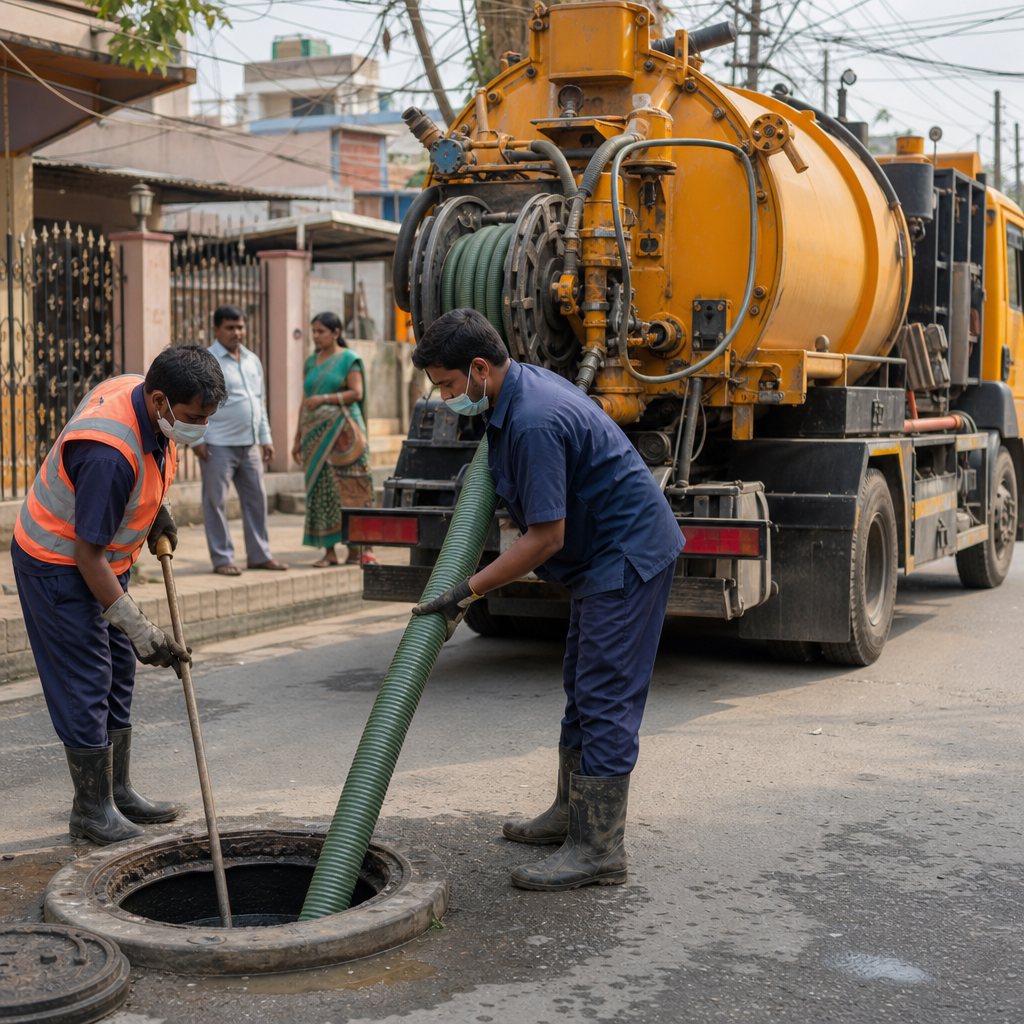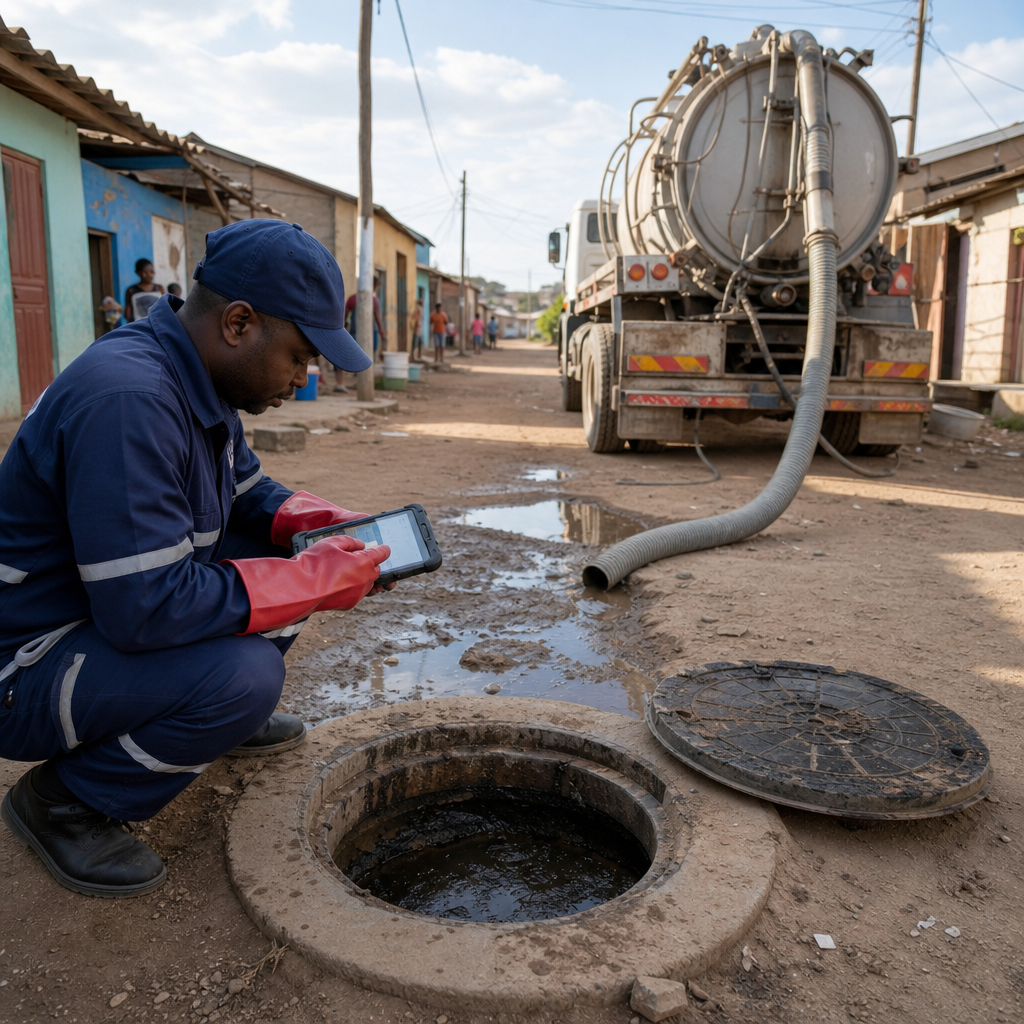
The hidden economic value of sanitation data sits at the center of economic sustainability in EcoSan because every decision about toilets, nutrient recovery, sludge logistics, tariffs, and public health costs depends on information that is usually scattered, underused, or not collected at all. Sanitation data includes household access figures, toilet usage rates, fecal sludge volumes, treatment plant performance, nutrient content in excreta-derived products, collection route timing, capital expenditure, operating expenditure, willingness-to-pay surveys, land application outcomes, and disease surveillance linked to sanitation conditions. EcoSan, or ecological sanitation, is a systems approach that treats human waste as a resource stream rather than an end-of-pipe disposal problem. In practice, that means urine diversion, composting, biogas generation, soil amendment production, water savings, and tighter links between sanitation, agriculture, and circular economy planning. I have worked on sanitation business cases where a single missing dataset, such as actual emptying frequency or the nitrogen content of stored urine, changed the entire financial model. That is why sanitation data has economic value beyond reporting. It improves forecasting, reduces waste, lowers financing risk, reveals recoverable resources, and helps cities choose service models that can survive after donor funding ends. For a hub article on economic sustainability in EcoSan, the key point is simple: sustainable sanitation systems are built on reliable data about costs, flows, risks, and outcomes. Without that evidence, planners underestimate lifecycle costs, overstate demand for reuse products, and fail to price services properly. With it, they can create stronger enterprises, defend public budgets, and capture environmental and agricultural value that conventional accounting often misses.
Why sanitation data changes the economics of EcoSan
Economic sustainability in EcoSan means the system can keep delivering safe service and resource recovery over time without collapsing from underfunded operations, weak demand, or unmanaged externalities. Sanitation data changes that equation because it reveals the full cost and value picture. In many cities, budget discussions still focus on toilet construction counts. That metric matters, but it says almost nothing about operating reliability, collection costs, pathogen reduction, compost maturity, or whether farmers will buy the end product. When I have reviewed underperforming EcoSan programs, the failure point was rarely technology alone. It was usually poor information about user behavior, maintenance intervals, contamination rates, or market demand.
Good data supports four economic functions. First, it improves cost accounting. Lifecycle costing distinguishes capital costs from recurrent costs such as container replacement, transport fuel, labor, bulking materials, and laboratory testing. Second, it identifies revenue opportunities from recovered nutrients, organic matter, carbon benefits, and service subscriptions. Third, it quantifies avoided costs, including reduced groundwater contamination, lower fertilizer imports, and lower disease burden. Fourth, it lowers investor and municipal risk by showing whether assumptions are realistic.
Consider urine-diverting dry toilets in peri-urban settlements. A project may appear inexpensive if the analysis stops at toilet installation. Once data is added on ash supply, user training refreshers, vault emptying frequency, and compost curing losses, the true operating profile becomes visible. At the same time, nutrient analysis can show that the recovered urine contains plant-available nitrogen that partially substitutes synthetic fertilizer. That substitution has value, especially during fertilizer price spikes. Data turns a simplistic cost story into a resource management business case.
What data matters most in a sanitation economy
Not all sanitation data has equal economic relevance. For EcoSan, the highest-value datasets are the ones that affect cash flow, public health compliance, and product marketability. Demand data comes first: number of users, seasonal occupancy, willingness to pay, service preferences, and actual payment behavior. Asset data follows: toilet type, age, containment volume, diversion efficiency, and maintenance condition. Flow data is essential: liters of urine collected, kilograms of fecal matter removed, contamination by greywater or solid waste, transport distance, and treatment throughput. Quality data matters because reuse markets depend on standards. Nutrient composition, moisture content, pathogen indicators, heavy metals where relevant, and product stability determine whether compost or sanitized urine can be sold safely and credibly.
Cost data should be granular. Too many models lump all operating expenses together. In reality, route productivity, fuel consumption, bag or container replacement, labor per ton handled, bulking-agent sourcing, customer acquisition cost, and laboratory compliance costs each affect viability. Revenue data must also be realistic. Listing a theoretical compost selling price is not enough; practitioners need actual offtake volumes, payment timing, rejection rates, and marketing costs. The same is true for savings. If an institution claims water savings from dry sanitation, meter readings or defensible estimates should back it up.
| Data category | Key metric | Economic question answered | EcoSan example |
|---|---|---|---|
| Demand | Regular paying households | Will service revenue cover recurrent costs? | Container-based sanitation subscription retention |
| Operations | Cost per collection trip | Where is the cost leak in service delivery? | Optimizing fecal container pickup routes |
| Resource recovery | Nitrogen, phosphorus, potassium content | What is the agronomic replacement value? | Pricing sanitized urine for vegetable farmers |
| Quality | Pathogen reduction level | Can the product enter formal markets safely? | Compost certification for landscaping use |
| Public health | Disease incidence trends | What costs are avoided by better sanitation? | Reduced diarrheal burden near flood-prone settlements |
| Finance | Tariff collection rate | Is the business model bankable? | Blended finance for decentralized treatment hubs |
Turning operational data into lower costs and stronger services
Operational data creates value fastest because it directly affects daily spending. In EcoSan systems, transport and handling inefficiency often consume more money than managers expect. Route sheets, fill-level tracking, and time-per-stop analysis can cut collection costs substantially. In container-based sanitation, for example, understanding how quickly containers fill by household size and toilet design allows operators to reduce unnecessary trips while avoiding overflow. Even simple spreadsheet tracking of pickup intervals can expose neighborhoods where scheduling is based on habit rather than evidence.
Maintenance data is equally important. Urine diversion failures, blocked pipes, poor cover material use, and damaged pedestals can all degrade performance and raise costs downstream. When those issues are logged consistently, managers can identify recurring failure modes and redesign training or hardware. I have seen replacement part costs fall after teams discovered that one low-cost fitting was causing repeated leakage and contamination. The insight did not come from a major digital platform. It came from disciplined maintenance records tied to specific toilet models.
Operational data also improves labor productivity. If staff spend too much time manually sorting contaminated material or traveling to low-volume sites, labor costs rise without improving service quality. GPS-enabled route planning, barcode-based container tracking, or even paper manifests can create accountability and cleaner handoffs. The point is not technology for its own sake. The point is reducing uncertainty. Lower uncertainty means fewer emergency responses, better staffing plans, and more credible budgets.
Valuing resource recovery with evidence instead of assumptions
One of the biggest promises of EcoSan is resource recovery, yet this is also where weak data can lead to overstatement. Human excreta contains nitrogen, phosphorus, potassium, organic matter, and in some cases energy potential, but market value depends on treatment quality, logistics, farmer acceptance, and local substitutes. A compost pile is not automatically a product, and sanitized urine is not automatically a fertilizer business. Economic sustainability requires evidence.
Agronomic trials are especially valuable. If farmers can see yield response from excreta-derived products compared with urea, diammonium phosphate, or manure, adoption improves. Nutrient analysis should be paired with field application guidance because timing, dilution, and crop type matter. The Food and Agriculture Organization and the World Health Organization have both influenced how practitioners think about safe reuse, although national rules ultimately govern market access. In practical terms, a sanitation enterprise needs data on nutrient concentration, application rates, transport costs per kilometer, crop response, and buyer willingness to pay. Without that bundle of evidence, pricing is guesswork.
There is also value in by-products beyond direct sales. Water savings from dry systems matter in water-scarce regions. Reduced dependence on imported fertilizer matters where foreign exchange pressures raise agricultural input costs. Biogas value matters where institutions currently buy LPG, charcoal, or firewood. These benefits should be quantified conservatively. Decision-makers trust a model more when it includes sensitivity analysis and acknowledges contamination risk, storage losses, and market development costs.
Public health, environmental externalities, and the avoided-cost case
The hidden economic value of sanitation data becomes even clearer when avoided costs are included. Poor sanitation imposes costs on health systems, households, employers, utilities, and local ecosystems. Diarrheal disease, helminth infection, environmental contamination, groundwater pollution, and flood-related exposure all carry economic consequences. EcoSan systems can reduce some of these burdens, but only if systems are used correctly and treatment is verified. Data is what links sanitation performance to economic benefit.
For public budgeting, avoided costs are often the strongest argument for investment. Health economists commonly use cost-of-illness analysis, disability-adjusted life year estimates, and productivity-loss calculations to value sanitation improvements. At city scale, environmental monitoring can also show reduced nutrient loading or safer sludge handling, which lowers remediation costs and supports regulatory compliance. In tourism-dependent areas, cleaner environments protect local income. In farming regions, safer reuse can improve soil organic matter and crop resilience over time, though results vary by soil type and management practices.
The important discipline is attribution. Not every positive outcome can be credited solely to EcoSan. Handwashing, water quality, drainage, and food hygiene also affect disease outcomes. That is why good sanitation data should be integrated with broader service and health datasets. Balanced analysis builds credibility. Overclaiming short-term impacts weakens trust with municipalities and financiers.
Financing, tariffs, and investment readiness in EcoSan
Investors, lenders, and public finance officers all ask the same question in different language: will this sanitation system keep working financially? Sanitation data answers that by showing demand stability, cost recovery potential, and operational discipline. For household services, tariff design should be based on actual affordability data and collection rates, not assumed willingness to pay. For treatment or reuse facilities, the core metrics include utilization rate, unit treatment cost, product rejection risk, and offtake concentration. A decentralized composting site with one large buyer may look profitable until the buyer exits; data on customer diversification reduces that risk.
Blended finance is often necessary in EcoSan because sanitation creates both private and public value. User fees may cover part of operations, while grants or municipal subsidies support capital investment, behavior change, or health monitoring. Results-based financing can work when outputs are measurable, but that requires robust verification data. In my experience, the strongest financial models separate three layers clearly: service revenue, resource recovery revenue, and public co-financing justified by external benefits. Mixing them without transparency causes confusion and unrealistic expectations.
Standard financial tools matter here. Net present value, internal rate of return, payback period, and debt service coverage ratios are useful, but only if input data is credible. Sensitivity testing should include fuel prices, labor turnover, drought conditions affecting compost demand, contamination rates, and regulation changes. A smaller project with reliable data often secures support more easily than a larger project built on optimistic assumptions.
Building a sanitation data strategy that supports long-term sustainability
Economic sustainability in EcoSan improves when data collection is designed around decisions, not reporting burdens. Start with a minimum viable dataset: user counts, service frequency, operating costs by activity, treatment outputs, quality compliance, sales volumes, and payment performance. Then define who owns each dataset, how often it is updated, and what decision it informs. If no decision depends on a metric, stop collecting it. This keeps systems lean and increases accuracy.
Digital tools can help, including KoboToolbox, mWater, GIS dashboards, and enterprise accounting software, but governance matters more than software choice. Teams need standard definitions, audit trails, and routine data quality checks. Reconciliation between operational logs and finance records is especially important. If collection teams report higher volumes than treatment logs show, either material is being lost, recorded incorrectly, or diverted. Each possibility has financial implications.
For this Economic Aspects hub, the main lesson is that sanitation data is not an administrative afterthought. It is economic infrastructure. It reveals where EcoSan creates value, where costs are understated, and where policy support is justified. Organizations that measure carefully can price services better, build stronger reuse markets, and make a credible case for public and private investment. The next step is practical: audit the data you already have, identify the missing metrics that drive major financial decisions, and use them to strengthen your EcoSan strategy.
Frequently Asked Questions
What is sanitation data, and why does it have hidden economic value?
Sanitation data is the full set of information that describes how sanitation systems actually perform in the real world. It includes household access rates, toilet functionality, usage behavior, fecal sludge generation volumes, emptying frequency, transport distances, treatment plant throughput, operating costs, nutrient content in recovered products, customer payment behavior, tariff collection, and even public health trends linked to sanitation conditions. The economic value is often called “hidden” because this information is frequently fragmented across municipalities, utilities, NGOs, private operators, and health agencies, or it is simply never collected in a reliable way.
When that data is organized and used properly, it directly improves decision-making. A city can avoid overspending on infrastructure that is too large, or prevent failures caused by systems that are too small. Service providers can optimize collection routes, reduce fuel use, improve truck utilization, and lower labor inefficiencies. Treatment operators can identify bottlenecks earlier, improve performance, and reduce downtime. Policymakers can set tariffs based on actual service costs instead of assumptions, which supports financial sustainability without pricing households out of the system.
There is also major value in the ability to quantify what sanitation produces, not just what it costs. In EcoSan systems, sanitation data helps reveal the recoverable value of nutrients, organic matter, water, and energy. If operators know the nutrient composition and quality consistency of excreta-derived products, they can better position compost, biosolids, or urine-based fertilizers in agricultural markets. In other words, sanitation data turns sanitation from a pure expense category into a measurable economic system with recoverable assets, operational efficiencies, and long-term social returns.
How does sanitation data improve economic sustainability in EcoSan systems?
Economic sustainability in EcoSan depends on making accurate choices at every stage of the sanitation value chain, and those choices are only as strong as the data behind them. EcoSan systems are designed to recover value from sanitation flows, especially nutrients and organic resources, but recovery is only profitable when operators understand volumes, quality, logistics, costs, and demand. Without data, recovery efforts can become inefficient, underutilized, or financially disappointing.
For example, if a utility or enterprise does not know how much fecal sludge or source-separated urine is being generated in a service area, it cannot design collection schedules, storage capacity, treatment units, or product output targets effectively. If treatment performance data is weak, managers may not know whether recovered products are consistent enough for market sale. If collection timing, route duration, and truck utilization are not tracked, transport costs can quietly consume a large share of revenue. Small inefficiencies repeated daily across a city can become large financial losses over time.
Good sanitation data also helps EcoSan operators connect sanitation services to real market opportunities. Nutrient recovery only has economic value when product quality, quantity, timing, and customer demand are aligned. Data makes it possible to estimate how much fertilizer-equivalent value is available, what treatment standards are needed, what packaging or storage may be required, and which customer segments are most likely to purchase recovered products. This reduces uncertainty for investors, municipalities, and private operators. In practical terms, sanitation data is what allows EcoSan to move from a concept with environmental promise to a system with credible, repeatable economic performance.
What kinds of economic decisions become stronger when sanitation data is collected and analyzed well?
Nearly every major economic decision in sanitation improves with better data. At the planning level, governments and utilities can use data to determine whether they need sewer expansion, decentralized treatment, container-based services, fecal sludge management upgrades, or hybrid approaches. That prevents costly misallocation of capital. In many cases, the most expensive sanitation mistakes come from building systems based on assumptions rather than actual demand, settlement patterns, waste volumes, and service behavior.
At the operational level, sanitation data supports budgeting, staffing, maintenance scheduling, route optimization, spare parts planning, and treatment efficiency management. Knowing how often toilets fill, where emergency overflows occur, how long collection trips take, and where treatment losses happen allows managers to run services more efficiently. This improves service reliability while reducing avoidable expenditures. It can also help identify non-revenue losses, such as unpaid services, underbilled customers, illegal dumping, or underperforming equipment.
At the policy and financing level, strong data improves tariff design, subsidy targeting, contract management, and investment planning. Decision-makers can compare service costs by neighborhood, customer type, or technology model, then structure funding more fairly and more effectively. Data also strengthens the case for external finance because lenders and development partners are more likely to support systems with measurable performance and realistic cost-recovery pathways. In short, sanitation data reduces uncertainty, and reducing uncertainty is one of the fastest ways to improve economic outcomes in any infrastructure sector.
Can sanitation data help measure returns beyond direct revenue, such as health and environmental savings?
Yes, and this is one of the most important reasons sanitation data has such high strategic value. The economics of sanitation are not limited to user fees or product sales. Strong sanitation systems reduce disease transmission, lower healthcare burdens, improve worker productivity, reduce school absenteeism, protect water resources, and decrease environmental cleanup costs. However, these benefits are easy to overlook unless they are measured systematically through data.
For example, if sanitation improvements are paired with disease surveillance and household service data, analysts can estimate avoided medical expenses, fewer lost workdays, and lower productivity losses caused by diarrheal disease, parasitic infections, or environmental contamination. If sludge tracking and treatment data are linked to environmental monitoring, a municipality can better estimate savings from reduced groundwater contamination, lower nutrient pollution, and less emergency spending on degraded public spaces or waterways. These benefits may not appear immediately on an operator’s balance sheet, but they matter tremendously at the city and national economic level.
In EcoSan contexts, sanitation data can also help measure the environmental value of nutrient recycling and resource recovery. Replacing synthetic fertilizers with safe excreta-derived products can reduce import dependence, stabilize local input availability, and create circular economy benefits. If these effects are documented through credible data, sanitation investments become easier to justify not only as social infrastructure, but as economically productive systems. This broader return-on-investment perspective is often what persuades governments and funders to move from short-term project thinking to long-term sanitation strategy.
What are the biggest barriers to unlocking the economic value of sanitation data, and how can organizations address them?
The biggest barriers are usually not technological; they are institutional, operational, and governance-related. In many places, sanitation data is scattered across different actors who do not share standards, reporting systems, or incentives. Municipalities may track infrastructure coverage, private emptiers may hold route and volume information informally, treatment plants may record performance inconsistently, and health departments may collect public health indicators separately. As a result, no one sees the full economic picture. Data gaps are especially common in onsite sanitation and fecal sludge management, where informal service chains often dominate.
Another barrier is data quality. Information may be outdated, incomplete, manually recorded, or collected in ways that make comparison difficult. If definitions are inconsistent—for example, what counts as “access,” “safe treatment,” or “service coverage”—then analysis becomes unreliable. There is also a tendency to collect data for compliance reporting rather than for management decisions, which means organizations gather numbers but do not turn them into practical insights. In that situation, the hidden value remains hidden because the data is not structured to support financial planning, operational control, or performance improvement.
Organizations can address these barriers by starting with a clear decision-making purpose. Instead of collecting everything, they should identify the specific economic questions they need to answer: What does it cost to serve each area? Where are the biggest inefficiencies in transport? How much nutrient value is recoverable? Which tariffs are realistic? What health-related savings can be demonstrated? From there, they can standardize indicators, digitize key reporting flows, integrate data across departments and service providers, and establish routines for analysis and action. Even modest improvements in data governance can produce major economic gains when they help sanitation actors move from reactive problem-solving to evidence-based planning. That is ultimately where the hidden economic value of sanitation data becomes visible and actionable.