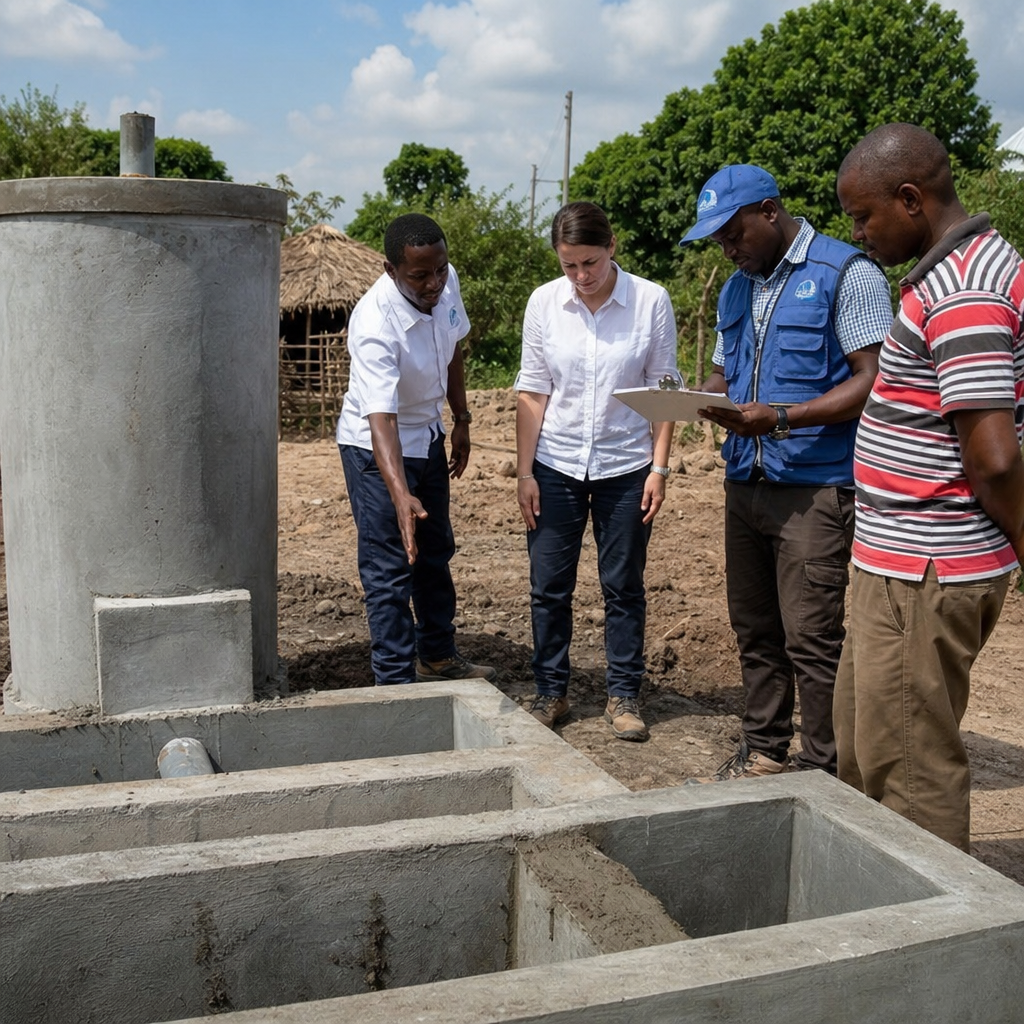
Sanitation as a Catalyst for Economic Innovation starts with a simple truth: when waste is managed safely and productively, communities gain far more than cleaner surroundings. They gain healthier workers, lower public costs, new business models, and a reliable stream of reusable resources. In the context of Economic Sustainability in EcoSan, sanitation is not only a public health service. It is an economic system that can convert liabilities into assets through nutrient recovery, water reuse, energy generation, and circular local enterprises.
EcoSan, short for ecological sanitation, refers to sanitation approaches designed to protect health while recovering value from human waste. Instead of treating urine, feces, and wastewater as material to hide and dispose of, EcoSan separates, sanitizes, and repurposes them. Common systems include urine-diverting dry toilets, composting toilets, container-based sanitation, fecal sludge treatment linked to compost production, and decentralized wastewater systems that recover water and nutrients. Economic sustainability in EcoSan means these systems can maintain operations over time without collapsing under unaffordable subsidies, weak maintenance, or missing markets for recovered outputs.
I have seen sanitation projects fail not because the technology was unsound, but because the economics were left vague. A toilet installed without a service chain is a stranded asset. A compost plant without buyers becomes a storage problem. A tariff designed without considering household cash flow leads to nonpayment and neglect. By contrast, projects that map the full value chain from user payments to collection, treatment, product certification, and agricultural demand tend to last. They create jobs, reduce imports of synthetic inputs, and improve municipal resilience.
This matters because sanitation still suffers from chronic underinvestment despite its measurable economic returns. The World Health Organization has repeatedly shown that sanitation investments produce broad social and economic gains through lower disease burden, time savings, productivity gains, and reduced healthcare costs. EcoSan adds another layer by creating recoverable value. For cities facing rising fertilizer costs, water stress, landfill pressure, and youth unemployment, that shift from disposal to recovery can change the economics of the entire sanitation sector.
What Economic Sustainability in EcoSan Really Means
Economic sustainability in EcoSan is the capacity of an ecological sanitation system to cover lifecycle costs, maintain service quality, replace assets when they wear out, and keep generating social and market value. Lifecycle costs include capital expenditure, operation and maintenance, transport, treatment, monitoring, customer support, and eventual refurbishment. Many sanitation plans underestimate recurrent costs, especially collection logistics, skilled labor, and behavior support. In practice, those recurrent items determine whether a system survives beyond the pilot stage.
A sustainable EcoSan model usually combines several revenue and value channels. The first is direct user finance, such as household payments, landlord contributions, school budgets, or commercial sanitation fees. The second is public finance, including municipal transfers, targeted sanitation subsidies, output-based aid, or climate and resilience funds. The third is resource recovery revenue from compost, urine-derived fertilizer, black soldier fly larvae feed linked to organic waste treatment, irrigation water, biogas, or carbon-related finance where methodologies allow it. The fourth is avoided cost: less sewer expansion, lower landfill transport, reduced flood contamination, and lower disease treatment costs.
One of the most important distinctions is between financial profitability and economic viability. A sanitation operator may not recover every cost from user fees alone, especially in low-income settlements, yet the system can still be economically sound when public health savings and environmental benefits are counted. Roads, drainage, and solid waste services operate on the same logic. EcoSan should be evaluated as essential infrastructure with recoverable commercial components, not forced into an unrealistic expectation of full cost recovery from households in every context.
Another core principle is fit-for-context design. Urine diversion may perform well where agriculture can absorb nutrients and water is scarce. Container-based systems may be more viable in dense informal settlements where sewers are impractical and pit emptying is unsafe. Decentralized treatment may outperform centralized expansion in peri-urban areas with fragmented growth. Economic sustainability improves when the technical model matches settlement density, cultural preferences, land availability, crop demand, and transport distances. There is no universal winning system.
How EcoSan Creates Economic Value Across the Sanitation Chain
Sanitation becomes an innovation platform when value is identified at each step of the chain. Upstream, toilet manufacturing creates demand for ceramics, plastics, carpentry, masonry, and installation services. Midstream, collection and transport create jobs in routing, vehicle maintenance, digital scheduling, and customer support. Downstream, treatment and reuse create additional enterprises in composting, pelletizing, nutrient concentration, irrigation services, landscaping products, fuel briquettes, and soil restoration. When local governments support standards and procurement, these linked markets can grow into a durable sanitation economy.
Consider urine-diverting systems. Urine contains most of the nitrogen and a large share of the phosphorus and potassium excreted by humans. If collected separately and sanitized according to recognized guidance, it can replace part of the demand for synthetic fertilizer. In farming regions where imported fertilizer prices are volatile, this substitution is economically meaningful. A municipality that spends heavily managing nutrient pollution can also benefit when those nutrients are redirected into agriculture rather than discharged untreated into waterways.
Fecal sludge composting provides another example. On projects I have assessed, the strongest economics emerged when compost was positioned not as generic waste-derived material but as a soil health input for specific crops, such as horticulture, tree nurseries, sugarcane, or degraded land rehabilitation. Farmers do not buy compost simply because it exists. They buy when trials show improvements in soil organic matter, moisture retention, and yield stability, especially where soils are depleted. Packaging, nutrient testing, and extension support matter as much as the treatment technology.
Decentralized wastewater reuse can also unlock value where freshwater is costly. Treated effluent for landscape irrigation, industrial cooling, or construction can reduce pressure on potable supplies. Hotels, institutions, and industrial parks often become early adopters because they can quantify savings and manage quality assurance. The economic case strengthens in regions facing drought, groundwater decline, or expensive bulk water purchases. Water reuse is not a side benefit in these settings; it is a strategic asset.
| EcoSan pathway | Main economic value | Typical conditions for viability | Common constraint |
|---|---|---|---|
| Urine diversion | Recovered fertilizer nutrients | Agricultural demand, user training, safe storage | Collection purity and acceptance |
| Composting fecal sludge | Soil amendment sales and avoided dumping costs | Reliable feedstock, quality testing, crop trials | Weak product marketing |
| Container-based sanitation | Service fees plus centralized treatment outputs | Dense settlements, organized collection routes | High logistics cost |
| Decentralized wastewater reuse | Water savings and reduced discharge burden | Water scarcity, stable off-taker, monitoring | Quality compliance risk |
Business Models, Financing, and Market Design
Strong EcoSan economics depend on business model clarity. Who pays, for what, and when? In many successful systems, households pay for service convenience and reliability, not for abstract environmental outcomes. That means subscription models, pay-per-collection arrangements, bundled housing fees, school sanitation budgets, or sanitation surcharges linked to water or property billing. For treatment operators, the revenue mix often includes tipping fees, municipal service contracts, product sales, and grants for initial capital expenditure.
Blended finance is usually necessary. Capital-intensive components such as treatment plants, transfer stations, or decentralized reuse systems often need public or concessional funding because their benefits spill beyond direct users. Private operators can then compete on collection, processing efficiency, customer experience, and product commercialization. This division of roles mirrors other infrastructure sectors. It also prevents the common mistake of asking early-stage sanitation enterprises to finance public-good assets at commercial rates.
Market design for recovered products deserves special attention. Certification, nutrient analysis, pathogen reduction standards, and labeling determine whether a recovered fertilizer can earn trust. In several countries, the absence of a clear regulatory category traps products between waste law and fertilizer law, making distribution difficult. Where standards are defined, market growth is faster because institutional buyers, farmer cooperatives, and distributors have legal certainty. Demonstration plots are especially effective because farmers respond to visible agronomic performance more than to sanitation narratives.
Digital tools are now improving unit economics. Route optimization software lowers collection costs. Mobile money reduces payment friction. QR-based service tracking improves accountability for desludging and container exchange. Remote monitoring can flag system failures before they become expensive repairs. These tools matter because sanitation margins are often narrow. A small reduction in missed collections, fuel use, or downtime can determine whether an operator reaches breakeven.
Jobs, Local Industry, and Urban-Rural Linkages
EcoSan supports employment in ways conventional disposal models often overlook. Jobs appear in toilet fabrication, installation, pit emptying, transport, treatment plant operation, laboratory testing, agronomy, sales, equipment servicing, and data management. Many of these roles are local by necessity, which keeps spending within the community. A city that imports chemical fertilizer, pays healthcare costs from preventable disease, and trucks sludge to distant disposal sites leaks value outward. A circular sanitation economy retains more of that value locally.
The urban-rural linkage is especially important. Cities produce concentrated nutrient streams, while surrounding agricultural zones need soil amendments and water. EcoSan can connect those needs. I have found that the most practical link is not bulk transport of low-value wet material over long distances. It is processing into stable, standardized products near the source, then distributing through existing agricultural channels. Pelletized compost, concentrated urine-based fertilizers, and co-composted organics are easier to store, price, and market than raw sludge-derived material.
Local industry benefits when specifications are stable. Artisans can build urine-diverting pedestals or container housings consistently. Mechanics can maintain vacuum pumps and collection vehicles. Small laboratories can offer routine pathogen and nutrient tests. Training institutions can certify operators. These are not side effects. They are part of the economic architecture that turns sanitation from a one-off project into a sector.
There is also a gender dimension. Poor sanitation disproportionately affects women through unpaid care burdens, lost work time, safety risks, and school absenteeism for girls. EcoSan enterprises that recruit women into sales, customer relations, manufacturing, and agronomy broaden income opportunities while designing services around actual user needs. When sanitation improves privacy, reliability, and menstrual hygiene management, the economic effects extend beyond the sanitation ledger into education and labor participation.
Risks, Standards, and What Makes Systems Last
Economic sustainability does not mean pretending every recovered product will find a premium market. Some will not. Transport can be expensive, contamination can ruin product quality, and user adoption can decline if maintenance is weak. That is why standards, monitoring, and operations discipline are nonnegotiable. The World Health Organization guidelines on safe use of wastewater, excreta, and greywater, along with national sanitation and fertilizer regulations, provide the framework for managing health risk. Systems that cut corners on pathogen reduction or quality control destroy market trust quickly.
Maintenance planning is another decisive factor. Toilets need spare parts. Collection routes need backup capacity. Treatment sites need trained operators, drainage, odor control, and records. Asset management should include depreciation schedules and reserve funds for replacement. In financial reviews, I look for whether operators have priced these realities into service fees or contracts. If not, apparent profitability is temporary.
Policy alignment matters as well. Subsidies for chemical fertilizer can distort the market for recovered nutrients. Building codes may ignore nonsewered systems. Land tenure insecurity can discourage household investment. Public procurement rules may prevent municipalities from buying recovered compost for parks or land restoration. These barriers are solvable, but only if sanitation planners engage ministries of agriculture, environment, housing, and finance rather than working in isolation.
For organizations building a sub-pillar strategy around Economic Sustainability in EcoSan, the hub should connect closely to deeper articles on financing models, nutrient recovery markets, life-cycle costing, regulatory compliance, social acceptance, and decentralized infrastructure design. The central lesson is consistent across all of them: sanitation innovation becomes economically durable when service reliability, public finance, product quality, and market demand are designed together rather than treated as separate issues.
Sanitation as a Catalyst for Economic Innovation is not a slogan. It is a practical framework for turning a costly public obligation into a platform for healthier cities, stronger farms, local employment, and resource efficiency. Economic sustainability in EcoSan depends on lifecycle costing, realistic blended finance, context-specific technology choices, and disciplined market development for recovered outputs. The strongest projects treat sanitation as a full value chain, not a toilet delivery exercise.
The benefits are concrete. Households gain safer, more reliable services. Municipalities reduce unmanaged waste and defer expensive sewer expansion where it is unsuitable. Farmers access alternative nutrient sources and soil-restoring products. Entrepreneurs build businesses around collection, treatment, manufacturing, analytics, and reuse. Public health improves, and those gains translate into productivity and lower medical costs. Even where direct profits are modest, the wider economic case remains compelling because sanitation underpins every other part of development.
If you are shaping an EcoSan program, start with the economics early. Map cash flows, service responsibilities, reuse markets, regulatory requirements, and maintenance needs before scaling technology. Build evidence through pilots, but design for long-term operations from day one. Use this hub as the foundation for deeper work across the Economic Aspects topic, and evaluate every sanitation decision with one question: how will this system keep creating value five, ten, and twenty years from now?
Frequently Asked Questions
How does sanitation drive economic innovation rather than simply reduce health risks?
Sanitation supports economic innovation because it changes how communities view waste, infrastructure, and resource management. In traditional systems, sanitation is often treated as a necessary public expense focused mainly on disease prevention and environmental protection. While those outcomes remain essential, modern ecological sanitation approaches show that sanitation can also function as a productive economic platform. When human waste is collected, treated, and processed safely, it can yield valuable outputs such as organic fertilizer, recovered nutrients, biogas, reclaimed water, and even data-driven service opportunities for utilities and local enterprises.
This shift creates room for innovation across multiple sectors. Entrepreneurs can build businesses around waste collection logistics, treatment technologies, composting, nutrient recovery, and decentralized toilet services. Farmers can benefit from lower-cost soil amendments and more stable access to nutrient inputs. Municipalities can reduce pressure on overburdened sewer systems while lowering long-term healthcare and environmental remediation costs. In effect, sanitation becomes a circular economy engine: it reduces losses, captures value from materials previously discarded, and opens new markets that support local employment and resilience.
The broader economic effect is equally important. Better sanitation improves worker productivity by reducing illness, absenteeism, and time lost to inadequate facilities. It also increases school attendance, supports tourism, strengthens investor confidence in local infrastructure, and improves the usability of public spaces. So while sanitation certainly protects health, its economic role is much larger. It creates conditions where innovation becomes practical, profitable, and scalable.
What kinds of economic value can EcoSan systems generate for communities and businesses?
EcoSan systems can generate direct and indirect economic value in ways that are often underestimated. Direct value comes from recovering usable resources from sanitation streams. Nutrients such as nitrogen, phosphorus, and potassium can be transformed into agricultural inputs, reducing dependence on expensive synthetic fertilizers. Treated organic matter can improve soil structure and long-term agricultural productivity. In some systems, waste can also be used to produce biogas for cooking, heating, or electricity generation, creating another income stream or cost-saving benefit. Water reuse, where appropriate and safe, can also support irrigation, landscaping, and certain industrial processes.
Indirect value is just as significant. Communities with reliable sanitation generally spend less on preventable healthcare costs linked to diarrheal disease, parasitic infections, and environmental contamination. Businesses benefit from healthier employees and lower productivity losses. Municipal governments can avoid or defer expensive investments in centralized wastewater expansion by using decentralized or hybrid sanitation models that are more affordable and adaptable. Property values may improve when neighborhoods are cleaner, safer, and less prone to flooding or contamination. In dense urban settings, improved sanitation can also support commercial activity by making marketplaces, transport hubs, schools, and informal settlements more functional and attractive.
There is also value in the service economy built around sanitation. Operations and maintenance, toilet manufacturing, container collection, treatment monitoring, compost production, reuse certification, and digital payment systems all create jobs and small-business opportunities. For businesses, EcoSan can turn what was once considered a compliance cost into part of a resource efficiency strategy. For communities, it can localize economic activity and keep value circulating within the region instead of being lost through waste disposal and imported inputs.
Why is nutrient recovery considered such an important part of economic sustainability in sanitation?
Nutrient recovery matters because it addresses two economic realities at once: waste management is costly, and agricultural nutrients are valuable. Conventional sanitation systems usually focus on removing waste from sight as efficiently as possible, often without preserving the nutrients embedded in it. EcoSan approaches take a different view. They recognize that human waste contains nutrients essential for plant growth, especially nitrogen and phosphorus, both of which are critical to food production. Recovering these nutrients safely can reduce the financial and environmental burden of both sanitation and agriculture.
From an economic standpoint, this is powerful because it transforms a disposal problem into an input supply opportunity. Farmers in many regions face volatile fertilizer prices, import dependence, and declining soil quality. Recovered nutrient products can help stabilize access to soil amendments and reduce production costs, particularly when local supply chains are weak or global commodity prices rise. Municipalities and service providers also benefit because the value of recovered products can help offset treatment and operational costs. While nutrient recovery rarely covers every sanitation expense on its own, it can strengthen the overall business case and improve system sustainability.
Nutrient recovery also supports long-term resilience. Phosphorus, for example, is a finite resource with significant geopolitical and supply-chain risks. Returning nutrients to the soil reduces waste, supports circular resource management, and improves environmental performance by lowering nutrient pollution in waterways. In economic sustainability terms, this means sanitation is not only less expensive to maintain over time, but also better aligned with agriculture, food security, and local resource independence. That is why nutrient recovery is increasingly seen as a cornerstone of sanitation innovation rather than a niche add-on.
Can investment in sanitation really lower public costs and improve productivity at the same time?
Yes, and this is one of the strongest arguments for viewing sanitation as an economic catalyst. Poor sanitation creates hidden costs across the entire public system. Governments and communities pay for higher disease burdens, emergency responses to contamination, environmental cleanup, lost school days, lower labor productivity, reduced tourism appeal, and degraded infrastructure. These costs do not always appear under one budget line, which is why sanitation has historically been undervalued. But when safe sanitation is in place, many of those losses decline at once.
Health improvements are the most immediate source of savings. Fewer sanitation-related illnesses mean lower treatment costs for households and public health systems. Workers miss fewer days, children attend school more regularly, and caregivers lose less time supporting sick family members. Over time, these effects strengthen human capital and economic output. In urban areas, reliable sanitation can also reduce damage to drainage systems and waterways caused by unmanaged waste, which lowers maintenance and remediation expenses. In rural and peri-urban settings, appropriate sanitation can protect local water sources that would otherwise become costly to restore or replace.
Productivity gains are equally important. Businesses operate more effectively when employees have access to clean, safe facilities and are less likely to become ill. Markets, schools, healthcare facilities, and transport centers function better when sanitation is dependable. Women and girls, who are disproportionately affected by inadequate sanitation, often gain time, safety, and greater access to education and work opportunities when services improve. Taken together, these outcomes show that sanitation is not merely a social investment. It is a foundational economic investment that reduces recurring public costs while increasing the productive capacity of communities.
What makes a sanitation system economically sustainable over the long term?
An economically sustainable sanitation system is one that can continue delivering safe, reliable service without collapsing under financial, technical, or institutional pressure. That means the system must be designed around local conditions, not just engineering ideals. Long-term sustainability depends on realistic operating costs, clear maintenance responsibilities, financing mechanisms that match household and municipal capacity, and technologies that can be serviced with available skills and supply chains. A system that is technically impressive but too expensive or complex to maintain will not remain economically sustainable.
Successful long-term models usually combine several value drivers rather than relying on one source of funding. User fees, public subsidies, cross-subsidization, commercial service contracts, and revenue from recovered resources can all play a role. The strongest systems recognize that sanitation provides both private and public benefits. Households gain direct services, but society also benefits from reduced disease, cleaner environments, and stronger economic participation. Because of that, blended financing is often more realistic than expecting users alone to bear all costs. Economic sustainability also improves when systems are modular and adaptable, allowing them to grow with changing population patterns and business demand.
Institutional strength is another major factor. Clear regulation, quality standards for reuse products, reliable monitoring, and incentives for private-sector participation help sanitation markets mature. Public trust also matters. People are more likely to pay for services and support reuse models when systems are visibly safe, professionally managed, and transparent about outcomes. Ultimately, an economically sustainable sanitation system is not defined only by whether it collects waste. It is defined by whether it protects health, recovers value where possible, supports livelihoods, and remains financially and operationally viable year after year.