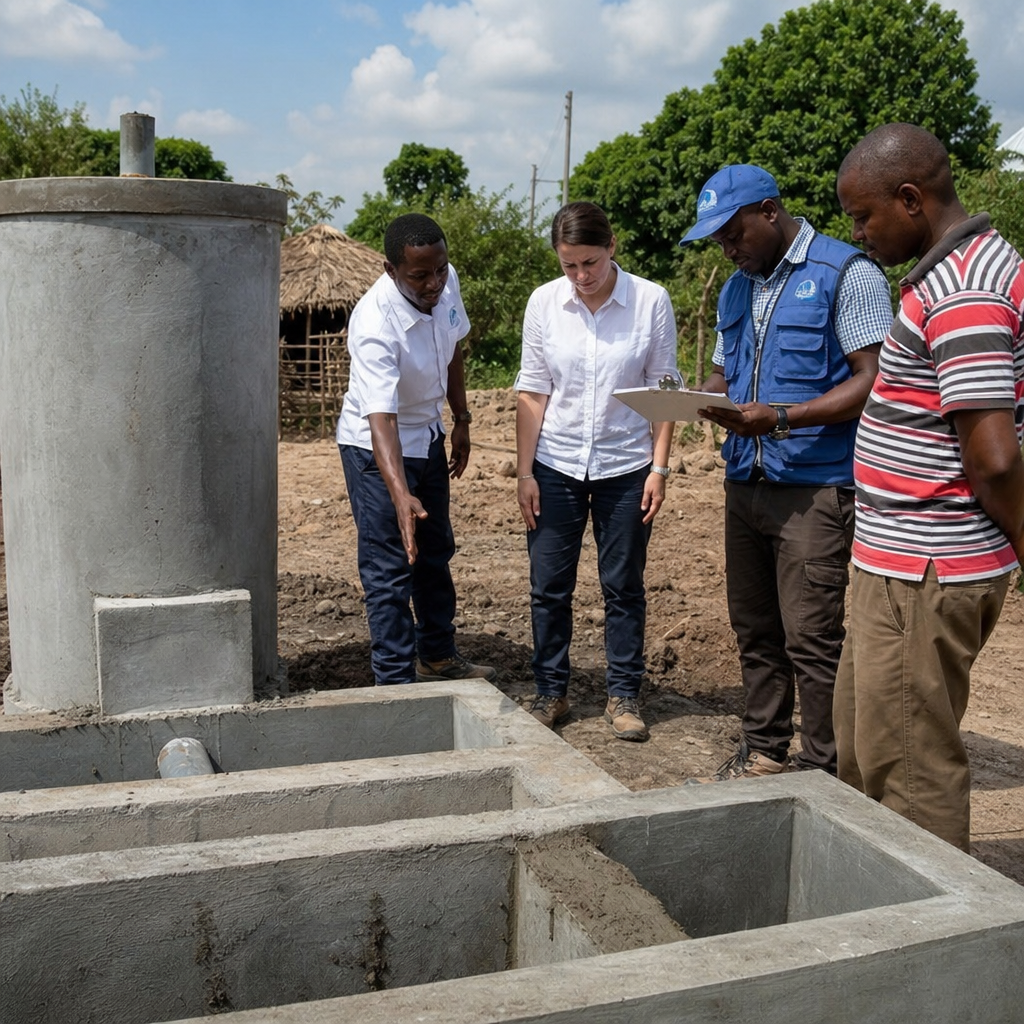
Sanitation projects shape local economies more deeply than many infrastructure programs because they influence health, labor productivity, land use, water quality, public finance, and the viability of small enterprises at the same time. In the context of ecological sanitation, or EcoSan, the central idea is that human waste is not only a disposal problem but also a recoverable resource stream that can produce fertilizer, soil conditioner, water savings, and lower treatment costs when systems are designed well. Economic sustainability in EcoSan means the system can keep delivering these benefits over time without depending on constant emergency subsidies, failing maintenance, or social practices that users will not accept.
I have worked on sanitation business cases where the engineering looked sound on paper yet the economics failed because no one mapped who paid for collection, who captured fertilizer value, or who carried the risk when usage patterns changed. That is why impact assessment matters. It is not enough to count toilets built or treatment units commissioned. A credible impact assessment asks how sanitation projects alter household spending, municipal budgets, agricultural yields, local employment, school attendance, tourism conditions, and environmental remediation costs. It also asks whether benefits are broad based or concentrated among asset owners and contractors.
For a hub article on economic sustainability in EcoSan, the essential terms should be clear. Capital expenditure covers construction, land, and equipment. Operating expenditure includes labor, energy, consumables, repairs, transport, and administration. Direct economic effects include user fees paid, jobs created, and fertilizer sold. Indirect effects include reduced disease burden, time saved from water hauling or open defecation practices, and improved groundwater quality. Induced effects arise when households and workers spend their additional income locally. Together, these categories determine whether a sanitation project strengthens a local economy or becomes a stranded asset.
This topic matters because sanitation is often financed as a social service, yet its long term success depends on economic logic. The World Health Organization has repeatedly shown that poor sanitation imposes heavy costs through diarrheal disease, helminth infection, undernutrition, and lost productivity. The World Bank has also documented national losses from inadequate sanitation in the form of health expenditure, time losses, premature mortality, and environmental degradation. EcoSan adds another economic dimension: resource recovery. When urine diversion, composting, blackwater treatment, sludge reuse, or nutrient capture are managed safely, sanitation can support circular local markets rather than only consuming public funds.
How sanitation projects affect local economic systems
The first step in any impact assessment is to map the channels through which sanitation changes economic activity. In practical work, I start with five pathways: health savings, productivity gains, environmental protection, enterprise development, and fiscal effects. Health savings occur when safer containment and treatment reduce exposure to pathogens. Families spend less on clinic visits, transport to care, and lost wages during illness. Productivity gains follow because adults miss fewer workdays and children attend school more consistently, improving future earning potential. Environmental protection matters because polluted drains, rivers, and shallow aquifers raise water treatment costs and damage fisheries, farming, and property values.
Enterprise development is especially important in EcoSan. A sanitation chain creates demand for masons, toilet component suppliers, pit emptying services, transport operators, compost processors, testing labs, and agricultural input retailers. In dense settlements, container based sanitation models have shown that recurring service revenue can support local jobs if customer retention remains high and logistics are efficient. In peri urban and rural areas, urine diversion and composting systems can create value when nutrient recovery products are standardized, pathogen risks are managed, and farmers trust the product. Fiscal effects include lower emergency spending on disease outbreaks, but also new obligations for regulation, monitoring, and support to low income users.
Because this article is a hub for economic sustainability in EcoSan, the key rule is simple: assess sanitation as a system, not a structure. A toilet may improve dignity, but a sanitation economy depends on service continuity, safe handling, financing discipline, and market uptake of recovered resources. Projects that ignore one link in the chain often shift costs downstream. For example, a household latrine campaign may reduce open defecation while increasing desludging demand that municipalities are not equipped to regulate or process safely. The local economy then absorbs hidden costs through contaminated waterways, illegal dumping, and health impacts that erase part of the project’s apparent return.
Economic assessment methods that produce credible results
Good sanitation impact assessment combines financial analysis, economic analysis, and distributional analysis. Financial analysis asks whether operators, municipalities, or households can pay the actual bills. Economic analysis values wider social benefits and costs, including externalities that market prices miss. Distributional analysis shows who wins, who pays, and whether vulnerable groups are left behind. In serious appraisals, I use lifecycle costing first, because underestimating operations and maintenance is the most common source of failure. Toilets, transfer systems, treatment units, and reuse platforms all have replacement cycles, training needs, and compliance costs that should be discounted across their service life.
Cost benefit analysis is useful when data quality is reasonable. Benefits can include avoided medical costs, avoided time losses, productivity gains, reduced water treatment expense, nutrient substitution value, energy recovery, and higher land or rental values. However, analysts should avoid double counting. For example, if reduced illness already captures fewer workdays lost, that same productivity gain should not be added again under another label. Cost effectiveness analysis helps when monetizing all outcomes is unrealistic. It can compare alternatives based on cost per household safely served, cost per kilogram of nitrogen recovered, or cost per disability adjusted life year averted, depending on policy goals.
| Assessment lens | Main question | Typical metrics | EcoSan example |
|---|---|---|---|
| Financial | Can the service pay its bills? | User fee recovery, operating ratio, reserve coverage | Whether urine collection fees cover transport and storage |
| Economic | Does society gain overall? | Net present value, economic internal rate of return | Valuing avoided disease and fertilizer substitution |
| Distributional | Who gains and who bears costs? | Affordability share, subsidy incidence, gendered time savings | Whether low income tenants benefit from shared facilities |
| Operational | Will the system keep performing? | Collection reliability, contamination rates, downtime | Whether compost quality stays within standards |
Robust results require baseline data and comparison logic. Before implementation, gather information on disease prevalence, current sanitation expenditure, emptying frequency, water source quality, fertilizer purchasing, crop yields, and time lost due to poor access. Then track the same indicators over time. Quasi experimental methods such as difference in differences can strengthen attribution when randomized designs are impossible. Administrative records, household surveys, utility accounts, GIS mapping, and lab testing should be combined. I have found that relying on survey claims alone is risky, especially for reuse volumes and maintenance behavior, because stated adoption often exceeds actual practice.
Cost structures, financing models, and affordability
Economic sustainability in EcoSan depends on matching the technology to a financing model that the community, operator, and local government can sustain. Capital heavy systems with low operating costs suit some contexts, while service based models with frequent collection fit others. The mistake is assuming that a low construction cost automatically means affordability. A urine diverting dry toilet may cost less water and sewer infrastructure over time, but if households must buy cover material, pay for periodic collection, and manage routine separation correctly, the operating burden can still be significant. Affordability should be assessed as a share of household income and adjusted for seasonal earnings.
Several financing structures are common. Household self finance works when incomes are stable and perceived benefits are immediate. Microfinance can help spread upfront cost, but repayment schedules must align with cash flow, especially in rural areas with harvest cycles. Output based aid can support installation while paying only after verified service delivery. Municipal cross subsidy models can protect low income neighborhoods if commercial users or higher income areas contribute more. Results based contracts can improve accountability for emptying, transport, and treatment, but only when indicators are measurable and enforceable. In my experience, blended models outperform single source funding because sanitation benefits and responsibilities are shared across the community.
User fees deserve careful design. Flat tariffs are simple but can be regressive. Volumetric charges are hard to apply in non sewered systems. Subscription models work well for container based sanitation because they stabilize revenue and route density, but churn quickly undermines unit economics. Public subsidies remain justified where health externalities are high and willingness to pay is lower than social value. The practical question is not whether subsidies exist, but whether they are targeted transparently and linked to safe service outcomes. Projects fail when they subsidize construction but leave collection, treatment, or monitoring unfunded.
Resource recovery and local market development
EcoSan becomes economically distinctive when recovered outputs find dependable markets. Nutrient recovery is the most discussed example. Human urine contains most of the nitrogen and a substantial share of the phosphorus and potassium excreted by households. When properly stored and applied, it can substitute part of synthetic fertilizer demand. Compost or processed biosolids can improve soil organic matter, water retention, and structure, which matters in degraded soils and drought prone farming areas. Some systems also produce biogas, black soldier fly larvae feed inputs, or irrigation water after treatment, though each pathway requires strict quality control and realistic market analysis.
The key phrase is realistic market analysis. A sanitation project does not create value merely by producing a recoverable output. It creates value only when the product meets standards, reaches buyers at an acceptable delivered cost, and solves a real problem better than alternatives. I have seen composting projects accumulate unsold stock because nutrient content varied by batch, packaging was poor, and extension support for farmers was absent. By contrast, projects that partnered with farmer cooperatives, tested nutrient composition regularly, and demonstrated field performance often achieved repeat purchases. In these cases, sanitation moved from waste management to input supply.
Market development often requires early public support. Certification, laboratory testing, transport coordination, and extension services reduce perceived risk for buyers. Demonstration plots are especially effective because farmers trust visible yield outcomes more than brochures. Pricing should reflect nutrient value, organic matter benefits, and handling costs, while acknowledging that synthetic fertilizers may be subsidized and therefore hard to displace. Urban landscaping, tree crops, and soil restoration programs can be easier entry markets than high value vegetables because compliance expectations and consumer concerns differ. Over time, a stable reuse market can lower net sanitation costs and anchor new local enterprises.
Jobs, productivity, and multiplier effects in local economies
Sanitation projects create employment directly, indirectly, and through multiplier effects, but only some of these jobs are durable and safe. Direct jobs include construction crews, masons, plumbers, collectors, treatment operators, lab technicians, mechanics, and customer service staff. Indirect jobs appear in supply chains for containers, pipes, protective equipment, spare parts, and agricultural distribution. Multiplier effects occur when these workers spend income in local shops, transport services, and housing. For local governments, this matters because the best sanitation investments are not those with the highest temporary construction employment, but those that sustain reliable service jobs and improve labor productivity across the economy.
Productivity gains are often larger than job counts suggest. Reduced enteric disease means fewer missed workdays, stronger child development, and better concentration in school. Women and girls often gain time when sanitation is closer, safer, and designed around actual household routines. That time can shift toward paid work, schooling, or enterprise activity. In market areas and tourism zones, cleaner surroundings also improve customer perceptions and dwell time. These effects are hard to monetize perfectly, but they are real. When I have compared market center improvements before and after sanitation upgrades, vendors consistently report higher foot traffic when odors, flies, and wastewater runoff decline.
There are tradeoffs. Informal pit emptiers may lose income when formal systems replace unsafe practices, and farmers may hesitate to adopt recovered products without proof of safety and performance. That is why just transition planning matters. Training, licensing pathways, equipment finance, and procurement preferences can help informal workers move into safer roles. Economic sustainability improves when a project strengthens the existing labor market rather than displacing it abruptly. A sanitation intervention should leave behind higher skill levels, safer working conditions, and more predictable earnings, not merely new infrastructure.
Governance, risk, and long term performance
No sanitation project remains economically sustainable without governance that enforces service standards and assigns responsibility clearly. Someone must own assets, someone must operate them, someone must monitor public health risk, and someone must fund services for users who cannot pay full cost. Weak governance creates hidden liabilities: overflowing facilities, illegal dumping, contaminated reuse products, and declining customer trust. Once trust is lost, willingness to pay falls and the financial model unravels. This is why procurement, contracts, monitoring protocols, and grievance systems are economic variables, not just administrative details.
Risk assessment should cover climate shocks, water scarcity, population growth, price volatility, and behavioral uncertainty. Flood prone zones may need raised systems and protected storage. Drought regions may gain more value from dry sanitation and water reuse. Rapid urbanization can overwhelm treatment capacity unless modular expansion is planned. Fertilizer price swings can either improve or weaken the business case for nutrient recovery. Sensitivity analysis is essential. I treat optimistic reuse revenue as upside, not as the sole basis for viability. The core sanitation service should remain defensible even if recovered product sales take longer to mature than expected.
For decision makers, the practical takeaway is straightforward: assess sanitation projects on lifecycle economics, public health outcomes, and market fit for recovered resources, then revisit those assumptions after implementation. Economic sustainability in EcoSan is strongest when technology choice matches user behavior, financing supports full service delivery, recovered products meet buyer needs, and governance keeps the whole chain safe. Use this hub as the starting point for deeper work on costing, business models, nutrient markets, affordability, and impact measurement. If you are planning or reviewing a sanitation investment, build your next appraisal around these principles and test every claimed benefit against real operating conditions.
Frequently Asked Questions
1. How do sanitation projects affect local economies beyond direct construction spending?
Sanitation projects influence local economies far beyond the initial costs of building toilets, sewer connections, treatment systems, or decentralized facilities. While construction creates short-term jobs for laborers, engineers, suppliers, transport providers, and contractors, the larger economic impact comes from what happens after the systems begin operating. Better sanitation reduces exposure to disease-causing pathogens, which can lower rates of diarrhea, parasitic infections, and other sanitation-related illnesses. That improvement matters economically because healthier people miss fewer days of work, children miss fewer days of school, and households spend less money on medical treatment, transport to clinics, and emergency care. Over time, that means more stable incomes, more productive labor, and stronger local demand for goods and services.
There are also effects on land use, property values, and business confidence. Communities with reliable sanitation tend to become more attractive for housing, retail activity, food service, tourism, and small-scale manufacturing because cleanliness and public health conditions improve the general business environment. Farmers and vendors benefit when water sources are less contaminated and local environmental quality is better protected. Municipalities can also see financial gains through reduced health-related public spending and lower costs associated with environmental cleanup, drainage blockage, and unmanaged waste. In other words, sanitation is not simply a welfare intervention; it functions as economic infrastructure that supports workforce participation, enterprise development, public finance stability, and long-term local growth.
2. What should be measured in an impact assessment of sanitation projects on local economies?
A strong economic impact assessment should measure both direct and indirect outcomes, and it should do so over a realistic time horizon. Direct indicators often include project capital costs, operation and maintenance costs, number of jobs created during construction and operation, local procurement levels, and service coverage. These numbers are important, but they only tell part of the story. To understand real local economic impact, assessments should also track changes in disease burden, household healthcare spending, workdays lost to illness, school attendance, productivity in agriculture and informal labor, and business performance in affected areas. These indicators show whether sanitation improvements are translating into measurable economic benefits for residents and employers.
It is also important to include environmental and spatial indicators because they often drive downstream economic outcomes. For example, changes in groundwater quality, surface water contamination, flooding frequency, odor levels, and waste management efficiency can affect agriculture, fisheries, tourism, land values, and commercial activity. Public finance indicators should also be part of the framework, including municipal maintenance costs, treatment savings, avoided emergency expenditures, and revenue implications where service fees or resource recovery systems are used. In projects involving ecological sanitation, assessments should additionally measure outputs such as compost, treated biosolids, urine-derived nutrients, water savings, and reduced fertilizer purchases. The best assessments combine quantitative data with interviews, household surveys, and local market analysis so they can capture not only monetary returns but also behavioral change, inclusion, and resilience.
3. Why is ecological sanitation especially important in economic evaluations?
Ecological sanitation is especially important because it changes the economic logic of sanitation from pure waste disposal to resource recovery and circular value creation. In conventional systems, human waste is typically viewed as a costly liability that must be collected, transported, treated, and discharged. EcoSan systems, by contrast, are designed to separate, treat, and reuse waste streams in ways that can produce valuable outputs such as fertilizer, soil conditioner, biogas in some system designs, and reduced freshwater demand. That means the economic assessment should not stop at avoided disease or improved hygiene; it should also consider whether the sanitation system creates saleable products, reduces input costs for farmers, improves soil fertility, and lowers pressure on centralized treatment infrastructure.
This matters particularly in areas where chemical fertilizer prices are volatile, water scarcity is rising, and municipalities struggle to finance large sewer networks. If treated nutrients can be safely reused in agriculture, local farmers may spend less on external inputs and improve yields over time. If water-efficient systems reduce demand on scarce supplies, communities may avoid expensive water expansion projects. If decentralized treatment reduces transport and processing costs, local governments may improve service delivery without taking on unsustainable infrastructure burdens. Economic evaluations should therefore compare EcoSan not only against the cost of doing nothing, but also against conventional sanitation pathways. When done properly, this comparison often reveals that ecological sanitation can deliver multiple forms of value at once: public health protection, environmental improvement, lower lifecycle costs, and new resource-based economic opportunities.
4. How do sanitation improvements support small businesses and informal livelihoods?
Small businesses and informal workers are often among the biggest beneficiaries of sanitation improvements, even though those gains are sometimes overlooked in project appraisals. Street food vendors, market traders, salon operators, mechanics, shopkeepers, transport workers, and home-based enterprises all depend on a healthy customer base, safe surroundings, and predictable daily routines. When sanitation is poor, business activity is disrupted by illness, flooding, foul odors, unsafe public space, and contaminated water. Workers lose time, customers avoid affected areas, and vendors may face spoilage, reputational damage, or even closure due to unsanitary conditions. Improved sanitation helps stabilize these local commercial ecosystems by making neighborhoods cleaner, safer, and more functional.
There are also supply-side benefits. Better sanitation can reduce absenteeism among employees and business owners, allowing enterprises to operate more consistently. Markets and commercial corridors with toilets, drainage, and waste treatment are often more usable for longer hours and by a wider range of people, especially women, older adults, and caregivers. In addition, sanitation systems themselves can create new livelihood opportunities in construction, maintenance, pit emptying, waste transport, treatment operations, compost processing, nutrient recovery, and local distribution of reuse products where regulations and safety standards permit. For informal settlements and low-income urban areas, these improvements can be especially significant because even small reductions in medical expenses and lost work time can materially improve household cash flow. From an economic perspective, sanitation supports the productivity and resilience of the local business base, not just household well-being.
5. What are the main challenges in proving the economic value of sanitation projects?
One major challenge is that many of the most important benefits appear gradually and are spread across different sectors, which makes them easy to underestimate. A sanitation project may reduce disease, improve school attendance, protect water bodies, raise property desirability, and support agricultural reuse all at the same time. Those benefits do not always show up in a single budget line or within the same year the project is completed. As a result, narrow evaluations that focus only on construction cost or immediate user fees can miss the larger economic picture. Another challenge is attribution: local economies are influenced by many factors, including road upgrades, health campaigns, rainfall patterns, commodity prices, and population growth. Analysts need a careful methodology to distinguish the effects of sanitation from these other variables.
Data quality is another common obstacle. In many areas, baseline data on illness rates, household spending, groundwater contamination, business turnover, and informal employment may be incomplete or inconsistent. Resource recovery benefits in EcoSan systems can also be hard to value if markets for compost or nutrient products are still emerging. Social factors matter as well. If users do not adopt the system correctly, if maintenance is weak, or if reuse products face cultural resistance, projected returns may not materialize as expected. That is why rigorous impact assessments should combine baseline and follow-up data, comparison communities where possible, lifecycle costing, sensitivity analysis, and stakeholder interviews. When these methods are used together, they provide a more credible and nuanced view of sanitation’s economic value and help decision-makers identify which project designs are most likely to deliver durable local benefits.