Analyzing the economic viability of sanitation solutions starts with a practical question: which systems deliver safe service, affordable lifecycle costs, and long-term value for households, utilities, cities, and farmers? In economic terms, viability means more than a low purchase price. It includes capital expenditure, operations and maintenance, asset lifespan, financing terms, user willingness to pay, public health benefits, environmental compliance, and the possibility of recovering value from waste streams. In the EcoSan context, economic sustainability refers to sanitation models designed to protect health while treating human excreta, greywater, and organic residues as resources that can produce fertilizer, soil conditioner, water, or energy. I have worked on sanitation business cases where the cheapest toilet at installation became the most expensive option after five years because of emptying failures, groundwater contamination, and frequent repairs. That experience is why economic analysis must follow the full service chain, from containment to treatment, reuse, and regulation.
Economic sustainability in EcoSan matters because sanitation markets regularly fail when costs and benefits fall on different actors. A landlord may pay for a toilet, tenants pay usage fees, municipalities manage sludge, health systems absorb disease burdens, and farmers may benefit from recovered nutrients without helping finance treatment. Conventional sewered systems can perform well in dense urban areas, but they often require high capital investment, continuous water supply, stable electricity, and strong utility management. On-site systems can cost less initially, yet they may create hidden public costs if pits flood, tanks leak, or sludge is dumped untreated. EcoSan tries to change this equation by reducing water demand, lowering transport loads, and creating products such as compost, urine-based fertilizer, dried biosolids, or biogas. The core economic question is not whether EcoSan is universally cheaper. It is whether a given configuration can deliver reliable sanitation outcomes at a lower total social cost or a higher total net benefit than available alternatives in a specific place.
For a sub-pillar hub on Economic Sustainability in EcoSan, the most useful approach is to organize the topic around decision factors. Readers usually want direct answers to six questions: what costs should be counted, where can value be created, which system types perform best in different contexts, how should financial viability be measured, what policies influence outcomes, and what risks can undermine returns? This article addresses each of those questions in plain terms and with the standards practitioners actually use, including lifecycle costing, cost-benefit analysis, levelized cost comparisons, nutrient recovery assessment, and service-chain planning. It also frames this page as a central reference point for related discussions on tariffs, subsidies, carbon finance, reuse markets, fecal sludge management, and decentralized treatment business models. Economic sustainability is not a single metric. It is a structured judgment about affordability, resilience, efficiency, and value creation over time.
What costs define economic sustainability in EcoSan
The first rule in sanitation economics is simple: count all costs across the service chain. Too many comparisons stop at construction, which distorts decision-making. A robust EcoSan assessment includes land acquisition, design, permitting, construction, user training, routine cleaning, consumables, labor, inspection, collection or emptying, transport, treatment, quality assurance, product marketing, and end-of-life rehabilitation. If the system depends on water, electricity, or bulking agents such as sawdust or ash, those recurring inputs belong in the model. If public agencies must enforce reuse standards or monitor groundwater, those administrative costs also matter. The World Bank, UNICEF, and the International Water Association all emphasize service-level costing because sanitation fails when downstream expenses are ignored.
Lifecycle costing usually reveals why some systems that look affordable are financially fragile. For example, a pit latrine may have low upfront cost but become expensive in dense settlements where access for mechanical emptying is poor and manual emptying creates health risks. A urine-diverting dry toilet may cost more to install and requires user training, but in water-scarce areas it can avoid flush water costs, reduce septic tank volumes, and create recoverable nutrients. Septic systems often appear attractive for peri-urban households, yet poorly designed soakaways can contaminate aquifers and trigger future remediation costs. In my experience, the turning point in stakeholder discussions comes when costs are annualized. Once capital is converted into equivalent yearly cost and compared with maintenance, emptying, and replacement intervals, the economic ranking of options often changes dramatically.
Analysts commonly use net present value, internal rate of return, and equivalent annual cost to compare sanitation solutions with different lifespans and cash flow profiles. Discount rates matter. A high discount rate penalizes systems with higher upfront investment but lower long-run operating cost, while a low rate makes durable infrastructure more attractive. For municipal planning, a social discount rate may be more appropriate than a commercial one because sanitation creates public goods, especially reduced disease transmission and environmental protection. Sensitivity analysis is essential because assumptions about inflation, utilization rates, desludging frequency, nutrient prices, and labor productivity can materially alter results. A defensible business case never presents one fixed number without a range.
Where value is created in resource-oriented sanitation
EcoSan becomes economically distinct when outputs are treated as marketable or cost-saving resources rather than waste. Human urine contains most of the nitrogen and a significant share of the phosphorus excreted by households, making it a potential fertilizer substitute when collected and applied safely. Fecal matter, once stabilized through composting, drying, co-composting, vermicomposting, or thermophilic treatment, can improve soils, especially where organic matter is depleted. Anaerobic digestion can generate biogas for cooking, heating, or electricity in institutional or community-scale systems. Treated effluent can offset freshwater demand in landscaping, forestry, or agriculture where local regulations permit. Each pathway creates a potential revenue line or avoided-cost benefit, but none should be assumed without market testing.
The strongest reuse cases usually come from places with clear agricultural demand, expensive synthetic fertilizer, and logistics that keep transport costs manageable. In Rwanda and Uganda, container-based and compost-oriented sanitation enterprises have tested sales of treated products to peri-urban farmers, but profitability depends on consistent quality, packaging, and distribution, not just nutrient content. In Sweden, source separation and urine reuse have been explored with strict quality control and strong institutional support. In India and East Africa, co-composting fecal sludge with market waste has shown promise because combining feedstocks can improve product characteristics and divert organic waste from dumpsites. The lesson is straightforward: the economic value of recovered resources depends as much on supply-chain execution as on treatment technology.
Still, resource recovery rarely covers the full cost of sanitation service on its own. That is a critical point for realistic planning. Nutrient products often compete with subsidized mineral fertilizers that are easier to transport and apply. Biosolids may face regulatory restrictions or stigma. Biogas systems can underperform if feedstock is inconsistent or digesters are poorly maintained. The most credible analyses therefore treat reuse revenue as one component of the financial model, not the sole foundation. The greater benefit may be avoided expenditure: lower water bills, smaller sludge transport volumes, reduced landfill use, lower fertilizer purchases by institutions, or reduced municipal treatment loads. Economic sustainability improves most when multiple value streams are combined.
How major sanitation options compare economically
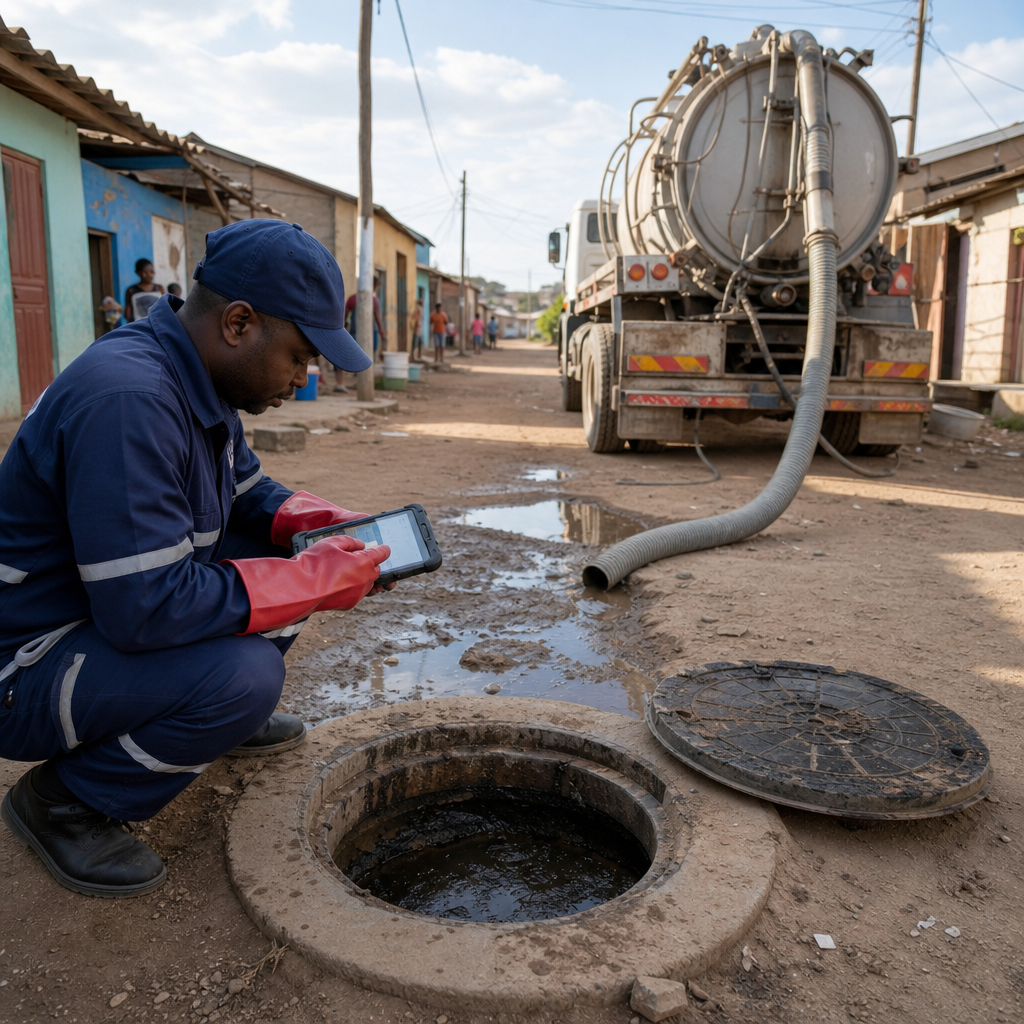
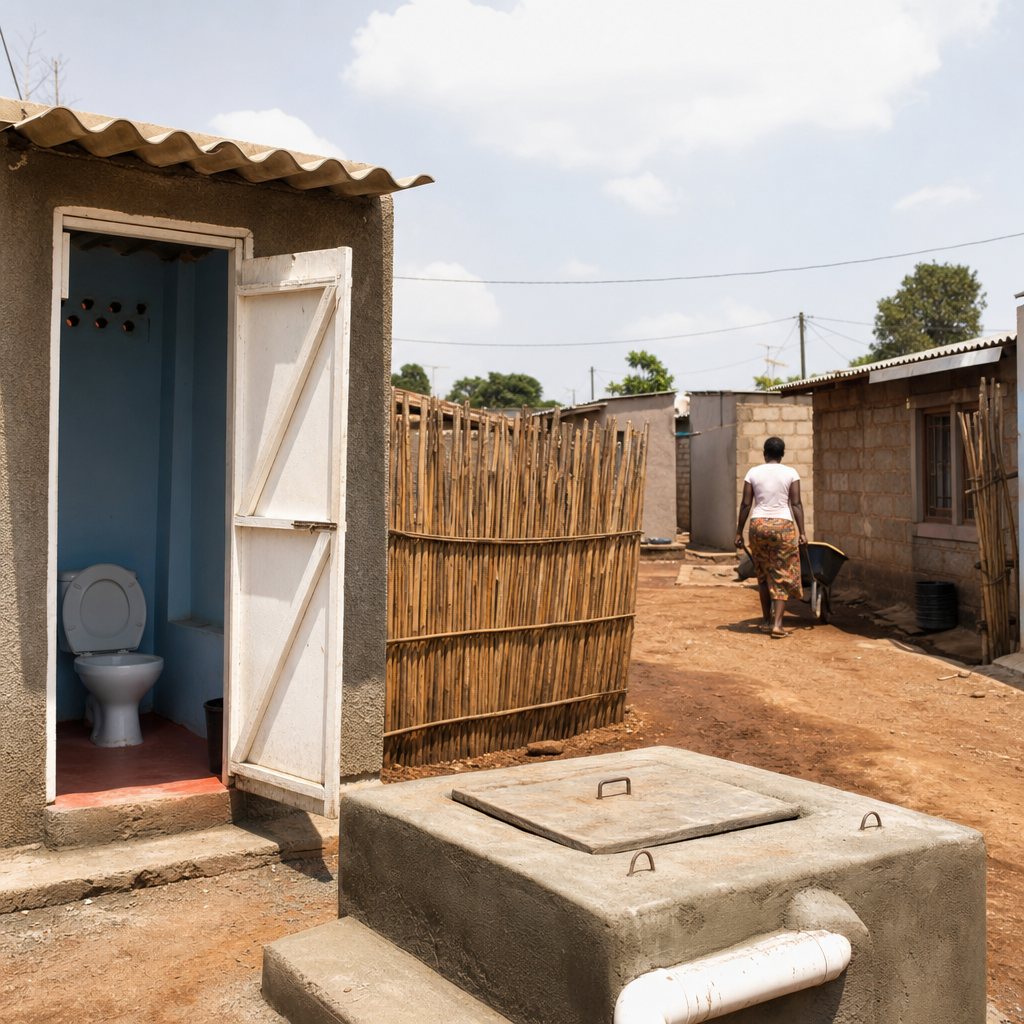
No sanitation technology is economically superior everywhere. Viability depends on density, water availability, soil conditions, land tenure, governance, road access, and user behavior. Sewers can deliver high service levels in dense cities with strong utilities, but network expansion is capital intensive and often unaffordable in informal settlements. Septic tanks are common because they shift costs to households, yet they require regular desludging and safe treatment infrastructure. Twin-pit pour-flush systems can be cost-effective where water use is modest and pits can rest long enough for safer handling. Urine-diverting dry toilets reduce water use and can support nutrient recovery, but they need more careful operation and stronger acceptance. Container-based sanitation can work in dense, low-income settlements because it removes the need for excavation and enables scheduled collection, though it relies on reliable service operations and customer retention.
| Option | Main economic strengths | Main economic constraints | Best-fit context |
|---|---|---|---|
| Sewered sanitation | High service level, centralized control, potential economies of scale | Very high capital cost, water and energy dependence, expensive expansion | Dense urban areas with strong utilities |
| Septic tank systems | Moderate household entry cost, familiar technology | Frequent failure from poor design, desludging and treatment gaps | Peri-urban and rural plots with space |
| Twin-pit systems | Low to moderate cost, limited mechanized emptying needs | Requires proper switching and pit sizing | Rural and small-town settings |
| Urine-diverting dry toilets | Low water demand, nutrient recovery potential | User training, product handling, market development | Water-scarce areas and reuse-oriented programs |
| Container-based sanitation | Low infrastructure barrier, predictable collection service | Operational intensity, route logistics, payment compliance | Dense informal settlements |
When I compare these systems for clients, I separate private cost from social cost. A septic tank may seem cheaper to a household than a monthly container-based service, but if overflowing tanks pollute drains and require emergency municipal cleanup, the broader economy pays the difference. Likewise, a sewer may have the highest capital cost yet still make sense in a central business district where land values, density, and environmental standards justify the investment. Economic sustainability requires matching technology to context, then matching service design to realistic institutional capacity. A good technology in the wrong operating environment becomes a poor investment.
Methods for measuring viability and bankability
Sanitation projects should be tested through several lenses, not one. Financial analysis asks whether revenues or budget allocations can cover direct costs. Economic analysis goes further and includes externalities such as avoided medical costs, time savings, reduced water pollution, climate impacts, and productivity gains. Cost-effectiveness analysis is useful when the objective is fixed, such as achieving safe containment for a target population at lowest cost. Cost-benefit analysis becomes valuable when monetized benefits can be estimated with reasonable confidence. For utilities and social enterprises, unit economics matter too: cost per household served, cost per cubic meter treated, cost per kilogram of nutrient recovered, collection route efficiency, and customer churn rates all reveal whether operations can scale.
Bankability depends on cash flow predictability. A sanitation model can be socially beneficial and still struggle to attract lenders if income is irregular, tariffs are politically constrained, or asset ownership is unclear. That is why blended finance is common in the sector. Public grants may fund initial infrastructure, development finance institutions may support treatment assets, and private operators may be contracted for collection or processing where they have a comparative advantage. Results-based financing has also gained traction because it links disbursement to verified service delivery rather than construction alone. For EcoSan enterprises, contracts with municipalities, farmer cooperatives, schools, or industrial offtakers can improve revenue certainty and reduce risk.
Measurement should also include performance indicators that predict economic durability. High downtime, inconsistent product quality, contamination events, and weak customer retention are all leading indicators of financial stress. A system that needs constant behavior correction may carry hidden support costs. Conversely, designs that simplify use, standardize maintenance, and reduce transport frequency usually perform better over time. The best business cases pair spreadsheets with field evidence: pilot data, willingness-to-pay surveys, sludge characterization, agronomic trials, route simulations, and regulatory review. Numbers are necessary, but sanitation economics becomes credible only when linked to operational reality.
Policy, regulation, and market conditions that shape outcomes
Public policy determines much of sanitation economics because the sector blends private services with public health obligations. Subsidies can improve access, but poorly targeted subsidies can trap cities in unaffordable technologies or reward construction without maintenance. Standards for effluent, compost, biosolids, and reuse products protect users and consumers, yet overly rigid rules can block innovation if they ignore local treatment pathways. Land-use rules affect whether decentralized treatment plants can be sited near demand centers. Import tariffs on treatment equipment, fertilizer subsidy regimes, electricity pricing, and water tariffs all influence comparative costs. Economic sustainability therefore depends as much on institutions as on engineering.
Successful programs usually align incentives across the chain. Municipalities may subsidize containment upgrades because they save money on drainage cleanup and disease control. Farmers may adopt recovered products when extension services provide demonstration plots and application guidance. Utilities may support source separation where reduced hydraulic load postpones expensive network upgrades. Carbon and climate finance are emerging but should be approached carefully. Methane avoidance, reduced synthetic fertilizer use, and lower pumping demand can create climate benefits, yet crediting methodologies, verification costs, and price volatility mean carbon revenue is rarely sufficient as a primary business model. It works best as a supplementary value stream.
Regulation also shapes trust, and trust shapes demand. Households pay more consistently when service quality is visible and enforcement is fair. Farmers buy more readily when product testing is transparent and labeling is credible. In practice, the strongest EcoSan economics often appear where municipal oversight, operator competence, and market development advance together. Fragmented governance usually produces the opposite outcome: underpriced household systems, neglected sludge management, weak reuse markets, and rising public costs.
Key risks, tradeoffs, and the path to durable scale
The main risks in EcoSan economics are operational failure, weak behavior adoption, volatile reuse markets, and policy inconsistency. Dry systems can fail if users add too much liquid or if collection schedules slip. Composting systems can miss pathogen reduction targets if process control is weak. Reuse products may sell slowly if packaging, distribution, or quality assurance is inadequate. These are not reasons to reject EcoSan. They are reasons to design conservatively, build strong monitoring systems, and pilot before scaling. In every successful program I have seen, managers treated user support and quality control as core operating costs, not optional extras.
The central takeaway is that economic sustainability in EcoSan comes from whole-system thinking. Count lifecycle costs, identify realistic value streams, compare technologies by context, test assumptions with field data, and align policy with service delivery. Resource recovery can improve the case, but dependable sanitation service remains the primary product. For readers using this hub to explore the broader Economic Aspects topic, the next step is to examine the linked subtopics in more detail: tariffs, financing structures, reuse market development, decentralized treatment economics, and fecal sludge service models. Use this framework to evaluate any sanitation option rigorously, and choose solutions that stay affordable, safe, and productive over time.
Frequently Asked Questions
1. What does “economic viability” mean when evaluating sanitation solutions?
Economic viability in sanitation refers to whether a system can deliver safe, reliable service at a cost that households, service providers, municipalities, or institutions can sustain over time. It is not limited to the upfront purchase or construction price. A sanitation option may appear inexpensive initially but become costly if it requires frequent repairs, expensive emptying, high energy inputs, complex maintenance, or early replacement. A truly viable solution performs well across its full lifecycle, balancing capital expenditure, operation and maintenance costs, financing terms, expected lifespan, and service quality.
It also includes broader economic effects that are often overlooked in basic cost comparisons. For example, improved sanitation can reduce healthcare spending by lowering rates of diarrheal disease and other sanitation-related illnesses. It can improve productivity by reducing time lost to illness or long trips to unsafe sanitation sites. In urban areas, viable sanitation systems can help cities avoid environmental penalties, reduce contamination of water bodies, and lower future infrastructure rehabilitation costs. In agricultural settings, some systems may create value through nutrient recovery, compost, biogas, or treated water reuse, which can offset part of the overall cost.
In practice, decision-makers assess economic viability by asking whether the sanitation solution is affordable, maintainable, financeable, and capable of meeting regulatory and public health standards over the long term. The best choice is often not the cheapest technology, but the one that delivers the strongest long-term value per dollar invested.
2. Why is lifecycle cost more important than upfront cost in sanitation projects?
Lifecycle cost matters more than upfront cost because sanitation systems are long-term service assets, not one-time purchases. A low-cost toilet, sewer extension, septic system, biodigester, fecal sludge treatment unit, or decentralized treatment plant may be attractive at installation, but the real financial picture only becomes clear when all future costs are considered. These include routine cleaning, energy use, repairs, spare parts, desludging, transport, treatment, operator labor, compliance monitoring, and eventual rehabilitation or replacement. If these recurring costs are too high or poorly planned, the system can fail economically even if the original investment was modest.
For example, a household may choose a cheap containment system that fills quickly and requires frequent emptying. Over several years, the total emptying cost may exceed what the household would have paid for a more durable, better-designed alternative. Similarly, a municipality may build a treatment facility using grant funding, but if it cannot afford skilled staff, electricity, chemical inputs, or maintenance contracts, the facility may underperform or stop operating altogether. In such cases, the lower capital cost does not translate into lower total cost or better value.
Lifecycle costing helps compare sanitation options on a fair basis. It captures not only direct financial expenses but also expected asset life and service reliability. This approach supports better planning, especially when decision-makers need to compare centralized sewerage, onsite sanitation, container-based sanitation, shared facilities, or hybrid service models. By focusing on total cost over time, planners can identify systems that are more resilient, more affordable to operate, and less likely to create hidden liabilities in the future.
3. How do public health and environmental benefits affect the economic case for sanitation?
Public health and environmental benefits are central to the economic case for sanitation because they generate real financial value, even if that value does not always appear directly in a utility budget or household invoice. Poor sanitation contributes to disease transmission, lost workdays, school absenteeism, malnutrition, and increased healthcare costs. When sanitation systems safely contain, collect, transport, treat, and dispose of or reuse waste, they reduce exposure to pathogens and create measurable social and economic gains. These gains can be substantial, especially in dense urban settlements, flood-prone areas, and communities with limited healthcare access.
Environmental benefits also carry major economic significance. Inadequate sanitation can contaminate groundwater, rivers, lakes, soils, and coastal areas, which can raise water treatment costs, damage fisheries, reduce agricultural productivity, and harm tourism. Noncompliance with environmental regulations can lead to fines, emergency cleanup costs, and reputational damage for utilities or local governments. By contrast, effective sanitation systems protect natural resources and reduce long-term remediation costs. This is especially important where water scarcity, stricter discharge standards, or land constraints make pollution more expensive to manage over time.
From an appraisal perspective, these benefits often justify investments that seem expensive when viewed narrowly through user fees alone. Cost-benefit analyses commonly assign monetary value to avoided illness, reduced mortality risk, cleaner water sources, time savings, and environmental protection. Even when those values are estimated conservatively, sanitation investments often perform much better economically than simple construction-cost comparisons suggest. In other words, the economic viability of sanitation is strengthened when analysts account for the broader benefits that safe sanitation creates for communities, ecosystems, and local economies.
4. What factors determine whether households or communities will actually pay for a sanitation solution?
Willingness to pay for sanitation depends on much more than income. People are more likely to pay when they perceive clear value, such as convenience, privacy, safety, dignity, odor control, reduced disease risk, and dependable service. Households often compare sanitation spending against other urgent needs, so even a technically sound system may struggle if payments are inflexible, poorly timed, or disconnected from visible benefits. A solution becomes more economically viable when the cost structure matches users’ cash flow and when the service is reliable enough to build trust.
Affordability is a major factor, but so is payment design. Small, predictable monthly fees may be easier for households to manage than large one-time capital costs. Financing options, connection subsidies, targeted support for low-income users, pay-per-use models, or bundled service arrangements can all improve uptake. In rural and peri-urban contexts, households may accept higher investment if the system is durable and reduces future emptying or maintenance needs. In dense urban areas, users may be more willing to pay for frequent, professional service if it clearly improves cleanliness and convenience.
Social norms and local context matter as well. Communities may place different value on shared toilets, household toilets, sewer connections, or resource-recovery systems depending on culture, land tenure, water availability, and past service experiences. Trust in the provider is also critical. If users believe that fees will lead to dependable operation, timely repairs, safe sludge management, and transparent service standards, payment compliance tends to improve. For this reason, economic assessments should include not just engineering and cost data, but also market research, user preference studies, and realistic demand forecasts. A sanitation system is only viable if people are both able and willing to support it financially over time.
5. Can resource recovery make sanitation solutions economically viable on its own?
Resource recovery can improve the economics of sanitation, but in most cases it should be viewed as a supporting revenue stream rather than a guaranteed stand-alone business model. Depending on the technology and local market, sanitation systems may generate reusable products such as compost, biosolids, biogas, electricity, fuel briquettes, treated water, or recovered nutrients. These outputs can create value, reduce disposal costs, and strengthen circular economy outcomes. However, the revenue potential depends heavily on product quality, market demand, transport logistics, regulation, seasonal variation, and customer acceptance.
In some contexts, resource recovery can meaningfully offset operating costs. For example, farmers may purchase nutrient-rich soil amendments if they are affordable, safe, and proven to improve yields. Treatment plants may reduce energy bills through biogas production. Industries or municipalities facing water scarcity may pay for reclaimed water if it meets technical and health standards. These are real opportunities, but they require careful market analysis. Producing a recoverable resource does not automatically mean there is a stable buyer, a viable distribution system, or a price high enough to cover processing and compliance costs.
The strongest economic assessments treat resource recovery as one part of a broader value equation. It can enhance project viability by diversifying revenue, reducing waste management costs, and creating environmental benefits, but it rarely replaces the need for sound tariffs, public finance, capital support, or efficient operations. In other words, resource recovery can strengthen sanitation economics, yet it works best when integrated into a realistic service model that prioritizes safe sanitation first and monetizable byproducts second.