The economics of waterless sanitation technologies sit at the center of modern debates about public health, infrastructure finance, climate resilience, and circular resource use. Waterless sanitation refers to toilet and treatment systems that operate without flush water, including urine-diverting dry toilets, composting toilets, dehydrating toilets, container-based sanitation, and some advanced onsite treatment units. EcoSan, short for ecological sanitation, goes a step further by designing systems to recover nutrients, organic matter, and sometimes energy from human waste instead of treating it only as a disposal problem. Economic sustainability in EcoSan means more than buying a cheap toilet. It includes capital costs, operating costs, maintenance labor, user acceptance, supply chains, safe handling, recovery value, environmental externalities, and the long-term affordability of service delivery.
I have worked on sanitation business cases where a technology looked inexpensive on procurement spreadsheets yet failed because emptying logistics, user training, or fertilizer regulations were ignored. I have also seen the opposite: systems with higher upfront costs outperform sewer extensions because they avoid water demand, pumping energy, and network losses over decades. That is why this topic matters. More than 3.5 billion people still lack safely managed sanitation according to WHO and UNICEF monitoring, and many cities face shrinking freshwater availability, aging sewer assets, and tighter climate budgets. In those settings, waterless sanitation is not a niche curiosity. It is often the only financially realistic pathway to safe service expansion.
As a hub topic, economic sustainability in EcoSan covers the full value chain. Decision-makers need to understand how costs accrue from household interface to transport, treatment, reuse, and regulation. They also need clear answers to practical questions: When is a dry toilet cheaper than a flush toilet? What revenue can nutrient recovery generate? Which business models work in low-income settlements, schools, peri-urban housing, and remote institutions? How should subsidies be designed so systems remain affordable without collapsing once grants end? The strongest economic assessments compare total lifecycle cost and social value, not just purchase price. That broader lens reveals where waterless sanitation technologies create savings, where they require public support, and how they can become durable parts of sanitation markets.
Understanding the cost structure of waterless sanitation
The first economic principle is simple: sanitation costs do not disappear when water is removed; they shift. In sewered systems, major expenses include piped networks, water supply, pumping, wastewater treatment plants, and storm infiltration management. In waterless systems, costs move toward user interface design, collection containers or vaults, pathogen reduction, service logistics, monitoring, and behavior support. A realistic comparison therefore uses lifecycle costing. The International Organization for Standardization and many infrastructure appraisal methods separate expenses into capital expenditure, operating expenditure, major maintenance, replacement, and end-of-life management. For waterless sanitation, operating expenditure often determines success because regular emptying, cover material, staff time, and transport can exceed initial hardware costs over ten to twenty years.
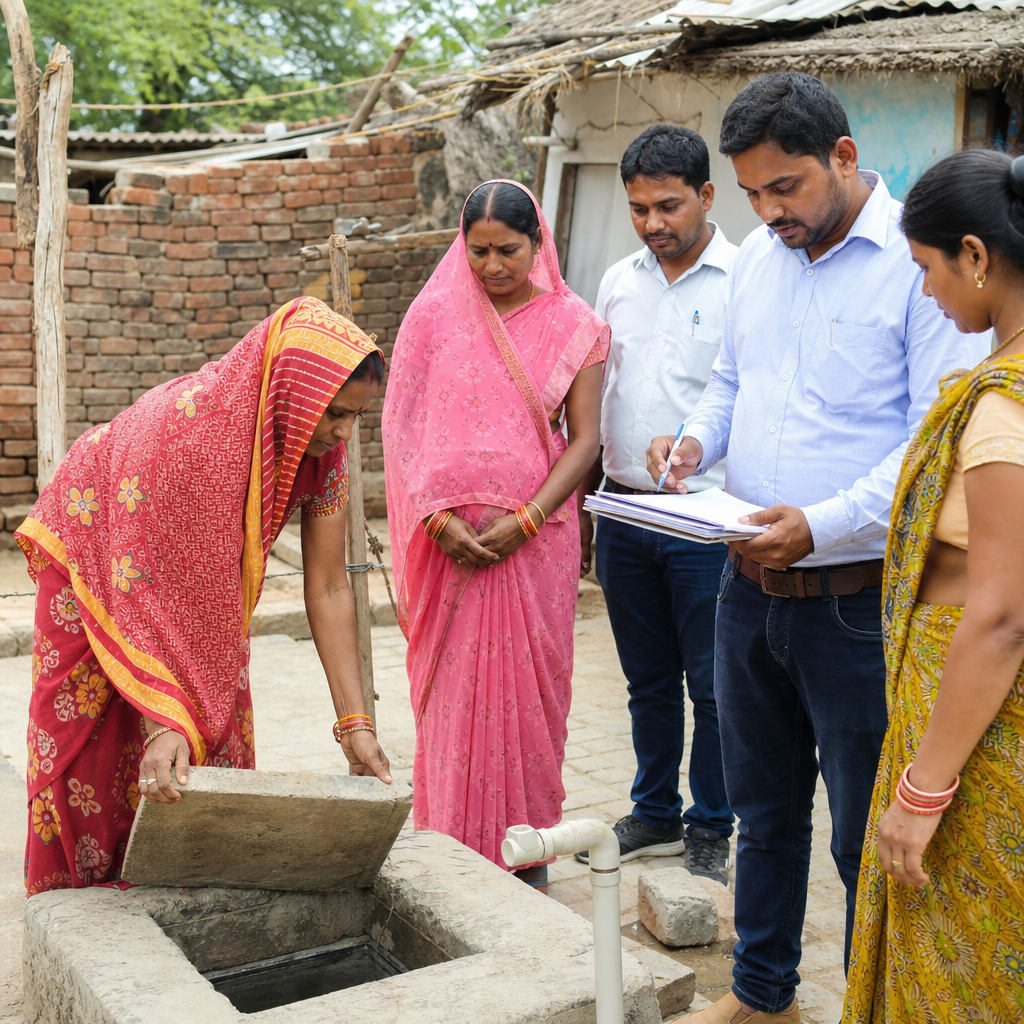
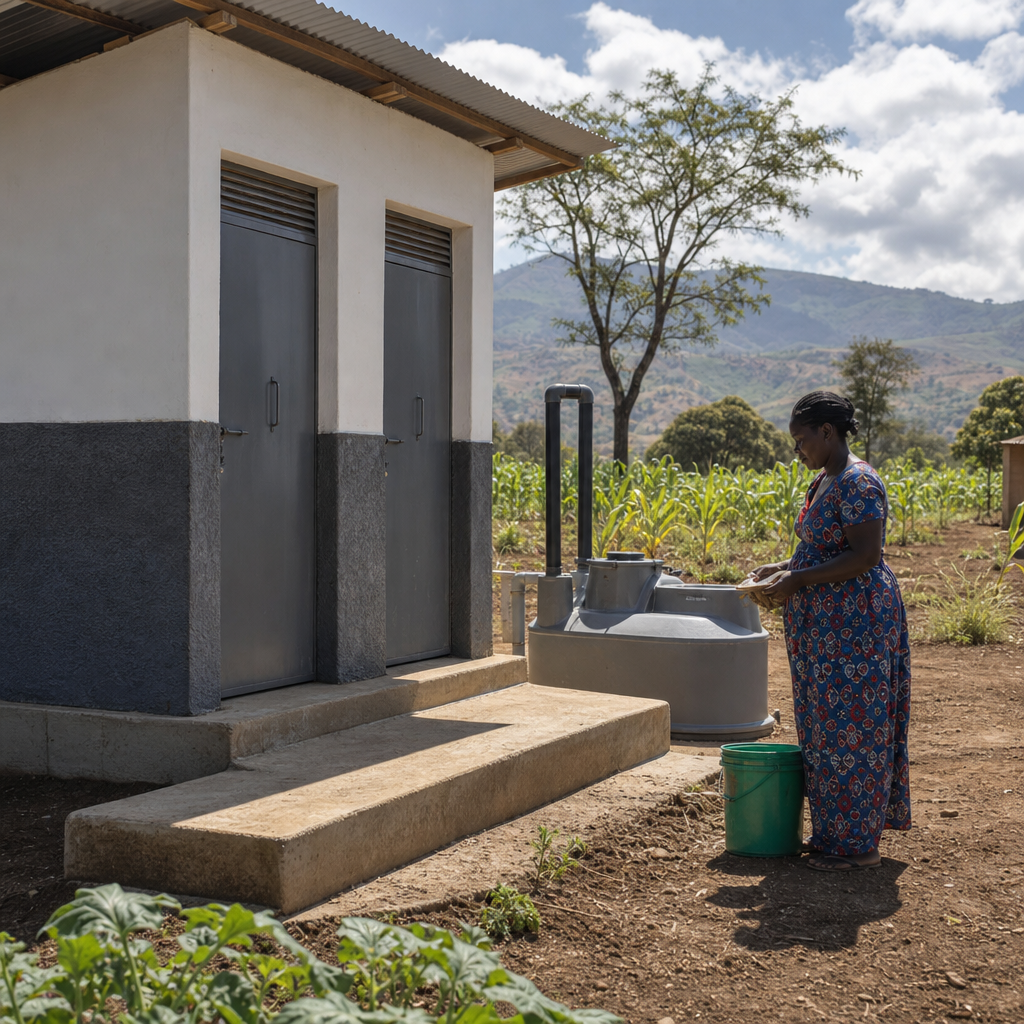
At household level, a simple urine-diverting dry toilet may cost far less than connecting one home to a distant sewer. Yet that headline can mislead if local carpenters are unavailable, vent pipes crack under ultraviolet exposure, or urine storage tanks are undersized. In institutional settings, the economics become more complex. A school composting toilet can reduce water bills immediately, but only if janitorial staff are trained to manage bulking material, vault rotation, and odor control. I have seen projects budget for toilet blocks but omit funds for gloves, ash, spare urine-diversion pans, and fecal compost curing space. Those omissions create hidden liabilities that later appear as user complaints and emergency spending. Strong economic planning treats these as core cost items, not optional extras.
Comparing lifecycle economics with conventional sanitation
Waterless sanitation technologies are most competitive where water is scarce, sewer expansion is expensive, terrain complicates excavation, or housing density outpaces infrastructure delivery. Conventional flush systems typically bundle sanitation with potable water demand. Each flush uses several liters, even with efficient cisterns, and the downstream system must move that volume continuously. The economics worsen where utilities already struggle with non-revenue water, intermittent supply, or high electricity tariffs for pumping. By contrast, dry and low-water systems can sharply reduce recurring utility bills and defer network capital expenditure. That deferral has real economic value because municipalities can redirect scarce borrowing capacity toward roads, drainage, or treatment upgrades.
However, waterless systems are not universally cheaper. Dense urban districts may face higher per-household collection costs if access roads are narrow and service frequency is high. Composting toilets require space and disciplined operation. Container-based sanitation relies on a reliable fleet and transfer stations, which can be costly before customer numbers scale. The best evaluations compare the full service chain under local conditions rather than declaring one technology superior in the abstract. In fast-growing peri-urban zones, for example, a waterless approach often wins on speed and incremental affordability. In compact downtown areas with existing sewers and strong treatment capacity, upgrading conventional systems may remain less expensive on a per-user basis.
| Economic factor | Waterless sanitation | Conventional flush sanitation |
|---|---|---|
| Upfront household cost | Low to moderate, depending on design and materials | Moderate to high if sewer connection is required |
| Water bill impact | Minimal water use | Recurring potable water demand |
| Network infrastructure | Limited or none | Extensive pipes, pumping, treatment assets |
| Service dependence | Collection, emptying, treatment logistics | Utility continuity and plant performance |
| Resource recovery value | Potential fertilizer, compost, energy products | Usually diluted, harder to recover economically |
Revenue streams and resource recovery economics
The most distinctive feature of EcoSan is that it can transform sanitation from a pure cost center into a partial resource business. Human urine contains much of the nitrogen and potassium excreted by households, while fecal solids contain organic matter and phosphorus. If separation, storage, and treatment are done correctly, these outputs can become agricultural inputs. The economic question is not whether nutrients exist; it is whether they can be recovered, processed, transported, regulated, and sold at a price that offsets service costs. In practice, nutrient recovery rarely covers the entire sanitation chain, but it can materially improve viability, especially where fertilizer prices are volatile or soils are degraded.
Urine diversion offers the clearest example. Stored urine can be applied directly under controlled guidelines or processed into concentrated products such as struvite and ammonium sulfate in more advanced systems. Compost from dehydrated or composting toilets may provide soil amendment value, though market acceptance depends on hygiene assurance, crop type, and local regulation. Black soldier fly treatment, biodrying, and pelletization can add value in specialized models. I have seen reuse economics work best when the sanitation operator already has a distribution partner, such as a farmer cooperative, landscaping contractor, or municipal parks department. Without a buyer network, recovered products accumulate as inventory and become a disposal burden instead of revenue.
Resource recovery economics also depend on avoided costs. If a city can reduce wastewater loads, avoid importing synthetic fertilizer, cut sludge transport volumes, or improve soil water retention through compost application, those benefits should be counted. Analysts often use cost-benefit analysis or social return frameworks to capture these effects. Yet caution is essential: reuse revenue is sensitive to seasonality, product quality, and trust. It should strengthen a sanitation business model, not substitute for realistic service fees and public finance.
Business models, tariffs, and subsidy design
Economic sustainability in EcoSan depends as much on institutional design as on hardware. Four business models appear repeatedly in successful programs: self-supply by households, landlord-provided sanitation in rental compounds, utility or municipal service contracts, and private operators using subscription or pay-per-collection models. Each has different incentives. Household self-supply lowers public expenditure but can produce uneven quality and poor sludge management. Private subscription models improve accountability yet need route density and payment discipline. Municipal contracts can scale quickly, although they often suffer when sanitation budgets are merged with politically sensitive water accounts.
Tariff design must reflect the reality that sanitation has public-good characteristics. Many low-income users cannot pay the full cost of safe containment, collection, treatment, and reuse. That does not mean services are uneconomic; it means part of the value accrues to society through lower disease burden, cleaner groundwater, and reduced environmental damage. Smart subsidies therefore target outcomes, not just construction. Examples include results-based payments for safely treated waste volumes, vouchers for poor households, and capital grants paired with mandatory maintenance reserves. Cross-subsidies from water utilities, property taxes, or climate adaptation funds can also support operations where direct user fees are insufficient.
The strongest programs separate three questions: who owns the asset, who delivers the service, and who pays what share. When those roles are blurred, systems deteriorate. A container-based operator, for instance, may efficiently manage collections but still need municipal support for transfer stations and treatment land. A school may own dry toilets but require district budgets for consumables and staff training. Economic sustainability emerges when recurring responsibilities are assigned clearly and funded predictably.
Risk, regulation, and scaling conditions
Investors and public agencies evaluate waterless sanitation through risk. Technical risk includes odors, vault leakage, insect vectors, and treatment failure. Market risk includes customer churn, weak demand for reuse products, and fluctuating input costs. Regulatory risk is often the most underestimated. In many countries, building codes still assume flush toilets, fertilizer laws do not clearly classify recovered nutrients, and public health rules focus on centralized treatment pathways. These gaps raise transaction costs because every project needs special approvals, bespoke monitoring, or legal workarounds.
Scaling therefore requires standards and credible performance data. ISO 30500 for non-sewered sanitation systems, WHO sanitation safety planning guidance, and city-level fecal sludge management regulations help reduce uncertainty. Lenders and donors become more willing to finance expansion when operators can show collection reliability, pathogen reduction, customer retention, and unit economics over time. From experience, pilots fail economically when they remain isolated demonstrations. Costs stay high because spare parts are custom, staff are overqualified for tiny fleets, and procurement lacks volume discounts. Scale changes that equation. Once service routes densify and treatment throughput rises, per-household costs can fall sharply.
For this subtopic hub, the core lesson is clear. Waterless sanitation technologies are economically sustainable when they are assessed as service systems, financed over their full lifecycle, and linked to realistic recovery markets and regulations. They are not automatically cheaper than sewers, but in many water-stressed, rapidly urbanizing, or infrastructure-poor contexts they deliver lower total cost, faster deployment, and stronger resilience. The most durable EcoSan models combine user-centered design, disciplined operations, targeted subsidy, and verified public health performance. If you are building an EcoSan strategy, start with lifecycle costing, demand analysis, and institutional roles before selecting hardware. That sequence turns promising pilots into sanitation services that can survive budgets, politics, and growth.
Frequently Asked Questions
1. What makes waterless sanitation technologies economically attractive compared with conventional sewered systems?
Waterless sanitation technologies can be economically attractive because they change the cost structure of sanitation itself. Conventional sewered systems typically require major upfront capital investment in pipes, pumping stations, treatment plants, road excavation, household connections, and long-term maintenance. Those costs are especially high in fast-growing cities, informal settlements, water-scarce regions, flood-prone areas, and low-density rural communities where extending sewer networks is technically difficult and financially inefficient. Waterless systems reduce or eliminate the need for flush water and often avoid the most expensive parts of centralized infrastructure, which can significantly lower capital expenditure.
They also affect operating costs in important ways. Because these systems do not rely on large volumes of water for transport, utilities and households may spend less on water supply, pumping energy, and wastewater treatment. In places where water tariffs are rising or where water must be trucked, pumped long distances, or desalinated, the value of avoiding flush water becomes even more substantial. This creates a direct economic benefit at the household level and, in some cases, at the municipal level as well.
Another important economic advantage is modularity. Waterless technologies such as composting toilets, urine-diverting dry toilets, dehydrating toilets, and container-based sanitation can often be deployed incrementally. That means providers, governments, landlords, institutions, or households can invest in smaller stages rather than waiting for financing for a citywide sewer system. This lowers barriers to entry, accelerates service delivery, and can improve affordability for underserved populations. In economic terms, modular systems can reduce the financing burden and shorten the time between investment and public health benefit.
However, economic attractiveness depends on context. A waterless toilet is not automatically cheaper over its entire life cycle. Collection logistics, user training, replacement parts, safe treatment, regulation, and professional servicing all affect total cost. The strongest economic case tends to emerge when analysts compare full life-cycle costs rather than only purchase price. In many settings, waterless sanitation performs well because it offers lower infrastructure intensity, reduced water dependence, greater adaptability, and a more practical pathway to universal sanitation coverage than waiting decades for conventional sewer expansion.
2. How should the economics of waterless sanitation be evaluated beyond the initial purchase price?
The best way to evaluate the economics of waterless sanitation is through a life-cycle cost approach rather than a simple comparison of toilet unit prices. The purchase and installation cost is only one part of the picture. A proper economic assessment should include capital expenditure, financing costs, operations and maintenance, collection or emptying services, treatment, labor, monitoring, component replacement, user support, and end-of-life management. It should also account for whether the system requires a service chain, such as routine container pickup or compost removal, because service delivery often determines real affordability and sustainability.
Just as important are indirect and avoided costs. Waterless sanitation can reduce household water bills, lower pressure on municipal water systems, and avoid expensive sewer extension in difficult terrain or low-income neighborhoods. In regions with chronic drought, groundwater depletion, or weak wastewater treatment infrastructure, the avoided costs can be quite large. Governments may also save by reducing disease burden when safer sanitation decreases diarrheal illness, lost workdays, school absenteeism, and healthcare spending. Those public health gains are economically significant even when they do not appear directly on a utility balance sheet.
Economists also look at reliability, resilience, and service continuity. A flush-based system may appear efficient on paper, but if it depends on intermittent water supply, unstable electricity, or overloaded treatment plants, its real-world economic performance may be poor. Waterless systems can be more resilient during droughts, disasters, and infrastructure failure, which has value that traditional cost comparisons often underestimate. In climate-vulnerable areas, resilience is not a side benefit; it is a core economic variable.
Finally, evaluation should consider willingness to pay, affordability for low-income users, institutional capacity, and regulatory fit. A technically sound system may still fail economically if users are not supported, if collection routes are poorly designed, or if by-products cannot legally or safely be reused. For that reason, the strongest economic analyses combine household-level costs, provider economics, public-sector impacts, and environmental externalities. Looking at all of these factors together gives a much more accurate view of whether a waterless sanitation model is truly cost-effective over time.
3. Can waterless sanitation systems create economic value through resource recovery and circular economy models?
Yes, and this is one of the most discussed aspects of EcoSan and related waterless sanitation approaches. Traditional sanitation is often designed as a disposal system: waste is flushed away and treated as a liability. Waterless and ecological sanitation models can instead treat human excreta and urine as potential resource streams when they are safely managed. Depending on the technology and regulatory environment, outputs may include compost-like soil amendments, nutrients such as nitrogen and phosphorus, recovered water in some advanced systems, biogas in certain integrated designs, or even carbon-related benefits tied to emissions reduction and climate resilience strategies.
From an economic perspective, resource recovery can improve the business case, but it rarely works as a standalone justification. The value of recovered products depends on quality control, treatment standards, transport distance, local agricultural demand, market acceptance, and public trust. For example, urine-diverting systems may enable nutrient recovery, but the economics improve only when there is a reliable chain for storage, treatment, distribution, and use. Similarly, composting toilets may produce a useful end product, yet the market value may be modest once labor, handling, testing, and compliance costs are included.
That said, circularity can still be very important. Even when recovered resources do not fully finance the sanitation service, they can offset a portion of operating costs, reduce dependence on synthetic fertilizers, lower waste management expenses, and improve environmental outcomes. In farming regions or peri-urban areas with nearby agricultural demand, these benefits may be more tangible. In dense urban settings, the economic gains may come less from direct product sales and more from avoided treatment costs, reduced water use, and improved waste logistics.
The key point is that circular economy benefits should be integrated realistically. The strongest economic models do not assume that resource recovery will magically pay for everything. Instead, they treat it as one component of a broader value proposition that includes sanitation access, public health improvement, water savings, resilience, and environmental protection. When those benefits are combined, resource recovery can make waterless sanitation more financially and socially compelling, especially where policy incentives and local markets support safe reuse.
4. What are the biggest economic barriers to scaling waterless sanitation technologies?
The biggest barriers are usually not purely technical; they are institutional, financial, and behavioral. One major challenge is that sanitation markets are often fragmented. Households may be expected to pay for toilets, municipalities may oversee public health, private operators may handle collection, and regulators may control treatment and reuse standards. When responsibilities are split across many actors, financing becomes difficult and business models can struggle to reach scale. Investors and public agencies often prefer familiar sewer projects, even when they are more expensive, because the procurement structures and funding channels are already established.
Another barrier is the mismatch between capital and operating expenses. Many waterless systems have lower infrastructure costs than sewered networks, but they may require reliable ongoing service, such as maintenance, container collection, user education, or treatment management. In practice, many public finance systems are better set up to fund one-time construction than recurring service delivery. That creates a problem: a city may be willing to subsidize installation, but not the continuous operational support that keeps the system safe and effective. Without a stable revenue model, service quality can decline.
User acceptance also has economic consequences. If a system is unfamiliar, poorly designed, inconvenient to maintain, or culturally misaligned, adoption rates may be low and unit economics may worsen. Providers need enough customers within a service area to optimize routes, staffing, and processing capacity. Low uptake increases per-household costs. This is why design quality, customer support, and social marketing are not secondary issues; they are central to economic performance. Convenience and dignity matter because they affect demand, retention, and willingness to pay.
Regulation is another critical factor. In many countries, legal frameworks were written around sewered sanitation and may not clearly recognize container-based services, onsite reuse, nutrient recovery, or decentralized treatment. Unclear rules can discourage investment, delay permitting, and limit market development for recovered products. Add to that the challenge of limited performance data, and some decision-makers remain hesitant. Overcoming these barriers usually requires blended finance, supportive policy, service-based regulation, stronger standards, and procurement systems that value outcomes rather than defaulting to conventional infrastructure categories.
5. In which settings do waterless sanitation technologies tend to make the strongest economic sense?
Waterless sanitation tends to make the strongest economic sense in places where conventional flush-and-sewer systems are costly, impractical, or resource-intensive. That includes water-scarce regions, informal urban settlements, remote rural communities, flood-prone areas, rocky terrain, high water table zones, and rapidly expanding peri-urban districts where infrastructure cannot keep pace with population growth. In such settings, the cost of delivering piped water and sewerage to every household can be prohibitive, and delays in service expansion can impose heavy public health and environmental costs. Waterless