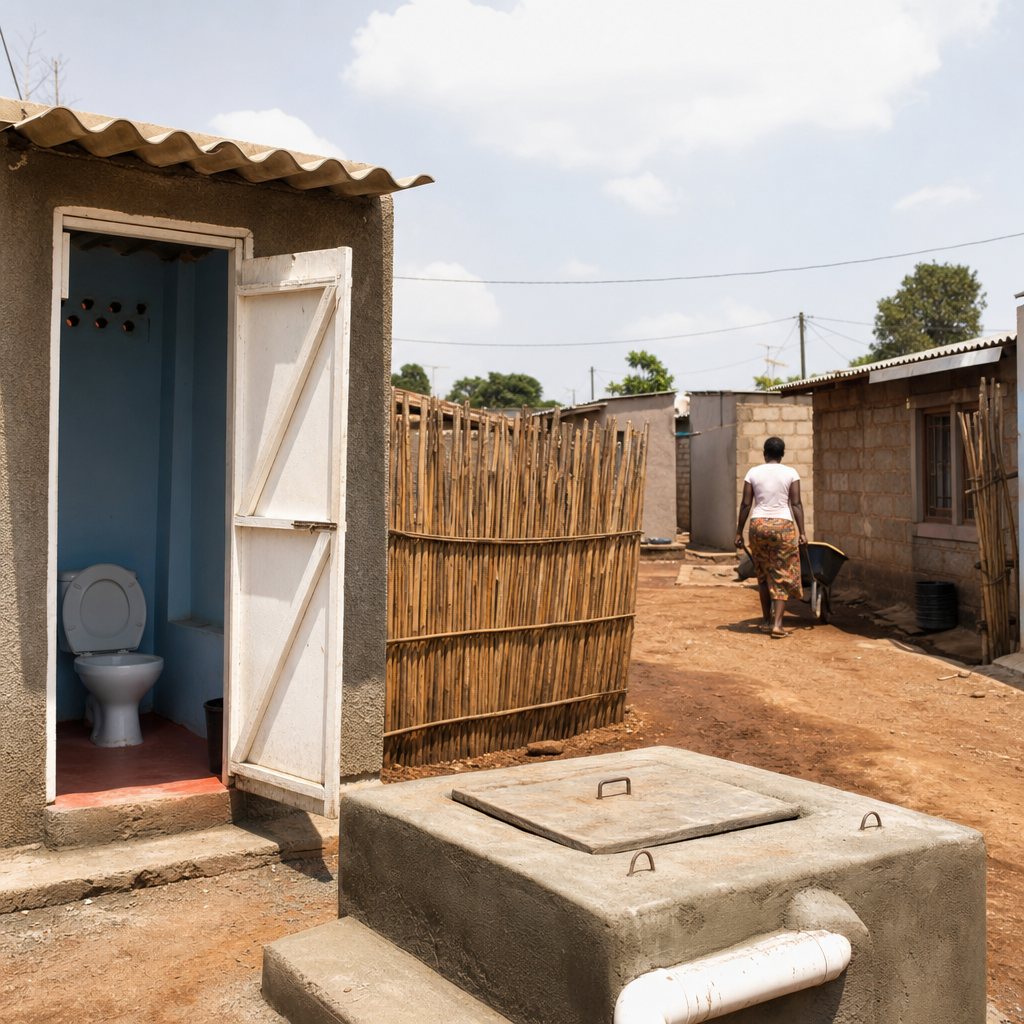
Economic growth through improved community sanitation is not a slogan; it is a measurable development pathway that affects labor productivity, public spending, education outcomes, land values, agriculture, and local enterprise formation. In this hub article on understanding EcoSan economics, EcoSan refers to ecological sanitation systems that safely recover nutrients, conserve water where appropriate, reduce pollution, and treat human waste as a resource stream rather than a disposal problem. I have worked on sanitation planning discussions where budgets were dominated by visible infrastructure, while the larger economic returns from better containment, collection, treatment, reuse, and behavior change were undervalued. That pattern is common. Communities often see toilets as a social service cost, yet the evidence shows sanitation is also an economic asset. When fecal sludge is mismanaged, households lose workdays, clinics absorb preventable disease burdens, utilities face water contamination costs, and farmers buy synthetic inputs that could be partially offset by recovered compost or nutrients. When sanitation is improved, those losses shrink and new value chains emerge. Understanding EcoSan economics matters because decision makers need more than health messaging. They need a practical framework for comparing capital costs, operating costs, avoided losses, willingness to pay, financing options, and long-term community returns.
At its core, EcoSan economics asks a direct question: how can a community design sanitation systems that protect health and the environment while creating durable economic value? The answer depends on context. Dense urban settlements may prioritize container-based services, transfer stations, and composting or co-treatment facilities. Small towns may pair urine-diverting dry toilets with local reuse models. Flood-prone areas may choose raised systems that prevent groundwater contamination and avoid reconstruction costs after storms. In each case, the economic logic goes beyond the toilet itself. Analysts typically examine life-cycle cost, including construction, emptying, transport, treatment, monitoring, repairs, and replacement. They also calculate avoided medical expenditure, time savings, increased school attendance, reduced water treatment burden, and potential revenue from recovered products. International institutions including the World Bank, UNICEF, WHO, and the International Water Association have repeatedly linked sanitation investment with productivity gains and reduced economic losses. The strongest sanitation strategies are therefore not charity projects. They are local development investments with public health, environmental, and market outcomes that can be planned, financed, and measured.
What EcoSan Economics Includes
Understanding EcoSan economics starts with system boundaries. A pit latrine, septic tank, urine-diverting toilet, sewer extension, or fecal sludge treatment plant should never be priced in isolation. The relevant unit of analysis is the full sanitation service chain: user interface, containment, emptying, conveyance, treatment, resource recovery, safe disposal of residuals, and governance. In practice, this means a low upfront-cost toilet can be economically weak if emptying is unsafe, transport distances are long, or treatment is absent. Conversely, a higher-cost design can be economically stronger if it lowers recurring expenses, extends asset life, and creates reusable outputs. I have seen municipalities underestimate this repeatedly by approving toilet construction targets without budgeting for sludge management. The result is visible coverage but hidden failure.
EcoSan adds another layer by valuing recovered resources. Urine contains much of the nitrogen and potassium excreted by households, while treated fecal matter can contribute organic matter and phosphorus to soils when standards are met. In water-scarce areas, dry or low-water systems can reduce pressure on supply infrastructure. These attributes alter the economics. Instead of paying only for waste removal, communities may offset costs through compost sales, reduced fertilizer purchases, lower water consumption, or carbon-related benefits where organic waste diversion cuts methane emissions. Not every project will generate strong direct revenue, and honest appraisals should say so. Transport costs, product quality control, pathogen reduction requirements, and market acceptance can all limit income. Still, resource recovery changes the planning conversation from pure expenditure to circular value creation, especially in peri-urban farming belts where demand for soil amendments already exists.
How Better Sanitation Drives Economic Growth
Improved sanitation stimulates economic growth through five main channels. First, it reduces disease, particularly diarrheal illness, helminth infections, and other enteric conditions linked to fecal exposure. Fewer illnesses mean fewer missed workdays, lower out-of-pocket treatment costs, and better child growth, which supports future earning potential. Second, it saves time. Households with safe, nearby toilets spend less time seeking facilities, caring for sick relatives, or collecting additional water for inefficient systems. Third, it protects water sources and public spaces, reducing remediation costs for utilities and local governments. Fourth, it raises the productivity of land and agriculture when treated outputs are reused safely. Fifth, it creates jobs across the sanitation service chain, from masons and pit emptiers to operators, mechanics, lab technicians, agribusiness buyers, and software-enabled route managers.
The labor effect is especially important. In low-income settlements, illness-related absenteeism often appears small at the household level but becomes substantial across a district. If one adult loses three working days a year to sanitation-related illness and thousands of adults are affected, the aggregate income loss is significant. School absences matter too. Girls are more likely to miss classes where school sanitation lacks privacy and menstrual hygiene support. Over time, these interruptions affect completion rates and human capital formation. Businesses feel sanitation problems as well. Markets, transport hubs, and industrial clusters operate more efficiently when workers have safe facilities and nearby drainage is not contaminated. In tourism-dependent regions, poor sanitation quickly damages local reputation, while cleaner environments support hospitality revenue and property appreciation. Economic growth from sanitation is therefore cumulative: each avoided loss strengthens household resilience and each service improvement supports broader local commerce.
Comparing Costs, Returns, and Time Horizons
Decision makers often ask whether EcoSan is cheaper than conventional sanitation. The accurate answer is that it can be more cost-effective, but only when evaluated over the right time horizon and against realistic service levels. Upfront construction costs vary widely by soil conditions, density, groundwater depth, materials, and labor markets. A sewer connection may seem attractive in theory but become financially unviable in dispersed settlements because of trenching, pumping, infiltration, and treatment costs. A urine-diverting dry toilet may cost more initially than a basic pit but can outperform it economically where water is scarce, pits fill quickly, or flood damage is frequent. The correct method is life-cycle costing, not headline capex comparison.
| Economic factor | Conventional low-service approach | EcoSan-oriented approach | Main economic implication |
|---|---|---|---|
| Upfront investment | Often lower | Sometimes moderate to higher | Cheap construction can mask future service failures |
| Operating costs | Irregular, poorly budgeted | Planned emptying, treatment, monitoring | Predictable operations reduce emergency spending |
| Health burden | Higher exposure risk | Lower when managed correctly | Fewer medical costs and lost workdays |
| Resource recovery | Usually none | Possible compost, nutrients, water savings | Offsets costs and supports local markets |
| Climate and flood resilience | Frequently weak | Can be designed for resilience | Less reconstruction and contamination after shocks |
Return on investment should include direct, indirect, and avoided costs. Direct returns include user fees, sanitation tariffs, sale of compost, tipping fees, or service contracts. Indirect returns include higher worker productivity and property values. Avoided costs include lower disease treatment, reduced environmental cleanup, and fewer water supply disruptions. Analysts commonly discount future cash flows to compare options, but they should also test sensitivity: what happens if compost sales are lower than expected, fuel prices rise, or uptake is slower? Strong EcoSan economics is not built on optimistic assumptions. It is built on conservative modeling, realistic collection rates, and operational discipline.
Financing Models That Make Systems Work
Sanitation systems fail financially when capital and operating finance are confused. Donor grants or municipal budgets may fund construction, but long-term performance depends on reliable operating revenue. That revenue can come from household fees, property taxes, cross-subsidies, utility billing, public health budgets, agricultural offtake agreements, carbon finance in limited cases, or blended finance structures. In my experience, the most stable models separate social support for poor households from the basic economics of service delivery. That means targeted subsidies for access, combined with predictable payment mechanisms for collection, treatment, and maintenance.
Different settings require different financing structures. In informal urban settlements, landlords may contribute to containment upgrades while a municipality supports transfer logistics and treatment infrastructure. In secondary towns, private emptiers may operate under licenses with disposal fees calibrated to keep legal dumping cheaper than illegal dumping. In rural areas, cooperatives may aggregate demand for toilet parts, maintenance, and compost marketing. Results-based financing can help where governments want to pay for verified service outcomes rather than only construction numbers. Microfinance also has a role, especially for household upgrades, but loan products must match repayment capacity and seasonal income patterns. Sanitation is essential infrastructure, so tariffs alone rarely cover everything. Public finance remains necessary, especially where public health externalities are large. The economic goal is not full privatization. It is financially credible service delivery with transparent subsidy design.
Market Creation, Jobs, and Local Enterprise
One of the most underappreciated benefits of EcoSan is market creation. A functioning sanitation economy supports small and medium enterprises across manufacturing, maintenance, logistics, treatment, analytics, and agriculture. Toilet slabs, urine-diversion pans, storage containers, protective gear, emptying equipment, pumps, drying beds, composting units, and testing services all create demand. Digital tools add another layer: operators now use route planning apps, GPS verification, mobile payments, and customer relationship systems to improve collection efficiency and reduce revenue leakage. These are not abstract possibilities. They are practical business functions already visible in fecal sludge management enterprises across Africa and Asia.
Job quality matters as much as job quantity. Historically, sanitation labor has been informal, unsafe, and stigmatized. Better economics allows formalization: training, personal protective equipment, mechanized emptying, vaccination protocols, contracts, and environmental compliance. This improves worker safety and service reliability. It also changes community perception. When sanitation becomes a professionalized local industry rather than an invisible emergency response, investment becomes easier to justify. Agricultural links can be especially powerful. Where treated compost meets quality standards and demonstration plots show yield benefits or improved soil structure, farmers become recurring customers. That recurring demand helps stabilize treatment facility revenue, though only if product consistency, transport logistics, and extension support are strong.
Policy, Regulation, and Measurement
Economic growth through sanitation does not happen on engineering alone. It requires rules that define responsibilities, standards that protect health, and data that show whether money is being used effectively. Regulations should specify containment requirements, emptying practices, discharge limits, sludge treatment standards, occupational safety, and reuse criteria. WHO sanitation safety planning principles, citywide inclusive sanitation approaches, and national public health codes provide a strong basis for this work. Without regulation, the cheapest operator often wins by cutting safety corners, shifting costs onto the public through pollution and disease.
Measurement should track more than toilet coverage. Serious economic analysis uses indicators such as safely managed service rates, cost per household served, desludging frequency, plant uptime, effluent or compost compliance, customer retention, illness incidence, school attendance, water quality trends, and enterprise revenue. Municipal leaders should ask three simple questions. Are services reaching all neighborhoods, including low-income areas? Are facilities being maintained and emptied safely over time? Are the economic benefits, including avoided losses and resource recovery, large enough to justify continued investment? If the answer to any of these is unclear, the data system is incomplete. Good sanitation economics depends on visible performance, not assumptions.
Understanding EcoSan economics means recognizing sanitation as productive infrastructure. The strongest projects do not chase toilet counts alone; they build reliable service chains, protect public health, recover value where feasible, and align finance with long-term operation. That is how improved community sanitation supports economic growth: by reducing avoidable losses, creating better jobs, strengthening agriculture, protecting water resources, and making local budgets work harder. EcoSan is not automatically the right choice in every location, and successful models require careful design, regulation, and user acceptance. Yet the central lesson is clear. When communities invest in sanitation as a managed economic system rather than a one-time construction program, returns are broader and more durable. If you are planning within the economic aspects of sanitation, use this hub as your starting point: compare life-cycle costs, map the full service chain, test reuse markets realistically, and prioritize financing that keeps services running year after year.
Frequently Asked Questions
How does improved community sanitation contribute to economic growth?
Improved community sanitation contributes to economic growth by reducing the direct and indirect costs of disease, environmental contamination, and lost productivity. When communities lack safe sanitation, households, employers, and governments all absorb preventable expenses. Families spend more on medical treatment, workers lose time to illness, children miss school, and local authorities often face higher costs for emergency clean-up, water treatment, and disease control. Better sanitation interrupts that cycle by lowering exposure to pathogens and reducing the spread of diarrheal disease, parasitic infections, and other sanitation-related illnesses.
From an economic standpoint, healthier populations are more productive populations. Adults can work more consistently, children are better able to attend school and learn, and caregivers lose fewer hours attending to sick family members. Over time, this strengthens the labor force and improves human capital. At the same time, cleaner public spaces and reduced pollution can improve property values, strengthen tourism potential, and make communities more attractive for investment. In the context of EcoSan, the economic effect is even broader because ecological sanitation systems are designed not only to safely manage waste but also to recover nutrients, conserve water where appropriate, and convert a public health liability into a usable resource stream. That creates opportunities for cost savings, agricultural inputs, and local enterprise development, all of which support more durable economic growth.
What makes EcoSan different from conventional sanitation in economic terms?
EcoSan, or ecological sanitation, differs from conventional sanitation because it treats human waste as a resource to be safely managed and recovered rather than simply a disposal problem. In many conventional systems, the main goal is removal: move waste away from homes and businesses through sewers, pits, or septic systems, often with high water use, expensive infrastructure, and ongoing treatment burdens. While conventional sanitation can deliver major public health gains, it may also create long-term operating costs, dependence on centralized systems, and missed opportunities to recover nutrients and organic matter.
Economically, EcoSan can create value in multiple ways. First, it may reduce water demand in areas where water scarcity makes flush-based systems costly or impractical. Second, when properly designed and managed, it can support the safe recovery of nutrients such as nitrogen and phosphorus, which can be used in agriculture and landscaping. That can lower fertilizer expenses and improve local soil productivity. Third, EcoSan systems may be more adaptable to decentralized settings, including rural communities, peri-urban neighborhoods, schools, and markets where full sewer expansion would be prohibitively expensive.
Importantly, the economic case for EcoSan does not rest on hardware alone. It depends on safe operation, maintenance, user acceptance, collection logistics, treatment standards, and viable end uses for recovered products. When those pieces are in place, EcoSan can lower public health costs, reduce environmental damage, and generate local economic activity around construction, maintenance, transport, treatment, and resource reuse. That combination makes it especially relevant in discussions of sanitation as a driver of inclusive and resilient growth.
Can better sanitation really improve education and labor productivity?
Yes, and the link is stronger than many people realize. Sanitation affects education and labor productivity through health, attendance, concentration, dignity, and time use. In schools, inadequate sanitation can lead to higher absenteeism, especially when students are exposed to recurring illness or when facilities are unsafe, unclean, or insufficiently private. Children who are frequently sick are less likely to attend regularly, and even when they do attend, illness and undernutrition can reduce concentration and learning performance. Over time, that weakens educational outcomes and human capital formation, which are central to long-term economic growth.
For workers, poor sanitation contributes to lost workdays, lower physical capacity, and reduced reliability. Repeated exposure to sanitation-related disease can affect energy levels, stamina, and productivity, particularly in labor-intensive sectors such as agriculture, construction, manufacturing, and informal trade. There is also a household-level productivity effect: when family members become sick, other adults may need to stay home to provide care, reducing total labor participation and income generation.
Improved community sanitation changes that equation. Fewer illnesses mean fewer disruptions to schooling and employment. Time previously spent dealing with sanitation-related challenges, including unsafe disposal practices or long trips to inadequate facilities, can be redirected toward learning and productive work. In the EcoSan context, sanitation improvements can also be integrated into schools, farms, and public institutions in ways that reinforce local awareness of hygiene, environmental stewardship, and resource efficiency. The economic payoff may not always appear instantly, but over time, improved attendance, stronger workforce participation, and healthier communities translate into measurable gains in productivity and development.
What are the local business and agricultural benefits of ecological sanitation systems?
Ecological sanitation systems can create practical economic benefits for both local businesses and agriculture by establishing new value chains around waste collection, treatment, reuse, and service delivery. At the business level, EcoSan can support jobs in toilet construction, retrofitting, maintenance, container collection, transport, treatment operations, product testing, composting, and distribution of recovered materials. These are not just one-time construction gains; they can become recurring service-based economic activities that support small enterprises, cooperatives, and municipal-private partnerships.
In agriculture, the biggest potential benefit is nutrient recovery. When human waste is safely treated according to health and environmental standards, the resulting products may be used to improve soil fertility, support crop production, and reduce dependence on imported or expensive chemical fertilizers. This can be particularly valuable in regions where farmers face declining soil quality, high input costs, or limited access to reliable fertilizer markets. Organic matter recovery may also help improve soil structure and moisture retention, which can enhance resilience in drought-prone or degraded landscapes.
There are also indirect business benefits. Cleaner neighborhoods and reduced contamination can improve market conditions, raise confidence among shop owners and investors, and lower sanitation-related disruptions for food vendors, schools, clinics, and local employers. However, these benefits depend on strong safeguards. Reuse must be carefully managed, treatment must be effective, and market acceptance must be built through regulation, education, and quality assurance. When implemented responsibly, EcoSan can connect sanitation outcomes with circular economy principles, allowing communities to reduce waste, protect health, and unlock local economic opportunities at the same time.
What does a community need for sanitation improvements to produce lasting economic results?
For sanitation improvements to generate lasting economic results, communities need more than infrastructure alone. Toilets, treatment units, and collection systems are essential, but long-term impact depends on governance, financing, maintenance, user behavior, and safe reuse or disposal pathways. One of the most common reasons sanitation investments underperform is that systems are built without enough attention to operations and maintenance. If facilities become unusable, treatment breaks down, or collection systems fail, the expected health and economic gains quickly erode.
A strong foundation includes community engagement from the start, so that systems match local preferences, cultural practices, land constraints, water conditions, and affordability levels. Clear institutional roles are also critical. Someone must be responsible for oversight, service quality, sludge or material handling, and long-term upkeep. Financing matters as well, including not just capital costs but also the recurring costs of cleaning, repairs, transport, treatment, and monitoring. In EcoSan systems, economic success also requires reliable protocols for resource recovery, market development for end products where appropriate, and safeguards that protect public health and the environment.
Policy support can significantly improve outcomes. Standards for treatment, reuse, and environmental protection help build trust and reduce risk. Public education and behavior change efforts improve adoption and proper use. Data collection is also important because communities and decision-makers need to measure impacts such as reduced disease burden, lower health spending, improved attendance, increased productivity, and any gains in agricultural output or enterprise formation. In short, lasting economic returns come from treating sanitation as a managed public service and development asset, not as a one-time construction project. That is where improved community sanitation, and especially well-planned EcoSan, becomes a meaningful pathway to stronger and more inclusive economic growth.