Financing rural sanitation determines whether safe toilets, fecal sludge management, and resource recovery systems remain pilot projects or become durable public services. In the Economic Aspects of sanitation, understanding EcoSan economics means examining how ecological sanitation systems are paid for, how costs and benefits are distributed, and why financing design often matters as much as engineering design. EcoSan, short for ecological sanitation, refers to approaches that safely contain, treat, and reuse nutrients, organic matter, or water from human waste, often through urine diversion, composting, dehydration, or decentralized treatment. In rural areas, where sewer networks are rarely viable and household incomes are irregular, these systems can offer practical advantages, but only when financing matches local realities.
I have worked on sanitation budgets where a technically sound toilet failed because the repayment schedule ignored harvest cycles, and I have seen modest subsidy programs unlock adoption when they were paired with mason training and after-sales support. Those lessons shape this hub article. Rural sanitation finance is not simply about finding more money. It is about structuring capital, subsidies, tariffs, loans, grants, and community contributions so that households can install systems, local providers can maintain them, and public agencies can verify health outcomes. A pit latrine, a urine-diverting dry toilet, and a small-bore decentralized treatment system all carry different cost curves, maintenance burdens, and revenue opportunities.
This matters because sanitation produces both private and public benefits. A family may value convenience, privacy, dignity, and fertilizer recovery, but the largest economic gains often appear beyond the household: lower disease burden, reduced groundwater contamination, better school attendance, and higher productivity. The World Bank has repeatedly estimated that inadequate sanitation imposes major national losses through health costs, time losses, and environmental damage. Yet rural households are usually asked to shoulder most upfront costs themselves. That mismatch explains why many sanitation markets stall. Understanding EcoSan economics helps governments, NGOs, lenders, and entrepreneurs decide who should pay, when they should pay, and what results justify public support.
As a hub page, this article connects the main financial questions across the subtopic: total cost of ownership, affordability analysis, subsidy targeting, sanitation microfinance, carbon and nutrient revenue, public-private delivery, and long-term service viability. The core principle is straightforward: the cheapest toilet on installation day is not always the lowest-cost sanitation solution over ten years. Good financing accounts for lifecycle costs, user behavior, supply chains, and monetizable outputs such as compost, biogas, or recovered nutrients. When those pieces align, rural sanitation becomes investable rather than charitable, and EcoSan shifts from a niche concept to a practical rural infrastructure strategy.
How EcoSan Economics Works in Rural Contexts
EcoSan economics starts with lifecycle costing. Instead of counting only construction expenses, practitioners calculate capital expenditure, operation and maintenance, emptying or treatment, replacement parts, user training, monitoring, and end-of-life rehabilitation. In rural sanitation, this broader view is essential because many systems that appear inexpensive fail through neglected maintenance or unsafe handling. A double-vault urine-diverting toilet may cost more than a simple pit latrine at installation, yet the comparison changes if pits collapse in flood-prone soil, if groundwater contamination creates health costs, or if composted material offsets fertilizer purchases. The correct question is not “What is the cheapest toilet?” but “What delivers safe service at the lowest sustainable cost?”
Affordability is equally specific. Rural households do not experience income as a fixed monthly salary. They often earn seasonally from crops, livestock, remittances, or informal labor. Financing therefore has to fit cash flow. I have seen repayment plans fail because lenders collected equal monthly installments during the lean season. By contrast, products linked to harvest periods, savings groups, or mobile money reminders often perform better. Affordability analysis should measure not just whether a household can eventually pay, but whether the timing, deposit, and maintenance burden fit local income patterns. This is why sanitation finance cannot be copied directly from urban water billing models or generic housing microfinance products.
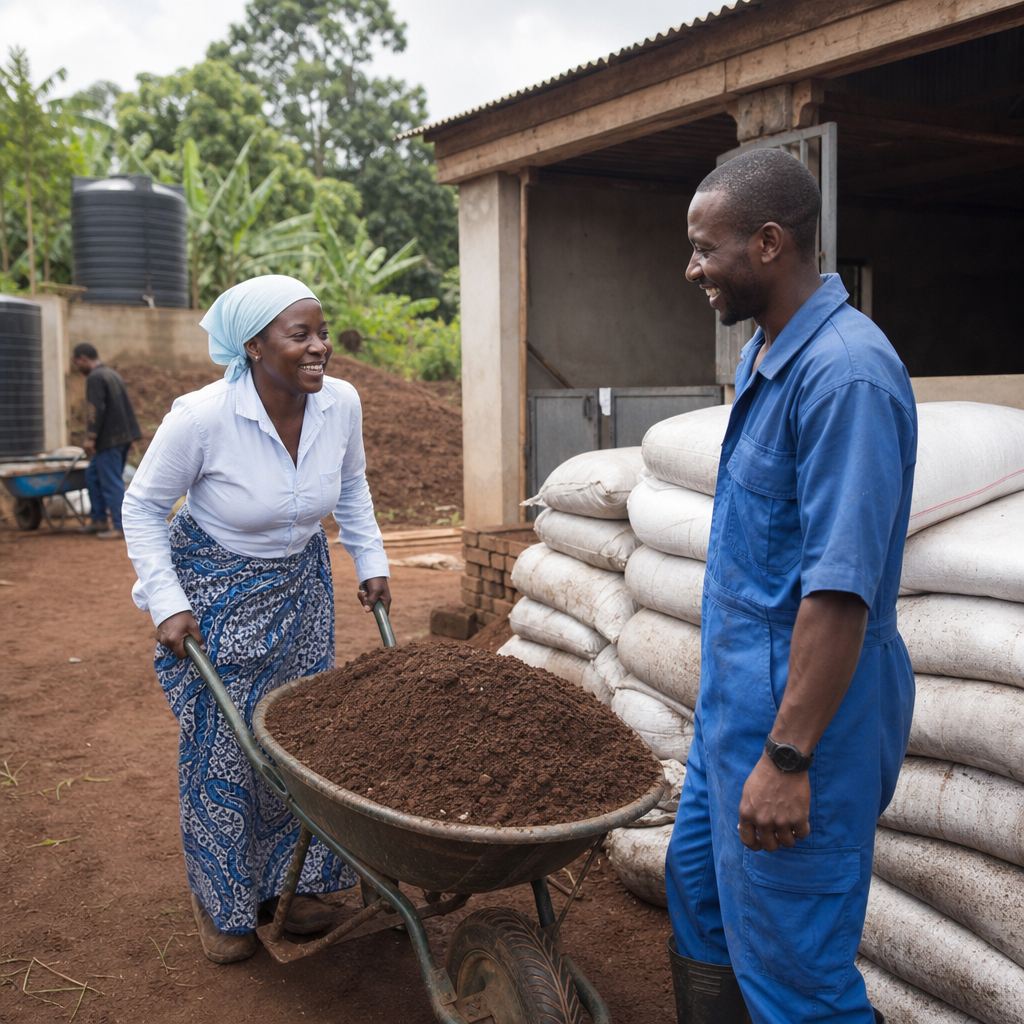
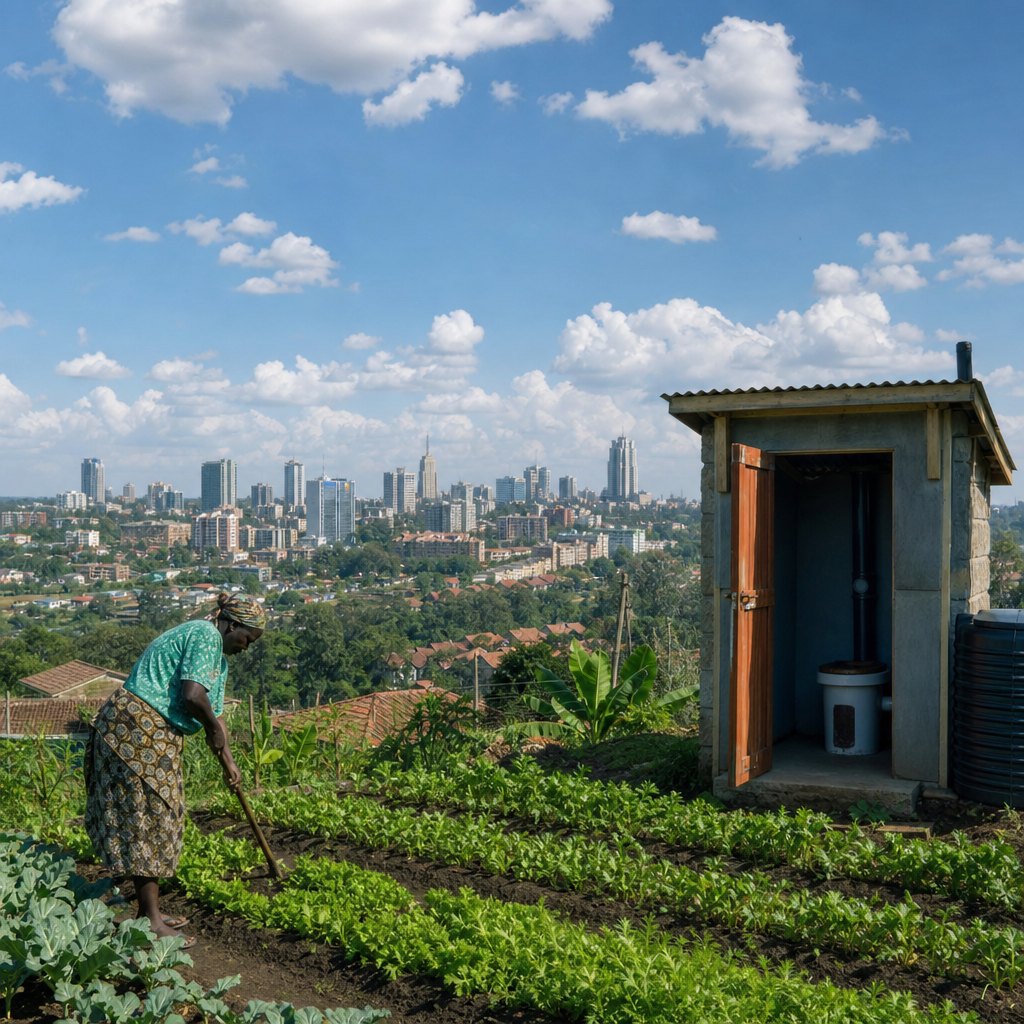
Another defining feature of EcoSan economics is value recovery. Some systems create usable outputs: sanitized urine as a nitrogen-rich fertilizer substitute, composted fecal matter as soil amendment, black soldier fly larvae from organic waste streams, or biogas from anaerobic digesters. These outputs rarely pay for the full sanitation system on their own, and overselling them is a mistake. However, they can materially improve project economics. In parts of East Africa, farmers using urine-diverting systems have reported lower spending on commercial fertilizers for certain crops. In Nepal and Ethiopia, organizations promoting ecological toilets have linked sanitation adoption to kitchen gardens and soil fertility messaging, increasing perceived household return on investment.
Public finance remains indispensable because sanitation has externalities. When one household builds a safe toilet, neighbors benefit from lower contamination risk. Markets alone underprovide that kind of good. The policy implication is clear: household contributions should be combined with targeted public support, especially for the poorest households, difficult geographies, and behavior change activities that private vendors cannot recover through sales. Successful programs treat sanitation as a service chain, not a one-time hardware purchase.
Funding Models That Make Rural Sanitation Scalable
The strongest rural sanitation programs blend multiple financing sources rather than relying on one instrument. The most common mix includes household payments, government subsidies, donor grants for market development, and small business financing for the supply chain. Each source should fund what it is best suited to cover. Households are usually best positioned to pay for private benefits such as convenience upgrades. Governments should fund public benefits such as hygiene promotion, regulation, and support for vulnerable groups. Donors can absorb early market-building risk. Local enterprises need working capital to stock pans, pipes, vault components, and transport services.
Targeted subsidies work better than blanket giveaways. In community-led sanitation settings, universal hardware subsidies have sometimes suppressed demand and weakened local ownership. But zero-subsidy ideology also fails where extreme poverty is widespread. The practical answer is smart targeting. Programs can use poverty registries, geographic vulnerability, disability criteria, or social protection databases to identify households needing support. Output-based aid is another strong option: providers receive reimbursement only after verified toilet completion and use. That improves accountability and shifts attention from inputs to results.
Microfinance has become one of the most useful tools for sanitation uptake when loan design is adapted to sanitation realities. Institutions such as Grameen-style lenders, village savings and loan associations, and specialized rural banks have financed latrines and bathroom improvements with relatively small ticket sizes. Water.org’s sanitation loan partnerships demonstrated that demand exists when products are affordable and application processes are simple. The most successful sanitation loans I have reviewed had four traits: low documentation burden, repayment terms aligned with income cycles, optional bundling of labor and materials, and lender education so staff understood sanitation assets. A toilet is not a revenue-generating machine in the same direct way as livestock, so underwriting must factor risk differently.
| Financing model | Best use | Main strength | Key limitation |
|---|---|---|---|
| Household savings | Basic upgrades, minor repairs | No debt cost | Slow for low-income families |
| Targeted subsidy | Poorest households, public health gains | Improves equity | Needs careful verification |
| Sanitation microloan | Toilet construction and add-ons | Spreads upfront cost | Repayment risk in lean seasons |
| Results-based finance | Provider incentives and scale | Pays for verified outcomes | Requires monitoring systems |
| Blended finance | Market development and enterprise growth | Shares risk across actors | Complex to structure |
Blended finance is especially relevant for EcoSan because the sanitation value chain includes public health objectives and enterprise opportunities. A donor or development bank might fund first-loss capital for a rural sanitation fund, allowing local lenders to issue more loans to households or service providers. A district government might subsidize toilet slabs while a private mason network sells superstructure upgrades. A farmer cooperative might pre-purchase sanitized compost from local treatment units, improving revenue predictability. These structures are more complex than direct grants, but they can build durable local markets when managed well.
Cost Recovery, Revenue Streams, and the Real Limits of Reuse
Cost recovery in rural sanitation is often misunderstood. Full recovery of all capital and operating costs from households is uncommon, especially in low-income regions. The more realistic aim is partial cost recovery combined with justified public support. For EcoSan systems, recovered resources can improve economics, but they should be evaluated conservatively. Nutrient value depends on crop type, transport distance, treatment quality, farmer acceptance, and local fertilizer prices. If a compost product costs more to move than it is worth in the field, the theoretical nutrient value does not translate into usable revenue.
That said, there are credible revenue cases. Urine contains much of the nitrogen and potassium excreted by humans, and in controlled agricultural reuse programs it can substitute for part of synthetic fertilizer demand. Compost or dehydrated fecal matter can improve soil organic content where soils are degraded. Small biogas digesters can reduce fuel purchases for institutions or clustered households. Carbon finance is emerging in some sanitation programs, particularly where methane emissions are avoided or biomass displacement is documented, though transaction costs and monitoring requirements remain significant. In my experience, the safest financial model treats reuse revenue as a supplementary benefit, not the foundation of debt repayment.
Local economics decide viability. In a fertilizer-scarce farming area, nutrient recovery may be genuinely valuable. In a water-stressed area, urine diversion may reduce flushing needs and support dry sanitation where piped water is unrealistic. In a floodplain with high groundwater, sealed or elevated systems can prevent contamination costs that are otherwise hidden in health spending and environmental damage. A sound business case therefore combines direct cash flows with avoided costs. Decision-makers should quantify both whenever possible, using simple but transparent assumptions.
Success Stories and Practical Lessons from the Field
Bangladesh offers one of the clearest lessons in rural sanitation finance: markets scale when public programs stimulate demand and local suppliers can respond quickly. National sanitation gains were not driven by one financing mechanism alone. They came from behavior change campaigns, local government engagement, low-cost product innovation, and a dense private supply chain of ring-slab producers and masons. Although much of the expansion focused on improved latrines rather than pure EcoSan systems, the financing lesson applies directly to ecological sanitation: hardware adoption rises when products are standardized, nearby, and payable in manageable amounts.
In Ethiopia, ecological sanitation projects supported by NGOs demonstrated that uptake improved when households could connect sanitation to agriculture. Farmers were more willing to maintain urine-diverting toilets when extension workers explained nutrient reuse in practical terms, not abstract environmental language. The strongest sites paired training with follow-up visits, because safe reuse depends on correct operation. Financing was modest, but the economic message was concrete: sanitation was framed as a farm input and health investment together.
Kenya provides useful examples of service-based models. Container-based and decentralized sanitation enterprises operating in dense settlements have shown that users may prefer paying for reliable collection over managing unsafe pits. In rural and peri-rural counties, similar thinking is being applied to sludge emptying, transfer, and treatment. The financing insight is that sanitation can sometimes be sold more effectively as a service subscription than as a one-time construction purchase, especially where households cannot manage technical maintenance alone.
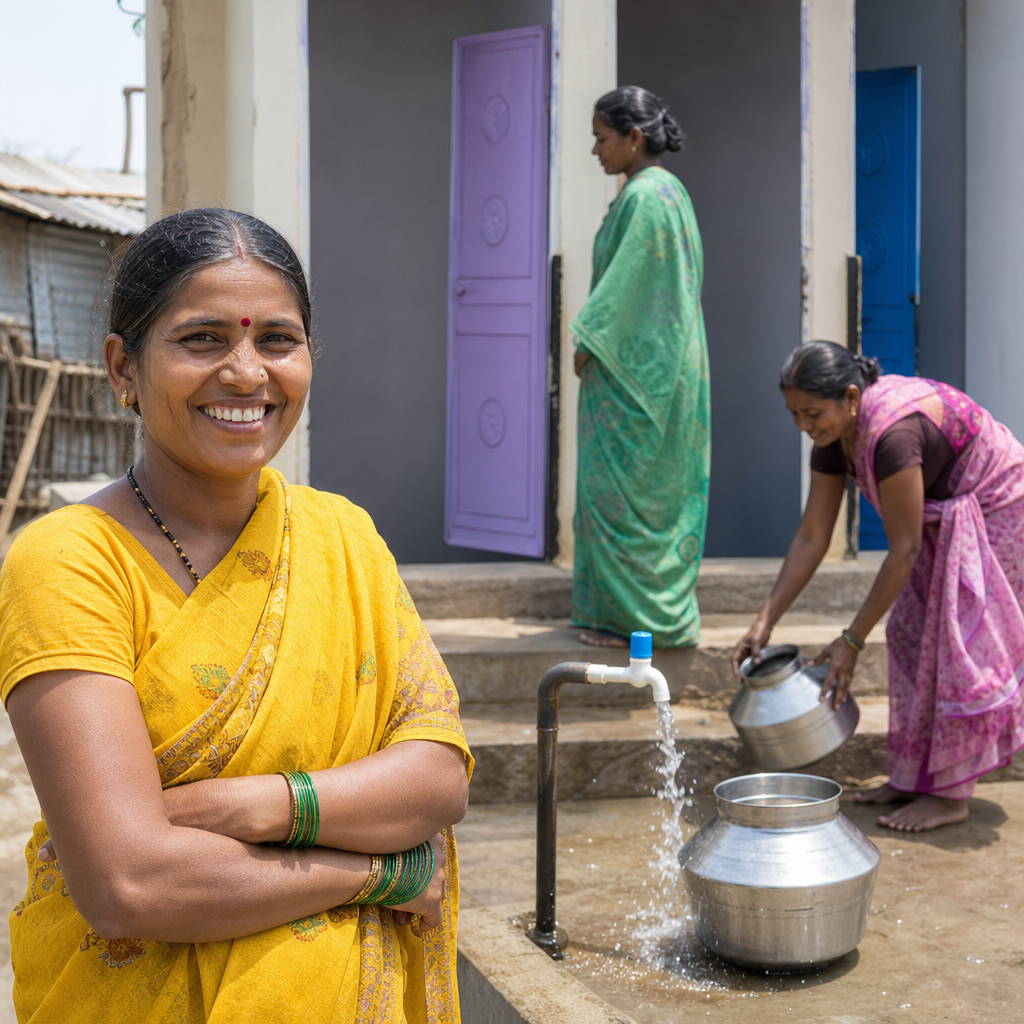
India’s sanitation drive illustrates both the power and the limitation of public subsidy. Large-scale incentives accelerated toilet construction dramatically, but long-term outcomes depended on water access, behavior change, and sustained use. For rural EcoSan planning, the lesson is clear: output targets must be matched with verification of functionality and user satisfaction. Building assets is easier than financing lasting service. Programs that budget only for construction usually underperform those that include training, monitoring, and repair mechanisms.
How to Build a Strong Rural Sanitation Finance Strategy
A workable strategy begins with segmentation. Not every household needs the same product or financing package. Map income bands, soil conditions, flood risk, water availability, and farming potential. Then match technologies and finance accordingly. Poor households may need targeted support for a basic safe system. Middle-income households may qualify for loans to install upgraded EcoSan units. Institutions such as schools or health posts may need capital grants with maintenance contracts. Service providers may need working capital, equipment leasing, or performance payments.
Next, calculate lifecycle costs for each service option, not just construction costs. Use recognized planning tools such as service chain mapping, willingness-to-pay surveys, and simple net present cost comparisons. Include training, transport, consumables, and replacement components. Build monitoring into the budget from the start. Finally, design incentives around verified outcomes: safe use, proper treatment, and sustained functionality after one or two years. That is where financing and public health finally meet.
Financing rural sanitation succeeds when money follows the realities of rural life, not when projects force households into rigid models. EcoSan economics is the discipline of aligning technology choice, affordability, public subsidy, and resource recovery into one credible plan. The main takeaway is simple: rural sanitation becomes sustainable when stakeholders finance the full service chain and value both household benefits and community-wide gains. For practitioners building the Economic Aspects hub, start with lifecycle costing, segment users carefully, and test blended models before scaling. If you are planning a program or investment, audit your current assumptions on affordability, maintenance, and reuse revenue, then redesign the financing structure around evidence rather than optimism.
Frequently Asked Questions
Why is financing so important for rural sanitation projects?
Financing is what turns rural sanitation from a short-term construction effort into a long-term public service. In many rural areas, the technical solutions already exist: toilets can be built, fecal sludge can be collected and treated, and ecological sanitation systems can recover nutrients, water, or energy. The real challenge is paying for these systems in a way that keeps them working year after year. Upfront capital is needed for household toilets, shared facilities, treatment units, transport equipment, and training. Just as important, ongoing funding is required for operations, maintenance, repairs, pit emptying, monitoring, and community engagement. When financing only covers construction, systems often fail because no one has budgeted for the full service chain.
In the context of EcoSan economics, financing also shapes who benefits, who pays, and whether a system is perceived as fair and affordable. Ecological sanitation approaches often generate value through compost, urine-derived fertilizer, reduced water use, or lower health costs, but those benefits may appear over time and may not flow directly to the party making the initial investment. That mismatch is one reason financing design matters as much as engineering design. A well-financed rural sanitation program aligns incentives between households, local governments, service providers, and communities. It spreads risk, improves affordability, and creates the conditions for reliable service rather than one-off infrastructure delivery.
What financing strategies work best for scaling rural sanitation services?
The most effective financing strategies are usually blended rather than relying on a single source of money. Public finance often plays a foundational role because sanitation produces major public health and environmental benefits that the market alone does not fully capture. Government grants, district budgets, and results-based subsidies can help cover the parts of the system that are hardest to finance privately, such as treatment facilities, remote service delivery, and support for the poorest households. At the same time, household contributions remain important because they build ownership and help stretch limited public funds. These contributions may come in the form of cash, labor, local materials, or phased payments over time.
Microfinance and small loans can also be powerful tools, especially when households want better toilets but cannot manage the upfront cost. Flexible repayment schedules, sanitation-specific loan products, and partnerships with local savings groups often make adoption more realistic. For entrepreneurs and service providers, access to working capital is equally important. Rural sanitation businesses may need financing for vacuum carts, protective equipment, composting units, transport, or storage. Without that business-side finance, even strong household demand may not translate into dependable services. In successful programs, financing is matched to the entire sanitation value chain, from construction to collection to treatment to reuse. That full-chain approach is what allows sanitation systems to scale with quality and durability.
How do subsidies fit into rural sanitation financing without creating dependency?
Subsidies can be highly effective when they are targeted, transparent, and designed to solve specific affordability or public-good challenges. The problem is not subsidies themselves; the problem is poorly designed subsidies that distort incentives or encourage low-quality construction. In rural sanitation, smart subsidies are often used to support low-income households, difficult geographies, behavior change campaigns, or infrastructure with broad community benefits such as treatment sites and transfer stations. These are areas where private spending alone is often insufficient, even when demand exists. A well-designed subsidy reduces barriers to access while still encouraging user participation and local accountability.
To avoid dependency, many successful programs tie subsidies to outcomes rather than simply paying for hardware. For example, support can be linked to verified toilet completion, safe containment standards, service continuity, or demonstrated use. Some programs provide partial subsidies so that households still contribute financially or in kind, preserving ownership. Others focus subsidies on the enabling environment, such as technical assistance, market development, training masons, or supporting sanitation entrepreneurs. In EcoSan systems, subsidies may help overcome the initial cost of separation, storage, and treatment components until markets for resource recovery products become viable. The key principle is that subsidies should correct market failures and equity gaps, not replace sustainable financing mechanisms altogether.
What are some common success factors in rural sanitation financing programs?
Successful rural sanitation financing programs typically share a few practical features. First, they recognize sanitation as a service chain rather than a single product. That means money is planned not only for toilet construction, but also for maintenance, sludge management, treatment, operator training, monitoring, and eventual replacement. Second, they are grounded in local realities. Programs work better when financing terms reflect seasonal incomes, agricultural livelihoods, local building practices, and community preferences. For example, farmers may be better able to repay after harvest, while remote communities may need adapted service models because transport costs are higher.
Another major success factor is institutional clarity. Rural sanitation often sits across multiple agencies, such as health, water, local government, and agriculture. Where roles are unclear, financing breaks down because no one takes responsibility for key functions. Strong programs assign responsibilities clearly and pair funding with measurable results. They also invest in the local market ecosystem by supporting masons, pit emptying providers, cooperatives, women-led enterprises, and reuse businesses. In EcoSan-related models, programs are especially successful when they build trust around safe reuse practices and demonstrate the economic value of recovered resources. Communities are more willing to invest when they can see tangible benefits such as lower fertilizer costs, improved crop yields, cleaner surroundings, and reduced disease. In short, success comes from combining sound finance, credible institutions, and services that people genuinely value.
Can you share examples of how rural sanitation financing has led to lasting results?
Many of the strongest success stories in rural sanitation come from programs that blended public support with household investment and local enterprise. A common pattern is that governments or development partners helped establish the enabling conditions by financing behavior change, technical standards, and targeted support for vulnerable households, while communities and local businesses handled construction and service delivery. In these cases, toilet coverage improved not just because funds were available, but because financing was structured to support sustained use and maintenance. Instead of distributing infrastructure alone, the programs created local systems for repairs, emptying, treatment, and accountability.
In ecological sanitation contexts, lasting results are often seen where resource recovery is treated as part of the business model rather than a side benefit. For example, communities that safely process compost or urine for agricultural use can create an additional revenue stream or at least offset farming costs. That does not always make the entire system fully self-financing, but it can improve overall viability and strengthen local acceptance. Other strong examples come from revolving funds, village savings groups, and sanitation credit schemes that allow households to invest incrementally rather than waiting for a full subsidy. These approaches have shown that even low-income rural households will often pay for better sanitation when financing is accessible, repayment fits cash flow patterns, and the service is reliable. The biggest lesson from these success stories is clear: durable rural sanitation depends less on one-time funding injections and more on financing systems that support the full life cycle of service delivery.