Creating economic opportunities in sanitation maintenance starts with recognizing a simple truth: toilets, sewers, drains, treatment units, and reuse systems only deliver public health benefits when someone is paid to keep them working. In the EcoSan context, sanitation is not only a service that protects water and reduces disease; it is also a local economy made up of maintenance labor, collection routes, spare parts, repair contracts, nutrient recovery, compost sales, training, and digital monitoring. EcoSan, short for ecological sanitation, refers to sanitation systems designed to safely manage human waste while recovering resources such as nutrients, water, energy, or organic matter. Economic strategies in EcoSan therefore focus on how these systems can be financed, operated, maintained, and linked to viable markets over time.
I have worked with sanitation programs where beautifully designed toilets failed within a year because no one budgeted for desludging, gasket replacement, chamber switching, or operator wages. I have also seen modest EcoSan systems outperform expensive infrastructure because communities had clear maintenance roles, transparent tariffs, and buyers for compost or treated biosolids. That contrast explains why this topic matters. Globally, billions still lack safely managed sanitation, and even where facilities exist, maintenance is the line between infrastructure on paper and service in practice. A broken urine-diverting toilet, clogged settlement tank, or unmanaged fecal sludge route quickly turns into lost user trust, higher environmental risk, and wasted capital.
Economic opportunity in sanitation maintenance means building repeatable income around the tasks that keep systems functional. That includes preventive maintenance, inspection, cleaning, transport, treatment operations, replacement part supply, and the sale of recovered products. It also means structuring incentives correctly. Households need affordable fees, workers need stable income and safe equipment, municipalities need service reliability, and private operators need enough margin to reinvest. The hub article below maps the core economic strategies in EcoSan, showing how maintenance can shift from an overlooked cost center to a resilient local market that supports jobs, public health, and circular resource use.
Why sanitation maintenance is the economic engine of EcoSan
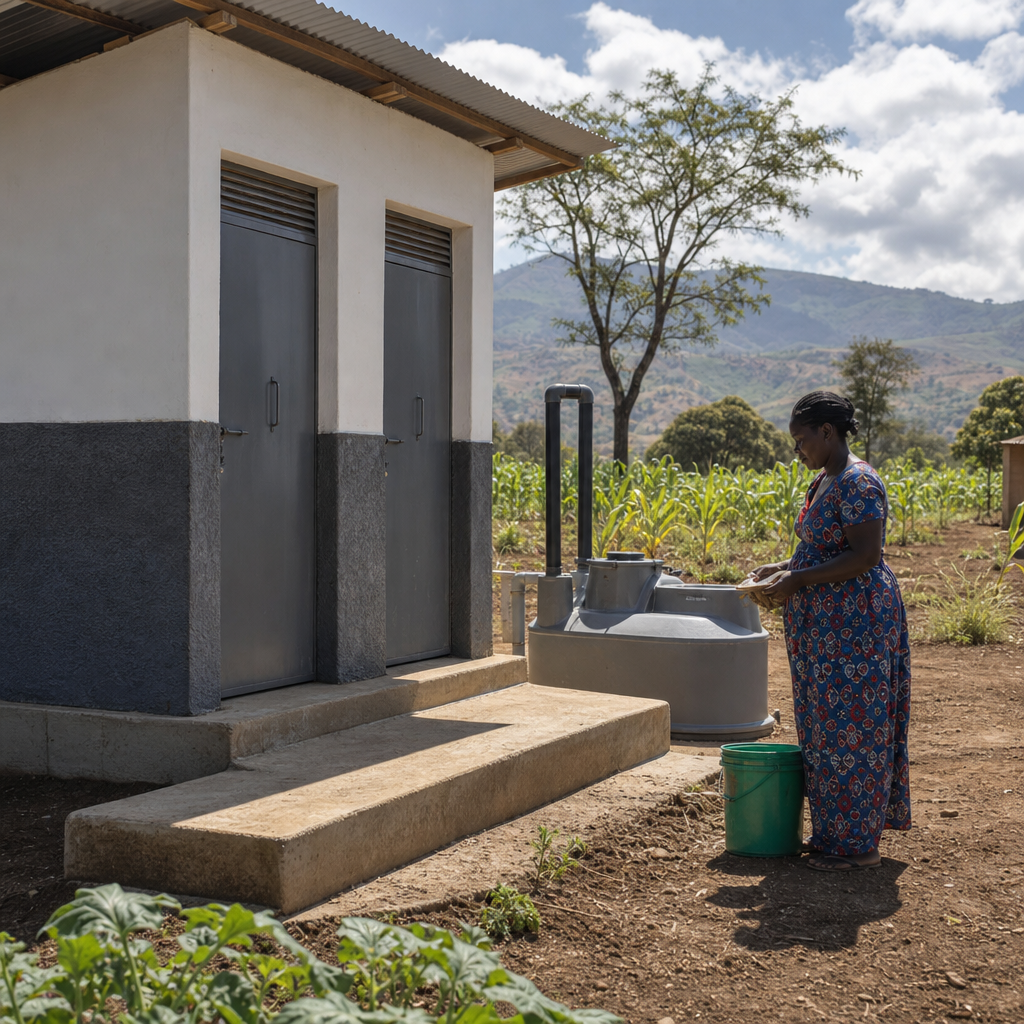
Maintenance is the economic engine of EcoSan because every ecological sanitation system relies on routine operational tasks, not just one-time construction. Urine-diverting dry toilets need chamber rotation, ash or cover material management, ventilation checks, and periodic removal of sanitized material. Septic systems and decentralized treatment units need sludge removal, pump servicing, baffle inspection, and leak control. Constructed wetlands need vegetation management and inlet cleaning. In budget terms, capital expenditure gets attention, but operating expenditure determines whether the system survives. The World Bank, WHO, and UNICEF have repeatedly shown that service sustainability depends on lifecycle costing rather than construction alone.
From an economic perspective, maintenance creates recurring demand. Recurring demand is what allows enterprises to form. A mason may build toilets once, but a maintenance business can invoice monthly, quarterly, or per service call. That recurring pattern supports route planning, staffing, inventory management, and creditworthiness. In several small-town sanitation programs, the strongest businesses were not builders but operators who combined toilet servicing, sludge collection, and treatment plant maintenance into one service package. Because EcoSan systems often separate waste streams and enable reuse, they create additional maintenance-linked revenue streams, especially when urine, compost, or treated sludge can be sold into agriculture or landscaping markets.
Maintenance also protects asset value. If a municipality spends heavily on decentralized sanitation and then underfunds upkeep, the effective return on investment collapses. Preventive maintenance is almost always cheaper than corrective maintenance. Replacing seals, emptying chambers on time, and cleaning filters cost far less than rebuilding collapsed pits, remediating contaminated groundwater, or replacing vandalized pumps. In plain terms, sanitation maintenance is where economic prudence, environmental protection, and job creation align.
Business models that turn maintenance into livelihoods
The most practical economic strategies in EcoSan use business models matched to local density, payment capacity, and reuse potential. The first common model is fee-for-service maintenance. Here, households, schools, markets, or institutions pay a scheduled fee for cleaning, inspections, minor repairs, and periodic emptying. This model works best where users can recognize the value of regular service and where operators can cluster customers geographically. I have seen this succeed in peri-urban neighborhoods when providers offered annual contracts rather than one-off emergency visits, because predictable routes reduced fuel costs and improved renewal rates.
A second model is franchised micro-enterprise. In this arrangement, a lead organization standardizes training, branding, safety procedures, and tools, while local operators deliver services under license. This lowers the barrier for new entrants and improves service quality. It is especially useful for EcoSan systems that require specialized knowledge, such as urine-diversion toilets or container-based sanitation. The franchise can negotiate bulk procurement for gloves, pumps, carts, and treatment inputs, giving small operators better margins.
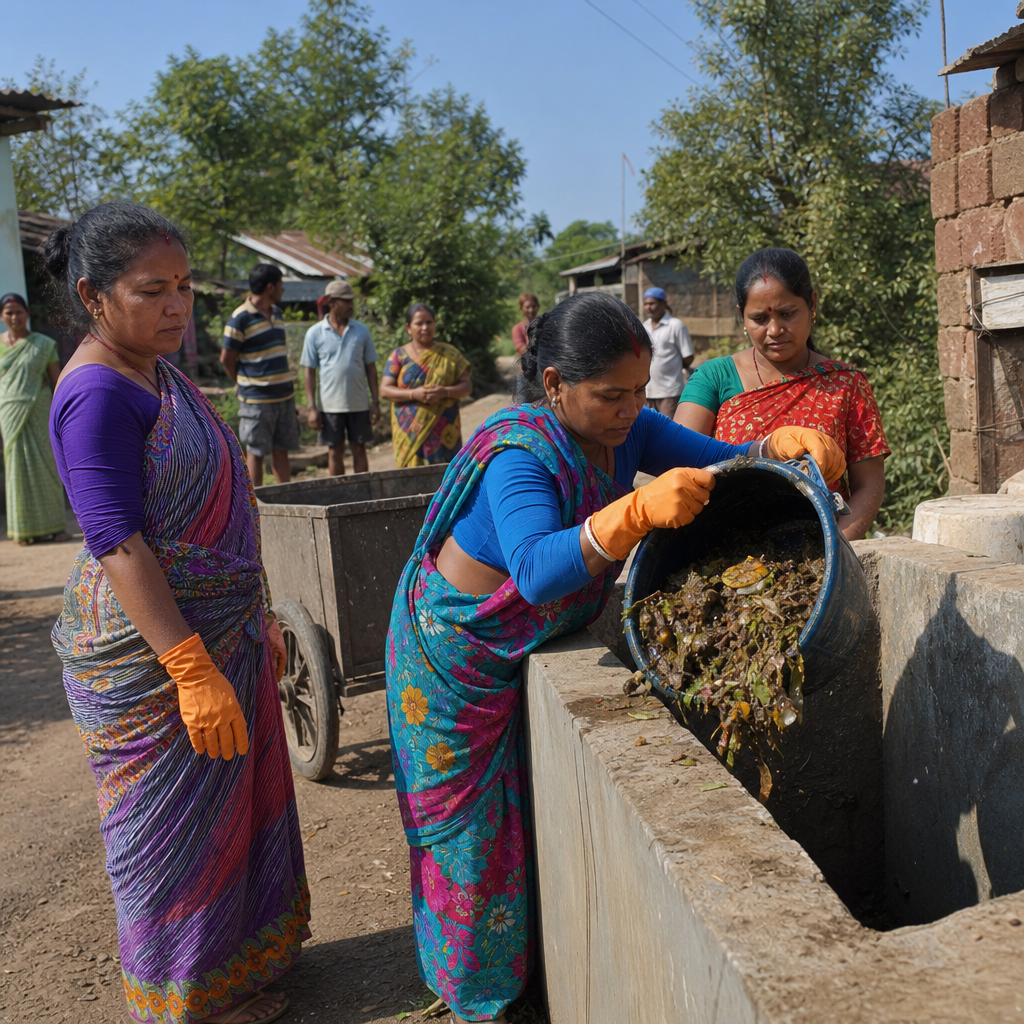
A third model combines maintenance with resource recovery. The operator earns part of its income from user fees and part from the sale of compost, treated biosolids, black soldier fly larvae feed, biogas, or recovered nutrients. This hybrid model is attractive because it reduces pressure on tariffs, but it only works when product quality is consistent and regulation permits reuse. The safest approach is to treat reuse income as supplemental rather than the sole revenue source, since agricultural demand can be seasonal and price sensitive.
| Model | Main Revenue Source | Best Fit | Key Risk |
|---|---|---|---|
| Fee-for-service maintenance | Household or institutional service fees | Dense settlements with predictable routes | Irregular customer payments |
| Franchised micro-enterprise | Service fees plus franchise support systems | Towns scaling standardized EcoSan services | Weak quality control across operators |
| Maintenance plus resource recovery | Fees plus compost, nutrient, or energy sales | Areas with agriculture or landscaping demand | Uncertain end-market pricing |
| Public-private service contract | Municipal payments tied to performance | Schools, markets, public toilets, treatment sites | Delayed government disbursement |
Public-private service contracts are another strong option. Municipalities can contract firms or cooperatives to maintain communal toilets, transfer stations, and decentralized treatment sites under service-level agreements. Good contracts define response times, cleaning frequency, occupational safety requirements, sludge tracking, and payment triggers. When designed properly, these contracts create formal jobs and improve accountability. The best contracts I have reviewed linked payments to verified outputs, such as the number of facilities serviced, uptime percentage, and safe disposal records, rather than vague monthly lump sums.
Financing mechanisms and tariff design for sustainable operations
No sanitation maintenance market survives without realistic financing. The core principle is simple: someone must reliably pay for routine operations. In EcoSan, that funding usually comes from a mix of user tariffs, municipal transfers, donor-supported transition finance, cross-subsidies, and product sales. User tariffs should be designed around affordability and willingness to pay, but they must still cover the routine cost base. A tariff that is politically popular but too low to cover transport, labor, consumables, and reserve funds will eventually degrade service quality.
Lifecycle costing is the standard method I recommend for tariff setting. It accounts for daily operations, preventive maintenance, major repairs, replacement cycles, supervision, compliance, and safe end-use or disposal. For example, a urine-diverting toilet program may appear inexpensive at installation, yet the true annual cost includes cleaning materials, operator visits, chamber emptying, user education refreshers, and periodic part replacement. Spreading those costs over the expected number of users produces a more honest service fee.
Blended finance often helps during market formation. Grants or concessional funds can support training, initial equipment, treatment site upgrades, or digital tracking systems, while recurrent costs are shifted gradually to tariffs and service contracts. Output-based aid can also work: providers receive support only after verified servicing or safe treatment milestones are met. This creates better incentives than open-ended subsidies. Municipal sanitation funds, climate adaptation finance, and public health budgets can all contribute when EcoSan maintenance reduces runoff pollution, greenhouse gas emissions, or disease exposure.
Tariff collection matters as much as tariff design. The highest collection rates usually come from methods that match local habits: mobile money, utility bill bundling, market association payments, school maintenance budgets, or landlord-mediated collection in rental compounds. Prepayment plans can stabilize cash flow, while emergency call-out fees should be set high enough to encourage preventive service subscriptions. The goal is not simply revenue extraction. It is reliable cost recovery that preserves service continuity and protects poor users through targeted support rather than generalized underpricing.
Building value chains for jobs, inputs, and recovered products
Economic strategies in EcoSan become stronger when maintenance is viewed as a value chain rather than a single task. The chain starts with input suppliers: toilet pans, urine-diversion pedestals, sealants, containers, pipes, cleaning materials, personal protective equipment, pumps, and transport carts. It continues through local technicians, pit emptiers, compost handlers, treatment operators, aggregators, and end buyers. Every weak link increases downtime or contamination risk. Every efficient link creates jobs and lowers service costs.
Local manufacturing and repair are especially important. Importing specialized parts may work in pilots, but it rarely scales. Standardized components that can be sourced or fabricated locally reduce downtime and keep money in the local economy. I have seen programs improve dramatically once they replaced bespoke imported fittings with locally available PVC dimensions and simple interchangeable seals. That single design choice reduced maintenance delays from weeks to days.
Recovered products deserve disciplined market development. Compost and treated biosolids can support soil improvement, but buyers need confidence in quality, moisture content, packaging, pathogen reduction, and application guidance. Urine-derived fertilizers need clear nutrient information and handling protocols. Biogas systems need maintenance contracts that guarantee uptime before productive users will depend on them. Farmers and landscapers will not buy on environmental messaging alone; they buy when the product performs consistently and is priced competitively against familiar alternatives.
Market validation should therefore precede large reuse investments. Test plots, offtake agreements, and certification pathways matter. So do logistics. A treatment plant may produce usable compost, but if bagging, storage, and transport costs exceed market value, the enterprise will struggle. The strongest sanitation value chains are practical: they solve an existing maintenance need first and add reuse revenue where evidence supports it.
Skills, safety, and digital systems that raise productivity
Sanitation maintenance creates decent economic opportunity only when skills and safety are treated as core operating assets. Workers need training in confined space risks, pathogen exposure, hand hygiene, PPE use, route planning, customer communication, and equipment care. For EcoSan specifically, they also need system-specific knowledge: how to manage separated urine streams, how to judge chamber maturity, how to avoid cross-contamination, and how to document safe transfer to treatment or reuse. Untrained labor may be cheap in the short term, but it increases accidents, system failure, and reputational damage.
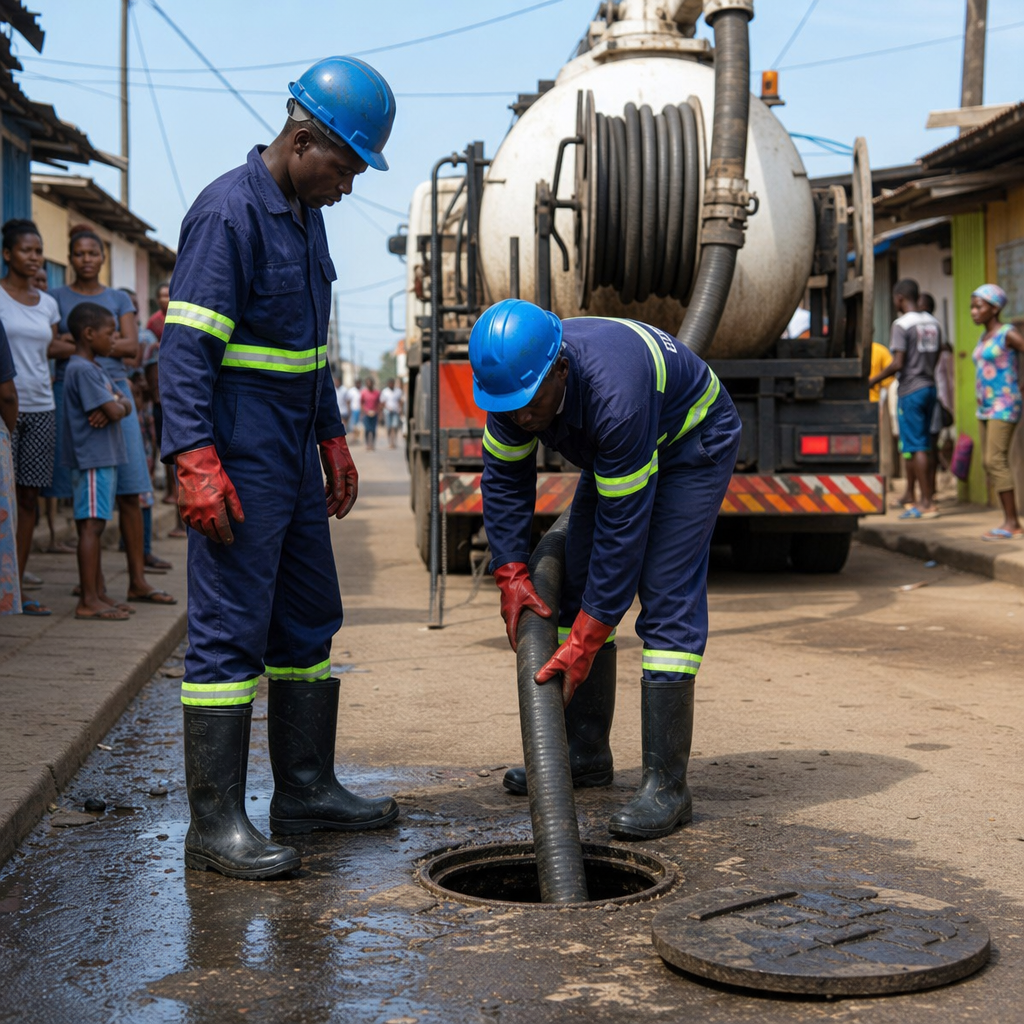
Occupational safety standards should be embedded in budgets and contracts. That means gloves, boots, masks where appropriate, vaccination access, washing facilities, and protocols that prohibit dangerous manual entry into tanks or pits without proper equipment and supervision. This is not just a labor issue; it directly affects economics. Safe teams have lower turnover, lower downtime, and better service consistency. Formalizing sanitation work also helps shift it from stigmatized informal labor to recognized skilled service provision.
Digital tools now make maintenance businesses more efficient. Simple mobile work-order apps can log inspections, schedule emptying cycles, issue invoices, and create proof-of-service records with timestamps and photos. GPS route optimization lowers fuel use. QR codes on facilities can link each unit to maintenance history and parts lists. Treatment sites can use basic dashboards to track inflows, drying times, compost batches, and product sales. In my experience, the immediate benefit of digitalization is not sophistication but visibility: managers can finally see which assets fail repeatedly, which routes lose money, and which customers are late on payment.
Data also improves access to finance. Lenders and municipalities are more willing to fund operators that can show service volumes, collection rates, contract renewals, and maintenance compliance. In other words, productivity in EcoSan maintenance comes from combining trained people, safe procedures, and simple operational data.
Policy, regulation, and scaling strategies for long-term growth
Policy determines whether sanitation maintenance remains informal survival work or becomes a stable local industry. Clear regulation is needed for licensing emptiers, approving treatment methods, transporting fecal sludge, certifying reuse products, and assigning service responsibilities between households, utilities, and municipalities. Without these rules, good operators are undercut by unsafe low-cost competitors, and investors hesitate. Regulation should set outcomes and safety thresholds while allowing room for decentralized and resource-recovery models. Overly rigid rules copied from sewered systems can unintentionally block viable EcoSan enterprises.
Municipal planning should include maintenance demand mapping. This means identifying how many toilets, septic tanks, dry systems, public facilities, and decentralized treatment sites need service, at what frequency, and with what transport constraints. Once demand is mapped, cities and districts can bundle service areas, designate treatment points, and publish contract opportunities. This lowers market uncertainty and helps enterprises invest in equipment. It also improves emergency preparedness during floods or disease outbreaks, when sanitation maintenance becomes even more critical.
Scaling works best through phased standardization. Start with a limited geography, define service packages, train operators, set tariffs, track performance, and refine technical standards before expanding. Anchor institutions such as schools, clinics, and markets can provide early predictable demand. Cooperatives, women-led enterprises, and youth service teams can all play important roles if procurement rules are accessible and payment terms are fair. What matters is not the label of the operator but the reliability of maintenance outcomes.
For readers building this subtopic further, the central lesson is clear. Economic strategies in EcoSan succeed when maintenance is treated as infrastructure, employment, and market development at the same time. Build tariffs on lifecycle costs, design business models around recurring service, standardize parts and training, create realistic reuse markets, and back it all with enforceable safety and regulatory systems. If you are developing an EcoSan program, start by auditing who maintains each asset, how they are paid, and where value is currently leaking. That is the fastest path to stronger sanitation services and broader economic opportunity.
Frequently Asked Questions
Why is sanitation maintenance considered an economic opportunity rather than just a public service cost?
Sanitation maintenance creates economic opportunity because every toilet, sewer line, drain, treatment unit, and reuse system depends on regular labor, supplies, logistics, and technical support to remain safe and functional. When communities stop viewing sanitation as a one-time construction project and start treating it as an ongoing service economy, new income streams become visible. These include paid cleaning and inspection work, pit emptying and sludge collection routes, plumbing and pump repair, sales of spare parts, service contracts for institutions, operator training, monitoring, transport, and reuse businesses built around compost, nutrients, reclaimed water, or other recovered resources.
In the EcoSan context, the economic value is especially clear because maintenance does more than preserve infrastructure. It helps protect water sources, reduce disease transmission, extend asset life, and keep resource recovery systems operating at a level where by-products can be safely marketed. A well-maintained system lowers emergency repair costs, reduces environmental contamination, and supports more predictable business planning for local entrepreneurs. Instead of spending public funds repeatedly on replacement after failure, communities can invest in stable maintenance jobs and small enterprises that keep systems working over time.
This shift also broadens who benefits economically. Maintenance work can generate opportunities for technicians, informal workers transitioning into safer formal roles, women-led microenterprises, youth service providers, cooperatives, transport operators, digital monitoring firms, and agricultural users of treated outputs. In practical terms, sanitation maintenance becomes a local market ecosystem. It supports livelihoods while delivering measurable public health and environmental outcomes, which is why it should be understood as both essential service delivery and a driver of inclusive local economic development.
What kinds of jobs and businesses can be created through sanitation maintenance?
Sanitation maintenance supports a wide range of jobs across the full service chain, from household-level upkeep to treatment and resource recovery. At the most visible level, there are cleaners, caretakers, desludging operators, drain maintenance crews, plumbers, electricians, mechanics, and treatment plant attendants. These roles are necessary to keep toilets usable, remove blockages, inspect pumps, maintain drainage channels, replace valves, repair containment units, and ensure treatment systems function within safe operating limits. Because many sanitation systems fail due to neglected upkeep rather than major structural defects, these recurring jobs are not peripheral; they are central to system performance.
Beyond frontline labor, there are also business opportunities in support services. Local enterprises can supply cleaning materials, hand tools, protective equipment, pumps, pipes, seals, valves, and other replacement parts. Service providers can offer annual maintenance contracts to schools, markets, transport hubs, apartment buildings, clinics, and industrial sites. Training centers can certify operators and technicians. Digital businesses can build inspection tools, route optimization platforms, customer payment systems, maintenance reporting dashboards, and monitoring applications that help providers schedule work and document compliance.
EcoSan systems create additional opportunities linked to reuse. Businesses may collect, process, package, and sell composted material, soil amendments, or nutrients recovered from waste streams, provided treatment and quality assurance standards are met. Farmers, landscaping services, nurseries, and urban agriculture projects may become customers for these outputs. In some settings, cooperatives or social enterprises can organize collection and treatment services while also marketing recovered products. When sanitation maintenance is planned intentionally, the result is not just isolated jobs but a layered local economy with entry-level positions, skilled technical careers, and growth pathways into entrepreneurship.
How can communities and local governments make sanitation maintenance financially sustainable?
Financial sustainability starts with acknowledging that maintenance must be budgeted as a recurring service, not treated as an optional add-on after construction. Communities and local governments can improve sustainability by designing realistic cost-recovery models that cover routine cleaning, inspections, repairs, replacement parts, transport, treatment, worker wages, and safe disposal or reuse activities. This often requires a mix of revenue sources rather than reliance on a single funding stream. Household user fees, institutional service payments, municipal budget allocations, cross-subsidies, targeted public support for low-income users, and revenues from recovered products can all play a role.
One of the most effective approaches is to define clear service packages and payment mechanisms. For example, a municipality may contract local providers for scheduled desludging, school toilet upkeep, or drain clearing under performance-based agreements. Apartment complexes and commercial facilities may pay monthly maintenance fees. Households may use pay-as-you-go or subscription models for toilet servicing or sludge collection. Digital payment tools can help reduce cash handling, improve transparency, and make it easier for providers to track revenue, customer history, and overdue accounts. Predictable payment systems matter because they allow enterprises to hire staff, maintain equipment, and plan inventory.
Local governments also strengthen sustainability when they create an enabling environment. That means licensing legitimate operators, enforcing service standards, preventing unsafe dumping, supporting access to transfer stations or treatment sites, and making room for small businesses to compete fairly. Public financing remains important, particularly where health externalities are high and affordability is a concern, but subsidies should ideally support outcomes such as safe service access and verified treatment rather than simply covering breakdowns after neglect. Financially sustainable sanitation maintenance is usually the result of disciplined asset management, transparent pricing, accountable service delivery, and policies that recognize maintenance as essential infrastructure expenditure.
What role does resource recovery play in creating economic opportunities in sanitation maintenance?
Resource recovery can significantly expand the economic potential of sanitation maintenance because it turns what is often viewed only as waste into a managed input for other sectors. In EcoSan systems, properly maintained separation, storage, collection, treatment, and processing steps can make it possible to recover nutrients, compost, soil conditioners, biogas feedstocks, reclaimed water, or other usable outputs. These products do not appear automatically. They depend on disciplined operations, contamination control, worker training, quality monitoring, and reliable treatment processes. That is exactly why maintenance is so important: without it, the value of recoverable resources declines and the risks increase.
When systems are maintained well, resource recovery can support new business models. Operators may earn income not only from service fees but also from sales of treated compost or nutrient products. Agricultural users may benefit from lower-cost inputs, especially in areas where synthetic fertilizers are expensive or difficult to access. Landscaping firms, tree nurseries, land restoration projects, and urban farming initiatives may also become customers. This can improve the overall economics of sanitation service provision by diversifying revenue and reducing dependence on one payment source.
That said, the opportunity is strongest when markets are developed realistically. Recovered products must meet safety and quality expectations, and customers need confidence in performance, handling, and consistency. Packaging, branding, testing, transport, and regulatory compliance all matter. Communities should avoid assuming that every sanitation system will automatically produce a profitable product stream. Instead, they should assess local demand, treatment capacity, logistics, and standards before scaling reuse markets. In the best cases, resource recovery complements core maintenance services, creates jobs in processing and sales, and helps reposition sanitation from a disposal challenge to a circular economy opportunity.
What are the biggest barriers to building a sanitation maintenance economy, and how can they be overcome?
Several barriers commonly limit growth in sanitation maintenance markets. The first is social and institutional undervaluation. Too often, funding and attention go to construction while maintenance labor is poorly paid, informal, stigmatized, or ignored in planning. When maintenance workers lack recognition, training, protective equipment, and legal status, service quality suffers and businesses struggle to grow. A second barrier is weak revenue collection. If user fees are inconsistent, tariffs are unrealistic, or municipalities delay payments, providers cannot retain staff, maintain equipment, or invest in expansion. A third challenge is fragmented infrastructure and governance. Operators may have no legal disposal point, unclear service mandates, limited access to spare parts, or overlapping regulations that discourage formal investment.
Technical and market barriers also matter. Poorly designed facilities can be difficult or expensive to maintain. Rural and peri-urban areas may have scattered demand, making collection routes less efficient. Resource recovery may be constrained by lack of quality standards, low customer trust, or limited market linkages. In addition, many small providers lack access to finance for vehicles, pumps, tools, protective gear, or treatment upgrades. Without working capital and equipment financing, even capable entrepreneurs can remain trapped in low-productivity operations.
Overcoming these barriers requires coordinated action. Governments can professionalize the sector through licensing, training standards, occupational safety rules, and procurement systems that reward reliable service. Development partners and financial institutions can support equipment finance, guarantees, and enterprise incubation. Municipalities can designate disposal and treatment infrastructure, publish service expectations, and use data systems to monitor performance. Communities can help by recognizing sanitation workers as essential service providers and supporting regular payment for preventive maintenance rather than waiting for failures. Most importantly, sanitation planning should include maintenance from the start, with clear budgets, workforce development, and viable business roles. When those foundations are in place, sanitation maintenance can move from an overlooked necessity to a respected and resilient local economic sector.