Sanitation is usually discussed as a public health obligation, yet it is also a productive economic system that can convert waste streams into assets. In the context of ecological sanitation, or EcoSan, human excreta and household wastewater are treated not as disposal problems but as sources of nutrients, water, energy, and jobs. Understanding EcoSan economics means tracing the full value chain: toilet design, collection logistics, treatment technology, product quality, market demand, operating costs, financing structures, and the public benefits that standard balance sheets often miss. This matters because unsafe sanitation still imposes heavy losses through disease, polluted water, missed workdays, and degraded land, while conventional sewer expansion remains unaffordable for many fast-growing towns. I have worked on sanitation business cases where a project looked expensive at the toilet level but became compelling once fertilizer displacement, sludge-to-fuel revenue, and avoided medical costs were counted together. That is the central economic insight of EcoSan. It shifts sanitation from a narrow cost center to a circular infrastructure investment. For policymakers, utilities, farmers, developers, and social enterprises, the question is not simply how to pay for toilets. It is how to build financially resilient sanitation systems that recover value, reduce long-term public expenditure, and create local markets. A sound EcoSan economic analysis therefore examines both cash income and wider returns, including healthier communities, stronger soils, lower import dependence for fertilizer and fuel, and more climate-resilient urban services.
What EcoSan economics includes
EcoSan economics covers every cost and benefit associated with sanitation systems designed for resource recovery. The cost side includes capital expenditure for toilets, storage, conveyance, treatment plants, quality control, land, labor, energy, maintenance, and replacement. The revenue side can include sale of compost, dried fecal sludge fuel, biogas, urine-based fertilizer, reclaimed water, carbon benefits in some cases, and user tariffs or service contracts. A complete analysis also values avoided costs: reduced healthcare spending, fewer days lost to illness, less groundwater contamination, lower synthetic fertilizer purchases, and smaller wastewater treatment burdens downstream. The key term is resource recovery, meaning the extraction of useful products from waste after safe treatment. Another key term is full cost recovery, which asks whether tariffs and sales can cover operations and, in stronger cases, part of capital costs. In practice, many viable systems achieve operating cost recovery but still rely on blended finance for initial infrastructure. That does not make them weak investments. Roads, drains, and water networks also depend on public capital because they generate broad social returns beyond direct cash flow.
Why sanitation has untapped economic value
Traditional sanitation planning often undervalues waste because it focuses on removal rather than transformation. Yet human excreta contains nitrogen, phosphorus, potassium, organic matter, and in some systems recoverable energy. Urine alone typically carries most of the nitrogen and a substantial share of the phosphorus excreted by households, making source separation economically interesting where fertilizer prices are high. Fecal sludge, when dried and processed, can become a soil amendment, a feedstock for black soldier fly larvae in controlled systems, or a solid fuel for industrial kilns. Wastewater can be reused in agriculture or landscaping when treated to the required standard. These are not theoretical possibilities. Cities in East Africa, South Asia, and Latin America have piloted fecal sludge composting plants, container-based sanitation services, co-composting facilities, and sludge-to-fuel enterprises with measurable market demand. The economic potential is strongest where three conditions overlap: limited sewer coverage, rising costs for imported farm inputs or fuel, and institutional willingness to regulate and purchase recovered products.
How to evaluate an EcoSan business model
When I assess an EcoSan model, I start with the service unit, not the treatment plant. A system must solve a real sanitation problem at a price households, landlords, municipalities, or employers can bear. Then I map the downstream economics: collection route density, contamination rates, moisture content, processing yield, product standards, and who will buy the end product repeatedly. Unit economics are decisive. If collection trucks travel long distances for small volumes, costs climb fast. If toilets are poorly designed and users mix trash into vaults, processing costs rise and product quality falls. If the end product competes with subsidized fertilizer, sales may stall unless the product is positioned for specific crops or blended with other inputs. A robust business case therefore separates three questions. Can the service operate reliably? Can operations be funded through tariffs, contracts, and product sales? And are there public benefits large enough to justify capital subsidy or output-based aid? Strong EcoSan economics requires yes to the first and third questions, even if the second is only partial in early years.
Cost drivers, revenues, and realistic margins
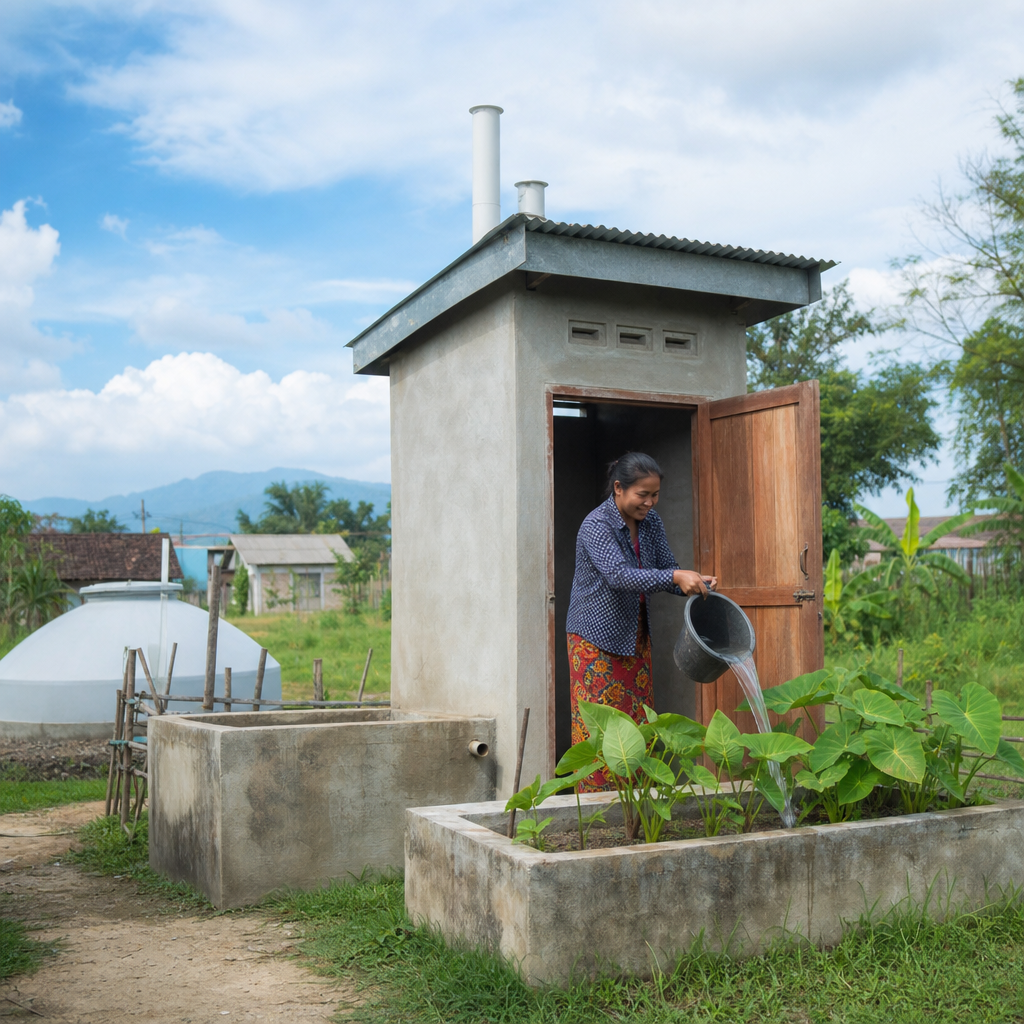
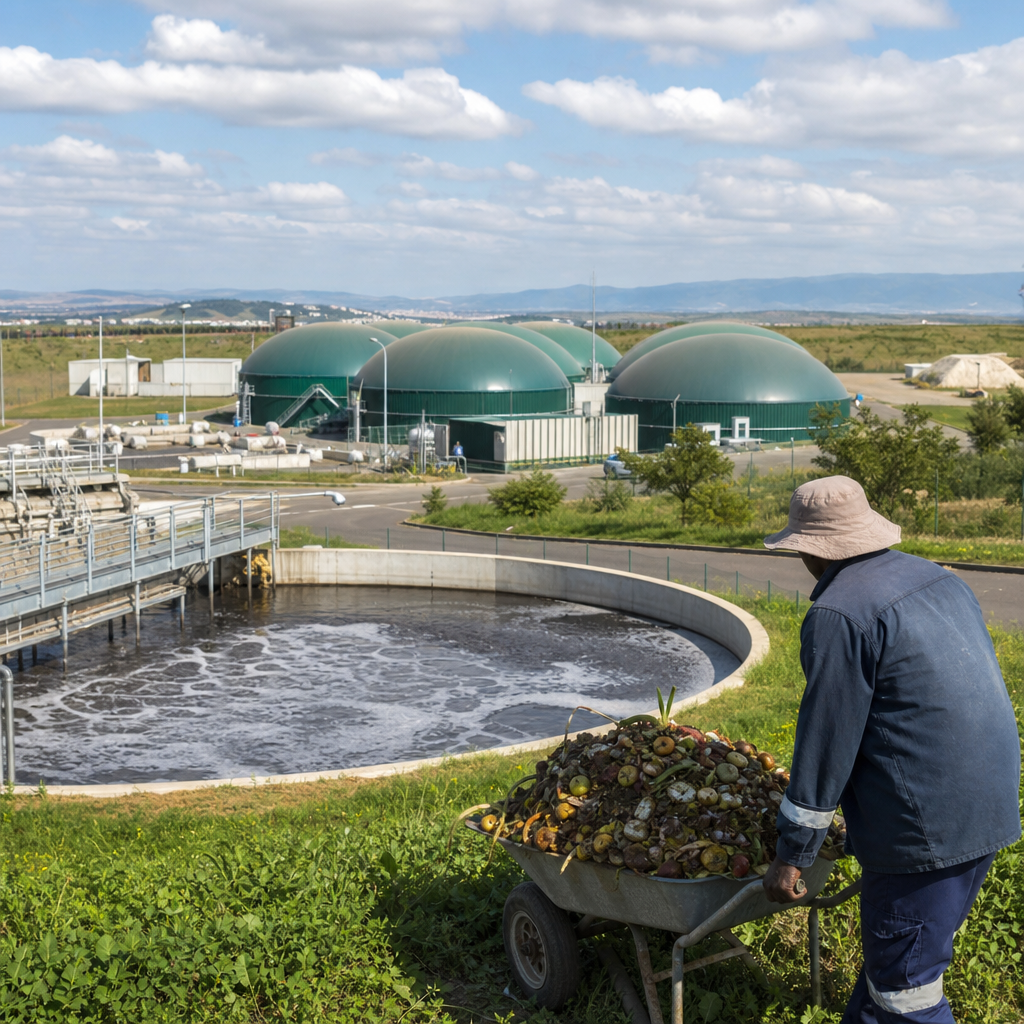
The economics of EcoSan are highly sensitive to design choices. Urine-diverting dry toilets reduce water demand and preserve nutrient value, but they require user training, separate storage, and a supply chain for emptying and reuse. Septic tanks and pit latrines have lower behavior-change requirements, yet poorly designed units increase desludging frequency or contaminate groundwater. Composting plants need reliable bulking material such as market waste or sawdust, while thermal drying systems need energy but produce a denser fuel product. Labor is often a major operating cost, followed by transport. In dense settlements, handcart or small-vehicle transfer can outperform large trucks because access is tight. Revenue profiles also vary by product. Compost margins are usually modest but stable when sold locally to horticulture, landscaping, or peri-urban farms. Fuel products can generate higher revenue per ton when there is an industrial off-taker, such as a cement plant, but they demand stricter moisture control and consistent calorific value. Biogas can offset onsite cooking or electricity use, although smaller digesters often disappoint when feedstock supply is irregular. The most resilient systems stack revenues instead of relying on one product.
| EcoSan pathway | Main cost drivers | Revenue or savings source | Best-fit context |
|---|---|---|---|
| Urine diversion and nutrient reuse | User training, storage tanks, collection logistics | Fertilizer savings, sale of treated urine products | Water-scarce areas, high fertilizer prices |
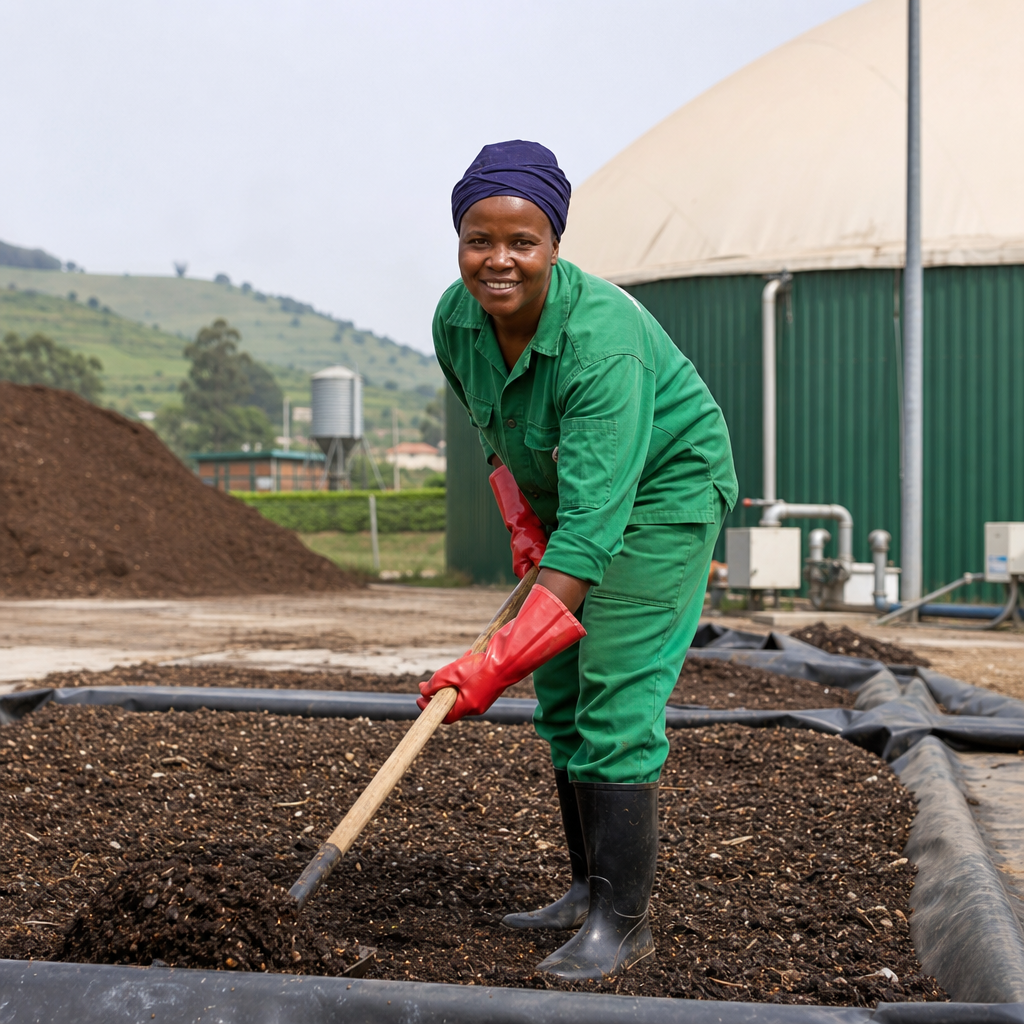
| Fecal sludge composting | Drying beds, labor, bulking material, testing | Compost sales, avoided disposal costs | Peri-urban farming zones |
| Sludge-to-fuel processing | Drying, densification, quality control, transport | Fuel sales to industry | Cities near industrial heat users |
| Anaerobic digestion | Digester maintenance, feedstock consistency, gas handling | Biogas, energy savings, digestate reuse | Institutions, markets, clustered organic waste |
Markets for recovered products and how they are built
A recovered product has no economic value unless buyers trust it, can use it easily, and see a clear advantage over alternatives. Market development is therefore as important as engineering. For compost, that means testing nutrient content, pathogen reduction, moisture, and stability, then matching the product to crops that respond well to organic matter, such as vegetables, orchards, and nurseries. Demonstration plots are one of the fastest ways to convert skepticism into repeat sales because farmers believe side-by-side yield results more than brochures. For fuel briquettes or dried sludge pellets, the buyer usually cares less about circularity than about price, ash content, calorific value, and dependable supply. Long-term offtake agreements with factories or institutional kitchens can de-risk investment. For urine-derived fertilizers, regulations and product form matter. A liquid product may be agronomically effective but costly to transport over long distances, which is why localized reuse or concentration technologies become important. The lesson from successful projects is consistent: product-market fit is not automatic. It is designed through standards, branding, distribution, and buyer education.
Financing models, policy incentives, and public returns
Because sanitation generates both private and public benefits, EcoSan finance usually works best as a blended structure. Households may pay for access, landlords may fund facilities to protect property value, municipalities may subsidize collection or treatment, and development finance may cover early capital expenditures. Output-based aid can reward verified service delivery, such as safely emptied pits or tons of sludge treated to standard. Carbon-related finance may support projects that cut methane emissions or displace fossil fuels, but it should be treated as supplemental rather than core revenue because verification costs and price volatility are real constraints. Public procurement can also shape the market. If cities purchase compost for parks or require co-processing contracts for industrial fuel users, demand becomes more predictable. Policy incentives matter most where regulations are clear. Standards for treated biosolids, reuse water, and occupational safety reduce uncertainty for investors and buyers. The economic justification for public support is strong. Sanitation improvements reduce disease burden, protect aquifers, raise land values, and limit environmental cleanup costs later. Those benefits accrue across society, so full reliance on household tariffs is neither realistic nor efficient.
Risks, constraints, and what separates success from failure
EcoSan can fail economically when projects ignore behavior, regulation, or logistics. The first risk is contamination. If users put plastics, sand, or chemicals into the system, treatment costs rise and outputs lose marketability. The second risk is weak demand forecasting. A compost plant sized around optimistic sales targets will quickly face stockpiles and cash pressure. Third, many projects underestimate collection complexity. In dense informal settlements, access constraints, seasonal flooding, and irregular payment patterns can break a model that looked efficient on paper. Fourth, health safeguards are non-negotiable. Inadequate pathogen reduction can destroy public trust and expose operators and farmers to harm. Systems need hazard controls, testing protocols, and traceability. Fifth, institutions matter. If responsibility for on-site sanitation, solid waste, and agriculture is fragmented across agencies, approvals and budget lines become slow and uncertain. The projects that succeed usually share practical habits: they pilot before scaling, price conservatively, secure at least one anchor buyer, invest in operator training, and monitor both service quality and product performance continuously. In economic terms, they reduce uncertainty before they expand fixed costs.
Waste to wealth in sanitation is not a slogan. It is a disciplined economic proposition built on service reliability, safe treatment, and credible markets for recovered resources. EcoSan economics shows that toilets, sludge management, nutrient recovery, energy production, and water reuse belong in one investment conversation, not in separate silos. The strongest cases do not depend on selling every byproduct at premium prices. They work because multiple value streams add up: user fees, municipal contracts, fertilizer substitution, fuel sales, avoided disposal costs, improved health, and environmental protection. The exact mix differs by location. Water-scarce farming regions may gain most from urine diversion and reuse. Dense cities with industry nearby may favor sludge-derived fuel. Institutional campuses may benefit from biogas and water recycling. What remains constant is the need for rigorous analysis. Decision-makers should compare capital costs, operating expenses, route density, treatment yields, product standards, market demand, and public benefits over the full life cycle. When that is done well, sanitation stops looking like a permanent drain on budgets and starts functioning as circular infrastructure with measurable returns. Use this hub as your starting point, then evaluate your local sanitation system through the lens of resource recovery, service economics, and long-term public value.
Frequently Asked Questions
1. What does “waste to wealth” really mean in the context of sanitation?
In sanitation, “waste to wealth” means shifting from a linear model of disposal to a circular model of resource recovery. Instead of treating human excreta and household wastewater as costly byproducts that must simply be removed, ecological sanitation views them as inputs for valuable goods and services. Urine can be recovered for its nitrogen, phosphorus, and potassium content and used as fertilizer. Fecal sludge can be treated and converted into compost, soil conditioners, biogas, briquettes, or other energy products. Wastewater can be treated for reuse in agriculture, landscaping, or industrial processes, reducing pressure on freshwater supplies.
Economically, this matters because sanitation systems generate costs whether or not value is captured. Households pay for toilets, cities pay for collection and treatment, and governments absorb the public health costs of poor sanitation. EcoSan aims to improve that equation by creating revenue streams from materials that were previously ignored. When resource recovery is designed well, sanitation spending does more than prevent disease; it supports agricultural productivity, lowers fertilizer dependence, creates jobs in collection and treatment, and stimulates local markets for recovered products. In that sense, wealth is created not by the waste itself, but by the systems, technologies, and markets built around transforming it into safe, useful outputs.
2. How does EcoSan create economic value across the full sanitation value chain?
EcoSan economics are best understood by looking at the entire value chain rather than only the treatment stage. Value begins at toilet design, where urine-diverting dry toilets, container-based sanitation systems, or decentralized wastewater setups can improve separation and make downstream recovery more efficient. A well-designed front end reduces contamination, lowers transport costs, and improves the quality of recovered materials. Collection and logistics are also major economic components. Scheduled emptying services, container swaps, and decentralized transfer systems can support formal employment, improve service reliability, and lower the costs associated with unsafe manual handling or emergency desludging.
At the treatment stage, value is created by selecting technologies that fit the local context and produce outputs with real market demand. Composting, anaerobic digestion, drying, co-composting, nutrient recovery, and water reclamation all have different capital costs, operating requirements, and product profiles. The most successful systems are not necessarily the most technologically advanced; they are the ones that align product quality with buyers’ needs. For example, farmers may value organic soil amendments if they are affordable, consistent, and easy to apply. Energy users may value briquettes or biogas if they are competitively priced and reliable. Landscapers, municipalities, and industry may value non-potable reclaimed water where water scarcity or high water tariffs make reuse attractive.
Beyond direct product sales, EcoSan also creates indirect economic benefits. It can reduce healthcare costs linked to poor sanitation, improve worker productivity by lowering disease burdens, protect water bodies that support fisheries and tourism, and reduce environmental cleanup costs. In urban areas, formalizing sanitation services can expand tax bases and attract private investment. In rural settings, nutrient recovery can strengthen local food systems and reduce dependence on imported fertilizers. The full economic picture is therefore broader than a single treatment plant balance sheet; it includes savings, avoided losses, employment effects, and resilience benefits across the local economy.
3. What kinds of products can be recovered from sanitation systems, and are there real markets for them?
Yes, there are real markets for sanitation-derived products, but success depends on product safety, consistency, pricing, and customer trust. The most common recovered products include compost, co-compost, dried sludge-based soil amendments, urine-based fertilizers, biogas, solid fuel briquettes, insect-based protein from waste-fed larvae systems where regulations allow, and treated wastewater for non-potable reuse. Each product serves a different market. Agriculture is often the largest target sector because nutrients and organic matter have clear value for crop production, soil restoration, and water retention. This is especially important in regions where soils are degraded or chemical fertilizers are expensive or difficult to access.
Energy products can also be commercially significant. Anaerobic digestion can generate biogas for cooking, heating, or electricity generation, while dried biosolids or blended biomass products can be processed into briquettes. Reclaimed water can be sold or distributed for irrigation, construction, toilet flushing, or industrial cooling, particularly in water-stressed areas. In all cases, the existence of a theoretical resource does not automatically mean there is a viable market. Buyers want products that are safe, legally approved, convenient to use, and clearly beneficial. Packaging, branding, distribution, and extension support often matter just as much as treatment technology.
Market development is one of the most underestimated parts of EcoSan. A treatment facility may technically produce fertilizer, but if farmers are unfamiliar with the product, skeptical about its origin, or unable to access it at the right time in the planting cycle, sales will be weak. That is why successful initiatives often combine product testing, quality certification, demonstration plots, public education, and partnerships with agricultural cooperatives, utilities, or municipal buyers. Real markets do exist, but they must be cultivated with the same seriousness as any other commercial sector.
4. What are the biggest financial and operational challenges in making sanitation economically productive?
The biggest challenge is that sanitation is both a public service and a business ecosystem, which means financial viability rarely depends on product sales alone. Collection costs are often high, especially in dense informal settlements or areas with poor road access. Treatment facilities require capital investment, trained operators, maintenance, energy inputs, and quality control systems. If feedstock volumes are inconsistent or contaminated, product quality suffers and costs rise. Many projects also struggle because they were designed around what technology can produce rather than what the market is willing to buy.
Another major barrier is pricing. Recovered products must compete with conventional alternatives such as chemical fertilizers, firewood, charcoal, or freshwater. If sanitation-derived products are more expensive, harder to transport, or less familiar to users, adoption can be slow. Regulatory uncertainty can further complicate the business case. Without clear standards for biosolids, urine-derived fertilizers, or reclaimed water, private investors and institutional buyers may hesitate. Social acceptance also matters. Even when products are scientifically safe, perception issues can affect demand if communication and trust-building are weak.
From an operational standpoint, the strongest models typically use blended revenue and support structures. These may include user fees, municipal service payments, carbon or climate-related financing, agricultural product sales, tipping fees, and public subsidies for the health and environmental benefits that the market does not fully pay for. In practical terms, the most resilient EcoSan systems are those that recognize sanitation’s public-good dimension while still pursuing efficiency, customer-focused service delivery, and commercially credible recovered products. Economic productivity in sanitation is achievable, but it requires disciplined operations, realistic financial planning, and supportive policy frameworks.
5. Why is EcoSan important for jobs, local development, and long-term economic resilience?
EcoSan can support local development because it turns sanitation from a narrow expenditure category into a broader productive sector. Jobs are created at multiple points in the chain: toilet manufacturing and installation, collection services, transport, treatment plant operations, laboratory testing, product processing, distribution, equipment maintenance, sales, and agricultural advisory services. These are not only high-level technical jobs. EcoSan can also create accessible livelihoods in communities where formal employment is limited, especially when services are organized safely and professionally. Formalization is important because it improves working conditions, raises service quality, and helps integrate sanitation workers into protected and recognized economic roles.
At the local economy level, resource recovery helps retain value that would otherwise be lost. Nutrients can circulate back into nearby farms instead of being discharged into rivers or requiring replacement through imported fertilizers. Reclaimed water can buffer communities against drought and rising water costs. Locally produced energy products can diversify household and enterprise fuel options. These linkages make communities less vulnerable to external shocks such as fertilizer price spikes, water scarcity, supply chain disruptions, and energy insecurity. In that sense, EcoSan is not only about extracting value from waste; it is about building more self-reliant and adaptive local systems.
Its long-term economic importance is especially clear in rapidly growing cities and climate-stressed regions. As populations rise, the costs of unmanaged waste, polluted waterways, and failing sanitation systems become much higher. EcoSan offers a framework for planning infrastructure that addresses public health while also supporting circular economy goals, climate adaptation, and green enterprise development. When sanitation systems are designed to recover nutrients, water, and energy safely, they can help cities and regions do more with limited resources. That makes EcoSan a strategic investment not just in cleaner environments, but in stronger, more resilient economies.