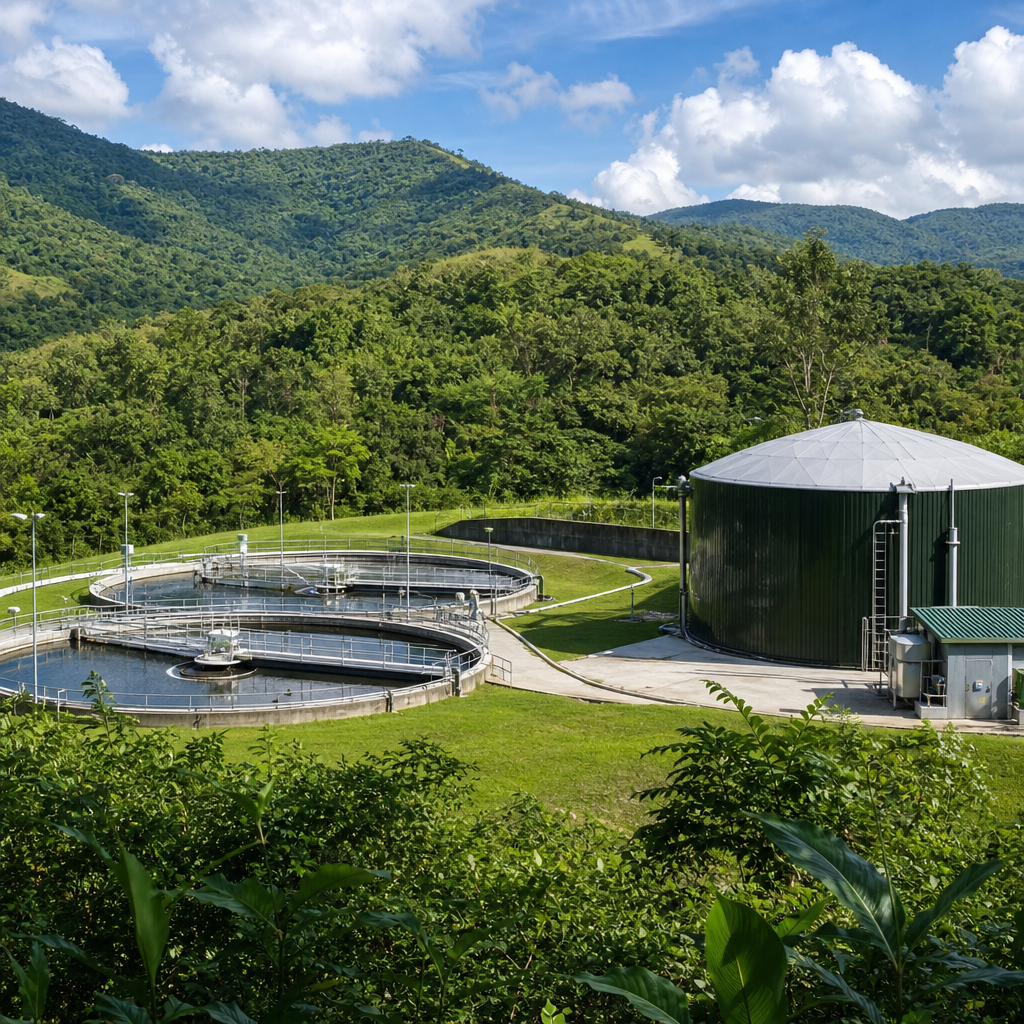
Investment risks and rewards in sanitation technologies are often misunderstood because sanitation sits at the intersection of public health, infrastructure, climate resilience, and local economics. In practice, financing and investing in EcoSan requires more than enthusiasm for sustainable toilets or nutrient recovery. It demands a clear view of capital costs, operating models, revenue reliability, regulatory conditions, user behavior, and the broader value created when sanitation systems reduce disease, protect water, and recover resources. EcoSan, short for ecological sanitation, refers to sanitation approaches designed to safely manage human waste while conserving water, recovering nutrients, producing energy, or reusing treated outputs in agriculture and industry.
I have worked with sanitation project teams evaluating container-based systems, urine-diverting dry toilets, decentralized wastewater treatment units, and fecal sludge treatment plants, and one lesson repeats across markets: sanitation investments rarely succeed when judged by hardware alone. The strongest cases combine engineering performance with realistic financing structures and measurable demand for services or recovered products. This matters because the global sanitation gap remains large, municipalities face budget constraints, and investors increasingly want infrastructure that delivers both financial returns and environmental outcomes. For readers exploring the economic aspects of sustainable sanitation, this hub explains where returns come from, what the main risks are, how capital is typically structured, and which indicators distinguish bankable EcoSan opportunities from well-intentioned but fragile pilots.
What counts as an EcoSan investment
An EcoSan investment can include household products, neighborhood-scale service systems, treatment facilities, digital monitoring tools, and circular economy businesses built around recovered resources. Examples include urine-diverting dry toilets sold through microfinance, container-based sanitation providers charging monthly service fees, anaerobic digesters turning sludge into biogas, black soldier fly facilities converting organic waste into feed ingredients, and fecal sludge treatment plants producing compost or fuel briquettes. Some projects are primarily public infrastructure, while others resemble venture-backed service companies. Many blend both models.
The first question investors ask is simple: what exactly is being financed? In sanitation, the answer usually falls into four layers. The asset layer covers toilets, collection vehicles, transfer stations, treatment equipment, and land. The service layer covers collection, transport, maintenance, customer support, billing, and compliance monitoring. The recovery layer covers compost, pellets, biogas, electricity, reclaimed water, insect protein, or carbon-related environmental value. The enabling layer covers software, data systems, and operator training. Returns depend on how these layers are packaged. A treatment plant with no reliable collection network is a stranded asset. A collection business with no disposal contract faces margin pressure and legal risk.
Because this page serves as a hub for financing and investing in EcoSan, it is useful to separate capital uses from investor types. Grants often pay for early pilots, technical assistance, or user adoption campaigns. Development finance institutions may support blended structures for treatment infrastructure. Commercial banks may finance fleet purchases or equipment when cash flows are visible. Impact investors often back service operators or technology companies seeking scalable growth. Municipal budgets and utility tariffs remain central because sanitation generates public benefits that markets alone do not fully monetize.
Where the rewards come from
The rewards in sanitation technologies are broader than a single project IRR. Financial returns can come from user fees, municipal service contracts, tipping fees, product sales, energy generation, and avoided costs. Social and environmental returns come from reduced diarrheal disease, lower contamination of groundwater, decreased fertilizer use through nutrient recovery, reduced methane emissions through better waste handling, and improved safety and dignity, especially for women and girls. The challenge is that different stakeholders capture different benefits. Investors may earn from service fees, while households capture health gains and cities capture reduced pollution.
In real transactions, the most durable revenue source is usually payment for sanitation as an essential service rather than speculative sales of recovered products. For example, container-based sanitation operators in dense urban settlements often achieve more predictable cash flow from subscriptions than from compost sales. Similarly, fecal sludge treatment plants may depend more on municipal discharge fees than on fertilizer revenue. Resource recovery still matters, but it is usually a margin enhancer rather than the sole investment thesis.
There are also strategic rewards. EcoSan can reduce dependence on centralized sewer expansion, which is often capital intensive and slow in peri-urban growth areas. Decentralized systems can be deployed faster, fit water-scarce regions, and create local jobs in maintenance, collection, and processing. In agriculture, nutrient recovery can partially replace imported fertilizer inputs. In climate finance discussions, methane avoidance, biogas substitution, and soil carbon benefits increasingly strengthen the case for concessional capital.
Core investment risks in sanitation technologies
The biggest sanitation investment risks are demand risk, operational risk, regulatory risk, affordability risk, and execution risk. Demand risk arises when households or institutions do not adopt or continue paying for the service. This is common when projects underestimate behavior change needs or overestimate willingness to pay. Operational risk appears when collection routes are inefficient, spare parts are unavailable, treatment systems clog, or staffing quality drops. In sanitation, small failures quickly become public health failures.
Regulatory risk is significant because standards for reuse, sludge transport, land application, discharge, or power generation vary widely. A compost product that is marketable in one jurisdiction may face strict permitting in another. Affordability risk is acute in low-income markets, where tariffs that fully recover costs may be politically or socially unacceptable. Execution risk includes procurement delays, weak contractor performance, land disputes, currency mismatch, and underfunded community engagement.
Technology risk should be analyzed carefully but not exaggerated. Most sanitation losses I have seen came less from breakthrough technology failure than from weak service design. Proven technologies such as settling-thickening tanks, planted drying beds, screw presses, anaerobic digestion, and urine diversion can still underperform when feedstock quality, maintenance routines, and operator training are poor. Investors should therefore test operational assumptions with field data, not lab claims.
| Risk category | What it looks like | Why it matters financially | Practical mitigation |
|---|---|---|---|
| Demand risk | Low sign-ups, irregular payments, user dropout | Revenue misses and poor debt service coverage | Pilot pricing, segmented tariffs, customer education |
| Operational risk | Missed collections, breakdowns, odor complaints | Higher OPEX, churn, penalties | Route optimization, preventive maintenance, spare parts stock |
| Regulatory risk | Delayed permits, unclear reuse rules | Asset delays and product market blockage | Early regulator engagement, compliance testing |
| Affordability risk | Users value service but cannot pay full cost | Persistent subsidy needs | Output-based aid, cross-subsidy, public service contracts |
| Market risk for outputs | Weak demand for compost, briquettes, or biogas | Recovery revenues underperform | Offtake agreements, conservative pricing assumptions |
How EcoSan projects are financed
EcoSan finance usually combines multiple instruments because no single source matches the full risk profile. Early-stage innovation often needs grants for prototyping, certification, and evidence building. Once a model shows repeatable demand, working capital can finance customer acquisition, inventory, and receivables. Asset finance supports vehicles, treatment units, pumps, and modular equipment. Larger public-interest infrastructure may use concessional debt, guarantees, viability gap funding, or results-based finance tied to verified service delivery.
Blended finance is especially common because sanitation creates positive externalities that private cash flows alone may not capture. A city may fund land and trunk infrastructure, a donor may fund behavior change and monitoring, and a private operator may finance service equipment against contracted payments. Development institutions such as the World Bank, IFC, African Development Bank, and regional facilities have long supported water and sanitation finance, but truly investable EcoSan opportunities usually emerge when local institutions can collect tariffs or honor service payments reliably.
At household level, microfinance and pay-as-you-go structures matter. A urine-diverting toilet or septic upgrade may be affordable over twenty-four months but impossible as a lump-sum purchase. Consumer finance can unlock adoption if repayment aligns with income cycles. For schools, clinics, factories, and housing developers, sanitation capex is often integrated into broader facility financing. This is why project sponsors should frame sanitation not as an isolated cost but as a compliance, health, and resilience asset.
Evaluating bankability and returns
Bankability in sanitation means predictable cash flows, manageable risk allocation, enforceable contracts, and assets that can be operated within local capacity. Investors should look first at unit economics. What does it cost to acquire a customer, serve that customer monthly, and retain that customer over time? What is the utilization rate of the treatment facility? What percentage of collections are actually billed and paid? How sensitive are margins to fuel prices, labor costs, or contamination in waste streams?
Standard project finance metrics still apply: IRR, NPV, payback period, debt service coverage ratio, and reserve requirements. Yet sanitation also requires service metrics that generalist investors often overlook. These include collection completion rate, treatment compliance rate, pathogen reduction performance, downtime, complaint resolution speed, and output quality consistency. I prefer seeing at least twelve months of operating data before treating assumptions as credible, because rainy seasons, holidays, and election periods often distort performance.
Conservative underwriting is essential. If compost sales are forecast at premium organic fertilizer prices without signed buyers, that revenue should be heavily discounted. If a business depends on carbon credits, the methodology, verification cost, issuance timeline, and buyer market must be tested. If municipal payments are central, the city’s payment history matters more than the elegance of the technology. Good sanitation investing rewards skepticism backed by field verification.
Business models that tend to work
Several sanitation business models have shown stronger economics than one-time hardware sales alone. Service subscription models work when dense populations reduce logistics cost per customer and collection frequency is optimized. Public-private operation contracts work when cities pay for verified transport and treatment outcomes. Institutional service models can be attractive because schools, worksites, and commercial facilities usually offer larger ticket sizes and lower collection friction than scattered households.
Resource recovery businesses work best when feedstock supply is secured and the recovered product solves an existing procurement problem. For example, biogas replacing purchased LPG in food processing can create clearer value than selling biogas into a weak external market. Compost performs better when linked to specific crops, distribution channels, and agronomic demonstrations. Black soldier fly systems are promising in some contexts, but feed regulations, contamination control, and offtake quality standards must be tight.
What tends not to work is assuming that an elegant toilet design automatically becomes a scalable business. Manufacturing margins can be thin, after-sales service can be expensive, and distribution in low-income or rural areas is difficult. The more robust strategy is often to pair products with financing, maintenance, and recovery services, creating recurring revenue and stronger customer retention.
Policy, standards, and the role of public capital
Sanitation is not a pure market sector, and pretending otherwise leads to fragile investments. Public capital remains necessary because sanitation is a public good with major spillover benefits. The key question is not whether subsidy exists, but whether subsidy is transparent, targeted, and structured to reward outcomes. Smart public support can fund network gaps, support low-income access, de-risk first-of-kind facilities, and pay for monitoring that assures health protection.
Recognized standards help investors. The WHO Sanitation Safety Planning approach provides a risk-based framework for managing health hazards across the sanitation chain. ISO 30500 has influenced performance expectations for non-sewered sanitation systems. National reuse guidelines, sludge management rules, and fertilizer standards determine whether recovered outputs can move into formal markets. Where standards are absent or inconsistently enforced, capital becomes more expensive because uncertainty is priced in.
For policymakers, the investment objective should be a pipeline of financeable projects, not isolated pilots. That means clear service mandates, tariff logic, land access for treatment, permitting timelines, and procurement rules that allow innovation without lowering safety thresholds. For investors, policy quality is often the difference between a promising sanitation technology and a durable sanitation market.
What this means for EcoSan investors and operators
The central lesson is straightforward: the best EcoSan investments are service businesses or infrastructure platforms with realistic cost recovery, not gadget bets detached from operating reality. Strong opportunities have verified demand, disciplined operations, conservative revenue assumptions, and a financing structure that matches public benefits with public support. Recovered resources can improve returns, but dependable sanitation payments usually carry the model.
As a hub for financing and investing in EcoSan, this article points to the questions every deeper topic should answer: who pays, when they pay, what standards govern performance, which risks can be transferred, and what evidence proves durability. If you are evaluating a project, start with the sanitation chain end to end, map every cash flow, and stress-test the weakest assumption. That is how sound sanitation investing protects capital while delivering measurable health, environmental, and economic value. Use this framework to compare technologies, structure partnerships, and move from pilot logic to investable scale.
Frequently Asked Questions
1. What makes sanitation technologies a unique investment compared with other infrastructure or climate solutions?
Sanitation technologies are unusual because they create value across several systems at once, yet that value does not always show up as a simple, direct cash return. Unlike a conventional utility asset that may have one clear revenue stream, sanitation projects often sit at the intersection of public health, environmental protection, water security, climate resilience, agriculture, and local service delivery. That means investors need to evaluate both financial performance and broader economic outcomes. In the case of EcoSan and related sanitation technologies, the return profile may include user fees, service contracts, waste collection income, nutrient recovery, compost or fertilizer sales, water reuse opportunities, and avoided costs linked to pollution, disease burden, and degraded ecosystems.
What makes the sector especially distinctive is that the benefits are often distributed among different stakeholders. A household may gain convenience and dignity, a municipality may reduce environmental contamination, farmers may benefit from recovered nutrients, and health systems may see lower disease-related costs. However, those gains are not always captured by the same entity making the initial investment. That creates a gap between social value and investable revenue, which is why sanitation projects often require blended finance, public-private partnerships, or targeted subsidies to become financially viable at scale.
Another important difference is that sanitation performance depends heavily on local conditions. Technical success is influenced by soil type, water availability, density, user preferences, maintenance capacity, transport logistics, and regulatory frameworks. A model that works well in one city or district may not transfer neatly to another. For investors, this means due diligence must go beyond the technology itself and examine the full service chain, from installation and user adoption to collection, treatment, reuse, and compliance. In short, sanitation can be a highly rewarding investment category, but it is rarely a plug-and-play one.
2. What are the biggest investment risks in sanitation technologies?
The biggest risks typically fall into five categories: capital risk, operational risk, revenue risk, regulatory risk, and behavior risk. Capital risk arises because sanitation systems often require up-front spending on hardware, site preparation, treatment units, transport equipment, or supporting infrastructure. If those costs are underestimated, project economics can deteriorate quickly. This is especially true when technologies are introduced into markets with weak supply chains, imported components, or limited local technical support.
Operational risk is equally important. A sanitation system is only as strong as its maintenance model. Even well-designed technologies can underperform if pits are not emptied on time, treatment units are not monitored, spare parts are unavailable, or service personnel are not trained. Investors sometimes focus too heavily on the novelty of the product and not enough on the reliability of day-to-day operations. In sanitation, recurring service quality often matters more than initial installation quality.
Revenue risk is one of the most misunderstood issues in the sector. Many sanitation business models assume income from user fees, municipal payments, carbon finance, or by-product sales such as compost, biogas, or recovered nutrients. In reality, each of these streams can be uncertain. Households may be price-sensitive, municipalities may pay slowly, carbon revenue may depend on complex verification processes, and by-product markets may take time to mature. Investors should test whether the project still works if one or more of those revenues arrive later than expected or at lower-than-forecast levels.
Regulatory risk also matters because sanitation touches public health and environmental compliance. Projects can be delayed or reshaped by permitting requirements, waste transport rules, product standards for reuse, land access issues, or changing local government priorities. In some markets, the legal framework for resource recovery from human waste is still evolving, which can affect the sale of treated outputs. Finally, behavior risk should never be underestimated. Adoption, willingness to pay, correct usage, and long-term acceptance are all critical. If users do not trust the system, do not maintain it properly, or revert to older practices, even a technically sound investment can fail to achieve expected returns.
3. Where do the rewards and upside opportunities come from in EcoSan and other sanitation investments?
The rewards in sanitation investments come from a mix of direct income, resilient demand, and broader economic value creation. At the most basic level, sanitation is not a discretionary need. Communities, institutions, and cities require safe waste management solutions, and that creates long-term demand for technologies and services that are affordable, reliable, and locally appropriate. Investors who enter the sector with a realistic operating model can benefit from steady service-based revenue rather than one-time equipment sales alone.
EcoSan systems can also create upside through circular economy pathways. When human waste is safely processed, it may be converted into marketable outputs such as compost, soil amendments, nutrients, reclaimed water, or in some cases energy products. These outputs can improve project economics and strengthen local agricultural systems, especially where fertilizer prices are volatile or water scarcity is increasing. That said, the real opportunity is often not just the sale of recovered materials, but the creation of integrated local service ecosystems that reduce disposal costs and generate recurring value.
Another major reward is alignment with policy and development priorities. Sanitation contributes directly to public health, environmental protection, climate adaptation, and inclusive urban development. Because of that, well-structured projects may be able to access concessional capital, grant support, impact investment, public procurement opportunities, or climate-linked funding that is not available to ordinary commercial ventures. For investors, this can improve the risk-return profile if the capital stack is designed intelligently.
There is also strategic upside in being early in a sector that is gaining more attention from governments, utilities, foundations, and institutional investors. As cities face growing pressure from population growth, water stress, and pollution, decentralized and resource-recovering sanitation models are becoming more relevant. Investors who build strong local partnerships, prove service reliability, and collect solid performance data may gain an advantage as the market matures. In other words, the reward is not only financial return from individual projects, but also the opportunity to help shape an essential infrastructure market that remains underdeveloped in many regions.
4. How should investors evaluate whether a sanitation technology business model is actually viable?
Investors should start by examining the full sanitation value chain rather than focusing narrowly on the technology unit. A viable business model must answer several practical questions: Who pays for installation? Who pays for ongoing service? How often is maintenance needed? What does collection and transport cost? Where is waste treated? Is there a dependable market for recovered outputs? And which stakeholder captures the benefits created? If these questions are vague or based on optimistic assumptions, the model may not be investable yet.
A strong evaluation should separate one-time revenues from recurring revenues. Many sanitation ventures look promising during pilot stages because donor support or early customer acquisition can mask weak long-term economics. Investors should test whether the company can cover operations, maintenance, customer support, logistics, and replacement cycles over time. Unit economics matter greatly. That includes cost per household served, cost per ton collected or treated, average revenue per user, customer retention, service frequency, gross margin on recurring services, and the true cost of compliance and quality control.
It is also important to assess market realism. If the model depends on compost or nutrient sales, investors should ask whether there are actual buyers, what prices are achievable, what quality standards apply, and how seasonal demand affects cash flow. If municipal contracts are central to the model, investors should assess procurement cycles, political continuity, payment reliability, and enforcement mechanisms. If affordability is a key issue, the model may need subsidies, installment financing, cross-subsidization, or institutional anchor customers such as schools, housing developments, or employers.
Finally, viability depends on execution capacity. The best sanitation technology will struggle without trusted local operators, trained technicians, customer education, data systems, and relationships with regulators and communities. Investors should look for evidence from pilots and early deployments: consistent usage, acceptable service levels, manageable maintenance costs, and measurable health or environmental outcomes. In sanitation, proof of operational discipline is often a stronger signal than technical novelty. A business model becomes truly compelling when it can show both reliable service delivery and credible pathways to scale.
5. What strategies can reduce risk and improve returns when investing in sanitation technologies?
One of the most effective strategies is to structure sanitation investments with blended capital rather than expecting pure commercial finance to carry the entire burden. Because sanitation produces significant public benefits, it often makes sense to combine grants, concessional debt, public support, results-based financing, or first-loss capital with private investment. This can absorb early-stage uncertainty, reduce the cost of capital, and make room for business models that deliver strong social and environmental value even when direct cash flows are still developing.
Another smart strategy is to prioritize service models over product-only models. Selling toilets or treatment units once may generate short-term revenue, but recurring service contracts for maintenance, waste collection, treatment, monitoring, and reuse can create more durable economics. Investors should favor companies and projects that understand customer lifecycle value, not just installation volume. Ongoing service relationships also generate data, and data is critical for improving operations, securing public contracts, and validating impact claims.
Local partnership is another major risk-reduction tool. Sanitation depends on trust, behavior change, land use, and logistics, so ventures with strong municipal relationships, community engagement capacity, and local technical teams tend to perform better than models that rely solely on imported