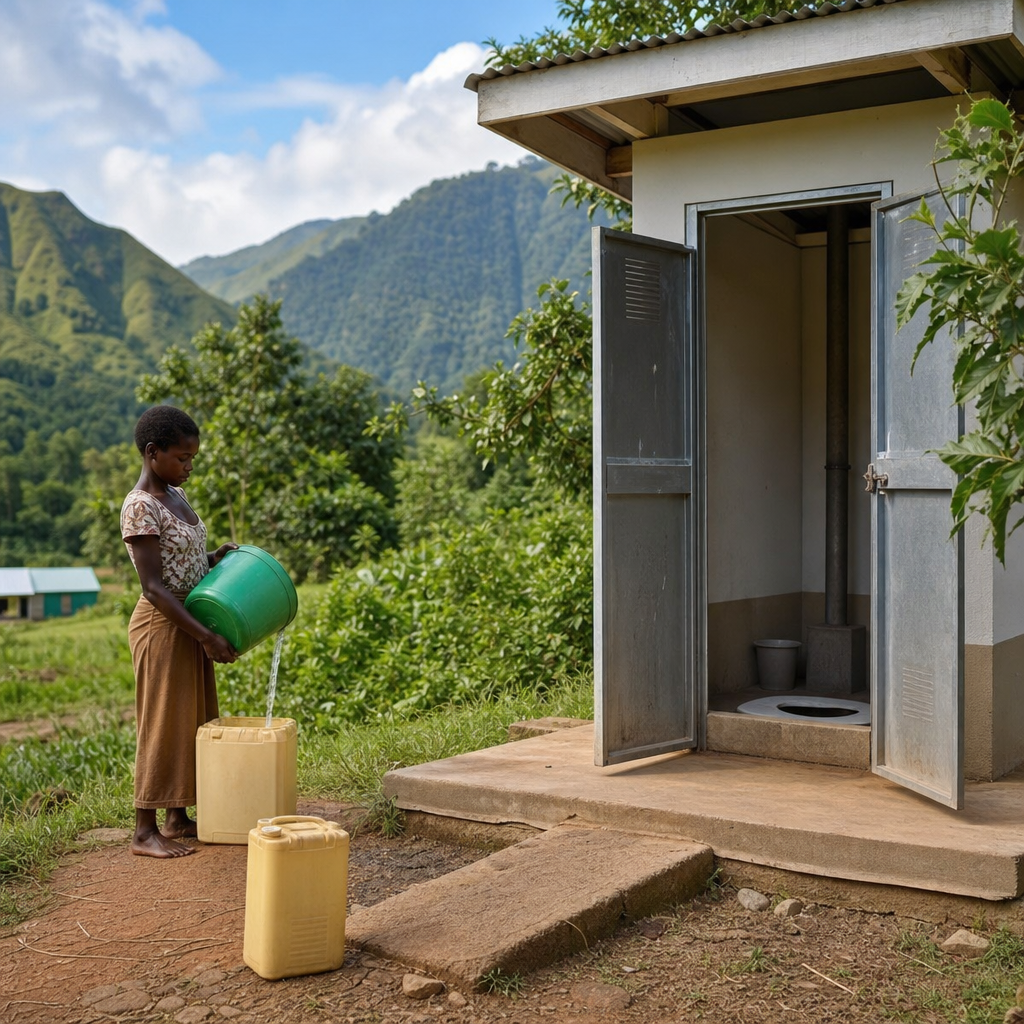
EcoSan and the economics of water security are inseparable because sanitation systems shape household budgets, public health costs, agricultural productivity, and the long-term value of water itself. EcoSan, short for ecological sanitation, refers to sanitation approaches that safely separate, treat, and reuse human excreta and wastewater as resources rather than waste. In practice, that often means urine-diverting dry toilets, dehydrating vault systems, composting designs, fecal sludge treatment linked to nutrient recovery, and greywater reuse where standards allow. Water security means reliable access to sufficient, safe water for health, livelihoods, ecosystems, and economic development. When sanitation captures nutrients, reduces contamination, and lowers demand for freshwater, it directly strengthens water security.
I have worked on sanitation business cases where the first conversation was about toilets, but the real decision driver was money: the cost of tanker water in dry months, the hospital bills from diarrheal disease, the energy burden of pumping sewage, and the value of fertilizer imported at volatile prices. That is why economic sustainability in EcoSan matters. It is not only about whether a toilet can be built cheaply. It is about whether the whole sanitation chain remains affordable, financeable, operable, and valuable over time. A system is economically sustainable when lifecycle costs are manageable, benefits are measurable, incentives are aligned, and institutions can maintain service without chronic subsidy dependence or environmental damage.
For this Economic Aspects hub, the goal is to explain how EcoSan creates economic value, where the costs really sit, which business models work, and what tradeoffs decision-makers must evaluate. This topic spans household economics, municipal finance, agricultural markets, climate resilience, and regulation. It also connects to related issues such as nutrient recovery, fecal sludge management, decentralized wastewater treatment, circular economy policy, tariff design, and water reuse standards. A strong understanding of economic sustainability in EcoSan helps utilities, city planners, NGOs, farmers, and investors choose systems that protect water resources while delivering durable financial returns and public benefits.
What Economic Sustainability Means in EcoSan
Economic sustainability in EcoSan is the ability of a sanitation system to deliver safe service and resource recovery at a cost structure that users, operators, and public institutions can support over its full life. That definition matters because many sanitation projects fail after construction. Capital expenditure is visible and politically attractive; operation and maintenance costs are less visible but decisive. In EcoSan, the cost profile differs from sewered systems. Water use is often lower, conveyance infrastructure is lighter, and treatment may be decentralized. However, collection logistics, user training, product quality control, monitoring, and market development for recovered outputs become more important.
In practical terms, I assess five variables first. The first is lifecycle cost: construction, operation, maintenance, emptying, transport, treatment, replacement, and compliance. The second is avoided cost: reduced water purchases, lower sewer loads, fewer disease outbreaks, and delayed capital expenditure on centralized treatment. The third is resource value: recovered nitrogen, phosphorus, organic matter, energy, or irrigation water. The fourth is risk: contamination, product rejection, seasonal demand swings, and weak institutional ownership. The fifth is distribution: who pays and who benefits. A household may bear toilet maintenance costs while a municipality captures health savings, or farmers may gain fertilizer value from a system financed by urban sanitation budgets. Sound economics requires aligning those flows.
Compared with conventional flush sanitation, EcoSan frequently improves economics in water-stressed settings because it reduces freshwater demand and avoids expensive sewer expansion. The World Bank and UNICEF have repeatedly shown that inadequate sanitation imposes large losses through health costs, lost productivity, and environmental degradation. In arid and peri-urban areas, every cubic meter of water not flushed into a sewer has economic value. The exact value depends on scarcity, pumping distance, treatment standards, and competing uses, but the principle is consistent: sanitation choices can either intensify water stress or relieve it.
Cost Structure, Lifecycle Analysis, and Financial Viability
The most common mistake in EcoSan appraisal is comparing only upfront construction costs. A urine-diverting dry toilet may cost more than a simple pit latrine in some markets, while costing far less than a sewer connection plus network extension. Neither comparison is useful without lifecycle analysis. The proper method is lifecycle costing, sometimes expressed through net present value, annualized cost, or levelized cost per user served. This framework discounts future costs and benefits and captures replacement cycles, maintenance intensity, transport frequency, treatment performance, and residual value from recovered products.
For households, the key questions are affordability and predictability. Does the system require regular purchase of cover material? How often do vaults need emptying? Are spare parts locally available? Does the design reduce water bills enough to offset maintenance? In cities where tanker water can cost several dollars per cubic meter during shortages, reduced flush demand can materially improve household resilience. For municipalities, viability depends on whether EcoSan lowers network expansion costs, reduces wastewater treatment loads, and cuts pollution entering rivers or shallow aquifers. Decentralized systems often avoid high capital lock-in, but they need strong service management and performance monitoring.
| Economic factor | Conventional sewered sanitation | EcoSan-oriented systems | Main implication for water security |
|---|---|---|---|
| Water use | High, especially with flush toilets | Low to very low in dry or source-separating designs | Preserves potable water and reduces dry-season demand |
| Infrastructure cost | Very high for networks and centralized treatment | Lower in decentralized settings, but service logistics matter | Can expand sanitation without overbuilding water-intensive assets |
| Nutrient recovery | Usually lost or expensive to recover later | Designed for direct or easier recovery | Supports agriculture while reducing water pollution |
| Operating complexity | Centralized technical complexity | Distributed operational and behavior-management complexity | Success depends on local capacity and service design |
| Financial return profile | Benefits often indirect and public | Mix of public benefits and potential product revenues | Enables blended finance and circular revenue models |
Financial viability improves when project teams separate revenue certainty from social benefit. Product sales from compost, dried sludge derivatives, urine-based fertilizers, or reclaimed water can help, but they rarely justify the whole system alone. The stronger business case usually combines user fees, municipal sanitation budgets, health savings, avoided infrastructure costs, and targeted public support for environmental benefits. In my experience, projects become more bankable when they stop overselling fertilizer revenue and instead present conservative demand assumptions, quality assurance protocols, and credible off-take agreements with farmers or landscaping companies.
Resource Recovery, Market Value, and the Circular Economy Case
EcoSan economics become especially compelling when resource recovery is treated as a disciplined market activity rather than a slogan. Human urine contains most of the nitrogen and a significant share of the phosphorus excreted by households, while fecal solids contribute organic matter and some nutrients after safe treatment. Recovering those materials can reduce dependence on synthetic fertilizers, whose prices are sensitive to natural gas markets, geopolitics, and import logistics. The fertilizer shock following the energy crisis in Europe made this vulnerability obvious to many agricultural buyers.
That said, recovered resources only have market value when they meet quality, safety, and convenience expectations. Farmers compare nutrient concentration, transport cost, pathogen risk, odor, handling characteristics, and crop response. A poorly stabilized product with inconsistent composition will not hold value even if its nutrient content looks good on paper. This is why standards and certification matter. WHO guidance on safe use of wastewater and excreta, ISO-aligned management practices, and national fertilizer regulations can either unlock markets or block them. Quality assurance, lab testing, and traceable treatment protocols are not bureaucratic extras; they are market infrastructure.
The circular economy case is strongest where water scarcity and fertilizer dependence intersect. For example, a peri-urban farming belt near a drought-prone city may benefit from reclaimed water for non-potable irrigation and sanitized nutrient products for soil fertility. The sanitation utility then creates two economic outputs: lower pollution loads in local waterways and reduced input costs for agriculture. The environmental gain has direct monetary significance. Less nitrogen and phosphorus entering lakes and rivers means lower eutrophication risk, fewer algal blooms, and potentially lower drinking water treatment costs downstream.
Still, not every EcoSan output should be monetized aggressively. Some benefits are best captured as avoided public expenditure rather than commercial sales. This is especially true where regulatory barriers, weak farmer trust, or fragmented supply chains make product markets thin. A realistic hub view of economic sustainability includes both monetized and non-monetized value.
Household, Utility, and Public Finance Perspectives
Different stakeholders experience EcoSan economics differently, and hub planning should make those perspectives explicit. Households care about total monthly burden, convenience, privacy, status, and reliability. A system that saves water but demands unpleasant manual handling may face resistance unless service providers manage collection professionally. Utilities focus on service coverage, compliance, asset utilization, and cost recovery. Governments care about health outcomes, environmental protection, social equity, and fiscal efficiency. Farmers and landscapers care about price, nutrient reliability, and application rules.
Because benefits and costs are fragmented, EcoSan often requires blended finance. Capital grants may support public health and environmental objectives, while user fees cover routine service and recovered products generate supplementary income. Results-based financing can work when there is reliable verification of usage, safe treatment, or nutrient recovery. Carbon finance may contribute in specific cases, particularly where systems reduce methane emissions from uncontrolled decomposition or lower energy use compared with conventional wastewater treatment. Development banks, climate funds, municipal bonds, and microfinance can all play roles, but only when project governance is strong.
Tariff design deserves special attention. Sanitation services fail when tariffs ignore ability to pay or conceal operating realities. Cross-subsidies may be justified, especially where wealthier water users impose higher system costs or where low-income communities face the highest disease burden. However, subsidies should support service outcomes, not dysfunctional hardware choices. In several projects I have reviewed, the best-performing model was a modest monthly service fee linked to scheduled collection, backed by municipal support for treatment and market development. That approach created accountability on both sides.
Risks, Tradeoffs, and Conditions for Long-Term Success
EcoSan is not automatically cheaper or better. It works best under clear conditions: water scarcity, expensive sewer expansion, suitable user engagement, viable service logistics, and enforceable health safeguards. The main risks are familiar. Poor user training can lead to contamination or system misuse. Weak collection services can turn a decentralized model into an unsafe one. Overestimating fertilizer demand can leave operators with unsold product. In dense informal settlements, space constraints and tenure insecurity may complicate installation. In wet climates, drying-based systems need careful design to maintain performance.
Long-term success depends on governance as much as engineering. Someone must own monitoring, maintenance standards, occupational safety, and end-use compliance. Municipalities need clear rules for licensing service providers, testing recovered products, and managing complaints. Data matters as well. A strong economic case uses measured figures on water savings, collection cost per household, pathogen reduction, crop yield response, and avoided treatment expenditure. Without data, advocates rely on generic claims, and financiers stay cautious.
The central lesson for this Economic Aspects hub is simple: economic sustainability in EcoSan comes from system design, not ideology. The best projects match technology to local water conditions, price services honestly, protect public health rigorously, and treat recovered resources as managed products with real quality requirements. When those elements align, EcoSan strengthens water security by reducing demand for freshwater, preventing pollution, and turning sanitation from a recurring liability into part of a resilient local resource economy. Use this hub to evaluate lifecycle costs, financing options, market pathways, and governance requirements before selecting a model for your community or portfolio.
Frequently Asked Questions
What is EcoSan, and why is it important to the economics of water security?
EcoSan, or ecological sanitation, is an approach to sanitation that treats human waste and wastewater as recoverable resources rather than as material to be flushed away and discarded. Instead of depending entirely on water-intensive sewer systems, EcoSan solutions often separate urine and feces at the source, reduce water use, and support safe treatment and reuse through systems such as urine-diverting dry toilets, composting toilets, dehydrating vaults, and fecal sludge treatment processes. This matters economically because sanitation choices directly influence how much water households, farms, utilities, and governments must secure, transport, treat, and pay for over time.
From a water security perspective, EcoSan can reduce pressure on freshwater supplies by minimizing the amount of clean water used for flushing and by lowering wastewater volumes that require costly treatment. In areas facing drought, rapid urban growth, aging infrastructure, or weak sewer coverage, that can translate into significant savings on both capital investment and operating costs. At the household level, lower water consumption can reduce monthly expenses. At the public level, better sanitation lowers disease burdens, which in turn reduces healthcare costs, missed school days, lost labor productivity, and emergency spending tied to outbreaks. When safely managed, EcoSan can also recover nutrients and organic matter that support agriculture, creating economic value from materials that would otherwise be treated only as waste. In that sense, EcoSan strengthens water security not just by conserving water, but by improving the overall efficiency and resilience of how societies manage sanitation, health, food production, and public finance.
How can EcoSan systems reduce the cost of sanitation and water infrastructure?
EcoSan can reduce sanitation and water infrastructure costs by changing the basic design assumptions of conventional systems. Traditional flush sanitation requires a continuous supply of clean water, extensive pipe networks, pumping stations, sewage transport, and centralized treatment plants. Those systems can work well in some settings, but they are expensive to build, maintain, and expand, especially in low-density rural communities, informal settlements, flood-prone areas, or cities growing faster than utility networks can keep up. EcoSan systems often use decentralized designs that reduce or avoid some of these major infrastructure requirements.
For example, urine-diverting dry toilets and composting systems can function with little or no flush water, which immediately lowers water demand. That means households and municipalities may spend less on water abstraction, distribution, and wastewater treatment. Decentralized treatment can also reduce the need for long sewer extensions into difficult terrain or underserved neighborhoods. In places where sewer installation costs are prohibitively high, EcoSan may offer a more affordable pathway to improved sanitation coverage. Operation and maintenance costs can also be more manageable when systems are designed for local conditions and serviced through community-scale or small-enterprise models rather than through large centralized utilities alone.
There is also an important long-term financial dimension. Conventional infrastructure often carries hidden costs: leak repairs, energy-intensive pumping, treatment plant upgrades, stormwater infiltration problems, and environmental cleanup when untreated sewage contaminates rivers or aquifers. EcoSan systems, when properly designed and monitored, can lower these risks by reducing wastewater generation and improving source separation. The result is not simply cheaper toilets, but potentially lower lifetime system costs and more flexible investment strategies. For policymakers and planners, that makes EcoSan an important option in portfolios aimed at expanding sanitation while protecting scarce water resources and containing future infrastructure liabilities.
What are the public health and economic benefits of linking EcoSan to water security strategies?
Linking EcoSan to water security strategies delivers both health and economic benefits because sanitation and water are tightly connected. Poor sanitation contaminates water sources, spreads pathogens, and increases the incidence of diarrheal disease, parasitic infections, and other illnesses that undermine household welfare and national productivity. When communities do not have safe systems for containing and treating excreta, the cost is felt everywhere: in higher medical bills, lower worker output, reduced school attendance, child stunting, and rising pressure on already strained public health systems.
EcoSan helps address these issues by improving containment, encouraging safer treatment pathways, and reducing direct contamination of surface water and groundwater. Because many EcoSan systems use far less water than conventional flush systems, they also support more efficient allocation of potable water for drinking, cooking, hygiene, and productive uses. That becomes especially important during droughts, service interruptions, or in regions where households already spend a high share of income securing water from vendors or distant sources. Better sanitation can therefore protect health while making scarce water resources go further.
The economic payoff can be substantial. Fewer waterborne illnesses mean lower out-of-pocket healthcare spending for families and lower treatment costs for clinics and hospitals. Adults lose fewer workdays, children miss fewer classes, and caregivers spend less time responding to preventable illness. Communities with safer sanitation and more reliable water management are also more attractive for investment, tourism, and local business activity. In many contexts, the value of these avoided losses exceeds the upfront cost of improved sanitation. That is why EcoSan is increasingly seen not only as an environmental or engineering intervention, but as a practical economic strategy that strengthens resilience, lowers vulnerability, and improves the return on investments in water security.
Can EcoSan create economic value through resource recovery and agriculture?
Yes, one of the defining advantages of EcoSan is that it can create economic value by recovering nutrients, water, and organic matter from sanitation systems and returning them to productive use. Human urine contains significant amounts of nitrogen, phosphorus, and potassium, while treated fecal matter and composted organic material can contribute soil-conditioning benefits. In conventional sanitation, these resources are often diluted with water and treated as disposal problems. EcoSan aims to separate and process them safely so they can support agriculture, landscaping, forestry, or soil restoration, depending on local regulations and treatment standards.
This resource recovery can matter a great deal in economic terms. Fertilizer prices are volatile in many regions, and smallholder farmers are often exposed to high input costs that limit yields and profitability. Where safe reuse systems are established, nutrient recovery can reduce dependence on imported or expensive chemical fertilizers, improve soil health, and strengthen local circular economies. In water-scarce regions, treated wastewater or greywater reuse can also support irrigation or non-potable applications, helping preserve freshwater supplies for higher-value uses. The result is a broader definition of sanitation value: instead of paying only for waste removal, communities may gain agricultural inputs, reduced disposal costs, and improved land productivity.
That said, the economic benefits depend on proper treatment, user acceptance, quality control, logistics, and supportive policy frameworks. Resource recovery is not automatic. It requires training, monitoring, and a strong emphasis on safety to prevent pathogen exposure and maintain public trust. But when those conditions are in place, EcoSan can transform sanitation from a recurring cost center into a system with measurable returns. That is especially relevant for water security, because it helps societies extract more value from limited resources while reducing pollution and supporting more resilient food and water systems.
What challenges affect the economic success of EcoSan projects, and how can they be addressed?
EcoSan offers strong potential, but its economic success depends on how well projects address technical, social, regulatory, and operational challenges. One of the biggest issues is that the cheapest option upfront is not always the most effective or sustainable over time. Poorly designed systems, weak maintenance plans, limited user training, or inconsistent collection and treatment services can undermine performance and increase costs later. In some places, households may resist unfamiliar toilet designs, especially if they perceive them as less convenient, less private, or harder to maintain than flush systems. These social factors matter just as much as engineering decisions because adoption and correct use determine whether the expected economic and water-saving benefits are actually realized.
Another challenge is the need for safe, well-regulated treatment and reuse. If fecal sludge, urine, or compost products are not properly managed, public health risks can rise and public confidence can collapse. Markets for recovered nutrients may also be underdeveloped, making it harder to capture the full economic value of resource recovery. Financing can be a barrier as well, especially for low-income households that may benefit from EcoSan in the long run but cannot absorb upfront installation costs without subsidies, credit, or public support. In urban settings, the absence of coordinated service chains for emptying, transport, treatment, and reuse can limit scale and cost-effectiveness.
These challenges can be addressed through thoughtful program design. Successful EcoSan initiatives usually combine appropriate technology selection with strong community engagement, clear maintenance responsibilities, user education, and institutional support. Governments and development partners can help by creating standards for safe reuse, supporting pilots that generate local evidence, training service providers, and designing financing mechanisms that reduce entry barriers. Economic evaluation should also be broad enough to include avoided health costs, water savings, environmental protection, and agricultural benefits rather than focusing only on installation price. When planners take a full life-cycle and systems-based view, EcoSan often becomes much more competitive. In other words, the economics improve when EcoSan is treated not as a standalone toilet technology, but as part of an integrated strategy for sanitation, water security, public health, and resource efficiency.