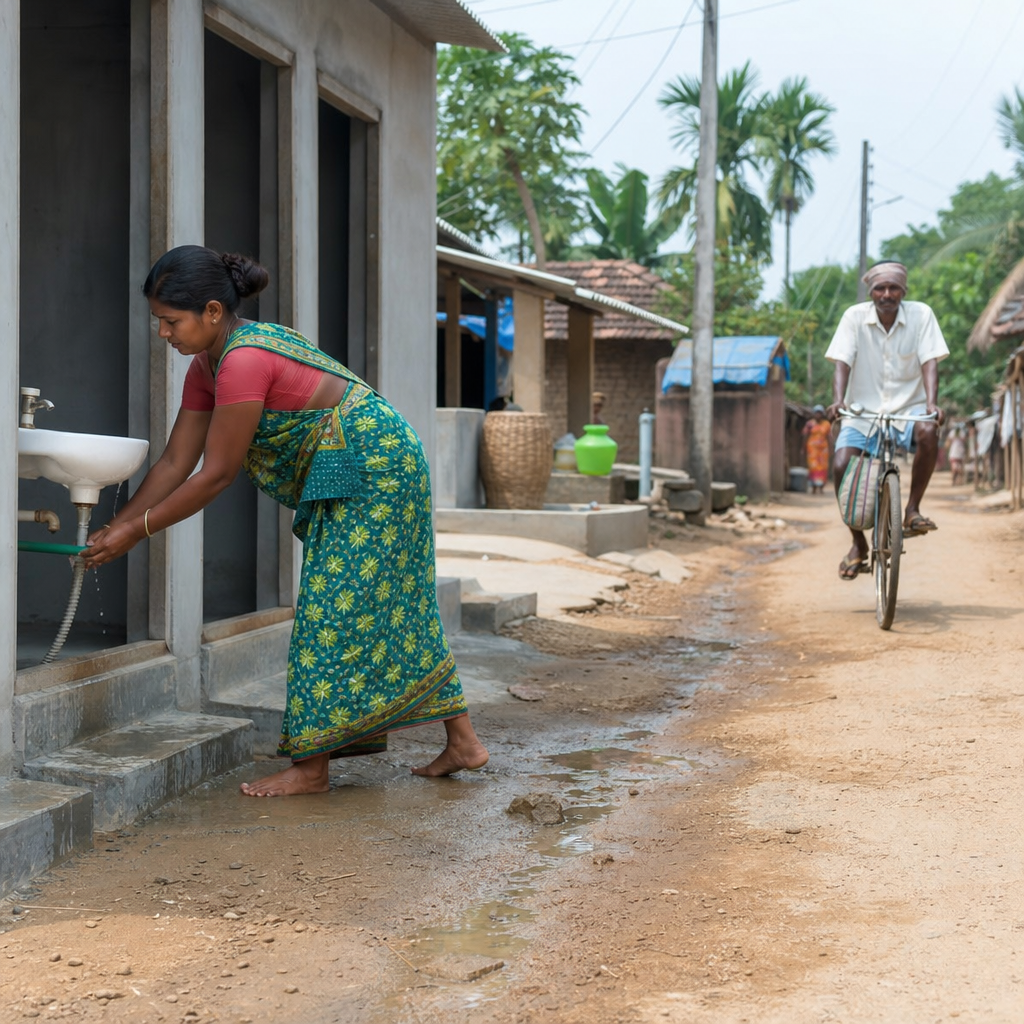
Sanitation and the informal economy are tightly linked because millions of households, workers, and small enterprises rely on systems that sit outside formal sewer networks, public payrolls, and regulated waste services. In this context, the informal economy includes unregistered pit emptiers, neighborhood toilet operators, waste pickers, compost sellers, and small builders who install toilets or urine-diverting systems for cash. EcoSan, short for ecological sanitation, refers to sanitation approaches that safely separate, treat, and reuse nutrients, water, and organic matter, often through composting toilets, urine diversion, container-based services, and fecal sludge processing. Financing and investing in EcoSan matters because sanitation failures reduce productivity, raise health costs, and limit business activity, while well-designed systems can create jobs, recover resources, and improve urban resilience. I have seen this most clearly in settlements where formal sewer expansion was decades away, yet local operators were already moving sludge, repairing toilets, and selling agricultural inputs with no access to affordable finance. The hub issue is not simply whether EcoSan works technically. The practical question is how households, municipalities, lenders, donors, and entrepreneurs can pay for systems that deliver safe service, fair returns, and measurable public value.
That question matters across low-income urban neighborhoods, secondary towns, climate-stressed rural areas, refugee settings, and peri-urban farming belts. Conventional sanitation finance usually assumes large capital projects, centralized utilities, and long depreciation schedules. EcoSan finance is different. Costs are distributed across toilet hardware, collection logistics, treatment sites, behavior change, maintenance, regulation, and end-use market development. Revenue may come from user fees, service contracts, tipping fees, compost sales, carbon benefits, or public subsidies tied to health outcomes. Because the informal economy is already providing much of the labor and market access, investment decisions must account for cash income volatility, insecure land tenure, low collateral, and fragmented demand. A successful financing model therefore blends infrastructure finance with microfinance, enterprise working capital, output-based subsidies, and risk-sharing. When done well, EcoSan becomes more than a sanitation intervention. It becomes a local economic system that formal institutions can strengthen rather than displace, creating safer jobs, lower disease burdens, and productive reuse of materials that were previously treated only as waste.
How sanitation shapes informal livelihoods and local markets
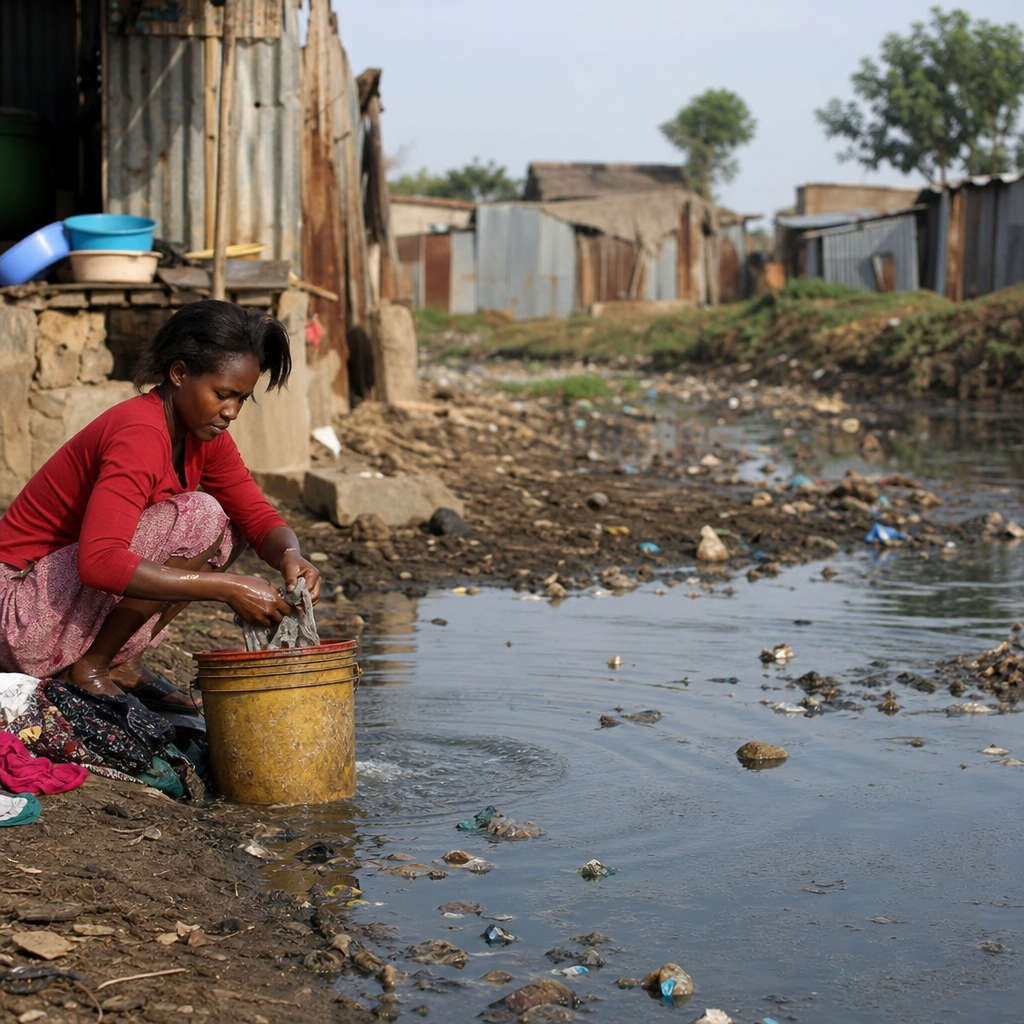
Sanitation affects the informal economy through time, health, mobility, and market access. When toilets are absent or unsafe, workers lose hours finding facilities, caregivers miss shifts because children are sick, and vendors operate in environments that discourage customers. The World Bank has long estimated that poor sanitation imposes large economic losses in many countries through health expenditure, premature death, reduced tourism, and lower productivity. At the neighborhood level, the losses are visible in simpler terms: food sellers close early because nearby drains overflow, landlords struggle to attract tenants, and transport workers avoid areas with unusable public toilets. Informal sanitation workers also bear hidden costs. Manual pit emptiers often pay out of pocket for gloves, fuel, and repairs, while facing seasonal demand swings and legal uncertainty.
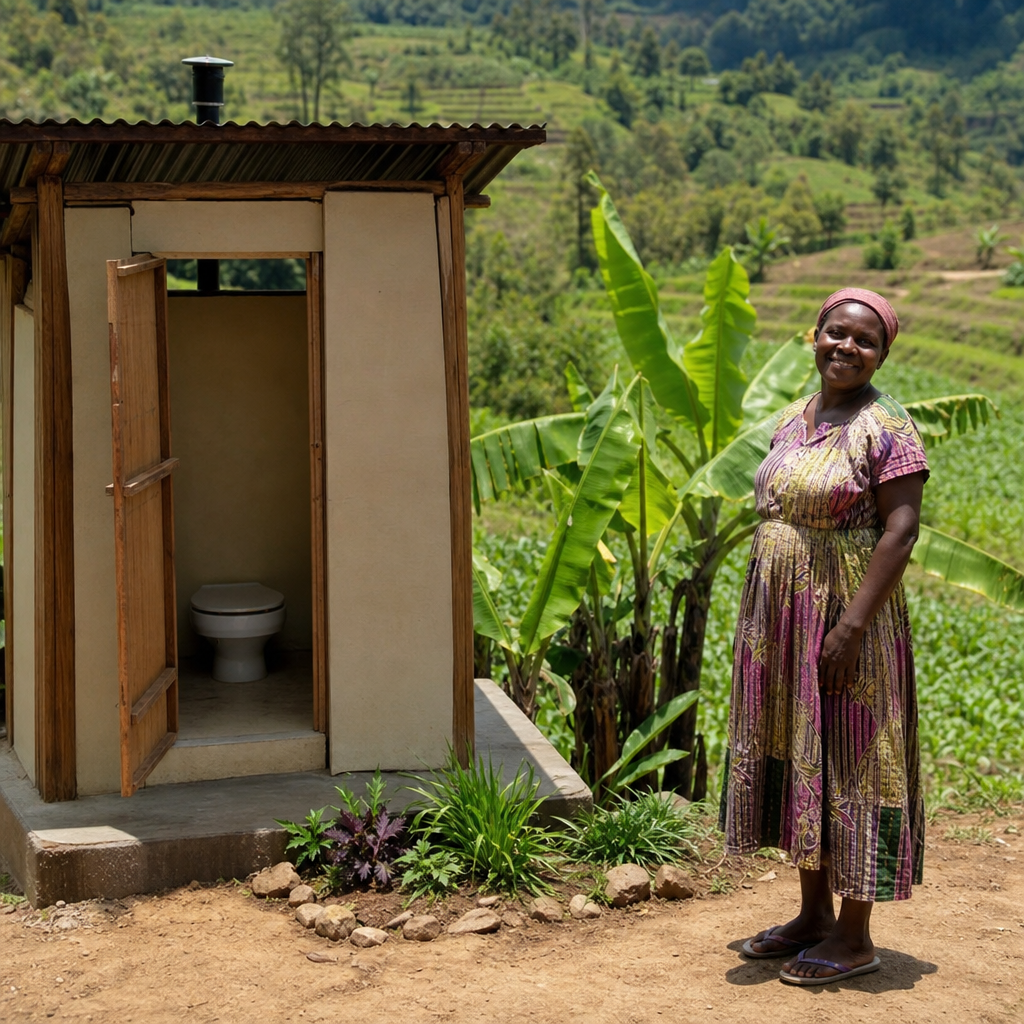
EcoSan changes these incentives by treating sanitation as a service chain and a resource chain. A urine-diverting dry toilet can reduce water use where piped supply is unreliable. Container-based sanitation can serve dense settlements where vacuum trucks cannot enter. Fecal sludge drying, composting, black soldier fly processing, or co-composting with organic solid waste can create products for agriculture or landscaping if standards, quality control, and distribution are managed carefully. In cities such as Durban, Kampala, and Nairobi, the lesson from multiple pilots and enterprises has been consistent: the toilet alone is not the business. The business is the reliable movement of materials, the quality of treatment, and the credibility of end products. Investors who miss that systems view underestimate operating costs and overestimate quick profitability.
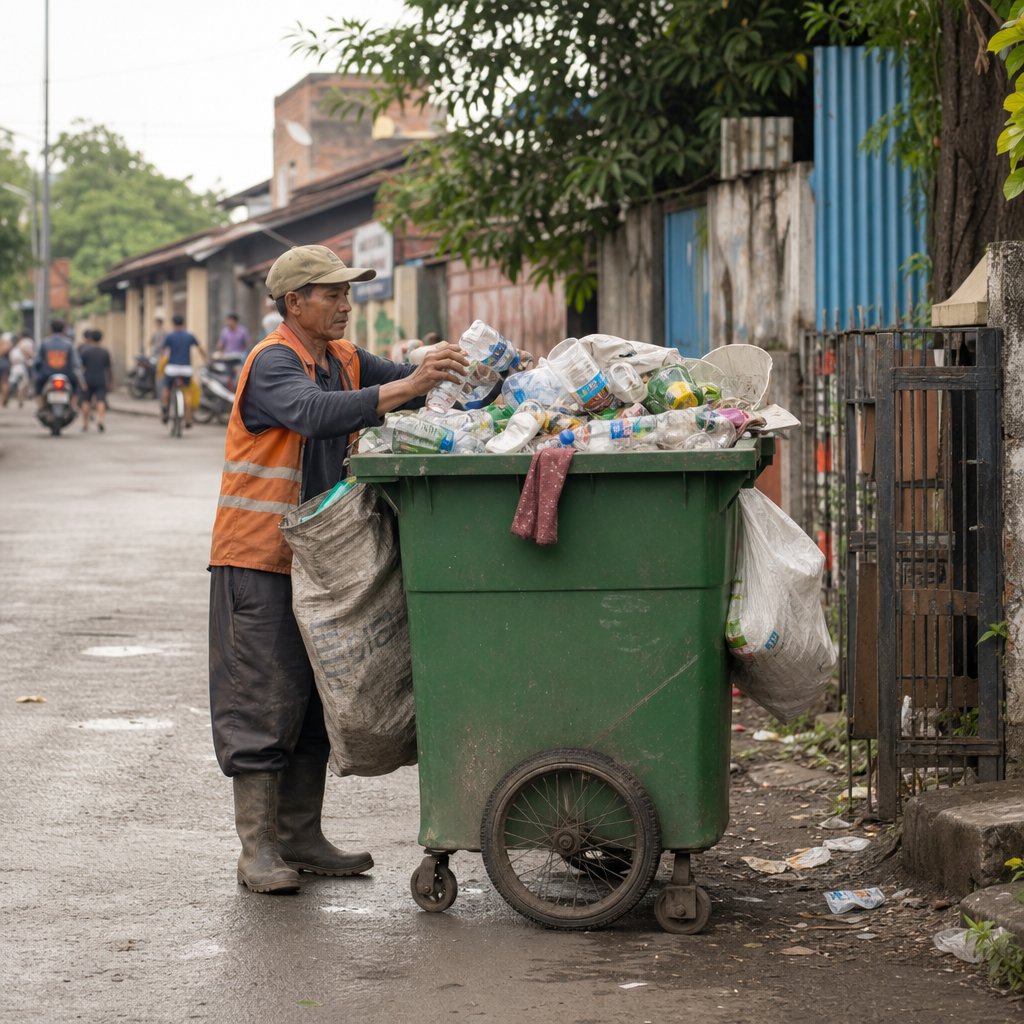
The informal economy often provides the missing last mile. Local masons adapt toilet designs to difficult plots. Youth groups run cleaning and collection services. Waste pickers and organic waste aggregators can supply co-composting feedstock. Small agro-dealers introduce compost products to farmers who would never buy directly from a treatment plant. Yet these actors are frequently excluded from procurement, formal credit, insurance, and municipal planning. Financing strategies that ignore them tend to fail because collection routes break down, customer acquisition stalls, or treatment plants run below capacity. The strongest projects map every actor in the chain, identify who carries which cost, and decide which functions should be subsidized as public health goods and which can support commercial returns.
What financing and investing in EcoSan actually involves
Financing EcoSan means structuring capital and revenue across four layers: household access, enterprise operations, treatment infrastructure, and public oversight. Household finance covers toilet purchase, upgrades, connection alternatives, and recurring service fees. Enterprise finance covers vehicles, containers, payroll, digital payment systems, and working capital for route operations. Infrastructure finance covers land, buildings, drying beds, composting platforms, urine storage, safety equipment, and laboratory testing. Public finance covers regulation, inspections, hygiene promotion, and targeted subsidies for vulnerable users. These layers move on different timelines. A household may need a twelve-month loan for a toilet. A sanitation enterprise may need a revolving facility to bridge customer payments. A treatment plant may need patient capital over seven to ten years.
Investing in EcoSan requires clarity about what kind of return is realistic. Some components can be commercially viable. Regular collection services with dense routes and digital billing can generate steady cash flow. Compost sales can contribute revenue where nearby agriculture exists and transport distances are short. Carbon or climate-linked finance may become relevant where methane avoidance or nutrient recovery is verified. Other components, especially behavior change, enforcement, service to the poorest households, and disease prevention benefits, justify public or philanthropic funding because the returns are social rather than private. In practice, most scalable EcoSan models are blended. They combine grants or concessional debt for public-good functions with commercial discipline in service delivery.
| Finance need | Typical instrument | Best use case | Main risk |
|---|---|---|---|
| Household toilet purchase | Microloan or pay-as-you-go plan | Low-income customers with predictable cash flow | Default during income shocks |
| Startup collection service | Working capital loan | Early route expansion and container inventory | Weak billing and low route density |
| Treatment facility construction | Concessional debt plus grant | Shared infrastructure with public health value | Underused capacity and land delays |
| Service for vulnerable households | Output-based subsidy | Payments tied to verified service delivery | Poor verification systems |
| Reuse product market development | Catalytic grant | Testing, certification, and farmer demonstrations | Slow customer adoption |
For this hub topic, the central principle is simple: match each sanitation activity to the right source of capital. Do not force short-term commercial debt onto long-payback infrastructure. Do not expect compost sales alone to fund universal access. Do not subsidize functions that a well-run operator can sustain through user fees. Good EcoSan finance is allocation, not ideology.
Business models, revenue streams, and investor expectations
EcoSan business models generally fall into three categories: product-led, service-led, and platform-led. Product-led models sell toilet units, urine-diversion hardware, or retrofit kits through dealers, masons, or NGOs. Service-led models earn recurring income from container exchange, pit emptying, toilet maintenance, cleaning, and sludge transport. Platform-led models coordinate multiple functions, such as digital bookings, franchise management, treatment, and sale of reuse products. Most successful operators combine at least two categories because one-time hardware margins rarely cover customer support and recurring service costs. I have found that investors understand this faster when unit economics are presented route by route and product by product rather than as a single blended margin.
User fees are the foundation of financial discipline, but pricing must reflect local realities. Daily public toilet fees may work in transport hubs, while monthly subscriptions suit container-based sanitation in dense informal settlements. In farming zones, seasonal payment schedules can align with harvest income. Cross-subsidy also matters. Higher-volume commercial customers, landlords, schools, or markets can help stabilize cash flow and support lower-income residential users. Tipping fees from municipalities or private haulers can improve treatment plant viability if contracts are enforceable. Resource recovery adds upside, but it should be modeled conservatively. Compost markets depend on moisture content, pathogen reduction, packaging, transport cost, and farmer trust. Urine-derived fertilizer can be valuable, but storage, acceptance, and regulations often slow commercialization.
Investor expectations should reflect infrastructure-like realities rather than software-style growth assumptions. Collection fleets depreciate. Containers must be replaced. Customer education is ongoing. Public approvals take time. Even well-executed businesses may require phased investment, where grant-funded pilots establish demand, seed equity builds systems, and debt arrives only after collections, churn, route density, and treatment throughput are proven. Development finance institutions, impact funds, municipal facilities, and local banks each play different roles. The best capital stack is the one that lets the operator survive the boring years of execution, because sanitation wins through consistency, not speed.
Risk, regulation, and due diligence for EcoSan investments
Sanitation investment fails most often when risk is treated as purely financial. In reality, operational, regulatory, land, and social risks are equally material. Due diligence should begin with containment quality, collection frequency, treatment process validation, occupational safety, and end-use compliance. Standards from the World Health Organization, ISO 30500 for non-sewered sanitation systems, and local environmental and fertilizer regulations provide useful benchmarks. A composting operation without temperature logs, pathogen testing, and runoff controls is not investable, no matter how attractive the demand forecast looks. Likewise, a container-based service without disciplined customer data, route planning, and replacement inventory will struggle to retain users.
Regulation can enable or block EcoSan. Clear licensing for emptiers, safe disposal points, land-use approvals for treatment sites, and product standards for compost or soil conditioners reduce uncertainty and lower the cost of capital. Ambiguity does the opposite. I have seen entrepreneurs invest in processing equipment only to discover that no agency had authority to approve the final product for agricultural use. That kind of regulatory gap traps value in the middle of the chain. Municipalities can reduce the problem by publishing service standards, integrating non-sewered sanitation into citywide inclusive sanitation plans, and using contracts that pay for verified outcomes such as safe emptying, transport, and treatment.
Social acceptance is another core risk. Households may resist urine separation if instructions are unclear. Farmers may hesitate to buy recovered products without field trials and visible quality assurance. Workers may avoid formalization if licensing raises fees but not earnings. Good investors therefore examine training systems, customer education materials, grievance channels, and partnerships with trusted community groups. Due diligence in EcoSan is not only about spreadsheets. It is about whether the operator can move a sensitive service through a complicated social environment without cutting corners on safety.
Building an investable EcoSan ecosystem that includes informal workers
EcoSan scales when cities and funders build ecosystems, not isolated pilots. That means supporting the full sanitation value chain: design standards, consumer finance, enterprise incubation, treatment infrastructure, quality testing, offtake development, and data systems. Informal workers must be included deliberately. Formalization should add protection, training, and market access rather than simply adding penalties. Practical measures include licensing pit emptiers at low cost, linking them to disposal vouchers, organizing savings groups for equipment purchases, and offering contracts that reward safe delivery to treatment sites. Digital tools such as mobile payments, customer management apps, and GPS-linked service verification can improve collections and accountability, but only if they fit worker literacy, device access, and network conditions.
For policymakers, the strongest opportunity is to treat EcoSan as productive urban infrastructure. Public funds can de-risk land acquisition, laboratories, and trunk treatment assets while leaving room for private and community operators in customer-facing services. For lenders, the opportunity is specialized underwriting based on route density, repeat purchase behavior, school or market contracts, and disposal access instead of generic small-business templates. For donors and impact investors, the opportunity is catalytic capital tied to clear milestones: verified households served, safe treatment volumes, worker safety compliance, and offtake agreements with farmers or landscapers. For enterprises, the opportunity is disciplined execution around one service area before expansion.
The economic case is strongest when sanitation is measured beyond toilet counts. Track avoided medical expense, reduced flood blockage from better waste management, time saved, school attendance, worker income stability, and fertilizer substitution value. Those indicators help justify blended finance and reveal why EcoSan belongs at the center of economic development planning, not at the margins. If you are building this subtopic strategy, start with the value chain, map who pays and who benefits, then structure finance to close the gaps. That is how sanitation and the informal economy become a source of opportunity rather than a cycle of unmanaged risk.
Frequently Asked Questions
1. How are sanitation and the informal economy connected?
Sanitation and the informal economy are closely connected because a large share of sanitation access, maintenance, and waste handling in low-income and underserved areas happens outside formal public systems. In many communities, households are not connected to sewer networks, municipal collection is irregular or absent, and formal service providers do not reach dense informal settlements or peri-urban neighborhoods. As a result, everyday sanitation depends on unregistered or semi-formal workers such as pit emptiers, shared toilet attendants, drain cleaners, waste pickers, toilet builders, and transporters who operate for cash and often without contracts, permits, or legal protections.
These workers fill critical service gaps. They help families empty pits when tanks overflow, keep public or neighborhood toilets functioning, recover reusable materials, and build low-cost sanitation options where formal construction firms are too expensive or unwilling to work. Small enterprises may also sell compost, urine-based fertilizer, or reused materials linked to ecological sanitation systems. In practical terms, this means sanitation is not just a public health issue; it is also a livelihood system supporting millions of workers and microbusinesses.
The connection also has a downside. Because these activities often happen informally, workers may face unsafe conditions, low and unstable incomes, social stigma, and exclusion from finance, training, insurance, and regulation. Households can also be left with uneven service quality and limited accountability. Understanding sanitation through the lens of the informal economy helps policymakers and development organizations see both realities at once: informal sanitation work is indispensable, but it is too often unsupported and undervalued.
2. Who are the main informal workers and businesses involved in sanitation?
The informal sanitation economy includes a wide range of people whose work is essential but frequently overlooked. One major group is pit emptiers and septic tank cleaners who manually or mechanically remove fecal sludge from pits, tanks, and containment systems in places without sewer connections. Another important group is neighborhood or pay-per-use toilet operators who manage shared facilities, collect user fees, purchase cleaning supplies, and keep toilets open in crowded areas where private household toilets are not feasible.
It also includes small builders, masons, and local installers who construct household toilets, retrofit pit latrines, install urine-diverting systems, or adapt facilities to tight plots and difficult ground conditions. In some markets, waste pickers and transporters recover solid waste from sanitation-adjacent environments such as dumps, drains, and treatment areas. Compost sellers, soil amendment traders, and small agricultural suppliers may participate when treated organic matter or nutrient products are reused. Informal vendors may also sell toilet parts, slabs, containers, handwashing stations, and cleaning products through neighborhood supply chains.
What ties these actors together is that they usually work with limited capital, little formal recognition, and high exposure to risk. Many learn through practice rather than certification. Their businesses are often flexible, local, and highly responsive to community demand, which is why they persist even when formal systems exist. For article readers, the key point is that sanitation is supported by an ecosystem of small-scale labor and enterprise, not just by utilities and government agencies.
3. What are the biggest sanitation challenges faced by informal workers and communities?
The biggest challenges are usually a mix of health risks, infrastructure gaps, legal uncertainty, and economic insecurity. Informal sanitation workers often handle human waste with inadequate protective equipment, limited access to mechanized tools, and little occupational safety training. Exposure to pathogens, chemicals, sharp materials, and hazardous gases can lead to serious short- and long-term health problems. Manual emptying in cramped or flooded areas is especially dangerous, yet it remains common where roads are too narrow for trucks or where equipment is unaffordable.
Communities face their own challenges. In many informal settlements, toilets are insufficient in number, poorly maintained, unsafe for women and girls at night, or difficult for older adults and people with disabilities to use. Shared facilities may become overcrowded, while pit emptying services can be delayed or unaffordable. Without reliable sludge transport and treatment, waste may be dumped into drains, waterways, vacant land, or open areas, creating broader environmental contamination and disease risk.
Another major problem is exclusion from formal systems. Informal workers may be penalized by regulation but not supported with licensing pathways, credit, equipment, or training. Small sanitation businesses often struggle to access loans, land, storage space, and legal contracts. At the same time, households in informal neighborhoods may lack land tenure or official addresses, making it harder to receive public investment. This combination of weak infrastructure and weak institutional recognition keeps both workers and residents trapped in low-service, high-risk conditions. Addressing sanitation challenges therefore requires more than toilets alone; it requires better labor conditions, service chains, financing, and inclusive urban planning.
4. What opportunities does EcoSan create within the informal economy?
EcoSan, or ecological sanitation, creates opportunities because it treats human waste not only as something to dispose of, but also as a resource that can be safely transformed and reused. Depending on the system design, EcoSan approaches may separate urine and feces, reduce water use, support composting, and enable nutrient recovery. This can open new roles for small-scale entrepreneurs who build urine-diverting toilets, collect and transport separated waste streams, process composted material, produce soil inputs, and distribute recovered products to farmers, landscapers, or urban growers.
For the informal economy, this can be especially important in places where sewer expansion is slow, water is scarce, and land or income constraints make conventional sanitation difficult. EcoSan systems can sometimes be deployed at household or community scale with lower infrastructure requirements than centralized sewerage. That creates room for local enterprise, from construction and maintenance to product sales and user education. Neighborhood-based operators may be able to earn income by maintaining facilities, managing collection cycles, and supplying reuse markets if quality and safety standards are in place.
That said, the opportunity is not automatic. EcoSan only delivers real benefits when systems are designed well, users are trained, maintenance is consistent, and treatment is sufficient to protect health. Markets for compost or urine-derived inputs must also be trusted and viable. If products are poorly processed or socially unacceptable, the business case weakens. The strongest opportunity comes when public agencies, NGOs, and private actors help informal workers upgrade skills, improve safety, access equipment, and connect to formal value chains. In that setting, EcoSan can support both better sanitation outcomes and more resilient livelihoods.
5. How can governments and organizations improve sanitation while supporting informal livelihoods?
The most effective approach is not to ignore or criminalize informal sanitation work, but to improve it step by step. Governments and organizations can start by recognizing that informal workers already provide essential public services. Once that reality is acknowledged, policies can focus on safer, cleaner, and more accountable service delivery. Practical measures include training pit emptiers and toilet operators, expanding access to protective gear and mechanized emptying tools, creating affordable licensing systems, and setting realistic service standards that small operators can meet.
Financial support is also crucial. Many sanitation microenterprises need working capital to buy pumps, carts, storage containers, cleaning supplies, or construction materials. Targeted loans, grants, guarantee schemes, and results-based subsidies can help them upgrade. Cities can designate disposal points, transfer stations, and treatment facilities so workers have legal, safe places to take waste. Procurement and contracting can also be made more inclusive by allowing cooperatives, neighborhood associations, and small service providers to participate in sanitation programs rather than limiting opportunities to large firms.
On the community side, improvement strategies should include toilet access, maintenance plans, user education, and attention to gender, safety, and accessibility. For EcoSan and reuse-based models, governments and NGOs can support product standards, monitoring, and public awareness so recovered resources are trusted and safely used. The broader goal is formalization without displacement: bringing workers into safer and more regulated systems without destroying the livelihoods that currently keep sanitation functioning. When done well, this approach strengthens public health, protects the environment, and creates a more inclusive sanitation economy.