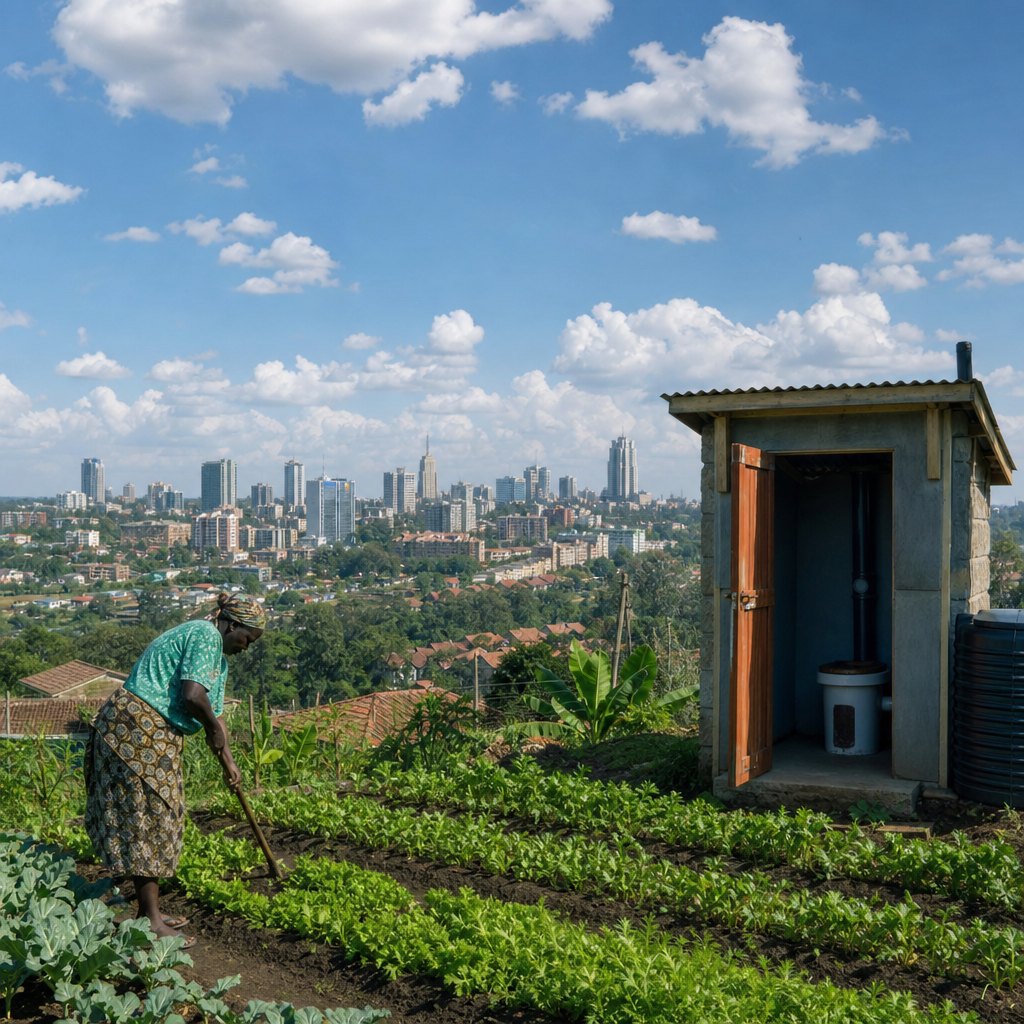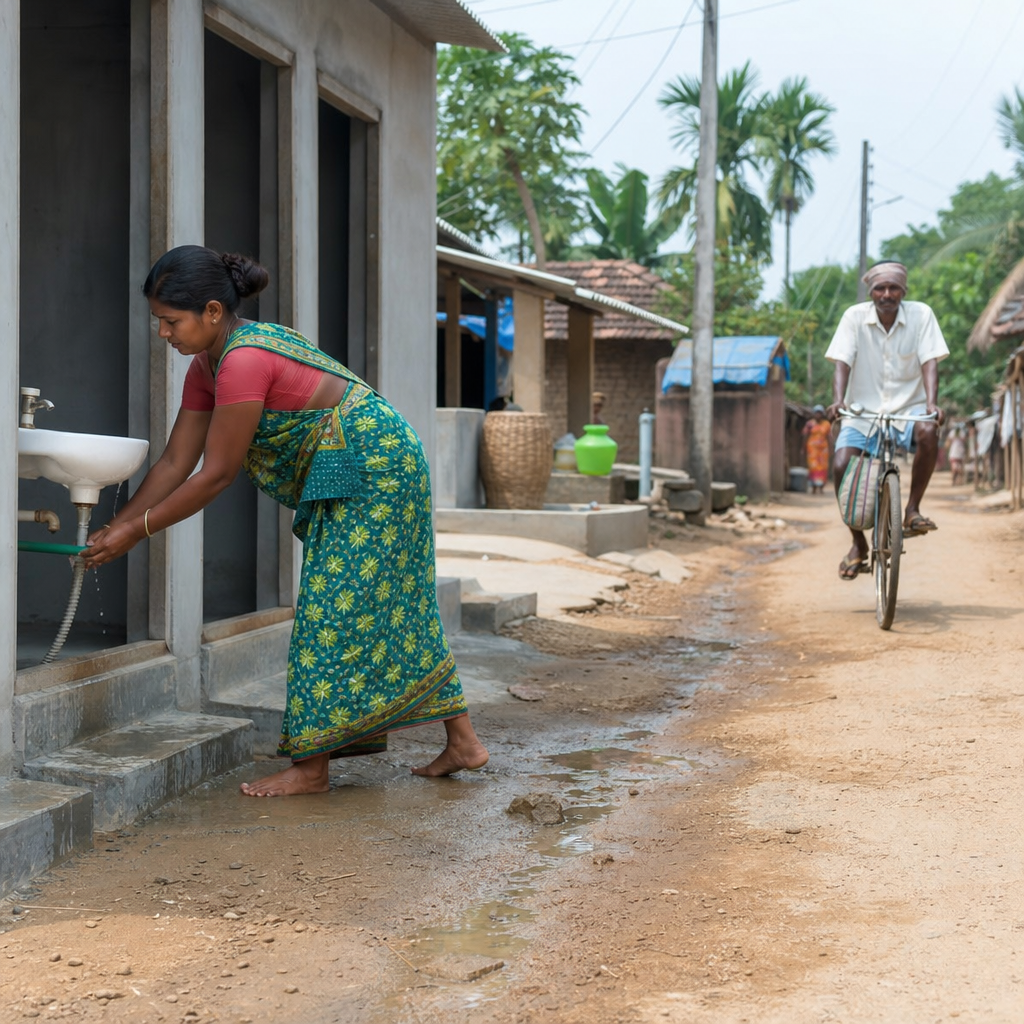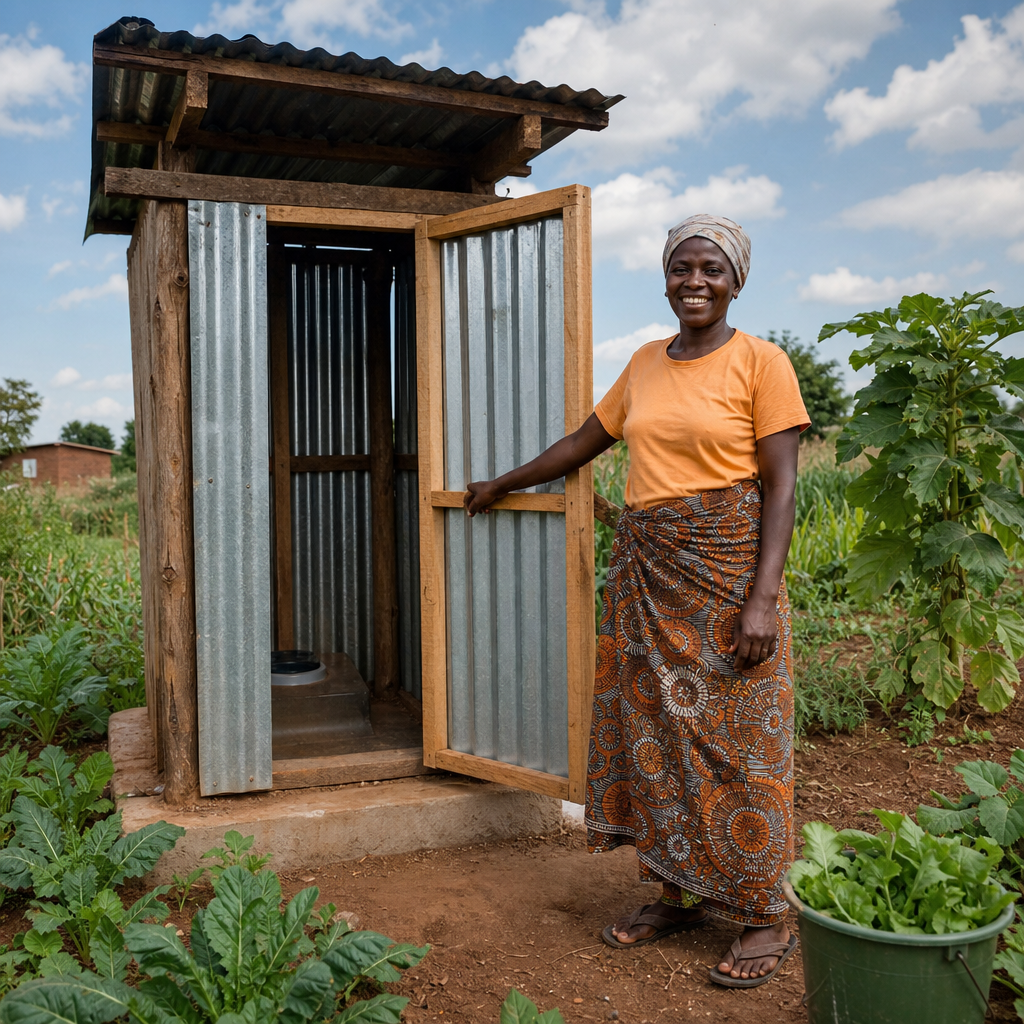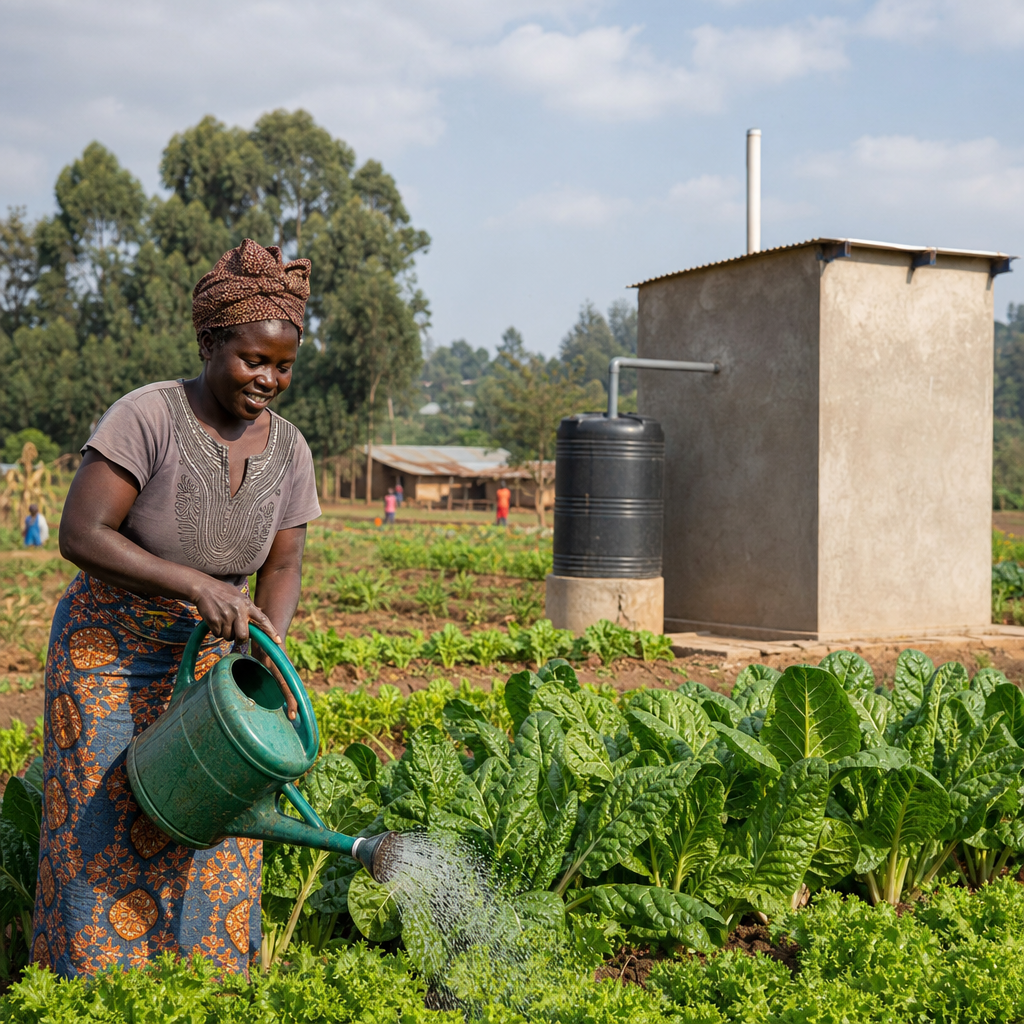
Ecological sanitation is often discussed as a public health or environmental intervention, but in farming communities its economic impacts are just as significant. At its core, ecological sanitation, often shortened to EcoSan, is a system that treats human excreta and household wastewater as resources rather than waste. Instead of relying only on sewer networks or pit latrines that isolate nutrients from agriculture, EcoSan systems recover nitrogen, phosphorus, potassium, organic matter, and water for productive use. For rural households that depend on soils, crops, and cash flow from seasonal harvests, that change affects farm budgets, fertilizer purchases, yields, labor allocation, and long-term resilience.
When I have worked with rural sanitation and agricultural livelihood projects, the financial question has always arrived before the technical one: who pays, who saves, who earns, and when. Farmers rarely reject ecological sanitation because they dislike nutrient recovery in principle. They hesitate because the initial costs are visible now, while many benefits accumulate later through lower fertilizer spending, better soil structure, reduced disease burden, fewer lost workdays, and in some cases new income from compost, urine-based fertilizer products, or service enterprises. Financing and investing in EcoSan therefore cannot be treated as an afterthought. It is the central mechanism that determines adoption.
For farming communities, EcoSan financing includes household savings, microcredit, rotating savings groups, government subsidies, nongovernmental grants, climate and development finance, private investment in sanitation enterprises, and blended models that combine several sources. Investing in EcoSan means more than funding toilets. It includes the full value chain: collection, storage, treatment, transport, application equipment, training, quality assurance, market development for reuse products, and monitoring for safety. A farming community may install urine-diverting dry toilets, composting toilets, biogas digesters, or decentralized wastewater reuse systems, but the economic logic is similar. Capital expenditure must be matched to local demand, operating costs must remain manageable, and resource recovery must create measurable value.
This matters because agriculture faces tightening margins worldwide. The Food and Agriculture Organization has repeatedly highlighted soil degradation, nutrient depletion, and fertilizer price volatility as major constraints on smallholder profitability. At the same time, sanitation gaps remain severe in many rural regions, imposing hidden economic losses through illness, water contamination, and time spent managing unsafe systems. EcoSan sits at the intersection of these pressures. Done well, it turns a sanitation cost center into a productive asset. Done poorly, it becomes an underused facility with no market linkage, weak maintenance, and low repayment capacity. Understanding the economics helps communities, cooperatives, investors, and policymakers back systems that are practical, bankable, and durable.
Why EcoSan changes farm economics
The clearest economic effect of ecological sanitation is nutrient substitution. Human urine contains most of the nitrogen and a substantial share of the phosphorus and potassium excreted by households. Properly stored and applied, it can replace part of purchased mineral fertilizer, especially for maize, vegetables, bananas, and fodder crops. Treated fecal compost contributes organic matter that improves water retention and soil aggregation. In regions where fertilizer prices rose sharply after 2021 due to energy costs and supply disruptions, communities using reuse systems had an immediate hedge against volatility. Even where yields do not jump dramatically in the first season, reduced input purchases can improve net margins.
There is also a labor and health channel. In farming households, illness translates directly into lost planting days, lower harvest quality, and missed market trips. Improved sanitation reduces exposure to pathogens when systems are built, emptied, and reused safely. The World Health Organization guidelines on sanitation and health make clear that safe containment and treatment reduce diarrheal disease risk, while reuse standards help manage exposure during agriculture. Economically, fewer sick days mean more available labor, less spending on treatment, and better school attendance, which indirectly supports household productivity. These gains are harder to capture in a simple payback model, but they are real and often larger than expected.
Land value and water security also matter. In dense rural settlements, poorly managed pits can contaminate shallow groundwater and force households to spend more on water access or treatment. EcoSan systems that separate flows and reduce leaching can lower those costs. Where water is scarce, systems that minimize flushing or support treated greywater reuse can cut household water demand. In practical terms, financing EcoSan should be modeled not only against toilet construction costs but against avoided fertilizer purchases, avoided medical expenses, protected water sources, and more stable farm output over time.
Financing models that make EcoSan adoption possible
No single financing structure works everywhere. In lower-income farming communities, the most successful programs usually combine household contribution with external support for the parts of the system that generate public benefits, such as disease reduction and groundwater protection. A household may fund masonry, doors, or labor, while a local government subsidy covers urine-diversion pans, vault liners, or training. This cost-sharing approach improves ownership without placing the full burden on families who have limited cash between harvests.
Microfinance can work, but only when repayment schedules match agricultural income cycles. Monthly repayment plans often fail for seasonal farmers. Better products use grace periods, post-harvest repayment, or bundled agricultural and sanitation loans. Savings groups are especially effective because they rely on social trust and local decision-making. I have seen village savings and loan associations approve sanitation investments more readily when the loan case includes fertilizer savings and a plan for compost use on specific plots. The investment becomes productive rather than purely consumptive.
Cooperative finance is another strong option. Farmer cooperatives can aggregate demand for materials, reduce unit costs through bulk purchasing, and support shared transport or treatment infrastructure. This is important where individual households can manage toilets but not downstream processing. A cooperative may own a compost curing site, a pelletizing unit, or application equipment, allowing members to access reuse benefits without each funding the entire chain independently. Public development banks and rural credit institutions are more likely to finance these group assets because they generate traceable cash flow.
For larger systems, blended finance is often necessary. Grants can de-risk early-stage pilots, while concessional loans or impact investment fund scale-up. Carbon and climate finance may support biodigesters or systems that reduce methane emissions from unmanaged waste, though measurement requirements can be demanding. Results-based financing is increasingly relevant: investors or donors release funds when toilets are built, treatment performance is verified, or a certain volume of safe fertilizer product reaches farms. This structure creates accountability, but only if monitoring is credible and not too expensive for local implementers.
| Financing model | Best use case | Main advantage | Main limitation |
|---|---|---|---|
| Household savings | Basic retrofits, partial upgrades | High ownership, no interest cost | Slow adoption, excludes poorest households |
| Microcredit | Individual household systems | Speeds installation | Repayment risk if timed poorly |
| Savings groups | Villages with strong social cohesion | Flexible local lending | Limited capital for larger assets |
| Public subsidy | Health and environmental priorities | Improves affordability | Can distort demand if poorly targeted |
| Cooperative investment | Shared treatment and reuse services | Economies of scale | Needs strong governance |
| Blended finance | District or enterprise expansion | Unlocks larger projects | Complex structuring and reporting |
What investors should evaluate before funding EcoSan
Sound EcoSan investment starts with unit economics. Investors need to know the capital cost per household, annual operating cost, expected lifespan of components, emptying and transport costs, treatment losses, and the market value of recovered products. They also need to ask whether users actually want the system. A technically elegant urine-diverting toilet fails financially if households do not maintain separation or if the community rejects reuse. Demand assessment should include cultural acceptance, distance to fields, crop types, fertilizer practices, and willingness to pay for maintenance.
Product quality is equally critical. Recovered nutrients only have market value if they are safe, consistent, and easy to use. Standards from the World Health Organization and national agriculture ministries matter here. Farmers compare EcoSan outputs against urea, diammonium phosphate, manure, and compost they already know. If moisture content varies widely or nutrient concentration is unclear, they discount the product. Successful enterprises publish application guidance, provide basic nutrient analysis, and demonstrate results on local plots. Demonstration farms are not a marketing extra; they are a risk-reduction tool.
Governance is another investment filter. Who owns the assets, who collects user fees, who enforces maintenance, and who bears liability if treatment fails? In community-scale projects, these questions determine financial performance as much as engineering. I have seen systems with solid donor funding underperform simply because no one budgeted for vault emptying, spare parts, operator training, or bookkeeping. Investors should insist on a full operational plan, including tariffs, reserve funds, maintenance intervals, and responsibilities across the sanitation-to-farm chain.
Finally, investors should separate social return from cash return. Some EcoSan projects produce direct revenues through service fees and fertilizer sales. Others justify funding mainly through avoided public health costs, reduced environmental damage, and farm productivity gains that accrue broadly across the community. Both are legitimate, but they require different capital. Commercial lenders need predictable repayment. Public agencies and philanthropic funders can support benefits that markets undervalue. Treating all EcoSan investments as if they should deliver venture-style returns is one of the fastest ways to misallocate capital.
Building viable business models around resource recovery
The strongest EcoSan business models treat sanitation and agriculture as one linked market. A service provider may charge households for toilet construction, scheduled collection, or maintenance, then earn additional revenue from selling compost, dried biosolids, liquid fertilizer, seedlings grown with recovered nutrients, or advisory services for application. This diversified model is more resilient than relying on a single revenue stream. In East Africa and South Asia, several sanitation enterprises have improved margins by packaging treated outputs for horticulture rather than selling bulk material only to grain farmers, because vegetables, fruit trees, and nurseries can justify higher value per kilogram.
Aggregation is usually the turning point between pilot success and commercial viability. One household produces too little material to support efficient transport or processing. A cluster of villages can. Once volume rises, enterprises can justify shredders, dryers, covered curing pads, quality testing, branded packaging, and distribution partnerships with agro-dealers. Agro-dealer channels matter because they reduce the behavioral barrier for farmers. If recovered fertilizer sits next to lime, seed, and conventional inputs, it enters a familiar purchasing environment. That is a practical financing insight: market access supports repayment by making the recovered product easier to monetize.
Pricing should reflect agronomic performance, not just production cost. If a treated urine concentrate delivers plant-available nitrogen quickly, it competes differently from compost, which releases nutrients more slowly but improves soil carbon. Businesses that explain this clearly can sell complementary use rather than forcing a false substitution. Many farmers do best with integrated nutrient management, combining recovered organic inputs with targeted mineral fertilizer. That approach is economically rational and often improves uptake because it reduces the risk of changing everything at once.
Policy, risk, and the long-term investment case
Public policy determines whether EcoSan remains a niche project or becomes investable infrastructure. Clear regulations on reuse, pathogen reduction, transport, licensing, and product standards lower uncertainty for households and enterprises. Extension services are equally important. When agriculture officers include recovered nutrient products in soil fertility advice, adoption rises because farmers hear consistent messages from trusted institutions. Tax exemptions for sanitation hardware, output-based subsidies for verified installations, and procurement support for schools or clinics can also stimulate local markets.
Risk still needs honest treatment. EcoSan is not automatically cheaper than conventional sanitation. Poor design can create odor, user dissatisfaction, or contamination. Transport can erase the value of recovered nutrients if distances are long and material remains bulky. Social acceptance can stall projects even when economics look favorable on paper. That is why the long-term investment case depends on matching technology to context. Dense settlements may suit container-based systems with organized collection. Dry rural areas may benefit more from urine diversion and composting. Livestock-owning communities may integrate biodigesters with manure management.
For farming communities, the core lesson is straightforward. Financing and investing in EcoSan works when projects are designed as rural production systems, not just sanitation installations. The best models align loan terms with harvest cycles, share risk across households and public institutions, create markets for recovered nutrients, and budget for operations from the beginning. When that happens, ecological sanitation reduces input costs, strengthens soil health, protects labor productivity, and opens new enterprise opportunities across the local economy.
As the hub for financing and investing in EcoSan, this topic connects every related question: affordability, subsidies, microfinance, cooperative ownership, enterprise development, product standards, and return on investment. Communities and decision-makers should evaluate EcoSan with the same seriousness they apply to irrigation, storage, or seed systems, because it influences all three indirectly through nutrients, health, and resilience. Start with a realistic cash-flow analysis, test demand locally, and build a financing package that supports both safe sanitation and productive reuse. That is how EcoSan moves from promising idea to durable economic asset.
Frequently Asked Questions
1. How does ecological sanitation create direct economic benefits for farming communities?
Ecological sanitation creates direct economic value by turning sanitation byproducts into useful agricultural inputs rather than treating them only as waste. In farming communities, this matters because fertilizers, soil amendments, irrigation water, and waste management services all carry real costs. EcoSan systems are designed to recover nutrients such as nitrogen, phosphorus, and potassium, along with organic matter and, in some cases, treated household water. When these resources are safely processed and returned to the land, farmers may spend less on synthetic fertilizers, improve soil structure, and reduce dependence on outside inputs whose prices can be volatile.
The economic impact is often strongest where input costs are high and farm margins are narrow. Even modest savings on fertilizer can make a meaningful difference for smallholders. Over time, the use of nutrient-rich composted material or treated urine can also support better moisture retention and healthier soils, which may improve yields and reduce vulnerability to drought stress. Beyond household-level savings, communities may benefit from lower sanitation maintenance costs, fewer expenses linked to unmanaged waste, and new income opportunities tied to collection, treatment, transport, and reuse services. In practical terms, EcoSan can improve the farm economy from multiple angles at once: lower costs, more productive land, and stronger local resource cycles.
2. Can ecological sanitation reduce farmers’ dependence on commercial fertilizers?
Yes, ecological sanitation can reduce dependence on commercial fertilizers, although the extent varies by system design, crop needs, climate, handling practices, and the scale of nutrient recovery. Human excreta contains many of the same essential nutrients that crops require, especially nitrogen, phosphorus, and potassium. In conventional sanitation systems, those nutrients are often lost from the local agricultural cycle. EcoSan systems aim to capture, treat, and reuse them safely, allowing farmers to replace at least part of what they would otherwise buy from external suppliers.
This can be economically important because fertilizer prices are often unstable and heavily influenced by global energy markets, transport costs, and supply disruptions. For farming communities, especially those in remote areas, commercial fertilizer can be one of the largest and least predictable production expenses. By recovering nutrients locally, EcoSan introduces a measure of input security. Farmers may not eliminate purchased fertilizer entirely, but they may be able to reduce the quantity needed, apply nutrients more strategically, and combine recovered products with other soil fertility practices such as composting, mulching, and crop rotation.
It is also important to be realistic. EcoSan is not a one-size-fits-all substitute for every fertility need. Nutrient content can vary, and safe treatment, storage, and application are essential. But when managed properly, ecological sanitation can become a practical component of integrated soil fertility management, helping communities lower costs, strengthen resilience, and keep valuable nutrients circulating within the local economy rather than losing them through poorly managed waste systems.
3. What effect does ecological sanitation have on crop productivity and long-term farm profitability?
Ecological sanitation can influence both crop productivity and long-term profitability by improving access to plant nutrients and supporting healthier soils. Productivity gains do not come only from nutrient supply. Many EcoSan outputs, particularly composted materials, contribute organic matter that can improve soil texture, microbial activity, water infiltration, and moisture retention. These soil health benefits are economically significant because they can support more stable yields over time, especially in degraded or nutrient-poor soils where conventional fertilizer alone may not solve the problem.
For profitability, the key issue is not simply whether yields go up, but whether net returns improve. If a farmer can maintain or increase production while spending less on synthetic fertilizer and possibly less on irrigation due to improved soil moisture holding capacity, the farm business becomes more efficient. Better soils can also lower long-term land rehabilitation costs and reduce the risk of declining productivity from nutrient mining. In areas affected by drought variability, stronger soil organic matter may help buffer crops against stress, which adds a resilience value that is not always visible in a single season’s budget but becomes very important over several years.
That said, profitability depends on implementation quality. EcoSan systems require training, correct treatment methods, labor organization, and community acceptance. If these factors are weak, expected benefits may be delayed or reduced. But where systems are well managed, the long-term economic case can be compelling: healthier soils, more dependable yields, lower external input costs, and a more circular farm economy that supports sustained agricultural productivity rather than short-term output alone.
4. Are there broader community-level economic benefits beyond individual farms?
Absolutely. The economic effects of ecological sanitation often extend far beyond the farm household using the recovered resources. At the community level, EcoSan can support local employment in toilet construction, maintenance, waste collection, treatment, composting, transport, extension training, and reuse enterprises. Instead of money leaving the community to pay for imported fertilizers or costly sanitation failures, more value can circulate locally through service networks and agricultural reuse systems.
There are also indirect savings that matter. Poor sanitation carries costs through contaminated water, land degradation, and illness-related productivity losses. When disease burdens fall, households can lose fewer workdays, spend less on treatment, and maintain more consistent labor availability during key farming periods such as planting and harvesting. Children may miss fewer school days, which has long-term human capital implications. Communities may also avoid some of the infrastructure and environmental remediation costs associated with unmanaged waste disposal.
In addition, ecological sanitation can strengthen local economic resilience by linking sanitation, water management, and agriculture into one practical system. In places where wastewater can be safely treated and reused, it may ease pressure on scarce freshwater resources. In regions facing fertilizer access challenges, local nutrient recovery helps reduce exposure to external market shocks. These combined effects make EcoSan more than a sanitation upgrade; it can function as a community development strategy that supports public health, agriculture, employment, and local resource security at the same time.
5. What are the main economic challenges or barriers to adopting ecological sanitation in farming communities?
The main economic barriers usually involve upfront investment, training needs, operational planning, and market or social acceptance. EcoSan systems can deliver long-term savings, but they may require initial spending on infrastructure such as urine-diverting toilets, storage units, composting facilities, treatment systems, or transport arrangements. For low-income farming households, even relatively small capital costs can be a major obstacle, especially when credit is limited or when benefits will be realized gradually rather than immediately.
There are also transaction and management costs. Safe reuse depends on correct separation, treatment, storage, and application methods. That means households and communities often need technical support, behavior change education, and ongoing monitoring. Labor requirements can be higher than in systems that simply dispose of waste without recovery. If these responsibilities are not clearly organized, the economic promise of EcoSan may not translate into reliable practice. In some cases, stigma around handling human-derived products can reduce adoption or limit the willingness of farmers and buyers to engage with reuse systems, even when treatment standards are strong.
Another challenge is that economic returns may be undervalued because they are spread across different areas, including health savings, fertilizer substitution, soil improvement, and environmental protection. These benefits are real, but they may not appear as quick cash income. As a result, policymakers and households can underestimate EcoSan’s total value. The most successful adoption strategies usually combine financing options, community education, technical guidance, and clear evidence of agricultural results. When these pieces are in place, the barriers become more manageable, and farming communities are more likely to capture the full economic benefits of ecological sanitation.