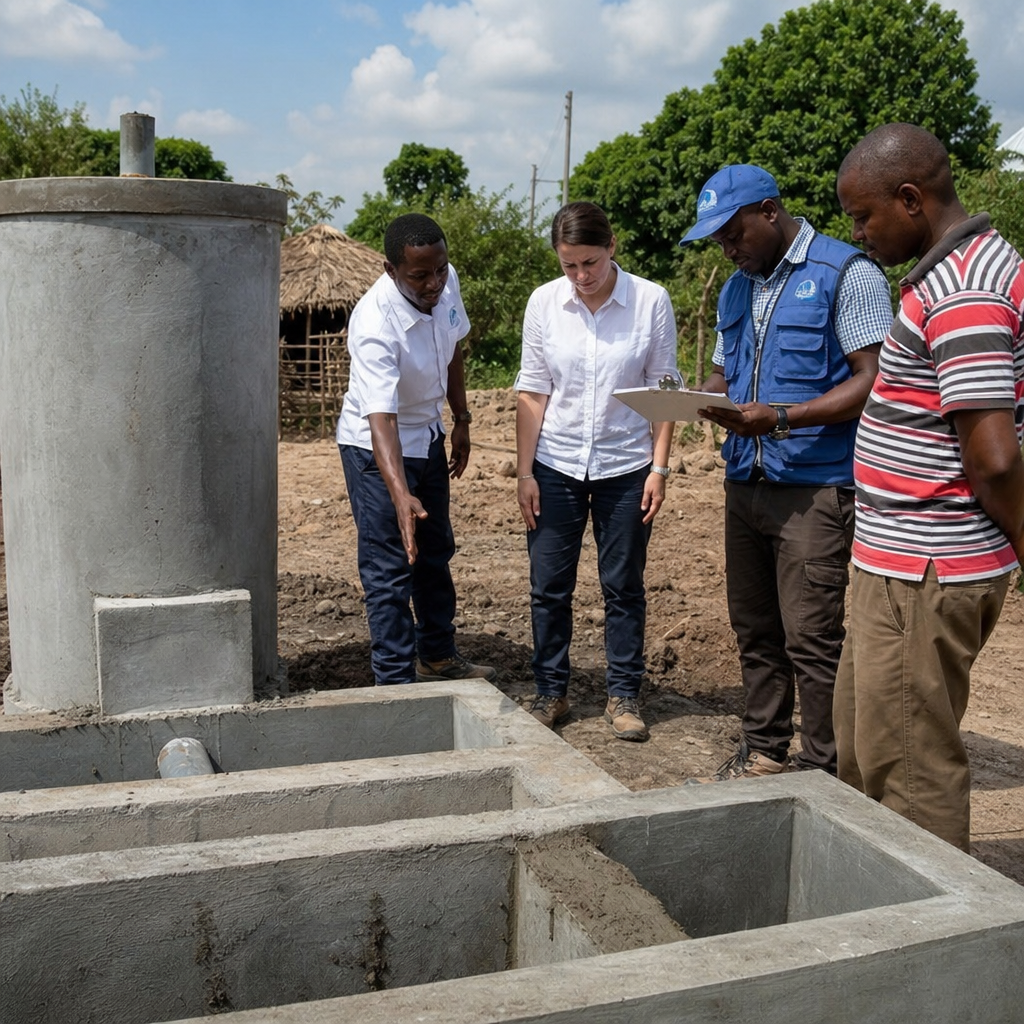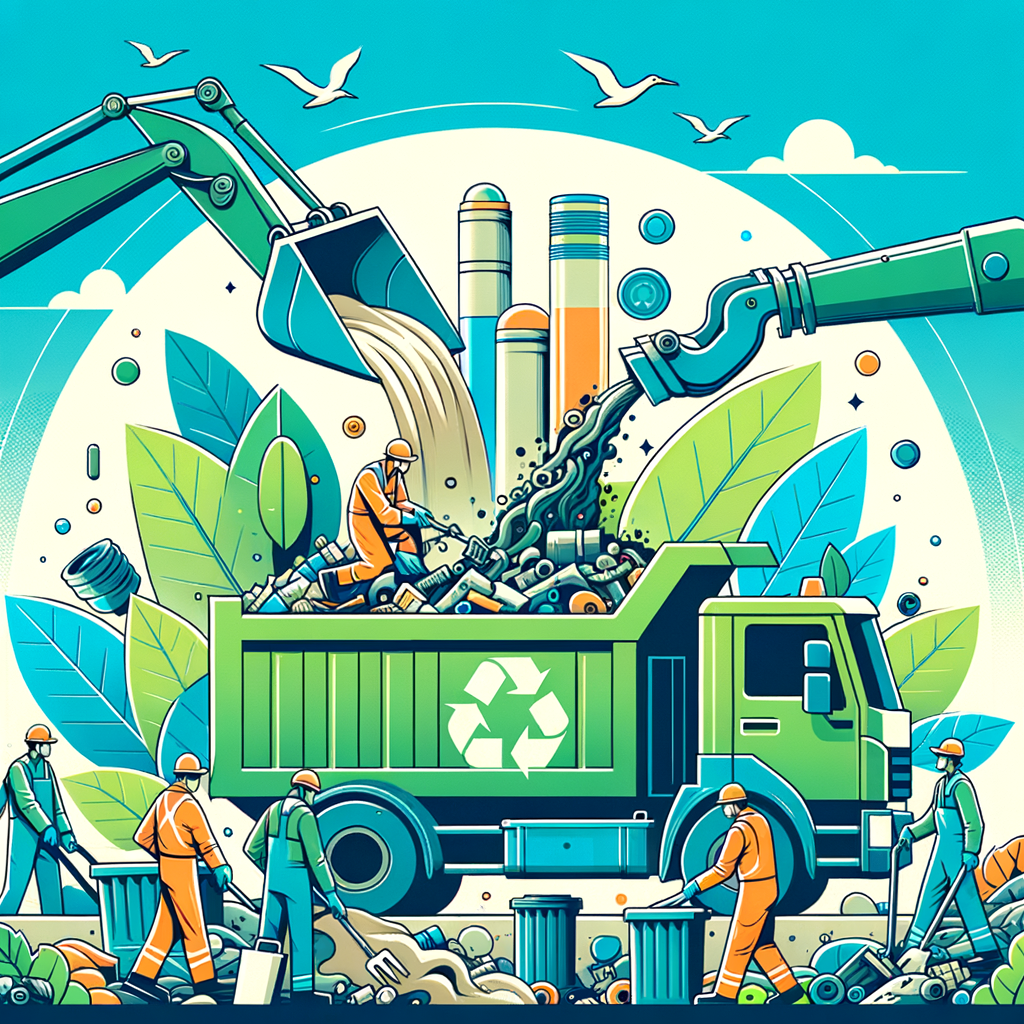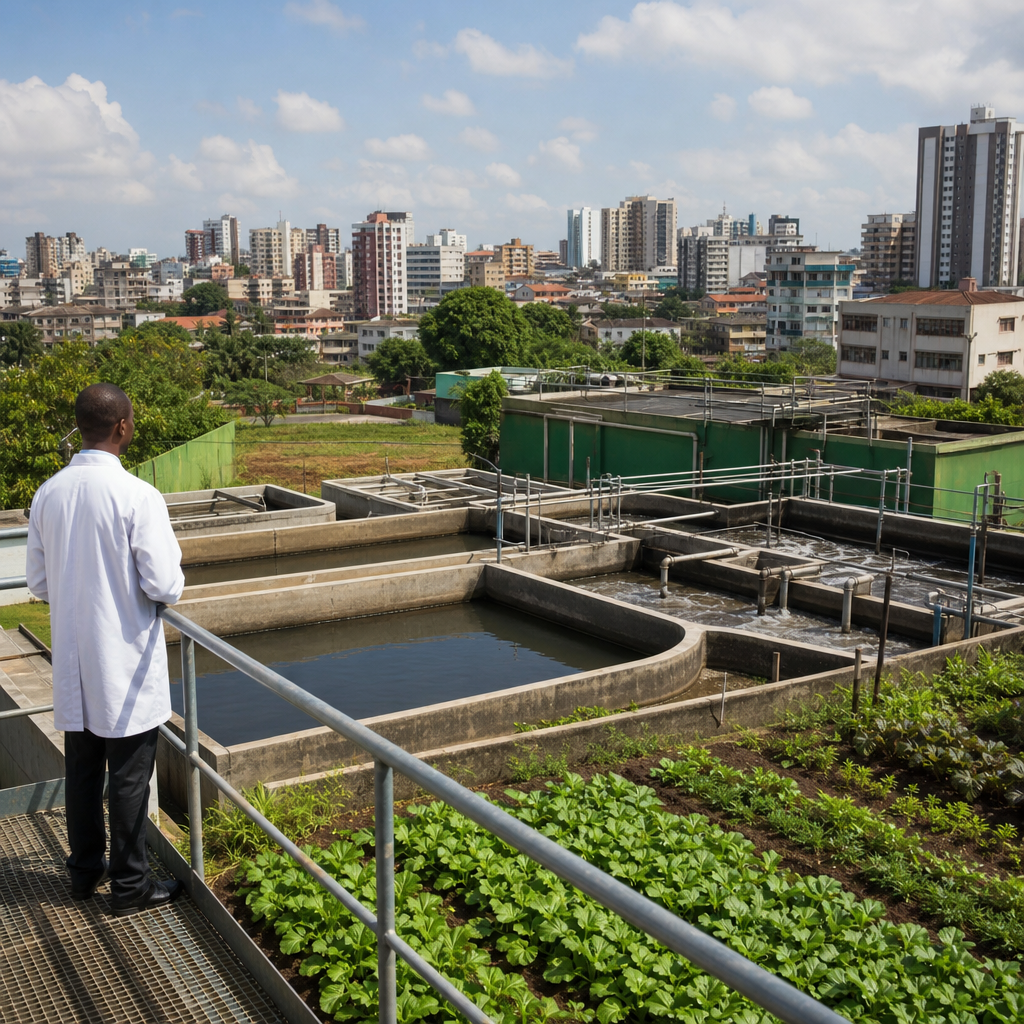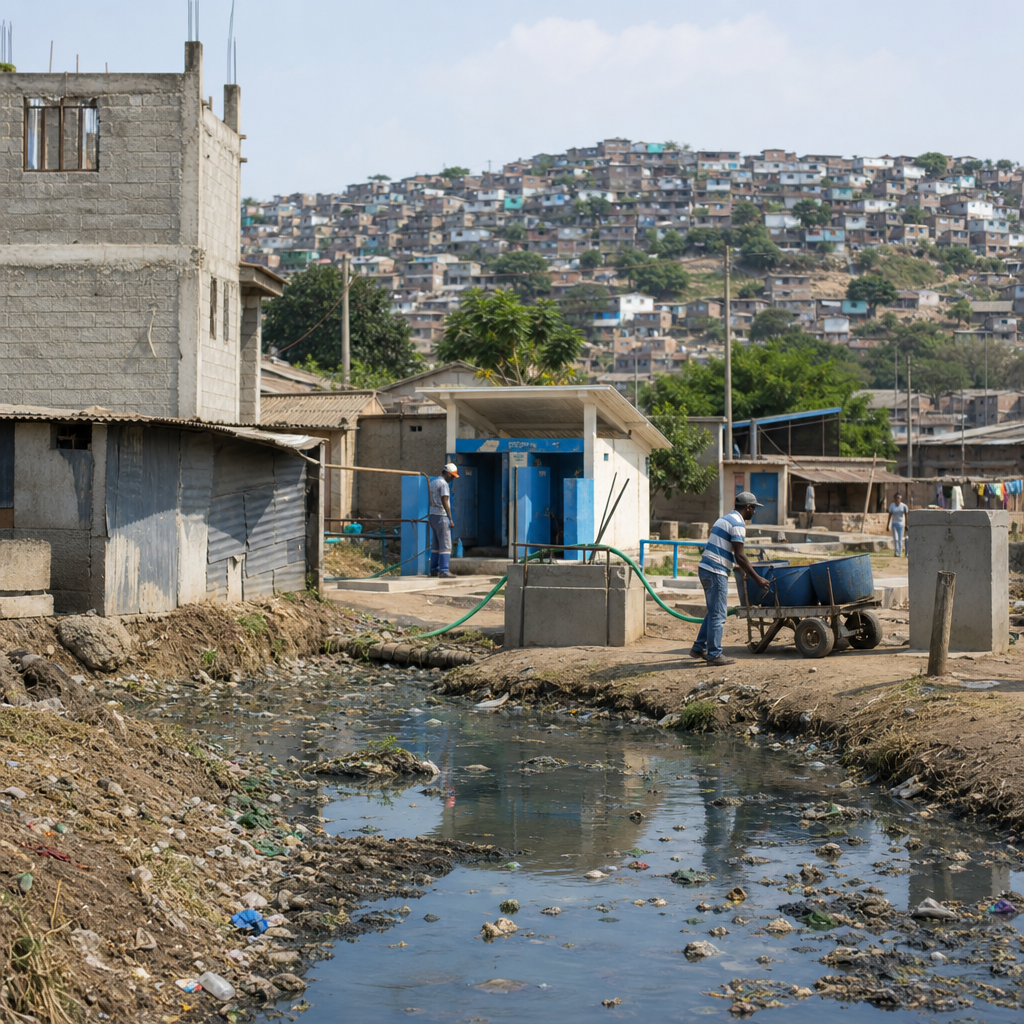
Economic resilience through community-based sanitation starts with a practical truth: when households, farms, schools, and local enterprises can finance safe toilets, nutrient recovery, and wastewater reuse, they reduce health shocks, stabilize livelihoods, and create assets that keep value circulating locally. In the EcoSan field, financing and investing refer to the full set of mechanisms used to pay for ecological sanitation systems, operate them over time, and capture returns from healthier communities, lower treatment costs, and marketable outputs such as compost, biogas, irrigation water, and recovered nutrients. Community-based sanitation means planning, funding, owning, and maintaining services with active participation from users, local governments, cooperatives, savings groups, and small service providers rather than relying only on distant utilities or one-time donor projects. This matters because sanitation failure is expensive in ways that budgets often hide: clinic bills rise, workdays are lost, groundwater becomes harder to treat, and neighborhoods become less attractive for business investment. I have worked on sanitation business cases where the toilet itself looked unaffordable until we counted avoided desludging trips, fertilizer substitution, and fewer disease-related absences. Once those flows were made visible, communities and lenders saw sanitation not as a sunk cost but as infrastructure with measurable economic value. That shift is central to financing and investing in EcoSan.
EcoSan systems are designed to manage human waste as a resource stream instead of a disposal problem. Depending on local conditions, that can include urine-diverting dry toilets, composting toilets, container-based sanitation, decentralized wastewater treatment, black soldier fly processing, biogas digesters, and fecal sludge treatment linked to agriculture or energy production. The economic case depends on lifecycle cost, user adoption, collection logistics, product quality, regulation, and market demand for recovered resources. A durable hub article on financing and investing in EcoSan must therefore connect household affordability, municipal budgeting, private capital, blended finance, climate funding, risk management, and revenue design. It also needs to answer practical questions searchers ask: Who pays upfront? What generates cash flow? Which models work in low-income settlements? How should communities compare grants, loans, tariffs, and public-private partnerships? The strongest answer is that no single instrument fits every context. Successful community-based sanitation finance layers sources according to the maturity of the project and the reliability of its income streams. Upfront capital may come from grants, revolving funds, or concessional loans; operations may be covered by tariffs, service contracts, or user fees; expansion may depend on municipal guarantees, carbon revenues, or impact investment. When these layers are aligned, sanitation becomes an economic resilience strategy, not merely a public health intervention.
The economics of EcoSan: costs, returns, and resilience
The first step in financing and investing in EcoSan is to understand what exactly is being financed. Communities are not just buying toilets. They are financing a service chain: user interface, storage or conveyance, collection, transport, treatment, resource recovery, quality assurance, and final distribution of end products. In practice, weak business cases usually come from costing only the hardware while ignoring maintenance, behavior change, training, spare parts, laboratory testing, and governance. Strong business cases use lifecycle costing, often over ten to twenty years, and compare alternatives on net present cost rather than upfront price alone. A urine-diverting dry toilet may cost more initially than a simple pit latrine, yet over time it can reduce emptying costs, lower water use, and produce nutrients that offset fertilizer purchases. A biodigester attached to a market or school can reduce fuel spending for cooking while improving hygiene and cutting odor complaints.
Returns in community-based sanitation are both financial and economic. Financial returns are the direct cash flows paid to an operator, cooperative, or investor through user fees, collection charges, compost sales, biogas sales, tipping fees, or municipal service contracts. Economic returns are broader and often larger: fewer diarrheal episodes, less stunting risk, improved attendance at school, higher land values, and avoided environmental remediation costs. The World Bank has repeatedly shown that poor sanitation imposes substantial economic losses through health costs and lost productivity. In project appraisal, I separate these value streams because lenders care about predictable cash, while local governments should care about total welfare gains. Economic resilience appears when sanitation systems reduce the frequency and severity of shocks. During floods, decentralized systems can keep operating when sewers fail. During fertilizer price spikes, nutrient recovery becomes more valuable. During water scarcity, reuse systems protect production. These resilience benefits should be built into financial models through scenario analysis, not treated as vague co-benefits.
Who pays and how: the main financing channels
Most viable EcoSan programs combine household contributions, public finance, and mission-aligned private capital. Household finance covers what users can realistically pay, either upfront or over time. This may include cash savings, in-kind labor, mobile money installments, village savings and loan associations, SACCO loans, or supplier credit from local masons and sanitation enterprises. Public finance remains essential because sanitation creates public goods that markets underprovide. Municipal budgets, intergovernmental transfers, output-based aid, and results-based contracts can subsidize capital expenditure, especially for low-income households, schools, health facilities, and treatment infrastructure. Private capital enters when there is a service model with stable demand and enforceable payment collection. Examples include container-based sanitation providers, fecal sludge logistics firms, pelletized compost ventures, and biogas operators supplying institutions.
Blended finance is often the bridge between social need and commercial discipline. Grants can fund early-stage feasibility studies, community engagement, and prototype testing. Concessional debt can lower the weighted cost of capital for treatment plants or decentralized systems with clear off-take agreements. Guarantees can reduce perceived default risk for local banks that have never financed sanitation enterprises. Development finance institutions and impact investors increasingly look for climate adaptation, methane reduction, circular economy, and women’s health outcomes alongside modest financial returns. Still, there are limits. Recovered products rarely cover the full cost of sanitation on their own, especially at small scale or in weak markets. Any article about financing and investing in EcoSan should say this clearly: revenue from compost or biogas is useful, but it is usually one layer in the stack, not the entire stack.
| Financing source | Best use in EcoSan | Main advantage | Main limitation |
|---|---|---|---|
| Household savings or microloans | Toilets, upgrades, connection fees | Builds ownership and demand discipline | Affordability constraints for poorest users |
| Municipal or national subsidy | Inclusive access, treatment infrastructure | Supports public health and equity goals | Budget volatility and political cycles |
| Concessional debt | Plants, transport fleets, decentralized networks | Lower capital cost and longer tenor | Requires repayment capacity |
| Impact investment | Scalable service businesses | Patient capital with outcome focus | Needs credible governance and reporting |
| Carbon or climate finance | Methane reduction, biogas, resilience upgrades | Adds non-tariff revenue | High verification and transaction costs |
Designing bankable community-based sanitation models
A bankable sanitation model has three features: reliable demand, measurable service delivery, and governance that makes money flows transparent. In community-based sanitation, demand is strengthened when the service solves a daily problem users already feel, such as unsafe nighttime access, expensive pit emptying, lack of water, flooding, or fertilizer costs. I have seen repayment improve sharply when payment collection was tied to a familiar cadence, such as weekly market days or mobile money deductions aligned with informal income patterns. Measurable service delivery means clear unit economics: cost per household served, cost per ton collected, revenue per cubic meter treated, conversion rate of sludge to compost, and customer retention. Governance matters because lenders and grantmakers both need confidence that tariffs, subsidies, and maintenance funds are not disappearing into opaque committees.
Institutional structure changes the financing options. A community cooperative may be ideal for local trust and labor mobilization but may struggle to raise growth capital without audited accounts and formal contracts. A small private operator can move faster on logistics and technology, yet may need a municipal franchise or viability gap support to serve low-income areas. Public-private-community partnerships often work best when each party carries the risk it can actually manage. Communities manage local oversight, hygiene promotion, and user accountability. Local government handles regulation, land access, and targeted subsidies. Enterprises manage operations, asset maintenance, and product marketing. Contracts should specify service levels, payment triggers, quality standards for reuse products, and dispute resolution. Without those details, sanitation ventures become hard to finance because no one can price the risk properly.
Revenue models, tariffs, and resource recovery markets
Cash flow is the core question in financing and investing in EcoSan. The most durable models avoid dependence on a single revenue source. Household tariffs may be flat monthly fees, pay-per-use charges, subscription packages, or embedded charges in rent or service bills. Collection services can charge by container, by household, or by route contract. Municipalities may pay availability-based fees for treatment capacity or performance-based payments for verified safe disposal and reuse. Resource recovery adds secondary income through compost, co-compost, biogas, briquettes, insect protein, biochar, or treated water for irrigation and landscaping. However, every revenue line requires market validation. Compost must meet agronomic and safety standards and compete with synthetic fertilizers on nutrient content, transport cost, and farmer confidence. Biogas needs steady feedstock and appliance compatibility. Reclaimed water depends on proximity to demand and regulation.
Tariff design should balance affordability, cost recovery, and equity. A common mistake is setting user fees too low for maintenance, then watching systems fail and trust collapse. Another mistake is pushing full cost recovery onto poor households even though sanitation generates broad public benefits. Cross-subsidies are often appropriate: commercial customers, institutions, or higher-income households can pay more, while targeted subsidies protect vulnerable users. Willingness-to-pay studies help, but they should be complemented by ability-to-pay analysis and actual payment behavior. Digital payment records, churn rates, and delinquency patterns are more informative than stated preferences alone. Where reuse products are sold, quality assurance is non-negotiable. Standards from the World Health Organization for safe reuse and national fertilizer or biosolids regulations shape what can be marketed and at what price. Investors notice this immediately because regulatory noncompliance can destroy the revenue case.
Risk, due diligence, and investment readiness
Sanitation investors assess technical risk, demand risk, regulatory risk, execution risk, and governance risk. Technical risk includes system failure, odor, contamination, poor pathogen reduction, and unreliable feedstock volumes. Demand risk includes low adoption, irregular payment, and weak off-take for recovered products. Regulatory risk covers permits, land tenure, environmental compliance, and product certification. Execution risk appears when teams lack procurement discipline, route planning, maintenance systems, or financial controls. Governance risk includes unclear ownership, elite capture, and weak reporting. Good due diligence tests each risk with evidence, not optimism. That means pilot data, customer retention data, route density estimates, laboratory results, asset registers, and realistic staffing plans. Sensitivity analysis should model inflation, currency volatility, drought, flooding, fertilizer price swings, and delayed subsidy disbursement.
Investment readiness is often less about invention and more about documentation. Projects become financeable when sponsors can present a coherent capital stack, audited or at least clean management accounts, standardized contracts, a monitoring framework, and a credible path to scale. Named tools help here. A discounted cash flow model shows debt service capacity. A debt service coverage ratio below lender thresholds signals that tariffs or subsidies must change. A social return on investment framework helps public funders compare sanitation with competing uses of budget. Key performance indicators should include service reliability, collection efficiency, treatment compliance, product sales conversion, customer complaints, and health or environmental outcomes where measurement is feasible. Communities do not need a corporate bureaucracy, but they do need discipline. The sanitation ventures that last are usually the ones that measure relentlessly and adjust early.
Building a financing roadmap for inclusive EcoSan scale
A practical hub for financing and investing in EcoSan should end with a roadmap communities and decision-makers can use. Start with demand and context: settlement density, water availability, land constraints, soil conditions, flood risk, agricultural demand, and local regulation. Then choose technology based on service-chain fit, not novelty. Develop lifecycle costs, map stakeholders, and identify which benefits are private versus public. Private benefits can support user payments and enterprise revenue. Public benefits justify subsidies, grants, or municipal contracts. Next, test unit economics through a pilot large enough to reveal real collection costs and user behavior. Secure offtake agreements where possible before scaling resource recovery. Build governance early with transparent accounts, operating procedures, and community oversight.
After the pilot, assemble the capital stack in stages. Use grants for design and inclusion, concessional finance for infrastructure, and commercial or impact capital only where revenue visibility is strong. Protect low-income access with targeted subsidies, not blanket underpricing. Formalize maintenance reserves because neglected assets erase financial gains quickly. Document outcomes so future rounds of funding can rely on evidence rather than promises. The main benefit of community-based sanitation is not only cleaner neighborhoods. It is a more shock-resistant local economy with lower health costs, stronger agricultural linkages, and service businesses that create jobs. If you are shaping an EcoSan program, start by building the business case around the full sanitation value chain, then match each cost and benefit to the right source of finance. That is how sanitation becomes an engine of economic resilience.
Frequently Asked Questions
What does community-based sanitation have to do with economic resilience?
Community-based sanitation strengthens economic resilience because it turns sanitation from a recurring cost into a local system of risk reduction, productivity support, and asset creation. When a community can organize, finance, and maintain safe toilets, fecal sludge management, nutrient recovery, and wastewater reuse, it reduces the likelihood of disease outbreaks that interrupt work, school attendance, and household income. Fewer health shocks mean families spend less on emergency treatment, lose fewer workdays, and avoid the cascading financial stress that often follows preventable illness.
It also stabilizes livelihoods at the local level. Farmers can benefit from safely recovered nutrients and water, small businesses can operate in cleaner environments with less disruption, and schools and public institutions can maintain attendance and performance when sanitation is reliable. In many cases, community-based models also create jobs in construction, maintenance, collection, treatment, reuse, and local enterprise development. That matters because money spent on sanitation does not simply leave the area; it can circulate through local labor markets, service providers, and agricultural value chains.
Most importantly, community-based sanitation improves resilience over time by building systems that communities can govern and adapt. Instead of depending solely on expensive centralized infrastructure or irregular external support, communities can combine household contributions, cooperative management, public subsidies, and revenue from reuse products to keep services running. That combination of lower health risk, stronger local productivity, and durable service delivery is why sanitation is increasingly seen not just as a public health issue, but as a foundation for economic resilience.
How can households and communities finance ecological sanitation systems affordably?
Affordable financing usually comes from blending multiple sources rather than expecting one actor to pay for everything upfront. Households may contribute cash, labor, or locally available materials for toilet construction, while community groups, savings circles, or cooperatives help spread costs over time. Microfinance, rotating savings schemes, village savings and loan associations, and pay-as-you-go arrangements can make sanitation upgrades more realistic for families that cannot afford a large one-time expense. For schools, markets, and public facilities, financing often combines local government budgets, donor support, user fees, and community cost-sharing.
In ecological sanitation, affordability also improves when planning looks beyond the initial toilet structure. A well-designed financing strategy considers the full lifecycle cost: construction, operation, maintenance, emptying or collection, transport, treatment, reuse, and eventual replacement. This is where many sanitation efforts struggle, because capital funding may be available while long-term service funding is not. Communities that succeed usually establish clear rules for who pays for which parts of the system, how fees are collected, and how maintenance reserves are built. Even modest user fees can be effective if they are predictable, transparent, and linked to visible service quality.
Subsidies still play an important role, especially for low-income households and vulnerable populations, but the strongest models target subsidies carefully rather than applying them uniformly. Public funds can support the parts of sanitation that create broad social benefits, such as disease prevention, environmental protection, and safe treatment infrastructure. Private and household financing can then support the portions with direct user value. When these layers are structured well, ecological sanitation becomes more affordable, more bankable, and more likely to survive beyond the first installation phase.
Can nutrient recovery and wastewater reuse really generate economic value for communities?
Yes, but the value depends on whether recovery and reuse are designed safely, matched to local demand, and managed as part of a real service and market system. Ecological sanitation can recover nutrients such as nitrogen and phosphorus, organic matter for soil improvement, and water for productive reuse. In farming communities, these outputs can reduce dependence on purchased inputs, improve soil health, and support crop production, especially where fertilizer prices are volatile or water is scarce. That can directly improve household margins and make local agricultural systems more resilient to external shocks.
Wastewater reuse can also support landscaping, tree planting, fodder production, or certain non-potable applications when treatment standards and health safeguards are appropriate. The economic case is often strongest where conventional waste disposal is costly, freshwater is limited, or agriculture is central to local livelihoods. However, value creation is not automatic. Recovered products must meet safety requirements, be socially acceptable, and fit existing agricultural practices. Communities need storage, transport, quality assurance, user training, and often support with market development before nutrient recovery becomes a reliable source of economic benefit.
It is also important to be realistic about where the returns appear. Sometimes the biggest economic gains are not from selling a recovered product at a high price, but from avoiding losses: lower fertilizer expenses, fewer crop failures, reduced contamination, less disease, and lower waste management costs. In other words, the value of reuse is often both direct and indirect. When communities understand that sanitation outputs can contribute to farming, local enterprise, and environmental restoration, they are better positioned to treat sanitation as productive infrastructure rather than just a disposal challenge.
What makes a community-based sanitation investment sustainable over the long term?
Long-term sustainability depends on governance, service design, financial planning, and community trust working together. A system may be technically sound, but if no one is clearly responsible for collecting fees, scheduling maintenance, monitoring treatment quality, or responding to breakdowns, it will likely fail. Sustainable community-based sanitation investments usually have defined roles for households, local committees, operators, farmers, schools, and municipal authorities. That institutional clarity matters just as much as the engineering.
Financial sustainability requires planning for ongoing costs from the beginning. Communities need a realistic estimate of operating expenses, maintenance intervals, replacement needs, and service gaps that may emerge over time. They also need revenue streams or budget commitments that are dependable enough to cover those costs. This may include user fees, municipal support, cooperative contributions, agricultural reuse income, or performance-based financing. The most resilient models build some form of reserve fund so routine wear, seasonal disruptions, or emergency repairs do not trigger service collapse.
Social sustainability is equally important. People must trust that the system is safe, fair, and worth paying for. That means transparent management, regular communication, inclusive decision-making, and attention to user experience, especially for women, children, older adults, and people with disabilities. Communities are more likely to protect and maintain sanitation assets when they can see the benefits in daily life: cleaner surroundings, fewer illnesses, lower spending on emergencies, and useful outputs for local production. Sustainable sanitation is not only about infrastructure lasting; it is about institutions and incentives lasting with it.
Why is sanitation increasingly viewed as an investment rather than just a public service expense?
Sanitation is increasingly viewed as an investment because its returns extend far beyond the toilet itself. Safe sanitation reduces disease burden, improves labor productivity, supports school attendance, protects water resources, and lowers the economic damage caused by environmental contamination. Those are measurable gains for households, communities, businesses, and governments. When sanitation is neglected, the costs show up elsewhere: healthcare spending rises, income becomes less stable, children miss school, enterprises face interruptions, and local ecosystems become less able to support agriculture and livelihoods.
In the context of community-based ecological sanitation, the investment case becomes even stronger because the system can produce additional forms of value. Nutrient recovery, wastewater reuse, composting, and service-related employment can create tangible local returns. That does not mean every sanitation project becomes a high-revenue business, but it does mean well-planned systems can generate cost savings, reduce vulnerability, and support productive activity in ways that traditional accounting often overlooks. Investors and public planners are paying more attention to this because resilience has economic value, especially in areas facing climate stress, water scarcity, or limited public infrastructure.
Calling sanitation an investment also changes decision-making. It encourages lifecycle budgeting, performance monitoring, and long-term asset management instead of one-time construction targets. It pushes communities and institutions to ask better questions: How will this system be maintained? What health and livelihood risks will it prevent? What resources can it recover? How can local enterprises participate? When sanitation is framed this way, it becomes easier to justify funding and easier to design systems that deliver lasting economic and social returns.