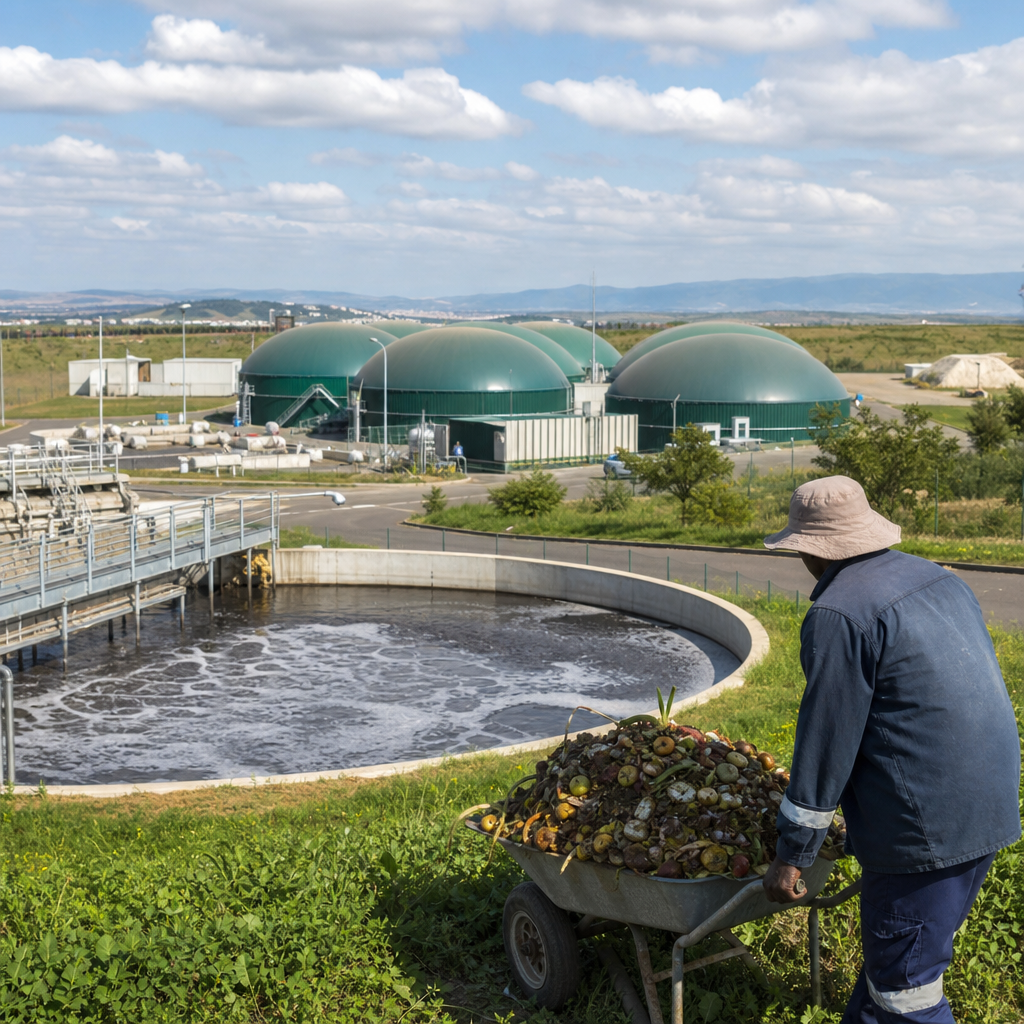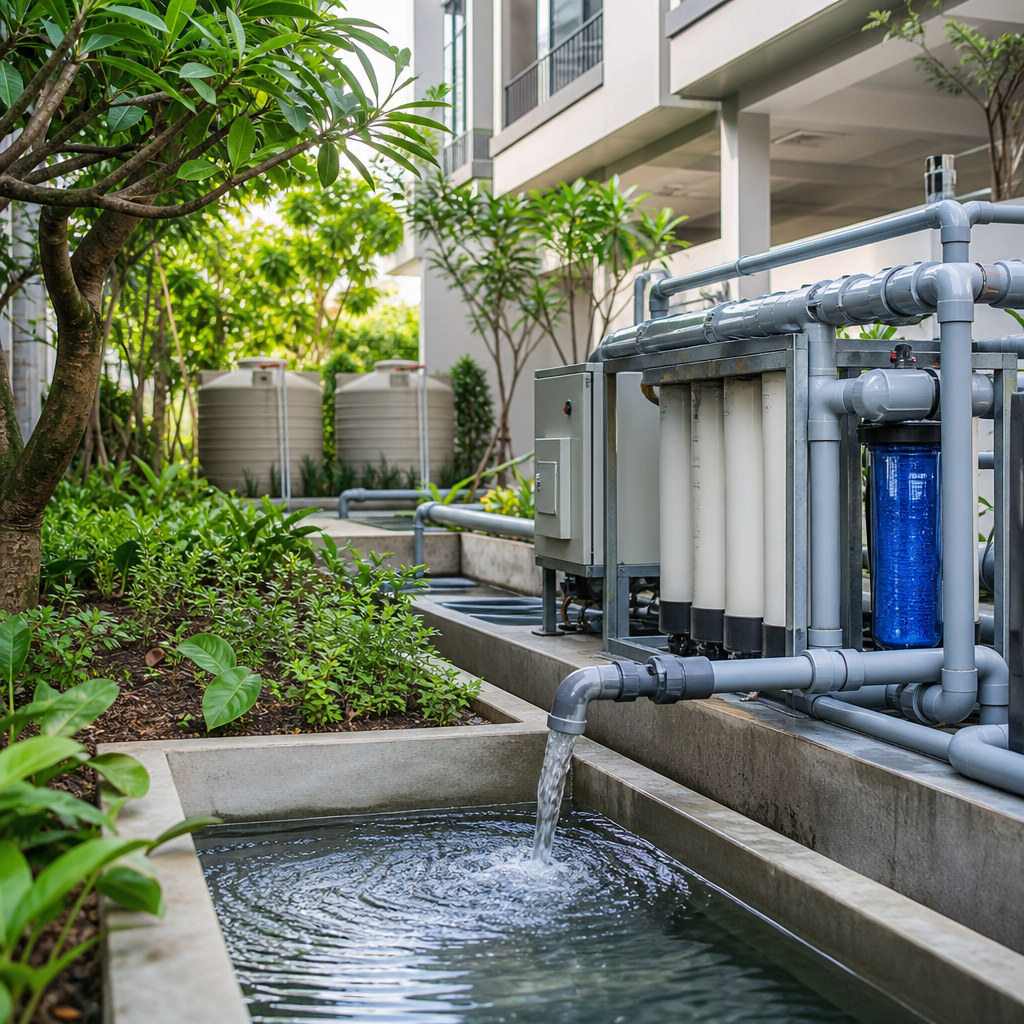
Greywater treatment and reuse delivers measurable financial value by turning lightly contaminated wastewater from showers, bathroom sinks, and laundry into a dependable resource for irrigation, toilet flushing, and selected commercial processes. In EcoSan economics, greywater refers to household or building wastewater that excludes sewage from toilets, while treatment means the physical, biological, and sometimes chemical steps used to remove solids, soaps, nutrients, and pathogens to a level appropriate for reuse. Reuse means substituting treated greywater for potable water where drinking-water quality is unnecessary. This distinction matters because water, wastewater, and infrastructure costs are rising together, and decentralized reuse can lower all three. I have worked on business cases for residential developments, hotels, schools, and peri-urban sanitation programs, and the same pattern appears repeatedly: when a project matches treatment quality to end use and sizes storage correctly, greywater becomes an economic asset rather than a disposal problem.
The topic belongs at the center of any discussion about understanding EcoSan economics because it connects household budgets, utility finance, public health, and long-term urban resilience. EcoSan, short for ecological sanitation, evaluates sanitation systems not only by construction cost but by resource recovery, environmental externalities, operating expense, and social return. Greywater sits alongside urine diversion, composting, blackwater treatment, and nutrient recovery as one of the most practical pathways to reduce freshwater demand. In many buildings, greywater can represent 50 to 80 percent of indoor wastewater volume, depending on local habits and appliance efficiency. That means a large share of wastewater can be captured close to the source and reused locally. For a homeowner, the benefit may be lower water bills and reduced landscape losses during drought restrictions. For a municipality, the benefit may be deferred spending on imported water, sewer expansion, and peak-season pumping. For developers, the benefit may be improved project viability where water connection capacity is limited or expensive.
The economic case is strongest when decision makers evaluate total cost of ownership instead of focusing only on equipment price. A basic treatment unit may look expensive compared with a simple sewer connection, but that comparison misses avoided potable purchases, reduced wastewater discharge fees, lower stormwater stress through on-site landscaping reuse, and potential increases in property value. It also misses risk reduction. Sites exposed to water rationing, tariff volatility, or unreliable supply gain economic resilience from internal recycling. Regulations still shape what is possible, and maintenance cannot be ignored, but these are manageable variables, not reasons to dismiss reuse. Understanding EcoSan economics therefore starts with a practical question: under what conditions does greywater treatment pay for itself, and what wider financial benefits appear once systems are integrated into building and community planning?
How Greywater Reuse Creates Direct and Indirect Savings
The most immediate economic benefit comes from offsetting potable water use. Toilet flushing typically accounts for about 20 to 30 percent of indoor demand in many buildings, while outdoor irrigation can exceed indoor demand in dry climates. When treated greywater supplies these uses, every reused liter can displace purchased drinking water. In places with inclining block tariffs, the marginal savings are often higher than the average tariff because reuse reduces consumption in the most expensive tier. I have seen multifamily properties shorten payback simply by targeting the highest-volume nonpotable demands first, usually irrigation and flushing, instead of overdesigning for every possible reuse point.
Wastewater charges also matter. Where sewer fees are tied to metered potable use, less imported water usually means lower wastewater billing, even if the greywater stays on-site. In commercial settings, discharge permits and trade waste charges can further strengthen the case. Hotels and gyms are good examples because showers generate a steady greywater stream close to continuous toilet demand. Schools often have a weaker daily balance during holidays, so storage and seasonal irrigation become more important to economics. Industrial laundries can benefit substantially, but treatment requirements rise with detergents, lint, and chemical loads, so the design must reflect real influent quality rather than generic assumptions.
Indirect savings often surpass direct bill reductions over the life of the asset. Reuse can defer the need for larger incoming water connections, booster pumps, storage tanks, and sewer upgrades. For growing municipalities, distributed greywater systems reduce hydraulic load on centralized wastewater treatment plants, especially during dry-weather peaks driven by indoor water use. That can postpone capital-intensive expansions of interceptors, lift stations, and process units. In drought-prone regions, the avoided cost of emergency supply measures, such as trucking water or accelerating desalination and interbasin transfers, is economically significant even if it does not appear on a single household invoice. Developers also use reuse systems to unlock sites where water availability constraints would otherwise limit density or delay approvals.
Cost Components, Payback, and Lifecycle Analysis
A serious economic assessment breaks costs into capital expenditure, operating expenditure, replacement cycles, compliance, and residual value. Capital costs include dual plumbing, collection piping, treatment units, disinfection, storage, controls, pumps, and commissioning. Retrofitting existing buildings usually costs more than installing systems during new construction because walls, slabs, and shafts are already fixed. Operating costs include electricity, filter changes, consumables such as chlorine or ultraviolet lamp replacement, monitoring, labor, sludge or screen disposal, and periodic cleaning of tanks and membranes. Systems with membranes can produce high-quality water but require more skilled maintenance and energy than simple settling and filtration systems suited to subsurface irrigation.
Payback depends less on the sticker price than on utilization rate. An underused system rarely performs well economically. For example, a house may produce enough shower greywater to irrigate a small garden, but if winter rainfall eliminates irrigation demand and no indoor reuse is allowed by code, storage becomes a constraint and annual savings stay modest. By contrast, a mid-rise apartment building with stable occupancy and constant toilet flushing demand can use treated greywater every day, making the asset productive year-round. This is why demand-supply matching is a central principle in EcoSan economics. The best projects are not the most complex ones; they are the ones with consistent water flows, clear nonpotable demand, and operators capable of routine maintenance.
| Cost or Benefit Driver | Typical Effect on Economics | Practical Example |
|---|---|---|
| High potable water tariff | Improves savings and shortens payback | Hotels in arid cities offset expensive tiered water charges |
| New construction installation | Lowers capital cost versus retrofit | Dual plumbing added before walls are closed |
| Stable year-round nonpotable demand | Increases system utilization | Apartment toilets use treated greywater daily |
| Strict water quality requirements | Raises treatment and monitoring cost | Indoor reuse requires filtration, disinfection, and alarms |
| Poor maintenance capacity | Reduces reliability and financial return | Filters clog, pumps fail, reuse volume drops |
| Sewer fee linked to metered supply | Adds indirect savings | Lower imported water reduces sewer bill |
Lifecycle costing should use net present value, internal rate of return, and sensitivity analysis rather than a simple payback alone. A simple payback is easy to communicate, but it ignores discount rates, component replacement, tariff escalation, and salvage value. In practice, I model best-case, base-case, and stress-case scenarios. Variables that usually deserve sensitivity testing are water tariff growth, occupancy, electricity price, membrane life, maintenance frequency, and downtime. This approach reveals whether a project is robust or only attractive under optimistic assumptions. It also helps compare greywater reuse with alternatives such as rainwater harvesting, low-flow fixtures, pressure management, or centralized recycled water connections.
Building-Level and Community-Level Business Cases
At building scale, residential complexes, resorts, hospitals, and campuses tend to offer the strongest business case because they produce predictable greywater volumes and have large nonpotable demands. Hotels are especially favorable. Guests generate shower and hand-basin flows every day, and toilets, cooling towers, and landscaping absorb reused water continuously. Resorts in water-scarce tourist regions often combine greywater with smart irrigation controls to reduce both potable demand and plant stress. Hospitals require stricter risk management and may limit reuse applications, but laundry and handwashing volumes can still support significant savings when regulations permit.
Single-family homes can benefit, but economics vary widely. Low-cost laundry-to-landscape systems can be effective where regulations allow untreated or lightly filtered subsurface irrigation and where gardens need regular water. More advanced packaged systems for indoor reuse often have longer paybacks because absolute water demand is smaller. Even so, in areas with high tariffs, connection constraints, or severe drought restrictions, household systems can still make sense as resilience investments. In my experience, homeowners value continuity of irrigation and reduced dependence on municipal supply almost as much as bill savings, particularly where landscaping supports food production or property value.
At community scale, decentralized clusters can outperform both isolated household systems and distant centralized plants. A cluster serving several apartment blocks, a school, and a small commercial strip can spread operating labor, monitoring equipment, and backup capacity across more users. This economy of scale often lowers unit treatment cost while keeping conveyance distances short. New districts in Australia, Spain, Israel, Singapore, and parts of the United States have demonstrated that recycled nonpotable water networks can reduce imported water demand substantially when integrated early in master planning. The key is governance: ownership, operator responsibility, tariff design, and water quality accountability must be clear from the start.
Risk, Regulation, and the Limits of the Economic Case
Greywater treatment is not automatically cost-effective, and credible planning must address its limits. The first constraint is regulation. Some jurisdictions allow only subsurface irrigation from simple systems, while others permit indoor reuse after specified treatment and disinfection standards are met. Compliance costs can include permits, sampling, operator certification, backflow prevention, signage, and cross-connection testing. These are necessary safeguards, not bureaucratic extras, because reuse systems fail economically and reputationally if they create health risks.
The second constraint is operational discipline. Many underperforming systems were technically sound on paper but lacked maintenance budgets, training, or spare parts. Pumps foul, filters blind, sensors drift, and storage tanks develop odor when retention times are too long. If reliability drops, users often bypass the system and the projected savings disappear. For that reason, the cheapest technology is rarely the most economical over time. Appropriate technology means selecting the simplest treatment train that consistently meets the required reuse standard under actual site conditions.
There are also environmental tradeoffs with economic consequences. Treatment uses energy, and some systems consume chemicals. If electricity is carbon-intensive or expensive, high-energy processes may weaken the case unless water scarcity costs are extreme. Salts from detergents can accumulate in soils under repeated irrigation, reducing plant health and increasing landscape maintenance costs. Good source control, low-sodium cleaning products, and periodic soil monitoring help manage this risk. Decision makers should also recognize that efficiency measures, such as low-flow fixtures and leak reduction, usually complement greywater reuse and often deliver the fastest returns. Reuse works best as part of a water strategy, not as a stand-alone symbol of sustainability.
How to Evaluate Greywater Projects Within EcoSan Economics
Understanding EcoSan economics means valuing multiple outcomes together: avoided freshwater use, reduced wastewater discharge, resilience, nutrient and organic load management, land-use effects, and social acceptability. A practical evaluation starts with a water balance. Measure sources by fixture type, estimate daily and seasonal variability, then map nonpotable demands that can legally and safely use treated greywater. Next, select treatment based on end use, not aspiration. Irrigation may only need screening, settling, and basic filtration in some jurisdictions, while toilet flushing generally requires tighter control and disinfection. Then build a financial model that includes capital, operations, replacement, compliance, and avoided costs over at least fifteen to twenty years.
Where wider public benefits exist, cost-benefit analysis should include them explicitly. Reduced abstraction can protect aquifers, lower energy use for long-distance water transfer, and improve drought resilience for entire communities. Lower sewer flows can reduce overflow risk and postpone infrastructure expansion. These benefits may justify incentives, rebates, or development bonuses. Utilities and cities increasingly support onsite reuse when it aligns with integrated urban water management and when monitoring data proves performance. For project sponsors, the takeaway is simple: treat greywater as infrastructure. Define service levels, assign accountability, budget maintenance, and track outcomes. If you are building an EcoSan strategy or comparing sanitation investments, start with a detailed site assessment and lifecycle model. That is how greywater treatment and reuse moves from a promising idea to a durable economic advantage.
Frequently Asked Questions
1. How does greywater treatment and reuse create direct economic savings?
Greywater treatment and reuse creates direct economic savings by reducing demand for potable water, which is typically the most expensive water source in a home, commercial building, or institutional facility. When lightly contaminated wastewater from showers, bathroom sinks, and laundry is captured, treated, and reused for applications such as landscape irrigation, toilet flushing, and certain non-potable commercial processes, the property buys less freshwater from the utility. That lower water demand can produce meaningful savings every month, especially in areas with high volumetric water rates, tiered pricing structures, drought surcharges, or seasonal irrigation costs.
The financial benefit often extends beyond the incoming water bill. In many locations, sewer charges are tied either directly or indirectly to total metered water use. If a building imports less potable water because it offsets part of its demand with treated greywater, sewer-related costs may also decline. This can be especially valuable for multifamily properties, hotels, schools, office buildings, and industrial or mixed-use sites where toilet flushing and irrigation account for a substantial share of water consumption. Over time, these recurring savings help offset the capital cost of collection plumbing, storage, treatment units, controls, pumps, and maintenance.
Another important factor is predictability. Unlike rainwater harvesting, which depends on local weather patterns, greywater is generated regularly as part of daily occupancy and building use. That makes it a dependable internal resource and allows owners to displace potable water in a more consistent way throughout the year. In practical terms, the economic value comes from transforming what would have been wastewater into a usable asset, lowering operating expenses while improving water efficiency at the same time.
2. What factors have the biggest impact on the return on investment for a greywater system?
The return on investment for a greywater system depends on several economic and technical variables working together. The first major driver is the local cost of water and wastewater service. In regions where potable water is expensive, sewer charges are high, or utilities use escalating block rates, every gallon of reused greywater is worth more. The second key factor is the volume and consistency of greywater produced. Buildings with steady occupancy and significant water use from showers, bathroom sinks, and laundry usually have stronger reuse potential than properties with highly irregular usage patterns.
End use also matters a great deal. A system tends to offer better economics when the site has reliable non-potable demand, such as toilet flushing in commercial buildings, irrigation for large landscapes, or process water demand in specific operations. If treated greywater can be used frequently and consistently, the infrastructure generates value more often, which improves payback. By contrast, systems that produce reusable water but have limited opportunities to use it may not achieve the same financial performance.
Capital cost is another major variable. Project cost is influenced by whether the system is installed in new construction or retrofitted into an existing building, the complexity of the plumbing layout, treatment performance requirements, storage needs, automation, monitoring, and local code compliance. In new developments, greywater systems are often easier and less expensive to integrate because separate drainage and reuse piping can be designed from the start. Retrofits can still be worthwhile, but existing building constraints may increase installation cost and lengthen the payback period.
Operations and maintenance should also be included in any realistic ROI analysis. Filters need cleaning or replacement, pumps consume electricity, and treatment components must be inspected to maintain performance and compliance. However, well-designed systems with appropriate technology selection and maintenance planning can keep these costs manageable. Incentives, rebates, water-efficiency grants, or green building certification value can further improve project economics. In short, the strongest financial outcomes usually occur where water prices are high, greywater supply is steady, non-potable demand is significant, and the system is designed to match the site’s actual needs.
3. Is greywater reuse more cost-effective in residential or commercial properties?
Greywater reuse can be cost-effective in both residential and commercial settings, but the economics often become more compelling in larger commercial, institutional, and multifamily properties because scale improves efficiency. Commercial buildings, hotels, apartment complexes, student housing, healthcare support facilities, and schools often generate substantial volumes of greywater every day and also have continuous non-potable demand for toilet flushing or irrigation. That combination of high supply and high reuse demand tends to produce stronger water bill reductions and better overall payback.
In single-family residential properties, the economics are more variable. A simple laundry-to-landscape system or basic subsurface irrigation reuse approach can be relatively affordable and may provide worthwhile savings in regions with expensive water or strict drought restrictions. However, more advanced residential systems designed for indoor reuse, such as toilet flushing, generally require additional treatment, storage, controls, and code-compliant plumbing, which can increase upfront cost. In homes with modest water use, the annual savings may be smaller, so the payback period can be longer unless local rates are high or incentives are available.
Commercial properties also benefit from another economic advantage: water efficiency can support broader asset performance. Lower operating costs improve net operating income, which is particularly relevant for income-producing properties. In some cases, visible sustainability investments can also strengthen tenant appeal, support ESG objectives, or contribute to green building certifications, indirectly enhancing marketability and asset value. That said, not every commercial property is automatically a perfect candidate. The best opportunities are sites with reliable occupancy, clear non-potable demand, and management capacity to maintain the system properly.
So, while residential systems can absolutely deliver financial value, commercial and multifamily installations often show stronger cost-effectiveness because they can spread fixed system costs across a much larger volume of recovered and reused water. The right answer depends less on property type alone and more on the match between greywater generation, reuse opportunities, local utility rates, and project design.
4. Can greywater treatment and reuse protect property owners from future water price increases and water scarcity costs?
Yes, one of the most important economic advantages of greywater treatment and reuse is that it can reduce exposure to future water price increases and the financial disruptions associated with water scarcity. Water costs have risen in many regions due to aging infrastructure, energy costs, regulatory compliance, drought pressure, and competition for limited freshwater supplies. A property that can internally recover and reuse part of its water demand is less dependent on the full volume of utility-supplied potable water, which helps moderate the impact of future rate hikes.
This resilience has real financial value. During drought periods, utilities and local governments may impose restrictions on outdoor irrigation, increase rates, apply surcharges, or require costly emergency conservation measures. A building with a compliant greywater system is often better positioned to maintain essential non-potable uses with less disruption. For landscaped properties, this can mean preserving vegetation and avoiding replacement costs. For commercial and institutional facilities, it can mean sustaining operations with less vulnerability to supply constraints or reputational issues related to excessive potable water use.
There is also a strategic planning benefit. Long-term capital planning increasingly favors infrastructure that improves resource independence and operational stability. Greywater reuse contributes to that by creating a circular water loop within the property boundary. Instead of viewing wastewater solely as a disposal cost, owners can treat part of it as a substitute resource. That reduces demand risk and can make budgeting more predictable over time, especially in regions where water scarcity is expected to intensify.
While greywater systems are not a complete substitute for municipal water service, they can serve as a meaningful hedge against both rising utility costs and the operational consequences of water shortages. From an economic perspective, that risk-reduction value is often as important as the immediate savings visible on today’s water bill.
5. What costs should be considered before investing in a greywater treatment and reuse system?
Before investing in a greywater treatment and reuse system, property owners should evaluate the full life-cycle cost rather than focusing only on the initial equipment price. Upfront costs typically include system design, engineering, permitting, plumbing modifications, collection piping, storage tanks, treatment units, pumps, controls, monitoring equipment, disinfection components where required, and installation labor. If the project is a retrofit, structural or access constraints may add complexity and cost. Code compliance and inspection requirements can also affect the budget, particularly for indoor non-potable reuse applications.
Operating costs should be assessed just as carefully. Depending on the treatment approach, ongoing expenses may include electricity for pumps and controls, routine inspections, filter cleaning or replacement, consumables, water quality testing, maintenance contracts, and occasional component repairs or upgrades. Staff time also matters in larger facilities, especially where building operators must document performance, respond to alarms, or maintain compliance records. A system that is economically attractive on paper can underperform financially if maintenance needs are underestimated.
At the same time, owners should weigh these costs against a broad set of potential financial benefits. Those include lower potable water purchases, reduced sewer or wastewater charges where applicable, avoided irrigation demand, improved drought resilience, and possible eligibility for rebates or sustainability incentives. In commercial real estate, there may also be indirect financial gains through higher asset efficiency, stronger tenant appeal, or alignment with environmental performance goals. A credible feasibility assessment should compare all expected costs and savings over the system’s useful life, not just the first year.
The most reliable way to evaluate the investment is through a site-specific analysis that looks at water use patterns, available grey