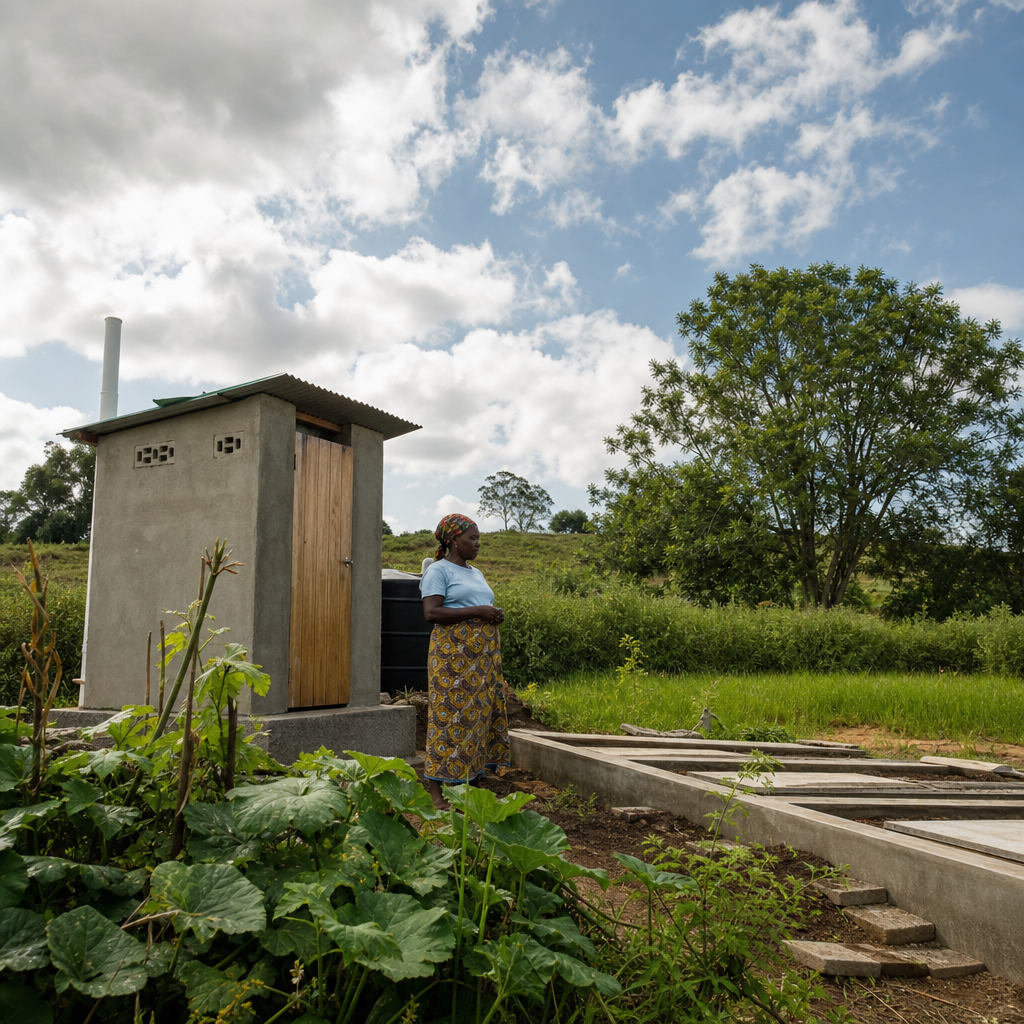
EcoSan, short for ecological sanitation, is often introduced as a sanitation approach that safely separates, treats, and reuses human waste as a resource, but in practice it is also a financing question, an investment case, and a pathway to economic empowerment. When I have worked with sanitation programs, the technical discussion about urine diversion, composting, sludge treatment, or nutrient recovery only moved forward after communities, municipalities, lenders, and entrepreneurs understood who would pay, who would earn, and how risk would be managed. That is why financing and investing in EcoSan deserves hub-level attention within the broader economic aspects of sanitation. It connects household affordability, enterprise development, municipal service delivery, agricultural productivity, public health savings, and long-term climate resilience in one decision framework.
At its core, financing EcoSan means securing capital for toilets, containment, collection, treatment, reuse systems, operations, and maintenance. Investing in EcoSan means allocating money with an expectation of measurable returns, which may be financial, social, environmental, or blended across all three. Those returns can come from user fees, service contracts, fertilizer substitutes, carbon-related outcomes, avoided health costs, reduced groundwater contamination, and stronger local value chains. The reason this matters is simple: sanitation systems fail less often when the money model is as carefully designed as the engineering model. A well-built urine-diverting dry toilet without maintenance finance becomes a liability. A modest but bankable reuse business can become a local employer, input supplier for farmers, and proof point that sanitation is productive infrastructure rather than sunk cost.
EcoSan sits at the intersection of infrastructure finance and circular economy investing. Unlike conventional sewer expansion, which usually depends on large public capital budgets and long amortization periods, EcoSan can be deployed in modular units, neighborhood clusters, or citywide service chains. That modularity changes financing options. Households may use microloans. Small operators may lease collection equipment. Municipalities may contract treatment and reuse through performance-based agreements. Development finance institutions may support early-stage capital expenditure while philanthropic grants fund behavior change, training, and market development. Private investors usually look for predictable cash flows, so the strongest EcoSan propositions bundle several revenue streams instead of relying on one weak source alone.
Economic empowerment enters the picture because EcoSan can lower input costs for farmers, create jobs in construction and service delivery, formalize waste workers, and keep sanitation spending circulating locally. In regions where fertilizer prices are volatile, recovered nutrients can improve farm economics. In dense settlements where sewer networks are unrealistic in the near term, container-based or decentralized EcoSan models can expand service faster and at lower upfront cost. For women, youth, and informal workers, the sector can open opportunities in manufacturing, collection logistics, compost production, agronomic advisory services, and retail distribution. The hub question is not whether EcoSan has economic value. It is how to structure finance so that value is captured, risks are shared sensibly, and systems remain affordable, safe, and scalable over time.
Why EcoSan Attracts Investment Attention
Investors and public funders pay attention to EcoSan when the business case is framed around service outcomes instead of toilets alone. A toilet is an asset, but sanitation is a service chain: user interface, containment, collection, transport, treatment, product conversion, and end-use. Each link has costs and potential income. In my experience, projects become credible when they present the full chain with unit economics, not just capital budgets. For example, a peri-urban EcoSan enterprise may earn monthly service fees from households, tipping fees from institutions, and seasonal revenue from compost sales. None of those streams may be sufficient on its own, but together they can support debt service and working capital planning.
There is also a strong macroeconomic rationale. The World Health Organization has long documented that poor sanitation drives health expenditure, productivity loss, and school absenteeism. Every avoided diarrheal disease case has economic value. Every hour not spent finding a toilet or managing unsafe sludge has economic value. EcoSan systems can also reduce pressure on water supply because many designs use little or no flush water. In water-stressed markets, that saving is not abstract. It affects municipal utility budgets, household spending, and agricultural water allocation. Investors increasingly understand that resilient sanitation infrastructure supports broader local economic stability.
Another reason EcoSan attracts interest is its compatibility with decentralized infrastructure trends. Cities are struggling to finance universal sewerage, especially where topography, informality, and low density make network expansion expensive. Decentralized sanitation can be phased, tested, and adapted. That lowers deployment risk if governance is strong. Impact investors often prefer models where capital can unlock measurable improvements within three to seven years. EcoSan fits that window better than many trunk infrastructure projects. The caveat is that decentralization does not remove the need for regulation. It increases the need for clear service standards, safe reuse protocols, and verifiable monitoring.
Key Financing Models for EcoSan Systems
There is no single best financing model for EcoSan. The right structure depends on customer income, land tenure, regulatory conditions, agricultural demand, and who controls downstream treatment assets. Household self-finance works in middle-income settings where upfront toilet costs are modest and supply chains are reliable. Microfinance is common where demand exists but liquidity is limited. In several sanitation programs, small loans with repayment periods of twelve to twenty-four months have been more effective than larger infrastructure loans because they align with household cash flow. The lesson is practical: sanitation finance must match income patterns, not idealized engineering timelines.
Public finance remains essential, especially for treatment facilities, transfer stations, research, and market creation. Municipal budgets often fund the least commercially attractive parts of the chain because they produce public goods, including disease prevention and environmental protection. Targeted subsidies can improve equity, but broad untargeted subsidies can distort service markets and weaken willingness to pay. I have seen subsidy programs succeed when they were tied to verified installation, safe emptying, or service for low-income households rather than to product distribution alone. Results-based financing is especially useful because it pays for outcomes that can be inspected.
Blended finance is increasingly important. A grant may de-risk early customer acquisition, while concessional debt supports equipment purchases and private equity funds growth once operations stabilize. This layering is often the only realistic route for early-stage EcoSan businesses because they face market education costs and delayed revenue from reuse products. Carbon finance, though still complex for sanitation, can sometimes strengthen the capital stack if methane avoidance or nutrient management benefits are methodologically defensible. Development banks and climate funds are more receptive when proposals quantify emissions, health gains, and agricultural substitution effects with transparent assumptions.
| Financing model | Best use case | Main advantage | Main limitation |
|---|---|---|---|
| Household savings | Low-cost toilet upgrades | Simple and fast | Excludes poorer households |
| Microfinance | Household and small enterprise assets | Matches irregular incomes | Interest rates may be high |
| Municipal budget | Public treatment and oversight | Supports public-good functions | Vulnerable to political cycles |
| Blended finance | Scaling integrated service chains | Combines risk-tolerant and commercial capital | Structuring is complex |
| Results-based finance | Verified service delivery | Rewards measurable outcomes | Needs strong monitoring |
Private investment becomes viable when repayment discipline, customer retention, and end-product markets are visible in data. Lenders want to see collection efficiency, average revenue per user, churn, maintenance cost per unit, and product off-take agreements. If those indicators are weak, the answer is not to force commercial debt too early. It is to redesign tariffs, improve operations, aggregate demand, or provide first-loss support until the service model matures. That sequencing is what separates bankable EcoSan projects from pilot projects that never scale.
Building a Bankable EcoSan Business Case
A bankable EcoSan business case starts with demand, not technology. The first question is who has a sanitation problem painful enough to pay for a better service. That may be landlords under pressure to provide compliant toilets, schools that need safe facilities, market operators facing fines, or farming cooperatives seeking affordable soil amendments. Once customer segments are clear, financial modeling becomes grounded. Capital expenditure should include construction, equipment, training, certification, and contingency. Operating expenditure should include labor, transport, consumables, repairs, monitoring, rent, and customer support. Too many proposals underprice maintenance and overstate reuse revenue.
Revenue design should be conservative. Household user fees are the most common income stream, but they are sensitive to service reliability and perceived value. Subscription models often outperform one-time collection charges because they smooth cash flow and reduce default. Institutional contracts can stabilize revenue because schools, clinics, and workplaces usually pay on agreed schedules. Reuse products add upside, but only if quality is consistent and distribution is practical. Compost derived from treated fecal sludge must meet local safety requirements and compete with manure, synthetic fertilizer, or existing compost on price and performance. Urine-derived fertilizers may perform well agronomically, yet adoption depends on packaging, farmer education, and trust.
Risk allocation is central to bankability. Construction risk belongs with capable builders. Demand risk should not be hidden under unrealistic uptake assumptions. Policy risk is significant where reuse regulation is unclear. Currency risk matters when imported equipment is financed in foreign currency but customer revenue is local. Good models use sensitivity analysis on uptake, default, transport distance, and product pricing. In projects I have evaluated, the turning point between viability and failure was often route density for collection vehicles or the moisture content of compost affecting transport cost. Small operational variables have major financial consequences.
Measurement also matters. Investors increasingly expect key performance indicators beyond toilet counts: safely managed service rates, pathogen reduction compliance, nutrient recovery volume, customer retention, unit gross margin, and subsidy dependence per user. Recognized planning tools can help. The World Bank’s financial and economic appraisal methods, life-cycle costing, and citywide inclusive sanitation frameworks provide practical structure for comparing options. Bankable does not mean fully commercial from day one. It means the path to sustainability is explicit, evidenced, and matched to the right type of capital.
Investment Risks, Safeguards, and Returns
EcoSan investments carry real risks, and serious articles should state them plainly. Health risk is the most important. If treatment is inadequate or handling protocols are weak, the entire value proposition collapses. The World Health Organization guidelines on sanitation and health and reuse-related risk management are not optional references; they are baseline safeguards. Technical risk comes next. A design that performs well in one climate may fail in another due to rainfall, soil conditions, temperature, or user behavior. Market risk affects reuse products, especially where buyers have low awareness or cheap fertilizer substitutes are heavily subsidized.
Governance risk is equally important. Unclear licensing, fragmented mandates between sanitation and agriculture agencies, or inconsistent enforcement can stop investment. That is why investors prefer jurisdictions with approved standards for sludge treatment, compost quality, occupational safety, and monitoring. Social acceptance risk should also be assessed honestly. Resource recovery from human waste is feasible, but market adoption improves only when products are demonstrably safe, properly branded, and supported by field trials. I have seen farmer skepticism decline quickly after side-by-side crop demonstrations showed comparable yields and improved soil structure, but those demonstrations cost money and time.
Returns should be understood in layers. Financial returns may be moderate rather than venture-scale, especially in early markets. However, economic returns can be much larger once health savings, avoided water treatment costs, productivity gains, and fertilizer substitution are included. That is why public and concessional capital remain justified. Impact returns are also material: service access for underserved households, formal employment, reduced pollution loads, and resilience in drought-prone areas. The strongest investment memos quantify all three layers and explain which investor class is best suited to each. Commercial debt wants predictable repayment. Impact equity accepts longer timelines. Public finance underwrites public benefits the market cannot fully monetize.
How EcoSan Drives Economic Empowerment
Economic empowerment through EcoSan is not a slogan; it happens through specific channels. First, households gain productive time and reduce medical spending when sanitation is safer and closer to home. Second, local enterprises earn revenue from construction, maintenance, collection, treatment, and product sales. Third, farmers gain access to nutrient sources that can improve soils and lower dependence on imported inputs. Fourth, municipalities can redirect scarce funds when decentralized systems reduce emergency response, contamination cleanup, and uncontrolled dumping. These effects are strongest when service chains are formalized and local workers are trained, insured, and paid reliably.
Women’s economic participation deserves specific attention. In many contexts, women manage household sanitation decisions yet have limited control over capital. Microfinance products tailored for sanitation, savings groups, and pay-as-you-go service models can improve uptake. On the supply side, women-led enterprises have succeeded in toilet retail, maintenance scheduling, hygiene promotion, and compost distribution when procurement systems do not exclude small firms. Youth employment is another clear opportunity. Collection logistics, data-enabled route management, product packaging, and customer support are all areas where digital tools can create entry points for younger workers with limited land or fixed assets.
The most durable empowerment comes when communities move beyond being end users and become economic participants in the sanitation value chain. Cooperative ownership of treatment sites, franchise models for local operators, and purchase agreements with farmer groups can keep more value local. That does not happen automatically. It requires contract literacy, transparent pricing, quality assurance, and technical support. But when those pieces are in place, EcoSan becomes more than a sanitation intervention. It becomes a practical engine for local enterprise formation and broader economic inclusion.
What This Hub Means for Financing and Investing in EcoSan
Financing and investing in EcoSan is the hinge that turns sanitation ambition into durable economic results. The main lesson is clear: successful EcoSan systems are financed as service chains, not as isolated hardware purchases. They combine realistic user pricing, targeted public support, disciplined operating models, and evidence-based reuse markets. They also recognize limits. Not every location can support the same technology, tariff, or product strategy, and not every part of the system should be forced into a commercial mold. Public health functions need public commitment, while enterprise opportunities need room to grow with the right capital.
As a hub within economic aspects, this topic links naturally to deeper discussions on household sanitation loans, municipal procurement, blended finance structures, carbon opportunities, unit economics for compost and urine-derived products, farmer adoption, and impact measurement. The benefit of understanding the full financing landscape is that decisions become sharper. Policymakers can target subsidies better. Entrepreneurs can pitch stronger business plans. Investors can match capital to risk more intelligently. Communities can demand services that remain affordable and safe after the pilot phase ends. If you are shaping an EcoSan program or evaluating one, start with the money flow across the entire value chain and build from there.
Frequently Asked Questions
What is EcoSan, and why is it considered a catalyst for economic empowerment?
EcoSan, or ecological sanitation, is a sanitation approach that safely separates, treats, and reuses human waste as a valuable resource rather than viewing it only as something to be disposed of. At its core, EcoSan includes practices such as urine diversion, composting, fecal sludge treatment, nutrient recovery, and safe reuse in agriculture or other productive sectors. What makes EcoSan especially important in discussions of economic empowerment is that it changes sanitation from being seen purely as a cost center into something that can generate financial, social, and environmental returns.
In many communities, sanitation challenges create a hidden economic burden through poor health, lost productivity, water contamination, and the high cost of unsafe waste management. EcoSan helps reduce those losses while opening new income pathways. Recovered nutrients can support farming, compost can improve soil, and treated by-products can feed local enterprises. Entrepreneurs may build businesses around toilet construction, collection services, treatment operations, fertilizer production, equipment maintenance, and agricultural supply chains linked to reuse. For municipalities, EcoSan can lower long-term infrastructure pressure by promoting decentralized systems that are often more adaptable and affordable than conventional sewer expansion.
Economic empowerment also comes from who participates. Households can save money, farmers can improve yields, small businesses can enter sanitation value chains, and local workers can gain technical and operational jobs. Women and youth, who are often disproportionately affected by poor sanitation, may benefit from new business opportunities and better health security. In that sense, EcoSan is not just a technical sanitation model. It is a practical framework for turning sanitation investment into healthier communities, stronger local markets, and more resilient livelihoods.
How does EcoSan create real financial value for households, entrepreneurs, and municipalities?
EcoSan creates financial value by addressing both sides of the economic equation: it reduces costs and creates new revenue opportunities. For households, the most immediate value often comes from improved health and lower medical spending. Better sanitation reduces exposure to disease, which means fewer lost workdays, fewer school absences, and less money spent on treatment. In areas where water is scarce or expensive, dry or low-water EcoSan systems can also reduce water-related costs. Over time, the reuse component can provide additional savings or income, especially where treated outputs can support home gardens or small-scale agriculture.
For entrepreneurs, EcoSan opens the door to a range of service-based and product-based business models. A business might manufacture urine-diverting toilets, manage waste collection logistics, operate treatment sites, sell compost or nutrient products, provide maintenance contracts, or offer training and quality assurance services. What matters economically is that sanitation becomes part of a value chain rather than a one-time construction project. Once that shift happens, recurring revenue becomes possible. Small and medium enterprises can participate at multiple points in the chain, especially when municipalities or development programs create enabling conditions through regulation, procurement, licensing, and access to finance.
Municipalities gain value because EcoSan can help them manage sanitation obligations in a more cost-effective and scalable way. Extending conventional sewer networks into every settlement can be prohibitively expensive, especially in fast-growing or low-density areas. Decentralized ecological sanitation solutions can reduce capital costs, improve service coverage, and create structured local markets for waste treatment and reuse. Municipal governments may also benefit indirectly from improved public health, cleaner environments, and stronger local economic activity. When EcoSan is planned well, the financial case becomes much clearer: public money supports sanitation access, and that investment helps unlock long-term economic returns across the community.
Why is financing such an important part of making EcoSan systems work in practice?
Financing is essential because even the best technical sanitation solution will struggle if households, service providers, and local governments cannot afford to adopt, operate, and maintain it. In practice, EcoSan often succeeds only when the financial model is as carefully designed as the engineering model. Toilets, containment systems, transport arrangements, treatment infrastructure, training, monitoring, and reuse markets all require investment. Without clear answers to who pays, when they pay, and how they recover value, implementation can stall even when the sanitation need is obvious.
Different stakeholders face different financing barriers. Households may need affordable payment plans, targeted subsidies, or microfinance to install improved systems. Entrepreneurs may need startup capital to purchase equipment, develop treatment capacity, or build product distribution channels for recovered resources. Municipalities may need blended finance, donor support, climate-linked funding, or public-private partnerships to create enabling infrastructure and oversight systems. Lenders and investors, meanwhile, often want proof that there is reliable demand, manageable risk, and a pathway to repayment. That is why EcoSan must often be presented not just as a sanitation intervention but as an investment case.
A strong financing approach usually combines public health logic with business logic. Public funding may be justified because sanitation delivers broad social benefits, while private capital may be attracted where revenue streams can be demonstrated. The most effective EcoSan programs recognize that sanitation markets do not build themselves. They need customer education, operational standards, institutional coordination, and patient investment. Once those pieces are in place, financing becomes less of a barrier and more of a catalyst, allowing communities to move from pilot projects to durable, economically meaningful sanitation systems.
What are the biggest challenges to linking EcoSan with economic opportunity?
One of the biggest challenges is that the economic value of EcoSan is often real but not always immediate, visible, or evenly distributed. Communities may understand the health benefits of improved sanitation, but they may be less certain about the practicality of reuse, the safety of recovered products, or the reliability of markets for compost and nutrients. If demand for recovered resources is weak, the business case for treatment and reuse becomes harder to sustain. That means EcoSan programs cannot focus only on toilet adoption; they also need to develop downstream markets, quality controls, and user trust.
Another major challenge is institutional fragmentation. Sanitation, agriculture, public health, water management, and local economic development are often managed by different agencies or departments that do not coordinate closely. EcoSan sits at the intersection of all of them. If regulations are unclear, if standards for treated products are missing, or if responsibilities for collection and treatment are poorly defined, entrepreneurs face uncertainty and municipalities struggle to scale solutions. In addition, social acceptance can be a barrier. Cultural perceptions around human waste can affect household uptake, labor participation, and willingness to use recovered products in agriculture.
There are also operational and financial challenges. Poor maintenance, inadequate training, weak supply chains, and underfunded monitoring systems can undermine performance. Early-stage enterprises may struggle with cash flow, customer acquisition, and compliance costs. Households may want improved sanitation but still find the upfront cost too high. Overcoming these barriers requires a whole-system approach: technical design that fits local conditions, financing tailored to different users, supportive regulation, strong community engagement, and long-term market development. The key lesson is that EcoSan creates economic opportunity most effectively when it is treated as an ecosystem of services, incentives, and institutions rather than a standalone technology.
How can communities and decision-makers strengthen the economic impact of EcoSan programs?
To strengthen the economic impact of EcoSan, communities and decision-makers should begin by treating sanitation planning as part of local economic development rather than as an isolated infrastructure issue. That means mapping the full value chain: who builds systems, who pays for them, who collects waste, who treats it, who certifies safety, and who buys the recovered products. When those links are clearly understood, it becomes much easier to identify business opportunities, financing gaps, and policy barriers. Strong programs also start with local realities, including land use, water availability, agricultural demand, household income patterns, and cultural preferences.
Investing in market development is especially important. If recovered compost, nutrients, or other treated outputs are going to generate value, there must be confidence in product quality and usefulness. Governments and program leaders can support this by setting standards, funding demonstration projects, training farmers, and helping build reliable distribution networks. At the same time, they can support entrepreneurs with incubation, procurement opportunities, performance-based contracts, and access to affordable credit. For households, uptake improves when systems are user-friendly, affordable, and clearly connected to health, dignity, and livelihood benefits.
Decision-makers should also focus on long-term governance and inclusion. Monitoring systems, maintenance arrangements, operator training, and clear accountability are all critical for protecting both public health and investor confidence. Programs that intentionally include women, youth, informal workers, and small local enterprises often generate broader and more durable economic benefits because they expand who participates in and benefits from the sanitation economy. In practical terms, the strongest EcoSan initiatives are those that combine technical safety, financial realism, community ownership, and market creation. When that combination is achieved, EcoSan becomes more than a sanitation solution; it becomes a platform for resilience, enterprise, and shared prosperity.