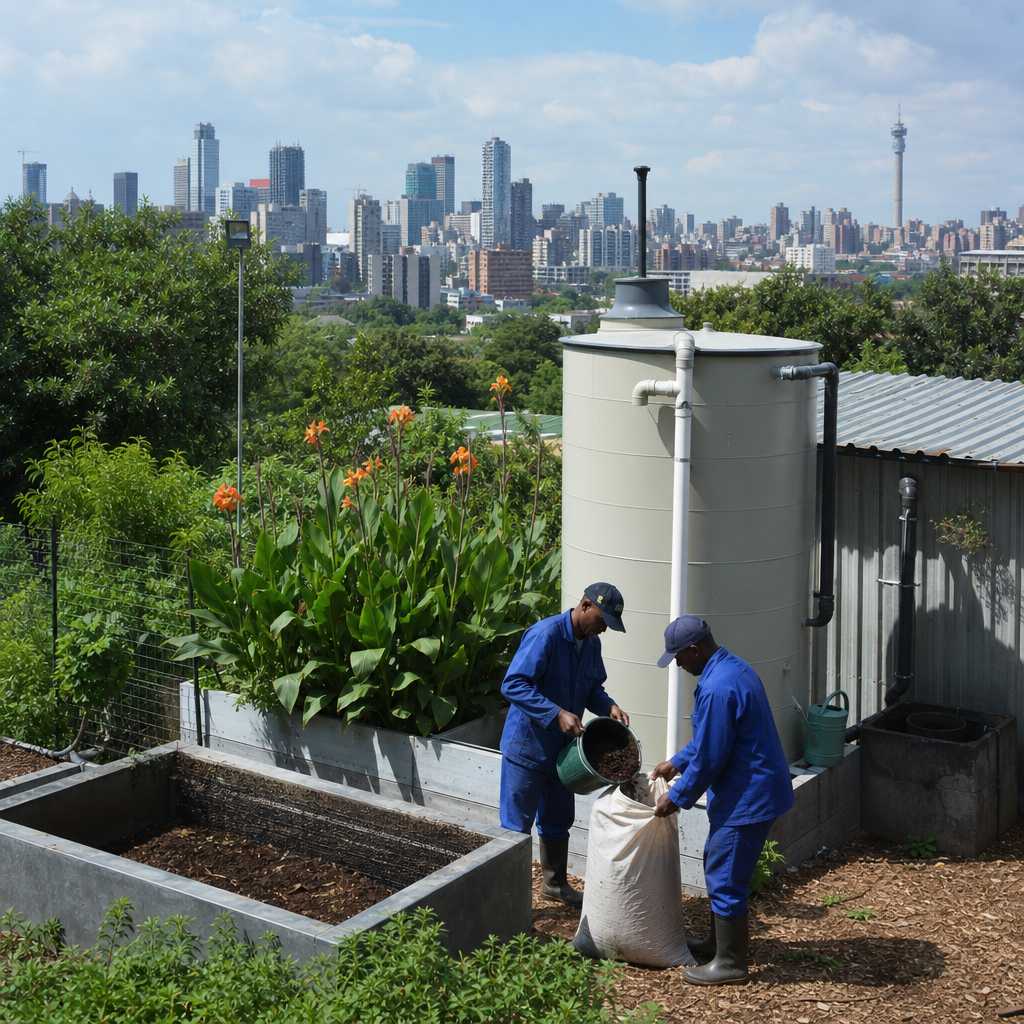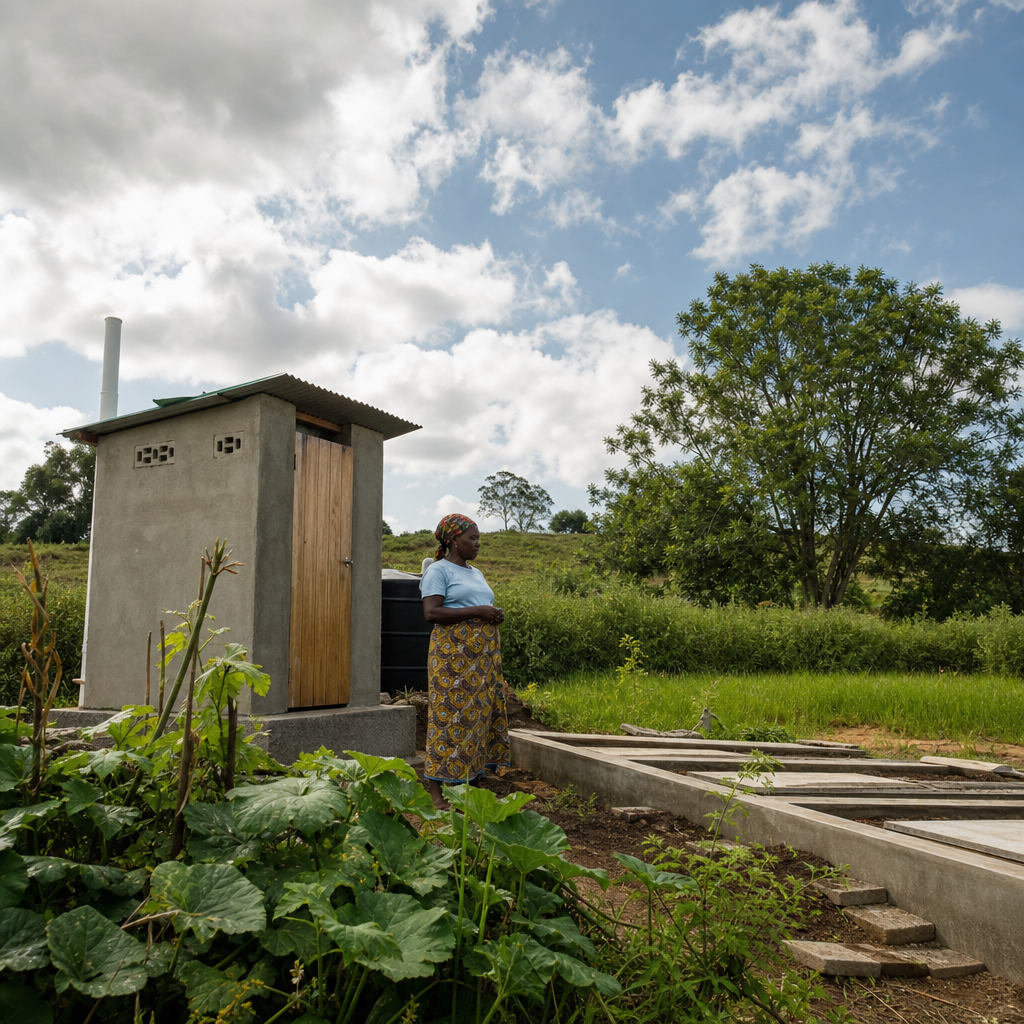
Financing sustainable sanitation in a changing climate requires more than good intentions; it demands durable business models, targeted public investment, and clear recognition that sanitation systems are economic assets as much as public services. Sustainable sanitation refers to services that safely manage human waste across the full chain—containment, emptying, transport, treatment, reuse, and final disposal—while remaining affordable, resilient, and environmentally sound over time. In EcoSan, or ecological sanitation, the goal expands further: recover nutrients, conserve water, protect soils, and reduce pollution instead of treating waste as a costly burden. Economic sustainability in EcoSan means the system can cover lifecycle costs, attract long-term finance, withstand climate shocks, and deliver measurable value to households, utilities, farmers, and municipalities.
I have worked with sanitation programs where toilets were installed quickly but failed within a few rainy seasons because financing focused on construction rather than maintenance, sludge management, and climate resilience. That pattern is common. Around the world, floods inundate pits, drought constrains flush systems, storm surges damage sewers, and heat stresses treatment performance. Climate change makes existing underinvestment more expensive. When sanitation fails, health costs rise, water sources are contaminated, school attendance drops, tourism suffers, and cities face cleanup bills far higher than the cost of prevention. Financing sustainable sanitation therefore matters not only for infrastructure planning, but for productivity, public health, food systems, and fiscal stability.
This hub article explains how to finance economic sustainability in EcoSan comprehensively. It defines the main cost categories, shows where revenue can come from, compares funding instruments, and clarifies how climate adaptation changes investment priorities. It also addresses common questions directly: Who pays for sustainable sanitation? Can resource recovery cover operating costs? What financing works in low-income and climate-vulnerable settings? Which institutions should carry risk? The core answer is straightforward. No single source pays for everything. Successful sanitation finance blends household contributions, public budgets, concessional capital, commercial finance, tariffs, and revenue from recovered products, all structured around service levels and realistic operations. The strongest systems treat sanitation as essential economic infrastructure with social returns and circular value.
Understanding the Full Economics of EcoSan
Economic sustainability begins with accurate costing. Many sanitation projects fail because decision-makers price only the toilet or treatment unit, ignoring the full service chain and long-term replacement needs. A proper economic assessment includes capital expenditure for infrastructure, operating expenditure for routine service, capital maintenance expenditure for major rehabilitation, direct support costs such as regulation and behavior change, and financing costs such as interest and guarantees. In climate-sensitive planning, it also includes resilience costs: elevating facilities above flood lines, sealing pits against infiltration, diversifying water sources, protecting treatment plants from storm events, and building redundancy into collection and reuse networks.
EcoSan systems can have different cost structures from conventional sewerage. Urine-diverting dry toilets, container-based sanitation, decentralized wastewater treatment, fecal sludge treatment plants, co-composting facilities, and biogas digesters often reduce water demand and defer large pipe investments. However, they may require more deliberate service management, user training, and logistics. In practice, the cheapest option on day one is rarely the least-cost option over twenty years. I have seen municipalities reject decentralized treatment because unit costs appeared high, then spend far more on emergency desludging, flood repairs, and downstream pollution control. Lifecycle costing usually reveals the smarter choice.
Economic appraisal should distinguish financial returns from economic returns. Financial returns show whether a provider can repay debt or cover operating costs through fees and sales. Economic returns capture broader benefits such as lower disease burden, reduced groundwater contamination, better school participation for girls, avoided flood damage from blocked drains, and fertilizer substitution when nutrients are recovered. These wider benefits justify public subsidy. Sanitation almost always needs some subsidy because many benefits accrue to society, not only the paying customer. The policy question is not whether to subsidize, but how to target subsidies efficiently and transparently.
Who Pays and Why Blended Finance Matters
The most practical answer to sanitation finance is that different actors pay for different value streams. Households often finance on-premise toilets, landlords fund shared facilities, utilities or municipalities manage network and treatment assets, governments subsidize services for low-income communities, and donors or development banks support market building and climate adaptation. Commercial lenders may finance revenue-generating segments when cash flow is stable enough. In EcoSan, farmers, aggregators, or energy buyers may also pay for compost, biosolids, struvite, treated wastewater, or biogas. Because no single actor captures all benefits, blended finance is essential.
Blended structures use public or concessional money to reduce risk and crowd in other funding. Common tools include results-based financing, viability gap funding, guarantees, first-loss capital, output-based aid, climate adaptation grants, and performance-linked service contracts. For example, a city can use grant funding to build a fecal sludge treatment plant, contract a private operator under service standards, and allow revenue from tipping fees plus compost sales to cover part of operations. If collection demand is uncertain, a municipal minimum revenue guarantee can make the model bankable. That is far more realistic than expecting compost revenue alone to repay all capital costs.
Public finance remains central because sanitation has strong public-good characteristics. National budgets, municipal transfers, and utility cross-subsidies are needed for universal access, regulatory enforcement, and resilience upgrades. Yet public money should be structured to improve performance. Ring-fenced sanitation accounts, transparent tariff policies, service-level agreements, and audited asset management plans make funding more credible. Development finance institutions such as the World Bank, African Development Bank, Asian Development Bank, and regional climate funds increasingly support sanitation where health, adaptation, and urban resilience overlap. Their involvement often improves procurement standards and long-term planning, though projects still need strong local institutions to perform after external support ends.
Revenue Streams in Circular Sanitation Systems
A common question is whether EcoSan can pay for itself through resource recovery. Sometimes it can cover a meaningful share of operating costs, but full cost recovery from by-products alone is uncommon. The economics depend on product quality, transport distance, local fertilizer prices, energy tariffs, regulation, and customer trust. Still, circular revenue is important because it diversifies cash flow, reduces disposal costs, and strengthens the business case for treatment.
Urine can be processed into nutrient products; fecal sludge and organic waste can be co-composted; anaerobic digestion can produce biogas for heat or electricity; dried sludge can become fuel briquettes in some markets; treated effluent can irrigate landscaping or agriculture where standards allow. In East Africa, fecal sludge compost businesses have shown that farmers will buy when nutrient content is consistent and extension support explains application rates. In India, some co-treatment plants improve economics by processing septage alongside wastewater. In Senegal and Bangladesh, scheduled desludging models have improved collection revenues because households pay predictable service fees instead of waiting for emergencies.
| Revenue source | Typical payer | Best use case | Main limitation |
|---|---|---|---|
| User tariffs or service fees | Households, landlords, businesses | Routine collection, O&M, minor repairs | Affordability constraints in low-income areas |
| Tipping fees | Desludging operators | Treatment plant operations | Weak enforcement can encourage illegal dumping |
| Compost or biosolids sales | Farmers, landscapers, distributors | Offsetting treatment costs | Quality control and transport costs |
| Biogas or electricity sales | Utilities, institutions, local users | Sites with stable organic feedstock | High technical and maintenance requirements |
| Treated water reuse | Farmers, industry, municipalities | Water-scarce regions | Regulatory and public acceptance barriers |
| Carbon or climate finance | Climate funds, carbon buyers | Methane reduction and resilience projects | Complex monitoring and verification |
To make these revenue streams credible, project developers need offtake agreements, product standards, and market development. Compost will not sell consistently if nutrient levels vary widely or pathogens are not controlled. Biogas revenue will not stabilize cash flow if feedstock supply fluctuates or generators fail. Treated wastewater has value only where delivery, storage, and quality are reliable. Circular sanitation works best when engineering, commercial planning, and regulation are designed together from the start.
Climate Change Reshapes Sanitation Investment Decisions
Climate change alters both costs and returns. Flood-prone areas need raised latrines, sealed containment, stormwater separation, protected electrical systems, and treatment sites outside high-risk flood zones. Drought-prone regions benefit from dry sanitation, low-flush technology, wastewater reuse, and nutrient recovery that reduces dependence on synthetic fertilizers whose prices can spike with energy markets. Coastal zones may need corrosion-resistant materials and salinity-aware treatment design. These adjustments increase upfront capital costs, but they reduce service disruption and asset loss over time.
Investors and planners should use climate risk screening at concept stage, not as a late compliance exercise. Hazard maps, rainfall intensity projections, groundwater data, and urban growth patterns can change technology choice entirely. A lined pit or septic design suitable today may become unsafe if groundwater rises or flood frequency increases. Likewise, an energy-intensive treatment process may become financially unstable where power reliability declines during heat waves. Resilient sanitation finance therefore prioritizes adaptive capacity, not only lowest initial cost.
There is also a strong case for linking sanitation to adaptation finance. Improved fecal sludge management prevents contamination during floods, decentralized reuse systems reduce pressure on scarce water supplies, and methane capture from waste contributes to mitigation. Although sanitation has historically been underrepresented in climate portfolios, that is changing as cities package projects around resilience, water security, and circular economy outcomes. The strongest proposals quantify avoided losses: lower disease outbreaks, fewer emergency desludging operations, reduced fertilizer imports, and less damage to water bodies and drainage networks.
Building Bankable Projects and Strong Institutions
Bankability is not only about engineering quality. It depends on clear cash flow, accountable institutions, and measurable performance. Lenders and investors ask basic questions: Who owns the assets? Who collects revenue? What happens if users do not pay? Are tariffs approved? Is there demand for emptying and treatment? Can the operator enforce disposal at licensed sites? Without good answers, even technically sound projects struggle to raise capital.
In my experience, the most financeable sanitation projects share several traits. They define service areas clearly, use phased investment rather than oversized plants, match technology to operator capacity, and collect baseline data on waste volumes and willingness to pay. They also separate social policy from commercial accounting. If low-income households need support, the subsidy is explicit and budgeted, rather than hidden inside an impossible tariff. Digital tools help. GIS mapping, scheduled desludging platforms, mobile payments, remote monitoring, and customer databases improve revenue collection and planning accuracy. Utilities using asset management software and key performance indicators typically make stronger funding cases because they can demonstrate where money goes and what outcomes it buys.
Regulation matters just as much as finance. Standards for fecal sludge treatment, compost quality, occupational safety, and wastewater reuse create the trust that markets need. Enforcement against illegal dumping protects legitimate operators. Land tenure and siting rules affect whether treatment plants can be built at all. For municipalities, the shift from infrastructure delivery to service delivery is decisive. Paying contractors only to construct facilities encourages abandonment; paying for verified service outcomes encourages maintenance, emptying, safe transport, and treatment continuity.
Practical Financing Models for Different Contexts
No financing model fits every setting. In dense informal settlements, container-based sanitation or shared managed facilities may need recurring public support because land constraints make household systems impractical. In peri-urban areas, scheduled desludging funded through utility bills or property-linked fees can stabilize treatment demand and reduce illegal discharge. In small towns, clustered decentralized treatment often costs less than extending sewers, especially where terrain or flood risk raises civil works costs. In agricultural zones, reuse can improve economics when transport distances are short and farmer organizations are involved early.
Results-based approaches are particularly useful when governments want accountability. Payments can be tied to verified household connections, safe emptying volumes, treatment performance, or reuse sales that meet standards. Microfinance can help households upgrade toilets when repayment terms align with income patterns, especially if paired with technical assistance and quality-certified masons. Municipal bonds are possible in larger cities with sufficient creditworthiness, but they work best when sanitation sits inside a broader utility or urban resilience investment program. Public-private partnerships can be effective for treatment operations and collection logistics, though they require realistic risk allocation; private operators cannot absorb political tariff risk that only government can manage.
The central lesson is simple: finance the service chain, not isolated hardware. Economic sustainability in EcoSan comes from matching each cost to the right funding source, valuing resilience before disasters strike, and treating recovered resources as supplementary revenue rather than magical solutions. Cities and programs that do this build sanitation systems that survive floods, save water, protect health, and create usable products from waste. As you develop your Economic Aspects content, use this hub to evaluate lifecycle costs, blended funding, climate resilience, and circular revenues together, then apply those principles to each technology, market, and policy decision.
Frequently Asked Questions
What does “financing sustainable sanitation” actually mean in the context of climate change?
Financing sustainable sanitation means funding and sustaining the entire sanitation service chain in a way that is safe, affordable, resilient, and environmentally responsible over the long term. In a changing climate, that goes far beyond building toilets. It includes investing in containment systems, scheduled emptying, transport, treatment infrastructure, reuse opportunities, safe final disposal, monitoring, maintenance, and the institutions needed to keep services functioning year after year. Climate pressures such as flooding, drought, sea-level rise, extreme heat, and storm damage can disrupt every stage of this chain, so financing must account for both everyday operations and future climate risks.
From a practical standpoint, this means moving away from one-time capital spending as the only financial strategy. Sustainable sanitation requires a mix of funding sources: household contributions where affordable, targeted public subsidies for low-income and high-risk communities, private investment where viable, and long-term operational budgets that support service delivery. The strongest approaches treat sanitation systems as economic assets that protect public health, reduce environmental damage, improve productivity, and strengthen urban and rural resilience. When financing is designed this way, sanitation is no longer seen as a cost center alone, but as essential infrastructure that generates measurable social, environmental, and economic value.
Why are durable business models so important for sanitation systems?
Durable business models matter because sanitation is not a one-off construction project; it is a continuous public service. Toilets, septic tanks, sewers, transfer stations, fecal sludge treatment plants, and reuse systems all require regular operation, maintenance, staffing, energy, fuel, replacement parts, customer engagement, and regulatory oversight. If the financial model only covers initial construction, the system often deteriorates quickly, leading to unsafe emptying, untreated waste discharge, failed equipment, and declining user trust. In climate-stressed settings, weak business models are even more vulnerable because shocks such as flood damage, rising operating costs, and service interruptions can rapidly push providers into failure.
A durable sanitation business model creates reliable revenue and aligns incentives across the service chain. That may involve user fees, municipal transfers, performance-based contracts, sanitation tariffs, cross-subsidies, climate adaptation funding, or revenues from resource recovery such as compost, energy, or treated water where markets exist. The key is realism. Not every part of the sanitation chain can or should pay for itself through user charges alone, especially in low-income or high-risk areas. That is why blended models are often the most effective. Public finance can support the elements with high social value but weak direct profitability, while private operators can improve efficiency in areas like emptying, transport, treatment operations, or equipment services. The result is a system that is financially sturdier, operationally dependable, and better able to withstand climate-related stress.
What role should public investment play in making sanitation affordable and climate-resilient?
Public investment is essential because sanitation delivers major public benefits that markets alone do not fully capture. Safe sanitation reduces disease, protects groundwater and surface water, lowers healthcare costs, improves school attendance and worker productivity, and helps communities recover more quickly from climate shocks. These benefits extend far beyond the individual household, which is why relying solely on household payments or commercial returns often leaves major service gaps. Public finance helps close those gaps, especially for low-income populations, informal settlements, remote communities, and flood-prone areas where costs are higher and private incentives are weaker.
In climate terms, public investment is especially important for resilience. Governments and municipalities can fund flood-resistant containment, decentralized treatment in vulnerable zones, drainage integration, emergency desludging capacity, elevated facilities, backup power, stronger monitoring systems, and rehabilitation after extreme weather events. They can also direct subsidies more intelligently by targeting outcomes rather than simply infrastructure counts. For example, instead of only paying for toilet construction, public programs can support safe emptying services, treatment performance, service continuity, and affordability for vulnerable households. This kind of targeted investment strengthens both equity and system performance. In short, public money should be used strategically to reduce risk, unlock additional finance, and ensure that sanitation systems remain functional for the people who need them most.
How can sanitation systems be treated as economic assets rather than just public services?
Treating sanitation systems as economic assets means recognizing that they create ongoing value, not just basic service coverage. Well-financed sanitation protects labor productivity by reducing illness and absenteeism. It preserves water resources and land value by preventing contamination. It lowers disaster recovery costs when systems are designed to withstand floods and extreme weather. It supports local jobs in construction, pit emptying, transport, treatment, maintenance, engineering, digital monitoring, and reuse markets. In some cases, sanitation can even generate revenue through recovered nutrients, compost, biogas, energy, or reclaimed water, although these opportunities vary widely by location and should be assessed carefully.
This asset-based perspective changes how decision-makers evaluate investments. Instead of asking only, “How much does sanitation cost?” they also ask, “What losses does sanitation prevent, and what value does it generate over time?” That shift is important for climate adaptation planning, municipal budgeting, and investor confidence. Assets that protect public health and reduce environmental risk deserve lifecycle financing, routine maintenance, and performance management just like roads, power systems, or water networks. In EcoSan and related approaches, the emphasis on safe reuse and circular resource flows can strengthen this economic case when supported by strong regulation, market demand, and quality control. But even where reuse revenues are limited, sanitation still functions as a high-value public asset because of the broad economic benefits it delivers across communities and local economies.
What financing approaches are most effective for scaling sustainable sanitation in climate-vulnerable communities?
The most effective approaches are usually blended, phased, and tailored to local realities. There is no single financing model that works everywhere because sanitation markets, climate risks, income levels, settlement patterns, and institutional capacity differ widely. In many contexts, the strongest strategy combines public capital investment, concessional finance, household contributions where feasible, and private-sector participation in service delivery. Climate-vulnerable communities often need additional support through adaptation funds, resilience grants, insurance mechanisms, contingency financing, or results-based programs that reward safe and continuous service under difficult conditions.
Successful scaling also depends on financing the full service chain rather than isolated components. For example, subsidizing toilets without ensuring affordable emptying and treatment can create unsafe overflow, illegal dumping, and service breakdowns. Likewise, building treatment infrastructure without reliable collection and transport systems will undercut performance. Effective financing therefore links infrastructure to operations, regulation, data systems, and long-term maintenance. It also prioritizes inclusion. Poor households may need targeted subsidies, flexible payment plans, or service vouchers, while small service providers may need working capital, equipment loans, guarantees, or technical assistance to expand safely. When climate resilience is built into these financial structures from the beginning, communities are better protected against disruption, and sanitation systems are far more likely to remain safe, functional, and financially viable over time.