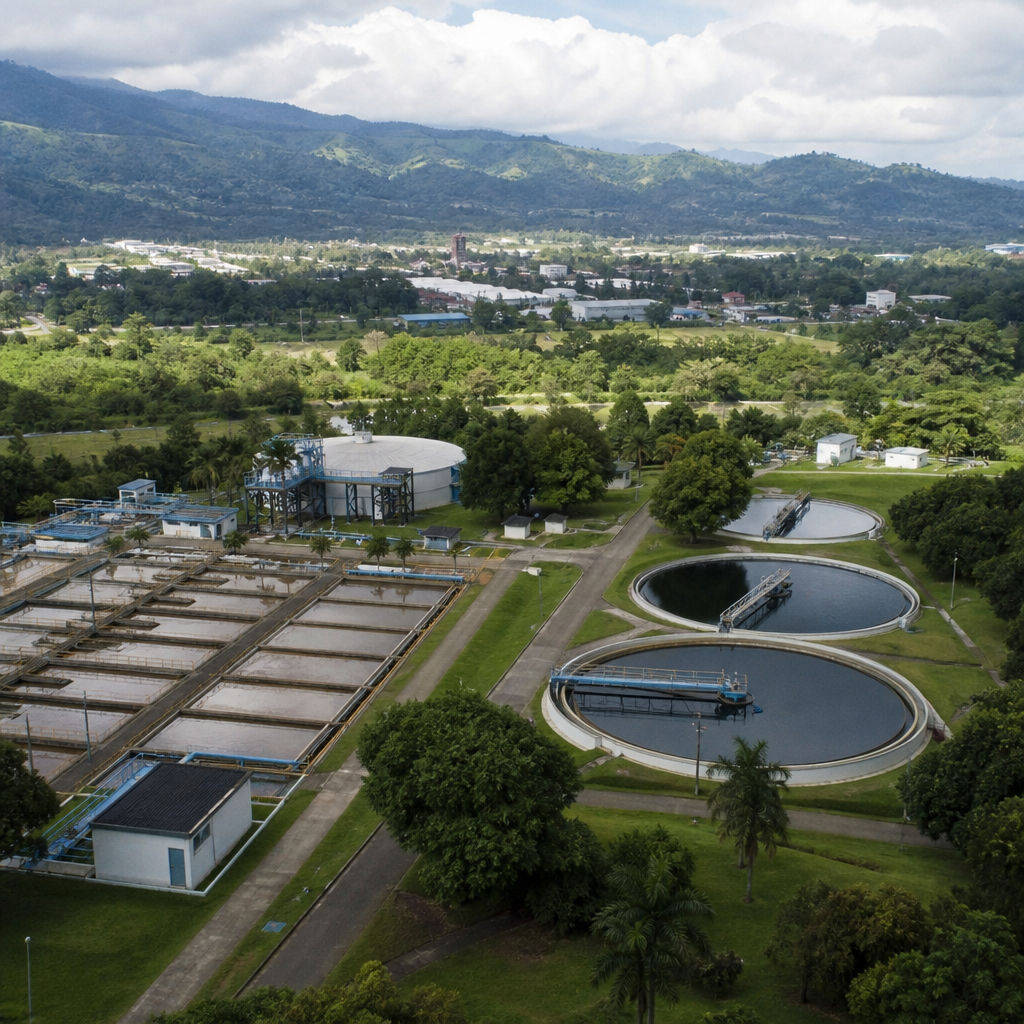
Economic policies that encourage sustainable sanitation shape whether safe toilets, wastewater treatment, and resource recovery become public goods or remain underfunded services. Sustainable sanitation means sanitation systems that protect health, conserve water, prevent pollution, recover nutrients or energy where practical, and remain affordable over time. In work across municipal sanitation planning, I have seen one repeated pattern: technical solutions fail when tariffs are mispriced, subsidies reward the wrong behavior, or regulations ignore operations and maintenance. Economic policy is therefore not a side issue in EcoSan, or ecological sanitation; it is the framework that determines adoption, service quality, and long-term viability.
EcoSan refers to sanitation approaches that treat human waste as a resource stream rather than only a disposal problem. Depending on context, that can include urine diversion, composting toilets, fecal sludge treatment, biogas generation, nutrient recovery, decentralized wastewater reuse, and circular service models that convert sludge into compost, fuel briquettes, or industrial inputs. The economic dimension matters because sanitation markets are fragmented. Households choose toilets, landlords defer upgrades, utilities price water and sewerage, farmers may buy recovered fertilizer, and municipalities bear health and environmental costs that are often invisible in budgets. Without economic strategies that align these actors, systems underperform even when technology is proven.
The urgency is substantial. According to the WHO and UNICEF Joint Monitoring Programme, billions of people still lack safely managed sanitation, and inadequate sanitation contributes to diarrheal disease, stunting, lost school time, groundwater contamination, and degraded waterways. Those impacts carry measurable economic losses through healthcare spending, reduced productivity, lower tourism value, and expensive environmental remediation. Sustainable sanitation policies matter because they move decisions from short-term cheapest cost toward life-cycle value. Good policy can reduce disease, create jobs in service chains, improve fertilizer security, cut treatment costs, and make climate-resilient sanitation bankable. This article explains the core economic strategies in EcoSan, the policy tools that support them, and the tradeoffs leaders must manage.
Why sanitation economics must focus on full system costs
The central mistake in sanitation policy is judging affordability only by construction cost. A toilet, sewer connection, biodigester, or fecal sludge treatment plant is not a one-time purchase; it is part of a service chain with containment, emptying, transport, treatment, reuse or disposal, monitoring, and repair. In city after city, I have seen capital grants fund infrastructure that later fails because no one budgeted for desludging trucks, spare parts, laboratory tests, operator salaries, or enforcement. Sustainable sanitation policy starts with life-cycle costing, which estimates capital expenditure, operating expenditure, major maintenance, financing cost, and replacement timing. That approach allows governments to compare sewer expansion with decentralized treatment, container-based sanitation, and on-site systems on a fair basis.
Full-cost accounting also makes externalities visible. When untreated wastewater contaminates rivers, the utility may appear to save money, but downstream communities pay through health burdens and water treatment costs. When sludge is dumped illegally, municipalities avoid formal treatment expense only to incur flood risk, odor complaints, and land devaluation. Economic policies should therefore incorporate avoided costs and public benefits, not only utility cash flow. Cost-benefit analysis, social return on investment, and environmental valuation are useful tools here. They help justify targeted support for sustainable sanitation where the market alone would underinvest, especially in low-income settlements and rural areas where social gains exceed direct household willingness to pay.
Pricing, tariffs, and smart subsidy design
Tariff design determines whether sanitation services can be maintained without excluding poor households. The most effective policies separate three questions: who pays, how much revenue is needed, and which users require support. Uniformly low tariffs are politically attractive but usually starve utilities and pit maintenance against expansion. Better practice uses cost-reflective tariffs for users who can pay, paired with targeted subsidies for vulnerable groups. Increasing block tariffs, sanitation surcharges linked to water bills, cross-subsidies from commercial users, and performance-based transfers from national government can all play a role if billing systems are strong.
Subsidies work best when they support outcomes rather than merely hardware. For example, a city can subsidize verified fecal sludge collection for low-income households instead of giving every household a toilet voucher regardless of whether pits are safely emptied later. Rural programs can offer partial rebates for urine-diverting dry toilets once installation meets technical standards and households receive training. Utilities can receive output-based aid when treatment plants achieve discharge compliance or reuse targets. In my experience, the strongest schemes avoid blanket giveaways and instead reduce specific market failures: high upfront costs, information gaps, financing constraints, and weak service incentives.
| Policy tool | Primary purpose | Best use case | Main risk |
|---|---|---|---|
| Connection subsidy | Reduce upfront household cost | Peri-urban sewer or condominial systems | Low uptake if monthly bills remain unaffordable |
| Emptying voucher | Support safe fecal sludge management | Dense on-site sanitation areas | Fraud without trip verification |
| Capital grant | Fund infrastructure expansion | Public treatment and transfer facilities | Neglect of operations and maintenance |
| Output-based aid | Pay for verified service results | Utilities and private operators | Weak monitoring can distort claims |
| Tax incentive | Lower cost of approved technologies | Composting toilets, reuse equipment, biogas units | Benefits captured by higher-income buyers |
Well-designed subsidies should be transparent, time-bound where appropriate, and reviewed against measurable goals such as coverage, safe treatment, and affordability ratios. They should also be neutral enough to allow different technical pathways. If policy subsidizes sewers exclusively, cities may ignore lower-cost decentralized options that perform better in water-scarce or informal areas. Economic strategies in EcoSan succeed when finance follows service outcomes and local conditions rather than a single favored technology.
Financing models for circular sanitation systems
Even strong tariffs rarely fund major sanitation expansion alone, so financing structure matters. Municipal budgets, development finance, blended finance, climate funds, green bonds, revolving funds, and microfinance all have roles depending on project scale and risk. Large treatment plants may suit sovereign lending or municipal bonds where revenue and governance are stable. Decentralized toilets, small-bore sewers, and household reuse systems often need microcredit, supplier finance, or pay-as-you-save models. Container-based sanitation companies frequently rely on patient capital in early years because route density and by-product markets take time to mature.
Circular sanitation improves project economics when recovered outputs generate revenue, but policymakers should be realistic. Compost, struvite, reclaimed water, black soldier fly protein, and biogas can offset costs, yet they rarely cover the entire service chain immediately. The bankable approach is to treat resource recovery revenue as one piece of a diversified model, not the sole justification. For example, fecal sludge compost can sell to horticulture if quality standards are met and logistics are efficient, but transport costs can erase margins. Biogas from institutional toilets can reduce fuel purchases for schools or markets, though digesters need steady feedstock and trained operators. Reclaimed water can save utilities money in industrial zones or landscaping, provided dual-pipe systems, pricing, and quality assurance are in place.
Public policy can de-risk these models. Feed-in tariffs for biogas electricity, procurement rules that allow municipalities to buy certified compost, concessional loans for reuse infrastructure, and guarantee facilities for sanitation enterprises all improve investment conditions. Results-based financing is especially useful in EcoSan because it rewards verified outputs such as tons treated, cubic meters reused, or households receiving regular collection. In practice, the best financing packages blend public support for public health benefits with private capital for commercially viable components.
Market creation for recovered resources
Sustainable sanitation becomes more resilient when recovered products have dependable demand. Creating that demand requires standards, certification, logistics, and buyer confidence. Farmers will not purchase sludge-based compost if nutrient content is inconsistent or pathogen risks are uncertain. Industries will not use reclaimed water without reliability and clear quality specifications. Economic policy therefore has to build markets, not merely produce outputs. That means setting technical standards, funding demonstration projects, and supporting extension services that show end users the performance of recovered products.
Several examples illustrate the point. In East Africa, sanitation enterprises have built compost markets by blending treated biosolids with organic waste, testing nutrient content, and targeting higher-value crops where farmers can see yield effects. In India, city-level fecal sludge treatment plants have explored co-composting tied to state fertilizer and solid waste policies, though success varies with transport economics and procurement support. In Europe, phosphorus recovery through struvite has gained traction where wastewater utilities face stricter nutrient discharge limits and fertilizer buyers trust product quality. In each case, regulation and market development advanced together.
Governments can accelerate demand through public procurement. Parks departments can purchase certified compost; road agencies can use biosolids-based soil amendments for revegetation; industrial estates can sign reclaimed water offtake agreements; agriculture ministries can include safe recycled nutrient products in extension programs. Tax policy can help as well by reducing import duties on equipment used in treatment and reuse while avoiding artificial price distortions that make virgin fertilizer or freshwater unrealistically cheap. The principle is simple: recovered sanitation products compete better when policy corrects hidden subsidies and verifies quality.
Institutions, regulation, and incentives for service performance
Economic policy works only when institutions can implement it. Sanitation is often split across ministries, utilities, municipal departments, health regulators, and private operators, which creates blurred accountability. Strong policy assigns responsibility for the whole service chain and ties money to performance. Utilities should know whether they are responsible only for sewers or also for on-site sanitation oversight, septage receiving stations, and treatment compliance. Municipalities should have enforceable mandates for emptying schedules, licensing, land use approvals, and data reporting.
Performance regulation is a powerful but underused tool. Instead of funding agencies simply for assets built, governments can set indicators such as safe containment rates, desludging response time, noncompliant discharge incidents, treatment uptime, and proportion of sludge beneficially reused. Benchmarking utilities against peers can improve both transparency and efficiency. I have found that once city managers can see unit costs per cubic meter treated or per household served, they begin to question assumptions about technology choice, routing, staffing, and energy use. Data discipline changes spending behavior.
Standards matter too. Clear technical standards for composting toilets, septic tank design, sludge treatment, effluent quality, and occupational safety reduce uncertainty for investors and users. So do predictable licensing systems for emptiers and reuse businesses. However, regulation must fit enforcement capacity. If standards are so complex that local authorities cannot inspect them, informal dumping and noncompliance rise. The best regulatory frameworks phase requirements, prioritize the highest-risk failures, and link compliance to tangible incentives such as permit renewal, access to transfer stations, or eligibility for subsidy programs.
Inclusion, behavior, and local economic development
Sustainable sanitation policy cannot focus only on infrastructure finance. Households make decisions based on cash flow, tenure security, convenience, privacy, and trust in service providers. Landlords may delay toilet upgrades if tenants pay the health costs. Women and girls often bear disproportionate costs when facilities are unsafe or unavailable. Informal workers in pit emptying face dangerous conditions without formal recognition. Economic strategies in EcoSan must therefore include social targeting, behavior-informed design, and workforce development.
One effective approach is to bundle sanitation finance with service assurance and user education. A household is more likely to adopt a urine-diverting toilet if it receives a maintenance plan, easy access to parts, and clear information on how collected urine or compost will be handled safely. Landlords respond better to tax rebates, accelerated permitting, or rental compliance enforcement than to awareness campaigns alone. In dense settlements, scheduled desludging financed through small monthly payments often outperforms ad hoc emptying because it smooths household expenditure and reduces illegal dumping incentives.
There is also a jobs dimension. Sanitation service chains create work in manufacturing, installation, collection, transport, treatment, laboratory testing, equipment maintenance, reuse marketing, and digital monitoring. Training and formalization policies can lift productivity and safety at the same time. Mechanized emptying, personal protective equipment, route optimization software, and operator certification are not just labor measures; they improve economics by reducing downtime, spill risk, and reputational barriers to reuse products. A sustainable sanitation economy is built when policy recognizes sanitation as an essential service sector with real employment potential.
Economic policies that encourage sustainable sanitation are most effective when they treat sanitation as a long-term service system, not a construction program. The essential strategies are clear: measure full life-cycle costs, design tariffs that protect affordability without starving operations, target subsidies to verified outcomes, blend public and private finance, create reliable markets for recovered resources, and regulate performance across the whole service chain. When those elements align, EcoSan moves from pilot projects to durable public infrastructure and viable local enterprise.
The practical benefit is not abstract. Communities gain cleaner water, lower disease burden, more resilient nutrient supply, safer work, and better value from public spending. Utilities gain clearer revenue models and stronger incentives. Households gain services they can afford and trust. For policymakers building an economic strategy in EcoSan, the next step is simple: audit current sanitation spending, identify where incentives reward unsafe or unsustainable practices, and redesign finance around measurable service outcomes. That is how sustainable sanitation becomes scalable.
Frequently Asked Questions
1. What kinds of economic policies most effectively encourage sustainable sanitation?
The most effective economic policies are usually the ones that align public health goals with long-term financial sustainability. In practice, that means combining well-designed tariffs, targeted subsidies, public investment, regulatory incentives, and performance-based funding rather than relying on a single policy tool. Sustainable sanitation systems need money for capital costs, daily operation, maintenance, expansion, sludge management, wastewater treatment, and in many cases resource recovery. If policy only funds construction but ignores the ongoing costs of service delivery, systems tend to deteriorate quickly.
Cost-reflective but socially balanced tariff policy is one of the most important foundations. When tariffs are priced far below actual service costs, utilities often cannot maintain sewer networks, treatment plants, or fecal sludge services. At the same time, tariffs that rise too quickly without protections for low-income households can exclude the people who need safe sanitation the most. The best policies usually pair gradual tariff reform with lifeline rates, cross-subsidies, or direct support for vulnerable households. This preserves affordability while still giving operators enough revenue to maintain reliable service.
Targeted public subsidies are also critical. Broad, untargeted subsidies often benefit higher-income users who are already connected to sewered systems, while poorer households in informal or peri-urban areas remain unserved. More effective policies direct subsidies toward household toilet access, septic tank upgrades, sewer connections, container-based sanitation where appropriate, or fecal sludge collection and treatment in underserved areas. In other words, subsidy design matters as much as subsidy size.
Another powerful policy approach is linking funding to measurable outcomes. Governments and development partners increasingly use performance-based grants or results-based financing to reward utilities and municipalities for expanding coverage, improving treatment compliance, reducing pollution, or safely managing sludge. This helps move sanitation policy beyond infrastructure counts and toward actual service quality and environmental performance.
Finally, policies that support resource recovery can strengthen the overall economics of sanitation. These include incentives for producing biogas from sludge, recovering nutrients for agriculture, reusing treated wastewater for industry or irrigation, or encouraging circular economy models where they are technically and financially sound. Resource recovery rarely pays for an entire sanitation system on its own, but it can improve viability, reduce waste, and support broader sustainability goals when integrated carefully.
2. Why are tariffs and subsidies so important in sustainable sanitation policy?
Tariffs and subsidies are central because they determine who pays, how much is paid, and whether sanitation services can survive beyond the first phase of construction. Sanitation is often treated as a technical issue, but in reality it is also a financing and governance issue. Toilets, sewers, treatment plants, drains, sludge trucks, and reuse systems all depend on stable funding streams. If tariffs are set too low, providers struggle to cover operating costs. If subsidies are poorly targeted, public funds may be spent without improving access, equity, or environmental outcomes.
Tariffs matter because sanitation is not a one-time investment. Systems need routine cleaning, pumping, repairs, chemical inputs, electricity, staff, monitoring, and eventual asset replacement. Underpriced tariffs create deferred maintenance, service interruptions, untreated discharges, and declining public trust. In many municipalities, treatment facilities fail not because the technology was inherently unsuitable, but because the utility was never allowed to collect enough revenue to operate them properly. Sound tariff policy helps prevent that cycle.
Subsidies matter because sanitation has strong public health and environmental benefits that markets alone often undervalue. Safe sanitation reduces disease transmission, improves school attendance, protects water bodies, lowers healthcare costs, and can increase productivity. Because many of these benefits are shared across society, there is a clear justification for public financial support. The key is to structure subsidies so they correct market failures and address affordability barriers without distorting incentives.
Well-designed subsidy systems target the right users and the right parts of the sanitation chain. For example, capital subsidies may help low-income households build toilets or connect to networks, while operational subsidies may support treatment functions that generate broad environmental benefits but limited direct revenue. Governments may also subsidize service in dense low-income settlements where conventional cost recovery is especially difficult. This is usually more effective than blanket subsidies that keep tariffs artificially low for everyone, including wealthier users.
The most durable policy mix often combines transparent tariffs with smart subsidy design. Users who can pay should contribute to service costs, while public finance should protect vulnerable groups and fund benefits that accrue to the wider community. That balance is what makes sanitation both sustainable and equitable over time.
3. How can governments make sanitation affordable for low-income households without undermining system sustainability?
Affordability and sustainability are not opposites, but they do require careful policy design. The goal is not simply to make sanitation cheap at the point of use. The goal is to ensure that everyone can access safe sanitation while the system still has enough funding to function reliably over the long term. Governments can achieve this by targeting assistance where it is truly needed instead of suppressing prices across the board.
One of the strongest approaches is targeted support for low-income households. This can take the form of connection subsidies, vouchers, installment payment plans, output-based aid, or social protection mechanisms that help households pay for toilets, septic improvements, or sewer access. These tools reduce the upfront barriers that often prevent adoption. In many places, the largest obstacle is not the monthly bill but the initial connection or construction cost. Breaking that cost into manageable payments can significantly increase access.
Tariff design also plays a major role. Governments and regulators can use lifeline tariffs, increasing block structures, or direct income-based support to protect basic sanitation access. However, tariff policy should be designed carefully. A poorly structured block tariff may not help the poorest households if multiple families share one connection, or if unconnected households rely on more expensive informal services. That is why affordability policy must reflect how people actually access sanitation, not just how systems are designed on paper.
Governments can also support lower-cost service models that still meet health and environmental standards. In some contexts, decentralized wastewater treatment, scheduled desludging, simplified sewers, shared facilities with strong maintenance plans, or container-based systems may be more financially realistic than conventional sewer expansion. Economic policy should remain technology-neutral enough to support the service model that best fits local density, water availability, land constraints, and institutional capacity.
Importantly, protecting affordability does not mean ignoring provider viability. Utilities and service operators need predictable revenue and timely public transfers if they are expected to serve poor communities well. Delayed subsidies, weak billing systems, and political resistance to tariff adjustments often damage service quality first in low-income areas. The most effective affordability policies are transparent, funded, and monitored, so that social protection does not become an excuse for chronic underinvestment.
4. What role do incentives for wastewater treatment and resource recovery play in sustainable sanitation?
Incentives for wastewater treatment and resource recovery help shift sanitation policy from basic disposal toward environmental protection and circular use of materials. Traditional sanitation systems often focus narrowly on removing waste from households, but sustainable sanitation asks what happens next. If wastewater is discharged untreated or sludge is dumped unsafely, health and environmental risks simply move downstream. Economic policy can correct this by rewarding treatment, safe reuse, and pollution reduction.
Wastewater treatment often suffers because its benefits are diffuse while its costs are immediate and visible. Municipalities may hesitate to invest in treatment plants or sludge treatment facilities when budgets are constrained and political incentives favor more visible infrastructure. This is where policy tools such as environmental compliance standards, pollution charges, treatment subsidies, concessional finance, and performance grants become important. They help make treatment financially and politically feasible rather than optional.
Resource recovery can strengthen that case. Treated wastewater may be reused for irrigation, landscaping, industrial processes, or groundwater recharge where regulations and local conditions allow. Fecal sludge and biosolids can sometimes be processed into compost, soil amendments, fuel products, or biogas. Nutrient recovery can reduce dependence on imported fertilizers in some agricultural systems. These opportunities do not eliminate the need for public investment, but they can create supplementary revenue, reduce disposal costs, and improve the overall value proposition of sanitation infrastructure.
That said, policy must be realistic. Resource recovery should not be oversold as a guaranteed profit center. Market demand, transport costs, product quality, regulatory compliance, and public acceptance all affect viability. Many projects fail when policymakers assume recovered products will automatically cover treatment costs. Strong economic policy therefore includes feasibility assessment, quality standards, procurement support, market development, and incentives tied to verified outputs rather than optimistic projections.
When designed well, incentives for treatment and recovery help sanitation systems deliver multiple public benefits at once: cleaner waterways, lower disease burden, reduced pollution, better water stewardship, and productive reuse of nutrients or energy. This broader policy view is what makes sanitation truly sustainable rather than merely functional.
5. How can municipalities and national governments design sanitation policies that remain effective over time?
Long-term effectiveness depends on treating sanitation as a public service system, not as a short-term construction program. Policies remain effective when they create stable institutions, realistic financing, accountability for results, and enough flexibility to adapt to changing urban growth, climate pressures, and service demands. Many sanitation strategies look strong at launch but weaken later because they focus too heavily on capital spending and too little on operations, enforcement, and asset management