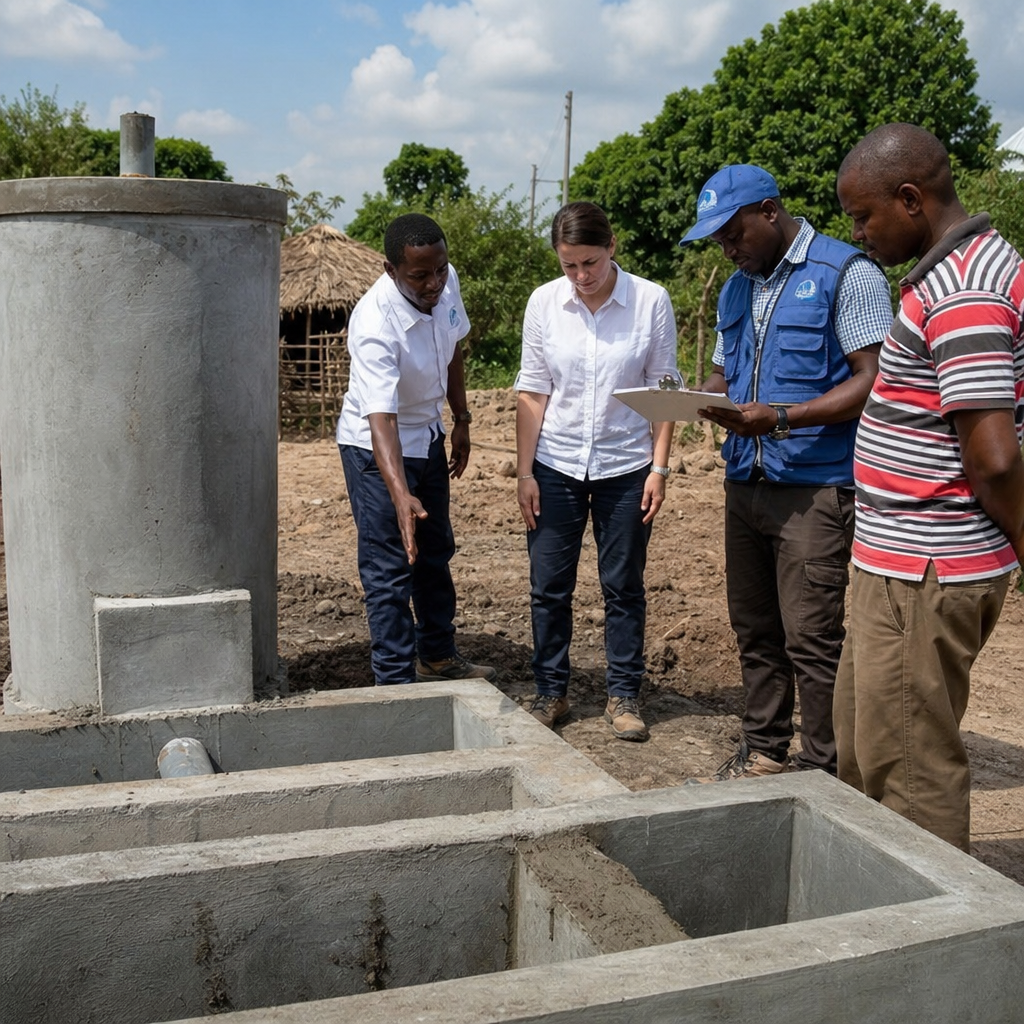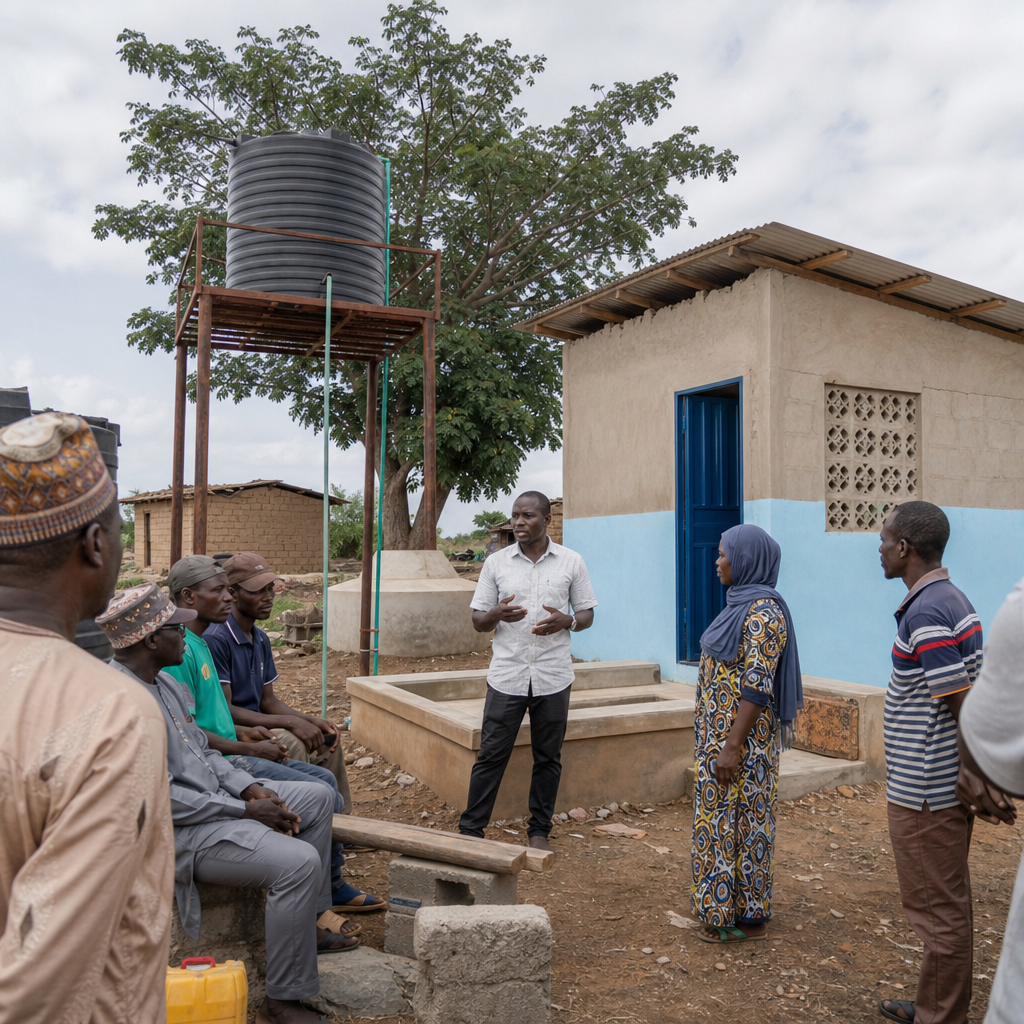
Leveraging local resources for sustainable sanitation financing is the practical foundation of any successful ecological sanitation program, because toilets, treatment systems, and reuse networks only last when communities can pay for construction, operation, maintenance, and eventual replacement. In this context, sustainable sanitation financing means building a reliable mix of household payments, local government budgets, community savings, small business revenue, and external capital that supports safe sanitation over the full service chain. Ecological sanitation, often shortened to EcoSan, refers to sanitation systems designed to conserve water, recover nutrients, protect public health, and turn human waste into usable products such as compost, treated effluent, or soil amendments. Financing and investing in EcoSan therefore goes beyond buying hardware. It includes funding behavior change, operator training, fecal sludge collection, treatment monitoring, product quality control, and market development for reused outputs. This matters because sanitation failures are rarely technical in my experience; they are usually financial. A well-designed urine-diverting dry toilet, decentralized wastewater treatment unit, or composting system can perform for years, but only if cash flow matches service obligations. For municipalities, NGOs, utilities, cooperatives, and local entrepreneurs, the central question is not whether EcoSan is beneficial. It is how to mobilize local resources so the system remains affordable, investable, and resilient while delivering environmental and economic value.
Why local resource mobilization determines EcoSan success
Local resource mobilization matters because sanitation is an ongoing service, not a one-time asset purchase. Capital expenditure covers land, design, civil works, toilets, pipes, storage tanks, transfer stations, treatment units, and safety equipment. Operating expenditure then continues every month through labor, transport, water, electricity, spare parts, consumables, inspections, and compliance. When these recurring costs are ignored, infrastructure quickly degrades. I have seen projects with donor-funded toilets fail within two years because no one set a tariff for pit emptying, no budget existed for replacement parts, and no local operator had an incentive to keep the chain functioning. By contrast, systems built around local financing discipline tend to survive. Households accept a user fee when service is consistent. Farmer groups buy compost when product quality is predictable. Municipal councils defend sanitation line items when they can see reduced dumping, cleaner drains, and lower remediation costs. Local money creates local accountability.
EcoSan has unique financing characteristics compared with conventional sewer expansion. Upfront costs may be lower in dense low-income settlements where decentralized systems avoid major trunk infrastructure, yet transaction costs can be higher because projects often involve many small assets and many users. Revenue can also come from multiple points: toilet subscriptions, container collection fees, tipping fees, treated water sales, compost sales, carbon-related income where methodologies allow, and avoided fertilizer expenses for users of recovered nutrients. These revenue streams are promising, but they are rarely sufficient on their own in the early years. That is why strong hub planning links public finance, household finance, and enterprise finance from the start. The financing goal is not to force full cost recovery from poor users. The goal is to align each cost with the most suitable source of funds.
Understanding the full sanitation value chain and cost structure
Any hub page on financing and investing in EcoSan should begin with the sanitation value chain: user interface, containment, collection, transport, treatment, reuse or disposal, and oversight. Every stage has costs, risks, and potential income. A urine-diverting toilet may need higher-quality pans, vaults, and user education than a basic pit latrine. A container-based sanitation service may require recurring pickup logistics and a vehicle fleet, but it can work well where space is limited and groundwater protection is critical. A decentralized wastewater treatment system may generate treated effluent for irrigation, yet treatment performance must meet local environmental and health rules. Financial planning therefore starts by mapping who pays for each stage and who benefits from each output.
One of the most useful tools here is lifecycle costing. Instead of presenting only construction cost per toilet or cost per treatment unit, lifecycle costing estimates total cost over ten to twenty years, including major maintenance and replacement. Another essential concept is affordability analysis. A tariff that balances the operator’s books may still be unaffordable for low-income households, especially where rent, food, and transport consume most income. A realistic model combines tariffs with targeted subsidies, public health transfers, or cross-subsidies from higher-income users. Sanitation economists often separate costs into capital expenditure, operating expenditure, capital maintenance expenditure, direct support costs, and indirect support costs. This structure makes hidden gaps visible. Training, regulation, and community engagement are support costs, but without them the infrastructure underperforms and investors lose confidence.
Funding sources: matching the right money to the right purpose
Different financing sources serve different roles in EcoSan. Grants are best used for public goods and market creation: piloting a new service model, funding hygiene promotion, establishing laboratories, or subsidizing inclusion for the poorest households. Municipal budgets are appropriate for neighborhood drainage interfaces, treatment land, enforcement, and service provision where health externalities justify public spending. Household contributions work well for connection fees, toilet upgrades, or regular service payments if installment options exist. Local savings groups, rotating credit associations, and cooperatives can finance toilets in settlements where formal banking is weak. Microfinance institutions may support household sanitation loans when repayment schedules match income patterns and the product is easy to verify.
Commercial finance becomes relevant when an EcoSan enterprise has dependable cash flow. Banks and impact investors usually want evidence of repayment capacity, not just social benefit. That means signed service contracts, historical collection rates, unit economics, and realistic demand for reuse products. Blended finance can bridge the gap. For example, a municipality may provide land and a partial capital grant, a development partner may absorb early technical assistance costs, and a local lender may fund working capital for vehicles and inventory. Results-based financing is another effective mechanism. In this structure, providers receive payments after verified outputs such as toilets installed, households served, sludge safely treated, or compost meeting quality standards. Verification reduces misuse of funds and focuses attention on performance, not just procurement.
| Financing source | Best use in EcoSan | Main advantage | Main limitation |
|---|---|---|---|
| Household payments | User fees, toilet upgrades, service subscriptions | Builds ownership and recurring cash flow | Affordability constraints for low-income users |
| Municipal budget | Public infrastructure, treatment land, oversight | Supports health and environmental public goods | Competes with other local priorities |
| Microfinance | Small loans for toilets and home systems | Expands access where savings are limited | Requires repayment discipline and suitable products |
| Commercial debt | Vehicles, equipment, enterprise expansion | Scales proven business models | Lenders require strong financial records |
| Grants or subsidies | Pilots, inclusion, technical assistance | Reduces early-stage risk | Not reliable for long-term operations |
Building viable business models around resource recovery
Resource recovery is often the most distinctive investment thesis in EcoSan, but it needs disciplined market analysis. Compost, co-compost, dried sludge-based soil conditioners, treated wastewater, black soldier fly larvae feed inputs, and recovered nutrients all have potential value. However, investors should assume that reuse revenue is supplemental until proven otherwise. In projects I have worked on, compost sales improved margins only after product testing, packaging, and farmer demonstration plots established trust. Farmers compare recovered products against urea, NPK blends, manure, and free organic waste. They buy based on nutrient content, moisture, transport cost, and crop response, not environmental messaging alone. That means product certification, extension support, and consistent supply matter as much as production.
A strong EcoSan business model identifies the core paying customer. Sometimes it is the household paying for collection. Sometimes it is the municipality paying for safe treatment under a service contract. Sometimes it is a real estate developer seeking compliance in an off-grid site. Resource sales can then add upside. Container-based sanitation enterprises provide a clear example. Their recurring revenue usually comes from subscriptions for regular collection, while compost or fuel products from treated waste contribute a smaller share. Decentralized wastewater treatment on institutional campuses can follow another model: the institution funds treatment to meet discharge rules and reduce water purchases, then reused water lowers landscaping costs. In both cases, financial viability depends on contracts, operational discipline, and measurable savings rather than optimistic assumptions about by-product sales.
How local governments, communities, and enterprises can share risk
Risk allocation is one of the most overlooked parts of sanitation finance. If one actor carries all technical, demand, and payment risk, the model usually stalls. Local governments can reduce project risk by providing land, streamlined permitting, or guaranteed service payments tied to verified treatment. Communities can reduce social risk through participatory design, tariff discussions, and monitoring committees that help maintain usage. Enterprises can manage operational risk by standardizing collection routes, preventive maintenance schedules, and occupational safety procedures. Development partners can absorb innovation risk through pilot funding or first-loss capital in blended structures.
Public-private partnerships in sanitation work best when responsibilities are specific. A municipality might retain ownership of treatment assets while a private operator runs collection and processing under a performance contract. A cooperative may manage compost sales because it already has local agricultural relationships. A women-led savings group may administer household toilet loans because repayment trust exists at neighborhood level. This sharing of roles is not just governance theory. It directly affects financeability. Lenders and grantmakers are more comfortable when service standards, reporting requirements, and payment triggers are written clearly. Vague partnership agreements create disputes, and disputes interrupt cash flow.
Metrics investors and decision-makers should track
Financing and investing in EcoSan requires better metrics than simple toilet counts. Decision-makers should track cost per person served, collection efficiency, treatment compliance, tariff collection rate, operating ratio, debt service coverage, customer retention, downtime, and occupational safety incidents. For resource recovery, monitor output quality, rejection rates, average sale price, and the share of revenue coming from reused products. Public sector planners should also examine avoided costs, such as reduced drain cleaning, lower emergency desludging, or deferred sewer expansion. These indirect economic benefits often justify public co-financing even when direct enterprise revenue is modest.
Health and environmental indicators matter because they protect the investment case. Testing for pathogen reduction, nutrient content, moisture, and heavy metals can determine whether compost is marketable and safe. Effluent quality should be checked against local standards and, where relevant, World Health Organization guidance on wastewater reuse. Credit committees may not read laboratory reports in detail, but they care whether regulatory noncompliance could shut a facility down. Good data also improves refinancing opportunities. Once a project can show two or three years of stable service and audited accounts, the cost of capital usually improves.
Common financing mistakes and how to avoid them
The most common mistake is treating sanitation as a construction project instead of a service business. This leads to underbudgeted operations, no reserve for capital maintenance, and no attention to customer payments. Another mistake is overestimating revenue from recovered products before a market exists. A third is choosing technology for prestige rather than fit. I have seen mechanically complex units installed where spare parts were unavailable and operator turnover was high. Simpler decentralized designs, though less impressive on paper, would have delivered better returns because they matched local capabilities.
Projects also fail when tariffs are set politically rather than financially, or financially rather than socially. The solution is transparent tariff design backed by affordability analysis and targeted subsidy policy. Finally, many programs ignore asset management. Pumps, liners, containers, drying beds, and transport vehicles all have replacement cycles. If reserves are not funded, breakdown becomes inevitable. The best EcoSan finance plans are conservative, phased, and evidence-led. They start with a service model people will pay for, pair it with public support where external benefits are strong, and expand only after operational proof.
Local resource mobilization is the durable path to sustainable sanitation financing because it turns EcoSan from a donor-dependent intervention into an accountable local service economy. The strongest hub strategy for financing and investing in EcoSan combines lifecycle costing, realistic tariffs, targeted subsidies, public co-financing, and carefully tested resource recovery revenue. It recognizes that sanitation creates private value for households, public value for cities, and productive value for agriculture and water management. Each benefit should be matched to an appropriate funding source. For practitioners, the practical lesson is clear: start with the full service chain, price operations honestly, validate demand for recovered products, and assign risk to the parties best able to manage it.
For readers exploring the economic aspects of EcoSan, this page serves as the entry point for deeper work on household sanitation loans, blended finance structures, municipal budgeting, fecal sludge enterprise models, reuse market development, tariff design, and investment readiness. The common thread across all of those topics is local capability backed by disciplined finance. When communities, local governments, lenders, and sanitation enterprises invest together, EcoSan systems are more likely to stay safe, affordable, and productive for the long term. Use this framework to review your current sanitation plans, identify the missing financing links, and build a funding mix that can carry EcoSan from pilot stage to lasting public service.
Frequently Asked Questions
What does “leveraging local resources” mean in sustainable sanitation financing?
Leveraging local resources means building sanitation systems around the money, materials, labor, institutions, and business activity that already exist within a community or local economy. Instead of relying only on short-term grants or outside donors, this approach combines household contributions, municipal budget allocations, community savings groups, microfinance, local private sector services, and revenue from sanitation-related enterprises to create a stronger and more durable financing base. In practical terms, it can include families paying in installments for toilet upgrades, local governments funding public infrastructure or targeted subsidies, cooperatives pooling savings for shared facilities, and entrepreneurs earning income from pit emptying, compost production, or resource recovery.
The reason this matters is simple: sanitation is not a one-time expense. Toilets and treatment systems need routine operation, repairs, sludge management, supervision, and eventual replacement. If financing plans cover only construction, systems often fail after the first breakdown or when maintenance is neglected. Local resource mobilization reduces that risk because it ties the sanitation service to ongoing local commitment and accountability. It also improves resilience, since a community with multiple local funding streams is less vulnerable when donor support ends, political priorities shift, or economic conditions change.
Just as importantly, leveraging local resources helps align sanitation investments with what households and local institutions can realistically sustain over time. It encourages phased improvements, better cost recovery, and stronger local ownership. When communities contribute financially or through labor and management, they are often more invested in upkeep and service quality. That does not mean external finance is unimportant. In many cases, outside capital is still needed for major infrastructure, technical support, or support for low-income households. The goal is not to replace external support entirely, but to use it strategically so it strengthens, rather than substitutes for, local financing capacity.
Why is local financing so important for long-term ecological sanitation success?
Local financing is essential because ecological sanitation systems only deliver lasting health, environmental, and economic benefits when they continue functioning year after year. A toilet that cannot be emptied, a treatment unit that cannot be repaired, or a reuse system that lacks operating funds quickly becomes a burden instead of a solution. Long-term success depends on having reliable resources for the full sanitation service chain: user access, collection, transport, treatment, safe reuse or disposal, monitoring, and asset replacement. Local financing creates the continuity needed to support all of these functions beyond the initial construction phase.
Ecological sanitation often involves decentralized systems, nutrient recovery, composting, urine diversion, fecal sludge management, or localized treatment and reuse models. These approaches can be highly effective, but they usually require regular management, user education, and some degree of service coordination. If financing is weak, even technically sound systems can fail because no one is paying for consumables, operator wages, equipment maintenance, quality control, or outreach. That is why durable funding mechanisms matter just as much as engineering design. A system is only sustainable if the financial model behind it is sustainable.
Another major advantage of local financing is that it supports adaptation to local conditions. Communities differ widely in income patterns, settlement density, water availability, agricultural demand for reuse products, and the strength of local institutions. Financing models built from local realities are usually more practical than imported templates. They can be designed around seasonal incomes, neighborhood management structures, available enterprises, and realistic affordability thresholds. Over time, this flexibility helps communities improve coverage, maintain quality, and expand services incrementally rather than waiting for occasional large infusions of outside funding.
What local funding sources can communities combine to pay for sanitation infrastructure and services?
Communities can draw from a surprisingly broad mix of local funding sources, and the most effective sanitation financing strategies usually combine several of them rather than depending on one alone. Household payments are often the starting point. These may include up-front contributions, installment plans, monthly service fees, or pay-per-use arrangements, depending on whether the sanitation model is household-based, shared, or service-oriented. Local government budgets are another critical source, especially for public goods such as drainage interfaces, treatment facilities, regulatory oversight, school sanitation, and subsidies for low-income households.
Community savings groups, rotating savings associations, cooperatives, and self-help funds can also play a major role, particularly where households need help managing larger one-time construction costs. These mechanisms often work well because they are trusted locally and can be tailored to local repayment patterns. In parallel, microfinance institutions, local banks, and credit unions may provide sanitation loans for households, landlords, or small service providers. On the supply side, small businesses can generate revenue through toilet construction, emptying services, transport, treatment operations, compost sales, biogas, or other resource recovery activities. Where these enterprises are viable, they can offset operating costs and strengthen the local sanitation economy.
Other local resources are equally important even when they are not strictly cash. Communities may contribute land, construction materials, volunteer labor, management time, or in-kind support for operations. Local institutions such as schools, health facilities, markets, and employers may co-finance shared sanitation where they benefit directly. In stronger municipal systems, sanitation can also be partially supported through property taxes, utility cross-subsidies, or earmarked local fees. The key is to map who benefits, who can pay, what costs recur over time, and which funding source is best matched to each part of the service chain. Capital-intensive assets may need public or blended finance, while routine operations are often better supported by predictable user fees and local business revenue.
How can communities make sanitation affordable for low-income households without undermining financial sustainability?
Affordability and sustainability do not have to be in conflict, but they do require careful design. The most common mistake is assuming that either everyone must pay full cost immediately or that services should be provided free of charge indefinitely. In reality, sustainable sanitation financing often depends on smart cost sharing. Poor households may need targeted support for initial construction or connection costs, while routine operating expenses can be covered through smaller, more manageable payments over time. This approach protects access without eliminating the financial discipline needed to keep systems running.
Targeted subsidies are usually more effective than blanket subsidies. For example, local governments or development partners can subsidize the poorest households, people with disabilities, tenants in informal settlements, or vulnerable groups, while households with greater ability to pay contribute a larger share. Flexible repayment systems also make a big difference. Instead of requiring one large payment, communities can use installment plans, savings groups, microloans, seasonal repayment schedules, or sanitation service subscriptions. Lower-cost technology options and phased upgrades can further improve affordability by allowing households to start with a safe basic service and improve over time as income permits.
Financial sustainability is protected when affordability measures are transparent, well-targeted, and linked to actual cost structures. Someone still has to cover operation, maintenance, emptying, treatment, and replacement, so financing plans should clearly identify which costs are borne by users, which by local government, and which by subsidies or concessional finance. Cross-subsidies can help in some settings, such as using commercial user fees to support public or low-income services. Strong billing systems, clear service standards, and community communication are also essential. When people understand what they are paying for and see that services are reliable, willingness to pay tends to improve, which strengthens the overall financial model.
What are the best steps for developing a sustainable local sanitation financing strategy?
The best financing strategies begin with a full understanding of the sanitation service chain and its real costs. Communities and local authorities should identify not only what it costs to build toilets or treatment units, but also what it costs to operate them, empty them, transport waste, maintain equipment, train users, monitor safety, and replace assets at the end of their useful life. Many sanitation projects fail because these ongoing costs are underestimated or ignored. A realistic financing plan starts with lifecycle costing, so decision-makers can match each cost category with the most appropriate funding source.
The next step is to assess local capacity and opportunity. This includes household willingness and ability to pay, the strength of local government budgeting, the presence of savings groups or lenders, private sector service providers, agricultural demand for reuse products, and institutional partners such as schools, markets, or health centers. Once that landscape is clear, communities can design a blended financing model. For example, household investments may cover on-plot facilities, municipal funds may support treatment infrastructure, user fees may finance regular service delivery, and local enterprises may generate supplementary revenue from resource recovery. External grants or concessional loans can then be used strategically to fill gaps, de-risk investment, or support vulnerable populations rather than carrying the full system indefinitely.
Finally, a strong local sanitation financing strategy needs governance, accountability, and periodic review. Roles must be clear: who collects payments, who manages funds, who delivers services, who monitors quality, and who pays for major repairs or future replacement. Transparent financial management builds trust, and trust is essential for long-term willingness to pay. Communities should also track service performance, revenue collection, maintenance costs, and equity outcomes so the financing model can be adjusted over time. The most successful strategies are rarely static. They evolve as demand grows, businesses mature, regulations improve, and local institutions gain experience. In that sense, sustainable sanitation financing is not just about finding money once; it is about building a local system that can keep sanitation services functioning for decades.