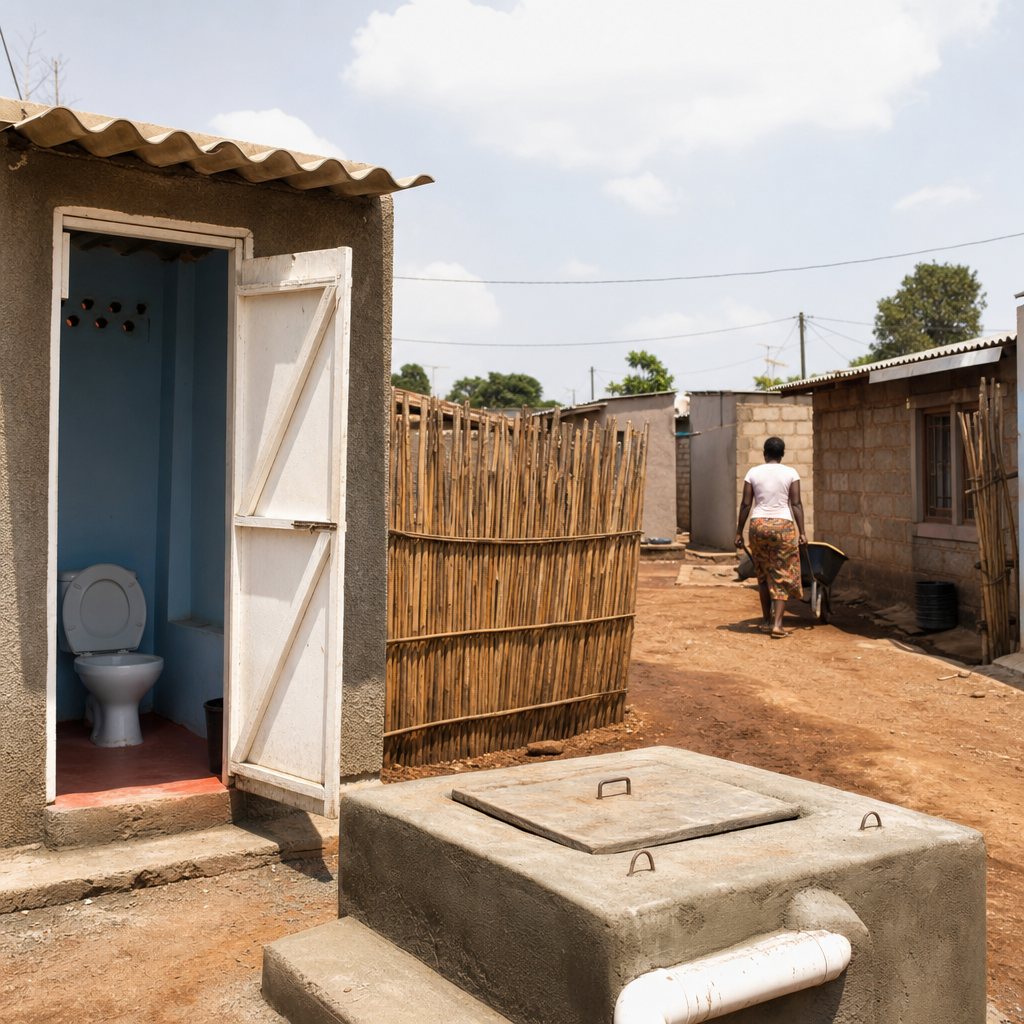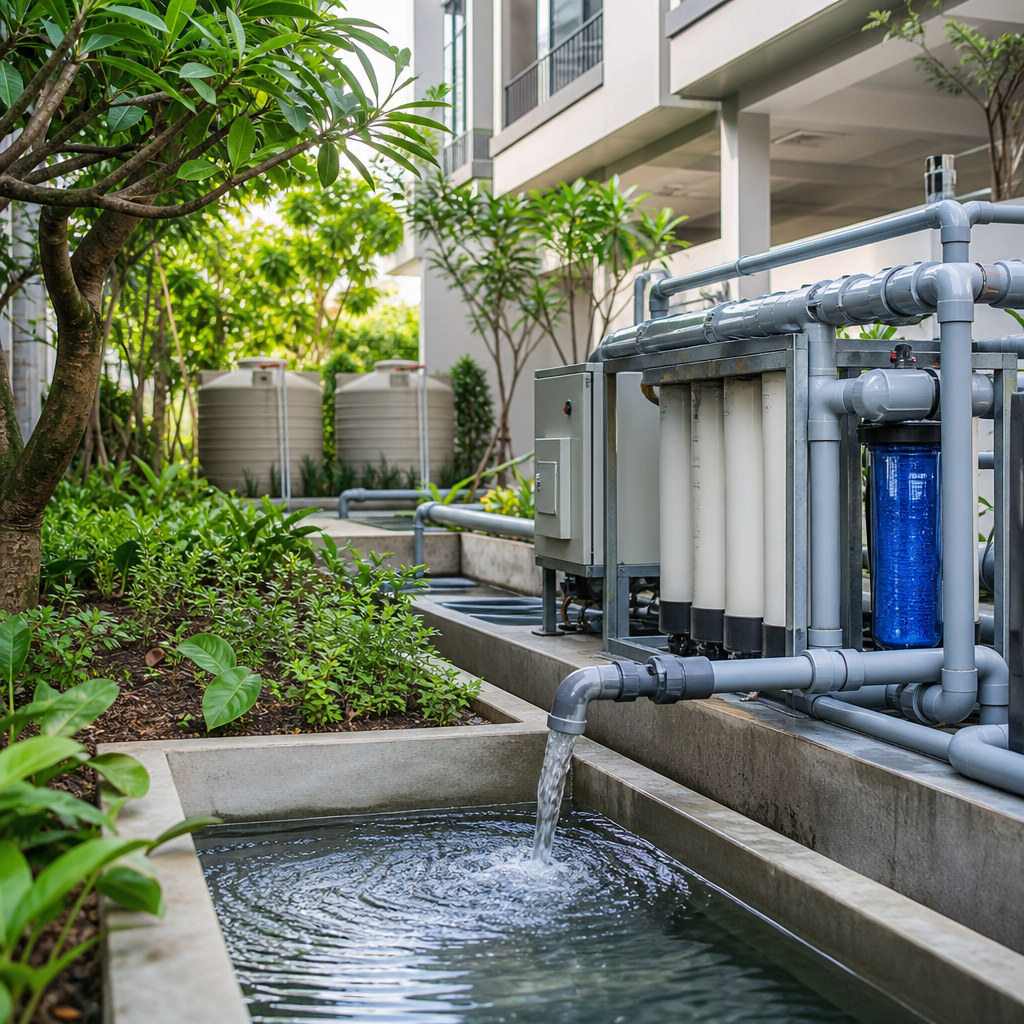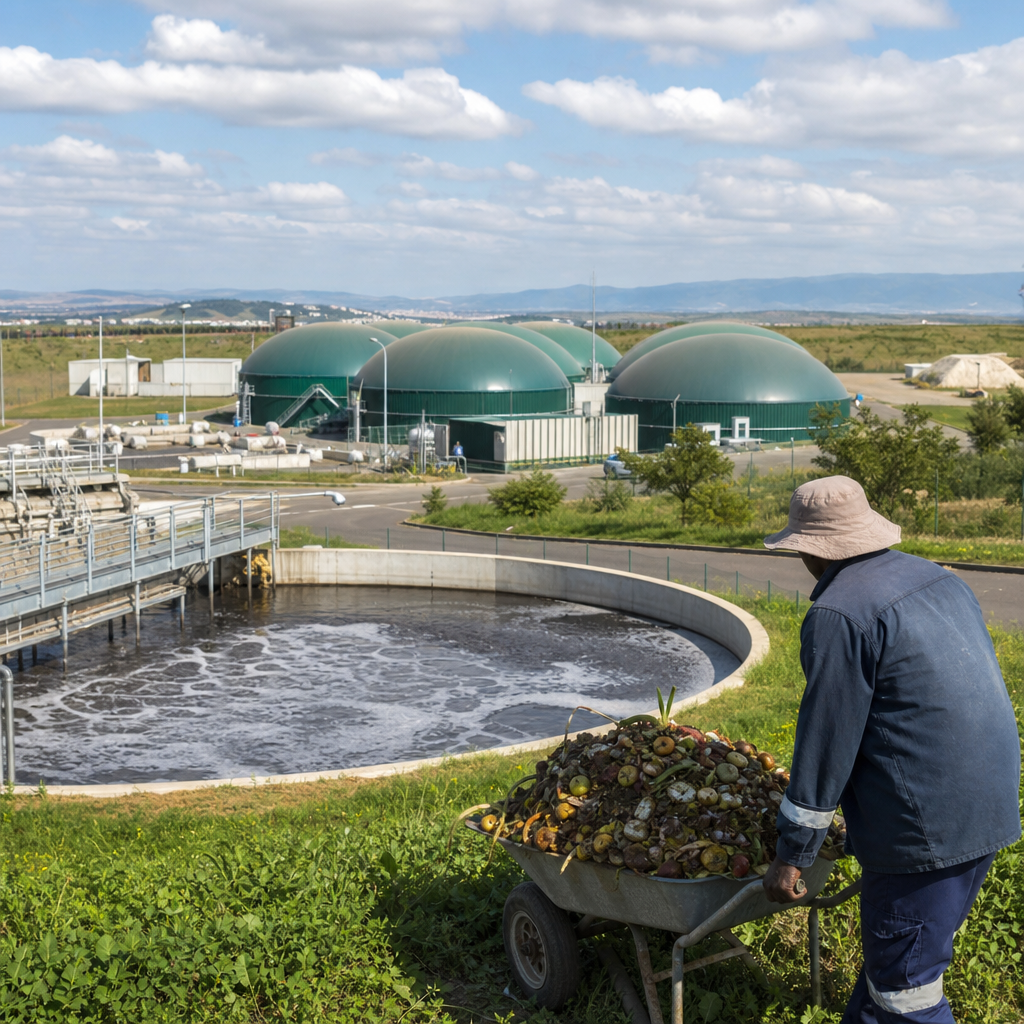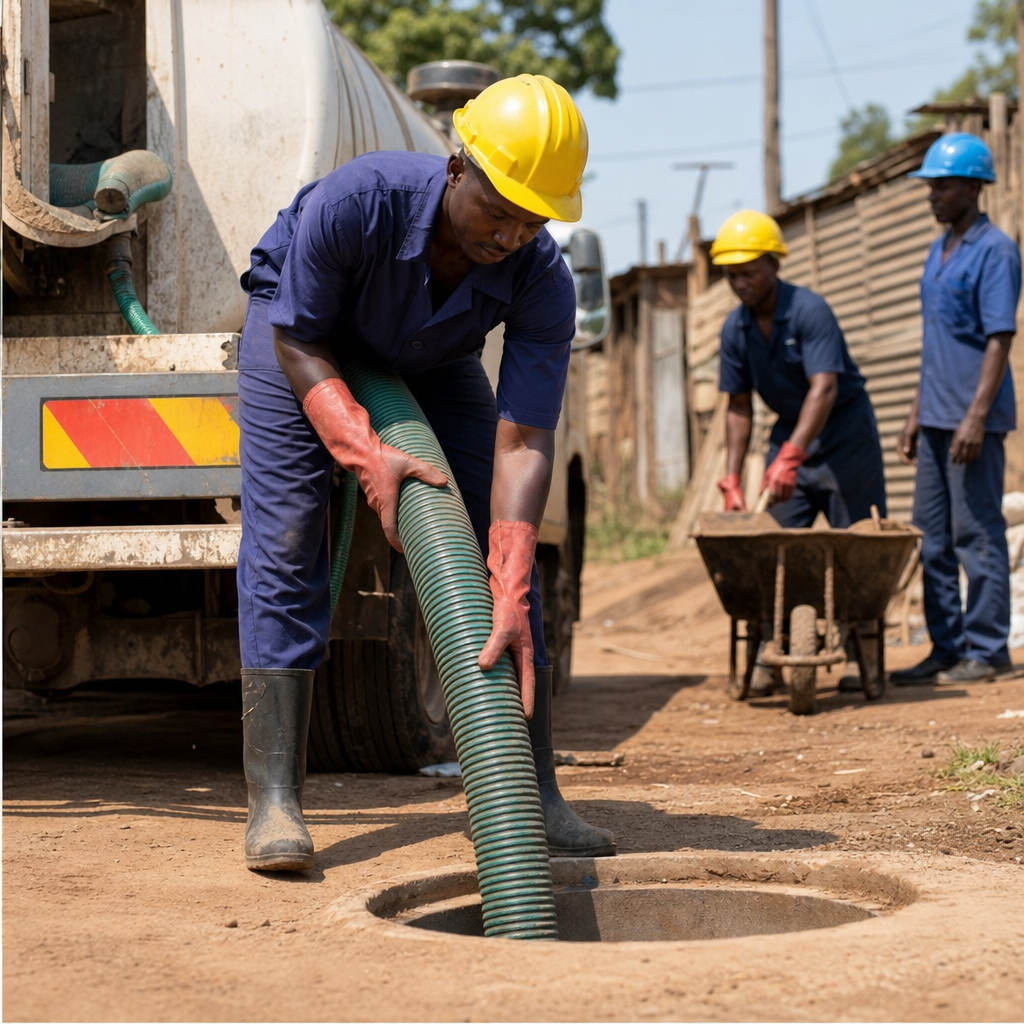
Venture capital in the sanitation sector is moving from a niche idea to a serious investment theme as water stress, urbanization, public health pressure, and climate adaptation force markets to modernize how waste is collected, treated, reused, and financed. In this context, sanitation includes toilets, sewer and non-sewer systems, fecal sludge management, wastewater treatment, hygiene infrastructure, digital monitoring, and resource recovery, while EcoSan refers to ecological sanitation models that design waste streams as inputs for energy, fertilizer, water reuse, and circular production. Investors evaluating financing and investing in EcoSan need to understand a market that sits at the intersection of infrastructure, health, agriculture, software, carbon reduction, and regulated utilities. I have worked with founders and project developers in this space, and the first lesson is always the same: sanitation is essential, but it is not simple. Revenue can come from hardware sales, service contracts, municipal concessions, nutrient recovery, biogas, carbon credits, and data services, yet adoption often depends on procurement rules, behavior change, and long sales cycles. That mix creates unusual venture opportunities alongside material execution risk. For readers exploring the economic aspects of sanitation, this hub explains where venture capital fits, which business models attract capital, how blended finance supports early markets, and why careful diligence matters more here than in many consumer or software categories. The sector rewards investors who can separate real defensibility from pilot theater.
Why sanitation is attracting venture capital now
Sanitation has become investable because several long-term drivers are converging. First, the global sanitation gap remains enormous. According to the WHO and UNICEF Joint Monitoring Programme, billions of people still lack safely managed sanitation, and hundreds of millions rely on unimproved or shared systems. That service deficit is not only a development issue; it creates addressable demand for container-based sanitation, decentralized treatment, remote monitoring, water-efficient toilets, sludge logistics, and low-cost treatment technologies. Second, regulators are tightening discharge standards and nutrient limits, especially around nitrogen, phosphorus, PFAS, and pathogen control. Tight regulation increases compliance spending and creates openings for technologies that lower operating cost or improve treatment performance.
Third, climate change is reshaping utility and city budgets. Drought pushes wastewater reuse higher on the priority list. Flooding exposes the fragility of aging sewers and onsite systems. Methane from wastewater and sludge is receiving more scrutiny as countries formalize climate targets. Fourth, digital infrastructure has matured. Cheap sensors, cloud telemetry, GIS planning tools, and machine learning for predictive maintenance now allow sanitation operators to run distributed assets with better visibility. A decentralized wastewater system was once viewed as operationally messy; today, remote monitoring can reduce truck rolls, flag failures, and support performance-based contracts.
The final driver is the circular economy case. EcoSan businesses can monetize byproducts rather than treating waste purely as a cost center. Biogas upgrading, biochar, struvite recovery, insect protein using organic co-streams, recycled water, and dried sludge fuel all expand the revenue stack. Investors do not fund sanitation because it sounds worthy; they fund it when unit economics improve through multiple monetization channels and when customers face a clear cost of inaction.
What investors mean by financing and investing in EcoSan
Financing and investing in EcoSan covers more than equity rounds in startups. It includes venture capital for technology and platform companies, project finance for treatment assets, equipment leasing, revenue-based financing for service operators, concessional capital for market building, and public-private structures that de-risk early deployment. The sanitation capital stack is therefore layered. Grants and catalytic first-loss vehicles often support proof of concept. Seed and Series A investors back teams building proprietary treatment processes, toilet hardware, route optimization software, or marketplace models for waste collection. Later-stage growth capital supports factory scale-up, regional expansion, and acquisitions. Debt becomes relevant once revenues are contracted and asset performance is demonstrated.
For founders, the critical question is whether they are selling a product, a service, or an outcome. A toilet manufacturer needs margins, distribution, warranty control, and working capital discipline. A sanitation-as-a-service operator needs utilization, route density, customer retention, and collections efficiency. A treatment technology company needs bankable performance data, permitting support, and a credible path from pilot to standard specification. Outcome-based models, such as guaranteed effluent quality or nutrient removal, can win customers faster, but they shift risk to the provider and require stronger balance sheets.
This hub topic matters because EcoSan rarely scales on venture equity alone. Most successful sanitation businesses combine different forms of capital over time. Understanding those transitions helps investors avoid forcing software expectations onto infrastructure realities.
Business models that can produce venture-scale returns
Not every sanitation company is venture-backable. The most attractive models combine large unmet demand, repeat revenue, operational learning advantages, and technology that improves margins as scale increases. Container-based sanitation offers one example. Companies such as Sanergy in Kenya built systems around household or community toilets, scheduled collection, treatment, and conversion of waste into useful outputs. The appeal lies in recurring service revenue and route density, though profitability depends on logistics efficiency and downstream offtake.
Decentralized treatment is another category. Startups developing modular anaerobic digesters, membrane bioreactors, electrochemical treatment, or packaged blackwater systems can target hotels, factories, campuses, and peri-urban developments where central sewer extension is too expensive. Here the opportunity is strongest when systems are standardized, remotely monitored, and supported by long-term service contracts. Software also matters. Asset management platforms that optimize pumping schedules, detect infiltration and inflow, verify septic empties, or monitor treatment compliance can scale with less capital intensity than physical infrastructure plays.
Resource recovery can enhance returns, but investors should test whether byproduct revenue is core or optional. Struvite recovery is valuable where phosphorus discharge penalties are high and fertilizer markets are accessible. Biogas economics work best when feedstock quality is stable, energy tariffs support offtake, and digestate handling is solved. Carbon revenue may help, especially from methane avoidance or biochar pathways, but it should not be the only justification for a business. In my experience, the strongest sanitation companies can survive on service economics and treat carbon upside as incremental.
| Model | Main Revenue Source | Capital Intensity | Key Risk |
|---|---|---|---|
| Container-based sanitation | Recurring household or institutional fees | Medium | Collections and route density |
| Decentralized treatment systems | Equipment sales plus O&M contracts | Medium to high | Performance guarantees and permitting |
| Utility software and monitoring | SaaS subscriptions or analytics contracts | Low to medium | Integration into legacy utility workflows |
| Resource recovery | Sale of fertilizer, energy, water, or credits | High | Commodity pricing and offtake certainty |
Where the risks are highest for founders and investors
The biggest risk in sanitation investing is confusing social necessity with venture suitability. Many products solve important problems but do not support the growth rate, gross margin profile, or exit pathways venture capital requires. Long sales cycles are common because municipalities, utilities, landlords, and industrial buyers move slowly and demand evidence over several operating seasons. Hardware reliability is another failure point. A toilet, separator, pump, digester, membrane, or sensor deployed in harsh conditions must survive misuse, variable inputs, heat, corrosion, and irregular maintenance. Bench performance is not field performance.
Regulatory and political risk are substantial. Permitting can stall projects for months. Tariff changes can erode economics. Public procurement can favor incumbents or lowest upfront price rather than lifecycle value. Informal waste economies create complexity too. In many cities, pit emptiers, haulers, and recyclers already serve the market, even if imperfectly. A startup that ignores those actors may face resistance or fail to achieve supply consistency. Currency exposure can also hurt cross-border operators that collect revenue in local currency while repaying equipment or investors in dollars or euros.
There is also a category risk around pilot dependency. Sanitation founders often win grants for demonstrations, then discover that pilots do not convert into scaled contracts. Investors should ask whether the company has a repeatable deployment playbook, standardized unit economics, and a buyer with budget authority. If each project is bespoke, the business may resemble engineering services rather than a scalable platform. Diligence should include site visits, independent water quality testing, reference calls with operators, and close review of maintenance records, spare-parts availability, and customer payment behavior.
How smart capital structures make sanitation deals work
Because sanitation combines public-good outcomes with commercial constraints, blended capital is often the difference between a stalled idea and a financeable company. Concessional money can fund customer education, early R&D, or demonstration units that private investors would not underwrite. Development finance institutions, climate funds, and impact investors frequently anchor rounds or provide guarantees that lower risk for commercial lenders. Results-based financing can pay for verified service delivery, such as safely managed waste treated or households reached, thereby supporting working capital during early scale.
Project-level special purpose vehicles are useful when treatment assets have predictable cash flows separate from the parent startup. Leasing can unlock adoption for schools, clinics, and small businesses that cannot afford upfront equipment purchases. Revenue-based financing may suit operators with steady collection fees but limited collateral. In some cases, municipal contracts paired with minimum revenue guarantees create enough certainty for debt. The mistake I see most often is using expensive equity to fund assets that should sit on cheaper project or equipment finance. That distorts dilution and makes venture returns harder to achieve.
Investors should map capital to risk stage. Technology risk belongs earlier and usually needs equity or grants. Construction risk may require milestone-based disbursement. Operating risk can be shared through service contracts and insurance. Commodity price risk on recovered outputs may need offtake agreements. When each risk sits with the party best able to manage it, EcoSan financing becomes more durable.
What good diligence looks like in sanitation
A strong sanitation diligence process starts with demand, not technology. Who pays, why now, and what is the cost of doing nothing? For a hotel installing onsite treatment and reuse, the answer may be tanker fees, freshwater scarcity, and discharge compliance. For a city outsourcing fecal sludge treatment, it may be disease prevention, landfill pressure, and donor-backed performance targets. Once demand is clear, investors should verify technical claims through third-party data. Established standards from ISO, NSF, local effluent regulations, and utility procurement specifications provide useful benchmarks. A founder who cannot show removal rates, uptime, maintenance intervals, and failure modes in real operating conditions is not ready for scale capital.
Unit economics must include the unglamorous line items: trucking, sludge drying, consumables, membrane replacement, field technicians, odor control, call centers, and billing leakage. Customer acquisition costs can be deceptively high where sanitation behavior is sensitive or informal alternatives are cheaper in the short term. Retention and renewal rates matter because infrastructure sales are episodic, while service businesses live on recurring revenue. Investors should also assess founder-market fit. Teams with deep wastewater engineering credentials but no distribution capability often stall, while strong operators who understand local permitting, utility politics, and maintenance logistics usually outperform polished pitch decks.
The hub role of EcoSan within the economic aspects of sanitation
As a hub topic, financing and investing in EcoSan connects several related questions readers typically explore next: how sanitation tariffs are set, how public-private partnerships allocate risk, how carbon markets affect wastewater projects, how nutrient recovery creates new income, and how impact metrics influence capital allocation. Venture capital is only one piece of that landscape, but it plays an important signaling role. When experienced investors back a sanitation company, they validate that operational innovation can create enterprise value in a sector long dominated by public budgets and donor programs.
The most promising opportunities are not generic bets on “waste tech.” They are targeted theses around decentralized treatment for water-stressed sites, digital infrastructure that improves utility performance, logistics platforms for fecal sludge management, and circular recovery businesses with verified offtake. The main risks are equally specific: regulatory delay, weak collections, overstated byproduct revenue, hardware failure, and pilot-heavy growth without repeatability. For founders, the path forward is disciplined capitalization, rigorous field data, and business models designed around who actually pays. For investors, the advantage comes from patient underwriting and technical diligence rather than speed. If you are building or evaluating EcoSan ventures, use this hub as the starting point, then map each opportunity to its true revenue engine, risk profile, and financing fit before deploying capital.
Frequently Asked Questions
1. Why is venture capital becoming interested in the sanitation sector now?
Venture capital is paying closer attention to sanitation because several long-term pressures are turning it from an overlooked public service issue into a large, investable market. Water stress is forcing cities, utilities, and industries to treat wastewater as a resource rather than a liability. Rapid urbanization is exposing the limits of aging sewer networks and creating demand for decentralized, non-sewered, and modular sanitation systems that can scale faster than traditional infrastructure. Public health concerns, including disease prevention, hygiene resilience, and regulatory compliance, are also pushing governments and private operators to modernize sanitation systems. On top of that, climate adaptation is changing how investors think about wastewater treatment, sludge management, stormwater interaction, and resource recovery.
What makes the sector especially relevant to venture capital is that sanitation innovation is no longer confined to concrete-heavy infrastructure projects alone. Startups are now building technology layers around monitoring, analytics, smart treatment systems, container-based sanitation, decentralized wastewater treatment, nutrient recovery, water reuse, and operating software for sanitation networks. These business models are often more compatible with venture investment because they can offer recurring revenue, asset-light components, stronger margins, and scalable digital products. In other words, investors are seeing sanitation not just as pipes and treatment plants, but as a growing ecosystem that includes hardware, software, services, financing innovation, and circular economy opportunities.
Another reason interest is rising is policy momentum. Governments, development finance institutions, and municipal authorities are increasingly setting stricter standards for discharge, reuse, sludge treatment, and environmental reporting. That creates market pull for companies that can help operators comply more efficiently. For venture firms, the sanitation sector now sits at the intersection of climate tech, health tech, water technology, infrastructure modernization, and sustainability, which makes it easier to justify as a strategic investment theme rather than a philanthropic niche.
2. What types of sanitation businesses are most attractive to venture capital investors?
The most attractive sanitation businesses for venture capital tend to be the ones that combine urgent demand with scalable economics. Investors generally look for companies that solve real sanitation problems while offering a path to repeatable deployment across cities, utilities, industrial facilities, real estate developments, or underserved communities. This often includes decentralized wastewater treatment systems, digital monitoring platforms, IoT-enabled sensors for sewer and non-sewer infrastructure, predictive maintenance software, fecal sludge logistics platforms, advanced treatment technologies, and resource recovery businesses that turn waste streams into energy, fertilizer, clean water, or reusable materials.
Software-enabled and service-based models are especially appealing because they can scale without requiring the company to own every physical asset in the system. For example, a company that provides real-time monitoring and optimization for treatment plants may be more venture-friendly than one that depends entirely on building capital-intensive facilities from scratch. Likewise, businesses that improve collection efficiency, track sanitation performance, digitize compliance reporting, or support pay-per-use and subscription models can create recurring revenue and clearer growth metrics.
EcoSan, or ecological sanitation, can also be attractive when it moves beyond concept-level sustainability claims and demonstrates practical commercial value. Ventures in this space may focus on urine diversion, nutrient capture, composting systems, low-water sanitation, closed-loop waste reuse, or community-scale sanitation models that reduce environmental impact while generating usable outputs. Investors tend to be most interested when EcoSan solutions can prove unit economics, user adoption, operational reliability, and regulatory compatibility.
That said, the strongest sanitation startups are often those that understand the realities of the sector: procurement can be slow, regulations matter, infrastructure buyers are cautious, and customer education is often necessary. Companies that succeed are usually the ones that can bridge innovation with implementation, offering solutions that are not only technically impressive but also financially viable, easy to operate, and suited to real-world sanitation systems.
3. What are the biggest opportunities for growth and returns in sanitation investing?
The biggest opportunities in sanitation investing are emerging where large unmet needs align with technology-driven efficiency or new business models. One major opportunity is decentralized sanitation. Many fast-growing urban and peri-urban areas cannot wait for full sewer expansion, which creates demand for modular, off-grid, and non-sewered systems. Startups that can provide affordable, maintainable, and regulation-ready solutions in these markets may unlock significant growth, particularly if they partner with municipalities, developers, utilities, or employers.
Another high-potential area is wastewater reuse and resource recovery. As freshwater becomes more constrained, treated wastewater is gaining value for industrial use, agriculture, landscaping, and even indirect potable reuse in some markets. At the same time, sanitation waste streams can produce biogas, recover phosphorus and nitrogen, and create soil amendments or other marketable outputs. These circular economy models are attractive because they can transform sanitation from a cost center into a revenue-generating system, improving project economics and investor appeal.
Digital infrastructure is also a strong growth category. Many sanitation systems still suffer from poor visibility, limited diagnostics, weak data collection, and reactive maintenance. Companies that provide monitoring, diagnostics, automation, leak and blockage detection, odor control analytics, asset management, or route optimization for sludge collection can help operators reduce downtime, labor costs, environmental risk, and compliance failures. These value propositions can be compelling in both developed and emerging markets.
There is also a financing opportunity. Sanitation often struggles not because the need is unclear, but because the payment structures are fragmented and the upfront capital requirements are high. Ventures that introduce embedded finance, performance-based contracts, sanitation-as-a-service, micro-payment models, blended finance structures, or public-private delivery platforms may help unlock adoption where traditional infrastructure funding falls short. For investors, the return potential increases when a company is not just selling equipment, but reshaping how sanitation is purchased, operated, and paid for over time.
4. What are the main risks venture capital investors should watch for in the sanitation sector?
The sanitation sector offers substantial promise, but it comes with a risk profile that is different from many conventional software or consumer startups. One of the biggest risks is long sales cycles. Many sanitation customers are municipalities, utilities, public agencies, industrial operators, or large institutions that move slowly, require pilot testing, and have complex procurement rules. That can delay revenue, increase customer acquisition costs, and put pressure on venture-backed companies that need to show fast growth.
Capital intensity is another important concern. Some sanitation ventures require manufacturing, deployment infrastructure, maintenance networks, field operations, or balance-sheet support for projects. That can make scaling more expensive than founders and investors initially expect. Even when the technology is strong, profitability may take time if installations are custom, service-heavy, or dependent on infrastructure partnerships. Investors need to understand whether the business is truly venture-scalable or better suited to project finance, infrastructure capital, strategic acquisition, or blended funding.
Regulatory and public acceptance risks also matter. Sanitation operates in a tightly regulated environment because failures affect health, water quality, land use, and environmental safety. Approval pathways can vary significantly across regions, and technologies that involve reuse, sludge handling, or resource recovery may face additional scrutiny. Public perception can also shape adoption, especially when solutions involve recycled water, waste-derived products, or new user behaviors. A technically elegant product can still struggle if regulators, operators, or end users do not trust it.
Operational complexity is a further risk. Sanitation solutions must work reliably in messy, variable, real-world conditions. Waste streams differ, maintenance capacity varies, climate impacts can disrupt systems, and local infrastructure constraints can reduce performance. Investors should be cautious of companies that look strong in pilot environments but have not demonstrated durability at scale. Strong teams in this sector usually combine engineering expertise with operational discipline, regulatory knowledge, and on-the-ground deployment experience. In sanitation, execution risk is often just as important as innovation risk.
5. How should investors evaluate startups working in sanitation and EcoSan?
Investors should evaluate sanitation and EcoSan startups through a lens that balances technology quality, market realism, and implementation readiness. First, the problem being solved must be specific and economically meaningful. A strong company is not just addressing “sanitation” in a broad sense; it is improving a defined part of the value chain such as containment, collection, treatment, monitoring, reuse, sludge transport, nutrient recovery, or hygiene infrastructure. The startup should be able to explain who pays, why they pay, and what measurable benefit they receive, whether that is lower operating cost, regulatory compliance, higher recovery value, reduced water use, better public health outcomes, or faster deployment.
Second, investors should examine the business model carefully. Key questions include whether revenue is one-time or recurring, whether scaling requires large capital outlays, whether installation and servicing are standardized, and whether customer adoption depends on subsidies or concessional finance. In EcoSan specifically, it is important to test whether environmental benefits are translating into a commercially viable model. Sustainability alone is rarely enough for venture returns. The company needs credible unit economics, dependable operations, and a path to adoption that does not rely entirely on idealistic buyers or short-term grant support.
Third, proof of execution matters enormously. Investors should look for field data, retention, system uptime, treatment performance, regulatory approvals, customer references, and evidence that the technology works outside controlled pilots. Partnerships with municipalities, developers, utilities, NGOs, industrial users, or public health agencies can strengthen credibility, but those relationships should lead to real