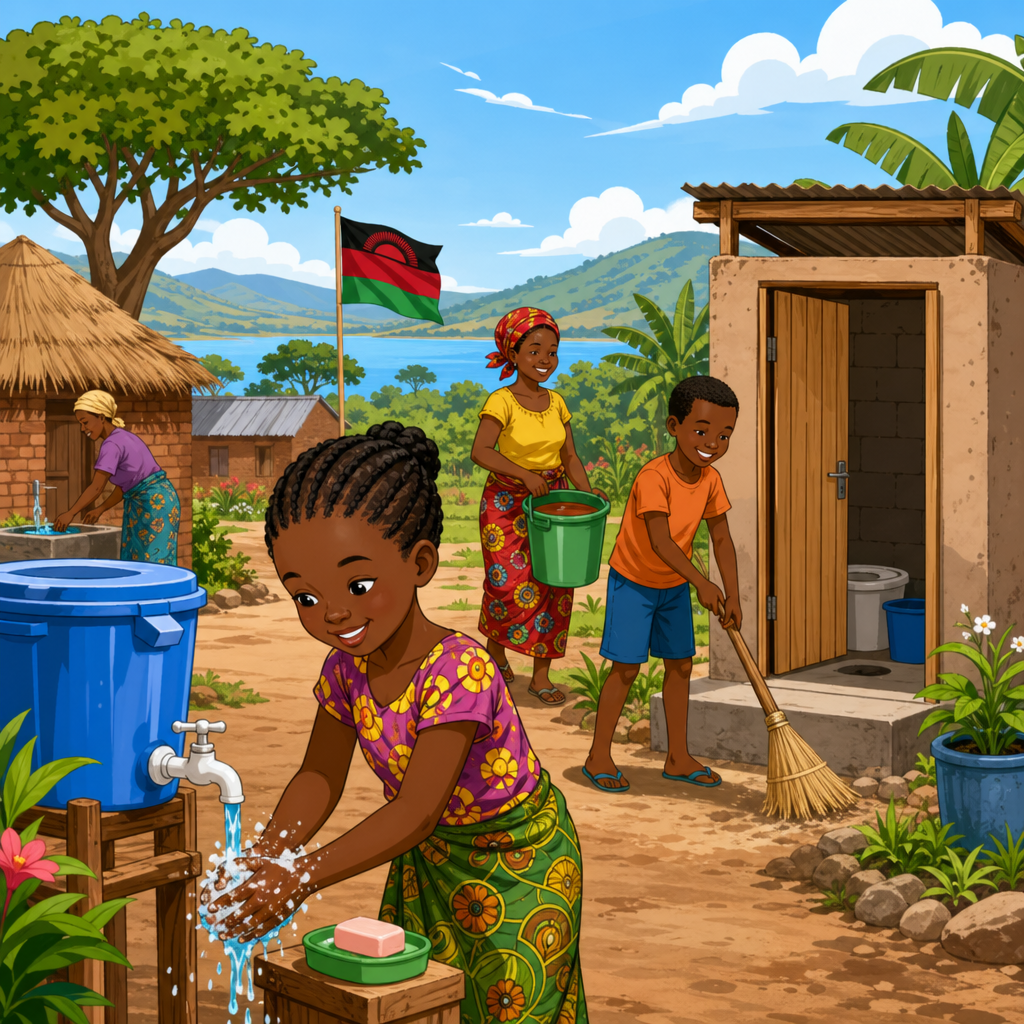
Addressing hygiene and sanitation challenges in Malawi requires more than building toilets; it demands systems that protect health, conserve water, recover nutrients, and fit local realities. In Malawi, sanitation refers to the safe management of human waste from containment to treatment or reuse, while hygiene includes the daily behaviors that block disease transmission, such as handwashing with soap, menstrual hygiene management, and safe water handling. EcoSan, short for ecological sanitation, treats human waste as a resource rather than a disposal problem. That shift matters in a country where rapid population growth, seasonal water stress, flood damage, and limited sewer networks leave many households, schools, and health facilities without reliable services.
I have worked on rural sanitation programs where a latrine that looked acceptable on paper failed within one rainy season because the pit flooded, the slab cracked, or no one had planned for pit emptying. Malawi faces those practical constraints every year. According to the WHO/UNICEF Joint Monitoring Programme, basic sanitation access remains uneven, open defecation persists in some districts, and safely managed services are still out of reach for much of the population. Poor sanitation contributes to diarrheal disease, cholera outbreaks, parasitic infections, stunting, school absenteeism, and unsafe working conditions for sanitation workers. Women and girls carry a disproportionate burden because privacy, safety, and menstrual hygiene are inseparable from sanitation quality.
This article serves as a hub for showcasing global EcoSan successes through the lens of Malawi. It explains the country’s main hygiene and sanitation challenges, shows where ecological sanitation can help, and connects lessons from Africa and beyond that are directly relevant to Malawian communities, local governments, NGOs, schools, and development partners. The central point is straightforward: Malawi does not need imported sanitation ideas for their own sake. It needs proven models that manage waste safely, survive local climate pressures, can be maintained affordably, and create visible value for users. EcoSan can meet those tests when design, behavior change, supply chains, and governance are aligned.
Why Malawi’s sanitation gap remains difficult to close
Malawi’s sanitation challenge is structural as much as technical. Most people rely on onsite systems rather than sewerage, especially in rural areas and dense informal settlements. Traditional pit latrines are common because they are familiar and relatively cheap to construct, but they often perform poorly in high water table zones, flood-prone areas, and places with unstable soils. When pits fill, households may not have space or money to rebuild. In urban settlements, emptying services are often limited, unsafe, or too expensive, which means sludge may be dumped untreated. The sanitation chain breaks long before treatment.
Hygiene constraints deepen the problem. Handwashing stations are frequently absent or nonfunctional, and soap costs can discourage consistent use. In schools, inadequate toilet-to-student ratios, poor maintenance, and weak menstrual hygiene support push girls to miss class or avoid school during menstruation. Health facilities face their own sanitation risks when water interruptions undermine cleaning, waste segregation, and infection prevention. These are not isolated failures. They are connected symptoms of underfinanced public services, fragmented responsibilities, weak fecal sludge management, and infrastructure that is not built for local environmental conditions.
Climate pressure intensifies everything. Malawi’s rainy season can flood pits and spread contamination into shallow groundwater, while drought can reduce water available for hygiene. Cyclones and extreme rainfall events damage toilets, displace communities, and trigger outbreaks. In practice, resilience is no longer optional. Any sanitation strategy that ignores flooding, groundwater protection, and material durability will underperform. That is one reason ecological sanitation keeps coming up in Malawi discussions: dry or low-water systems can reduce pressure on scarce water supplies and offer alternatives where pits or septic systems are a poor fit.
How ecological sanitation addresses Malawi’s core risks
Ecological sanitation is not one product. It is a design approach that separates, treats, and reuses waste safely. Common models include urine-diverting dry toilets, alternating double-vault systems, arborloos, and composting toilets adapted for household, school, or institutional settings. In Malawi, the strongest case for EcoSan is that it can solve several constraints at once. It reduces dependence on water for flushing, lowers the risk of groundwater contamination when correctly built, and creates treated compost or urine fertilizer that can support agriculture. In a country where smallholder farming dominates livelihoods, nutrient recovery is not a side benefit; it can be a compelling value proposition.
That said, EcoSan only works when the treatment process is understood and managed. Urine diversion must be maintained, ash or dry cover material must be available, vaults must be rested long enough for pathogen reduction, and users must be comfortable handling end products or relying on trained service providers. I have seen projects struggle when the toilet was installed as hardware alone, with no follow-up on behavior, cleaning routines, or agricultural reuse. The best Malawi-relevant EcoSan programs treat the toilet, the user, and the service chain as one system. They include mason training, user education, agricultural extension advice, and local supply access for pipes, slabs, doors, and replacement components.
EcoSan is especially useful in schools and peri-urban areas where pit emptying is difficult and land is constrained. A well-managed urine-diverting system can provide durable service without the recurring problem of full pits. For households, the economics depend on construction quality, willingness to maintain the system, and whether nutrient reuse is culturally acceptable and practically beneficial. The technology must fit the user, not the other way around.
Global EcoSan case studies Malawi can learn from
Several countries offer practical lessons for Malawi because they faced similar barriers: constrained public budgets, reliance on onsite sanitation, and the need to make systems valuable to users. In Uganda, school sanitation programs that combined urine-diverting toilets with handwashing facilities and hygiene clubs improved usability because students were taught not just what the system was, but how to keep it functional. In Ethiopia, ecological sanitation pilots linked compost output to school gardens and household agriculture, creating a visible reason to maintain separation and storage correctly. In Zambia and Zimbabwe, dry sanitation options have been used in water-stressed settings where flush systems were unrealistic. The lesson is consistent: adoption rises when users see cleaner facilities, lower rebuild costs, or agricultural returns.
Sweden and other European countries often appear in sanitation discussions because they advanced source separation and nutrient recovery early, but Malawi should be selective in what it copies. The relevant lesson is not expensive infrastructure. It is process discipline: separate waste streams, minimize contamination, verify treatment, and connect outputs to regulated use. Closer to Malawi’s context, South Africa has tested urine diversion in eThekwini and other municipalities, showing both potential and limits. Where user support, maintenance, and service models were strong, systems performed. Where they were installed without sustained engagement, acceptance declined. That evidence matters because it proves social design is as important as engineering.
| Country or region | EcoSan approach | Key success factor | Practical lesson for Malawi |
|---|---|---|---|
| Uganda | School urine-diverting toilets | Student hygiene education and routine cleaning | Pair infrastructure with school management systems |
| Ethiopia | Household and school composting systems | Use of treated outputs in gardens | Make reuse benefits visible to users |
| Zambia | Dry sanitation in water-scarce areas | Low water dependence | Target drought-prone and low-service zones first |
| South Africa | Municipal urine diversion programs | Maintenance support and user engagement | Build service models, not just toilets |
| Sweden | Source separation and nutrient recovery | Clear treatment standards | Strengthen guidance on safe reuse and handling |
For Malawi as a hub within global EcoSan successes, these examples show that the winning formula is never technology alone. Durable uptake comes from matching design to climate, creating a maintenance routine people can actually follow, and making sanitation outputs useful enough to justify care. That is why case studies matter: they reveal what failed as well as what scaled.
Priority settings: schools, health facilities, markets, and informal settlements
Schools should be one of Malawi’s top EcoSan priorities because the return is immediate and measurable. When toilets are clean, private, and usable year-round, attendance improves, especially for girls. A school sanitation package should include separate blocks for girls and boys, menstrual hygiene spaces, handwashing stations with soap or soapy water, accessibility features, a cleaning roster, and trained staff oversight. EcoSan designs can reduce pit filling pressure on crowded campuses and support school gardens if outputs are safely managed. UNICEF, WaterAid, and national education programs have repeatedly shown that school WASH outcomes improve when facilities and behavior change are funded together.
Health facilities need a stricter standard because sanitation failure in a clinic can spread infection quickly. Not every facility is suited to dry sanitation, but many require low-water resilience, reliable containment, placemaking for hand hygiene, and safe waste segregation. In flood-prone districts, sanitation design should be elevated, sealed where necessary, and linked to drainage management. For markets and transport hubs, the issue is heavy daily use. EcoSan can work if there is paid management, routine cleaning, and secure collection or reuse arrangements. Public toilets without an accountable operator usually degrade fast.
Informal urban settlements present the hardest sanitation challenge in Malawi because space is tight, tenure can be uncertain, and household investment is risky when eviction or flooding is possible. Here, shared facilities may be necessary, but they must be designed for high frequency use and backed by service arrangements for cleaning, repairs, and end-product handling. Container-based sanitation, simplified transfer systems, and decentralized treatment may sometimes outperform conventional pit solutions. The principle remains the same: choose systems that can be managed safely in dense conditions, not systems that merely look affordable at installation.
What Malawi must get right to scale successful sanitation
Scaling sanitation in Malawi depends on governance, finance, and local capacity. First, district planning must treat sanitation as a full service chain, including containment, transport, treatment, reuse, and occupational safety. Second, local artisans need standardized training so EcoSan units are built correctly. Poor slope on a urine diversion pedestal or weak vault sealing can ruin performance. Third, supply chains matter. If households cannot get replacement pipes, vent screens, slabs, or doors locally, systems deteriorate quickly. Fourth, monitoring must move beyond counting toilets. The right indicators are functionality, cleanliness, handwashing availability, safe sludge or compost handling, and continued use after one or two rainy seasons.
Financing also needs realism. The poorest households may need targeted subsidies, while schools and health facilities require public capital and maintenance budgets. Results-based financing can help if indicators are tied to sustained functionality rather than construction alone. Microfinance may work for some peri-urban households, but only where income is stable. Agricultural extension services should be involved where reuse is part of the model, because safe nutrient application needs guidance on storage times, crop restrictions, and handling. Standards from WHO sanitation safety planning and risk-based management provide a strong framework for this work.
Community acceptance is the final hinge. People adopt sanitation that feels safe, dignified, and worthwhile. Messaging should focus on reduced smell, durability in floods, lower rebuilding frequency, privacy, and agricultural value, not only abstract environmental benefits. Malawi can build a stronger sanitation future by learning from global EcoSan successes while staying disciplined about local fit. The next step is clear: policymakers, NGOs, schools, and community leaders should identify the districts and institutions where conventional pit models fail most often, pilot climate-resilient EcoSan service packages there, and document results rigorously so the strongest models can expand with confidence.
Frequently Asked Questions
What are the main hygiene and sanitation challenges in Malawi?
Malawi faces a combination of sanitation, water, health, and infrastructure challenges that make hygiene improvement more complex than simply constructing more toilets. In many communities, households still rely on basic or unsafe sanitation facilities that do not fully separate people from human waste, and some areas continue to struggle with open defecation, poorly built pit latrines, flooding, and limited waste treatment services. During the rainy season, toilets can collapse or overflow, increasing the risk that fecal matter will contaminate soil and nearby water sources. In densely populated settlements, the lack of space and weak waste management systems can make safe containment and disposal especially difficult.
Hygiene challenges are equally important. Regular handwashing with soap is one of the most effective ways to prevent diarrheal disease, cholera, and other infections, but it depends on reliable access to water, soap, and practical handwashing facilities. Safe water handling at home is another critical issue, since water can become contaminated during collection, transport, or storage. Menstrual hygiene management also remains a significant concern, particularly where girls and women lack private facilities, clean absorbent materials, water, and dignified spaces for washing and changing. These challenges are interconnected, which is why successful sanitation strategies in Malawi need to address toilets, behavior, water access, public health education, and long-term service systems together.
Why is hygiene behavior just as important as building sanitation facilities?
Building toilets is essential, but toilets alone do not stop disease transmission if daily hygiene practices are weak. Human health improves most when sanitation infrastructure is combined with behaviors that interrupt the spread of germs. These behaviors include washing hands with soap after using the toilet and before preparing food, safely disposing of children’s feces, keeping water containers clean and covered, maintaining toilet cleanliness, and managing menstrual hygiene in a safe and dignified way. Without these practices, pathogens can still move from feces to hands, food, water, and surfaces, causing illness even in places where latrines exist.
This is why hygiene promotion is a central part of any effective response in Malawi. People need practical, affordable actions that fit their daily routines and local conditions. For example, a household may have a latrine, but if there is no nearby handwashing station, handwashing rates may remain low. A school may have toilets, but if girls do not have privacy or water for menstrual hygiene, attendance and wellbeing can still suffer. Sustainable progress happens when communities understand the health reasons behind good hygiene, have access to the right supplies and facilities, and are supported to turn healthy practices into lasting habits. In other words, infrastructure creates opportunity, but behavior delivers the health benefit.
What is EcoSan, and how can it help address sanitation problems in Malawi?
EcoSan, short for ecological sanitation, is an approach that treats human waste not simply as something to dispose of, but as a resource that can be managed safely and, in some cases, reused productively. Instead of focusing only on containment, EcoSan systems are designed to protect public health, conserve water, and recover nutrients from human waste. This can be especially valuable in Malawi, where many areas face water stress, agricultural pressure, and limited access to centralized sewage treatment. EcoSan technologies often aim to separate urine and feces, reduce odor, improve decomposition, and create conditions where treated waste can be reused safely, depending on the system and local regulations.
For Malawi, EcoSan can offer several advantages when it is properly designed, accepted, and maintained. It can reduce dependence on water-intensive sanitation systems, which is important in places where water is scarce or expensive to access. It can also support soil fertility by enabling the recovery of nutrients, potentially benefiting smallholder farming if treatment and reuse are done safely and responsibly. However, EcoSan is not a one-size-fits-all solution. It requires user understanding, regular maintenance, safe handling procedures, and strong community engagement. Adoption is more likely to succeed when households are trained clearly, local artisans can build and repair systems, and the technology matches people’s preferences, incomes, and living conditions. When these factors come together, EcoSan can become a practical part of a broader sanitation strategy in Malawi.
How do improved sanitation and hygiene benefit health, education, and livelihoods in Malawi?
Improved sanitation and hygiene create benefits that reach far beyond the household toilet. From a health perspective, safe waste management and consistent hygiene practices reduce exposure to disease-causing organisms that spread through contaminated hands, food, water, and environments. This helps lower the burden of diarrheal diseases, cholera, intestinal worm infections, and other illnesses that can be especially dangerous for young children, older adults, and people with weakened immune systems. Better health means fewer medical expenses, less time lost to illness, and reduced pressure on local health services.
The educational and economic benefits are also substantial. Children are better able to attend school and concentrate when they are healthy, and girls are more likely to stay in school when sanitation facilities support privacy, safety, and menstrual hygiene management. At the household level, families save time when they have convenient sanitation and handwashing facilities nearby, and they may avoid the productivity losses that come with repeated illness. In farming communities, sanitation approaches such as EcoSan may also contribute to resource recovery and soil improvement when implemented safely. Overall, investing in hygiene and sanitation supports human dignity, environmental protection, school participation, workforce productivity, and community resilience. It is one of the most cost-effective foundations for long-term development in Malawi.
What makes a sanitation solution sustainable and effective in Malawian communities?
A sustainable sanitation solution in Malawi is one that people can afford, use correctly, maintain over time, and trust. Effectiveness depends on more than technical design. A toilet or sanitation system must fit local conditions such as soil type, flood risk, water availability, household income, cultural preferences, and available construction materials. In flood-prone areas, for example, technologies need to withstand heavy rains and prevent contamination when water levels rise. In water-scarce settings, low-water or dry sanitation options may be more practical than flush systems. If solutions are too expensive, too complicated, or socially unacceptable, adoption and long-term use are likely to be weak.
Strong sanitation systems also require service chains, not just facilities. That means thinking about the full process: containment, emptying where necessary, transport, treatment, and safe disposal or reuse. Hygiene promotion, community involvement, and local ownership are equally important. When community members understand how a system works, why it matters, and how to maintain it, they are more likely to use it consistently and protect it. Schools, health centers, local leaders, artisans, and public health workers all play important roles in this process. The most effective sanitation approaches in Malawi are usually those that combine practical technology, behavior change, gender-sensitive design, reliable maintenance, and long-term planning. That is how sanitation moves from a short-term project to a lasting public health solution.