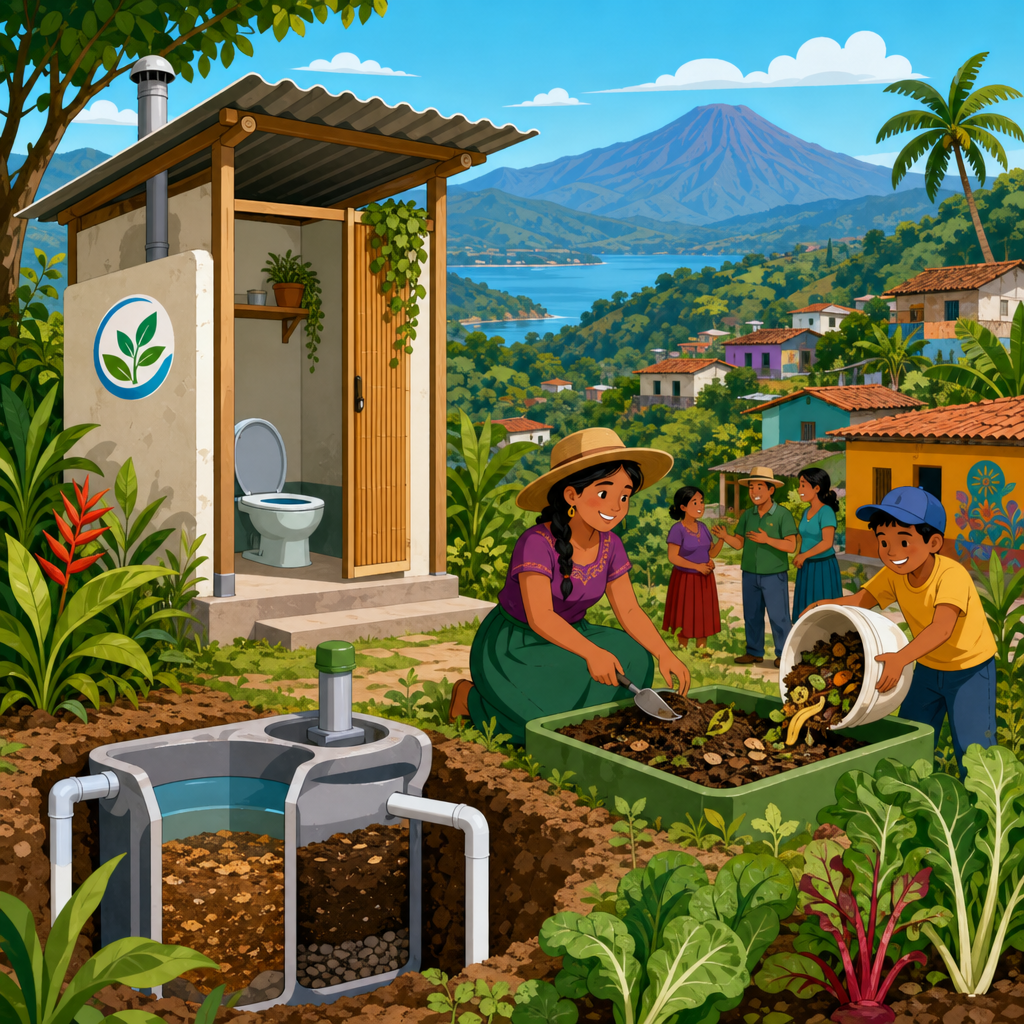
EcoSan progress in Asia offers some of the clearest evidence that sanitation systems can protect public health, recover nutrients, save water, and strengthen local resilience when they are designed around real user behavior instead of imported assumptions. Ecological sanitation, usually shortened to EcoSan, refers to approaches that treat human excreta as a resource stream rather than useless waste. In practice, that includes urine-diverting dry toilets, composting systems, decentralized treatment, fecal sludge reuse, and service models that safely return nutrients or organic matter to agriculture. I have worked with sanitation planners and local operators across dense settlements and rural districts, and the same lesson keeps recurring: success depends less on hardware alone than on maintenance, social acceptance, financing, and clear institutional ownership.
Asia matters because the region combines rapid urbanization, water stress, agricultural nutrient demand, and huge variation in income, governance capacity, and settlement patterns. Those conditions make conventional sewer expansion slow or unaffordable in many places, especially peri-urban settlements, flood-prone areas, islands, mountain communities, and water-scarce towns. At the same time, Asia has generated practical EcoSan case studies that other regions now study closely. From community-led sanitation programs in India to urine-diversion pilots in China, container-based service innovation, co-composting, and fecal sludge treatment linked to farming in Nepal, Bangladesh, Cambodia, and the Philippines, the region shows that resource-oriented sanitation is not a niche concept. It is a working response to specific infrastructure gaps.
This hub article on showcasing global EcoSan successes uses Asian examples to explain what actually works, where projects struggle, and why some models scale while others stall after the pilot stage. It also serves as a gateway for deeper case study content under the broader Case Studies and Success Stories topic. Readers usually ask three direct questions: what counts as success, which countries have credible examples, and what lessons can be transferred elsewhere without repeating earlier mistakes. The short answer is that success means safe containment, consistent use, verifiable treatment, viable service delivery, and reuse pathways that communities accept. The strongest Asian examples succeed because they combine technical fit with governance, training, monitoring, and economic logic.
What EcoSan success looks like in Asian contexts
EcoSan success in Asia is not defined by the number of toilets installed. It is defined by a functioning sanitation chain. That means households use the system correctly, operators collect or manage outputs safely, treatment achieves pathogen reduction, and the final products or effluents have a practical destination. In technical reviews, I look first at containment performance, moisture control, odor management, emptying frequency, and whether there is a documented operation and maintenance routine. A urine-diverting toilet that users abandon after six months is not a success. A modest decentralized system with high user satisfaction and reliable maintenance is.
Public health remains the first benchmark. The World Health Organization sanitation safety planning framework is useful here because it forces implementers to identify exposure risks from toilet interface to end use. Many early EcoSan projects across Asia promoted reuse strongly but underinvested in handling protocols, storage times, operator protection, and user education. Stronger programs corrected that. They set clear storage periods for urine, compost maturation rules for solids, and treatment standards for fecal sludge or co-compost. Success therefore means both resource recovery and risk reduction. If one is missing, the system is incomplete.
Economic durability is the second benchmark. Across Asia, systems survive when someone has a reason to keep them running. Sometimes that incentive is lower water consumption, which matters in drought-prone areas. Sometimes it is reduced fertilizer expenditure for farmers. In dense settlements, the incentive may be a scheduled service model that is cheaper and more reliable than paying informal emptiers during emergencies. Social fit is the third benchmark. Privacy, convenience, menstrual hygiene compatibility, child use, cleaning effort, and cultural beliefs about handling excreta all shape long-term adoption. The most persuasive case studies are the ones that openly address these daily realities.
India and Nepal: from demonstration projects to service ecosystems
India has produced some of the region’s most instructive EcoSan experience because it has tested multiple models across water-scarce rural areas, flood zones, and urban settlements. Organizations such as Ecosan Services Foundation, Sulabh affiliates in related sanitation work, and state-level rural sanitation missions have all contributed lessons, although results vary widely by district. In parts of Gujarat, Tamil Nadu, and Odisha, urine-diverting dry toilets were introduced where groundwater contamination, pit flooding, or water scarcity made flush systems impractical. The better-performing schemes paired hardware with farmer outreach, explaining nutrient value in direct terms such as nitrogen substitution and reduced chemical fertilizer demand.
Nepal offers a similarly useful record, especially in hill settlements and peri-urban municipalities where terrain and weak sewer coverage favor decentralized options. Practical Action, ENPHO, municipal utilities, and local enterprises have worked on fecal sludge management, co-composting, and treatment linked to urban agriculture. In the Kathmandu Valley, the wider sanitation conversation increasingly shifted from toilet construction toward the full service chain, including emptying, transport, treatment, and reuse. That shift matters because EcoSan is often misread as a toilet technology only. In reality, Nepal’s more successful initiatives showed that market-based emptying services and treatment facilities are just as important as household interfaces.
The transferable lesson from India and Nepal is that demonstration toilets alone rarely create lasting change. What works is a service ecosystem: trained masons, local spare parts, household instruction, municipal oversight, and a buyer or user for treated outputs. I have seen installations remain clean and functional for years when local champions were backed by practical municipal support. I have also seen technically sound toilets fail because no one clarified who would handle vault emptying or how to manage user mistakes. These case studies are valuable because they show both outcomes side by side, making them especially relevant for readers exploring global EcoSan success stories.
China and Southeast Asia: adapting EcoSan to density, farming, and climate
China’s sanitation history includes extensive experimentation with rural nutrient recycling, biogas digesters, and source-separating systems, giving it one of the deepest evidence bases in Asia. While not all programs would be labeled EcoSan in the same way today, the core principle of closing nutrient loops has long influenced rural sanitation policy. In provinces where agriculture remained closely tied to household waste management, projects examined how urine diversion, composting, and anaerobic digestion could reduce pollution while supporting soil fertility. The strongest examples integrated extension services, so farmers understood application rates and handling precautions rather than receiving products with no guidance.
Across Southeast Asia, the picture is more varied but equally instructive. Cambodia and Laos have used dry sanitation and flood-resilient designs in areas where high water tables or seasonal inundation make pit systems risky. In the Philippines, resource recovery has been explored through decentralized wastewater treatment, septage management, and reuse pathways for biosolids where regulations and treatment quality permit. Bangladesh has pushed important innovation in fecal sludge management, especially around treatment plants, scheduled desludging, and composting business models. These experiences matter to EcoSan because they prove that resource-oriented sanitation can operate in dense, low-income settings if logistics and treatment quality are handled professionally.
Climate adaptation is a major reason these cases deserve attention. In monsoon zones and delta cities, conventional pits overflow, contaminate groundwater, and fail during floods. Dry or sealed source-separating systems, raised toilets, container-based collection, and decentralized treatment can reduce these vulnerabilities when designed correctly. However, density creates tradeoffs. Household composting may work in rural settings but not in informal settlements with little storage space. That is why Southeast Asian successes increasingly emphasize managed services rather than asking every household to become a treatment operator. For hub content on showcasing global EcoSan successes, this distinction is central: the best model depends on settlement form, land availability, and the capacity to manage risk consistently.
Common patterns behind regional success
When I compare successful EcoSan programs across Asia, five factors appear repeatedly: context-specific design, user training, reliable maintenance, regulation that enables safe reuse, and institutions that treat sanitation as a service. Projects fail when any one of those is ignored. A well-designed urine-diverting toilet still underperforms if cleansing water habits were not considered. A composting toilet still becomes a health risk if vault switching is poorly timed. Treatment plants still sit idle if municipalities do not budget for operators, electricity, and haulage contracts.
| Success factor | What it looks like in practice | Asian example |
|---|---|---|
| Design fit | Toilet and treatment matched to water access, density, soil, and flood risk | Raised or dry systems in flood-prone Bangladesh and Cambodia |
| User support | Households trained on urine diversion, ash use, cleaning, and vault changeover | Rural EcoSan rollouts in India with mason and household orientation |
| Service chain | Scheduled emptying, transport, treatment, and end-use agreements | Fecal sludge management programs in Nepal and Bangladesh |
| Reuse market | Compost, biosolids, or treated effluent linked to agriculture or landscaping | Co-composting linked to peri-urban farming near South Asian cities |
| Institutional backing | Municipal ownership, monitoring, operator contracts, and standards | City-led decentralized sanitation pilots in the Philippines |
Another recurring pattern is iterative adjustment. The strongest Asian sanitation programs did not pretend the first design was perfect. They modified pedestal shape, urine pipe slope, ventilation, cover material guidance, emptying tools, and user messaging after field feedback. This willingness to adapt is one reason some regional examples became genuine success stories rather than temporary pilots. Monitoring also matters. Programs that tracked fill rates, usage consistency, pathogen indicators, odor complaints, and reuse uptake made better decisions than those relying on installation counts alone. For anyone studying EcoSan progress in Asia, that is one of the clearest practical insights: measurement drives improvement.
Barriers, tradeoffs, and the lessons global practitioners should keep
Asian EcoSan case studies are useful precisely because they are not uniformly positive. They show where ambition outran operations. Social acceptance remains a major barrier, especially where people associate dry toilets with poverty or dislike handling composted products from human waste. Gendered usability problems also surface quickly if designs ignore menstrual hygiene management, nighttime safety, or child-friendly access. In several programs I reviewed, facilities built with good technical intentions still saw low use because steps were too steep, pans were difficult to clean, or maintenance instructions were too complex. These are not side issues; they determine whether the system survives.
Regulation can either support or block progress. Countries that lack standards for compost, biosolids, or urine reuse leave municipalities and farmers uncertain about what is allowed. On the other hand, overly rigid wastewater rules can shut down safe decentralized solutions by forcing them into frameworks designed only for sewers. Financing is another constraint. Capital subsidies may help launch projects, but long-term success depends on tariffs, service fees, municipal budgets, agricultural value, or blended finance that covers operations. The global lesson is simple: resource recovery rarely pays for the entire sanitation system, but it can improve economics enough to make safe services more viable.
For a hub on showcasing global EcoSan successes, the most important takeaway from Asia is not that one toilet type should be copied everywhere. It is that successful sanitation systems are assembled from the ground up around local conditions and managed as living public services. Regional examples from India, Nepal, China, Bangladesh, Cambodia, and the Philippines show that EcoSan can deliver measurable gains in water savings, nutrient recovery, climate resilience, and safe sanitation access. They also show that scale comes only when governments, communities, and service providers share responsibility. Use these case studies as practical guides, then go deeper into the linked country and technology articles to identify the model that fits your context.
Frequently Asked Questions
What does EcoSan mean in the Asian context, and why has it gained attention across the region?
In Asia, EcoSan refers to ecological sanitation systems that manage human waste as a recoverable resource rather than a disposal problem. That shift matters because many communities across the region face overlapping pressures: water scarcity, rapid urbanization, rising fertilizer costs, climate stress, and gaps in sewer infrastructure. EcoSan approaches such as urine-diverting dry toilets, composting toilets, and decentralized treatment systems have gained attention because they can address several of these issues at the same time. Instead of relying entirely on water-intensive flush systems and costly centralized networks, EcoSan models often reduce water use, support nutrient recovery, and make sanitation more adaptable in rural settlements, peri-urban neighborhoods, flood-prone areas, and places where sewer expansion is financially or geographically difficult.
Regional successes have helped build credibility. In different parts of Asia, projects have shown that well-designed ecological sanitation can improve hygiene outcomes while also creating practical value through compost, soil amendments, or treated outputs for agriculture and landscaping. The most important lesson is that progress tends to happen when systems are tailored to local conditions, including climate, housing density, farming practices, user preferences, and maintenance capacity. EcoSan has gained momentum not because it is a single universal technology, but because it offers a framework for linking sanitation, public health, environmental protection, and resource recovery in ways that make sense for specific communities.
How have regional successes in Asia demonstrated that EcoSan can improve both sanitation and environmental outcomes?
Regional experience has shown that EcoSan can deliver environmental benefits without losing sight of sanitation fundamentals. When implemented properly, these systems can safely separate, store, compost, or treat excreta in ways that reduce contamination of groundwater, rivers, and surrounding land. That is especially important in areas where leaking pits, failing septic systems, or untreated discharge have long undermined local water quality. In many successful Asian initiatives, decentralized systems have also lowered pressure on overburdened municipal infrastructure by treating waste closer to where it is generated, which can reduce transport costs, energy use, and uncontrolled disposal.
At the same time, a number of regional projects have highlighted nutrient recovery as a major advantage. Human urine contains nitrogen, phosphorus, and potassium, while composted fecal matter can contribute to soil improvement when handled according to safety standards. In agricultural settings, this has helped demonstrate how sanitation systems can support circular economies rather than simply generate waste streams. Environmental gains also come from reduced water demand, particularly where dry or low-water systems replace conventional flushing. In water-stressed parts of Asia, that is not a minor benefit; it can be one of the strongest arguments for adoption. The strongest examples combine health protection, user training, regular maintenance, and clear reuse pathways, showing that environmental performance improves most when sanitation is treated as part of a broader local resource management strategy.
What factors have made some EcoSan projects in Asia successful while others have struggled?
The clearest difference between successful and struggling EcoSan projects is usually not the technology itself, but whether the system was designed around real user behavior and long-term management. Successful projects tend to start with community habits, cultural expectations, cleaning routines, land availability, and local attitudes toward reuse. They also include practical training so users understand how to separate waste streams, when to add cover material if required, how storage periods work, and why maintenance matters for odor control and hygiene. Where these details are ignored, even technically sound systems can be rejected or misused.
Institutional support is another major factor. Projects perform better when local governments, NGOs, service providers, schools, or farmer groups share responsibility for monitoring, maintenance, and public communication. Clear operation plans, supply chains for spare parts, scheduled emptying or compost handling, and realistic financing models all increase the chance of long-term success. By contrast, some projects have struggled because they were installed as one-time demonstrations without enough follow-up, user education, or budget for upkeep. Social acceptance also plays a decisive role. In many Asian settings, sanitation decisions are strongly influenced by ideas of convenience, status, safety, and privacy. Systems that are clean, easy to use, and aligned with household aspirations tend to fare much better than designs that ask users to tolerate inconvenience in the name of sustainability. In short, successful EcoSan in Asia is usually participatory, locally adapted, and backed by institutions that treat maintenance and behavior change as essential parts of the system.
How does EcoSan support water conservation, nutrient recovery, and climate resilience in Asian communities?
EcoSan supports water conservation most directly by reducing or eliminating the need for flushing. In regions where households already face seasonal shortages, high water costs, or weak piped supply, this can significantly improve resilience. Dry or low-water systems reduce dependence on large volumes of clean water simply to move waste, which is particularly valuable in drought-prone areas and in communities where water collection is labor-intensive. Decentralized systems can also be less vulnerable to service disruptions than conventional sewer-dependent models, making them useful in remote areas, informal settlements, or disaster-affected zones.
Nutrient recovery is another core strength. Instead of allowing valuable nutrients to be diluted, lost, or discharged into waterways, EcoSan systems can capture them for productive reuse when treatment and handling are done safely. This creates opportunities for local agriculture, home gardens, tree planting, and soil restoration, especially in places where synthetic fertilizers are expensive or difficult to access. Climate resilience enters the picture because ecological sanitation can be more flexible under changing environmental conditions. Flooding, salinity intrusion, extreme rainfall, and infrastructure damage all challenge conventional sanitation systems across Asia. Well-sited and well-managed EcoSan options can reduce overflow risks, protect groundwater, and maintain service where centralized systems are impractical. The broader lesson from regional successes is that sanitation becomes more resilient when it is integrated with water management, land use, and local food systems rather than treated as an isolated engineering problem.
What are the most important lessons from EcoSan progress in Asia for future sanitation planning?
One of the most important lessons is that there is no one-size-fits-all sanitation model for Asia. Future planning works best when decision-makers begin with local realities: settlement patterns, soil and groundwater conditions, climate risks, household preferences, service capacity, and economic constraints. EcoSan progress in the region shows that sanitation planning should prioritize outcomes such as safe containment, treatment, reuse potential, affordability, and user satisfaction rather than assuming that conventional sewer expansion is always the ideal endpoint. In many contexts, decentralized and ecological options can deliver faster, more affordable, and more sustainable gains.
Another key lesson is that sanitation should be planned as a service system, not just a construction project. Toilets alone do not create successful sanitation outcomes; communities also need training, maintenance arrangements, monitoring, safe handling protocols, and institutions capable of supporting the system over time. Regional examples also suggest that communication matters. People are more likely to adopt and sustain EcoSan when benefits are explained in practical terms such as lower water use, improved convenience, cleaner surroundings, reduced fertilizer costs, and greater resilience during droughts or floods. Finally, the Asian experience shows that resource recovery can strengthen the case for investment, but only if health safeguards remain central. The strongest path forward is not to romanticize EcoSan, but to scale what has been proven to work: locally grounded designs, strong user engagement, reliable operations, and a clear connection between sanitation, environmental quality, and community well-being.