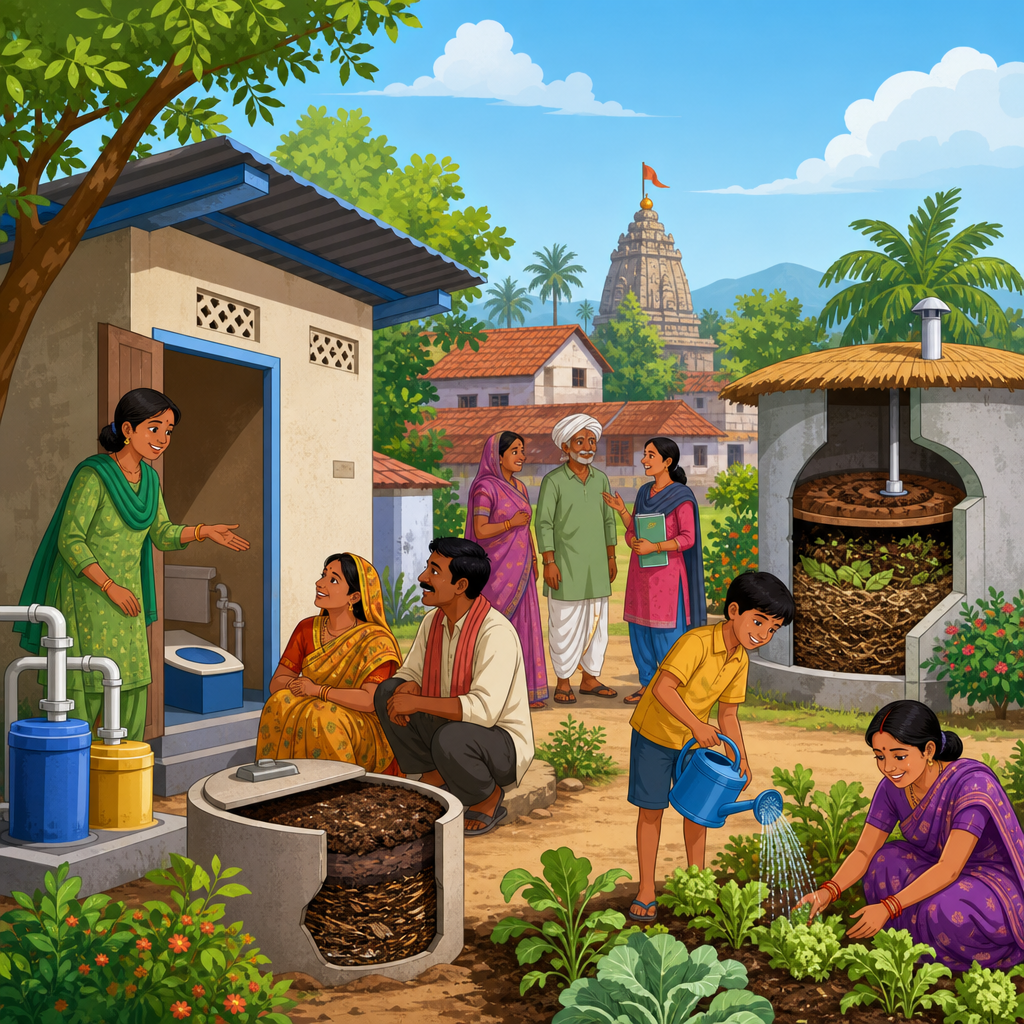
Addressing sanitation in densely populated areas demands solutions that work where land is scarce, infrastructure is overloaded, and public health risks spread quickly. In this context, EcoSan, short for ecological sanitation, refers to systems that safely separate, treat, and reuse human waste as a resource rather than treating it only as something to dispose of. I have worked on sanitation content and implementation reviews across urban settlements, refugee settings, and peri-urban neighborhoods, and the same pattern appears repeatedly: conventional sewer expansion cannot keep pace with rapid urban growth, while unmanaged waste contaminates water, drains, homes, and livelihoods. That gap is why lessons from EcoSan implementations matter globally.
Densely populated areas create a difficult sanitation equation. A settlement may have thousands of residents per square kilometer, shared plots, narrow lanes, seasonal flooding, and no room for septic drain fields. Water supply may be intermittent, making flush systems unreliable. Emptying services may be informal, unsafe, or too expensive for households. In these conditions, sanitation failure is not abstract. It shows up as diarrheal disease, stunting, parasitic infections, unsafe work for pit emptiers, and nutrient pollution in nearby rivers and lakes. The World Health Organization and UNICEF Joint Monitoring Programme have repeatedly shown that safely managed sanitation remains uneven, especially in low-income urban areas.
EcoSan matters because it reframes the problem. Instead of designing only for disposal, it asks how excreta can be contained, sanitized, and returned to productive use through compost, treated sludge, or nutrient recovery. Common EcoSan models include urine-diverting dry toilets, container-based sanitation, dehydration vaults, and systems that support composting or co-composting. The approach does not mean one toilet design fits every neighborhood. Its real value lies in linking safe containment, feasible collection, reliable treatment, and economically useful end products. Global lessons from EcoSan implementations show that success depends less on the toilet unit alone and more on service design, user behavior, regulation, and market development for recovered resources.
As a hub article for case studies and success stories, this page examines what dense urban communities, municipalities, utilities, and social enterprises can learn from EcoSan projects across Africa, Asia, and Latin America. It addresses practical questions decision-makers ask: Which models work in crowded settlements? What fails most often? How do programs win user acceptance? Can resource recovery pay for operations? And how should cities evaluate sanitation options when sewerage is unaffordable or physically impossible? The strongest lesson is simple and consistent: sanitation in densely populated areas improves when planners treat EcoSan as a complete service chain with community trust, not as a hardware distribution exercise.
Why Dense Urban Settings Require Different Sanitation Strategies
Conventional sanitation planning often assumes available land, regular road access, piped water, and public budgets large enough to finance sewers and treatment plants. Dense settlements rarely offer any of those conditions. I have seen neighborhoods where a desludging truck could not get within one hundred meters of a pit latrine, forcing manual emptying into drains at night. In such places, the key challenge is not merely building toilets; it is maintaining safe sanitation across the whole chain, from user interface to treatment and final disposal or reuse.
EcoSan implementations respond to this constraint by reducing water dependence, minimizing pathogen exposure, and creating manageable waste streams. Urine diversion lowers moisture content, helping dehydration and reducing odor when systems are properly used. Container-based services avoid on-site accumulation in flood-prone compounds and instead rely on frequent collection. Shared sanitation blocks with tightly managed cleaning can outperform poorly maintained household pits in rental compounds. These systems are especially relevant where groundwater is shallow or where latrines regularly overflow during rain.
Global experience shows that density changes the economics of service delivery. High density can reduce collection costs per customer if routes are organized and households are close together. At the same time, density raises the consequence of failure. One neglected communal toilet or one leaking pit can affect hundreds of people nearby. The best EcoSan programs account for this by emphasizing operations, monitoring, and local accountability rather than assuming infrastructure alone will solve the problem.
What Successful EcoSan Implementations Have in Common
Across case studies, successful EcoSan implementations share five traits: clear user instructions, dependable collection or emptying, treatment standards, institutional ownership, and a realistic end-use plan for recovered materials. Programs that miss even one of these components usually struggle. For example, urine-diverting dry toilets can perform well in schools and compounds when users understand separation and ash or cover material is consistently available. The same design fails quickly when tenants rotate frequently and no one is responsible for cleaning and education.
A second common factor is service reliability. In dense areas, people abandon systems they cannot trust. If containers are not collected on schedule, or vaults are not emptied before filling, users revert to unsafe alternatives. Social enterprises working in cities such as Nairobi, Cap-Haïtien, and Antananarivo demonstrated that households will pay for non-sewered sanitation when service is regular, clean, and dignified. The toilet becomes valuable not because it is novel, but because the provider keeps promises every week.
Third, treatment cannot be improvised. Pathogen reduction requires time, temperature, pH control, composting discipline, dehydration performance, or other validated treatment processes. Recognized guidance from the World Health Organization and the International Organization for Standardization makes clear that reuse must be managed based on health risk. In practice, programs do better when treatment is centralized or tightly supervised, because informal backyard reuse rarely achieves consistent safety levels in very dense settlements.
| Lesson | What It Means in Practice | Example from Implementations |
|---|---|---|
| User training matters | People need simple instructions on separation, cleaning, and cover material use | Urine-diverting toilets in informal settlements performed better when operators gave repeat demonstrations, not one-time orientation |
| Service beats hardware | Collection, maintenance, and repairs determine long-term use | Container-based sanitation providers retained customers when pickups were predictable and complaint handling was fast |
| Treatment must be verified | Reuse products need controlled processing and quality checks | Co-composting programs supplying agriculture markets succeeded when moisture, curing time, and contamination were monitored |
| Shared systems need management | Dense compounds require cleaning plans and fee systems | Communal blocks in urban settlements stayed functional when caretakers were paid and supervised |
| Reuse needs a market | Recovered nutrients or compost must fit local demand | Projects linked to nearby farmers or landscaping departments sold more output than projects producing compost without buyers |
Lessons from EcoSan Implementations in Africa, Asia, and Latin America
Several global lessons stand out when comparing regions. In East Africa, container-based sanitation gained attention because it solved access problems in informal settlements where pits were dangerous, illegal, or impossible to empty. Enterprises such as Sanergy in Kenya showed the importance of franchise operations, standardized collection logistics, and waste-to-value treatment pathways. The lesson was not that every city should copy one business model; it was that non-sewered sanitation can be professionalized when there is route density, performance tracking, and municipal recognition.
In Haiti, SOIL’s container-based EcoSan model offered another critical lesson for dense, low-infrastructure settings: customers value in-home or near-home sanitation that is safe, private, and frequently serviced. The organization also demonstrated how treated waste can be converted into compost through disciplined thermophilic processes. Yet the case also highlighted a hard truth I have seen in many reviews: revenue from compost alone rarely covers full operating costs. Sanitation remains a public-good service, so blended finance, donor support, user fees, or municipal contracts are usually needed.
In India and Bangladesh, dense settlements have offered lessons about shared toilets, fecal sludge management, and the limits of poorly adapted dry systems. Where water is culturally expected for anal cleansing, designs must accommodate that behavior rather than ignore it. Urine diversion systems often underperform when the user interface does not match established habits. Programs that engaged communities early, tested prototypes, and adjusted for washing practices achieved better acceptance than projects that imported designs without modification.
Latin American EcoSan experiences, especially in peri-urban and water-scarce regions, have emphasized agricultural reuse and the value of municipal partnerships. In parts of Mexico, Bolivia, and Peru, urine-diverting and composting systems were promoted where sewer connection was impractical or environmentally undesirable. The most durable outcomes came when local governments supported maintenance, agricultural agencies helped validate reuse, and households received follow-up visits over months or years. The broad lesson is that EcoSan can work technically in crowded contexts, but social adaptation and after-sales support are decisive.
Behavior Change, Inclusion, and the Reality of User Acceptance
User acceptance is often treated as a soft issue, but in sanitation it is operationally decisive. Dense neighborhoods include tenants, landlords, market vendors, schoolchildren, older adults, and people with disabilities, all using the same limited spaces differently. I have seen technically sound toilets fail because children found them difficult to use, because cleaners lacked protective gear, or because women felt unsafe reaching communal blocks at night. EcoSan implementation succeeds when planners map these user realities before construction.
Behavior change works best when messaging is specific and repeated. Users need to know where urine goes, when to add cover material, what not to throw into a vault, how often collection occurs, and whom to call when something breaks. Visual instructions, caretaker demonstrations, and tenant orientation are more effective than posters alone. In rental compounds, landlords and caretakers must be part of the system because residents may change frequently.
Inclusion also affects uptake. Toilets in dense settlements need lighting, handwashing access, menstrual hygiene support, child-friendly features, and safe steps or rails where needed. Shared facilities should have clear cleaning responsibilities and pricing that does not exclude the poorest households. Subsidies may be justified for capital costs, while operations are funded through modest user fees and public support. The practical lesson from EcoSan implementations is that dignity, convenience, and safety drive adoption as much as environmental messaging.
Economics, Regulation, and Building a Viable Service Chain
The economics of EcoSan in dense areas are often misunderstood. Resource recovery is valuable, but it is rarely enough by itself to finance the entire sanitation chain. Costs include toilet installation, containers or vaults, collection labor, transport, treatment land, quality control, marketing of outputs, customer service, and compliance. Any serious assessment must compare these costs with the real costs of alternatives, including sewer expansion, septic failures, flood damage, and public health burdens from unmanaged waste.
Municipal regulation can either unlock or block progress. Cities need standards for non-sewered sanitation, licensing for collection and treatment operators, occupational health rules, and realistic reuse regulations. ISO 30500 and related standards have helped frame performance expectations for non-sewered sanitation systems, while national fecal sludge management guidelines increasingly shape treatment and disposal practices. Where regulations recognize only sewered systems, EcoSan providers operate in uncertainty, making investment difficult and service continuity fragile.
Viability improves when programs build diversified revenue and support streams. User fees can cover a share of routine service. Municipal contracts can pay for public health benefits in low-income districts. Compost or soil conditioner sales may offset treatment expenses if product quality is consistent and local agriculture or landscaping demand exists. Carbon and climate finance may eventually help some models, especially those reducing methane from unmanaged sludge, but these mechanisms are still emerging. The clearest lesson is that dense-area sanitation should be financed as essential urban infrastructure, even when resource recovery adds value.
How Cities Should Apply These Global Lessons
Cities should begin with a service-chain assessment, not a product catalog. The right question is not whether EcoSan is good or bad, but which non-sewered sanitation model fits local density, water access, user practices, land availability, flood risk, and treatment capacity. Start by mapping where pits fail, where trucks cannot enter, where groundwater is vulnerable, and where households already pay for unsafe coping strategies. That evidence usually reveals clusters where container-based sanitation, urine diversion, or managed shared systems are more practical than immediate sewer expansion.
Pilot programs should be small enough to manage closely and large enough to test logistics. In my experience, pilots fail when they focus on installation numbers and ignore route planning, complaint response, spare parts, and treatment throughput. Cities should define service standards from the start: maximum time to empty or collect, cleaning frequency for shared units, pathogen reduction targets, and customer reporting channels. They should also measure outcomes that matter, including usage rates, contamination incidents, maintenance costs, and customer retention.
The main benefit of learning from EcoSan implementations is clarity. Global evidence shows that sanitation in densely populated areas improves when systems are designed around people, operations, and safe reuse, not around assumptions imported from low-density neighborhoods. Cities that adapt these lessons can reduce disease exposure, protect water resources, and extend dignified sanitation faster than sewer-first plans alone allow. The next step is practical: review the case studies linked from this hub, compare service models against local conditions, and build a sanitation strategy that treats every household as reachable.
Frequently Asked Questions
Why is sanitation especially difficult to improve in densely populated areas?
Sanitation becomes much harder to manage when large numbers of people live close together, often on limited land and with infrastructure that was never designed for current population levels. In dense settlements, there may be little room to build new toilets, septic systems, drainage channels, or treatment facilities. Shared toilets can become overused quickly, while pit latrines may fill fast and be difficult to empty if roads are too narrow for desludging vehicles. In informal settlements and peri-urban neighborhoods, unclear land tenure can also discourage long-term investment in sanitation infrastructure because households, service providers, and local authorities may all be uncertain about who is responsible for construction, maintenance, and upgrades.
Public health risks also rise sharply in crowded environments. When toilets are inadequate, broken, unaffordable, or unsafe to access, people may resort to open defecation, unsafe dumping, or poorly managed shared facilities. That creates direct pathways for disease transmission through contaminated water, surfaces, food, and hands. Flooding can make conditions worse by spreading fecal waste through homes and streets. In refugee settings and rapidly growing urban settlements, the pace of population growth often outstrips planning and service delivery, so even systems that functioned initially can become overloaded. The most effective responses recognize that sanitation in dense areas is not just an engineering challenge. It is also a question of land use, affordability, governance, behavior, operations, and long-term service delivery.
What is EcoSan, and how can it help in crowded urban or peri-urban settings?
EcoSan, or ecological sanitation, is an approach that treats human waste not simply as something to remove, but as a resource that can be safely managed, treated, and reused. In practice, EcoSan systems are designed to separate waste streams, reduce contamination, and enable recovery of nutrients, organic matter, water, or energy where appropriate. This can include urine-diverting toilets, composting-based systems, container-based sanitation models, and other approaches that emphasize safe treatment and beneficial reuse. The core idea is that sanitation should protect public health while also reducing pressure on water supplies, sewer networks, and disposal systems.
In densely populated areas, EcoSan can be valuable because it offers options where conventional sewer expansion is too expensive, too slow, or physically impractical. If land is scarce and underground networks are difficult to install, decentralized systems may allow neighborhoods to improve sanitation incrementally rather than waiting for major infrastructure projects. In water-stressed environments, low-water or dry sanitation approaches can reduce dependence on unreliable supplies. Where treatment and logistics are well managed, resource recovery can also support urban agriculture, soil improvement, or energy generation, creating incentives for better waste management. That said, EcoSan is not a one-size-fits-all solution. It works best when collection, treatment, user acceptance, maintenance, and regulatory oversight are carefully planned. Without those elements, even technically sound systems can fail in dense settings. The lesson from global experience is that EcoSan is most effective when treated as part of a complete service chain, not merely as a toilet technology.
What global lessons have emerged from sanitation programs in informal settlements, refugee camps, and fast-growing cities?
One of the clearest global lessons is that sanitation succeeds when planners focus on the entire service chain: containment, access, collection, transport, treatment, and safe reuse or disposal. Too many projects concentrate only on constructing toilets, without ensuring that waste can be emptied, transported, and treated safely. In crowded settlements, this gap is especially damaging because poorly managed containment systems quickly overflow or leak, undermining public confidence and creating health risks. Programs that perform better usually combine physical infrastructure with clear operational systems, financing mechanisms, and accountable service providers.
A second lesson is that standardized solutions rarely work everywhere. Refugee settings, informal urban settlements, and peri-urban neighborhoods each present different constraints related to land availability, security, mobility, water access, social norms, and governance. Successful interventions are usually adapted through community engagement rather than imposed uniformly. Shared sanitation, for example, may be a practical step in some dense areas, but only if cleaning, lighting, safety, gender-sensitive access, and maintenance responsibilities are addressed. Another important lesson is that sanitation must be linked with drainage, solid waste management, and hygiene promotion. In flood-prone or congested areas, even improved toilets can fail if wastewater has nowhere to go or if trash blocks drains. Finally, effective citywide planning matters. Dense settlements cannot be treated as temporary exceptions. Global evidence shows that when authorities integrate low-income and informal areas into sanitation planning, rather than ignoring them, service quality, disease prevention, and long-term resilience all improve.
Are shared and communal sanitation facilities a good solution in densely populated communities?
Shared and communal sanitation facilities can be an important part of the solution in places where household toilets are not yet feasible, but their success depends heavily on management. In high-density neighborhoods, shared toilets may be the only realistic option when plots are too small, household incomes are low, or underground services are absent. Well-designed shared facilities can reduce open defecation, improve privacy, and provide faster access to safer sanitation than waiting years for household-level infrastructure. In emergency and displacement settings, communal facilities are often essential during the first phases of response.
However, the global record is clear that simply building shared toilets is not enough. Facilities deteriorate quickly when no one is responsible for cleaning, repairs, water supply, lighting, menstrual hygiene provisions, or fecal sludge removal. Poorly maintained blocks can become unsafe, especially for women, children, older adults, and people with disabilities. Distance, long queues, lack of privacy, and nighttime insecurity can all reduce use. The best shared sanitation models operate more like managed services than static structures. They include caretakers or contracted operators, scheduled maintenance, user feedback systems, affordable fee structures, and clear desludging arrangements. Design also matters: good ventilation, handwashing stations, separate spaces where needed, and accessibility features all improve usability. So yes, shared and communal sanitation can work in dense areas, but only when there is a credible system for operation, maintenance, and accountability.
What should governments, NGOs, and urban service providers prioritize to improve sanitation at scale in dense areas?
The first priority should be moving from isolated projects to service-based planning. That means understanding sanitation as a continuous public service rather than a one-time construction activity. Governments and service providers need reliable data on where people live, what sanitation systems are currently in use, how waste flows through the settlement, and where the biggest health and environmental risks exist. With that foundation, they can choose a mix of approaches, including sewered systems where feasible, fecal sludge management where on-site systems dominate, and EcoSan or other decentralized options where conventional models are unrealistic. In dense areas, this mix is usually more practical than relying on a single technology.
The second priority is building institutions and financing systems that support long-term operation. Many sanitation failures are not due to weak technology, but to unclear mandates, underfunded maintenance, poor regulation, and lack of incentives for safe emptying and treatment. Cities need policies that include informal and low-income settlements, not exclude them. They also need viable business and public finance models for cleaning, desludging, transport, treatment, and reuse. NGOs can play a strong role in piloting models, supporting community engagement, and strengthening local capacity, but durable progress usually depends on municipal integration and regulatory backing. Finally, programs should prioritize equity, safety, and public health outcomes. This means considering women and girls, people with disabilities, renters, mobile populations, and residents of insecure settlements from the beginning. The most effective large-scale sanitation strategies are practical, inclusive, and adaptive. They combine engineering with governance, behavior change, and realistic plans for sustaining services in environments where pressure on land and infrastructure will only continue to grow.