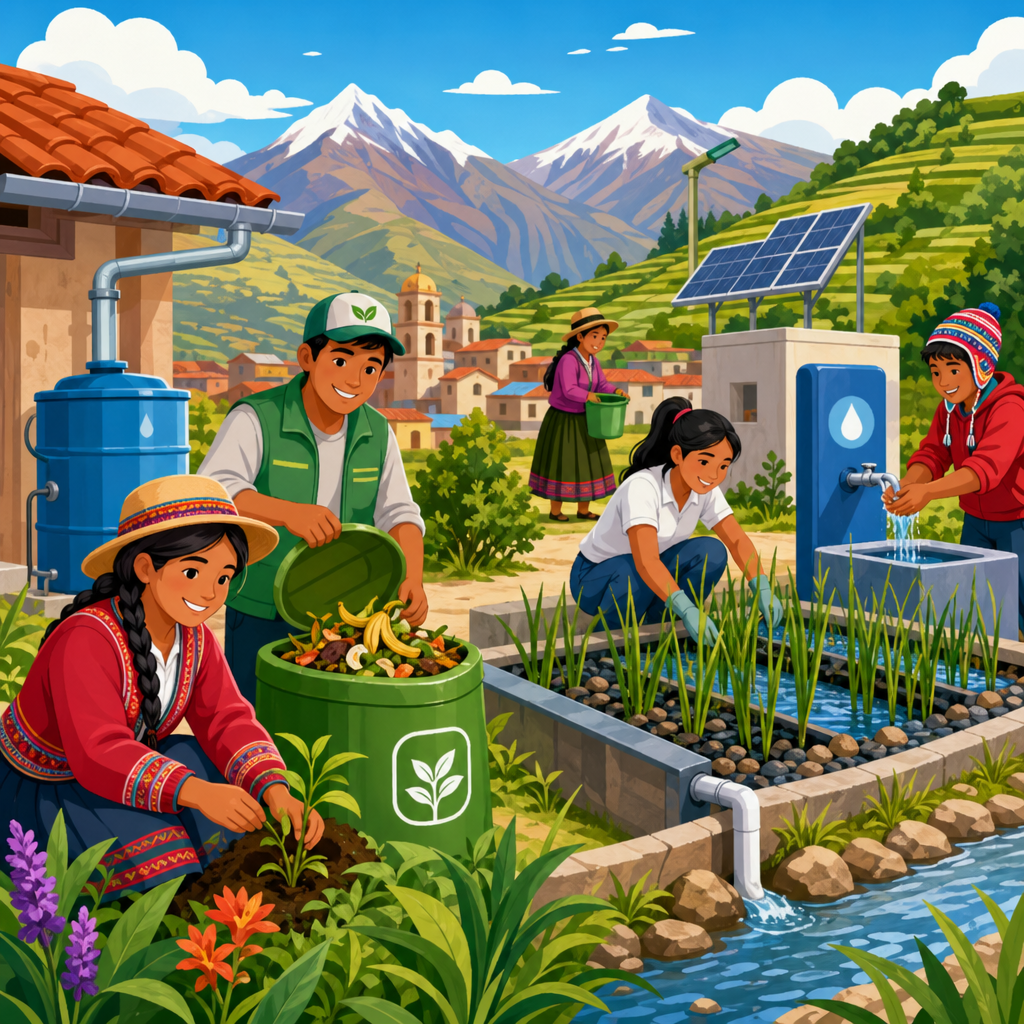
Sanitation for health and dignity is not an abstract development goal; it is a daily reality that shapes safety, disease risk, school attendance, income, and self-respect for millions of women. In my work reviewing ecological sanitation projects across Africa, Asia, and Latin America, the same pattern appeared repeatedly: when toilets are poorly designed, far away, unsafe at night, or impossible to maintain, women absorb the heaviest burden. They manage menstruation without privacy, care for sick children during diarrheal outbreaks, and spend time finding secluded places when no usable toilet exists. When sanitation improves, the gains are immediate and measurable. Cleaner facilities reduce exposure to fecal pathogens, while private, reliable toilets restore dignity and make education and work more practical.
Ecological sanitation, often shortened to EcoSan, refers to sanitation systems designed to safely separate, treat, and reuse human waste as a resource. Depending on the model, this can include urine-diverting dry toilets, composting toilets, container-based systems, or decentralized treatment that produces compost or fertilizer. The central idea is simple: instead of treating human waste only as something to dispose of, EcoSan aims to break disease transmission and recover nutrients and water where appropriate. The approach matters most in places where sewer networks are unaffordable, groundwater is vulnerable, or water scarcity makes flush toilets impractical.
This hub article examines lessons from EcoSan implementations through women’s stories from multiple countries because those stories reveal what technical reports often miss. A toilet can meet engineering specifications and still fail women if the door does not lock, the slab is hard to clean, the steps are unsafe for older users, or emptying procedures expose households to shame. Conversely, a modest system can succeed when women are consulted early, tariffs are realistic, local masons are trained, and reuse products are accepted by farmers. Across successful projects, health and dignity improved together, not separately. That is the core lesson of EcoSan: sanitation works best when technology, behavior, maintenance, and social norms are designed as one system rather than treated as separate tasks.
Why women’s experience is the most useful lens for evaluating sanitation
Women’s experience is the strongest test of sanitation quality because women use facilities under more complex conditions than men in most households. They need privacy during menstruation, safe access during pregnancy, space to assist children or older relatives, and a layout that supports cleaning, washing, and disposal. In peri-urban settlements I have assessed, women were usually the first to identify design failures: no internal shelf for soap, no light source, poor drainage causing slippery floors, or vaults that filled faster than projected because planners underestimated household size. These are not minor inconveniences. They directly affect whether a toilet is used consistently, whether children defecate elsewhere, and whether a facility remains hygienic after the first few months.
Global evidence supports this perspective. The World Health Organization and UNICEF Joint Monitoring Programme links safely managed sanitation to lower exposure to enteric disease, while multiple school sanitation studies show that girls’ attendance improves when facilities provide privacy, water, and menstrual hygiene support. Safety is equally important. In communities where open defecation or distant shared latrines remain common, women frequently delay toilet use until dark or early dawn, increasing risks ranging from urinary discomfort to harassment. That is why sanitation and dignity belong in the same conversation. Dignity is not a soft outcome; it determines use, maintenance, and long-term public health impact.
Lessons from Uganda and Kenya: urine diversion succeeds when training is practical
East African EcoSan projects offer one of the clearest lessons: urine-diverting toilets work when user instruction is concrete, repeated, and locally adapted. In Uganda, several municipalities and rural districts piloted urine-diverting dry toilets through schools and household programs supported by NGOs and local governments. The technology promised lower water demand and nutrient recovery, but early uptake varied widely. Where households only received a one-time handover, confusion followed. Users mixed ash and water incorrectly, children used the wrong drop hole, and vault switching was delayed. In the better-performing communities, women’s groups received hands-on demonstrations covering daily cleaning, ash dosing, urine storage, and harvest timing. Those households maintained drier vaults, reduced odors, and were more willing to use composted material in agriculture.
Kenya produced similar results, especially in informal settlements where sewer expansion lagged behind urban growth. In one settlement-level program I reviewed, women managing shared compounds preferred systems with clear cleaning responsibilities and visible fill indicators. The technology mattered, but management mattered more. Shared EcoSan blocks performed well when caretakers collected small user fees for soap, minor repairs, and pit or vault service. They failed when nobody owned maintenance. Another critical finding was language. Technical terms such as “pathogen die-off” meant little to users, but explaining that stored urine should rest before application and compost should mature fully before handling was widely understood. EcoSan training must be operational, not academic.
| Country | EcoSan approach | What women valued most | Main lesson |
|---|---|---|---|
| Uganda | Urine-diverting dry toilets in homes and schools | Privacy, reduced smell, fertilizer reuse | Repeated user training determines correct operation |
| Kenya | Shared and household EcoSan in dense settlements | Cleanliness, predictable maintenance, safety | Defined management and small fees improve durability |
| Bangladesh | Flood-resilient raised latrines and composting models | Access during monsoon, child-friendly design | Climate adaptation must shape toilet structure |
| Haiti | Container-based sanitation with service collection | In-home safety, no pit emptying burden | Service logistics can outperform infrastructure-heavy models |
| Peru | Dry sanitation in water-scarce peri-urban areas | Low water use, household control | Acceptance grows when reuse has clear economic value |
Lessons from Bangladesh and India: climate, caste, and convenience shape outcomes
South Asia shows why sanitation cannot be separated from local geography and social structure. In flood-prone parts of Bangladesh, raised latrines and sealed or protected containment systems were essential because conventional pits collapsed, overflowed, or contaminated surrounding water during monsoon periods. Women consistently emphasized access during heavy rain and nighttime flooding. A technically sound toilet that became unreachable on submerged paths was effectively no toilet at all. The strongest EcoSan adaptations used elevated platforms, durable superstructures, and steps designed for children and older users. These details increased use because women trusted that the facility would remain functional across seasons.
India offers a different but equally important lesson: convenience alone does not overcome social norms. In several dry sanitation and decentralized treatment initiatives, adoption depended on how communities viewed handling waste and whether reuse fit local farming practices. In some places, women liked the privacy and water savings of improved systems but worried about stigma tied to compost handling. Programs that confronted this directly did better. They used demonstration plots, involved respected local farmers, and clearly explained treatment timelines based on safe decomposition rather than vague assurances. The practical takeaway is that EcoSan acceptance grows when users see visible benefits and understand exactly who handles what, when, and under what safety protocol. Ignoring caste dynamics, labor divisions, or menstrual needs leads to underuse regardless of engineering quality.
Lessons from Haiti and Peru: service models can solve barriers that hardware cannot
Not every successful ecological sanitation case relies on households managing treatment themselves. Haiti demonstrates the value of container-based sanitation, especially in dense urban areas with unstable terrain, high water tables, or unsafe emptying conditions. Organizations such as SOIL showed that a service-based model can protect health and dignity by collecting sealed containers regularly and treating waste off-site. Women reported appreciating the fact that they did not need to supervise pit emptying, negotiate with informal emptiers, or escort children to unsafe communal toilets. In contexts where infrastructure is constrained, the service chain becomes the sanitation system. Reliability of collection schedules, customer support, and replacement supplies matters as much as toilet design.
Peru’s water-scarce peri-urban settlements offer another strong case. Dry toilets and urine diversion were often introduced where water trucking was expensive and sewer networks unrealistic. Households accepted these systems more readily when projects linked sanitation to household economics. Women managing scarce water budgets immediately understood the benefit of a toilet that did not consume flush water. Farmers were more interested when nutrient recovery was discussed in terms of crop response and fertilizer substitution rather than environmental theory. Still, Peru also exposed a limitation: if spare parts, trained builders, or follow-up visits disappeared after project completion, performance dropped. EcoSan is not a one-time installation; it requires a local market for maintenance, repairs, and user support.
What makes EcoSan implementations succeed over time
Across countries, five factors separate lasting EcoSan success stories from short-lived pilots. First, women must influence design before construction begins. This includes siting, door orientation, interior layout, menstrual hygiene provisions, lighting, handwashing access, and whether the facility is shared or household-based. Second, training must be staged over time. Initial orientation is never enough; follow-up after one month, one rainy season, and one vault cycle is where problems are corrected. Third, financing must cover maintenance, not just construction. Households and community groups need a realistic plan for consumables, repairs, and emptying or collection.
Fourth, health protection protocols must be explicit. Safe storage times, correct use of cover material, protective equipment where needed, and restricted handling before treatment completion should be communicated in plain language. Referencing established sanitation safety planning principles helps communities and implementers avoid improvising around risk. Fifth, projects need a credible end-use or disposal pathway. If compost or urine cannot be reused safely and acceptably, storage spaces fill and enthusiasm fades. The best programs build demand on the agricultural side early, using field demonstrations and agronomic guidance. When women can see reduced fertilizer costs, cleaner compounds, fewer odors, and safer access for daughters, EcoSan moves from donor project to household priority.
How this hub connects the wider case study series
As a hub for case studies and success stories, this page organizes the central lessons that every deeper article in the EcoSan series should expand. Readers exploring school sanitation will want more on privacy, menstrual hygiene, and adolescent girls’ attendance. Those focused on urban services will need separate analysis of container-based sanitation, fee collection, and treatment logistics. Agricultural reuse deserves its own discussion covering nutrient content, storage, farmer acceptance, and regulatory constraints. Climate resilience also warrants a dedicated article because flood zones, drought-prone settlements, and rocky terrain all change what “appropriate sanitation” means in practice.
The unifying message is clear. Sanitation for health and dignity improves most when women’s lived experience guides design, operations, and accountability from the start. EcoSan implementations work best when technology matches local water conditions, social norms, and service capacity; when training is repeated until use becomes routine; and when maintenance is treated as a permanent function rather than an afterthought. The women’s stories behind Uganda, Kenya, Bangladesh, India, Haiti, and Peru show that successful sanitation is never just about toilets. It is about trust, safety, affordability, and control over everyday life. Use this hub as the starting point for the wider case study series, and evaluate every sanitation model by the same practical question: does it make women healthier, safer, and more dignified every single day?
Frequently Asked Questions
Why is sanitation especially important for women’s health and dignity across different countries?
Sanitation affects everyone, but women often experience its consequences more intensely because they are typically the ones managing personal hygiene, menstruation, pregnancy-related needs, childcare, and care for sick family members. When toilets are unavailable, unsafe, too distant, or not designed with privacy in mind, women face daily stress that goes far beyond inconvenience. Poor sanitation can increase exposure to diarrheal disease, urinary tract infections, reproductive health complications, and hygiene-related illness. It also creates conditions where women may avoid eating or drinking to delay using the toilet, which can harm their long-term health.
Dignity is just as central as health. A toilet is not only a piece of infrastructure; it is a private space that allows a person to manage bodily needs without fear, shame, or humiliation. In many communities across Africa, Asia, and Latin America, women describe the emotional burden of waiting until dark to relieve themselves, hiding during menstruation, or worrying that others will see or judge them. These experiences shape self-respect, mobility, and participation in public life. Reliable sanitation gives women more control over their bodies, greater safety, and the basic dignity that should never depend on geography or income.
What kinds of sanitation problems do women commonly face in low-resource communities?
The most common problems are practical, but their effects are wide-ranging. Toilets may be too far from home, poorly lit, structurally unstable, difficult to clean, or shared by too many households. Some facilities do not have doors that lock, water for washing, or enough space for menstrual hygiene management. Others are built without considering older women, pregnant women, women with disabilities, or mothers helping small children. In flood-prone, arid, or densely populated areas, toilets may also be hard to maintain, quickly fill up, or become unusable during certain seasons.
Women also carry a disproportionate maintenance burden. When sanitation systems break down, it is often women who adapt around the failure by collecting water, cleaning dirty facilities, caring for sick relatives, and finding ways to protect girls’ privacy. In households without a suitable toilet, women may have to escort children, search for hidden places, or limit toilet use to specific times of day. These are not minor coping strategies; they consume time, create stress, and reduce opportunities for education, paid work, rest, and community participation. Across countries and cultures, the pattern is strikingly similar: when sanitation systems are weak, women are expected to absorb the cost.
How does poor sanitation affect girls’ education and women’s economic opportunities?
Poor sanitation has a direct impact on whether girls can attend school consistently and whether women can participate fully in work and public life. In schools, the absence of clean, private, and functional toilets can make attendance difficult, especially during menstruation. If there is no place to wash, change materials, or dispose of them discreetly, many girls miss class or leave school early. This interruption may begin as occasional absence but can lead to lower performance, reduced confidence, and eventually school dropout in some settings. The issue is not only menstruation itself, but the lack of facilities that allow girls to manage it safely and privately.
For women, sanitation influences productivity, income, and mobility. In markets, farms, factories, schools, and informal workplaces, lack of accessible toilets can shorten working hours, reduce concentration, and force women to plan their day around toilet access rather than around opportunity. Women who sell goods in public spaces, travel long distances, or work in temporary settings are especially affected. Time spent coping with inadequate sanitation at home also has economic consequences. If women are caring for children with preventable illness, fetching water for cleaning, or spending additional time searching for safe places to relieve themselves, that is time taken away from earning, studying, resting, or building a business. Good sanitation supports education and livelihoods because it removes an invisible barrier that limits women every single day.
What makes a sanitation solution truly safe, usable, and respectful of women’s needs?
A good sanitation solution starts with listening to women rather than assuming one design works everywhere. Safety means more than having a toilet structure in place. The toilet should be close enough to use conveniently, especially at night, and located where women do not face harassment or attack on the way there. It should have a door that closes securely, adequate lighting or safe access after dark, ventilation, and a design that feels private. Usability matters just as much: a facility must be cleanable, durable, affordable to maintain, and functional in local environmental conditions such as flooding, drought, high water tables, or rocky terrain.
Respectful sanitation also includes menstrual hygiene needs, handwashing, water access where appropriate, and accommodation for different life stages and abilities. A toilet that works for an adult man may not work well for an adolescent girl, a pregnant woman, an elderly woman, or a woman with limited mobility. In many successful ecological sanitation and community-led projects, women’s involvement in planning, siting, management, and maintenance leads to better outcomes because they identify details others miss: where privacy is weakest, when the route is unsafe, how cleaning will actually happen, and whether the technology is realistic for everyday use. The best systems are not only engineered well; they are socially informed, locally maintainable, and designed around real patterns of women’s lives.
What do women’s stories from multiple countries teach us about improving sanitation policy and practice?
Women’s stories reveal that sanitation should never be treated as a narrow technical issue. A latrine can be counted on a project report and still fail the people who need it most. Across multiple countries, women consistently point to the same priorities: privacy, safety, proximity, affordability, cleanliness, and the ability to manage menstruation and caregiving responsibilities with dignity. Their testimonies show that infrastructure alone is not enough if there is no maintenance plan, no water access, no community ownership, and no attention to who uses the facility at different times of day and under different conditions.
These stories also show that better sanitation policy depends on including women in decision-making from the beginning. When women help shape projects, interventions are more likely to reflect daily realities rather than outside assumptions. That can mean choosing a different location, modifying the design, creating a maintenance system, ensuring separate facilities where needed, or planning for long-term financing and repairs. Policymakers, NGOs, and local governments can learn a simple but powerful lesson from women’s lived experience: sanitation succeeds when it is treated as a health issue, a gender issue, a safety issue, and a dignity issue all at once. Listening to women across countries does more than improve project design; it helps build systems that are more equitable, more sustainable, and far more likely to last.