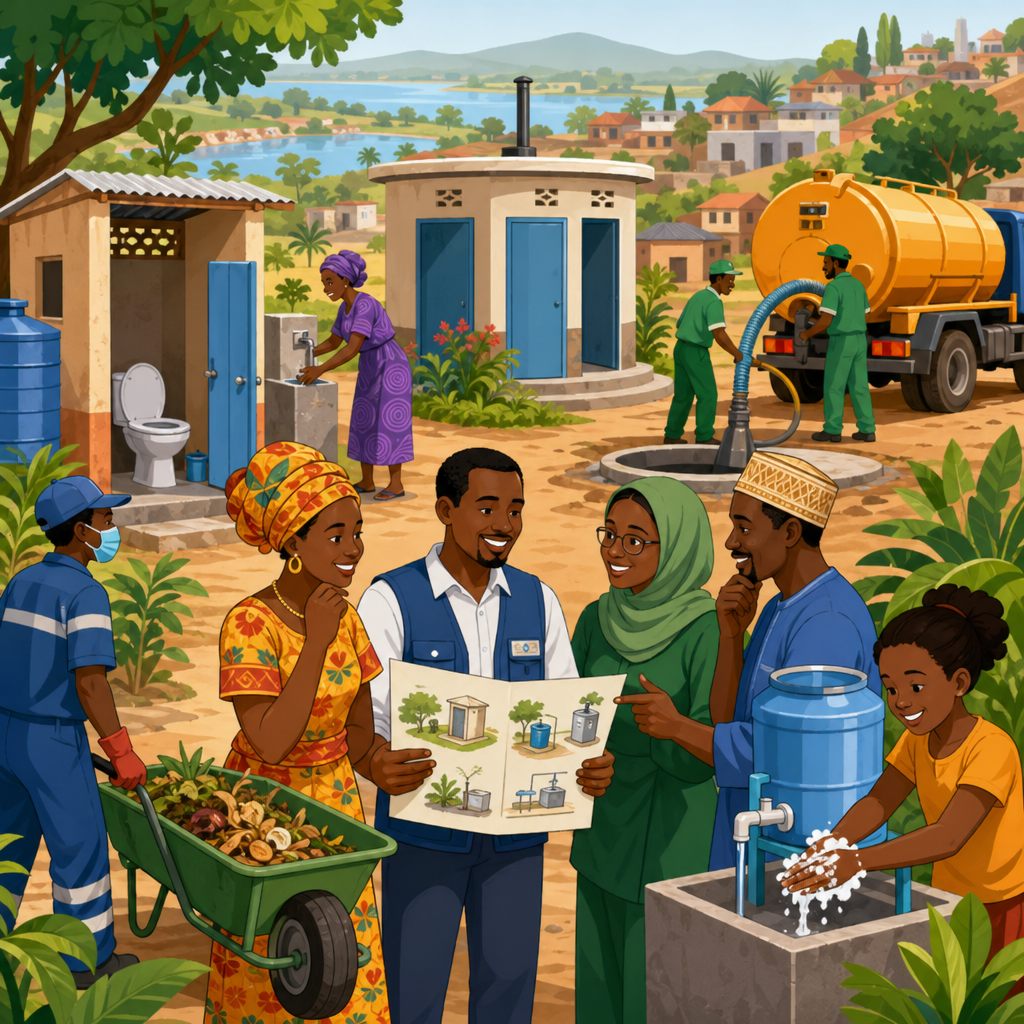
Empowering youth through sanitation initiatives starts with a practical truth: when young people help design, build, and manage sanitation systems, communities gain healthier households, stronger local leadership, and more durable infrastructure. In work around ecological sanitation, or EcoSan, I have seen projects succeed not because toilets were installed, but because youth were treated as operators, educators, entrepreneurs, and advocates. EcoSan refers to sanitation approaches that safely contain, treat, and often reuse human waste as a resource, typically through urine diversion, composting, dehydration, and nutrient recovery. These systems matter where sewer networks are limited, water is scarce, soils are degraded, or public budgets cannot sustain centralized treatment. They also matter because sanitation is never only a technical issue. It shapes school attendance, dignity, disease risk, environmental quality, and livelihoods.
As a hub for lessons from EcoSan implementations, this article explains what youth-centered sanitation initiatives are, why they work, and what case studies consistently teach. The strongest programs combine behavior change, operations training, financing, maintenance, and local ownership from the beginning. They answer common questions directly: What makes EcoSan different from conventional toilets? How can youth participate beyond awareness campaigns? Which implementation mistakes undermine results? What indicators show real impact? Across projects in schools, informal settlements, peri-urban districts, and rural farming communities, the pattern is clear. Young people are often the most effective link between household practice and system performance. They normalize handwashing, safe use, source separation, routine cleaning, and resource recovery. They also adapt quickly to monitoring tools, peer education models, and small enterprise opportunities tied to compost, maintenance, or menstrual hygiene supply chains. Understanding these lessons helps organizations build sanitation initiatives that last.
Why youth are central to successful EcoSan implementations
Youth are central because sanitation behavior is learned, repeated, observed, and socially enforced. In schools and community programs I have supported, adolescents often become the first consistent users of a new system and the first to notice failures, whether blocked urine pipes, ash shortages, poor ventilation, or unsafe cleaning routines. That frontline visibility matters. EcoSan systems depend on correct use more than flush toilets connected to mature sewer infrastructure. If users mix solid waste with plastics, add too much water to a dry toilet, neglect cover material, or ignore cleaning schedules, performance drops quickly. Young people can protect system integrity when they understand the operating logic and explain it in plain terms to families and peers.
There is also a leadership reason. Youth participation shifts sanitation from a donor-delivered asset to a community-managed service. Successful case studies repeatedly move beyond one-off hygiene clubs. They create roles such as student sanitation monitors, apprentice masons, peer trainers, data collectors, fecal sludge service assistants, and school health committee members. In Uganda, South Africa, Kenya, and parts of India, school and community EcoSan pilots showed better upkeep where local youth groups had named responsibilities and adult mentors. The strongest results came when participation included decision-making power, not just volunteer labor. That means young people helping choose toilet locations, set cleaning rosters, test signage, report user complaints, and evaluate whether the design fits girls, younger children, and people with disabilities.
Another reason youth matter is demographic. In many low and middle income countries, a large share of the population is under thirty, while unemployment remains high. Sanitation initiatives that include skills training can connect public health goals with employability. Basic plumbing, bricklaying, urine-diverting toilet maintenance, compost handling, customer communication, and mobile data collection are all teachable competencies. When EcoSan is framed this way, it supports both service delivery and economic inclusion.
What EcoSan case studies teach about design, training, and behavior change
The first lesson from EcoSan implementations is that hardware alone never delivers outcomes. Every credible case study shows that design must be paired with user training and repeated reinforcement. A urine-diverting dry toilet can be technically sound and still fail if users are not taught why urine and feces are separated, when to add cover material, how often containers should be emptied, and which cleaning products damage the system. I have seen installations labeled failures when the real problem was a two-hour handover with no follow-up. The better model is phased orientation: initial demonstration, supervised early use, visual instructions inside the cubicle, and refresher sessions after one month and three months.
The second lesson is that design must fit local habits. In some communities, anal cleansing with water is standard. In others, squat pans are preferred over seated units. In schools, privacy, menstrual hygiene management, and accessibility are often stronger adoption drivers than environmental messaging. Programs that copied imported designs without adapting to these realities usually faced odor complaints, misuse, or abandonment. By contrast, implementations that tested prototypes with students and caregivers before wider rollout had higher acceptance. The Sustainable Sanitation Alliance has long emphasized context-responsive planning, and that principle is consistently validated in field experience.
The third lesson is that behavior change must be specific. General hygiene messaging is not enough for EcoSan. Users need step-by-step operating guidance tied to the exact technology. Clear instructions such as “add one cup of ash after each use,” “do not pour wash water into the feces vault,” or “report a full container immediately” outperform broad messages about cleanliness. Named responsibilities also matter. Where everyone is responsible, no one is responsible.
| Implementation area | Common failure point | What successful projects do differently |
|---|---|---|
| Technology selection | Choosing systems unsuited to water use habits or soil conditions | Run participatory assessments, pilot prototypes, and adapt pan design, vault size, and drainage details |
| User training | One-time orientation with no reinforcement | Deliver repeated demonstrations, wall signage, peer coaching, and supervisor check-ins |
| Operations | No clear cleaning and emptying roles | Assign named caretakers, youth monitors, and escalation procedures for repairs |
| Social acceptance | Taboos around waste reuse and odor concerns | Use farmer demonstrations, health evidence, and visible maintenance standards |
| Financial planning | Budget covers construction but not consumables or repairs | Include lifecycle costing for ash, tools, spare parts, transport, and training refreshers |
Lessons from school-based and community-based EcoSan projects
School-based EcoSan projects often produce the clearest evidence for youth empowerment because the institution offers structure, daily use, and opportunities for peer learning. The best school programs integrate sanitation into health education, science, agriculture, and student leadership. For example, where treated compost is safely used in school gardens under controlled protocols, students can see nutrient recovery in practice rather than hearing abstract sustainability claims. This is especially effective when teachers connect sanitation to soil fertility, food production, and water conservation. Attendance can improve as facilities become cleaner, safer, and more private, particularly for girls who need menstrual hygiene support and secure doors.
Still, school projects fail when maintenance is treated as an afterthought. Janitors alone cannot sustain a high-use facility without supply budgets, repair systems, and user discipline. Stronger case studies set up sanitation committees that include students, teachers, cleaners, and local government representatives. They keep spare parts on hand, post cleaning schedules, and use simple inspections for smell, flies, water leakage, and handwashing supplies. In my experience, the schools that maintained performance were not the wealthiest. They were the ones with routines.
Community-based EcoSan implementations add another layer: household diversity. A design that works in a boarding school may not work in a dense informal settlement with tenant turnover, little storage space, and irregular collection services. Here, the lesson is co-production. Youth groups can map sanitation gaps, survey user preferences, and support landlord or community meetings. They can also run social marketing campaigns that explain practical benefits such as lower water use, safer compounds, and fewer open defecation sites. Programs that rely only on environmental arguments tend to be less persuasive than those that address convenience, cost, privacy, and status.
Some of the strongest community results come from linking EcoSan to local agriculture or landscaping. Where treated by-products can be safely used under national guidelines, communities may see direct value from nutrient recovery. However, this must be handled carefully. Public health safeguards, storage times, pathogen reduction, and crop restrictions must be explicit. Overpromising fertilizer income is a mistake. Reuse works best as one component of a well-managed service, not as the sole business case.
Operations, financing, and the business models that keep systems running
Sanitation systems endure when operations are designed before construction begins. That is one of the clearest lessons from EcoSan implementations. Every project should answer five questions in advance: Who cleans? Who empties? Where does material go? Who pays for consumables and repairs? What happens when the first responsible person leaves? If those answers are vague, performance usually declines within months. Youth can strengthen operations by handling inspections, digital reporting, community outreach, or fee collection support, but they should not be used as unpaid substitutes for proper service management.
Lifecycle costing is essential. Capital expenditure gets attention because it is visible, yet recurring costs determine long-term success. These include cleaning materials, ash or dry cover material, gloves, transport, ventilation pipe repairs, door latches, handwashing soap, training refreshers, and supervision. Organizations such as the World Bank’s Water and Sanitation Program and UNICEF have repeatedly highlighted the risk of underfunding operation and maintenance. In EcoSan, that risk is even sharper because misuse can rapidly damage user trust. One smelly or dirty block can undermine adoption across an entire site.
Several business models show promise. In schools, local government or school management committees often cover recurrent costs if they are built into annual budgets. In communities, landlord contributions, household fees, municipal service contracts, or cross-subsidized collection models may be more realistic. Youth-led microenterprises can support specific functions such as pit emptying logistics, toilet cleaning services, handwashing station supply, or compost packaging where regulations allow. The key is realism. Revenue from reuse products rarely covers full system costs at early stages. Reliable service financing usually blends user payments, institutional budgets, and public support.
Digital tools can help. Mobile forms in KoboToolbox, CommCare, or Open Data Kit make it easier for trained youth monitors to record fill levels, damage reports, soap stockouts, and user complaints. Data only matters, however, if someone acts on it. The most effective implementations create response timelines and escalation paths so monitoring leads to repairs and retraining.
Measuring impact, avoiding common mistakes, and scaling what works
Impact measurement should go beyond counting toilets built. Strong EcoSan evaluation tracks use, functionality, cleanliness, safety, inclusion, cost, and health-related behaviors. Useful indicators include percentage of facilities fully functional, days without soap stockouts, frequency of vault emptying on schedule, user satisfaction by age and gender, school absenteeism linked to inadequate sanitation, and proportion of households following correct operating steps. Where reuse is part of the model, monitoring should include storage times, handling practices, and compliance with local safety guidance. If data cannot show whether the system is being used correctly and maintained safely, the project is not truly being measured.
Common mistakes are consistent across regions. First, organizations choose technology before understanding the local service chain. Second, they underestimate training needs. Third, they ignore the social side of sanitation, especially privacy, shame, taboos, and gendered experience. Fourth, they launch without a maintenance budget. Fifth, they fail to plan for turnover among teachers, caretakers, or youth leaders. The practical fix is institutionalization: documented procedures, budget lines, refresher training, and clear ownership. When a program depends on one charismatic champion, it is fragile.
Scaling works when standardization and adaptation are balanced. Core elements such as safe design principles, maintenance protocols, and monitoring forms should be standardized. User engagement, communication style, and final hardware details should be adapted to local conditions. This is where hub-level learning is valuable. One case study may show how a girls’ sanitation club improved reporting. Another may demonstrate how municipal procurement stabilized spare parts. Another may reveal that a container-based variant worked better than vault systems in dense settlements. Together, these lessons help practitioners avoid repeating predictable failures.
The main takeaway is simple: empowering youth through sanitation initiatives improves EcoSan outcomes because it strengthens correct use, accountability, and long-term ownership. The best lessons from EcoSan implementations are practical, not abstract. Start with context, choose the right technology, train users repeatedly, fund maintenance, measure functionality, and give young people real authority in the system. When youth are engaged as decision-makers and service partners, sanitation becomes more resilient, more inclusive, and more credible to the community. Use this hub as your starting point, then explore the linked case studies, tools, and implementation guides needed to design the next project with fewer mistakes and stronger results.
Frequently Asked Questions
1. Why is youth involvement so important in sanitation initiatives?
Youth involvement matters because sanitation systems are not sustained by infrastructure alone; they are sustained by people who understand them, trust them, and are willing to maintain them over time. When young people are actively included in sanitation initiatives, they bring energy, creativity, local knowledge, and social influence that can dramatically improve adoption and long-term use. In many communities, youth are already central to daily household routines, school activities, and informal communication networks, which makes them especially effective at spreading practical sanitation knowledge and shaping community attitudes.
From an implementation standpoint, involving youth creates a stronger foundation for local ownership. Instead of seeing sanitation as something delivered by outsiders, communities begin to see it as a shared responsibility led by people they know. Young participants can help map sanitation gaps, identify barriers to safe toilet use, support hygiene education, and monitor whether systems are functioning as intended. In ecological sanitation, or EcoSan, this role becomes even more valuable because these systems often require users to understand separation, safe handling, maintenance, and the broader environmental benefits of resource recovery.
There is also a leadership dimension that should not be underestimated. When youth are trusted as operators, educators, entrepreneurs, and advocates, they gain practical skills in problem-solving, communication, technical maintenance, and civic participation. Those skills extend beyond sanitation and contribute to stronger local leadership overall. Communities benefit not only from better health outcomes and cleaner environments, but also from a rising generation that has learned how to organize around public needs and manage local systems responsibly.
2. What does empowering youth through ecological sanitation actually look like in practice?
In practice, empowering youth through ecological sanitation means moving beyond awareness campaigns and giving young people meaningful roles in planning, implementation, and management. EcoSan is most effective when users understand both the technical and social sides of the system, so youth can be trained to participate in site assessment, user education, toilet construction support, maintenance scheduling, composting or treatment processes, and community follow-up. This approach turns sanitation from a one-time installation project into a locally managed system with clear responsibilities and long-term relevance.
For example, youth groups may help identify where toilets are most needed, gather feedback from households, and explain how EcoSan systems work in language that is accessible and culturally appropriate. They can serve as peer educators in schools, lead demonstrations on handwashing and toilet use, and help dispel myths about ecological sanitation. In some communities, youth teams are trained to monitor cleanliness, report repairs, and support safe reuse practices where treated outputs are part of a circular resource model. These are not symbolic tasks; they are operational functions that directly influence whether a sanitation initiative succeeds or fails.
Empowerment also looks like economic participation. Young people can be supported to form sanitation enterprises that provide maintenance services, construct EcoSan units, distribute hygiene supplies, or manage treatment and reuse components in line with public health standards. When they earn income and gain recognized expertise, their role shifts from volunteer support to valued community service provider. That shift is important because it strengthens dignity, accountability, and sustainability. A youth-led sanitation initiative becomes far more durable when young people are not just included, but equipped, compensated, and respected as part of the system itself.
3. How do sanitation initiatives led by youth improve community health and development?
Youth-led sanitation initiatives improve community health by increasing the consistent use, maintenance, and social acceptance of safe sanitation practices. Poor sanitation contributes to diarrheal disease, parasitic infection, environmental contamination, and missed school or work days, especially in densely populated or under-resourced settings. When youth are involved in education and operations, they often help close the gap between having a facility and using it correctly. They can promote handwashing, support household behavior change, identify unsafe disposal practices, and encourage regular maintenance before small issues become public health risks.
The impact extends beyond direct disease prevention. Better sanitation improves dignity, safety, and educational participation, especially for girls and young women who may otherwise face barriers related to privacy, menstrual hygiene management, or unsafe facilities. Youth advocates are often well positioned to speak openly about these issues and push for sanitation solutions that are practical, inclusive, and responsive to real daily needs. Their involvement can help ensure that sanitation systems are designed for actual users, not just for technical compliance.
On the development side, youth-led sanitation work helps build social capital and local resilience. Communities with organized youth engagement often develop stronger communication channels, faster problem reporting, and more collective accountability around public infrastructure. In EcoSan projects, where systems may connect sanitation, agriculture, waste reduction, and environmental stewardship, youth can become important bridges between traditional practices and new approaches. This creates a multiplier effect: households become healthier, public spaces become cleaner, local knowledge expands, and young leaders gain experience managing shared resources in a way that benefits the entire community.
4. What challenges can arise when engaging youth in sanitation projects, and how can they be addressed?
One common challenge is that youth are often invited into sanitation projects in limited or symbolic ways rather than as genuine decision-makers. If their participation is restricted to outreach events or short-term volunteer activities, they may not develop the ownership needed to sustain the work. This can be addressed by involving youth early in the design process, assigning clear operational responsibilities, and creating pathways for continued leadership. When young people can influence planning, budgeting, implementation, and evaluation, their engagement becomes more serious and more effective.
Another challenge is the lack of training, tools, and supervision. Sanitation systems, particularly EcoSan systems, require technical understanding and careful attention to safety. Without proper instruction, youth may be expected to perform tasks they are not adequately prepared for, which can undermine both confidence and outcomes. Strong programs invest in practical training, mentorship, protective equipment, and clear protocols for operation and maintenance. They also recognize that youth need support structures, not just expectations. Partnering with schools, local governments, community-based organizations, and technical experts can help provide the continuity and guidance needed for success.
Social attitudes can also present barriers. In some contexts, sanitation work may be undervalued, stigmatized, or seen as inappropriate for young people to lead. Gender norms may further limit participation, especially for girls. Addressing these barriers requires deliberate community engagement that frames sanitation as a public health, environmental, and leadership issue rather than a low-status task. Public recognition of youth contributions, inclusive recruitment, and visible success stories can shift perceptions over time. The most effective initiatives treat youth engagement not as an add-on, but as a strategic investment in both sanitation outcomes and community leadership.
5. What makes youth-centered sanitation initiatives more sustainable over the long term?
Youth-centered sanitation initiatives tend to be more sustainable because they build human capacity alongside physical infrastructure. Toilets, treatment systems, and hygiene facilities can deteriorate quickly if no one is responsible for maintenance, user education, repairs, or adaptation over time. By training young people to manage these functions, communities create a local base of knowledge and accountability that remains after external funding or project teams leave. This is especially important in ecological sanitation, where ongoing management and user understanding are central to safe and effective operation.
Long-term sustainability also improves when youth are connected to real incentives and institutions. If they are linked to schools, local councils, cooperatives, health committees, or small enterprises, their sanitation work becomes embedded in community structures rather than dependent on short-lived enthusiasm. Some of the strongest models combine technical training with entrepreneurship, allowing youth to earn livelihoods from construction, maintenance, hygiene product distribution, waste treatment services, or agricultural reuse systems where appropriate and safe. When sanitation creates economic opportunity as well as public benefit, continuity becomes much more likely.
Perhaps most importantly, youth-centered initiatives create a culture of stewardship. Young people who help design and manage sanitation systems often become long-term advocates for cleanliness, public health, water protection, and environmental responsibility. They influence siblings, parents, classmates, and future households. Over time, that cultural shift can be just as valuable as the infrastructure itself. Sustainable sanitation is not only about what gets built; it is about who is equipped to care for it, improve it, and champion it for the next generation. That is why youth empowerment is not a secondary feature of successful sanitation initiatives—it is often one of the main reasons they endure.