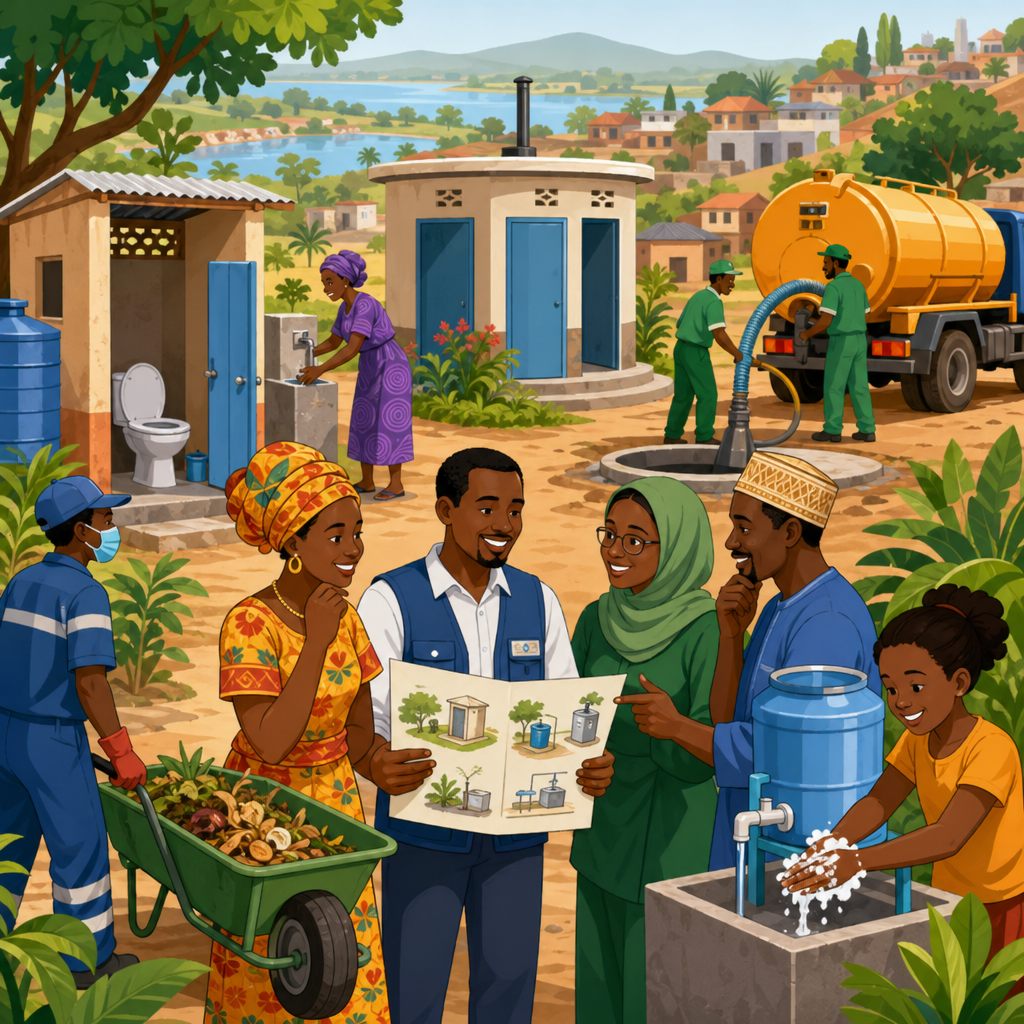
EcoSan solutions in peri-urban Indian settings have moved from small pilot projects to practical sanitation strategies because they address two linked problems at once: safe waste management and resource scarcity. EcoSan, short for ecological sanitation, is a systems approach that treats human excreta and household wastewater as materials to be safely contained, processed, and reused rather than simply flushed away. In peri-urban India, where villages transition into dense mixed-use settlements, this idea matters because conventional sewerage often arrives late, septic systems are poorly maintained, groundwater is stressed, and open drains carry health risks downstream.
In my work reviewing sanitation projects across municipal fringes, the strongest EcoSan implementations were never just about toilets. They combined user-centered design, pathogen risk reduction, water budgeting, municipal coordination, and a realistic plan for operation and maintenance. Peri-urban settings create a specific challenge profile: land is fragmented, tenure can be uncertain, tanker water is expensive, households may share facilities, and governance sits awkwardly between rural panchayat practices and urban service expectations. A sanitation option that ignores those realities usually fails, even if the technology itself is sound.
This hub article on lessons from EcoSan implementations examines what has worked, what has stalled, and what decision-makers should take from Indian case studies. It covers urine-diverting dry toilets, composting toilets, decentralized wastewater treatment linked to reuse, and fecal sludge management models that borrow EcoSan principles. The central lesson is clear: EcoSan succeeds when the sanitation chain is designed end to end, from user acceptance and collection to treatment, reuse, monitoring, and institutional accountability. That is why this topic deserves a dedicated hub under case studies and success stories.
Why peri-urban India is a decisive test for EcoSan
Peri-urban areas are the proving ground for EcoSan because they sit between two infrastructure logics. They are usually too dense for unmanaged on-site sanitation to remain safe, yet too dispersed or too fast-growing for universal sewer networks to be affordable in the near term. The Census definition of statutory and census towns captures part of this transition, but field conditions are even messier: unauthorized layouts, rental clusters, edge settlements near industrial corridors, and villages absorbed into expanding municipal limits all share sanitation gaps. In these environments, a water-intensive flush system can magnify costs while still failing to ensure treatment.
EcoSan offers a different starting point. Instead of assuming large volumes of water and centralized conveyance, it prioritizes source separation, local treatment, and reuse wherever safe and acceptable. This is especially relevant in states facing groundwater depletion, including Karnataka, Rajasthan, Telangana, and parts of Tamil Nadu. A urine-diverting system can sharply reduce water use. A decentralized wastewater treatment setup can recover water for landscaping, horticulture, or institutional grounds. A well-managed composting pathway can reduce pathogen loads and convert waste into a soil amendment where regulations and local markets permit.
However, peri-urban India also exposes EcoSan weaknesses quickly. Shared toilets complicate behavior-dependent designs. Seasonal migration disrupts maintenance routines. Emptying services may not understand separated streams. Local bodies may not have by-laws covering reuse products. The lesson from successful projects is not that EcoSan is universally superior, but that it can outperform default options when planners match the model to settlement density, user behavior, and service capacity.
What Indian EcoSan case studies consistently teach
Across documented implementations by organizations such as UNICEF, the Centre for Science and Environment, BORDA, and state sanitation missions, four lessons appear repeatedly. First, technology choice must follow the full sanitation chain, not precede it. A urine-diverting toilet without a service model for ash, desiccation, chamber switching, and final handling is incomplete. Second, demand creation matters as much as engineering. Users need to understand why separate pans, dry cover material, or restricted anal cleansing practices may be required in some designs. Third, institutional ownership must be explicit. Community-managed systems fail when no one is paid, trained, or authorized to enforce cleaning and safe handling. Fourth, reuse only works when there is a credible end user and quality confidence.
One pattern I have seen repeatedly is that demonstration toilets attract attention, but scale depends on municipal process discipline. In successful school and community toilet projects, the implementing agency prepared cleaning protocols, pictorial user instructions, chamber rest periods, and inspection checklists before construction finished. By contrast, weak projects treated user training as an afterthought. Within months, urine diversion channels blocked, solid waste entered chambers, and the technology was blamed for failures caused by neglected management.
Indian case studies also show that resource recovery should be framed carefully. Households respond better to convenience, dignity, smell control, lower water bills, and reduced pit filling than to abstract nutrient cycling claims. Farmers and gardeners may value compost or urine-derived nutrients, but acceptance grows only after evidence of product safety, crop suitability, and handling practicality. The implementation lesson is straightforward: lead with service benefits, then build reuse markets on demonstrated reliability.
Technology models and where each works best
Not all EcoSan systems fit all peri-urban contexts. Urine-diverting dry toilets work best where water is scarce, households can manage chamber switching, and users are willing to follow a dry-use protocol. They are better suited to owner-occupied homes, institutions with trained caretakers, and low-rise compounds than to high-turnover rentals. Composting toilets can work in similar conditions, though product quality depends heavily on moisture control, temperature, and retention time. In dense settlements with mixed wastewater flows, decentralized wastewater treatment systems, planted gravel filters, baffled reactors, and reuse-oriented treatment trains often provide a more realistic EcoSan pathway.
Fecal sludge management is sometimes left out of EcoSan discussions, but in peri-urban India it often delivers the most practical resource-oriented outcomes. Septic tanks and pits will remain common for years. The lesson from places that improved outcomes is that scheduled desludging, transfer logistics, and treatment at fecal sludge treatment plants can capture many EcoSan principles even without household urine diversion. When treated biosolids or co-compost products meet standards and have institutional buyers, the recovery model becomes more stable than household-level reuse alone.
| Model | Best-fit setting | Main benefit | Key risk |
|---|---|---|---|
| Urine-diverting dry toilet | Water-scarce owner-occupied homes, schools | Low water use and nutrient separation | User error and blockage |
| Composting toilet | Institutions with trained caretakers | Reduced sludge volume | Poor moisture control |
| Decentralized wastewater treatment with reuse | Housing clusters, campuses, mixed peri-urban layouts | Local water recovery | Weak O&M and power interruptions |
| Fecal sludge treatment with resource recovery | Settlements using pits or septic tanks | Scalable city-fringe service model | Irregular desludging and market linkage gaps |
The strongest implementations choose the simplest model that users and local institutions can actually sustain. That usually means avoiding highly behavior-sensitive systems in shared facilities unless caretaking is guaranteed. It also means designing for maintenance access, spare parts, and local masons’ skill levels, not just ideal technical performance on paper.
Design, behavior, and operations: where projects succeed or fail
Most EcoSan failures in peri-urban India are operational failures disguised as technical failures. Pan slope, venting, chamber size, urine pipe diameter, washwater routing, and access hatches all matter, but daily use patterns matter just as much. In several field reviews, I found that women’s water use practices, child usage, menstrual waste disposal, and expectations of pour-flush convenience had not been properly considered during design. Once a system conflicts with routine habits, contamination rises and maintenance burdens escalate.
Successful projects therefore invest in design adaptation. They provide clear separation between blackwater and greywater where required. They include child-friendly interfaces in schools. They plan for menstrual waste bins and collection. They ensure privacy, lighting, and handwashing, because no sanitation technology is accepted for long if the user experience feels unsafe or degrading. Programs that treat these factors as secondary usually see abandonment or retrofit requests.
Operations and maintenance need formal structure. A caretaker should know what to inspect daily, weekly, and monthly. Chamber fill levels should be tracked. Dry cover material such as ash or sawdust must be available in the right quantity and kept dry. If reuse is planned, storage duration and pathogen reduction assumptions should align with recognized guidance, including World Health Organization risk-based sanitation principles and national fecal sludge and septage management frameworks. The practical lesson is blunt: if no one owns maintenance, the system already has a failure date.
Institutional models, finance, and community acceptance
Institutional fit often determines whether an EcoSan project remains a case study or becomes a lasting service. In peri-urban India, responsibility may be split among municipalities, panchayats, parastatal water boards, school committees, resident groups, and private desludging operators. The better projects assign each function clearly: who pays for consumables, who handles periodic emptying, who verifies treatment quality, and who signs off on reuse. Ambiguity is expensive because sanitation problems surface slowly, then all at once.
Finance also requires realism. EcoSan can reduce lifecycle costs where sewer extension is prohibitively expensive, but only if maintenance is budgeted from the start. Capital subsidies that ignore operations create stranded assets. I have seen community systems praised at inauguration and neglected within a year because tariff collection was politically uncomfortable or because the implementing agency exited without training local operators. Viable models often combine household contributions, institutional budgets, municipal support, and in some cases cross-subsidy from broader sanitation contracts.
Community acceptance depends on trust and repeated engagement. Messaging should explain health protection, convenience, water savings, and service continuity in plain language. It should also address concerns directly: smell, insects, safety of recovered products, and whether toilets can handle real family use. Religious or cultural hesitation around reuse should never be dismissed. Instead, projects should offer options, demonstrate safe handling, and avoid forcing uptake where social consent is weak. Acceptance grows when people see a clean, working system managed predictably over time.
Monitoring results and building the next generation of projects
Good case studies measure more than toilet construction. They track functionality, usage, filling rates, desludging frequency, water savings, treatment performance, operator compliance, and user satisfaction. For reuse-linked systems, they also monitor product quality and offtake. This evidence matters because many sanitation debates in India still rely on infrastructure counts rather than service outcomes. A peri-urban EcoSan project should be judged by whether waste is safely managed and whether the system remains acceptable after the novelty phase ends.
The next generation of EcoSan projects in India will likely be hybrid rather than purist. Some neighborhoods will use decentralized treatment and water reuse. Others will improve septic and pit systems through scheduled desludging and treatment recovery. A smaller subset will continue to benefit from urine diversion or composting where households and institutions can manage the protocols well. Digital tools can help: QR-coded maintenance logs, GIS mapping of containment systems, and operator dashboards improve accountability when used consistently.
The core lesson from EcoSan implementations is simple. Match the technology to behavior, the service model to institutions, and the reuse plan to verified demand. If you are planning a peri-urban sanitation program, use this hub as your starting point, then move into the linked case studies on design choices, financing structures, user engagement, and long-term operations to build a system that works beyond the pilot stage.
Frequently Asked Questions
What are EcoSan solutions, and why are they relevant in peri-urban Indian settings?
EcoSan, or ecological sanitation, is an approach to sanitation that views human excreta and household wastewater as resources that can be safely managed, treated, and reused rather than discarded as waste. In peri-urban Indian settings, this matters because these areas often sit between rural and urban systems without fully benefiting from either. Settlements may be too dense for traditional pit-based solutions to work well over time, but they may also lack reliable sewer networks, adequate water supply, and consistent municipal waste treatment. EcoSan systems respond to this gap by focusing on safe containment, treatment, and productive reuse.
The relevance is especially strong where land is under pressure, groundwater is vulnerable, and households face periodic water scarcity. Conventional flush sanitation depends heavily on water and downstream infrastructure, both of which may be unreliable or unaffordable in fast-growing fringe settlements. EcoSan systems can reduce water use, lower contamination risks, and create value through nutrient recovery, compost-like soil amendments, or treated water for non-potable purposes, depending on the design. In practical terms, EcoSan is not just a toilet technology; it is a broader sanitation strategy that supports public health, environmental protection, and local resource efficiency in places where rapid growth has outpaced basic services.
How do EcoSan systems help address both sanitation and resource scarcity at the same time?
One of the strongest advantages of EcoSan is that it tackles two interconnected challenges simultaneously: unsafe waste disposal and the loss of valuable nutrients and water. In conventional systems, excreta and wastewater are commonly treated as materials to be moved away from homes as quickly as possible, often without adequate treatment. In peri-urban areas, this can lead to overflowing pits, polluted drains, contamination of nearby land and water bodies, and health risks for residents. EcoSan changes the logic by keeping waste streams separated where useful, treating them safely, and converting them into usable outputs.
For example, urine-diverting systems can capture urine separately, preserving nutrients such as nitrogen and potassium that are useful in agriculture. Fecal matter, when properly stored and treated, can be transformed into a safer soil-conditioning material. Greywater from bathing, laundry, or kitchens can also be managed through filtration, settling, and plant-based treatment systems for reuse in landscaping or other non-drinking purposes. This approach is particularly valuable in peri-urban India, where water is often limited, fertilizer costs may be high, and nearby farming or kitchen gardening may create local demand for recovered resources.
Just as importantly, EcoSan can reduce pressure on overstretched municipal systems. Instead of requiring large-scale sewer expansion and centralized treatment in every growing fringe settlement, decentralized EcoSan models can operate closer to the source. When designed well and maintained properly, they reduce pollution, conserve water, recover nutrients, and improve sanitation resilience. That is why EcoSan is increasingly viewed not simply as an alternative for underserved areas, but as a practical strategy for settlements facing both infrastructure deficits and resource constraints.
Which types of EcoSan systems are most suitable for peri-urban communities in India?
There is no single EcoSan model that fits every peri-urban settlement, because local conditions vary widely in terms of density, soil type, groundwater level, water availability, household income, space, cultural preferences, and institutional support. That said, some systems are often more suitable than others. Urine-diverting dry toilets are among the most commonly discussed EcoSan options because they reduce water use, support nutrient recovery, and can work in areas where sewerage is absent or unreliable. Twin-vault composting or dehydration-based toilet systems may also be appropriate where households have enough space and where users can be trained in proper operation.
In denser peri-urban areas, shared or cluster-based systems may be more practical than household-only models, especially where plot sizes are small. Decentralized wastewater treatment systems, simplified greywater reuse setups, planted gravel filters, and community-managed fecal sludge treatment arrangements can complement toilet technologies and make EcoSan more viable at settlement scale. In flood-prone or high-water-table areas, raised designs or systems that avoid direct infiltration may be especially important to prevent groundwater contamination.
The best choice usually comes from a careful assessment rather than a technology-first decision. Successful projects consider who will use the system, who will maintain it, how treatment and reuse will be monitored, whether recovered products will actually be accepted, and what local governance or entrepreneurship can support long-term operation. In many Indian peri-urban contexts, the most suitable EcoSan solution is not the most technically sophisticated one, but the one that balances safety, affordability, usability, and maintenance capacity. Matching the system to the local context is far more important than promoting any one design as universally ideal.
What are the main challenges to adopting EcoSan in peri-urban India, and how can they be overcome?
EcoSan offers strong benefits, but adoption is not automatic. One major challenge is social acceptance. Many households are familiar with the idea that sanitation means flushing waste away, and any system involving separation, storage, treatment, or reuse can initially feel unfamiliar or unacceptable. Concerns about smell, cleanliness, convenience, and the handling of treated products are common. These concerns are real and should be addressed through user-centered design, clear communication, demonstration sites, and practical training rather than technical promotion alone.
Operation and maintenance is another major issue. EcoSan systems usually require more informed use than poorly managed conventional systems, even if they are simpler in infrastructure terms. If urine diversion is not used correctly, if vaults are not alternated properly, if greywater units are not cleaned, or if collection and reuse chains are not organized, performance declines quickly. This is why long-term success depends on service models, not just hardware installation. Local masons, sanitation workers, self-help groups, resident committees, and entrepreneurs can all play a role in creating dependable maintenance and treatment systems.
Institutional and policy barriers also matter. Peri-urban zones often fall between rural and urban governance structures, leading to weak accountability for sanitation planning. Financing may be fragmented, and technical standards for decentralized reuse systems may be unclear or inconsistently enforced. Overcoming this requires stronger local planning, clearer roles for panchayats and urban local bodies, support for decentralized sanitation guidelines, and integration of EcoSan into broader water, health, and land-use planning. When projects include community engagement, technical support, realistic maintenance arrangements, and monitoring of health and environmental outcomes, EcoSan adoption becomes much more feasible and sustainable.
Are EcoSan solutions safe, affordable, and scalable for long-term use in fast-growing peri-urban settlements?
EcoSan solutions can be safe, affordable, and scalable, but only when they are designed and managed as complete systems rather than one-time construction projects. Safety depends on proper containment, treatment, handling, and reuse practices. If excreta and wastewater are separated, stored, treated, and applied according to sound public health principles, EcoSan can significantly reduce exposure to pathogens and lower environmental contamination. However, if any part of that chain is neglected, safety can be compromised. For this reason, successful scaling requires technical standards, user education, operator training, and regular oversight.
In terms of affordability, EcoSan can compare favorably with conventional systems in areas where piped sewerage is unavailable, expensive to extend, or difficult to maintain. Initial construction costs vary by design, but long-term savings can come from lower water use, reduced need for expensive pit emptying or sewer connections, and the productive use of recovered resources. Affordability also improves when systems are designed for local materials, built by trained local workers, and supported through community financing, subsidies, or livelihood-linked service models. For many peri-urban households, the right comparison is not against ideal urban sewerage, but against the recurring costs and health risks of poorly functioning onsite sanitation.
As for scalability, EcoSan is most scalable when approached in a modular and decentralized way. Instead of waiting for large centralized infrastructure to catch up with settlement growth, communities and local governments can implement phased sanitation systems that expand over time. Cluster-level treatment, local reuse markets, fecal sludge service chains, and community-based management all help create pathways to scale. The key is not simply replicating toilet units, but building an ecosystem of design, training, monitoring, maintenance, and governance. In that sense, EcoSan is highly promising for peri-urban India because it aligns with the realities of rapid growth, uneven infrastructure, and the urgent need for sanitation models that conserve water and recover value from waste.