Building resilient water and sanitation systems in vulnerable communities requires more than infrastructure. It requires designs that keep working during droughts, floods, price shocks, displacement, and governance gaps. In my work reviewing sanitation programs across informal settlements, rural districts, and peri-urban schools, the strongest systems are never the most expensive ones. They are the ones that match local water availability, soil conditions, maintenance capacity, cultural preferences, and public health goals. That is why diverse EcoSan success stories matter. They show how ecological sanitation can recover nutrients, protect groundwater, reduce water demand, and create service models that survive when centralized networks fail or never arrive.
Ecological sanitation, often shortened to EcoSan, is an approach that treats human waste as a resource to be safely managed, sanitized, and reused rather than simply flushed away. Common EcoSan systems include urine-diverting dry toilets, composting toilets, container-based sanitation, decentralized wastewater treatment, and fecal sludge reuse linked to agriculture or energy production. Resilience in this context means the ability of water and sanitation services to continue protecting health and dignity under stress while adapting over time. For vulnerable communities, that resilience is critical because service interruptions translate quickly into disease outbreaks, contaminated water sources, school absenteeism, and unsafe coping behaviors.
This hub article brings together diverse EcoSan success stories to explain what works, where it works, and why. It focuses on practical lessons from settings that are often excluded from conventional sewer-led planning: dense informal settlements, flood-prone communities, water-scarce rural areas, refugee settlements, and institutions such as schools and health posts. The central insight is straightforward. There is no single resilient sanitation model. The best outcomes come from combining technology choice, community engagement, financing, safe reuse, and long-term service arrangements. When those pieces are aligned, EcoSan can deliver measurable gains in health protection, water security, food production, and local livelihoods.
What resilient EcoSan systems look like in practice
A resilient EcoSan system does four things consistently. First, it safely separates, stores, transports, or treats excreta so pathogens do not reach people. Second, it functions with limited water, energy, and spare parts. Third, it can be operated locally with clear maintenance routines. Fourth, it creates value, often through compost, treated biosolids, urine fertilizer, biogas, or reduced water bills. In fragile settings, these characteristics matter more than technical elegance. A sewer network may perform well on paper, but if pumping stations lose power, if treatment plants are overloaded, or if households cannot afford connections, the service is not resilient.
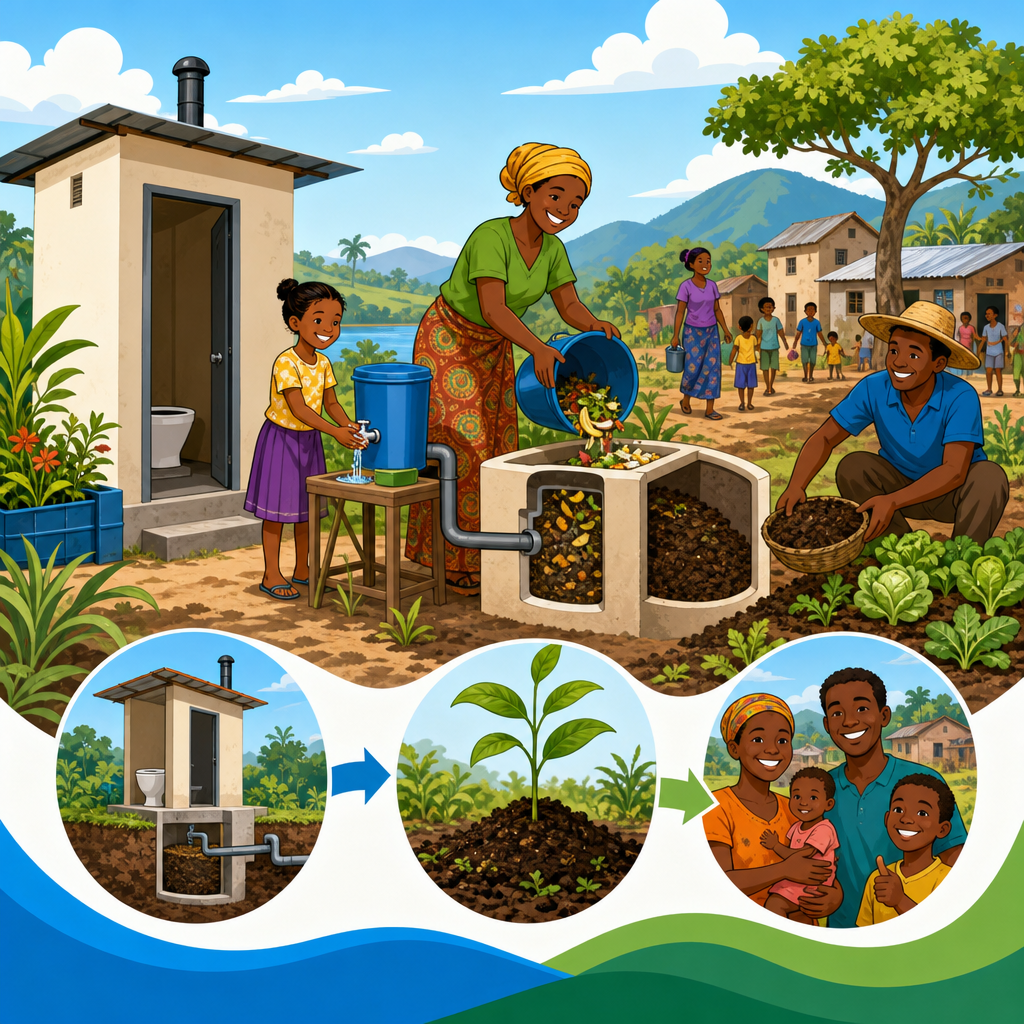
Urine-diverting dry toilets are a strong example. They separate urine and feces at the source, reducing odor, lowering moisture, and making downstream treatment easier. In water-scarce regions, they remove the need for flushing and preserve scarce potable water for drinking and hygiene. Where agricultural reuse is accepted, stored urine can supply nitrogen, phosphorus, and potassium to crops, while dehydrated fecal material can be further treated for soil improvement. These systems are not maintenance free. They require user training, dry cover material, cleaning discipline, and periodic emptying. But when those elements are planned well, they remain functional in places where flush systems routinely fail.
Container-based sanitation offers another resilient model for dense settlements built on unstable land, steep slopes, or flood zones. Instead of relying on pits that overflow or contaminate shallow aquifers, sealed containers collect waste for scheduled removal and off-site treatment. This service logic resembles solid waste collection more than conventional sewerage. It works especially well where space is limited and roads allow regular pickup. Successful operators have shown that households will pay for reliable, dignified service if the system is clean, predictable, and safe. The resilience advantage is clear: treatment can be centralized at manageable scale without requiring every household to build durable underground containment.
Success stories from water-scarce rural communities
Some of the strongest EcoSan case studies come from dryland regions where every liter of water counts. In parts of East Africa and southern Africa, repeated droughts have exposed the weakness of flush-dependent sanitation. Programs that introduced urine-diverting dry toilets and arborloos demonstrated a practical shift: sanitation systems could protect health without competing with domestic water needs. In rural Zimbabwe, long-running EcoSan initiatives linked household sanitation to garden productivity. Families used treated urine and composted material to improve maize, vegetables, and fruit tree growth, creating a visible reason to maintain the toilets correctly. When users can see food production benefits, adoption becomes more durable.
In Ethiopia and Kenya, implementation experience showed that success depended less on the toilet superstructure than on extension support. Households needed simple guidance on ash use, alternating vaults, safe storage time, and crop application practices. Communities with active agricultural extension workers and local masons performed better than communities that received one-time construction subsidies. The lesson is important for resilient water and sanitation systems: hardware alone does not create service continuity. Skills, trust, and follow-up are the actual backbone of long-term performance.
Rural schools have also shown why EcoSan fits low-water settings. Where groundwater is deep or hand pump yields are poor, a flush block can consume scarce school water and quickly become unusable. Dry or low-water systems reduce that risk. Several school projects in Uganda and Mozambique paired separate sanitation blocks with handwashing stations supplied by rainwater harvesting. This combination addressed a common criticism that dry sanitation neglects hygiene. It does not have to. The resilient approach is to reserve water for handwashing and cleaning while avoiding unnecessary use for waste conveyance.
Urban informal settlements and service-based sanitation models
Dense informal settlements present different constraints: high tenancy rates, little space, difficult legal status, and chronic flooding. Here, individual pit latrines often become unsafe quickly. They fill fast, are expensive to empty, and can leak into drains or groundwater. Service-based EcoSan models have emerged as a practical alternative. In Haiti, Kenya, and Madagascar, container-based sanitation enterprises demonstrated that sealed cartridges, regular collection, and professional treatment can deliver a safer user experience than unmanaged shared latrines. The critical shift is from infrastructure ownership to service reliability.
I have seen the same principle hold across projects: users judge sanitation first by cleanliness, smell, privacy, and convenience, not by engineering diagrams. Operators that maintained dependable pickup schedules and responsive customer service retained customers better than programs that focused only on toilet installation numbers. This matters for resilience because vulnerable communities live with constant disruption. If a provider misses collections, trust disappears quickly. If the provider performs reliably during heavy rain or civil unrest, adoption deepens.
| Setting | Common EcoSan option | Primary resilience benefit | Main operational challenge |
|---|---|---|---|
| Water-scarce rural villages | Urine-diverting dry toilets | Minimal water demand and nutrient recovery | User training and vault management |
| Dense informal settlements | Container-based sanitation | Safe collection without pits or sewers | Consistent pickup logistics |
| Flood-prone communities | Raised toilets with sealed storage | Reduced overflow and groundwater contamination | Higher construction cost |
| Schools and clinics | Dry or low-water blocks with handwashing | Service continuity when water is limited | Cleaning and behavior management |
Several citywide sanitation planning efforts now recognize that informal settlements need a mix of onsite, container-based, and transfer-based systems rather than a single network solution. This aligns with the sanitation service chain framework promoted by organizations such as the World Health Organization, UNICEF, and the World Bank. Containment, emptying, transport, treatment, and reuse all matter. A toilet that looks improved at the household level is not actually safe if waste is dumped untreated nearby. The best urban EcoSan examples succeed because they solve the entire chain.
Flood-prone and climate-exposed communities
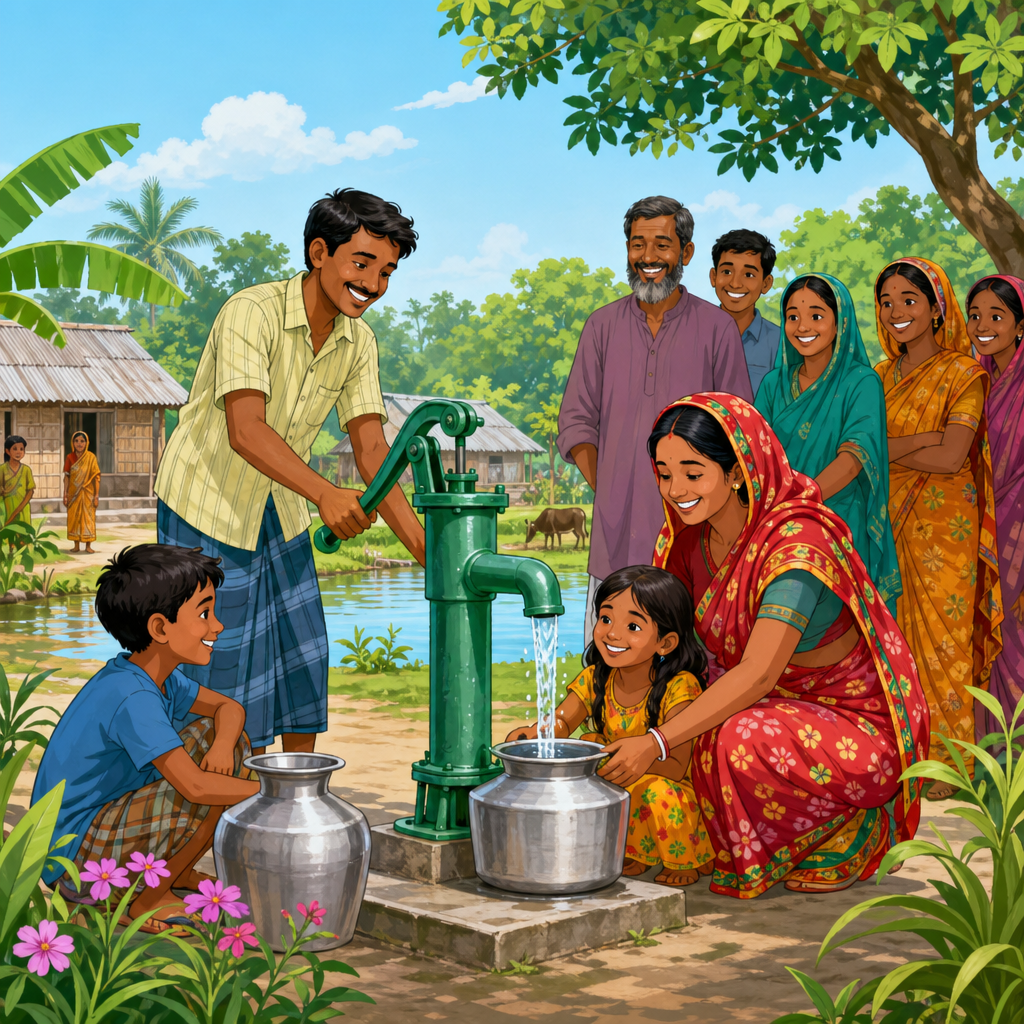
Climate stress changes sanitation risk dramatically. In flood-prone settlements, pits can collapse, septic tanks can infiltrate, and fecal contamination can spread across roads, homes, and shallow wells within hours. Resilient EcoSan designs respond by elevating structures, sealing storage, shortening collection cycles, and moving treatment away from hazard zones. In Bangladesh and coastal East Africa, raised latrines and urine-diversion systems have helped reduce direct flood contact with excreta. These systems are not perfect, but they substantially reduce the failure modes associated with submerged pits.
One practical lesson from flood-exposed projects is that site selection matters as much as toilet design. Building a technically sound toilet in a drainage path is still a failure. Communities that mapped flood levels, groundwater depth, and access routes before choosing technologies consistently avoided the worst outcomes. Another lesson is that resilient sanitation must be paired with resilient water supply. If floods contaminate tube wells, households may continue using unsafe sources even when sanitation facilities survive. Integrated planning is not optional in climate-exposed areas.
Decentralized wastewater treatment systems also have a place in peri-urban and institutional settings where land is available and wastewater volumes are moderate. Constructed wetlands, baffled reactors, and planted gravel filters can provide robust treatment with lower energy demand than conventional plants. Their resilience advantage lies in operational simplicity, but they still need desludging plans, hydraulic loading control, and trained caretakers. The strongest examples work because operators understand those limits and budget for maintenance.
What these case studies teach about long-term success
Across diverse EcoSan success stories, five patterns appear repeatedly. First, communities adopt systems they understand. Second, local governments support systems they can regulate and finance. Third, farmers or end users accept reuse only when treatment and safety rules are clear. Fourth, schools and landlords maintain facilities when roles are assigned explicitly. Fifth, monitoring continues after construction. These are management lessons, not just technical ones, and they determine whether a sanitation intervention lasts beyond the pilot stage.
Standards and verification matter as well. The safest reuse programs follow risk-based approaches such as those reflected in World Health Organization sanitation safety planning. Treatment targets, storage periods, and exposure controls should be documented, not assumed. In practice, that means testing compost maturity where possible, enforcing restricted crop application when treatment is partial, and training workers to use protective equipment during handling. Communities do not need laboratory-level complexity for every project, but they do need clear protocols. That is how resilience becomes credible rather than aspirational.
Financing is another decisive factor. Capital subsidies may help launch toilets, but resilient service usually depends on recurring revenue for collection, repairs, replacement parts, and operator wages. Successful programs blend household payments, public funding, and in some cases revenue from compost, briquettes, or fertilizer products. Reuse income alone rarely covers everything. The more realistic model treats resource recovery as a useful supplement rather than the only business case.
For practitioners building a hub of case studies, the most important takeaway is comparative learning. A successful rural urine-diversion project does not automatically translate to a flood-prone slum, and a container-based urban model may not suit scattered villages. The value of diverse EcoSan success stories is that they reveal design principles across contexts: match technology to risk, design for the whole service chain, train users, fund operations, and verify safety. When those principles guide planning, resilient water and sanitation systems become achievable even in the most vulnerable communities.
Conclusion
Building resilient water and sanitation systems in vulnerable communities starts with accepting a simple reality: context drives performance. Diverse EcoSan success stories prove that sanitation can be safe, affordable, water-efficient, and locally manageable when technology choices fit environmental conditions and service capacity. From dry rural districts using urine-diverting toilets to dense settlements relying on container-based collection, the winning models are the ones that protect health across the full sanitation chain and continue operating during stress.
The main benefit of this approach is durability. Communities are not left with abandoned infrastructure that fails after one flood, one drought, or one funding cycle. Instead, they gain systems that conserve water, reduce contamination, support nutrient recovery, and create clearer maintenance responsibilities. For policymakers, NGOs, engineers, and local leaders, the lesson is direct: stop searching for one universal sanitation answer and start building portfolios of proven, context-specific solutions.
Use this hub as your starting point for exploring the full range of EcoSan case studies, then apply the lessons to your own setting with careful assessment, community input, and long-term service planning.
Frequently Asked Questions
1. What makes a water and sanitation system truly resilient in vulnerable communities?
A resilient water and sanitation system is one that continues to function under stress, not just when conditions are ideal. In vulnerable communities, that means the system can keep serving people during droughts, floods, disease outbreaks, economic shocks, displacement, supply chain disruptions, and periods of weak local governance. True resilience goes beyond building pipes, pumps, toilets, or treatment units. It depends on whether the system matches local realities such as groundwater reliability, seasonal water scarcity, soil type, flood exposure, population movement, affordability, and the technical skills available for operation and repair.
In practice, resilient systems are usually designed around simplicity, adaptability, and maintainability. A technology that performs well in one region may fail quickly in another if spare parts are unavailable, pits flood seasonally, or users do not trust or accept the design. Strong systems are often the ones that use locally repairable components, have clear maintenance responsibilities, include backup water options, and can operate even when budgets tighten. For sanitation, resilience may mean choosing containment and emptying models that work in dense settlements, or selecting school sanitation designs that remain safe and usable during heavy rains. For water supply, it may mean diversifying sources, protecting catchments, storing water strategically, and planning for both water quantity and water quality failures.
Just as important, resilience has a social and institutional dimension. Communities need governance arrangements that clarify who manages the system, who pays for what, how repairs are reported, and how service quality is monitored. Without that, even well-built infrastructure can fail. The most resilient systems are the ones where engineering, financing, behavior change, maintenance planning, and community ownership are treated as part of one service system rather than separate project components.
2. Why is infrastructure alone not enough to improve water and sanitation services?
Infrastructure is essential, but on its own it rarely delivers lasting service. Many projects fail because they focus heavily on construction and too little on the conditions required to keep systems working over time. A borehole, toilet block, piped network, or fecal sludge facility can look successful at handover, yet become unreliable within months if tariffs are unrealistic, operators are untrained, spare parts are hard to obtain, drainage was poorly planned, or users were never meaningfully involved in the design process.
Water and sanitation systems function within a broader ecosystem of management, finance, public health, and user behavior. For example, a water point may be technically sound but still underperform if no one collects funds for preventive maintenance. A sanitation facility may be structurally durable but remain underused if it does not align with privacy expectations, menstrual hygiene needs, cultural norms, or safety concerns for women and girls. In flood-prone settings, infrastructure that is not supported by drainage, site planning, and emergency protocols may become hazardous during storms. In drought-prone settings, infrastructure built without source sustainability planning can intensify scarcity rather than solve it.
Long-term success usually depends on what happens after construction: routine operation, accountability, user education, supply chains for repairs, monitoring of service quality, and adaptation when local conditions change. This is especially important in vulnerable communities where incomes fluctuate, settlements may be informal, and institutions may have limited reach. The best programs treat infrastructure as one part of a service delivery model. They pair hardware with governance mechanisms, local capacity building, financing plans, inclusive user engagement, and realistic maintenance systems. That is what turns assets into reliable services.
3. How should water and sanitation systems be designed for droughts, floods, and other climate-related shocks?
Designing for climate stress starts with accepting that historical conditions may no longer be a safe guide. Systems should be planned around variability, uncertainty, and the possibility of repeated shocks. For drought resilience, that often means protecting and diversifying water sources rather than relying on a single supply. Communities may need combinations of groundwater, rainwater harvesting, storage, managed demand, and contingency arrangements for water trucking or emergency interconnections. It is also critical to assess how drought affects water quality, not just quantity, since concentrated contaminants and unsafe storage can increase health risks during shortages.
For flood resilience, siting and elevation are central. Toilets, pits, septic systems, pump controls, treatment units, and storage tanks should be located and constructed to reduce inundation risk. In areas with high water tables or frequent flooding, standard pit-based solutions may contaminate groundwater or overflow, so sealed containment, raised systems, simplified sewers, or safely managed emptying approaches may be more appropriate. Drainage is often overlooked, but it is vital. Even well-designed sanitation infrastructure can fail if wastewater, stormwater, and solid waste management are not considered together. Protecting critical components from erosion, backflow, and debris damage can dramatically improve continuity during extreme weather.
Resilient design also requires operational preparedness. Communities and service providers should know what happens if a pump fails, if roads become impassable, or if a sanitation site is cut off during heavy rain. Emergency spare parts, local repair capacity, simple shutdown procedures, and communication protocols can prevent temporary shocks from becoming prolonged service failures. The strongest designs are not necessarily the most advanced. They are the ones that are technically appropriate, climate-aware, and manageable with local resources under both normal and stressed conditions.
4. How do local conditions like soil type, water availability, and cultural preferences affect sanitation choices?
Local conditions shape whether a sanitation system will be safe, accepted, and maintainable. Soil type and groundwater levels influence whether pits are stable, whether effluent infiltrates properly, and whether there is a risk of contaminating nearby water sources. In loose or collapsing soils, pit latrines may need lining or may be impractical altogether. In rocky terrain, excavation can become too expensive. In high water table or flood-prone areas, conventional onsite systems can overflow or pollute shallow groundwater, making above-ground, lined, or container-based solutions more suitable. These are not minor technical details; they determine whether a sanitation intervention protects health or creates new problems.
Water availability is equally important. Some sanitation options require regular water for flushing, cleaning, or sludge management, while others are better suited to water-scarce environments. Installing water-dependent toilets in areas with unreliable supply can lead to clogged systems, poor hygiene, and eventual abandonment. By contrast, dry or low-water systems may be more practical in drought-prone communities, provided they are supported by effective maintenance and safe waste handling. The sanitation chain must be considered end to end, including containment, collection, transport, treatment, and final reuse or disposal. A toilet is only one component of that chain.
Cultural preferences, privacy expectations, gender norms, and household habits are also decisive. If people do not feel safe using a facility, if it lacks adequate privacy, if it does not accommodate children, older adults, or people with disabilities, or if it conflicts with local beliefs about cleanliness and shared use, uptake will suffer. In schools and public settings, design choices should account for menstrual hygiene management, handwashing convenience, lighting, accessibility, and ease of cleaning. The most effective sanitation programs start by understanding how people live and what constraints they face. They then select technologies and service models that communities can realistically use, maintain, and trust over time.
5. What are the most important steps for making these systems sustainable over the long term?
Long-term sustainability comes from treating water and sanitation as ongoing services rather than one-time construction projects. One of the most important steps is establishing clear management responsibility from the beginning. Everyone involved should understand who operates the system, who performs routine maintenance, who pays for repairs, how faults are reported, and what external support is available when local capacity is exceeded. Without that clarity, systems often fall into a gap between community expectations and institutional responsibility.
Financial planning is another critical factor. Sustainable systems need realistic funding for operation, maintenance, periodic replacement, and emergency repairs. That may include user fees, school budgets, municipal support, cross-subsidies, or targeted assistance for low-income households. The key is that financing arrangements must reflect what users can actually afford and what institutions can reliably manage. Underfunded systems tend to deteriorate slowly until service quality collapses. Preventive maintenance is almost always more cost-effective than waiting for major breakdowns.
Capacity building and local ownership matter just as much as budgets. Operators need practical training, not just manuals. Communities need channels to provide feedback and hold service managers accountable. Monitoring should track functionality, water quality, safe sludge management, downtime, and user satisfaction, not simply the number of facilities built. It is also wise to design with flexibility so that systems can be expanded, modified, or repaired as populations grow and environmental conditions change. In vulnerable communities, sustainability is rarely achieved through complexity or high capital cost alone. It is achieved by aligning technology, institutions, financing, and user needs so the system continues to work year after year, even when conditions are difficult.