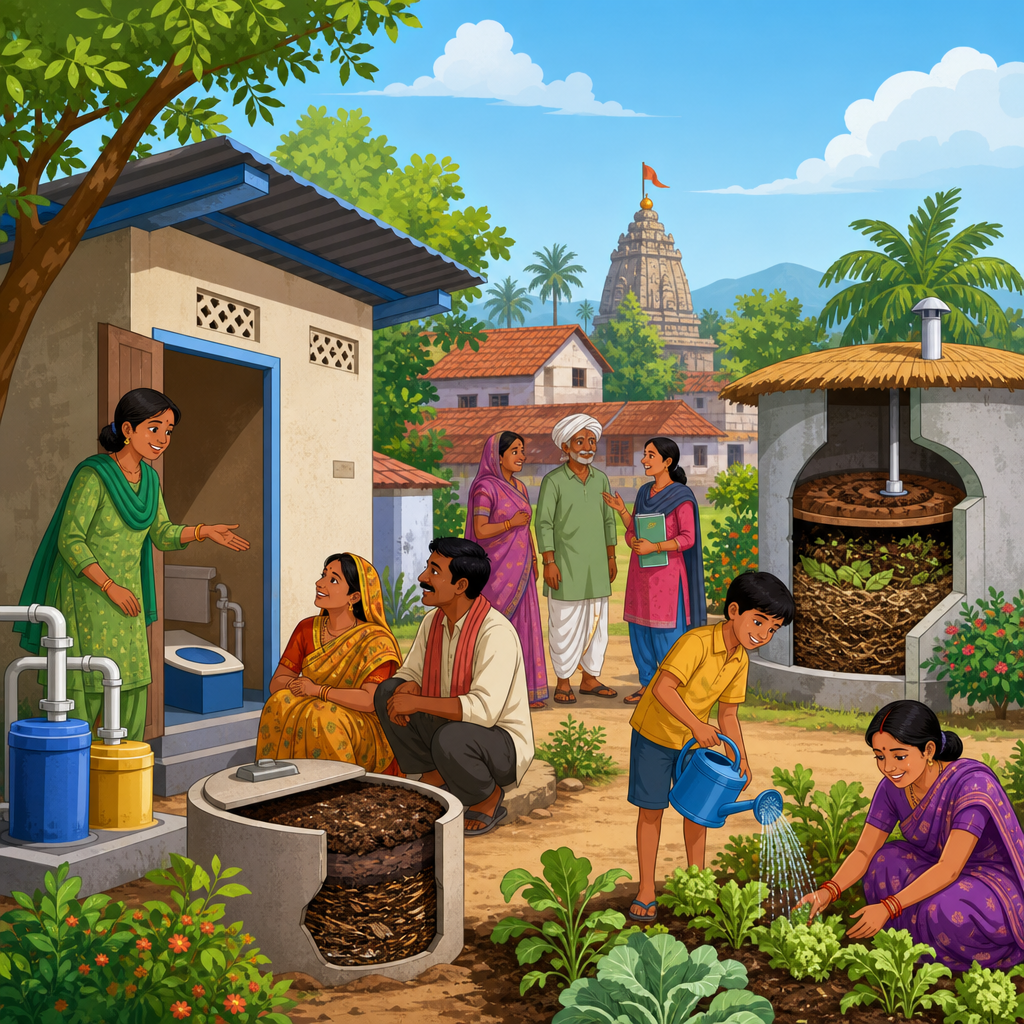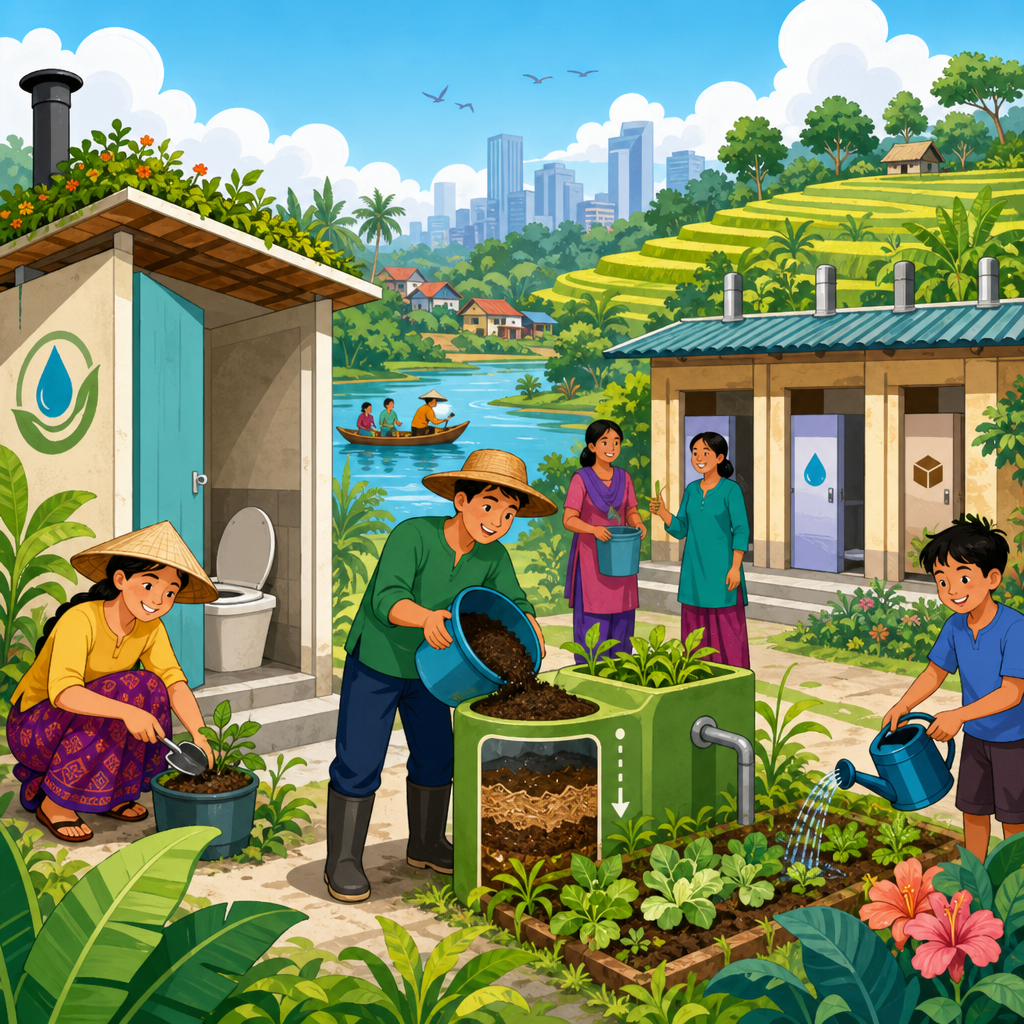
Community-Led Total Sanitation, commonly shortened to CLTS, is a participatory approach that helps communities end open defecation through collective behavior change rather than hardware subsidies alone. In practice, it starts with facilitated discussions, mapping, and frank analysis of how fecal contamination spreads through soil, water, food, hands, and household environments. The goal is not merely to build toilets. It is to create a shared community norm that human waste must be safely contained, managed, and, where appropriate, reused through ecological sanitation systems. That is why this topic matters within diverse EcoSan success stories: CLTS often creates the social demand, while ecological sanitation provides durable technical pathways for safe treatment, nutrient recovery, and local resilience.
I have worked on sanitation programs where latrine construction targets looked strong on paper, yet usage remained inconsistent because households were never part of the decision. CLTS changed that dynamic. Instead of treating people as passive recipients of infrastructure, it asks them to analyze their own sanitation conditions and act together. In many settings, that action has included pit latrines, pour-flush toilets, composting toilets, urine-diverting dry toilets, and fecal sludge management services tailored to local soil, water table, density, and cultural practices. The wider sanitation sector now recognizes that ending open defecation depends on behavior, inclusion, service chains, and long-term monitoring, not just unit counts. Country case studies show both the power and the limits of this model.
How Community-Led Total Sanitation Works in Real Terms
CLTS typically begins with triggering, a facilitated process designed to help a village confront the health and dignity impacts of open defecation. Facilitators guide residents through community mapping, transect walks to open defecation areas, simple calculations of feces produced, and contamination pathways often called the “F-diagram” in public health. When done well, the process is direct but not coercive. Communities then decide on locally appropriate actions, identify households without facilities, support vulnerable members, and establish informal monitoring. Verification for open defecation free status usually follows district or national criteria, and stronger programs continue into post-ODF upgrading, handwashing, menstrual hygiene support, and safe sludge management.
For ecological sanitation, this demand-side process matters because many EcoSan options require informed user behavior. Composting toilets need correct cover material and maintenance. Urine-diverting systems require separate collection and acceptance of reuse practices. Twin pits depend on alternating pits and safe emptying after decomposition. CLTS can create the collective commitment needed for those practices. However, not every village should adopt the same toilet model. Rocky ground, flooding, peri-urban density, disability access, and affordability all influence technology choice. The most successful programs link community mobilization with sanitation marketing, local masons, supply chains, and municipal oversight so households can select systems that they can actually sustain.
Bangladesh: From Rural Mobilization to National Scale
Bangladesh is one of the most cited CLTS success stories because it demonstrated early that sanitation coverage could accelerate when communities, local government, and civil society moved together. Initial work in places such as Rajshahi and other rural districts showed that open defecation could drop rapidly when local leaders, natural leaders, and trained facilitators maintained momentum after triggering. Over time, national sanitation campaigns reinforced this social norm, and local governments supported verification and follow-up. Bangladesh also benefited from high population density and active NGO networks, which made peer learning and rapid diffusion easier than in more dispersed rural settings.
What makes Bangladesh especially relevant for an EcoSan hub is that the story did not end with simple pit construction. In flood-prone, high water table, and densely populated areas, standard pits were often unsuitable or short-lived. Programs increasingly promoted raised latrines, twin pits, ring-slab designs, and improved containment options that reduced groundwater risks. In some areas, households adopted urine-diverting or compost-based approaches where water scarcity, soil conditions, or space constraints made them practical. The core lesson is not that one design won. It is that behavior change at scale created a platform for technical adaptation. Where follow-up and market support remained strong, communities moved beyond basic access toward safer, more resilient sanitation systems.
Nepal: Linking Open Defecation Free Campaigns with Community Ownership
Nepal’s sanitation progress offers a clear example of how CLTS can align with local governance and broader hygiene campaigns. District-level declarations of open defecation free status became powerful political milestones, but the strongest districts treated ODF not as the finish line but as an organizing framework. Ward committees, women’s groups, schools, and health volunteers took active roles in monitoring toilet use and promoting handwashing. In hill regions, where terrain complicates construction and transport, local innovation was essential. Communities used locally available stone, bamboo, and labor-sharing systems to build facilities that matched their environments and budgets.
EcoSan approaches found particular relevance in parts of Nepal where water scarcity, steep slopes, and nutrient recovery for agriculture made dry sanitation attractive. Several municipalities and development partners supported urine-diverting dry toilets and composting models, especially where conventional sewerage was unrealistic. Farmers could see direct value in composted material and stored urine when guidance was practical and health safeguards were clear. At the same time, Nepal’s experience shows an important caution. ODF declarations can mask slippage if households rebuild poorly after landslides, migration disrupts maintenance, or the poorest families lack durable options. Sustained success required periodic verification, financing support for vulnerable households, and stronger attention to fecal sludge safety in growing towns.
Ethiopia and Zambia: Strong Triggering, Different Implementation Realities
Ethiopia integrated CLTS into its rural health extension system, giving the approach unusually broad institutional reach. Health extension workers, kebele leaders, and community structures helped spread sanitation messages to remote areas. In many regions, this accelerated latrine adoption and normalized the expectation that every household should have and use a toilet. Yet Ethiopia also illustrates a recurring implementation challenge: rapid rural construction can produce fragile pits and temporary superstructures that collapse during rains or need frequent rebuilding. Where local supply chains for slabs, vent pipes, and durable components were weak, ODF gains were harder to sustain.
Zambia offers a different but equally useful case. CLTS expanded through district-led rural sanitation programming and showed measurable progress in reducing open defecation in many chiefdoms and villages. What stood out in field practice was the role of local champions and district environmental health staff in maintaining post-triggering follow-up. Communities that paired social pressure with practical support from trained artisans tended to achieve better durability. In both Ethiopia and Zambia, sanitation success improved when programs moved from a narrow focus on initial latrine uptake to a service perspective that included upgrading, rebuilding, and safer management of filled pits. That transition is exactly where EcoSan and other circular sanitation solutions become valuable.
| Country | Primary CLTS Strength | Key Sanitation Challenge | Relevant EcoSan Lesson |
|---|---|---|---|
| Bangladesh | Rapid community mobilization | Flooding and high water tables | Adapt designs to hydrology and density |
| Nepal | Local governance ownership | Terrain and post-disaster rebuilding | Dry systems can suit water-scarce slopes |
| Ethiopia | Integration with health extension | Low durability of first-generation latrines | Upgrading pathways matter as much as triggering |
| Zambia | District follow-up and local champions | Pit filling and rural supply gaps | Train artisans and plan for second-generation services |
| Indonesia | Urban and rural adaptation | Dense settlements and service-chain complexity | Containment must connect to treatment and reuse |
Indonesia: Adapting Community Mobilization for Dense Settlements
Indonesia’s sanitation work is often discussed through its national community-based total sanitation strategy, which adapted CLTS principles into a broader framework covering behavior change, handwashing, water handling, food hygiene, and waste management. This matters because Indonesian sanitation challenges range from remote rural villages to dense peri-urban kampungs where open defecation, unsafe containment, and direct discharge to drains can coexist. In those denser settings, a household toilet alone does not solve the problem if septic tanks leak, are never desludged, or discharge untreated effluent. Indonesia’s experience therefore helps bridge classic CLTS and modern citywide inclusive sanitation thinking.
Several Indonesian cities and districts combined community engagement with scheduled desludging, decentralized wastewater treatment, and sanitation entrepreneurship. In some locations, simplified sewerage or communal systems complemented household-level solutions. In others, improved septic tanks and fecal sludge management services were more realistic. The EcoSan angle appears where nutrient recovery, composting, or decentralized treatment supports circular resource use, especially in agriculture-adjacent communities. The practical lesson is decisive: social mobilization can start demand, but dense settlements need a full sanitation chain from toilet to treatment to safe disposal or reuse. Without that chain, communities may stop open defecation while still living with dangerous environmental contamination.
What These Success Stories Teach About Diverse EcoSan Pathways
Across these countries, the strongest sanitation outcomes share several features. First, communities understand contamination pathways and agree on a collective standard. Second, local governments verify progress and return after declaration day. Third, households can access affordable technical options through local markets, trained masons, and financing or targeted support. Fourth, programs recognize that the sanitation ladder does not end at a basic pit. As pits fill, settlements densify, climates shift, and water stress intensifies, communities need upgrades. That is where twin pits, urine-diversion, composting toilets, container-based sanitation in special contexts, and organized fecal sludge services enter the story.
Diverse EcoSan success stories are especially important because they show sanitation as a system rather than a single product. In agriculture-oriented areas, nutrient recovery can reduce fertilizer costs and make reuse meaningful when treatment is safe and culturally accepted. In flood-prone areas, raised or sealed systems may protect groundwater better than shallow pits. In water-scarce settings, dry sanitation can outperform flush-based models. In all cases, inclusion is critical. Elderly people, tenants, people with disabilities, female-headed households, and the poorest families are often left behind if programs rely only on social pressure. The best country examples combine collective action with practical support, technical flexibility, and honest post-implementation monitoring.
Common Pitfalls and How Strong Programs Avoid Them
Not every CLTS story is a success, and credible analysis requires saying that plainly. Poor facilitation can drift into shaming that alienizes vulnerable households. Weak verification can reward temporary latrines that collapse within months. Overemphasis on ODF targets can shift attention away from hygiene behavior, disability access, menstrual health needs, and fecal sludge management. Some governments have also underinvested in urban sanitation because CLTS was designed primarily for rural behavior change. These weaknesses are not reasons to dismiss the approach. They are reasons to implement it with stronger safeguards, clearer standards, and realistic technology pathways.
Programs that avoid these pitfalls tend to do five things well. They train facilitators carefully and prohibit coercive methods. They define durable minimum technical standards suited to local conditions. They fund post-ODF follow-up, not just triggering events. They link communities to markets and services, including pit emptying or upgrade support. And they use data beyond headline coverage numbers, such as toilet functionality, usage, handwashing access, sludge safety, and inclusion indicators. For readers exploring related case studies in this hub, those are the markers worth comparing across countries and technologies. They reveal whether a sanitation gain is temporary, symbolic, or truly transformational.
Community-Led Total Sanitation has earned its place in global sanitation practice because it addresses the core truth that infrastructure without ownership rarely lasts. The most compelling country examples, from Bangladesh and Nepal to Ethiopia, Zambia, and Indonesia, show that collective behavior change can reduce open defecation quickly and create momentum for broader public health gains. Yet the strongest lesson for this hub on diverse EcoSan success stories is that community mobilization works best when paired with technical options that fit local realities. Sanitation succeeds when toilets are used, maintained, upgraded, and connected to safe treatment or reuse, not merely built.
For practitioners, planners, and researchers, the practical takeaway is straightforward. Study CLTS case studies not as isolated campaigns, but as entry points into complete sanitation systems. Ask which designs survived floods, droughts, pit filling, migration, and urban growth. Ask how the poorest households were supported. Ask whether reuse was safe, accepted, and economically sensible. Those questions separate short-term declarations from durable sanitation progress. Use this hub as a starting point, then explore the country and technology-specific stories that show how community action and ecological sanitation can work together at scale for lasting health, dignity, and environmental protection.
Frequently Asked Questions
What is Community-Led Total Sanitation, and how is it different from traditional sanitation programs?
Community-Led Total Sanitation, or CLTS, is a behavior-change approach that helps communities eliminate open defecation by building collective awareness, responsibility, and action. Instead of starting with outside agencies delivering toilets or providing hardware subsidies, CLTS begins with community engagement. Facilitators guide residents through activities such as village mapping, transect walks, and discussions about how human waste contaminates water sources, food, hands, soil, and household environments. These exercises are designed to help people see the direct health and dignity consequences of open defecation in their own daily lives.
What makes CLTS different from many traditional sanitation programs is that the central goal is not simply infrastructure construction. It is the creation of a new social norm: that everyone in the community has a role in ensuring human waste is safely contained and managed. In many conventional models, toilets may be distributed or promoted without fully addressing whether people will use them consistently, maintain them, or encourage neighbors to do the same. CLTS focuses first on community ownership and local decision-making, which often leads to more durable habits and stronger peer accountability.
This difference is important when looking at success stories from various countries. In places where CLTS has worked well, progress often came not because communities received identical toilet designs or large financial incentives, but because local people felt motivated to act together. Families built sanitation solutions they could afford, leaders reinforced the message, and communities monitored one another’s progress. As a result, CLTS has become widely recognized as a practical way to move from isolated household change to collective sanitation transformation.
Why has CLTS been considered successful in multiple countries?
CLTS has been viewed as successful in many countries because it addresses sanitation as a shared public health issue rather than a purely private household matter. Open defecation affects everyone, not just the individual practicing it, because fecal contamination can spread through the environment and expose entire communities to disease. By making that connection visible and immediate, CLTS encourages communities to act collectively. This social dimension has made the approach especially effective in rural settings where neighbors know one another well and where local leadership can help reinforce new norms.
Success stories from countries in Asia, Africa, and beyond often share several common features. First, communities are actively involved from the beginning rather than treated as passive recipients of aid. Second, local facilitators use honest, practical discussions to help residents understand contamination pathways and the consequences for child health, nutrition, safety, and dignity. Third, communities are encouraged to create solutions that fit their own resources, terrain, and cultural preferences. This flexibility means the approach can adapt to very different settings while still pursuing the same outcome: ending open defecation.
Another reason CLTS has gained international attention is that it can trigger rapid momentum when communities take ownership seriously. In some countries, villages have moved quickly toward open defecation free status because households did not wait for external funding to begin making changes. Local innovation, community pressure, and visible progress often created a ripple effect from one area to another. While results vary and long-term sustainability always requires follow-up, the broader pattern across many countries shows that when behavior change is rooted in community leadership, sanitation improvements are often stronger and more lasting.
What are some common elements behind CLTS success stories in different countries?
Although each country has its own social, economic, and environmental context, many CLTS success stories are built on a similar foundation. One major element is skilled facilitation. Effective facilitators do not lecture communities or impose ready-made answers. Instead, they help residents analyze their own sanitation conditions, recognize the risks, and come to their own conclusions about the need for change. This participatory process creates a much deeper sense of commitment than top-down messaging alone.
Another common element is strong local ownership. Successful CLTS programs typically involve village leaders, women’s groups, teachers, health volunteers, and other trusted figures who can keep sanitation on the community agenda. These local actors often help organize follow-up meetings, monitor progress, support vulnerable households, and celebrate milestones. In many country examples, the turning point was not a single event but the emergence of local champions who kept momentum alive after the initial triggering activities ended.
Monitoring and collective accountability also play a major role. Communities that succeed often establish simple ways to track which households have access to and consistently use toilets, where risks remain, and what support is needed to reach everyone. Public discussion of progress can reinforce positive pressure and reduce backsliding. Importantly, the strongest success stories usually go beyond toilet construction. They include regular use, maintenance, handwashing promotion, safer disposal of child feces, and a broader understanding that sanitation is essential for health, dignity, and environmental cleanliness.
What challenges can affect CLTS outcomes, even in countries with strong sanitation progress?
Even where CLTS has produced impressive results, challenges can still affect outcomes. One of the most common issues is sustainability. A community may stop open defecation for a period of time, but without continued support, monitoring, and reinforcement, some households may revert to previous practices. Toilets can collapse, fill up, or become inconvenient to use during rainy seasons, floods, or other environmental stresses. This is why many sanitation experts emphasize that achieving open defecation free status is an important milestone, but not the end of the journey.
Equity is another critical challenge. Not all households have the same ability to build, upgrade, or maintain sanitation facilities. Elderly people, people with disabilities, landless families, and very low-income households may need additional support to participate fully. In strong CLTS implementation, communities and local authorities recognize these differences and work to ensure that the shift toward improved sanitation does not leave vulnerable groups behind. Country experiences show that inclusive planning often makes the difference between short-term gains and genuinely community-wide success.
There are also implementation risks if CLTS is misunderstood or applied too rigidly. Because the approach relies on strong emotional and social motivation, it must be carried out ethically and respectfully. Poor facilitation can lead to shame without support, pressure without practical solutions, or reporting systems that reward appearances rather than lasting behavior change. The most credible success stories are those where communities were empowered, not coerced, and where progress was backed by verification, follow-up, and broader sanitation planning. In other words, CLTS works best when it is part of a thoughtful, people-centered strategy rather than a one-time campaign.
What can other countries and development programs learn from CLTS success stories?
One of the biggest lessons from CLTS success stories is that sanitation change is most powerful when communities understand the problem for themselves and act together to solve it. Development programs often focus heavily on infrastructure, but CLTS demonstrates that behavior, social norms, and collective responsibility are equally important. A toilet that is built but not used does not protect public health. By contrast, when a whole community adopts the belief that open defecation is unacceptable and unsafe, the impact can be far more meaningful and widespread.
Another key lesson is the value of adaptation. Countries that have seen positive CLTS outcomes generally did not succeed by copying a model mechanically. They adjusted facilitation methods, follow-up systems, local government involvement, and sanitation options to fit local realities. This flexibility is essential because communities differ in income levels, geography, cultural expectations, climate risks, and market access. Successful programs pay close attention to these factors while keeping the core CLTS principle intact: communities lead the change.
Finally, CLTS success stories show that sanitation should be understood as an ongoing development process, not a one-time intervention. Countries can learn the importance of integrating CLTS with health education, hygiene promotion, local supply chains, technical guidance, and systems for sustaining gains over time. The strongest examples are those where communities moved from ending open defecation to improving toilet quality, handwashing habits, waste management, and overall environmental health. That broader progression is what makes CLTS especially valuable: it can serve as a starting point for long-term public health improvement driven by local leadership.